

Information Revolution
1. Introduction
The Information Revolution—which took shape primarily in the 1990s—is widely regarded as one of the most transformative global events of the 20th century. It brought revolutionary change in communication, information exchange, computing and the rise of the Internet. What began as technical advances quickly became a social and economic shift that touched nearly every aspect of daily life.
2. Background
Until the late 1980s, computers and telephones were mostly specialized tools used by businesses, governments and research institutions. With rapid improvements in microchips, fiber-optic communications and software, digital technologies started moving into everyday use. Personal computers, faster networks and more affordable devices created the conditions for a sweeping shift toward digitization.
3. Key Features
Several defining features characterized the Information Revolution:
3.1 Widespread adoption of computers and the Internet
Computers became affordable and accessible to homes, schools and small businesses; the Internet connected these devices across the globe.
3.2 Email, websites and search engines
New communication tools—email, web pages and search engines—made finding and sharing information faster and easier than ever before.
3.3 Rapid digitization of information
Documents, media and services moved from physical formats to digital ones, enabling instant access, copying and distribution.

Top-Rated Amazon Everyday Essential
Discover this top-rated Amazon product designed for dependable performance, quality construction, and everyday convenience. With strong customer satisfaction and reliable usability, this item delivers excellent value and practical features for daily life. Perfect for home use, travel, or as a thoughtful gift.
Buy Now on Amazon3.4 Growth of the software industry and IT sector
A booming software industry and an expanding IT services sector created jobs, startups and global companies focused on digital solutions.
3.5 Rise of mobile and wireless technologies
Mobile phones and wireless networks untethered people from desktops, allowing constant connectivity and new consumer experiences.
4. Global Impact
- Easier global connections: Communicating with people across the world became simpler and faster.
- Universal access to information: Information became more accessible, faster and often cheaper.
- Accelerated globalization: Markets, ideas and cultures connected with unprecedented speed.
- New business models: Companies embraced e-commerce, digital marketing and virtual operations.
The Information Revolution transformed not only tools and technologies, but the very ways people learn, work and collaborate across borders.
5. Impact on India
In India, the Information Revolution gained momentum after the economic reforms of 1991. Several notable developments followed:
- Emergence of IT hubs: Cities such as Bangalore and Hyderabad developed into major information-technology centres.
- Institution building: Organizations like NASSCOM and many educational and training institutes supported industry growth.
- Employment opportunities: New jobs in software, services and related sectors created opportunities for India’s youth.
- Policy foundations: Initiatives such as Digital India later built on this foundation to expand connectivity and digital services.
6. Challenges
Despite its benefits, the Information Revolution also introduced important challenges:
- Digital divide: Unequal access to technology created disparities between regions and socio-economic groups.
- Cybersecurity and privacy: Cybercrime, hacking and privacy concerns increased as more activity moved online.
- Impact on traditional jobs: Automation and digital processes contributed to declines in some traditional roles, creating transitional challenges for workers.
7. Conclusion
The Information Revolution reshaped global society and launched a knowledge-based economy. Its effects continue to guide technological development and open new possibilities. While opportunities have multiplied, meeting the challenges—especially inequality, security and workforce transition—remains essential to ensuring the benefits reach everyone.
Final thought
The story of the Information Revolution is still unfolding. Embracing its potential while addressing its risks will determine whether the digital age becomes an engine of inclusive progress.
1. Information Revolution
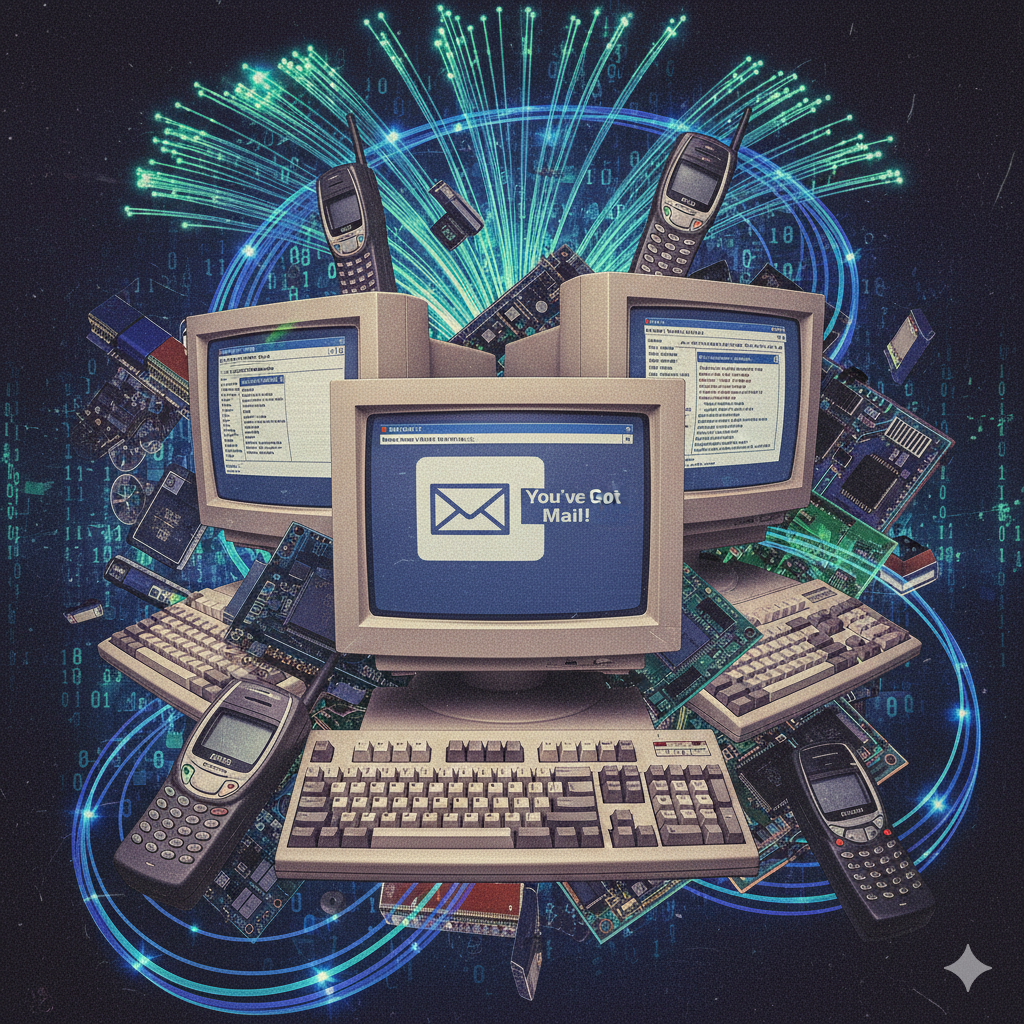
The Information Revolution was a historic development that took place during the 1990s. It deeply influenced every sphere of human life across the world. Through this revolution, there was extraordinary progress in computers, the Internet, mobile technology and communication media. As a result, the exchange of information became fast, accessible and inexpensive.

Highly Rated Amazon Product for Everyday Use
Discover this top-rated and highly reviewed product available on Amazon, known for reliable performance and excellent build quality. Designed to deliver everyday convenience and strong usability, it offers outstanding value and customer satisfaction. Perfect for home use, on-the-go needs, or as a thoughtful gift.
Buy Now on AmazonBackground of Information Revolution
The roots of the Information Revolution go back to the second half of the 20th century, when technologies such as computers, telephones, satellites and microchips began to develop. During the 1970s and 1980s, computers were used on a limited scale in developed nations and were mainly restricted to government departments and large commercial institutions.
By the late 1980s, rapid advancements in microprocessors, optical fiber and software technology accelerated digital progress. During this period, personal computers (PCs) became increasingly available to the general public.
With the Internet becoming publicly accessible in the early 1990s, the exchange of information became extremely fast, easy and global. Along with this, mobile phones, email, search engines and digital tools together sparked a revolution that changed the functioning of human society.
In India, the foundation of this revolution was strengthened after the economic reforms and liberalization policies of 1991. This led to rapid growth in the Information Technology (IT) sector, establishing India as an emerging power in the global digital landscape.
3. Main Features of the Information Revolution
Features of the Information Revolution
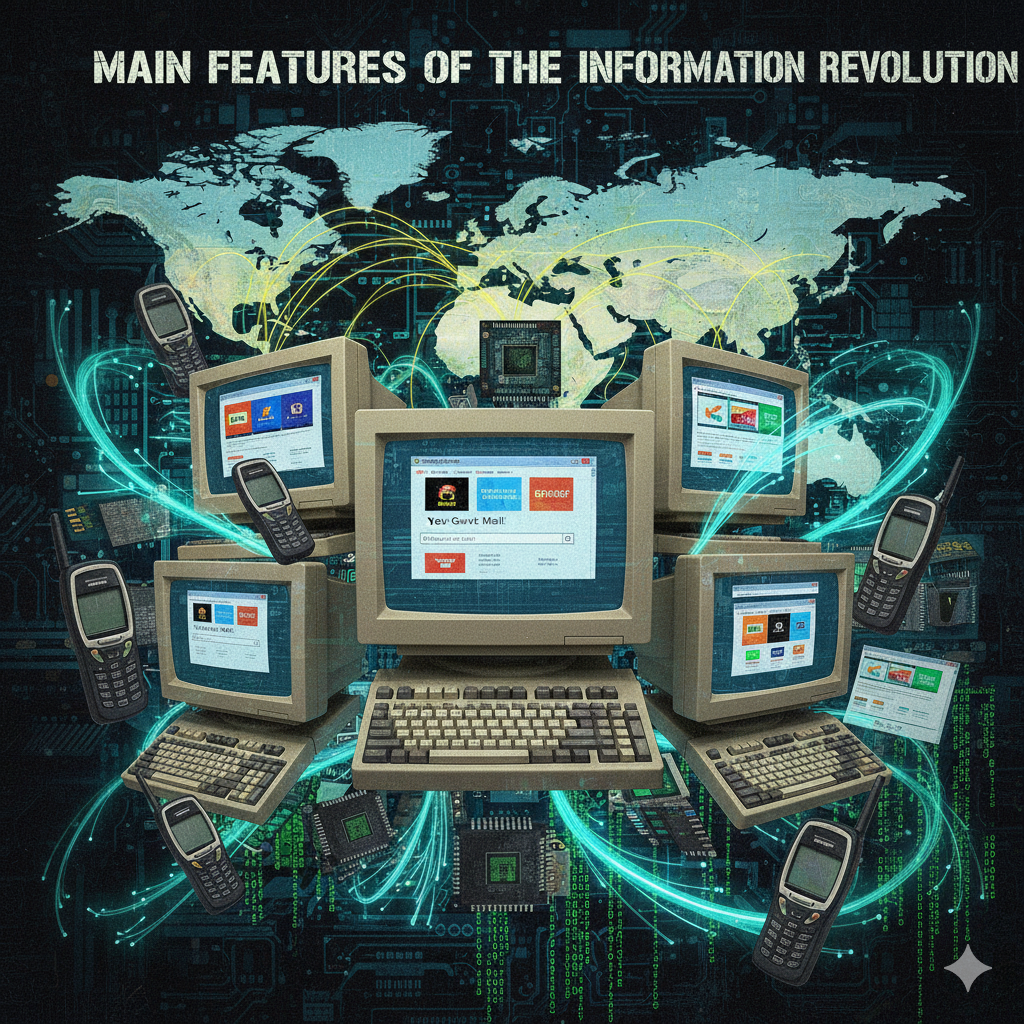
The Information Revolution of the 1990s brought significant changes in technological, social and economic life. Its major features include:
(1) Growth and Spread of the Internet
During the 1990s, the Internet became available to the general public, making the exchange of information easier, faster and global.
(2) Entry of Computers into Everyday Life
Personal computers (PCs) became common in homes, schools and offices, completely transforming daily work and communication methods.
(3) E-mail and Digital Communication
E-mail, online chatting and messaging services replaced traditional postal systems, making instant communication possible.
(4) Growth of Software and the IT Industry
The Information Revolution fueled the rapid expansion of the software and IT sector, creating millions of employment opportunities worldwide.
(5) Mobile and Wireless Revolution
The rise of mobile phones and wireless technology made communication simpler, faster and widely accessible.
(6) Global Connectivity and Digital Globalization
Instant access to information from anywhere in the world became possible, turning the world into a “global village”.
(7) Rise of Digital Media and Websites
News, entertainment and educational content became available digitally through websites and apps.
(8) Beginning of Online Services
E-commerce, online banking, digital payments and the digitization of government services expanded rapidly during this period.
The Widespread Use of Computers and the Internet
The widespread use of computers and the Internet was one of the most defining aspects of the Information Revolution of the 1990s. Earlier, computers were limited to government departments, large institutions and research centers; however, they soon became accessible to the general public.
The Internet transformed communication and access to information. E-mail, web browsing, online news, digital libraries and social media created a completely new digital ecosystem.
Impact of Widespread Digital Use:
- Global information became available within seconds.
- People across the world became interconnected.
- Business, education, healthcare and entertainment became increasingly digital.
E-mail, Websites and Search Engines
During the Information Revolution, the development of e-mail, websites and search engines played a crucial role in reshaping global communication and information access.
1. Development of E-mail
E-mail (electronic mail) replaced traditional postal communication. It quickly became the most popular means of communication in the 1990s. People could send messages, documents and images within minutes, making it a fast, reliable and low-cost medium.
2. Rise of Websites
With the expansion of the Internet, websites became the primary medium for sharing information. Educational institutions, government departments, companies and media organizations began publishing content online.
3. Development of Search Engines
Search engines such as Yahoo, AltaVista and later Google (1998) made information easily searchable. Users could find content on any subject within seconds, revolutionizing the learning and research process.
Conclusion: These three technologies connected the world, simplified access to knowledge and established the foundation of the modern information age.
Top-Rated Amazon Everyday Essential
Discover this highly reviewed and dependable Amazon product designed for everyday convenience and strong usability. With quality construction and practical features, this item delivers outstanding value and satisfaction. Ideal for home use, on-the-go needs, or as a thoughtful gift.
Buy Now on AmazonDigitization Accelerated
During the 1990s, the process of digitization gained unprecedented momentum. Digitization refers to converting analog information—such as documents, images, audio and video—into digital formats so it can be stored, shared and processed electronically.
Key Aspects of Digitization
1. Digitization of Documents and Records
Government, educational and business institutions began storing paper records in digital form, improving data management and accessibility.
2. Digital Libraries and Museums
Books, manuscripts and historical materials were scanned and made available online, expanding global access to knowledge.
3. Digitization of Media and Entertainment
Cassettes, CDs and videotapes were replaced by digital formats such as MP3, MP4 and PDF. News, music, movies and television shifted to digital platforms.
4. Digital Transformation of Services
Banking, railway reservation, taxation, education, healthcare and many public services moved online, increasing transparency, speed and convenience.
Result: Digitization led to paperless functioning, instant data availability and better data security—one of the greatest achievements of the Information Age.
The Software Industry and IT Sector Grew
The Information Revolution of the 1990s triggered a massive expansion of the software industry and the IT sector. Growing computer and Internet usage increased global demand for software, making IT a major economic force.
Key Points
1. Acceleration in Software Development
There was rapid progress in operating systems, application software, databases, graphics, gaming and mobile applications. Companies like Microsoft, Oracle and Adobe became global leaders.
2. Rise of IT Companies
Indian companies such as Infosys, TCS, Wipro and HCL established themselves as major players in the global IT market. Meanwhile, Silicon Valley became the world’s leading IT hub.
3. Increase in Global Outsourcing
Foreign companies began outsourcing large parts of their software and IT services to countries like India, resulting in the rise of BPO and IT services industries.
4. Employment and Economic Growth
Millions of young professionals found employment in the IT sector, making it a major contributor to economic development and foreign exchange earnings.
5. Innovation and Startup Culture
Digital-driven startups emerged in fields such as web development, app development, cloud computing, AI and data analytics.
Conclusion: The software and IT industry became the backbone of the Information Revolution, powering economic growth and technological advancement globally.
Mobile and Wireless Technology Became Popular
In the 1990s, mobile phones and wireless technology became essential elements of the Information Revolution. This development changed how people communicated and allowed seamless connectivity from anywhere, at any time.
Key Points
1. Popularity of Mobile Phones
By the mid-1990s, mobile phones began to reach the general public. Initially expensive and limited to a few, they soon became affordable and widespread.
2. Wireless Communication
Wireless technologies like GSM and CDMA enabled users to make calls, send messages and later access the Internet without cables. This was particularly beneficial for remote regions.
3. Internet on Mobile Phones
By the late 1990s, mobile phones began offering Internet access, giving people quick access to global information and online services.
4. Social and Business Impact
Mobile phones transformed social life, improved business communication and became vital tools during emergencies.
5. SMS and MMS Services
Text messaging (SMS) and multimedia messaging (MMS) made communication faster, personal and more efficient.
Conclusion: Mobile and wireless technologies literally brought the world “into our hands,” forming a solid foundation for today’s digital age.

4. Global Impact: The Information Revolution
Global Impact of the Information Revolution
The Information Revolution of the 1990s had a profound influence on the entire world. It brought significant social, economic, political and cultural changes on a global scale. Its major global impacts are outlined below:
(1) Driving Globalization
Information technology erased geographical boundaries digitally. Trade, communication and international collaboration became faster, easier and more efficient than ever before.
(2) Universal Access to Knowledge and Information
The Internet made information accessible from anywhere, at any time. This greatly boosted education, scientific research and public awareness around the world.
(3) Changes in Global Trade
E-commerce, digital payments and online marketing transformed traditional business systems. Multinational companies gained easy access to global markets, increasing competition and innovation.
(4) Changes in Work Culture
New work models such as work-from-home, teleconferencing and remote work emerged. These practices reduced workplace boundaries and allowed people to collaborate across continents.

Popular Amazon Everyday Essential
Discover this popular Amazon product that combines dependable performance with practical design. With quality build and everyday usability, it offers outstanding value and strong customer satisfaction. Perfect for daily use, travel convenience, or as a thoughtful gift option.
Buy Now on Amazon(5) New Power in Political Movements and Mass Communication
Social media and digital platforms enabled people to express their views globally. Movements such as the Arab Spring were significantly influenced by digital communication tools made possible through the Information Revolution.
(6) Emergence of the Digital Divide
While developed countries rapidly adopted new technologies, many developing or underdeveloped countries lacked resources. This created a new type of inequality known as the digital divide.
(7) Challenges of Cybersecurity and Data Protection
Though open information sharing proved beneficial, it also introduced risks such as hacking, privacy violations, data theft and online fraud. Cybersecurity became one of the most critical concerns of the digital era.
Conclusion: The Information Revolution connected the world, accelerated global dialogue and development, but also introduced new challenges and inequalities. Despite these issues, it remains one of the most transformative events in modern human history.


Top-Rated Amazon Everyday Essential
Discover this highly rated and practical Amazon product designed for dependable everyday performance and strong usability. With quality construction and thoughtful design, it delivers excellent value and satisfaction for your daily needs. Ideal for home use, travel convenience, or as a thoughtful gift for someone special.
Buy Now on Amazon7. Conclusion: Information Revolution
The 1990s marked the beginning of a new era in human civilization, known as the Information Revolution or the “digital age.” This revolution influenced every sphere of life—including communication, education, business, governance, medicine and entertainment. Technologies such as computers, the Internet, mobile phones and software connected the world and transformed information into power.
For a developing nation like India, the Information Revolution proved to be a major boon. It provided the country with a strong global identity and opened enormous opportunities for the youth. At the same time, it also introduced challenges such as digital inequality, cybercrime and negative social impacts, which require awareness, policy-making and responsible use.
Thus, the Information Revolution was not just a technological shift—it marked the beginning of deep social, economic and cultural transformation. It made the world faster, more connected and rich in knowledge. This revolution will continue to inspire progress, creativity and innovation in the years to come.
References
- Akshar Bharati, Vineet Chaitanya, Rajeev Sangal — Information Revolution (2003).
Discusses the definition of the Information Revolution, the role of communication and computer technologies, and emerging challenges. (Source: arXiv) - T. Ashraf — Information Technology and Public Policy: A Socio-Human Profile of Indian Digital Revolution.
Explains constraints and possibilities created by the digital revolution in India, with a socio-economic perspective. (Source: Taylor & Francis Online) - Sanjeev Sinha — India: Information Revolution, Japan Spotlight, May/June 2011.
Covers India’s 1991 reforms, IT/ITeS sector growth, education, e-governance and digital infrastructure in detail. (Source: jef.or.jp) - L.P. Rai — Indicators of the Information Revolution (2000).
Lists indicators related to information infrastructure and dissemination tools to measure India's digital progress. (Source: ScienceDirect) - Harish Mehta — The Maverick Effect: The Inside Story of India’s IT Revolution (2022).
Provides an inside account of NASSCOM’s formation, India’s software industry growth and entrepreneurship challenges. (Source: Wikipedia)