
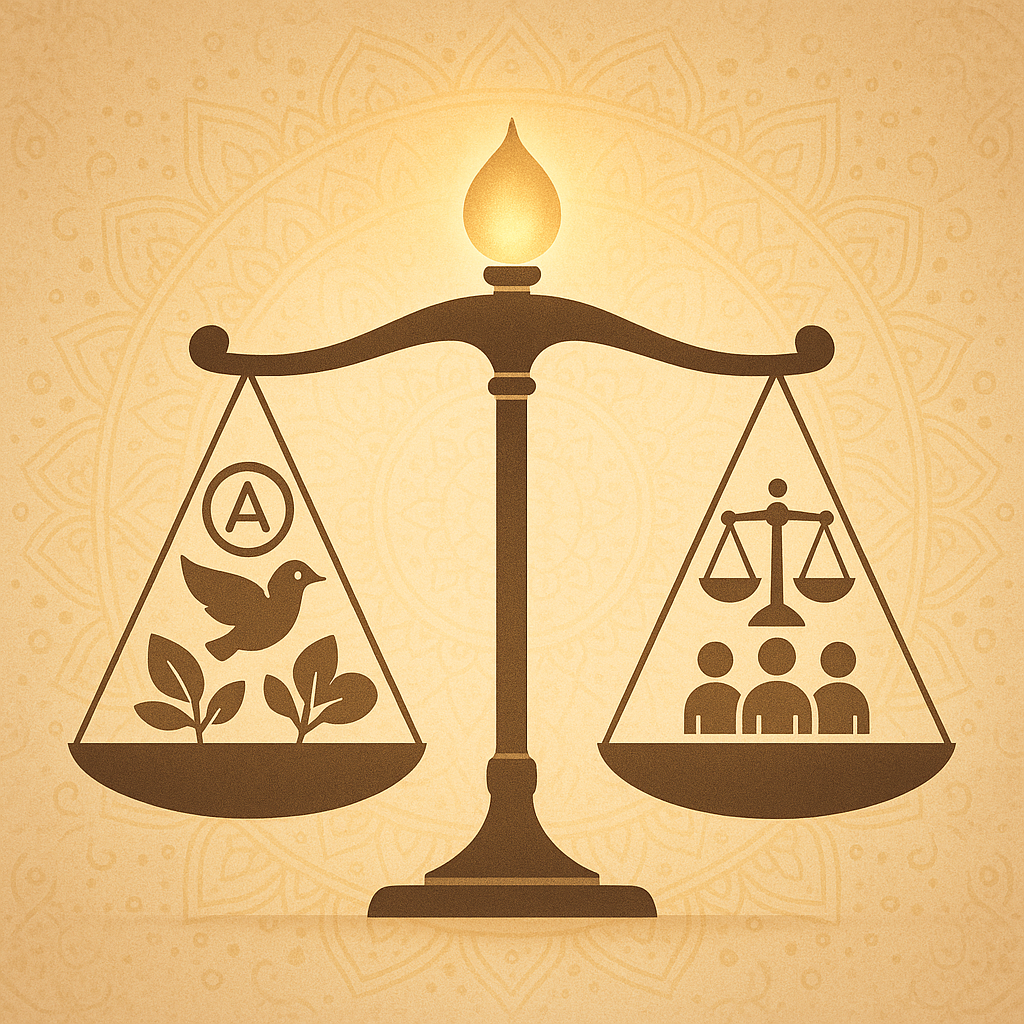
Religion (Dharma): Meaning, Principles, and Modern Relevance
Short intro: Dharma is a complex and multifaceted concept. Its meaning varies by time, place, and context, and it ties together life, spirituality, morality, and social norms. Below I share an inspiring, informative account of Dharma drawn from tradition and modern perspective.
1. The Original Meaning of Dharma
The word Dharma is derived from the Sanskrit root dhr, meaning “to hold” or “to support.” Dharma represents the principles that hold society, nature, and individual life in balance. In the Indian philosophical tradition, Dharma is not limited to methods of worship or mere religious belief; it is a broader way of life — an ethical and spiritual framework that guides conduct.
2. Types and Variations of Dharma
Dharma is not a single, rigid category. It manifests in several related forms that reflect its wide-ranging role:

Top Quality Amazon Product
Reliable performance and excellent value. A great choice for everyday use with trusted durability.
Buy on AmazonCommon Dharma (Common Morality)
This covers universal moral values such as adherence to truth, non-violence, kindness, and benevolence — values expected of all people.
Vishesh Dharma (Individual Duty)
These are duties assigned according to a person's status, role, or circumstances — for example, the duties of a king, a teacher, or a parent.
Sanatana Dharma
In the Indian tradition, Sanatana Dharma means the eternal and universal truth that is not bound to any particular time or place.
Legal/Scriptural Dharma
Dharma as set out in classical texts and traditions — including norms and injunctions found in scriptural literature.
3. Core Principles of Dharma
To understand Dharma properly, it is necessary to know its guiding principles:
- Truth: Following truth is a primary foundation of Dharma.
- Non-violence: Refraining from harm and practicing compassion.
- Justice: Living a just life and treating others fairly and equally.
- Duty: Fulfilling responsibilities and obligations toward family and society.
- Harmony: Maintaining balance between society, nature, and individual well-being.
4. Dharma and Adharma
Dharma and Adharma are opposites. Dharma sustains stability and peace for individual life and society; Adharma denotes actions and attitudes that violate those stabilizing principles and cause harm.
5. Sources of Knowledge about Dharma
The main sources from which we derive knowledge about Dharma include:
- Scriptural texts: The Vedas, Upanishads, the Gita, Mahabharata, and Ramayana.
- Smritis and law texts: Classical texts such as Manusmriti and Yajnavalkya Smriti that codify social and legal principles.
- Custom and practice: Moral and cultural traditions that evolve within communities.
- Teachings of saints and gurus: Spiritual guidance and lived examples handed down by teachers.
6. Modern View of Dharma
In modern times, Dharma is often reduced to ritual and worship practices alone. However, its deeper purpose is to serve humanity, uphold morality, and foster universal love. A contemporary approach should also examine Dharma from scientific and humanistic perspectives, asking how timeless ethical values can be applied to modern social challenges.
Despite varied practices, the core goal across traditions remains similar: spiritual growth, inner peace, and ethical living that benefits both the individual and society.
7. Influence of Dharma
On Personal Life
Dharma informs personal ethics, self-restraint, and everyday conduct. It offers a moral compass that shapes character and decision-making.
On Social Life
By promoting values such as justice, harmony, and mutual respect, Dharma contributes to social unity and stability.
On Spiritual Growth
Dharma supports inner purification and movement toward spiritual union or higher consciousness, depending on one's tradition.
Conclusion
Religion — understood here as Dharma — is much more than customs and rituals. It is a holistic way of life that integrates humanity, morality, and spirituality. The purpose of Dharma is to provide deeper meaning and direction to human life. A person who truly follows Dharma walks the path of truth, practices non-violence, pursues justice, and actively works for the welfare of society.
Embracing Dharma in its full sense is an invitation to live with integrity, compassion, and service — values that remain essential for individual fulfillment and social well-being.

The Original Meaning of Religion (Dharma)
The original meaning of religion in Indian tradition and philosophy is extremely broad and profound. The word Dharma is derived from the Sanskrit word “Dhri”, meaning “to hold,” “to protect,” or “to support.”
The basic purpose of religion is to provide principles that:
- Guide the individual and society in the right direction.
- Establish harmony and balance between nature and life.
- Ensure the practice of morality and duty.
Aspects of the Original Meaning of Religion
1. Spiritual Perspective
- Religion is the force that connects a human being to his soul.
- It acts as a bridge between individual and universal consciousness.
2. Moral Perspective
- Dharma includes adherence to fundamental principles such as truth, non-violence, compassion, and justice.
- It teaches the difference between right and wrong.
3. Social Perspective
- The purpose of religion is to establish unity and harmony in society.
- It emphasizes following social duties and responsibilities.
4. Personal Perspective
- Dharma provides right conduct and guidance for an individual’s life.
- It makes a person aware of his duties and rights.
5. Scientific Perspective
- The basic meaning of Dharma is to follow the laws of life and natural principles.
- It guides us to live in harmony with nature.
The Essence of “Dharma”
Religion is not a narrow ideology; it is an eternal and universal way of life. It is a collection of principles and rules that make life meaningful, balanced, and joyful.
In short, the basic meaning of religion is the path or principle that preserves human beings, society, and nature while guiding them toward a higher spiritual and moral state.
Differences of Religion (Dharma)
In Indian tradition, Dharma has been understood through various perspectives. It has been classified in different contexts, which define the duties and morals of an individual, society, and time.
1. Samanya Dharma (General Moral Principles)
This is also called “ordinary religion.” These are the qualities every individual should possess:
- Satya – Truthfulness
- Ahimsa – Non-violence
- Daya – Compassion
- Kshama – Forgiveness
- Self-restraint – Control over senses
- Shaucha – Internal and external purity
- Santosh – Contentment
Purpose: To bring balance in society and life through moral and human values.
2. Vishesh Dharma (Individual Duty)
Also known as Swadharma. This Dharma depends on a person’s Varna (class), Ashrama (stage of life), and circumstances.

Premium Amazon Product
Highly rated item with excellent performance & durability — a trusted choice for everyday use.
Buy on AmazonVarna Dharma
Duties based on social class:
- Brahmin – Teaching and spreading knowledge
- Kshatriya – Protecting society
- Vaishya – Commerce and agriculture
- Shudra – Service and support
Ashrama Dharma
Duties based on life stages:
- Brahmacharya – Student life
- Grihastha – Family life
- Vanaprastha – Withdrawal from social life
- Sannyasa – Renunciation
3. Sanatan Dharma (Eternal Religion)
- Based on universal and eternal principles.
- Includes truth, non-violence, compassion, and equality.
- Encourages harmony with nature and humanity.
Example: Truth and justice applicable in every era.
4. Yugdharma (Religion According to the Time)
Determined by the circumstances of each era. The form and duties of Dharma change with time.
- In Satyayuga – Truth and penance were dominant.
- In Kaliyuga – Service and devotion are considered most important.
5. Apaddharma (Emergency Religion)
This applies during crises or emergencies when normal rules cannot be followed.
Example: Stealing food may be considered Dharma if someone is dying of hunger.
6. Communal Religion
Based on religious beliefs and practices such as:
- Hinduism
- Buddhism
- Jainism
- Islam
- Christianity
These religions are defined by specific traditions, scriptures, and worship practices.
7. Folk Religion (Social Religion)
- Based on social customs, cultural traditions, and moral values.
- Focuses strongly on social welfare, harmony, and cooperation.
8. Difference Between Dharma and Adharma
- Dharma – That which benefits life, society, and nature.
- Adharma – That which harms these three, such as violence, lying, injustice, and greed.
Conclusion
The differences in religion show that Dharma is not limited to rituals or worship. It influences every dimension of life — spiritual, moral, social, and personal. By following Dharma, both the individual and society receive guidance that makes life balanced, meaningful, and purposeful.
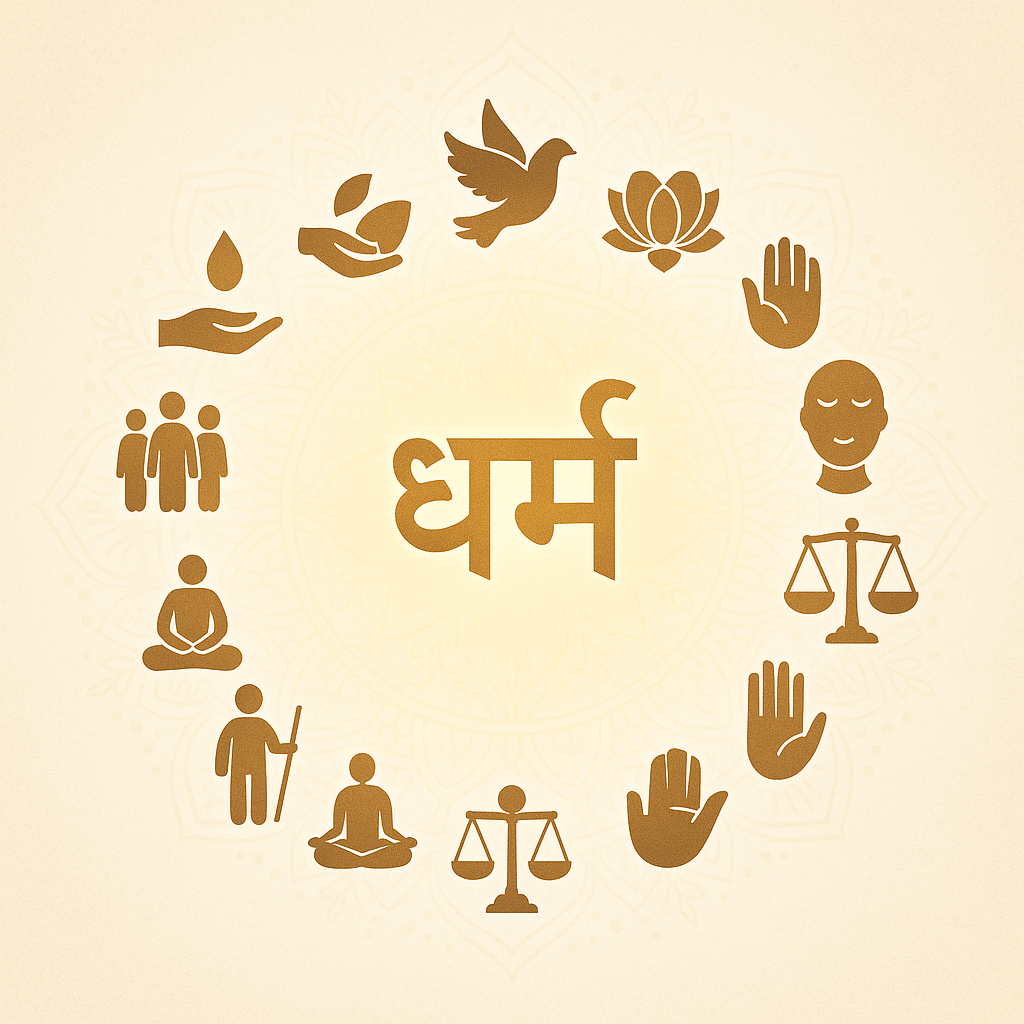
Principles of Religion (Dharma)
The principles of religion are the fundamental rules and guides necessary to maintain balance in human life, society, and nature. These principles form the foundation for individual, social, and spiritual growth. The principles of Dharma have been elaborately described in Indian philosophy and scriptures.
1. Truth
Truth is the primary foundation of religion. It means maintaining honesty in thoughts, words, and actions.
- Truth should be followed in every situation.
- In the Gita, it is said: “Satyaam Bruyat, Priyam Bruyat” (Speak the truth, but speak it pleasantly).
- Truth reflects honesty not only towards others but also towards the soul.
2. Non-Violence
Non-violence means avoiding any form of physical, mental, or emotional harm.
- It symbolizes respect for life.
- It establishes peace and harmony in society.
- Mahatma Gandhi described non-violence as the highest principle of Dharma.
3. Purity
Purity includes both external and internal cleanliness.
- External purity: Cleanliness of body and environment.
- Internal purity: Purity of thoughts, speech, and actions, such as refraining from anger, jealousy, and greed.
4. Compassion
Compassion means showing kindness and sympathy toward all living beings.
- Understanding the suffering of others and helping them is an integral part of religion.
- The concept of “Vasudhaiva Kutumbakam” (The world is one family) is based on compassion.
5. Forgiveness
Forgiveness means letting go of others’ mistakes without harboring resentment.
- It helps maintain inner peace and mental balance.
- According to the Mahabharata, forgiveness is a sign of bravery.
6. Contentment
Contentment means being satisfied with what one has.
- It prevents greed and dissatisfaction.
- It is the root of mental peace and stability.
7. Justice
The purpose of religion is to establish justice.
- It ensures equality and fairness in society.
- Justice applies not only to others but also to oneself.
8. Patience
Patience is the ability to face difficulties calmly.
- It promotes inner stability and tolerance.
- Religion teaches that patience paves the way to success.
9. Asteya (Non-Stealing)
Asteya means not taking what belongs to others — whether possessions or rights.
- It promotes honesty and self-respect.
- The Yoga Sutras mention Asteya as an essential principle of self-purification.
10. Swadharma (Personal Duty)
Every person’s Dharma is determined by their role, status, and responsibilities.
- The Gita says: “Swadharme nidhanam shreyah” (It is better to die performing one’s own duty).
- A person’s duty is toward society, family, and self.
11. Austerity (Tapasya)
Austerity means controlling desires and senses.
- It purifies the soul and strengthens self-discipline.
- Through austerity, a person moves toward spiritual goals.
12. Equality
Equality means treating all individuals without discrimination.
- Religion teaches that discrimination based on caste, color, or status is unrighteous.
- Equality strengthens unity in society.
13. Altruism
Helping others and working for the welfare of society is a fundamental principle of religion.
- Indian culture says: “Paropkaryaaya Punyaya” (Helping others is a virtuous act).
Conclusion
These principles help make life ethical, balanced, and meaningful. They guide the soul toward spiritual growth, bring harmony to society, and promote balance with nature. Following these principles leads to the welfare of both the individual and society.
Dharma and Adharma
Indian philosophy explains Dharma and Adharma as two fundamental forces that guide human life. Understanding their difference is essential for living with morality and responsibility.
Dharma: Definition and Nature
Dharma means following life principles necessary for the welfare of society, individuals, and nature.
- It is based on truth, justice, non-violence, and compassion.
The Purpose of Dharma
- To instill morality and discipline.
- To maintain peace and harmony in society.
- To purify the soul and promote spiritual growth.
Characteristics of Dharma
- Truth (Satya)
- Non-violence (Ahimsa)
- Purity
- Compassion (Daya)
- Justice
Examples of Dharma
- Lord Krishna said in the Gita: “Protection of Dharma leads to welfare.”
- Lord Rama’s adherence to Dharma in the Ramayana — truth, duty, and justice.

Premium Amazon Product
High performance, stylish design and long-lasting quality — a trusted choice for everyday use.
Buy on AmazonAdharma: Definition and Nature
Adharma is the opposite of Dharma. It refers to actions or thoughts harmful to society, individuals, and nature.
- It is based on falsehood, injustice, violence, greed, and selfishness.
Effects of Adharma
- Spread of unrest and disruption.
- Social imbalance and disintegration.
- Decline of morality and spiritual degradation.
Signs of Adharma
- Lies
- Violence
- Injustice
- Greed
- Jealousy and hatred
Examples of Adharma
- The deceit and injustice of Duryodhana and Shakuni in the Mahabharata.
- Ravana’s abduction of Sita, driven by ego and desire.
Main Differences Between Dharma and Adharma
| Aspect | Dharma | Adharma |
|---|---|---|
| Principle | Truth, justice, non-violence, compassion | Falsehood, injustice, violence, greed |
| Objective | Welfare of society and the soul | Self-centered and harmful |
| Effect | Peace, balance, progress | Unrest, imbalance, downfall |
| Basis | Morality, scriptures | Immorality, selfishness |
| Examples | Shri Ram, Yudhishthira, Mahatma Gandhi | Ravana, Duryodhana, Shakuni |
The Struggle Between Dharma and Adharma
- The Mahabharata represents Dharma (Pandavas) vs. Adharma (Kauravas).
- The Ramayana showcases Sri Ram (Dharma) vs. Ravana (Adharma).
The Results of Dharma and Adharma
- A person who follows Dharma attains respect and spiritual progress.
- A person who follows Adharma suffers because of his actions.
Lord Krishna said in the Gita:
“Dharmo rakshati rakshitah” — Dharma protects the one who protects Dharma.
“The end of Adharma is destruction.”
Conclusion
Dharma and Adharma reflect the eternal distinction between right and wrong. Dharma leads to peace, stability, and spiritual growth, while Adharma brings downfall to life, society, and the soul. Following Dharma with right judgment, morality, and compassion is the highest purpose of human life.
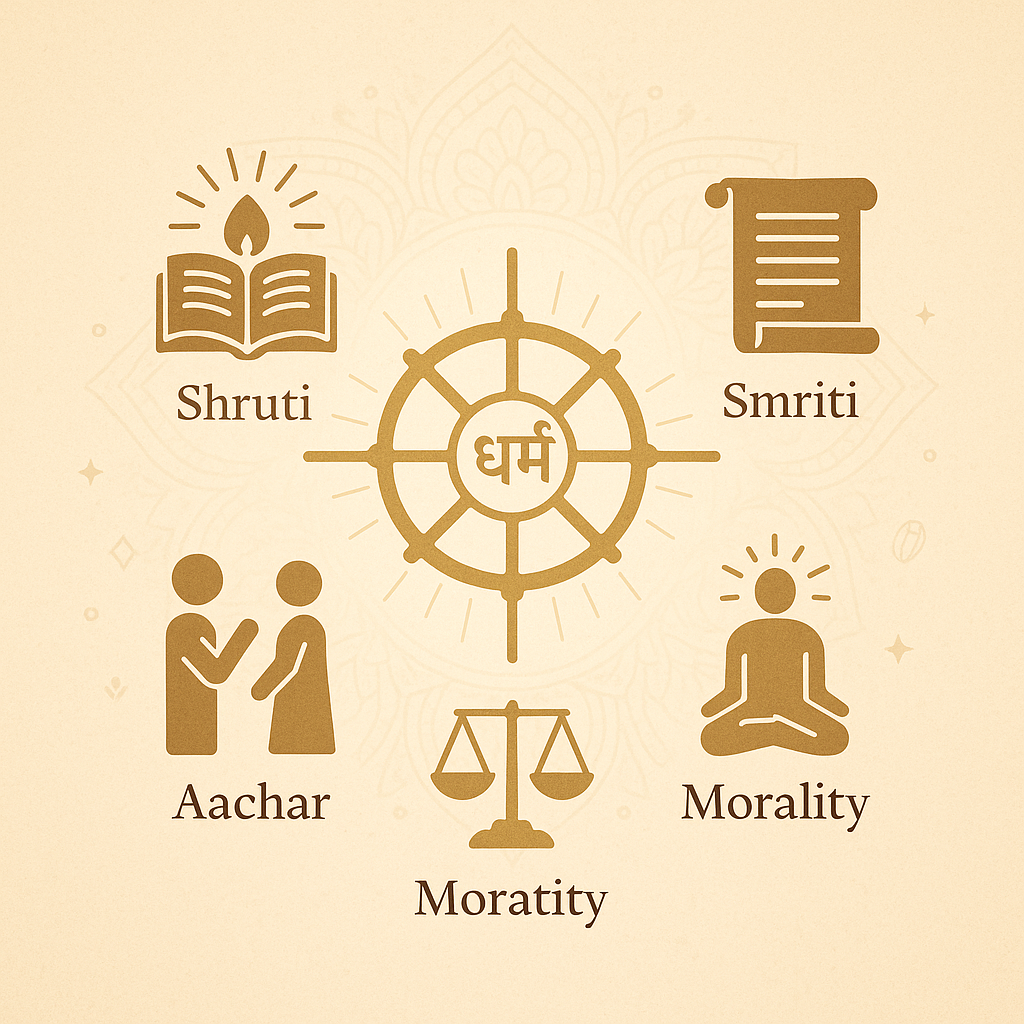
Sources of Religion (Dharma)
Indian philosophy and tradition define the fundamental basis of religion and explain where the knowledge and rules of Dharma originate. These sources guide the moral, spiritual, and social life of individuals and society. Four major sources of Dharma have been described, also known as Dharma Pramana.
1. Shruti (Vedas)
Definition
Shruti means “that which has been heard.” It is the oldest and most authoritative source of religion. Shruti is based on the Vedas, which were heard, realized, and compiled by ancient sages as divine knowledge.
Sources
- Rigveda
- Yajurveda
- Samaveda
- Atharvaveda
Features
- Provides eternal and unchangeable principles of Dharma.
- Forms the basis of rituals, Yajnas, and spiritual practices.
Examples
- Eternal principles like truth, non-violence, compassion.
- Rules of sacrifice and rituals.
2. Smriti (Dharmashastra)
Definition
Smriti means “that which has been remembered.” These texts present the essence of Vedic knowledge in simpler form and systematize social, ethical, and legal duties.
Sources
- Manusmriti
- Yajnavalkya Smriti
- Narada Smriti
Premium Amazon Product
Stylish design, great performance and excellent durability — ideal for everyday use.
Buy on AmazonFeatures
- Interprets Dharma according to time and societal needs.
- Clarifies personal, social, and legal duties.
Examples
- Varnashram Dharma
- Grihastha Dharma
- King's Dharma
3. Aachar (Social Conduct)
Definition
Aachar refers to moral and religious practices accepted by society. It is the practical form of religion.
Sources
- Traditions prevalent in society
- Clan, caste, and regional customs
Features
- Establishes harmony between individual and society.
- Makes religion practical and applicable to daily life.
Examples
- Marriage ceremonies, festivals, and worship practices
- Hospitality, charity, and community service
4. Morality (Conduct of Gentlemen)
Definition
Morality refers to the conduct of noble and virtuous individuals who uphold high moral and religious standards.
Sources
- Teachings and lives of sages, saints, and spiritual leaders
- Ethical traditions of ancient culture
Features
- Presents Dharma at a personal and idealistic level.
- Noble individuals serve as guides for society.
Examples
- Lord Rama's adherence to truth and Dharma
- Mahatma Gandhi’s path of truth and non-violence
Other Sources (According to Time & Society)
Tarka (Logic & Reasoning)
- Analyzing moral concepts through reason.
- Making rational decisions for the welfare of society.
Time & Place
- Dharma evolves according to changing times and conditions.
- Concepts like Yugdharma reflect adaptation to circumstances.
Shastras (Other Texts)
- Mahabharata
- Ramayana
- Bhagavad Gita
- Puranas
Importance of the Sources of Religion
- Social Cohesion: Maintain discipline and unity in society.
- Spiritual Advancement: Show the path to purification and realization of the Supreme.
- Personal Development: Cultivate discipline, restraint, and moral values.
- Flexibility: Keep Dharma relevant across time and societal changes.
Conclusion
The sources of religion serve as guides that provide humanity with the right direction. They shape morality, support social progress, and enrich spiritual growth. Through these four foundational sources of Dharma, human life can become ideal, harmonious, and purposeful.
Modern View of Religion
In the modern era, religion is not limited to rituals and traditions but is seen as a means to uplift the moral, social, and spiritual aspects of human life. The modern view emphasizes universal values, harmony between science and spirituality, and the balance between individual and society.
1. New Meaning of Religion
Personal Morality
- Religion guides individuals to choose between right and wrong.
- Values like truth, non-violence, honesty, and kindness are emphasized.
Universal Humanity
- All religions are seen as sharing common values of love, compassion, and humanity.
Spirituality & Self-Motivation
- Religion is increasingly viewed as a path to inner peace and spiritual awakening.
2. Modern Role of Religion in Society
Equality & Social Justice
- Religion is used as a foundation to reduce discrimination based on caste, gender, and identity.
- B. R. Ambedkar used religion as a tool for equality and justice.
Cultural Integration
- Religion strengthens cultural identity and promotes social harmony.
Religion & Education
- Religion has become a base for moral education, guiding children to develop values.
3. Coordination of Religion and Science
Reason & Logic
- Religion is being viewed through a rational, scientific lens.
- Practices like yoga and meditation are recognized for scientific benefits.
Environmental Protection
- Modern religion considers environmental protection a moral responsibility.
- Ideas like “Trees are Gods” promote eco-consciousness.
4. Religion in the Globalized World
Plurality
- Religion now connects global cultures and traditions.
- Interfaith dialogues strengthen unity.
Humanistic Approach
- Religion is viewed as a symbol of peace, compassion, and coexistence.
5. Religion and Personal Freedom
Individual Choice
- Religion is increasingly considered an individual’s personal matter.
Secularism
- Religion is kept separate from politics to ensure equal respect for all faiths.
6. Challenges Facing Religion
- Religious fanaticism and violence
- Superstition and blind faith
- Social and political misuse of religion
7. The Future of Religion: Reforming Modern Outlook
- Making religion a foundation of humanity and social welfare
- Using technology to spread positive spiritual messages
- Promoting yoga, meditation, and mindfulness digitally
- Adopting values like tolerance, inclusiveness, and equality
Conclusion
The modern view of religion transforms it into a universal guide for moral living, peace, and progress. Rising above conservative ideas, it promotes humanity, equality, and coexistence. In today’s world, religion is not merely a ritualistic concept but a global force that inspires harmony and positive change.
References
Premium Amazon Product
High quality and reliable performance — perfect for everyday use with excellent durability.
Buy on Amazon- Bhagavad Gita – Teachings on Dharma, truth, and spiritual discipline.
- Upanishads – Concepts of self-realization, morality, and universal harmony.
- Vedas – Foundations of Dharma, rituals, and philosophical principles.
- Ramayana – Ideals of duty, righteousness, and moral conduct.
- Mahabharata – Teachings on justice, Dharma vs. Adharma, and ethical living.
- Buddhist Teachings – Principles of non-violence, compassion, and equality.
- Works of Mahatma Gandhi – Ideals of truth, non-violence, and social harmony.
- Scholarly texts on Indian Philosophy and Religion.