
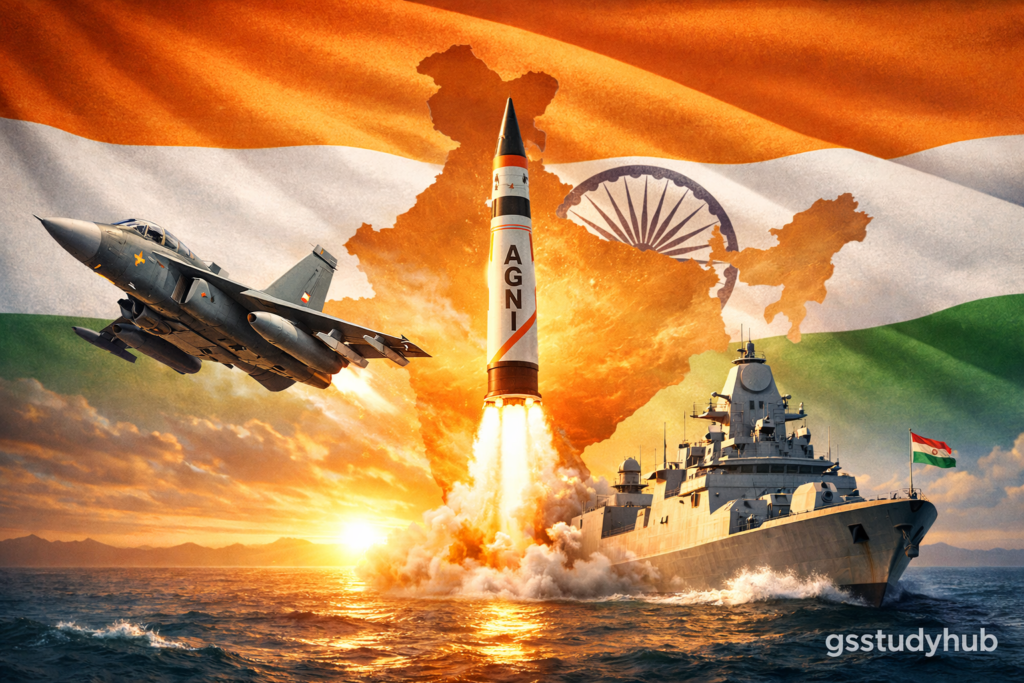
Introduction to India's Defence Modernization: From Dependence to Self-Reliance
For decades, India’s defence sector relied heavily on foreign weapons, technology, and military systems. After independence, a significant portion of the country’s military strength was built on imported fighter jets, tanks, artillery, and missile systems. This dependence not only created a heavy financial burden but also affected strategic decision-making, as external factors often influenced defence preparedness and supply chains.
India’s Defence Modernization has become a central pillar of India’s national security strategy.
Over time, India faced multiple wars, border tensions, and rapidly changing global security challenges. These experiences made it clear that long-term national security could not be guaranteed through dependence on foreign suppliers alone. Defence self-reliance became a strategic necessity rather than just an economic goal. A strong indigenous defence ecosystem not only enhances military capability but also strengthens the country’s economy, technological innovation, and global standing.
In the past decade, India has taken significant steps toward defence modernization. Government initiatives such as “Make in India” and “Atmanirbhar Bharat” have provided new direction to domestic defence production. The country is now developing indigenous fighter aircraft, missile systems, warships, drones, and advanced weapon platforms. This transformation is gradually shifting India’s position from one of the world’s largest arms importers to an emerging defence exporter.
India’s defence modernization is not limited to the purchase of new weapons. It represents a broader transformation that includes indigenous research, greater participation from domestic industries, the growing role of the private sector, and the development of advanced technologies. This journey from dependence to self-reliance is a defining chapter in India’s strategic evolution.
Today, India’s goal is not only to defend its borders but also to build a military and industrial capability strong enough to meet future challenges independently. This vision reflects the true spirit and direction of India’s defence modernization.

Top Study Essential for Competitive Exams
- Ideal for UPSC, SSC, Banking & State exams
- Student-friendly and durable design
- Perfect for long study sessions
- Highly rated by exam aspirants
Why India's Defence Modernization Is Crucial for National Security
India’s defence modernization is not merely a policy decision, but the result of changing global conditions and lessons learned from past experiences. In today’s world, security challenges have become far more complex and technologically advanced than before. Border disputes, terrorism, cyber attacks, space security, and the protection of sea routes have all become important dimensions of national security.
For several decades, India relied heavily on foreign weapons and technologies to meet its military requirements. This dependence placed a heavy burden on the defence budget and often led to delays in supply or the imposition of political conditions during times of crisis. These circumstances made it clear that long-term security requires strong indigenous defence production and the development of modern military technology.
With this understanding, India began moving toward self-reliance in the defence sector. The objective of defence modernization is not limited to purchasing new weapons, but also includes indigenous research, the participation of domestic industries, the involvement of the private sector, and the development of advanced technologies to build a strong and self-reliant defence ecosystem.
Today, India’s goal is to become a military power that can not only defend its borders but also face future technological and strategic challenges independently. This is why defence modernization has become a central element of the country’s national security strategy.
https://vajiramandravi.com/upsc-exam/defence-indigenisation/Changing Global Security Environment
The global security environment has changed dramatically over the past few decades. Traditional warfare, once dominated by tanks, artillery, and large troop formations, has evolved into a technology-driven battlefield. Modern conflicts now involve cyber warfare, drone strikes, artificial intelligence–based weapons, satellite surveillance, and precision-guided missile systems.
For a country like India, which is located in a strategically sensitive region, security challenges come from multiple directions. On the western front, the threat of cross-border terrorism and conventional military tensions has remained a long-standing concern. On the northern borders, changing geopolitical dynamics and territorial disputes have created new and complex challenges for national security planners.
At the same time, major global powers are rapidly investing in advanced military technologies. Stealth fighter aircraft, hypersonic missiles, autonomous drones, robotic combat systems, and network-centric warfare are becoming standard features of modern armed forces. If India fails to keep pace with these technological developments, its military capability could gradually become outdated and less effective.
These realities have made defence modernization an urgent necessity for India. To remain prepared for future conflicts, the country must build a technologically advanced, flexible, and self-reliant military force that can respond to both conventional and emerging threats.
Lessons from Past Conflicts
India’s history includes several wars and border crises that have shaped its approach to national security. These conflicts demonstrated that the bravery of soldiers alone is not enough to ensure victory. Modern equipment, reliable communication systems, and technological superiority are equally critical on the battlefield.
In many instances, dependence on foreign weapons and equipment created logistical challenges. Delays in supply, limitations in technology transfer, and political conditions attached to defence deals often affected preparedness. These experiences highlighted the risks of excessive dependence on external suppliers during times of crisis.
Border tensions and military operations also revealed the importance of continuous modernization. Outdated equipment and legacy systems can reduce operational efficiency and place additional risks on the lives of soldiers. Modern warfare requires speed, precision, and advanced technology to achieve strategic objectives.
The lessons from these conflicts convinced policymakers and military leadership that defence modernization is not a luxury, but a national necessity. This realization led to increased investment in research, the development of indigenous weapons, and the strengthening of the domestic defence industry.
Today, India’s defence modernization efforts are rooted in these historical experiences. They reflect the understanding that only a self-reliant, technologically advanced military can effectively face the challenges of the future.
Major New Defence Deals
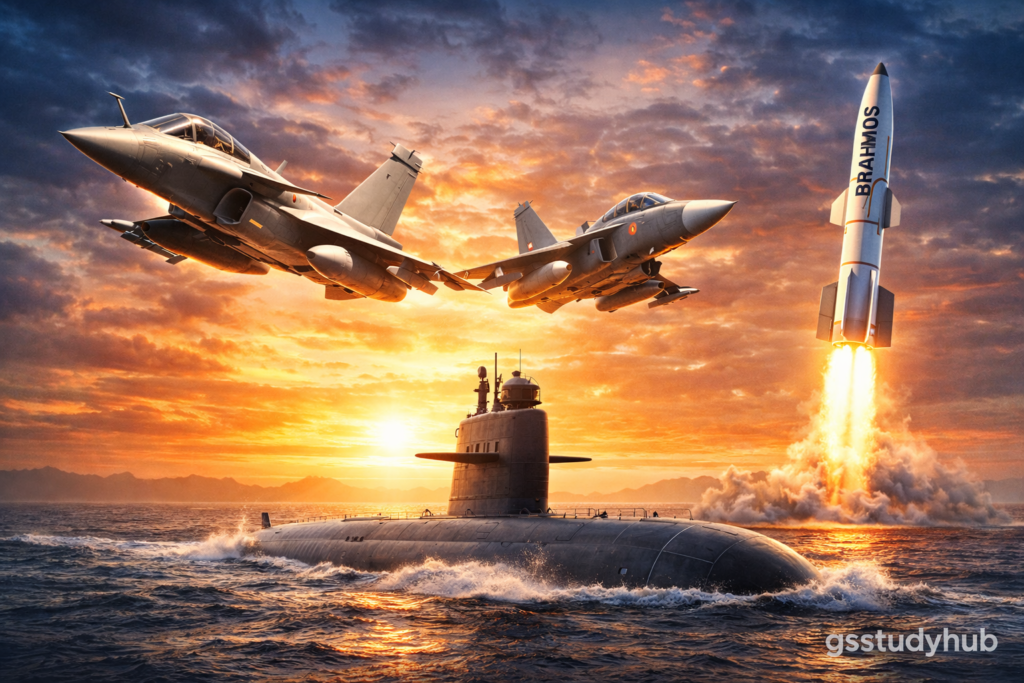
India’s defence modernization is not limited to indigenous production, but also includes strategically important foreign defence deals. These agreements aim to meet the immediate requirements of the armed forces, bridge technological gaps, and strengthen future military capabilities. In recent years, India has signed several key defence contracts for the Air Force, Navy, and Army, giving new direction to its military strength.
Fighter Aircraft and Air Power
For many years, the Indian Air Force relied on aging fighter aircraft, which put pressure on its operational readiness. To address this issue, India focused on acquiring modern multi-role fighter jets. The purchase of Rafale fighter aircraft from France proved to be a significant step in this direction. These advanced jets are equipped with modern radar systems, long-range missiles, and cutting-edge electronic warfare capabilities, greatly enhancing the offensive and defensive strength of the Air Force.
At the same time, India accelerated the development and production of the indigenous Tejas fighter aircraft. The Tejas program represents not only India’s technological progress but also a historic achievement in defence self-reliance. By placing large orders for Tejas aircraft, the government has also strengthened the domestic defence industry.
Naval Expansion and Submarines
With increasing strategic competition in the Indian Ocean region, India has placed special emphasis on strengthening its navy. The protection of sea lanes, safeguarding trade interests, and maintaining regional balance require modern warships and advanced submarine capabilities.
India has accelerated work on indigenous aircraft carriers, modern destroyers, frigates, and advanced submarine projects. The construction of Scorpene-class submarines is considered a major step toward enhancing India’s maritime power. These projects have not only improved naval strength but also boosted the domestic shipbuilding industry.
Army Modernization Projects
Several important modernization programs have also been launched for the Indian Army. The goal is to provide soldiers with modern weapons, better protective equipment, and advanced technological systems.
Special attention has been given to the modernization of tanks, the procurement of new artillery guns, and the development of indigenous artillery systems. In addition, modern drones and surveillance technologies are being integrated into the Army, enabling real-time intelligence gathering and faster operational responses.
The primary objective of these modernization projects is to enhance combat effectiveness, ensure the safety of soldiers, and prepare a capable and modern army for future technological and strategic challenges.
Top Study Essential for Competitive Exams
- Ideal for UPSC, SSC, Banking & State exams
- Student-friendly and durable design
- Perfect for long study sessions
- Highly rated by exam aspirants
India's Defence Modernization and the Rise of Indigenous Weapons
India’s defence modernization is not limited to foreign deals; the development of indigenous weapons has played an equally important role. Over the past few decades, India has achieved significant progress in missiles, fighter aircraft, radar systems, and other advanced weapon platforms. These indigenous projects have not only strengthened military capability but also laid a solid foundation for defence self-reliance.
Missile Programs
India’s missile program is one of the greatest successes of its defence self-reliance efforts. The Integrated Guided Missile Development Programme, initiated under the leadership of Dr. A.P.J. Abdul Kalam, provided the country with several advanced missile systems.
The BrahMos supersonic cruise missile is among India’s most well-known missile systems. It is considered one of the most advanced missiles in the world due to its high speed, precision, and multi-platform capability. BrahMos can be launched from land, sea, and air, significantly enhancing India’s strategic strike capability.
The Agni series of ballistic missiles has provided India with long-range nuclear deterrence capability. Different variants of the Agni missile family strengthen the country’s strategic security and ensure effective deterrence against potential threats.
The Akash surface-to-air missile system has become an important component of India’s air defence network. It is capable of neutralizing enemy aircraft and drones at medium ranges, significantly improving aerial protection.
How Indigenous Missiles Changed India’s Strategy
The development of indigenous missile systems has fundamentally transformed India’s strategic thinking and defence posture. Earlier, the country depended heavily on foreign technology for its strategic capabilities. Today, India possesses an independent and credible deterrent.
The availability of long-range ballistic missiles and precision cruise missiles has strengthened India’s strategic position. It has provided the country with a reliable deterrence capability, making aggressive actions by potential adversaries far more difficult.
In addition, the indigenous missile program has boosted defence research, industrial growth, and technological innovation, leading to long-term improvements in India’s overall military capability.
Indigenous Fighter Jets
India has also taken major steps toward self-reliance in the field of fighter aircraft. The Light Combat Aircraft Tejas is the most prominent example of this effort. Tejas is equipped with modern technologies and represents India’s engineering and design capabilities.
The successful testing and production of Tejas have placed India among the select group of nations capable of developing their own fighter jets. This achievement has reduced foreign dependence and provided momentum to the domestic defence industry.
Looking ahead, India is also working on the Advanced Medium Combat Aircraft (AMCA) project. This will be a fifth-generation stealth fighter jet designed to take India’s air power to a new level.
Make in India in the Defence Sector
The “Make in India” initiative has played a crucial role in promoting indigenous manufacturing in the defence sector. Under this policy, the government has encouraged domestic companies to participate in defence production.
Earlier, most defence manufacturing was limited to government-owned enterprises. However, the role of the private sector has grown significantly in recent years. Many Indian companies are now involved in producing defence equipment, drones, electronic systems, and weapon platforms.
Indigenous manufacturing not only reduces dependence on foreign imports, but also creates employment opportunities, encourages technological innovation, and strengthens the national economy.
Today, the “Make in India” initiative and the broader self-reliance strategy are playing a vital role in transforming India into a strong and self-sufficient military power.
Impact of India's Defence Modernization on Global Position
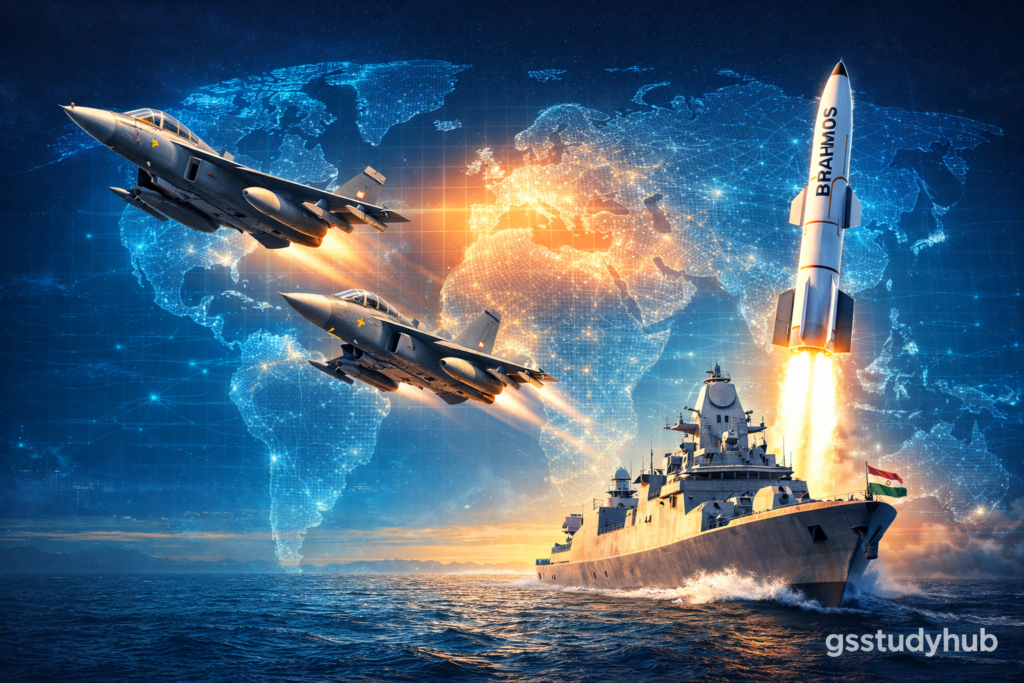
India’s defence modernization is not limited to enhancing military capability; it has also strengthened the country’s global standing and strategic influence. The development of indigenous weapons, acquisition of advanced military technologies, and growing international cooperation have positioned India as a responsible and emerging military power on the world stage.
Today, India is not only moving toward meeting its own security needs, but is also establishing a presence in the global defence market. At the same time, strategic partnerships with major powers have further enhanced India’s international position.
India as a Defence Exporter
In recent years, India has made significant progress in defence exports. A country once known as one of the world’s largest arms importers is gradually emerging as a defence exporter.
India has begun exporting missile systems, radar equipment, patrol vessels, light helicopters, and various defence platforms to several friendly nations. These exports have not only increased national revenue but have also enhanced India’s technological credibility and reputation in the global market.
The growth in defence exports has also benefited domestic industries. It has created new employment opportunities, encouraged technological innovation, and strengthened the national economy. The government aims to position India among the world’s leading defence exporters in the coming years.
Strategic Partnerships
India has developed strategic defence partnerships with several major countries to strengthen its military capabilities. Cooperation with the United States, France, Russia, Israel, and other nations has provided India with access to modern technology, training, and joint military exercises.
Defence agreements and joint exercises with the United States have given new direction to India’s strategic capabilities. Cooperation with France in fighter aircraft and naval systems has strengthened India’s air and maritime power. Meanwhile, Russia has long been a key defence partner, providing several critical military platforms and technologies.
The purpose of these strategic partnerships is not limited to purchasing weapons. They also focus on technology transfer, joint research, and production collaboration to build long-term military and industrial strength.
Today, India’s global position reflects a nation that is not only securing its own interests but also playing an important role in maintaining international security and stability.
https://en.wikipedia.org/wiki/Ministry_of_Defence_(India)
Top Study Essential for Competitive Exams
- Ideal for UPSC, SSC, Banking & State exams
- Student-friendly and durable design
- Perfect for long study sessions
- Highly rated by exam aspirants
Challenges in india's Defence Modernization
India has made significant progress in defence modernization, but this journey also involves several important challenges. The development of modern military technologies, procurement of advanced weapons, and strengthening of indigenous production systems are complex and expensive processes. They require long-term planning, stable budgets, and technological self-reliance.
Defence modernization is not only a military issue but also an economic and technological challenge. Budget limitations, technology gaps, insufficient investment in research, and dependence on foreign suppliers can all affect the pace of modernization.
Budget Constraints
One of the biggest challenges in defence modernization is limited budget availability. Modern weapons, fighter aircraft, submarines, and advanced missile systems are extremely expensive to acquire and maintain.
A large portion of the defence budget is spent on salaries, pensions, and operational costs. As a result, the funds available for new equipment and technological upgrades often remain limited.
In addition, economic conditions, social welfare programs, and infrastructure development priorities also influence defence spending. The government must balance these competing needs, which can sometimes slow down the pace of defence modernization.
Technology Gaps
Developing advanced defence technology is a long and complex process. In several critical areas, India still depends on foreign technology, such as advanced jet engines, stealth systems, high-end electronics, and certain strategic platforms.
This technological dependence can lead to delays in projects or increased costs. Relying on foreign suppliers may also affect strategic autonomy, as supply chains or cooperation can be disrupted during times of crisis.
However, India has started taking steps to reduce these technology gaps through indigenous research, greater participation of startups, private sector collaboration, and stronger defence research organizations. Achieving full technological self-reliance will require time, consistent investment, and sustained policy support.
Despite these challenges, India’s defence modernization is gradually moving in the right direction. With better budget management, continued technological development, and policy reforms, the country can emerge as a fully self-reliant and modern military power in the coming years.
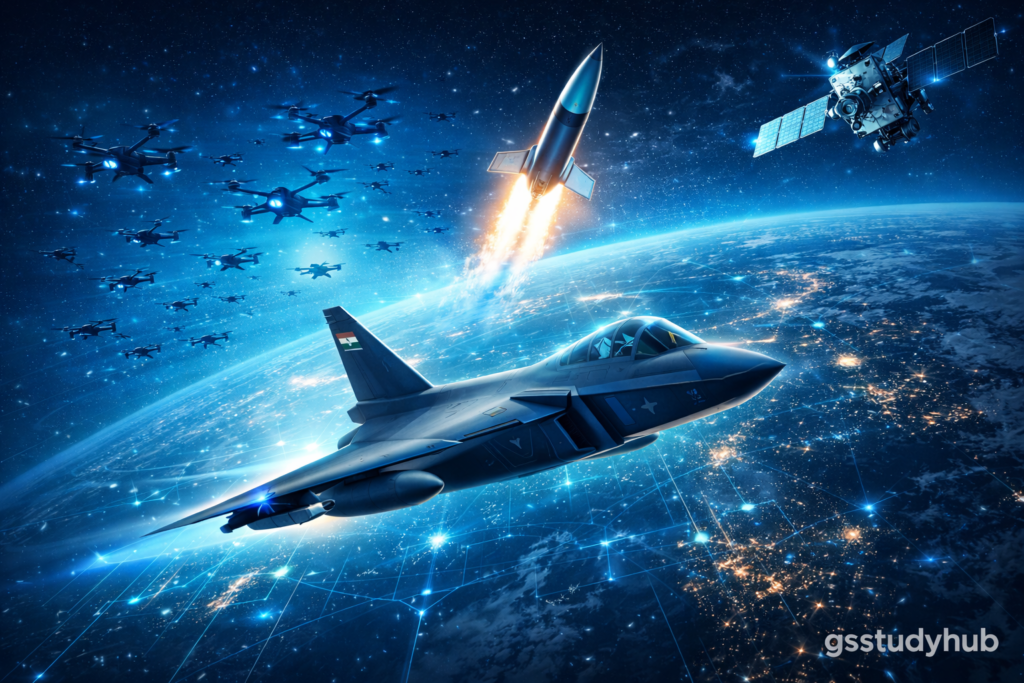
Future of India's Defence Modernization
Over the next 10 to 20 years, India’s defence modernization is expected to become a central pillar of the country’s national security strategy. Rapidly changing global politics, the emergence of new military technologies, and evolving security threats are pushing India to become a more capable, modern, and self-reliant military power.
In the coming years, India’s focus will not be limited to the purchase of new weapons. Greater emphasis will be placed on indigenous research, the development of advanced technologies, and making the domestic defence industry globally competitive. The government aims to achieve self-reliance in the defence sector and position India among the world’s leading defence manufacturers and exporters.
Future priorities will include artificial intelligence, robotic combat systems, hypersonic missiles, quantum communication, cyber security, and space-based defence capabilities. These technologies are expected to shape the nature of future warfare, which is why India is increasing its investment in these areas.
For the Air Force, the development of fifth-generation indigenous fighter aircraft, advanced drones, and network-centric warfare systems will redefine India’s air power. In the naval domain, modern aircraft carriers, nuclear-powered submarines, and long-range maritime surveillance systems will strengthen India’s maritime security.
For the Army, future plans will focus on lighter and more mobile combat platforms, automated weapon systems, smart artillery, and real-time surveillance technologies. These advancements will improve decision-making speed and precision on the battlefield.
In addition, the role of private companies, startups, and research institutions will become increasingly important in the defence sector. Through innovation, technological collaboration, and international partnerships, India aims to build a defence industry that is globally competitive.
Defence exports will also be a major component of future strategy. India’s goal is to become one of the world’s leading defence exporters by supplying indigenous weapons and technologies to friendly nations.
Overall, the future of India’s defence modernization will be driven by technological self-reliance, global partnerships, indigenous production, and strategic vision. If these plans are successfully implemented, India could emerge as a powerful, modern, and self-sufficient military force in the coming decades.

Top Study Essential for Competitive Exams
- Ideal for UPSC, SSC, Banking & State exams
- Student-friendly and durable design
- Perfect for long study sessions
- Highly rated by exam aspirants
Conclusion: The Road Ahead
India’s defence modernization is not limited to the purchase of weapons or technological upgrades. It has become a symbol of the country’s strategic thinking, economic growth, and national confidence. The reforms of recent years demonstrate that India is moving away from foreign dependence and progressing toward an indigenous, self-reliant defence system.
The future of India’s Defence Modernization will define India’s strategic position in the coming decades.
New defence deals, the development of indigenous weapons, strategic partnerships, and the growing participation of domestic industries are all contributing to the transformation of India into a stronger military power. This transformation is not only modernizing the armed forces but also promoting employment, technological innovation, and industrial growth.
However, challenges such as budget constraints, technology gaps, and global competition still remain. With the right policies, consistent investment, and long-term vision, these obstacles can be overcome.
In the coming years, if India continues to focus on indigenous research, private sector participation, and the development of advanced technologies, it will not only be able to defend its borders effectively but also emerge as a major global defence power.
India’s defence modernization is a journey from dependence to self-reliance, from imports to innovation, and from limited capabilities to global influence. This journey will shape the country into a secure, strong, and confident nation in the years ahead.
https://gsstudyhub.com/daily-current-affairs-08-february-2026/Frequently Asked Questions (FAQ)
1. What is India's defence modernization?
India’s defence modernization is the process of strengthening the country’s military capabilities through modern technologies, advanced weapons, and indigenous defence systems. Its main objective is to prepare the armed forces for future security challenges.
2. Why did India need defence modernization?
Changing global security conditions, border tensions, terrorism, and the emergence of new military technologies made it necessary for India to modernize its armed forces. Reducing dependence on foreign weapons has also been a key reason.
3. What are some major indigenous defence projects in India?
Some major indigenous defence projects include the Tejas fighter aircraft, Agni and Akash missile systems, the BrahMos cruise missile, indigenous aircraft carriers, and various drones and radar systems.
4. What is the role of “Make in India” in the defence sector?
The “Make in India” initiative aims to promote domestic defence manufacturing. It helps reduce dependence on foreign imports, creates employment opportunities, and strengthens the local defence industry.
5. Does India export defence equipment?
Yes, India has significantly increased its defence exports in recent years. The country now exports missile systems, radar equipment, helicopters, patrol vessels, and other defence platforms to several friendly nations.
6. What are the main challenges in India’s defence modernization?
Major challenges include budget constraints, dependence on foreign technologies, limited investment in research, and increasing global competition in the defence sector.
7. What will be India’s defence strategy in the coming years?
In the future, India’s defence strategy will focus on indigenous production, artificial intelligence, drone technology, hypersonic missiles, cyber security, and space-based defence systems. These advancements will help India become a modern and self-reliant military power.
References
- Ministry of Defence, Government of India. Annual Report. https://mod.gov.in
- DRDO (Defence Research and Development Organisation). Official Website. https://www.drdo.gov.in
- Indian Air Force. Official Website. https://indianairforce.nic.in
- Indian Navy. Official Website. https://indiannavy.nic.in
- Stockholm International Peace Research Institute (SIPRI). Military Expenditure and Arms Transfers Database. https://www.sipri.org
- International Institute for Strategic Studies (IISS). The Military Balance. https://www.iiss.org
- Press Information Bureau (PIB), Government of India. Defence News Releases. https://pib.gov.in