
Introduction: A Personal Journey to Understand the Monsoon
Indian Monsoon Crisis 2026 is emerging as one of the most serious climate challenges affecting India’s rainfall, agriculture, and economy. In India, the monsoon is not just a season—it is the backbone of life, influencing food production, water resources, and the livelihood of millions.
First Experience with Unusual Rainfall
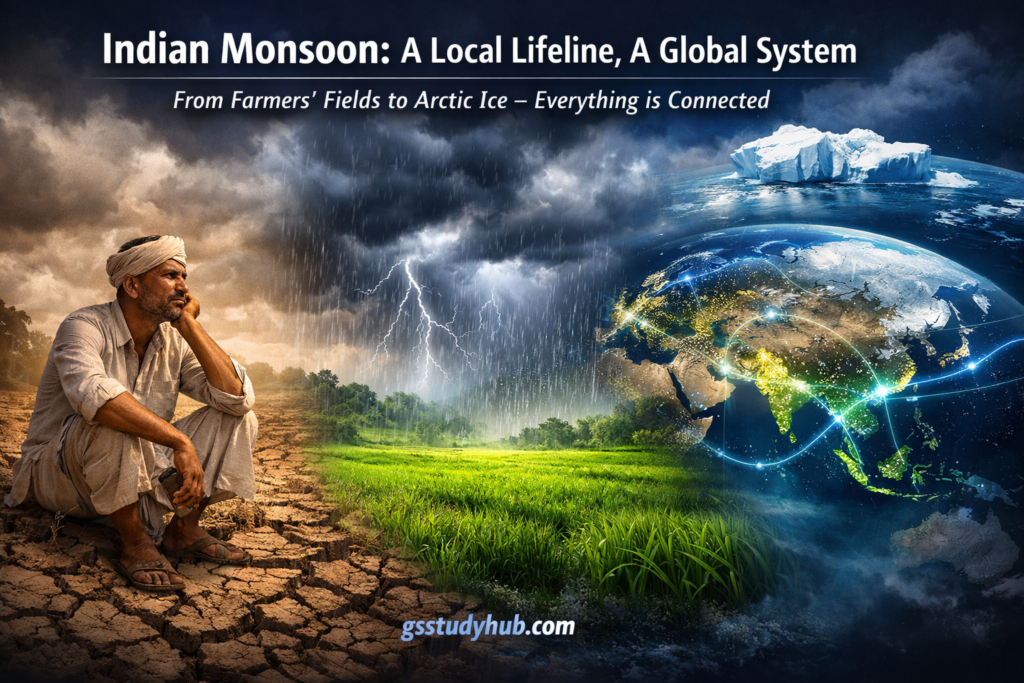
It was a typical summer season, and like every year, I was eagerly waiting for the arrival of the monsoon. Usually, by the end of June, rainfall would begin, bringing relief from the intense heat. However, that year was different. Clouds filled the sky, but rain refused to fall.
Days passed, and the fields started drying up. Farmers grew increasingly worried as their crops depended entirely on timely rainfall. In some places, there were sudden heavy showers, while in others, there was complete dryness. This uneven and unpredictable rainfall pattern was something I had never seen before.
This unusual experience raised an important question in my mind—was this just a natural variation, or was there a larger force at work? That question became the starting point of my journey to understand the Indian monsoon.
Curiosity About Global Climate Changes
This unexpected behavior of the monsoon deepened my curiosity. I began exploring the various factors that influence the Indian monsoon and how it behaves over time.
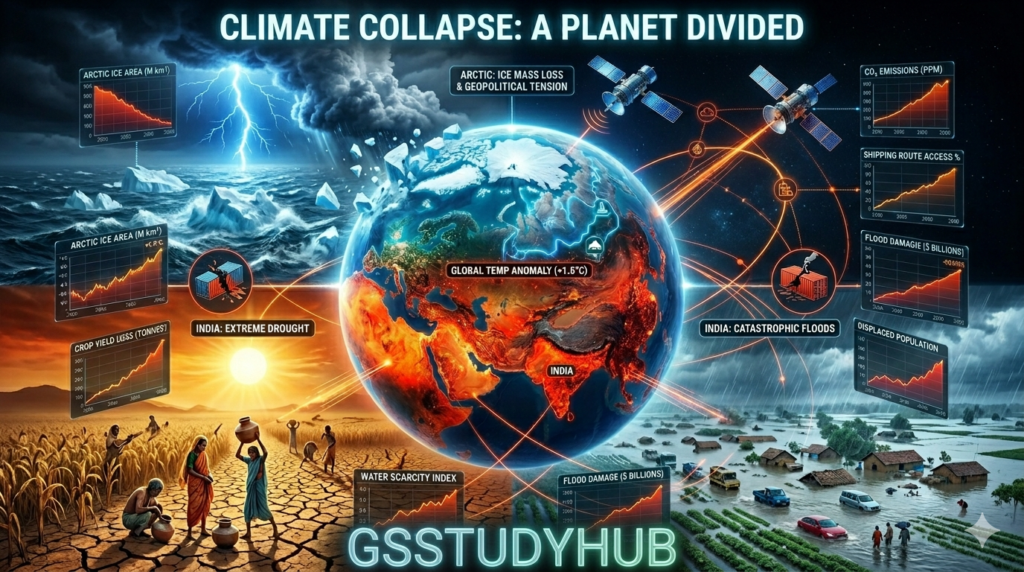
During my research, I came across a surprising fact—the changes happening in the Arctic region, far away from India, could also impact the Indian monsoon. The rapid melting of Arctic ice, rising global temperatures, and ongoing climate change were not just distant events; they were influencing weather patterns across the world.
Monsoon is the backbone of India’s agriculture and economy, influencing rainfall, food production, and water resources. Read the full analysis → Role and Impact of Monsoon in India
As I explored further, I realized that the Indian monsoon is not driven solely by local conditions like temperature and pressure differences. Instead, it is deeply connected to the global climate system. This realization was both fascinating and concerning, as it highlighted how interconnected our planet truly is.
The Indian Monsoon Crisis 2026 is closely linked to global climate change and Arctic warming.
Understanding the Indian Monsoon
The Indian monsoon is one of the most important components of India’s climate system. It plays a crucial role in shaping agriculture, water availability, and the overall economy of the country. The Indian monsoon is not just a weather phenomenon; it is a lifeline for millions of people who depend on rainfall for their survival and livelihood.
What is the Indian Monsoon?
The Indian monsoon is a seasonal wind system characterized by a reversal in wind direction, which brings moisture-laden winds from the ocean to the land. This process leads to widespread rainfall across the Indian subcontinent, mainly from June to September.
The arrival of the Indian monsoon marks a significant phase in India, as it determines agricultural productivity and water supply for the entire year.
How Indian Monsoon Works
The working of the Indian monsoon depends on several natural factors such as temperature differences, air pressure, and wind patterns. These elements interact to create a system that drives rainfall over the region.
Role of Land and Ocean Temperature
During the summer season, the land heats up much faster than the ocean. This creates a low-pressure area over the land and a relatively high-pressure area over the ocean. As a result, moisture-rich winds move from the ocean towards the land, causing rainfall.
Seasonal Wind Reversal
One of the defining features of the Indian monsoon is the seasonal reversal of winds. In summer, winds blow from the sea to the land, bringing rainfall. In winter, the direction reverses, and winds blow from land to sea, leading to dry conditions. This phenomenon is known as seasonal wind reversal.
Importance of Indian Monsoon in India
The Indian monsoon is extremely significant, as it influences not only the climate but also the socio-economic structure of the country.
Agriculture Dependency
A large portion of India’s agriculture depends on the monsoon. Timely and adequate rainfall ensures good crop production, while delayed or insufficient rainfall can lead to droughts and crop failures.
Economic Impact
India’s economy is closely linked to agriculture, making the monsoon a key factor in economic growth. A good monsoon boosts rural income and overall GDP, while a weak monsoon can create economic challenges.
Experts warn that the Indian Monsoon Crisis 2026 could severely impact agriculture and water security.
Water Resources
The monsoon is the primary source of water in India. Rivers, lakes, and groundwater levels are replenished by monsoon rains, making it essential for drinking water, irrigation, and hydroelectric power generation.
The Arctic Region: Earth’s Climate Regulator
The Arctic region, located around the North Pole, is one of the most crucial components of the Earth’s climate system. Although it appears remote and isolated, its influence extends far beyond the polar boundaries. The Arctic acts as a natural regulator of global temperature and weather patterns, making it highly significant for understanding climate change and its global impacts, including on the Indian monsoon.
What is the Arctic Region?
The Arctic region refers to the northernmost part of the Earth, centered around the Arctic Ocean and surrounded by landmasses such as Greenland, northern Canada, Russia, Norway, and Alaska. This region is characterized by extreme cold, vast ice cover, and unique environmental conditions.
For most of the year, the Arctic remains covered in ice, and temperatures often drop well below freezing. It is often referred to as the “Earth’s cooling system” because of its role in maintaining the planet’s temperature balance.
Geographical Features of the Arctic
The geographical features of the Arctic make it distinct from other regions of the world. Its harsh environment and unique landforms contribute significantly to its role in regulating global climate.
Ice Sheets and Glaciers
The Arctic is dominated by massive ice sheets and glaciers, which reflect a large portion of the sun’s radiation back into space. This process, known as the albedo effect, helps in cooling the Earth. However, due to climate change, these ice masses are melting rapidly, reducing the Earth’s ability to reflect heat and contributing to global warming.
Extreme Climate Conditions
The Arctic experiences some of the most extreme climate conditions on Earth. Temperatures remain extremely low, and the region witnesses polar day (continuous daylight in summer) and polar night (continuous darkness in winter). These unique conditions influence atmospheric circulation patterns across the globe.
Why Arctic is Important for Global Climate
The Arctic plays a vital role in maintaining the balance of the global climate system. It helps regulate the Earth’s temperature, influences ocean currents, and affects atmospheric circulation patterns such as jet streams.
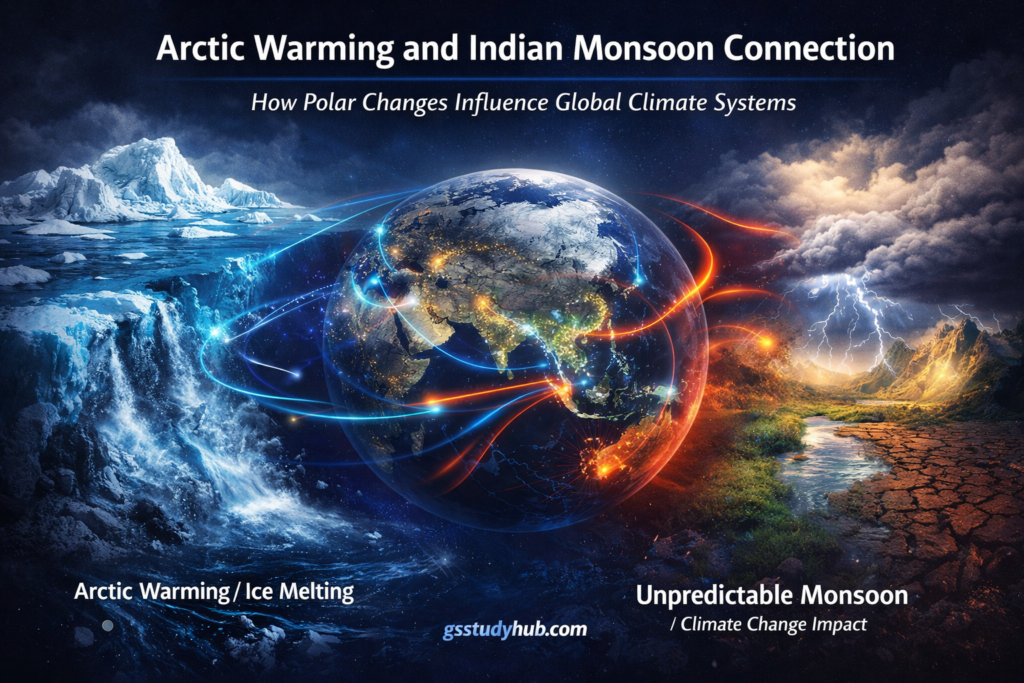
Any changes in the Arctic, such as rising temperatures or melting ice, can disrupt global weather systems. These changes can alter wind patterns and ocean currents, ultimately impacting weather phenomena like the Indian monsoon, storms, and rainfall distribution across different parts of the world.
Climate Change and Arctic Warming
Climate change is one of the most critical global challenges of our time, and its effects are most visible in the Arctic region. The Arctic is warming at a much faster rate than the global average, leading to rapid melting of ice and significant environmental changes. This phenomenon not only affects the polar ecosystem but also disrupts the global climate system, including weather patterns like the Indian monsoon.
India’s climate and monsoon system together control rainfall, agriculture, water resources, and economic growth. Read the full analysis → Importance of India’s Climate and Monsoon
What is Arctic Amplification?
Arctic amplification refers to the process in which the Arctic region warms more rapidly than the rest of the planet. One of the key reasons behind this is the melting of ice. As ice melts, it exposes darker ocean surfaces that absorb more solar radiation instead of reflecting it back into space. This increases heat absorption, which in turn accelerates further warming.
This feedback loop intensifies climate change in the Arctic and has far-reaching impacts on global atmospheric circulation and weather systems.
Causes of Arctic Ice Melting
The rapid melting of Arctic ice is driven by multiple factors, most of which are linked to human activities and global climate change.
Greenhouse Gas Emissions
Human activities such as industrialization, transportation, and energy production have increased the concentration of greenhouse gases like carbon dioxide (CO₂) and methane (CH₄) in the atmosphere. These gases trap heat within the Earth’s atmosphere, leading to global warming. The Arctic, being highly sensitive to temperature changes, experiences accelerated ice melting as a result.
Global Temperature Rise
Over the past few decades, the Earth’s average temperature has been steadily rising. This global temperature increase has a pronounced effect on the Arctic, where warming occurs at an even faster pace. As a result, sea ice and glaciers are melting rapidly, contributing to rising sea levels and increasing climate instability.
Current Situation of Arctic in 2026
By 2026, the impacts of climate change in the Arctic have become increasingly evident. The extent of sea ice has significantly declined, and scientific observations indicate that the region is warming at an unprecedented rate compared to earlier decades.
These changes have raised global concern, as disruptions in the Arctic are influencing jet streams, ocean currents, and atmospheric systems. Such disturbances can lead to irregular weather patterns, including unpredictable monsoon behavior, extreme rainfall, or drought conditions in regions like India.
Connection Between Arctic and Indian Monsoon
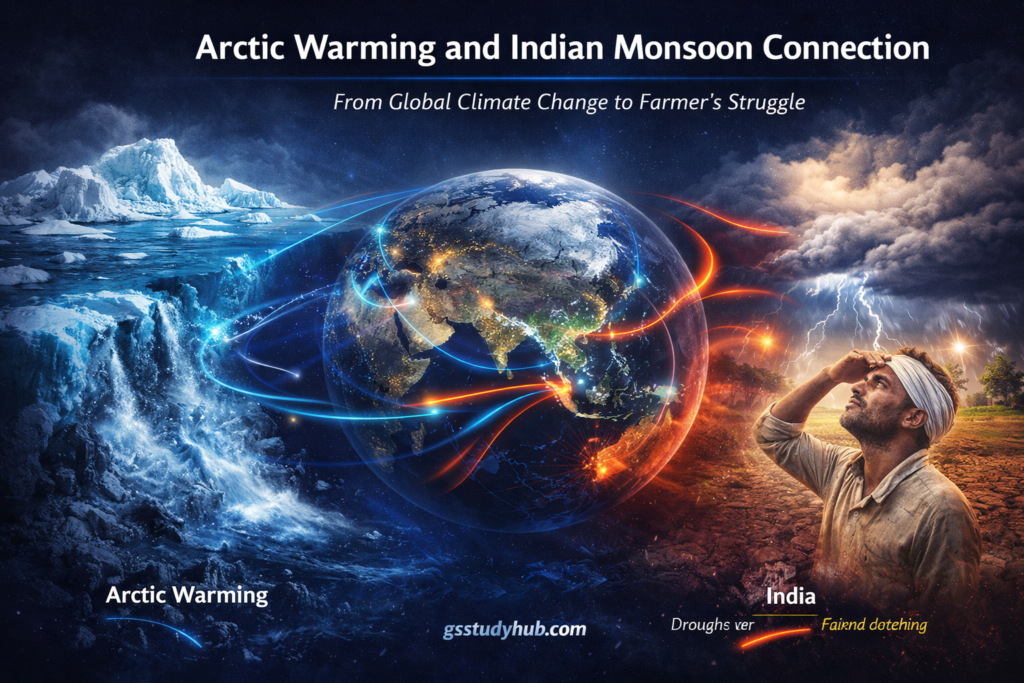
At first glance, the Arctic region and the Indian monsoon may seem completely unrelated. However, scientific research has revealed a strong and complex connection between the two. Changes in the Arctic, especially due to climate change, can influence global atmospheric circulation, which directly affects the behavior, timing, and intensity of the Indian monsoon.
Scientific Link Between Arctic and Monsoon
Scientists have found that rapid warming in the Arctic and the melting of ice disrupt the global climate balance. Since the Indian monsoon depends heavily on temperature differences and pressure systems, any disturbance in the global climate system can significantly impact monsoon dynamics.
Temperature Gradient Changes
The Indian monsoon is primarily driven by the temperature difference between land and ocean. However, Arctic warming alters the global temperature distribution, which can reduce this gradient. A weaker temperature gradient leads to a weaker monsoon circulation, affecting the amount and distribution of rainfall.
When this gradient weakens, moisture-laden winds from the ocean may not move as effectively towards the land, resulting in reduced or uneven rainfall across India.
Jet Stream Disturbance
Melting Arctic ice has a significant impact on jet streams, which are fast-flowing air currents in the upper atmosphere that influence weather systems worldwide. Changes in the Arctic can weaken or shift these jet streams.
Such disturbances can delay the onset of the monsoon or alter its intensity, making rainfall patterns more unpredictable and uneven.
Impact on Indian Monsoon Patterns
The effects of Arctic changes are increasingly visible in the changing patterns of the Indian monsoon. These impacts are not only climatic but also socio-economic in nature, affecting millions of people across the country.
Delayed Monsoon
Due to disruptions in atmospheric circulation and jet streams, the arrival of the monsoon can be delayed. This affects agricultural planning and can lead to reduced crop yields.
Irregular Rainfall
Rainfall patterns have become more erratic in recent years. Some regions experience excessive rainfall, while others face drought-like conditions. This uneven distribution poses serious challenges for water management and agriculture.
Extreme Weather Events
Climate change in the Arctic is contributing to an increase in extreme weather events such as heavy rainfall, floods, heatwaves, and droughts. These events not only disrupt daily life but also have long-term impacts on the economy and environmental stability.
A Story from Ground Reality: When Monsoon Became Unpredictable
The unpredictability of the Indian monsoon is not just a climatic issue—it is a human story that affects millions of lives, especially in rural India. For farmers, the monsoon is not just rain; it is hope, survival, and the foundation of their livelihood. When the monsoon becomes uncertain, it brings not only weather changes but also emotional and economic challenges.
Life of a Farmer Waiting for Rain
In a small village, a farmer prepared his land with great effort, just as he had done every year. He sowed seeds with the hope that the monsoon would arrive on time and nourish his crops. Every morning, he looked at the sky, waiting for dark clouds to gather and bring rain.
Days passed, but the rain did not come. Sometimes clouds appeared but disappeared without any rainfall. At other times, sudden heavy rain caused damage instead of helping the crops. This unpredictability made farming extremely difficult.
For the farmer, everything depended on the monsoon. A delay or failure in rainfall meant not only crop loss but also financial stress and uncertainty about the future. His story reflects the reality faced by millions of farmers across India.
Impact of Monsoon Failure on Rural India
The failure or irregularity of the Indian monsoon has far-reaching consequences in rural India. Since agriculture is the backbone of rural livelihoods, any disruption in rainfall directly affects income and employment.
Crop failures lead to reduced income for farmers, increasing their dependence on loans and pushing them into financial distress. In many cases, people are forced to migrate to cities in search of work.
Water scarcity is another major issue. A weak monsoon affects the availability of drinking water, irrigation, and water for livestock. This creates additional pressure on rural communities.
Thus, the unpredictability of the monsoon is not just an environmental concern—it is a socio-economic challenge that deeply impacts the lives, stability, and future of rural India.
Why This Issue is Important in 2026
In 2026, climate change and Arctic transformations are no longer distant scientific concerns—they have become urgent global challenges. The increasing unpredictability of the Indian monsoon, rising frequency of extreme weather events, and growing economic risks clearly highlight the importance of understanding this issue today.
India’s climate and monsoon system together control rainfall, agriculture, water resources, and economic growth. Read the full analysis → Importance of India’s Climate and Monsoon
Rising Climate Crisis
The global climate crisis is intensifying at an alarming rate. Rising temperatures, melting glaciers, and increasing sea levels are clear indicators of this change. The Arctic region is warming faster than any other part of the planet, which is disturbing global climate systems.
These disruptions are directly influencing the Indian monsoon, making rainfall patterns more irregular and unpredictable. If not addressed in time, these impacts could become even more severe in the coming years.
Impact on Indian Economy
The Indian economy is closely linked to the performance of the monsoon, especially due to its dependence on agriculture. Any variation in the monsoon has direct consequences on production, income, and overall economic stability.
Food Security
Irregular monsoon patterns can significantly affect crop yields, posing a threat to food security. Insufficient or poorly distributed rainfall can reduce agricultural output, leading to shortages and rising food prices.
GDP and Agriculture
Agriculture contributes significantly to India’s GDP and supports a large portion of the population. A strong monsoon boosts economic growth, while a weak or erratic monsoon can slow down the economy and create financial instability, particularly in rural areas.
Global Geopolitical Importance of Arctic
The Arctic region is no longer just a remote icy landscape—it is emerging as a key area of global geopolitical interest. The presence of vast natural resources such as oil, gas, and minerals has attracted the attention of major world powers.
As ice melts due to climate change, new shipping routes are opening, increasing the strategic and economic importance of the region. This has led to growing competition among nations, making the Arctic a focal point of global politics.
Thus, changes in the Arctic are not only environmental in nature but also have significant geopolitical and economic implications, which indirectly affect countries like India and the future of the Indian monsoon.
Challenges Ahead
The ongoing changes in the Arctic and their impact on the Indian monsoon present several serious challenges for the future. These challenges are not limited to climate alone but extend to economic stability, disaster management, and societal resilience.
Uncertainty in Weather Prediction
Climate change is making weather systems more complex and unpredictable. In the past, the timing and intensity of the monsoon could be forecast with relatively higher accuracy. However, today, these predictions have become more uncertain.
Arctic warming and disruptions in jet streams are altering global atmospheric patterns. This makes it difficult for weather prediction models to accurately forecast rainfall, temperature, and seasonal changes. As a result, farmers, policymakers, and disaster management agencies face increasing difficulty in planning and decision-making.
Increasing Natural Disasters
The frequency and intensity of natural disasters are rising due to climate change. Events such as heavy rainfall, floods, droughts, heatwaves, and cyclones are becoming more common and severe.
The unpredictability of the Indian monsoon further intensifies these disasters. Some regions experience sudden and excessive rainfall leading to floods, while others suffer prolonged dry spells and drought conditions.
These extreme events not only threaten human lives but also cause significant economic losses and environmental damage. Addressing these challenges will require improved forecasting systems, better infrastructure, and stronger global cooperation.
Solutions and Way Forward
Addressing the impact of Arctic climate change on the Indian monsoon requires coordinated efforts at both global and local levels. This is not just a regional issue but a shared global challenge that demands immediate and sustained action. By adopting effective strategies, it is possible to reduce risks and build a more resilient future.
Reducing Carbon Emissions
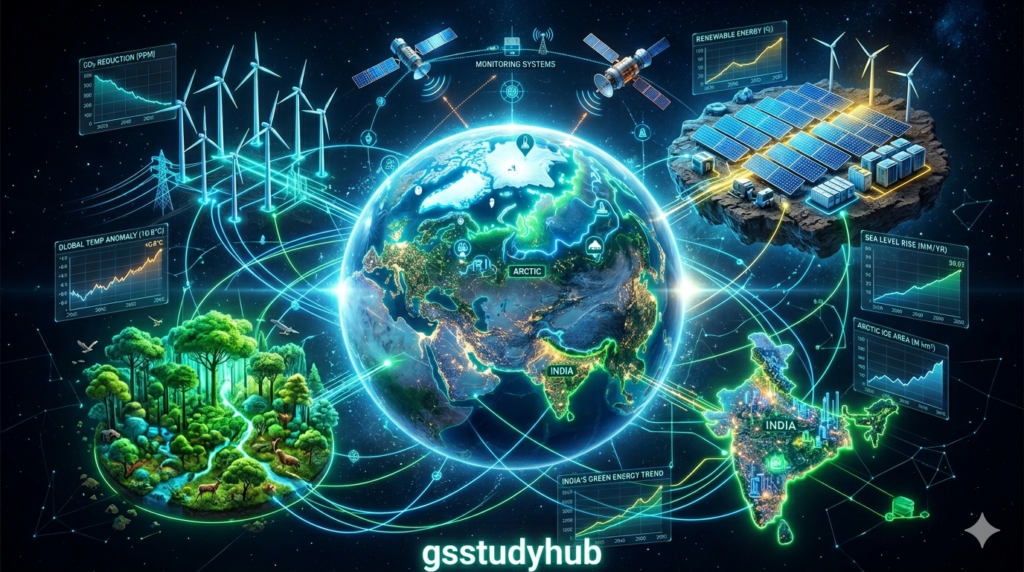
One of the most important steps in tackling climate change is reducing greenhouse gas emissions. Transitioning to renewable energy sources such as solar, wind, and hydro power can significantly lower carbon emissions. Additionally, improving energy efficiency, promoting electric vehicles, and protecting forests can further help in reducing the carbon footprint.
These actions are essential to slow down global warming and limit the rapid changes occurring in the Arctic region.
Improving Climate Research
Advancing climate research is crucial for better understanding the complex relationship between the Arctic and the Indian monsoon. The use of modern technologies such as satellite observations, advanced climate models, and data analytics can improve the accuracy of weather forecasting.
Better research will not only enhance prediction capabilities but also support policymakers in making informed decisions related to agriculture, disaster management, and environmental protection.
International Cooperation
Climate change is a global issue that cannot be solved by any single country alone. International cooperation is essential to reduce emissions, share technology, and implement sustainable practices.
Global agreements such as the Paris Agreement play a key role in bringing countries together to address climate challenges. Nations like India must actively participate in such initiatives and work towards sustainable development goals.
Through collective global efforts, it is possible to protect the Arctic, stabilize the climate system, and ensure a more predictable and sustainable Indian monsoon for future generations.
Stay updated with the most recent national and international developments for competitive exams.
Read Now → Current Affairs – 27 March 2026
Conclusion: A Connected Planet
This entire analysis clearly highlights that our planet is deeply interconnected. Changes occurring in the Arctic region are not confined to the polar areas—they extend their impact to distant regions like India. The Indian monsoon, which supports millions of lives, is now increasingly influenced by global climate dynamics.
This understanding reminds us that climate change is not a local issue but a global challenge that requires collective action. What happens in one part of the world can significantly affect another, emphasizing the need for global awareness and responsibility.
Lessons Learned from Arctic-Monsoon Link
The connection between the Arctic and the Indian monsoon teaches us that natural systems are highly interconnected. A change in one region can influence weather patterns and environmental conditions across the globe.
It also highlights the long-term consequences of human activities that contribute to climate change. These impacts are not immediate but unfold over time, affecting future generations. Therefore, it is essential to adopt sustainable practices and take environmental responsibility seriously.
Understanding the Indian Monsoon Crisis 2026 is crucial for India’s sustainable future.
Future Outlook for India
For India, it is crucial to strengthen policies and strategies to adapt to the changing climate. Improvements in agriculture, water management, and disaster preparedness can help reduce the risks associated with an unpredictable monsoon.
At the same time, promoting clean energy, protecting the environment, and actively participating in global climate initiatives will guide India toward a more sustainable and resilient future.
Ultimately, timely action and collective efforts can help safeguard both the environment and the livelihoods of future generations, ensuring a balanced and stable world.
Frequently Asked Questions (FAQs)
What is the Indian Monsoon?
The Indian monsoon is a seasonal wind system in which winds reverse direction and bring moisture from the ocean to the land, resulting in rainfall across the Indian subcontinent. It mainly occurs between June and September and is vital for agriculture.
Does the Arctic region affect the Indian monsoon?
Yes, changes in the Arctic region, such as ice melting and rising temperatures, influence global climate systems. These changes can impact atmospheric circulation patterns, which in turn affect the Indian monsoon.
What is Arctic warming?
Arctic warming refers to the rapid increase in temperature in the Arctic region, which is happening faster than the global average. This phenomenon is also known as Arctic amplification.
Why is the Indian monsoon becoming unpredictable?
The increasing unpredictability of the Indian monsoon is mainly due to climate change, Arctic warming, jet stream disturbances, and changes in global temperature patterns.
How does the monsoon impact India’s economy?
The Indian economy is heavily dependent on agriculture, which relies on monsoon rainfall. A good monsoon boosts crop production and economic growth, while a weak monsoon can lead to reduced yields and economic challenges.
Can climate change be controlled?
While climate change cannot be completely stopped, its impact can be reduced by lowering carbon emissions, adopting renewable energy, and strengthening global cooperation.
How can India deal with monsoon uncertainty?
India can address monsoon uncertainty by improving weather forecasting systems, strengthening water management, promoting sustainable agriculture, and enhancing disaster management strategies.
References
- India Meteorological Department (IMD) – Official data and reports on the Indian monsoon
- Intergovernmental Panel on Climate Change (IPCC) – Global climate change assessment reports
- NASA Climate Change Reports – Data and analysis on Arctic warming and global climate trends
- National Oceanic and Atmospheric Administration (NOAA) – Research on Arctic and oceanic systems
- World Meteorological Organization (WMO) – Global weather and climate reports
- Arctic Council – Studies and reports on Arctic environmental changes
- Ministry of Earth Sciences, India – Research and data on monsoon and climate science in India
- Scientific Journals (Nature, Science, etc.) – Research papers on Arctic–monsoon connections
- Down To Earth Magazine – Environmental analysis and climate-related articles in India
- The Hindu & The Indian Express – News and editorials on climate change and monsoon trends