
India USA Dairy Trade Policy
Why India Does Not Open Dairy Market for USA
Introduction
India and the United States share strong strategic and economic relations. However, when it comes to agriculture and dairy trade, India has consistently refused to fully open its market for American dairy products. This policy is often questioned by global trade experts, but India considers it a necessary step for protecting its farmers, economy, culture, and long-term food security.
1. India–USA Agriculture Trade Background
Agriculture has always been a sensitive sector in international trade. While the USA is one of the largest agricultural exporters in the world, India remains one of the biggest producers of milk and several food crops. The difference lies in production scale, subsidy structure, and farmer income patterns.
2. Protection of Indian Dairy Farmers
More than 80 million Indian families depend on dairy farming. Most of them are small and marginal farmers owning only two to five cattle. If cheap American dairy products enter Indian markets, local farmers will not be able to compete.
- Price of milk will fall
- Farmer income will decline
- Rural employment will suffer
- Cooperative dairy systems will weaken
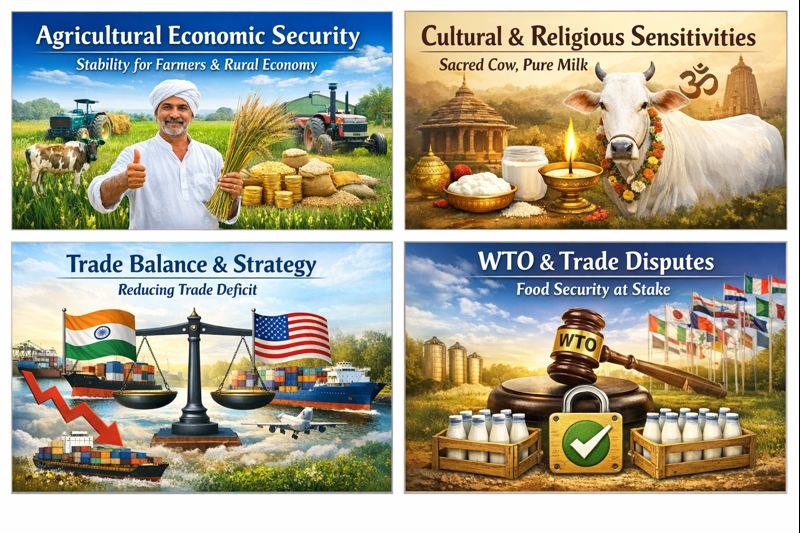
3. Agricultural Economic Security
Agricultural economic security ensures that farmers receive stable income and remain economically independent. India believes that opening dairy imports without protection will destroy rural stability and increase dependence on foreign food supplies.
4. Cultural and Religious Sensitivities
In India, milk is not only a food item but a sacred product. Many Indian consumers insist that cows must be fed vegetarian diets. In the USA, animal-based feed is common, which creates a cultural conflict regarding milk purity.
5. High Tariffs and Policy Restrictions
India applies high tariffs on dairy imports and enforces strict quality and feed certification standards. These policies are designed to prevent unfair competition and protect domestic producers.
6. Trade Balance and Strategic Concerns
India already imports large volumes of technology and defense equipment from the USA. Opening dairy markets would further widen the trade deficit and create strategic dependency.
7. US Demands vs India's Stand
The USA demands lower tariffs and easier market access. India insists on farmer protection and cultural respect. This difference remains unresolved in trade negotiations.
8. WTO and Trade Negotiation Issues
At WTO platforms, India consistently argues that agriculture cannot be treated like industrial goods. Food security and rural livelihoods must receive special protection.
9. Advantages and Risks for India
Advantages of protection include farmer stability, rural income, and food sovereignty. Risks include trade pressure and diplomatic challenges. However, India prioritizes long-term domestic stability.
10. Future Outlook
India may open limited dairy trade in future under strict certification systems. But complete market opening remains unlikely in the near future.
Conclusion
India’s dairy policy is not anti-trade, but pro-farmer and pro-stability. Protecting dairy farmers ensures national food security, rural employment, and cultural harmony.
FAQ
Why does India restrict US dairy imports?
To protect farmers, culture, and food security.
Will India ever open its dairy market?
Only under strict regulatory frameworks.
परिचय
भारत और अमेरिका के संबंध मजबूत हैं, लेकिन कृषि और डेयरी व्यापार के क्षेत्र में भारत ने हमेशा सावधानी बरती है। भारत अपने किसानों, संस्कृति और खाद्य सुरक्षा की रक्षा को प्राथमिकता देता है।
1. भारत–अमेरिका कृषि व्यापार पृष्ठभूमि
अमेरिका कृषि निर्यात में अग्रणी है, जबकि भारत दुनिया का सबसे बड़ा दूध उत्पादक देश है। दोनों देशों की उत्पादन प्रणाली और किसान संरचना पूरी तरह अलग है।
2. भारतीय डेयरी किसानों की सुरक्षा
भारत में 8 करोड़ से अधिक परिवार डेयरी से जुड़े हैं। यदि अमेरिकी सस्ते उत्पाद आए तो भारतीय किसान प्रतिस्पर्धा नहीं कर पाएंगे।
- दूध के दाम गिरेंगे
- किसानों की आय घटेगी
- ग्रामीण रोजगार प्रभावित होगा
- सहकारी डेयरी मॉडल कमजोर होगा
3. कृषि आर्थिक सुरक्षा
कृषि आर्थिक सुरक्षा का मतलब है किसान की आय और देश की खाद्य आत्मनिर्भरता को सुरक्षित रखना। विदेशी निर्भरता भारत की रणनीति के खिलाफ है।
4. सांस्कृतिक और धार्मिक मान्यताएँ
भारत में दूध धार्मिक रूप से पवित्र माना जाता है। गाय के आहार को लेकर भारत की विशेष मान्यताएँ हैं, जो विदेशी डेयरी प्रणाली से मेल नहीं खातीं।
5. उच्च टैरिफ और नीतिगत प्रतिबंध
भारत डेयरी आयात पर भारी शुल्क और कड़े नियम लागू करता है ताकि घरेलू किसानों की सुरक्षा बनी रहे।
6. व्यापार संतुलन और रणनीति
भारत नहीं चाहता कि डेयरी व्यापार से उसका व्यापार घाटा बढ़े और रणनीतिक निर्भरता बने।
7. अमेरिका की मांग और भारत का पक्ष
अमेरिका बाजार खोलने की मांग करता है, जबकि भारत किसान हितों को प्राथमिकता देता है।
8. WTO और व्यापार वार्ता
भारत WTO में कृषि को विशेष सुरक्षा देने की मांग करता रहा है क्योंकि यह जीवन और भोजन से जुड़ा विषय है।
9. भारत के लिए लाभ और जोखिम
लाभ में किसान सुरक्षा, रोजगार और खाद्य आत्मनिर्भरता है। जोखिम में अंतरराष्ट्रीय दबाव शामिल है।
10. भविष्य की दिशा
भविष्य में सीमित और नियंत्रित आयात संभव है, लेकिन पूर्ण खुलापन नहीं।
निष्कर्ष
भारत की डेयरी नीति किसान, संस्कृति और राष्ट्रीय हितों की रक्षा के लिए है। यह नीति देश को दीर्घकालिक स्थिरता प्रदान करती है।
प्रश्नोत्तर
भारत डेयरी बाजार क्यों नहीं खोलता?
किसानों और संस्कृति की सुरक्षा के लिए।
क्या भविष्य में नीति बदलेगी?
केवल नियंत्रित शर्तों पर।