
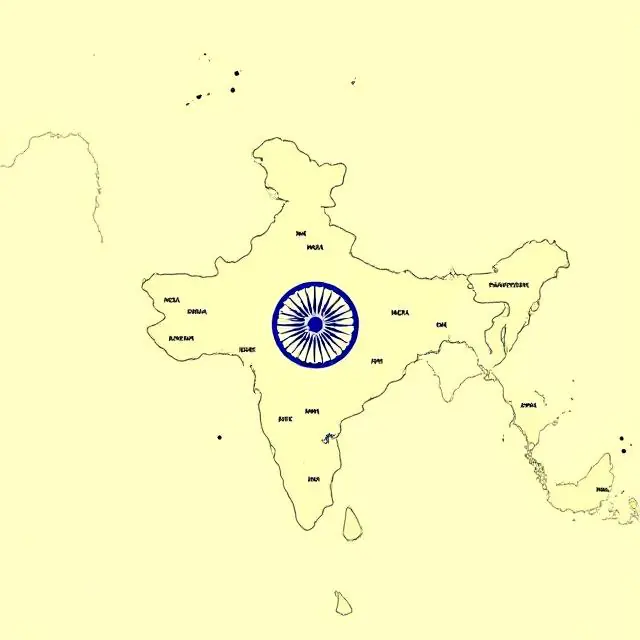
India’s Foreign Policy
Timeline: 1947–2025 • Language: English
This article presents a structured, inspiring, and factual overview of the evolution of India’s foreign policy, covering major phases, events, bilateral relations, global diplomacy, challenges, and the future roadmap.
Introduction
India’s foreign policy has evolved in close connection with its historical, cultural, political, and economic environment. From independence in 1947 to 2025, India has steadily strengthened its position on the global stage. This article explains India’s foreign policy through different phases, governments, global events, and strategic objectives.
1. Early Post-Independence Phase (1947–1964): The Nehru Era
Main Features:
- Establishment of the Non-Aligned Movement
- Announcement of the Panchsheel Principles
- Opposition to colonialism and racial discrimination
Major Events:
- 1947: India’s independence
- 1949: Beginning of the India-China border dispute
- 1954: Panchsheel agreement (India–China joint statement)
- 1955: Bandung Conference (foundation of the Non-Aligned Movement)
Nature of the Foreign Policy:
Under Jawaharlal Nehru, India adopted Non-Alignment, aiming to avoid direct alignment with either bloc of the Cold War (USA or USSR). India projected itself as the voice of developing nations.
2. Era of Wars and Shifting Equations (1964–1980)
Major Events:
- 1962: India-China war
- 1965: India-Pakistan war
- 1971: Bangladesh Liberation War
- 1974: Pokhran nuclear test
Foreign Policy Direction:
- India’s foreign policy became more realistic.
- Signed a “Peace and Friendship Treaty” with the Soviet Union in 1971.
- Relations with the US became tense, particularly after the Bangladesh war and nuclear tests.
3. From Rajiv Gandhi to Economic Liberalization (1980–1991)
Major Events:
- India’s Peacekeeping Force intervention in Sri Lanka (1987)
- Diplomatic complexities in the Tamil issue
- Opposition to Soviet intervention in Afghanistan
Changes in Foreign Policy:
- Focus on cooperation in science and technology
- Efforts to improve relations with the US and Europe
- A new beginning in India-China relations
4. New Economic Policy and a Multipolar World (1991–1999)
Major Events:
- 1991: Economic liberalization
- 1998: Second Pokhran nuclear tests
- 1999: Kargil War
Foreign Policy Strategy:
- Diplomacy aligned with globalization
- Strengthening SAARC
- Gradual improvement in India–US relations
- Maintaining dialogue with China
5. Foreign Policy of an Emerging India (1999–2014)
Main Leaders:
- Atal Bihari Vajpayee
- Dr. Manmohan Singh
Major Initiatives:
- Expansion of the “Look East Policy”
- India–US Civil Nuclear Agreement (2005–2008)
- Expansion of relations with Africa and Latin America
Significant Achievements:
- Recognition of India as an emerging global power
- G20 membership
- Formation of BRICS
6. Modi Era and Assertive Foreign Policy (2014–2025)
Main Features:
- Launch of “Act East Policy”
- “Neighborhood First” policy
- Promotion of the idea of “Vasudhaiva Kutumbakam”
- Strengthened ties with the Indian diaspora
- Mobilizing global support against terrorism
Major Events:
- 2016: Surgical Strike
- 2019: Balakot Air Strike
- 2020: India-China Galwan Valley clash
- 2023: G20 Presidency
Diplomatic Efforts:
- QUAD (India, USA, Japan, Australia)
- I2U2 (India, Israel, UAE, USA)
- Active participation in SCO
7. India in a Changing Global Landscape (2020–2025)
Diplomacy during COVID-19:
- “Vaccine Maitri” initiative
- Medical supplies and humanitarian assistance
Digital Diplomacy:
- Use of social media and virtual summits
- Increased presence at global platforms
India’s Strategic Priorities:
- Energy security
- Counter-terrorism
- Maritime security
- Cybersecurity
- Leadership on climate change
8. India’s Major Bilateral Policies (1947–2025)
India–US Relations:
- 1947–1990: Tense
- Improvement after 2000
- Deep cooperation in defence, trade and technology
India–China Relations:
- 1950–1962: Friendship
- Post-1962: Conflict
- Tensions after the Galwan Valley clash
India–Pakistan Relations:
- Wars in 1947, 1965, 1971, 1999
- Terrorism remains the biggest challenge
- Limited dialogue
India–Russia (Former USSR):
- 1950–1990: Key ally
- Post-2000: Diversified relations
- Cooperation in defence, space and energy
9. India’s Role in Multilateral Forums
United Nations (UN):
- Demand for permanent membership in UNSC
- Participation in peacekeeping forces
BRICS, SCO, QUAD:
- Creating a new global balance
G20 and WTO:
- Leadership in favour of developing nations
10. Challenges and Opportunities
Main Challenges:
- Border disputes (China, Pakistan)
- Terrorism
- Balancing between global major powers
- Domestic political pressures
Main Opportunities:
- Young population
- Soft power (Yoga, culture, Bollywood)
- Technological and digital diplomacy
- Space and defence cooperation
11. Future Outlook (Beyond 2025)
India’s foreign policy aims at global peace, sustainable development, and multilateral leadership. In the coming years, India will:
- Continue efforts to secure a permanent seat at the UN Security Council
- Play a key role in the Indo-Pacific region
- Expand technological diplomacy under “Atmanirbhar Bharat”
Inspiring Learning
The evolution of India's foreign policy shows how consistent principles, strategic adaptability, and long-term vision can shape a nation’s global strength. This journey offers inspiration for students, policymakers, and entrepreneurs — demonstrating that persistence and cooperation can lead to remarkable achievements.
Conclusion
From 1947 to 2025, India’s foreign policy has travelled a long way — from a newly independent nation emerging from colonial rule to a rising global power. Rooted in the principle of “Sarve Bhavantu Sukhinah,” India’s diplomatic journey is poised to grow even stronger in the decades ahead.
Hm