
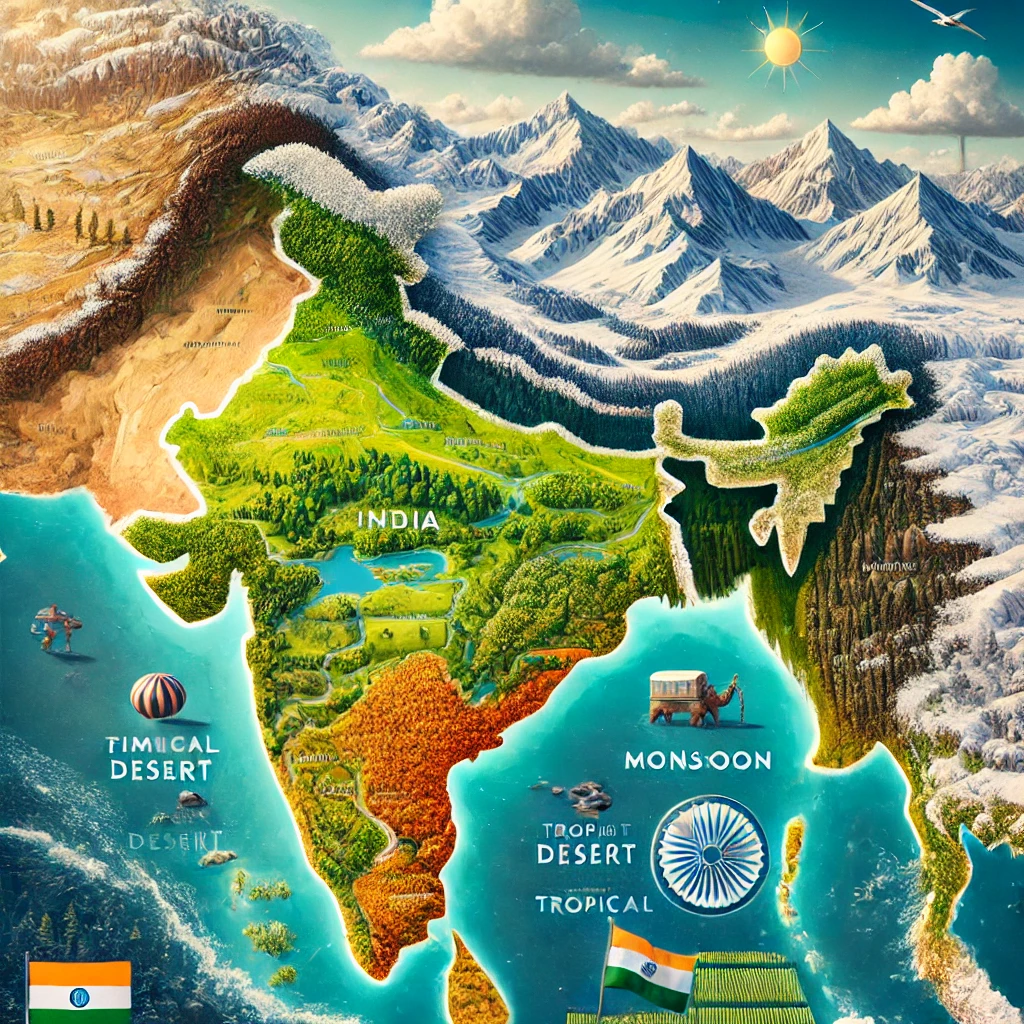
Climate of India
India’s climate is a vast, fascinating story shaped by mountains, oceans, monsoons, and diverse landscapes. While growing up and traveling across different parts of India, I realized that our climate is not just a weather pattern— it is an experience that influences our lifestyle, food, culture, and economy. From the scorching summers of Rajasthan to the snowfall in the Himalayas, every region tells a unique climatic story.
Types of Climate in India
According to the Köppen Climate Classification, India is categorized as a tropical monsoon climate zone. Because India is geographically diverse, it includes several climate types such as tropical, temperate, arid, and mountainous climates.
Main Climatic Zones
1. Tropical Monsoon Climate
- Found in most parts of India.
- High temperatures and heavy rainfall in summer.
- Monsoon from June to September, crucial for agriculture.
2. Dry Climate
- Mainly found in Rajasthan, Gujarat, and parts of Haryana.
- Very low rainfall and extreme temperatures.
3. Temperate Climate
- Common in the hilly regions of North India such as Himachal Pradesh and Uttarakhand.
- Snowfall in winter and pleasant weather in summer.
4. Marine Climate
- Found in coastal regions like Mumbai, Kochi, and Chennai.
- High humidity and moderate temperature throughout the year.
Seasons in India
India experiences four major seasons:
1. Summer (March to June)
- Temperature ranges between 30–45°C.
- Rajasthan, Central India, and North India experience the highest heat.
2. Rainy Season (June to September)
- Southwest monsoon remains active.
- Most of India receives heavy rainfall.
3. Autumn (October to November)
- Monsoon withdraws and pleasant weather begins.
- Clear skies and slightly cool atmosphere.
4. Winter (December to February)
- Temperatures may fall below 10°C in many northern regions.
- Himalayan areas experience snowfall.
Factors Affecting India’s Climate
1. Himalayan Mountains
They block icy winds from Central Asia, giving India a warmer and temperate climate.
2. Monsoon
The southwest monsoon plays a critical role in India’s agriculture and water supply.
3. Coastal Influence
Coastal regions have stable temperatures due to the moderating effect of the sea.
4. Equatorial Effect
Southern India remains warm and humid because of its proximity to the equator.
Importance of India’s Climate
- Agriculture: Indian farming depends heavily on monsoon rainfall.
- Economic Impact: Climate affects industries, food security, and livelihood.
- Tourism: Diverse weather conditions attract tourists from around the world.
India’s climate also shapes its cultural identity—food habits, traditional clothing, celebrations, and even architecture differ from one region to another.
Frequently Asked Questions (FAQ)
1. What type of climate does India have?
India primarily has a tropical monsoon climate with diverse variations such as temperate, arid, and mountainous climates.

High-Quality Amazon Product
Premium quality item with reliable performance and great reviews — available now on Amazon!
Buy on Amazon2. How many seasons are there in India?
There are four major seasons: Summer, Rainy Season, Autumn, and Winter.
3. Which factor affects India’s climate the most?
The monsoon is the most significant factor influencing India’s climate, especially agriculture.
4. Why is South India more humid?
South India is close to the equator, which increases humidity and temperature.
5. Which regions receive snowfall in India?
Northern Himalayan states such as Himachal Pradesh, Jammu & Kashmir, and Uttarakhand receive snowfall in winter.
Types of Climate in India
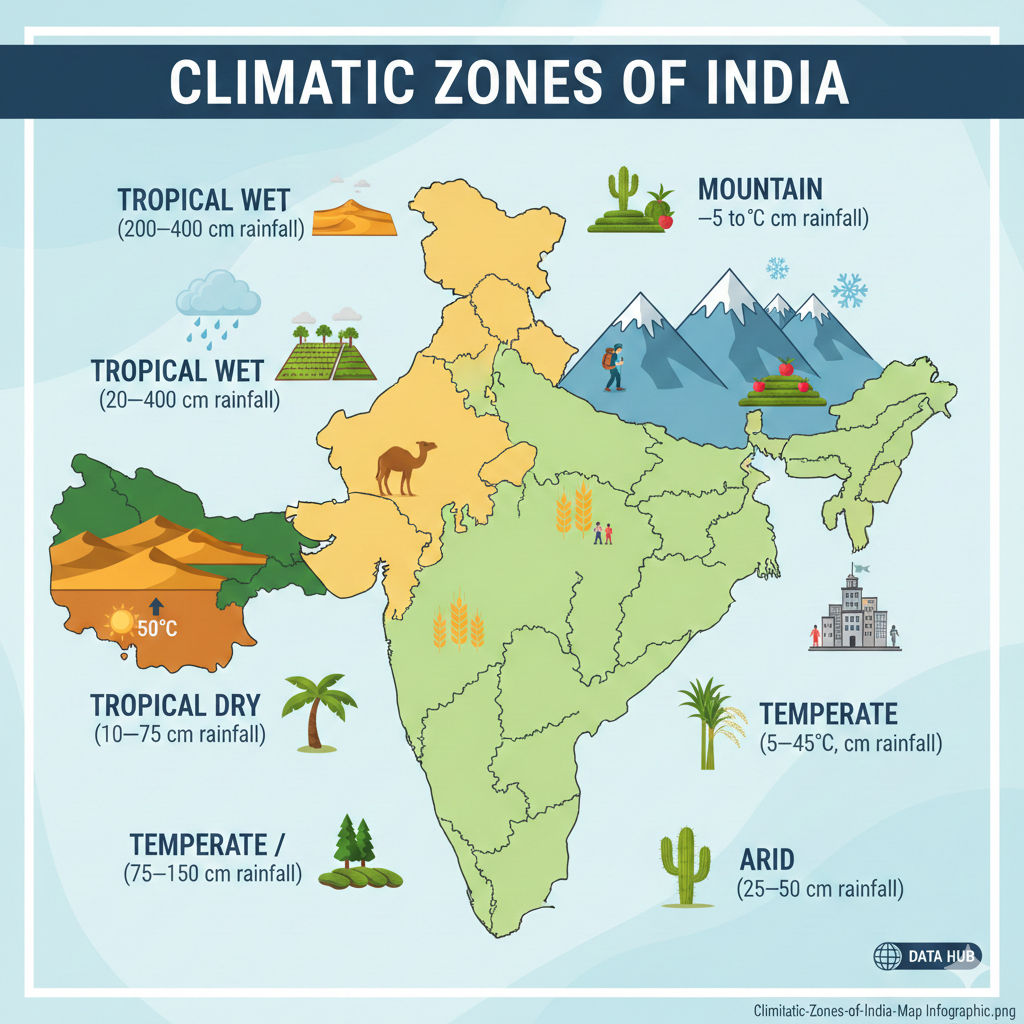
The climate of India is diverse and can be classified into different types. Its classification is based on geographical location, coastline length, mountain ranges, and rainfall distribution. India has five major climate types. Let us understand each of them in detail.
Also Read: Climate of India – Complete Overview
1. Tropical Wet Climate
Places
- West Coast: Kerala, Karnataka, Goa
- Northeast India: Assam, Meghalaya
Properties
- High temperatures (20°C to 30°C) throughout the year.
- Very heavy rainfall (200–400 cm), especially during monsoon.
Importance
- Highly fertile region suitable for water-based crops like paddy and tea.
2. Tropical Dry and Semi–Arid Climate
Places
- Rajasthan, Gujarat, Madhya Pradesh, Maharashtra
Properties
- Very little rainfall (10–75 cm).
- High summer temperature up to 45°C.
- Low temperatures in winter.
Importance
- Suitable for crops requiring less water: jowar, millet, gram.
- Camel rearing and date palm cultivation in the Thar Desert.
3. Tropical and Sub-Tropical Humid Climate
Places
- North Indian Plains: Uttar Pradesh, Bihar, Punjab
- West Bengal
Properties
- Summer temperature between 25°C to 45°C.
- Winter temperature drops to around 5°C.
- Moderate rainfall (75–150 cm) due to monsoon.
Importance
- Major food-growing region (wheat, rice, sugarcane).
- Favorable for dense population and urbanization.
4. Arid Climate
Places
- Western Rajasthan and Gujarat
Properties
- Rainfall between 25–50 cm.
- Day temperatures can reach 50°C and nights become very cold.
Importance
- Desert climate with sparse vegetation.
- Farming supported mainly through irrigation projects like the Indira Gandhi Canal.
5. Mountain Climate
Places
- Himalayan States: Jammu & Kashmir, Himachal Pradesh, Uttarakhand, Sikkim

Top-Rated Amazon Product
Premium quality product with excellent performance and trusted reviews — available on Amazon.
Buy on AmazonProperties
- Winter temperature below 0°C.
- Summer temperature between 15°C and 25°C.
- Rainfall varies with altitude; average 100–200 cm.
- Heavy snowfall in winter.
Importance
- Supports tourism and cultivation of apples, tea, walnuts.
- Source of rivers and freshwater.
Summary of Climatic Zones of India
| Climate Type | Places | Rainfall (cm) | Temperature (°C) |
|---|---|---|---|
| Tropical Humid | West Coast, Northeast India | 200–400 | 20–30 |
| Arid & Semi-Arid | Rajasthan, Gujarat, Maharashtra | 10–75 | 25–45 |
| Temperate (Sub-Tropical) | North Indian Plains | 75–150 | 5–45 |
| Dry Climate | Thar Desert | 25–50 | 25–50 (Day) / 5–15 (Night) |
| Mountain Climate | Himalayan Region | 100–200 | -5 to 25 |
Conclusion
India’s climatic diversity reflects its geographical variations and natural resources. Each climatic zone has its own special characteristics that influence regional agriculture, economy, tourism, culture, and lifestyle. Understanding these climate types helps us appreciate India's natural richness.
Frequently Asked Questions (FAQ)
1. How many major climate types are found in India?
India has five major climate types: Tropical Wet, Dry & Semi-Arid, Sub-Tropical Humid, Arid, and Mountain Climate.
2. Which is the rainiest region in India?
Cherrapunji and Mawsynram in Meghalaya receive the highest rainfall in India.
3. What is the temperature range in mountain climate?
Winter temperature can fall below -5°C, while summer temperature usually ranges between 15°C and 25°C.
4. Which climate zone supports maximum agriculture?
The sub-tropical humid climate of North Indian plains is ideal for agriculture, supporting crops like wheat and rice.
5. Why is the arid region important?
Despite low rainfall, arid regions are important for desert ecosystems, camel rearing, and irrigated agriculture through canal systems.
Seasons in India
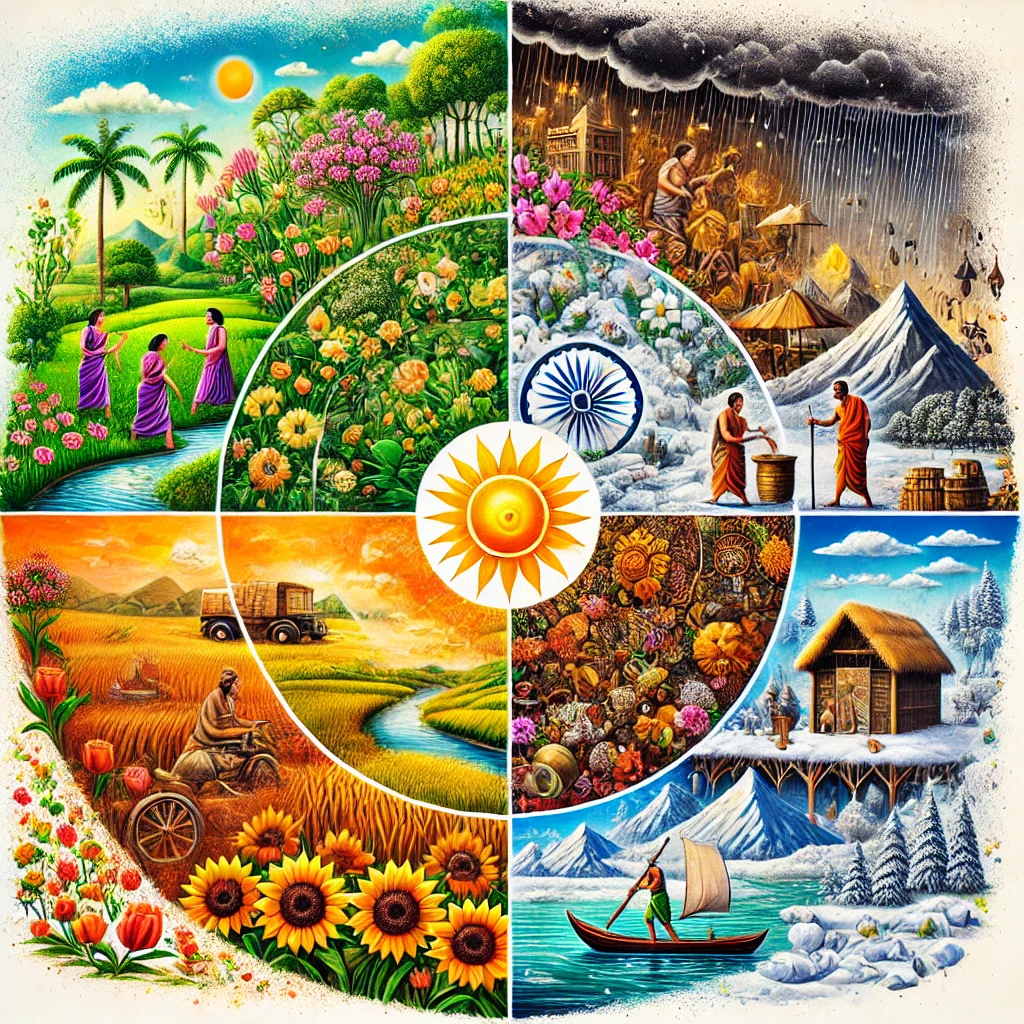
The seasons in India are full of diversity and natural balance. The weather of the Indian subcontinent changes cyclically, making it extremely important for agriculture, the environment, and lifestyle. India mainly experiences four major seasons. Let us know about each of them in detail:
Also Read: Complete Guide on Indian Climate
1. Summer Season
Time
March to June
Properties
Temperature
- Northern India: 30°C to 45°C
- Rajasthan and dry regions: up to 50°C
Heat and Hot Winds
Loo (hot winds) are common in the plains of North India during summer.
Day Length
Days are longer, and the sun remains intense.
Natural Effects
- Water level in rivers and reservoirs falls.
- Wildlife moves to shade to escape the heat.
Importance
- Season for fruits like mango and watermelon.
- The beginning of Kharif crops.
2. Rainy Season / Monsoon
Time
June to September
Properties
South-West Monsoon
The monsoon reaches Kerala in early June and gradually spreads across India, bringing rainfall to most parts of the country.
Amount of Rainfall
- Average rainfall: 100–300 cm
- Mawsynram and Cherrapunji are among the rainiest places in the world.
Weather Conditions
- Cloudy sky and cool atmosphere
- Heavy rainfall in Assam and Western Ghats
- Less rainfall in Rajasthan and Gujarat
Importance
- India’s agriculture depends heavily on the monsoon.
- Especially important for crops like paddy, sugarcane, and jute.
- Rivers, lakes, and reservoirs fill up.
3. Autumn Season
Time
October to November
Properties
Change of Weather
Monsoon withdraws, skies become clear, and mild coolness begins.
Temperature
- Day temperature: 25°C to 30°C
- Nights become cooler
Winds
Dry and cool winds start blowing in Northern India.
Importance
- Sowing season for Rabi crops.
- Festivals such as Dussehra and Diwali are celebrated.
4. Winter Season
Time
December to February
Properties
Temperature
- Northern India: 5°C to 15°C
- Himalayan region: below -5°C
Snowfall
Heavy snowfall occurs in Jammu & Kashmir, Himachal Pradesh, and Uttarakhand.
Cold Winds
Cold northern winds cool the plains.
Day Length
Days become shorter and nights longer.
Importance
- Rabi crops (wheat, mustard) ripen during this season.
- Peak tourism season for snowfall destinations.
Other Seasonal Classifications (Indian Tradition)
According to Indian traditions and Sanskrit literature, seasons are divided into six categories:
- Spring (March–April): Blooming of flowers and natural beauty.
- Summer (May–June): Peak heat.
- Monsoon (July–August): Heavy rainfall.
- Autumn (September–October): Clear skies and bright moon.
- Early Winter (November–December): Beginning of cold.
- Late Winter (January–February): Peak winter season.

Top-Rated Amazon Product
Premium quality item with great performance and trusted customer reviews — available on Amazon!
Buy on AmazonImportance of Seasons in India
Agriculture
- Seasonal cycle governs Kharif and Rabi crops.
- Monsoon is essential for water resources and irrigation.
Cultural and Religious Importance
- Festivals like Holi, Diwali, and Makar Sankranti depend on seasonal changes.
Environmental Importance
- Heat and rain help recharge water sources.
- Cold weather supports crop maturity.
Conclusion
The seasons of India not only make the country’s climate unique but also form the foundation of culture, lifestyle, agriculture, and daily living. These seasonal changes reflect the country’s natural richness and diversity.
Factors Affecting the Climate of India
The climate of India is influenced by various geographical, oceanic, and natural factors. These factors collectively shape the diversity of India’s climate.
1. Latitude
India lies in the tropical and subtropical region. South India experiences hot and humid tropical climate, while North India has extreme seasonal variations.
2. Altitude
Temperature decreases with increasing altitude. Mountain regions like the Himalayas remain much cooler than plains.
3. Distance from the Sea
Coastal areas (e.g., Mumbai, Chennai) have moderate climate, while inland areas (e.g., Delhi, Lucknow) have greater seasonal variations.
4. Wind Patterns
South-west monsoon brings rainfall from June–September, while north-east monsoon brings rain to Tamil Nadu.
5. Himalayas and Mountain Ranges
The Himalayas block cold winds from Central Asia and help bring monsoon rainfall to northern India.
6. Ocean Currents
Warm ocean currents keep coastal areas warm; cold currents lower the temperature.
7. Vegetation Cover
Dense forests like the Western Ghats and Sundarbans help maintain humidity and local temperature.
8. Monsoon
Monsoon is the most important climate factor, determining rainfall and agricultural patterns.
9. Pressure Systems
High and low pressure systems influence wind flow, monsoons, and rainfall distribution.
10. Local Climate and Natural Factors
Deserts raise temperatures, while lakes and rivers help cool surrounding regions.
Conclusion
India’s climate is shaped by complex natural and geographical factors. These elements influence agriculture, water resources, vegetation, and the cultural and economic life of the country.
Frequently Asked Questions (FAQ)
1. How many seasons are there in India?
India experiences four major seasons: Summer, Monsoon, Autumn, and Winter.
2. Which season is important for agriculture?
The monsoon season is crucial because most crops depend on rainfall.
3. Why does South India receive less winter variation?
South India lies near the equator, causing minimal temperature variation.
4. What is the coldest region in India?
The Himalayan region, where winter temperature can drop below -5°C.
5. Which factors mainly affect India’s climate?
Latitude, altitude, monsoon winds, Himalayan barriers, ocean currents, and distance from the sea.
The Importance of India’s Climate
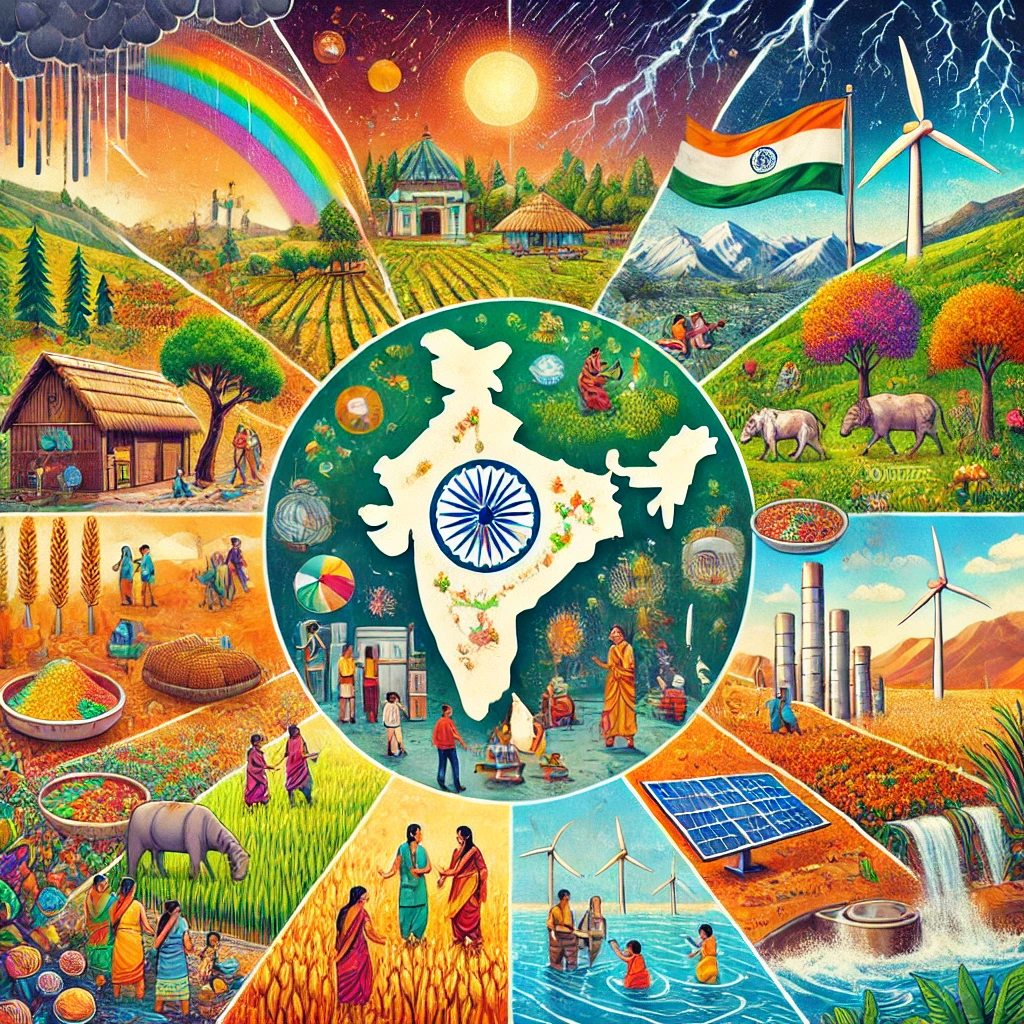
The climate of India plays a crucial role in shaping the country’s geographical, cultural, and economic structure. It affects the environment, agriculture, industry, biodiversity, lifestyle, and economy. Below is a detailed explanation of the importance of India’s climate.
Also Read: Factors Affecting India’s Climate
1. Impact on Agriculture and Food Security
Agriculture Depends on Monsoon
- Nearly 70% of agriculture in India depends on monsoon rainfall.
- Kharif crops (paddy, sugarcane, jute) and Rabi crops (wheat, mustard) rely on seasonal climate conditions.
- Irregular monsoon leads to crop failure and impacts food security.
Crop Diversity and Climatic Zones
- Different regions support different crops based on climate.
- Wheat and rice in Gangetic plains.
- Millets and sorghum in Western India.
- Spices and tea in South India.
2. Management of Water Resources
Importance of Rain and Rivers
- Major rivers like the Ganga, Brahmaputra, Narmada, and Kaveri depend on monsoon rainfall and Himalayan glaciers.
Climate and Water Cycle
- Monsoon replenishes rivers, lakes, groundwater, and reservoirs.
- Climate change is altering rainfall patterns, increasing the chances of floods and droughts.

Featured Amazon Product
High quality and reliable performance — a great choice with positive reviews on Amazon.
Buy on Amazon3. Impact on Biodiversity and Vegetation
Forest Conservation
- Climate supports diverse vegetation and wildlife.
- Regions like Western Ghats, Sundarbans, Himalayas, and Thar Desert have unique ecosystems influenced by climate.
Ecological Balance
- Forests regulate carbon dioxide levels.
- Maintain local climate and promote rainfall.
4. Economic Impact
Agriculture-Based Economy
- A major part of India's economy depends on agriculture, which is climate-dependent.
- Reduced crop production results in rising food prices and inflation.
Tourism Industry
- India’s diverse climate supports tourism across seasons.
- Snowfall in the Himalayas, beaches in coastal regions, Rajasthan’s desert, and Kerala’s backwaters attract tourists.
5. Impact on Energy and Industry
Energy Production
- Hydropower projects depend on river water levels, which rise during monsoon.
- Dry and sunny areas are ideal for solar energy production.
- Wind energy is influenced by seasonal winds.
Climate-Dependent Industries
- Textiles (cotton, jute), food processing, and tea production rely heavily on climate conditions.
6. Impact on Life and Health
Daily Life
- Climate influences food habits, clothing, and lifestyle.
- Cold regions prefer woolen clothes; coastal areas prefer cotton clothes.
Health Effects
- Heatwaves and heat strokes in summer.
- Waterborne diseases during the rainy season.
- Colds and respiratory issues in winter.
7. Social and Cultural Significance
Festivals and Traditions
- Many Indian festivals are connected to the climate and seasonal cycles.
- Holi in spring, Pongal and Makar Sankranti during harvest, Ganesh Chaturthi and Onam in monsoon.
Art and Literature
- Indian literature and poetry often describe seasons deeply.
- Kalidasa’s Ritusamhara beautifully depicts Indian seasonal themes.
8. Climate Change and Challenges
Climate Change
- Global warming is changing India’s monsoon pattern.
- Extremes like droughts, cyclones, and floods are becoming more frequent.
Challenges
- Crop failure and declining water resources.
- Natural disasters impacting lives and economy.
Conclusion
India’s climate plays a vital role in shaping the country’s environment, agriculture, economy, and cultural life. The monsoon-dependent lifestyle and economy highlight the importance of maintaining climate balance. Understanding and managing the impacts of climate change is essential for sustainable development in India.
Frequently Asked Questions (FAQ)
1. Why is India’s climate important?
India’s climate influences agriculture, economy, biodiversity, lifestyle, industries, and water resources.
2. How does monsoon affect India?
About 70% of Indian agriculture depends on monsoon rainfall. Monsoon determines crop success and water supply.
3. How does climate impact biodiversity?
Climate shapes forests and ecosystems like the Western Ghats, Himalayas, deserts, and Sundarbans, each hosting unique biodiversity.
4. What is the economic impact of climate?
Climate affects agriculture, tourism, hydropower, and industries that rely on temperature and rainfall patterns.
5. What are the challenges caused by climate change?
Irregular rainfall, drought, floods, crop failures, water shortages, and rising temperatures pose major challenges for India.

Top Amazon Product
High-quality product with dependable performance and excellent reviews — available on Amazon!
Buy on AmazonReferences
- All climate-related information is based on official data from the India Meteorological Department (IMD).
- Climate classification follows the principles of the Köppen Climate Classification system.
- Agriculture, monsoon, and crop-related details refer to reports from the Ministry of Agriculture and ICAR (Indian Council of Agricultural Research).
- Vegetation and biodiversity references are sourced from the Ministry of Environment, Forest and Climate Change (MoEFCC).
- Tourism and seasonal highlights refer to data available from the Ministry of Tourism (Incredible India).
- Water resource information is based on reports from the Central Water Commission (CWC) and river basin studies.