
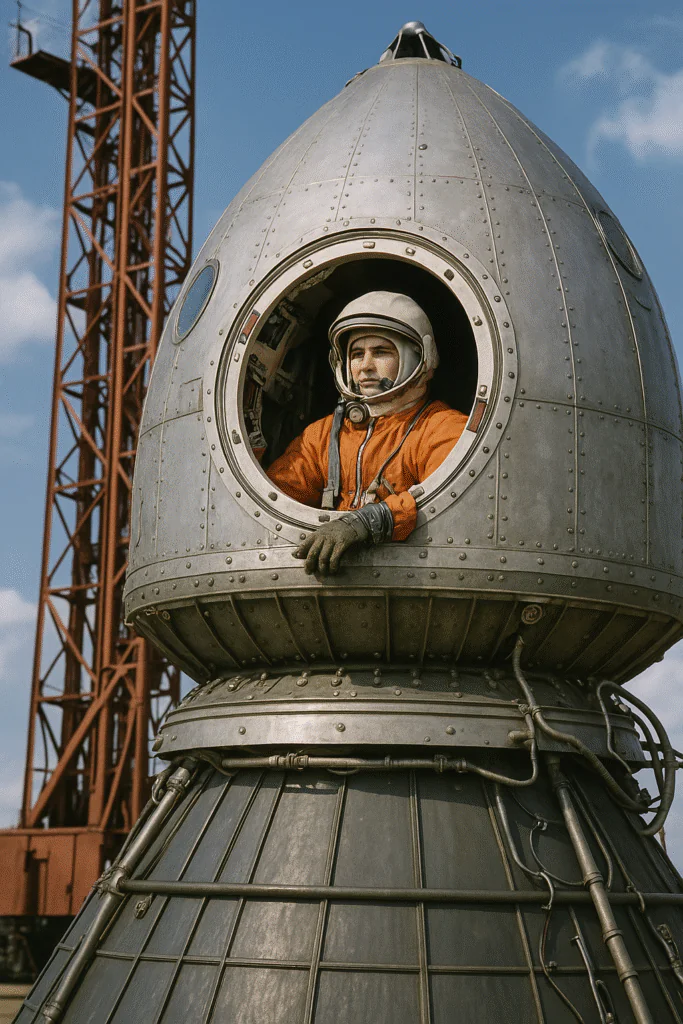
Human History in Space: Investigation of Direction Into Space – A Revolutionary Step (1961)
Human history witnessed a revolutionary moment on 12 April 1961 when, for the first time, a human being travelled beyond Earth. This historical event is remembered as the beginning of human space travel.
1. Background
After the Second World War, a Cold War began between the United States and the Soviet Union. Both countries started competing in science and technology, especially in what became known as the Space Race.
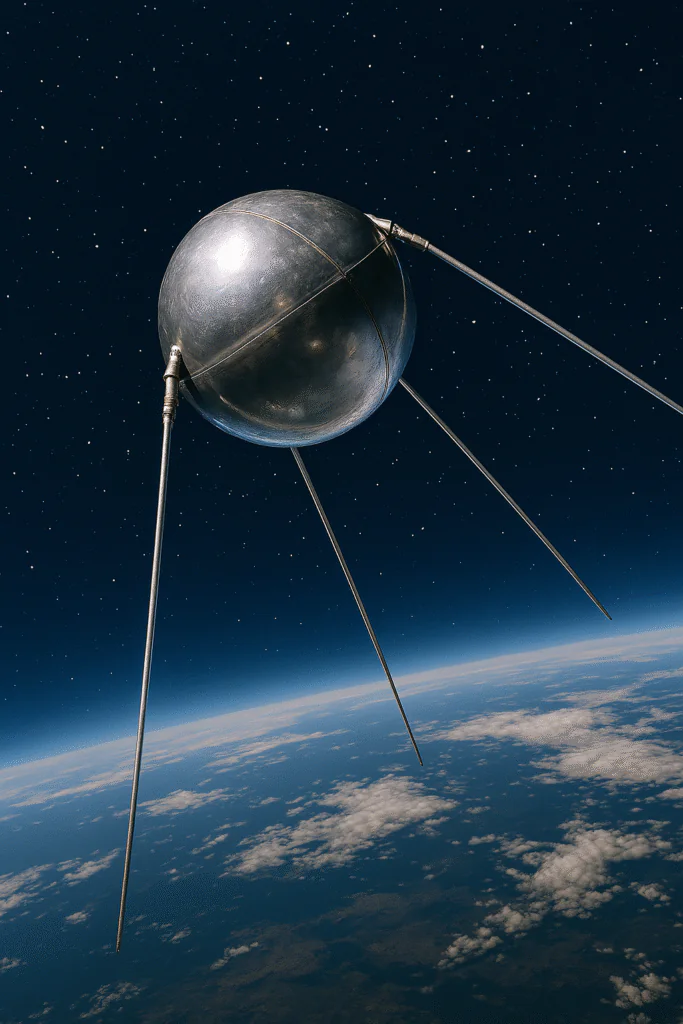
In 1957, the Soviet Union launched the first artificial satellite, Sputnik-1, which became a historic milestone.
2. First Human Space Travel
Key Details
- Passenger: Yuri Gagarin
- Country: Soviet Union (USSR)
- Spacecraft: Vostok-1
- Date: 12 April 1961
- Flight Duration: Approximately 108 minutes
Main Achievements
- He became the first human to travel into the orbit of Earth.
- He began the flight with the iconic shout: “Poyekhali!” (Let's go!)
3. Importance of the Mission
- This mission was humanity’s first step into outer space.
- It proved that humans could travel into space and return safely.
- The success inspired new advancements in science, technology, and education across the world.
4. Global Effect
The success of the Soviet Union gave it an advantage in the Space Race. In response:
- The United States accelerated its space program.
- NASA began sending astronauts into space.
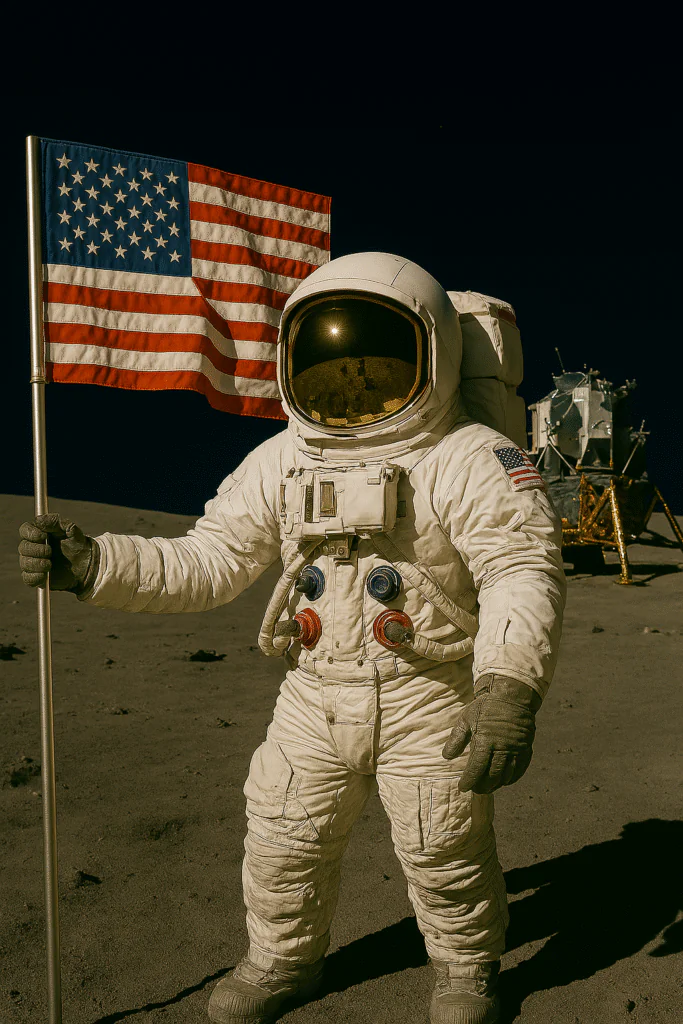
- The competition ultimately led to the Apollo-11 Moon Landing in 1969.
5. Effect on India
- India also began to take interest in space research.
- In 1969, ISRO (Indian Space Research Organisation) was established.
- In 1984, Rakesh Sharma became the first Indian to travel to space.
6. Conclusion
The human space journey of 1961 was not just a technological achievement but a symbol of human courage, scientific curiosity, and the desire to explore the unknown. Yuri Gagarin’s flight remains one of the most glorious events in the history of space science.

Premium Amazon Product – Quality, Comfort & Performance
Discover this thoughtfully designed product built for reliable performance and everyday comfort. Ideal for personal use or as a gift, it delivers solid durability and practical features. Click below to view the latest price, full specifications, and genuine customer reviews on Amazon.
View on AmazonHuman Space Journey (1961)
1. Preface
The year 1961 marked a historic turning point in human history when, for the first time, a human travelled beyond Earth. This achievement became a powerful symbol of science, technology, and human bravery.
2. Background
After World War II, the Cold War began between the USA and the USSR. This rivalry extended into space, starting the Space Race.
In 1957, the Soviet Union sent Sputnik-1, the first artificial satellite, into space.
3. First Human Space Flight
| Point | Description |
|---|---|
| Space Passenger | Yuri Gagarin |
| Country | Soviet Union (USSR) |
| Space Vehicle | Vostok-1 |
| Date | 12 April 1961 |
| Flight Time | 108 minutes |
| Achievement | First human to orbit the Earth |
Gagarin’s words: “Poyekhali!” (Let’s go!)
4. Scientific and Technological Importance
- Human stamina in space was tested for the first time.
- Accurate data about Earth’s orbit was collected.
- Spacecraft systems and safety technologies were validated.
5. Global Effect
- The Soviet Union gained an early lead in the Space Race.
- The USA accelerated NASA’s Apollo Program.
- Space research gained global importance.
6. Effect on India
- Interest in space research grew in India.
- ISRO was established in 1969.
- Rakesh Sharma became the first Indian astronaut in 1984.
7. Conclusion
The human space journey of 1961 not only began a new scientific era but also proved that human willpower and technological capability together can make the impossible possible. Yuri Gagarin’s name will remain immortal in history.
Human Space Journey (1961): Background and First Human Flight
1. Background: Human Space Journey (1961)
The background of human space travel developed in the mid-20th century when science, technology, and global politics converged. Especially after the Second World War, circumstances shaped the direction of space exploration.
(i) Cold War and the Space Race
- After the end of the Second World War in 1945, the USA and the Soviet Union emerged as two superpowers.
- An ideological, military, and technological competition began between them, known as the Cold War.
- One major field of this competition was space exploration.
- During the 1950s, both nations advanced their rocket programs aggressively.
(ii) Soviet Union’s Lead
In 1957, the Soviet Union launched the world’s first artificial satellite, Sputnik-1, surprising the United States.
- The “Sputnik” event created a major crisis-like situation in America.
- This led to an acceleration of the Space Race.
(iii) Preparation for Human Space Travel
- The Soviet Union started the Vostok Program whose goal was to send a human into space.
- The United States began the Mercury Program with similar objectives.
(iv) Scientific Challenges
- No one knew how the human body would react in zero gravity.
- Advanced rocket engines, heat-resistant materials, and safe re-entry systems needed development.
(v) Global Attraction to Space
- The public, scientific community, and governments had a deep desire to understand the mysteries of space.
- Space exploration became a symbol of national power, prestige, and scientific progress.
Conclusion
Thus, the background of the human space journey (1961) was not only technological but also political, social, and scientific. This was the era when humanity began to look beyond Earth’s boundaries.
2. The First Human Space Journey (1961)
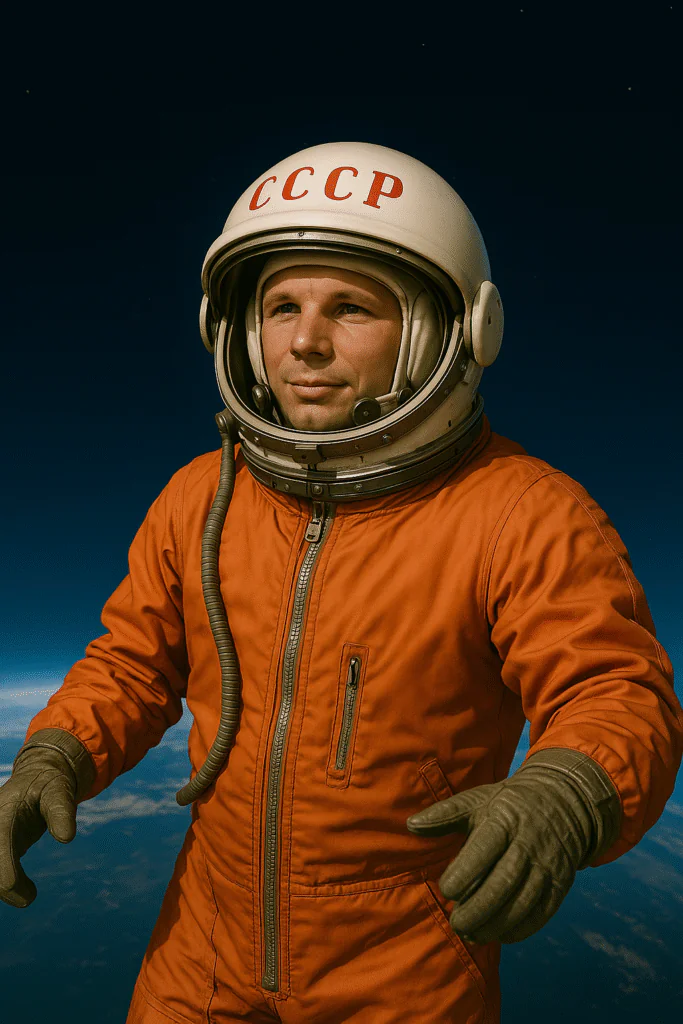
The first human space flight took place on 12 April 1961, when Soviet cosmonaut Yuri Gagarin created history. His journey became a source of pride and inspiration for all of humanity.
(i) The Space Passenger – Yuri Gagarin

Premium Amazon Product – Quality, Performance & Everyday Reliability
Discover this high-quality product designed for reliable performance and everyday convenience. With excellent build quality, thoughtful features, and strong user satisfaction, it’s a great choice for personal use or gifting. Click below to view the latest price, detailed specifications, and verified customer reviews on Amazon.
View on Amazon- Full Name: Yuri Alekseevich Gagarin
- Born: March 9, 1934, Russia
- Occupation: Fighter Pilot, later Cosmonaut
- Selection: Chosen from 20 cosmonaut candidates in the Vostok Program
- Traits: Highly disciplined, courageous, and mentally strong
(ii) The Spacecraft – Vostok-1
| Component | Description |
|---|---|
| Launch Date | 12 April 1961 |
| Launch Location | Baikonur Cosmodrome, Kazakhstan (USSR) |
| Duration | About 108 minutes |
| Flight Path | One complete orbit around Earth |
| Orbital Height | Approximately 327 km |
| Speed | Approximately 27,400 km/h |
(iii) Features of the Flight
- Yuri Gagarin completed one full orbit around Earth.
- The mission was controlled largely by automatic systems.
- At the start of the flight, he famously said: “Poyekhali!” (Let's go!).
- During re-entry, Gagarin separated from the capsule and landed on Earth using a parachute.
(iv) Safety and Preparation
- Gagarin wore a specially designed space suit that controlled pressure and temperature.
- He underwent mental, physical, and zero-gravity training before the flight.
- His heart rate, blood pressure, and other vitals were monitored throughout the mission.
(v) Historical Importance
- This flight was the first practical step toward human exploration of space.
- Yuri Gagarin became the first human to travel into space.
- The Soviet Union gained a temporary advantage over the United States in the Space Race.
(vi) Gagarin’s Return and Honor
- After the mission, Gagarin was declared a national hero.
- He received the Soviet Union’s highest award, Hero of the Soviet Union.
- His name became immortal in the history of space exploration.
Conclusion
The Vostok-1 mission and Yuri Gagarin’s bravery proved that humans could travel into space and return safely. This journey became a symbol of scientific achievement and human aspiration.
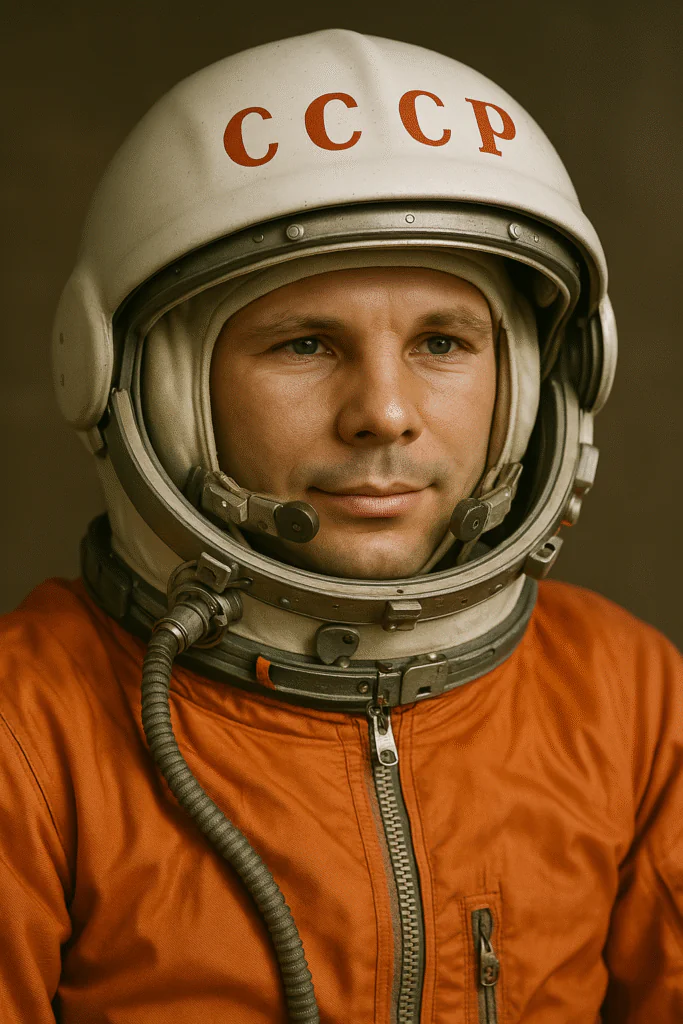
Passenger Name: Yuri Gagarin
Brief Introduction
| Element | Description |
|---|---|
| Full Name | Yuri Alekseevich Gagarin (Yuri Alekseyevich Gagarin) |
| Birth | 9 March 1934, Klushino, Russia (then Soviet Union) |
| Death | 27 March 1968 (in an aircraft accident) |
| Nationality | Soviet (USSR) |
| Profession | Pilot, Cosmonaut (Space Passenger) |
Chief Achievements
- Yuri Gagarin was the first human to travel into space.
- On 12 April 1961, he completed one full orbit of Earth aboard Vostok-1.
- At the time of the flight, he was only 27 years old.
- His iconic words — “Poyekhali!” (Let’s go!) — became a symbol of human space exploration.
Features
- Gagarin’s personality was calm, disciplined, and polite.
- His short height (about 5 feet 2 inches) made him suitable for the limited space inside the spacecraft.
- He served as a fighter pilot in the Soviet Air Force before becoming a cosmonaut.
Respect and Legacy
- He was honored with the highest Soviet award — “Hero of the Soviet Union.”
- Many monuments, institutions, and roads in Russia and other countries are named after him.
- 12 April is celebrated worldwide as “Yuri’s Night” and is also known as the International Day of Human Space Flight.

Premium Amazon Product – Quality, Performance & Value
Discover this highly rated product crafted for dependable performance and everyday convenience. With a durable build and thoughtful design, it’s perfect for personal use or gifting. Click the link below to check the latest price, full specifications, and verified customer reviews on Amazon.
View on AmazonDeath
In 1968, during a training flight, Yuri Gagarin died in an aircraft accident. The circumstances of his death remain mysterious and are still discussed today.
Conclusion
Yuri Gagarin was not just a space traveler — he was a symbol of human courage, scientific curiosity, and historical transformation. His name will forever be written in golden letters in the history of space exploration.
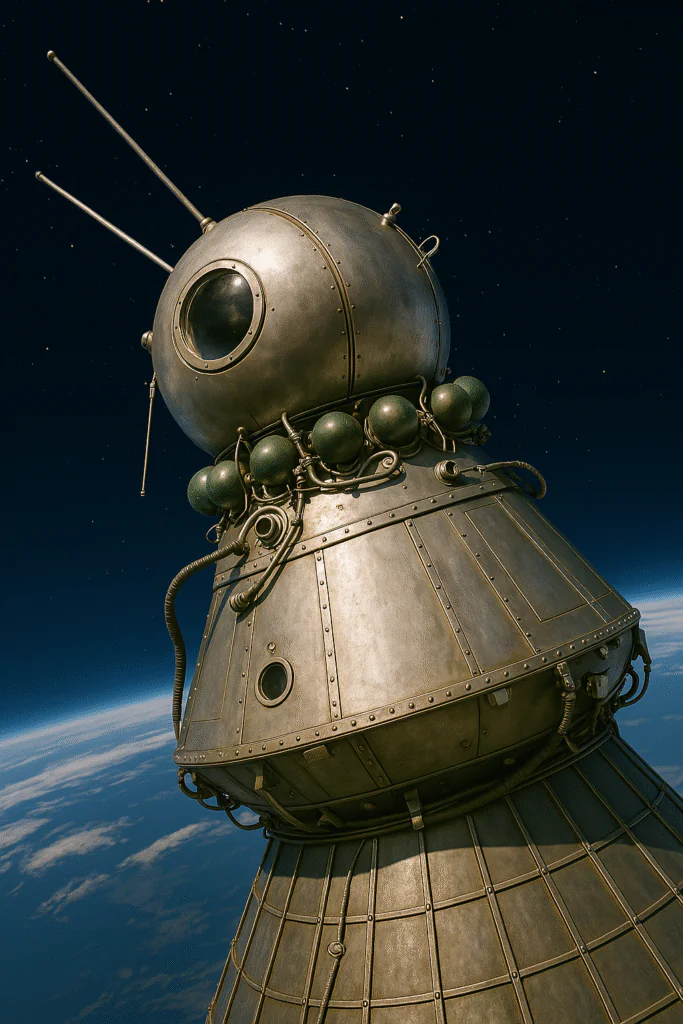
Space Vehicle: Vostok-1
Brief Introduction
Vostok-1 was the first spacecraft in human history that successfully carried one person into space and brought him safely back to Earth. This mission was conducted by the Soviet Union (USSR) and took place on 12 April 1961.
Chief Description
| Element | Description |
|---|---|
| Name | Vostok-1 |
| Meaning | The word “Vostok” means “East” in Russian |
| Launch Date | 12 April 1961 |
| Launch Location | Baikonur Cosmodrome, Kazakhstan (USSR) |
| Passenger | Yuri Gagarin |
| Flight Duration | About 108 minutes |
| Orbit | One complete orbit around Earth |
| Orbital Height | Min: 169 km, Max: 327 km |
| Speed | Approximately 27,400 km/h |
Technical Features

Premium Amazon Product – Quality, Comfort & Everyday Use
Explore this well-crafted product designed for dependable everyday use and reliable performance. With thoughtful features and solid build quality, it’s an excellent choice for personal needs or as a thoughtful gift. Click below to view the latest price, full specifications, and verified customer reviews on Amazon.
View on Amazon- Weight: About 4.7 tonnes
- Length: About 4.4 meters
- Capsule Shape: Round, with a diameter of 2.3 meters
- Crew Capacity: Only one passenger (Yuri Gagarin)
- Control System: Mostly automatic, but manual control was possible in emergencies
Safety Measures
- The spacecraft included air pressure control systems, temperature regulation, and communication equipment.
- Yuri Gagarin wore a specially designed space suit for additional protection.
- During landing, Gagarin ejected from the capsule and landed separately using a parachute — this was part of the pre-planned procedure.
Mission Achievements
- This was the first manned mission to enter Earth’s orbit.
- It provided scientific data about human body reactions in space.
- It proved the feasibility of human space travel.
Historical Importance
- It marked the beginning of a new era in human history — the era of space exploration.
- The Soviet Union gained a significant lead in the Space Race by sending the first human into space.
Conclusion
Vostok-1 was not just a technological milestone; it represented human imagination, courage, and scientific achievement. This mission inspired future generations and laid the foundation for later missions, including the Moon landings and beyond.
Importance of the Human Space Journey (1961)
The first human space journey by Yuri Gagarin in 1961 was not only a scientific and technological achievement but also a milestone with deep political, global, and inspirational significance. This event is considered the beginning of a new era in human history.
(i) Scientific Importance
- The mission proved that the human body can tolerate space conditions such as vacuum, zero gravity, and extremely high speeds.
- The life support systems designed for space were successfully tested and validated.
- Important scientific facts about Earth's orbit and gravity were confirmed.
(ii) Technological Progress
- It demonstrated the successful use of advanced rocket technology, spacecraft control systems, and communication systems.
- Automatic systems and parachute-based landing methods laid the foundation for future space missions.
- This journey established the base for future manned missions — leading to exploration of the Moon, Mars, and the International Space Station (ISS).
(iii) Political and Strategic Effect

Premium Amazon Product – Quality, Performance & Everyday Reliability
Discover this well-designed, high-quality product optimized for dependable performance and everyday convenience. With robust build quality and thoughtful features, it’s a great choice for personal use or gifting. Click below to check the latest price, full specifications, and verified customer reviews on Amazon.
View on Amazon- The Soviet Union gained a clear lead over the United States in the Space Race and demonstrated its technological superiority.
- The United States strengthened NASA and accelerated its own space program.
- This ultimately led to the human Moon landing in 1969 under the Apollo program.
(iv) Global Inspiration
- The mission ignited excitement and curiosity within the global scientific community.
- Millions of young people across the world were inspired to choose careers in science and space research.
- The event became a symbol of humanity’s desire to understand the universe.
(v) Beginning of the Space Age
- Gagarin’s flight marked the identification of the 20th century as the “Space Age.”
- After this mission, space exploration became a global priority — influencing communication, weather forecasting, GPS technology, and military applications.
(vi) A Step Forward for Humanity
- This mission was not just a national victory — it was a cosmic achievement for all of humanity.
- Gagarin famously said: “I see Earth… It is so beautiful!”
- This message still symbolizes environmental awareness, unity, and the wonder of space exploration.
Conclusion
The human space journey of 1961 did not only advance scientific progress — it created an inspiration that continues to guide space science, education, and human aspirations today. This was a historic moment when, for the first time, humanity stepped beyond our planet’s boundaries and moved toward the vast universe.

Premium Amazon Product – Quality, Performance & Value
Discover this well-crafted product designed for reliable performance and everyday convenience. With quality materials and thoughtful design, it offers dependable use for daily needs or makes a great gift option. Click below to see the latest price, detailed specifications, and verified customer reviews on Amazon.
View on Amazon