
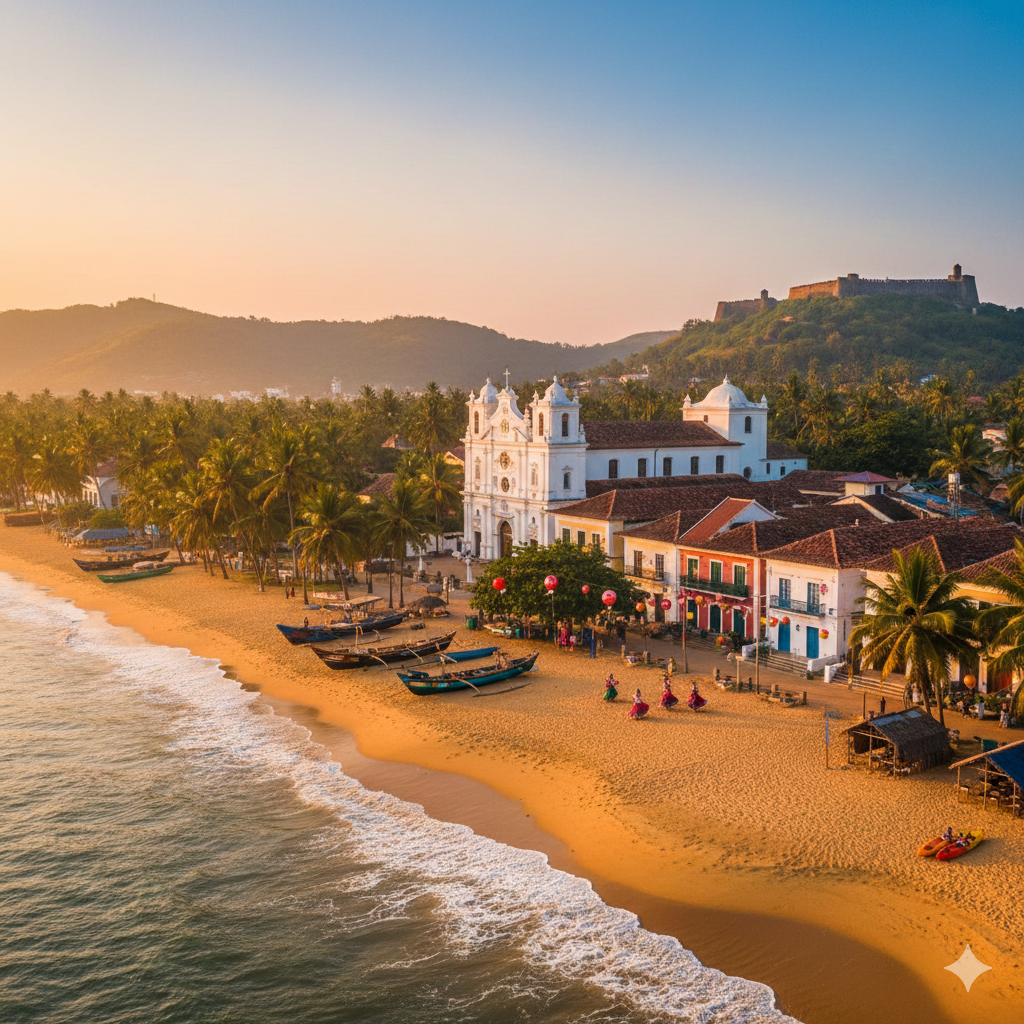
Goa: A Beautiful Blend of Nature, Culture, and Unique Experiences
Goa is a small yet incredibly attractive state of India, known for its natural beauty, rich cultural heritage, and unforgettable tourist destinations. Located on the west coast of India and bordered by the Arabian Sea, Goa offers a unique experience that stays with every visitor. In this article, I share my learnings and insights about Goa while keeping the information simple, inspiring, and useful.
1. Geographical Location
Where Goa Is Situated
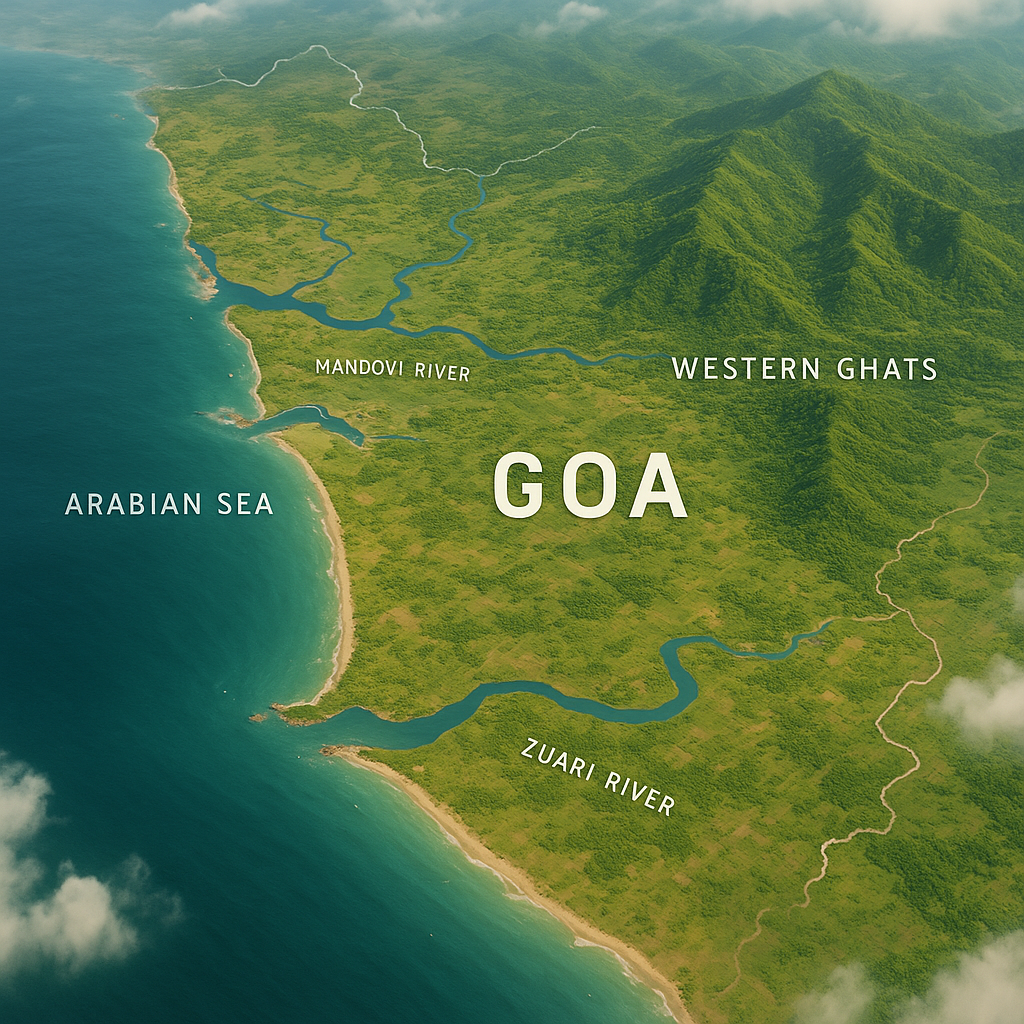
Goa lies between the Western Ghats and the Arabian Sea.
Key Geographic Facts
- Capital: Panaji (Panajim)
- Area: Approximately 3,702 square kilometers
- Population: Around 1.5 million (as per 2021 estimates)
- Main Languages: Konkani and Marathi; English and Hindi are also widely spoken
2. History
Goa's history is ancient and culturally diverse. It has seen the rise and fall of many kingdoms, shaping it into the vibrant region it is today.
Historical Journey of Goa
- Once part of major empires including the Maurya, Satavahana, and Chalukya dynasties.
- In the 16th century, the Portuguese captured Goa and made it their primary colony in India.
- Goa remained under Portuguese rule until 1961, after which it officially joined India.
- On 30 May 1987, Goa became a full-fledged Indian state.
3. Culture and Tradition
Goa's culture is a beautiful blend of Indian and Portuguese influences. The art, music, dance, and festivals here reflect this harmonious cultural mix.
Major Festivals of Goa
- Goa Carnival
- Diwali
- Christmas
- Feast of St. Francis Xavier
4. Natural Beauty and Tourist Places
Goa is widely known for its stunning beaches, lush greenery, and scenic hills. Each place here tells a different story and offers a special experience.
Popular Beaches
- Activity Beaches: Baga, Anjuna, Candolim
- Quiet Beaches: Palolem, Arambol, Agonda

Major Tourist Attractions
- Churches: Basilica of Bom Jesus, Cathedral of St. Catherine
- Forts: Aguada Fort, Chapora Fort
- Wildlife Sanctuaries: Bondla Wildlife Sanctuary, Cotigao Sanctuary
- Waterfalls: Dudhsagar Falls
5. Economy of Goa
Goa's economy mainly depends on tourism, fishing, mining, and agriculture.
- Tourism: Popularly known as the “Tourism Capital of India.”
- Mining: Iron ore and manganese are the key minerals.
- Agriculture: Coconut, rice, and cashew are the major crops.
6. Food and Cuisine
Goan cuisine is known for its delicious blend of seafood, spices, and traditional cooking methods.
Famous Dishes
- Fish curry
- Vindaloo
- Poi bread
- Bebinca (traditional dessert)
Popular Drinks
- Feni (local liquor)
- Coconut water
7. Transportation in Goa
- By Air: Goa International Airport (Dabolim)
- By Rail: Konkan Railway
- By Road: National and state highways, bus services
- Water Routes: Boat and ferry services
8. Key Takeaways
- Goa’s peaceful and open atmosphere makes it a perfect destination for travelers.
- The lifestyle is relaxed and comfortable.
- Its churches and monasteries, some listed as World Heritage Sites, highlight its rich heritage.
- Goa offers a unique blend of nature, culture, and festivals, attracting visitors from across the globe.
To explore more Indian states, visit our detailed guide on Incredible India State Profiles.
Frequently Asked Questions (FAQ)
1. What is Goa famous for?
Goa is famous for its beaches, nightlife, seafood, cultural blend of Indian and Portuguese traditions, and historic churches.
2. What is the best time to visit Goa?
November to February is considered the best time to visit Goa due to pleasant weather and vibrant festivals.
3. Is Goa safe for solo travelers?
Yes, Goa is generally safe for solo and female travelers, especially in major tourist areas. Basic precautions are always recommended.
4. Which food is most popular in Goa?
Fish curry, vindaloo, bebinca, and poi bread are among the most loved Goan dishes.
5. How many days are enough for a Goa trip?
A 3–5 day trip is usually enough to explore major beaches, churches, forts, markets, and local cuisine.
Geographical Location of Goa
Goa is a small but very important state located on the west coast of India. Its geographical location makes it unique, beautiful, and environmentally rich. Here is a detailed explanation of Goa’s geography:
1. Condition and Boundaries
Goa is the smallest state in India and is geographically positioned as follows:
- To the north, it is bordered by Maharashtra.
- To the east and south, it is surrounded by Karnataka.
- To the west lies the Arabian Sea, giving Goa a long and beautiful coastline.
The geography of Goa is a combination of the Western Ghats and fertile coastal plains, creating a rich and diverse natural environment.
2. Area and Coastline
- The total area of Goa is approximately 3,702 square kilometers.
- The state has a 160 km long coastline, home to famous beaches such as:
- Baga
- Candolim
- Anjuna
- Palolem
This coastline is not only loved for its beauty but is also important for fishing and maritime trade.
3. Mountainous and Plain Regions
The eastern part of Goa is covered by the Western Ghats, which makes this region green, environmentally rich, and ecologically significant.

- The Western Ghats region is a UNESCO World Heritage Site.
- The western part consists of coastal plains, ideal for tourism and maritime activities.
4. Rivers of Goa
The major rivers of Goa play a vital role in its geography, agriculture, and tourism.
Main Rivers
- Mandovi River: The most important river, flowing through Panaji and draining into the Arabian Sea.
- Zuari River: The second major river, crucial for irrigation in Goa.
- Terekhol, Chapora, and Sal: Other important rivers supporting fisheries, agriculture, and tourism.
5. Climate of Goa
Goa experiences a tropical monsoon climate, which shapes its natural landscape.
- Summer: 25°C to 35°C
- Monsoon (June–September): Heavy rainfall, making the region lush and fertile
- Winter: 15°C to 25°C, ideal for tourism
6. Biodiversity
Goa is known for its rich biodiversity and environmental heritage.
- Approximately 30% of Goa is covered with forests.
- Important wildlife sanctuaries include:
- Bondla Wildlife Sanctuary
- Cotigao Wildlife Sanctuary
- Molem Wildlife Sanctuary
- The Western Ghats host many rare species of flora and fauna.
7. Geographical Importance of Goa
- Its coastal location makes Goa highly significant for maritime trade and tourism.
- The Western Ghats act as a natural watershed, regulating river flow.
- The combination of coastal plains and mountains provides environmental balance.
Overall, Goa’s geographical location makes it one of India’s most beautiful and environmentally rich states. It holds significance not only for its natural beauty but also for its economic, cultural, and historical value.
History of Goa
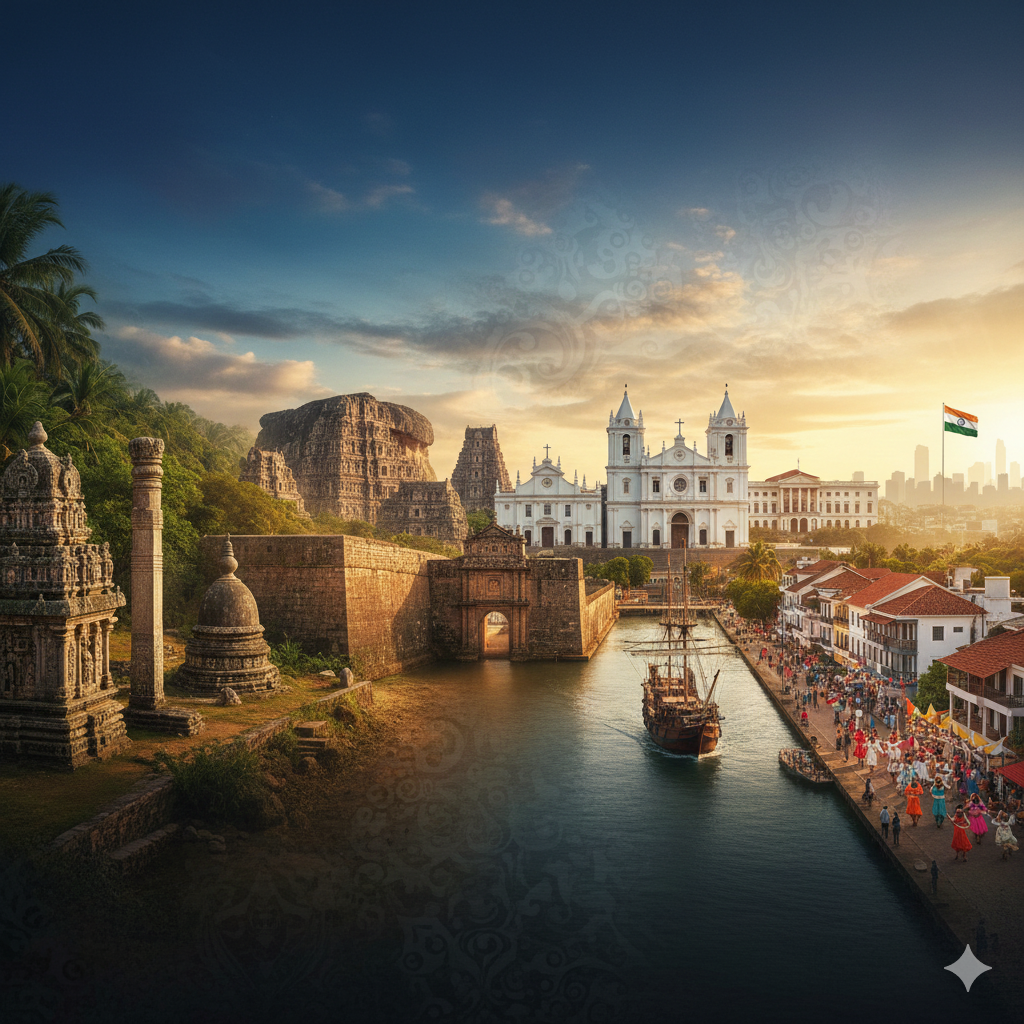
The history of Goa is ancient, rich, and remarkably diverse. Over the centuries, this region has been ruled by powerful empires and colonial forces, each leaving a deep impact on its culture, architecture, and identity. The history of Goa can be understood in the following major phases:
1. Ancient History
- In ancient Indian texts, Goa is referred to as “Goparashtra” or “Gomantaka”, meaning “Land of the Cows.”
- This region was developed by the Aryans during the Vedic period.
- Goa came under the Maurya Empire during the reigns of Chandragupta Maurya and Ashoka, and Buddhism spread in this area.
- Later, the Satavahana dynasty ruled Goa, transforming it into an important trading centre.
2. Medieval History
- Goa was ruled by the Chalukya dynasty from the 4th to the 8th century.
- After the Chalukyas, Goa came under the rule of the Kadamba, Rashtrakuta, and Hoysala dynasties.
Kadamba Dynasty (11th–14th Century)
- This period is considered the Golden Age of Goa.
- Many temples were built, and Goa became a major religious and cultural centre.
In the 14th century, Goa was conquered by the Delhi Sultanate, after which Muslim rule was established. Later, in the 15th century, the Vijayanagara Empire took control of the region.
3. Portuguese Rule
In 1510, Afonso de Albuquerque captured Goa and made it a key part of the Portuguese Empire. Goa remained under Portuguese colonisation for nearly 450 years, shaping much of its modern character.
Impact of Portuguese Rule
- Goa became an international maritime trade centre.
- Christianity spread widely, and many iconic churches were built.
- Some of these sites, such as the Basilica of Bom Jesus and Se Cathedral, are now UNESCO World Heritage Sites.
- The Portuguese attempted to suppress Hindu culture, leading to the destruction of several temples.
- Despite conflicts, a unique blend of Indian and European culture developed during this era.
4. Modern History
Freedom Struggle
- During the 19th and 20th centuries, Goa witnessed movements inspired by the Indian freedom struggle.
- When India became independent in 1947, Goa continued under Portuguese rule.
Goa Liberation Movement
- On 19 December 1961, the Indian government launched Operation Vijay.
- Under the leadership of Indian defence forces, Goa was liberated from Portuguese control.
- After liberation, Goa was made a Union Territory along with Daman and Diu.
5. Statehood to Goa
- On 30 May 1987, Goa became the 25th state of India.
- After attaining statehood, Goa rapidly developed economically and culturally.
- It soon emerged as one of India’s top tourist destinations.
6. Religious and Cultural Influences
Goa reflects the coexistence of Hindu, Muslim, and Christian traditions.
- Christianity expanded significantly during Portuguese rule.
- Despite this, Hindu and Konkani culture continued to remain strong.
- The people of Goa are known for their cultural harmony and religious tolerance.
7. Heritage and Legacy
- Goa is home to numerous historical churches, temples, and forts.
- The state hosts UNESCO-recognised heritage sites, especially the Churches and Convents of Goa.
8. Goa Today
Today, the historical journey of Goa makes it one of India’s most culturally and historically rich states. It is admired not just for its natural beauty but also for its unique cultural heritage and historical legacy.
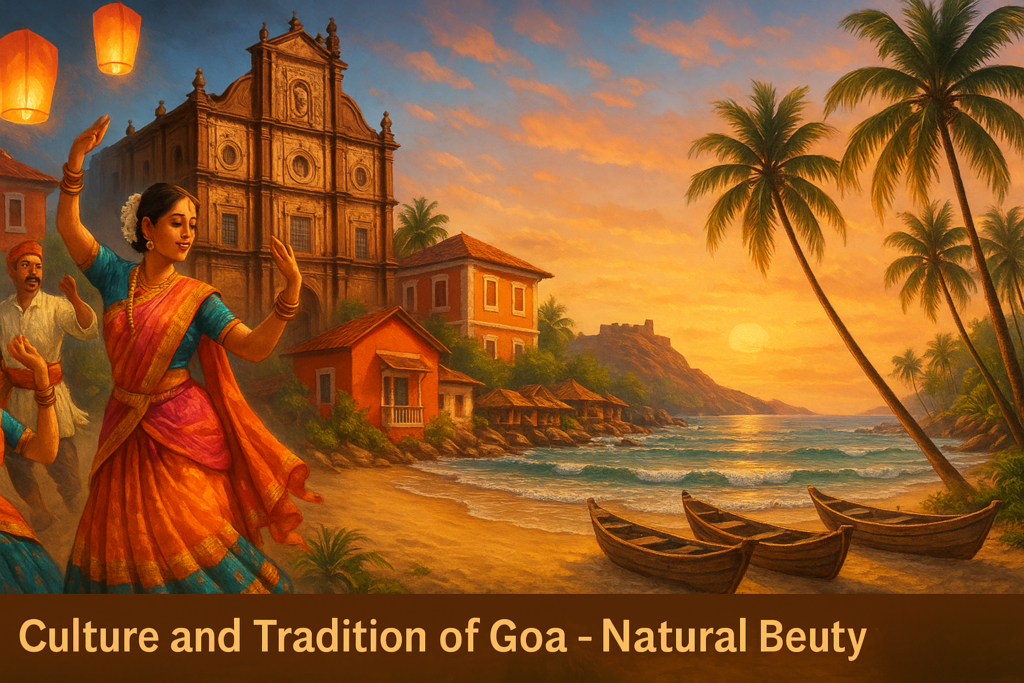
Culture and Tradition of Goa
The culture and tradition of Goa represent a unique blend of Indian and Portuguese influences. The state is known for its rich cultural heritage, colorful festivals, unique music, dance forms, and vibrant art. Goa’s culture is shaped by the local Konkani community along with the traditions that evolved during Portuguese rule. Let us understand it in detail:
1. Language and Clothing
Language
- Konkani is the main language of Goa and is seen as a strong cultural identity.
- Other commonly spoken languages include Marathi, Hindi, English, and Portuguese.
- Konkani literature and folklore play an important role in Goa’s heritage.
Clothing
- Women: Traditionally wear the “Nauvari Sari,” especially during festivals and weddings.
- Men: Wear dhoti, kurta, and a cap. Western clothing is also widely adopted.
2. Music and Dance
Music and dance are core elements of Goa’s cultural identity.
Music
- Folk Music: Songs like “Fugdi” and “Dulpod” are extremely popular.
- Portuguese Influence: Reflected in styles like the traditional “Fado.”
- Goan Trance: A modern electronic music genre associated with Goa’s nightlife.
Dance Forms
- Folk Dances: “Dhalo” and “Kolato.”
- Traditional Dance: “Mando,” a slow and romantic dance form.
3. Festivals and Celebrations
Goa celebrates festivals from all religions and cultures with great enthusiasm.
Major Hindu Festivals
- Shigmo (similar to Holi; celebrated with colors and dancing)
- Ganesh Chaturthi
- Diwali and Dussehra
Major Christian Festivals
- Christmas
- Goa Carnival – a vibrant celebration of parades, music, and dance
- Feast of St. Francis Xavier
Other Festivals
- Eid and Muharram
- Navroz (Parsi festival)
4. Food of Goa
Goan cuisine is a rich fusion of Indian and Portuguese culinary traditions.
- Fish Curry Rice – the staple dish of Goa
- Vindaloo – spicy meat preparation
- Sarpatel and Feni – influenced by Portuguese flavors
- Bebinca – traditional Goan dessert
- Seafood like shrimp, crab, and fish are widely consumed
5. Arts and Crafts
- Chittar: Traditional Konkani painting style
- Handicrafts: Pottery, bamboo products, coconut shell crafts
- Tile Art: Decorative Portuguese-style tiles
6. Religious and Cultural Syncretism
Goa is an outstanding example of religious harmony and cultural coexistence. Temples, churches, and mosques often stand close to each other in the same villages. The people of Goa strongly believe in unity and cultural exchange.
7. Traditional Rituals and Customs
- Traditional rituals are followed during weddings, childbirth, and harvest festivals.
- Folk traditions include performances like “Dhalo” and “Ros.”
8. Religious Places
Temples
- Mangeshi Temple
- Shantadurga Temple
- Mahalakshmi Temple
Churches
- Basilica of Bom Jesus
- Se Cathedral
Mosques
- Safa Masjid
- Jama Masjid
9. Folk Beliefs and Festival Significance
- Shigmo: Celebrated as a harvest festival.
- Carnival: Symbolizes joy, celebration, and cultural freedom.

10. Social Life and Lifestyle
Goans are enthusiastic, friendly, and festive by nature. Their lifestyle is relaxed, peaceful, and closely connected to nature. Goa’s cultural fusion makes it one of the most vibrant and diverse states in India.
Natural Beauty and Tourist Spots of Goa
Goa is renowned worldwide for its breathtaking natural beauty and diverse tourist destinations. The state is a perfect blend of beaches, greenery, historical sites, wildlife sanctuaries, and scenic river valleys. Let’s explore Goa’s natural charm in detail:
1. Beaches
Goa’s beaches make it the “Beach Paradise of India.”
- Baga Beach: Famous for water sports and nightlife.
- Calangute Beach: Known as the “Queen of Beaches.”
- Anjuna Beach: Famous for natural beauty and flea markets.
- Palolem Beach: A peaceful beach located in South Goa.
- Morjim & Arambol: Popular for turtle reserves and serene ambience.
- Candolim & Vagator: Famous for scenic views and party culture.
2. Waterfalls and River Valleys
- Dudhsagar Falls: One of India’s tallest waterfalls, stunning during monsoon.
- Arvalam Falls: Calm and ideal for nature lovers.
- Mandovi & Zuari Rivers: Known for cruise rides and river walks.
- Chapora River: Popular for boating and photography.
3. Wildlife Sanctuaries and Natural Areas
- Mollem National Park: Located in the Western Ghats, rich in wildlife.
- Cotigao Wildlife Sanctuary: Serene and surrounded by dense forest.
- Bondla Wildlife Sanctuary: Perfect for family visits.
- Dr. Salim Ali Bird Sanctuary: A paradise for bird watchers.
4. Historical Sites and Forts
- Aguada Fort: Symbol of Portuguese history, located on the seashore.
- Chapora Fort: Popular after the movie "Dil Chahta Hai."
5. Churches and Temples
- Basilica of Bom Jesus: UNESCO World Heritage Site.
- Se Cathedral: One of the largest churches in Asia.
- Mangeshi & Shantadurga Temples: Important Hindu pilgrimage sites.
6. Architecture & Forts
- Portuguese-style buildings and churches.
- Historical forts that offer stunning views.
7. Cruises and Water Sports
- Mandovi River Cruise: Enjoy music and dance while cruising.
- Water Sports: Jet skiing, parasailing, banana boat rides, snorkeling.
- Scuba Diving: Popular for exploring marine life.
8. Rural Tourism
- Salcete: Showcases traditional Goan life.
- Loutolim: Known for natural beauty and Goan culture.
- Chorao Village: Ideal for nature and bird lovers.
9. Carnivals and Festivals
Goa’s annual carnival and festivals like Shigmo and Christmas attract tourists from all over the world.
10. Flora and Fauna
The Western Ghats make Goa a biodiversity hotspot, home to rare species of plants and animals.
11. Ideal Time to Visit
- October to March: Best for beach activities and sightseeing.
- June to September: Ideal for enjoying lush greenery and waterfalls.
The natural beauty and tourist attractions of Goa make it one of India’s most popular travel destinations. Whether beaches, heritage sites, wildlife, or festivals—Goa offers something special for every traveler.
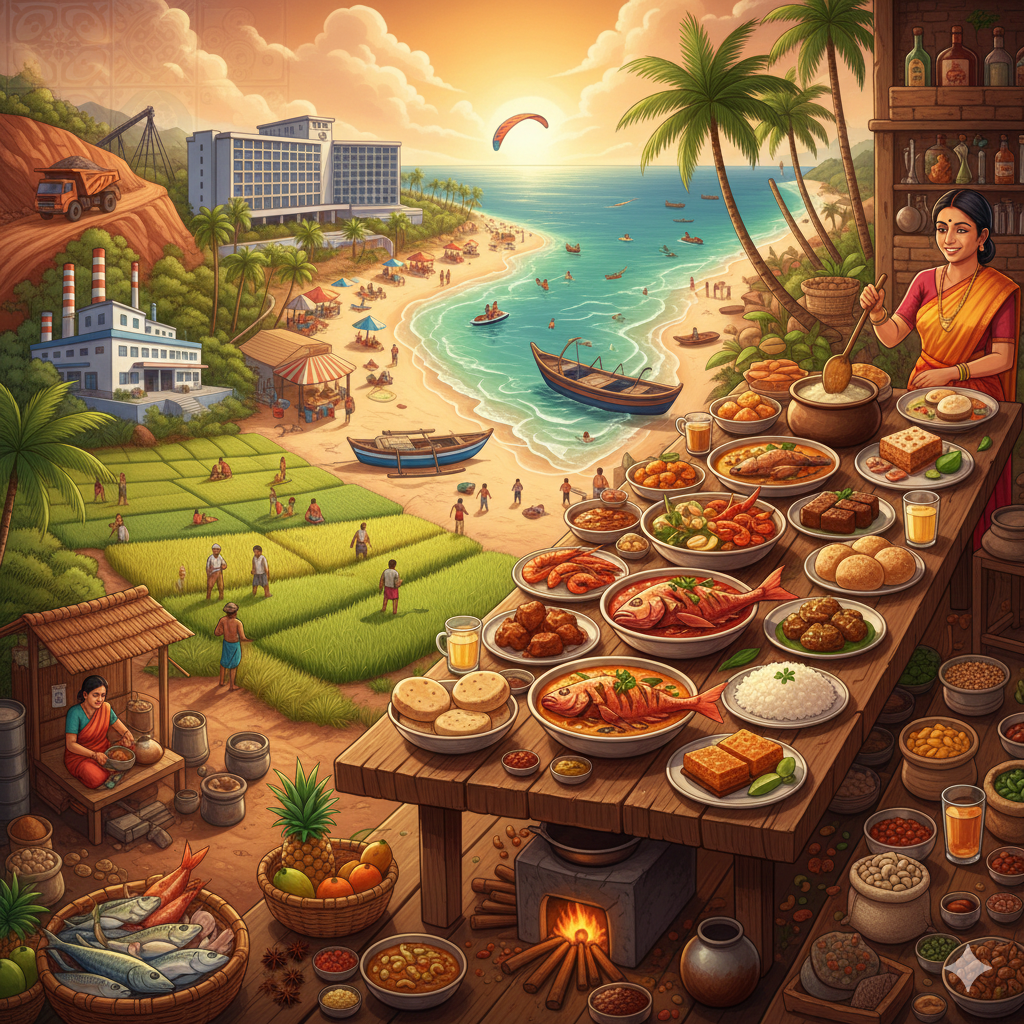
Economy of Goa
Goa’s economy is diverse and balanced, with contributions from agriculture, mining, tourism, fishing, and the industrial as well as service sectors. Its strategic coastal location and rich natural resources have made Goa an economically significant state. It is also the wealthiest state in India, with a per capita income much higher than the national average. Let us understand Goa’s economy in detail:
1. Tourism
Tourism is the largest contributor to Goa’s economy.
- Goa attracts millions of Indian and foreign tourists every year.
- Beach Tourism: Goa’s beautiful beaches are the main attraction.
- Medical & Wellness Tourism: Goa is known for Ayurveda, spa treatments, and wellness retreats.
- Eco-tourism: Wildlife sanctuaries and rural tourism are growing rapidly.
- Tourism boosts hotels, restaurants, transportation, and local handicraft industries.
2. Mining Industry
- Goa is rich in mineral resources, especially iron ore.
- Manganese and bauxite are also mined in the region.
- Minerals are exported primarily to China, Japan, and European countries.
- Mining has caused environmental concerns, leading to temporary bans by the Supreme Court.
3. Agriculture
Agriculture is a traditional livelihood in Goa, though its contribution has declined.
Major Crops
- Paddy (Rice): Staple food crop.
- Coconut: Cultivated on a large scale.
- Cashew: One of India’s major cashew-producing areas.
- Sugarcane and Betel Nut: Important cash crops.
Efforts are being made to promote organic farming. Crop production largely depends on monsoon rains.
4. Fisheries
Goa’s coastal location makes fisheries an important economic sector.
- Fishing provides livelihood to a large coastal population.
- Major fish varieties: Sardines, mackerel, shrimp, and kingfish.
- Fish is exported mainly to Southeast Asia and Europe.
- Government promotes modern fishing technology and marine conservation.
5. Industry
The industrial sector in Goa is steadily developing.
Major Industries
- Food processing
- Pharmaceuticals
- Shipbuilding
- Handicrafts
- Textiles
- Pharmaceutical Industry: Goa is a major medicine-producing hub in India.
- IT & Services: Information Technology and BPO sectors are growing.
- Industrial zones like Bicholim and Verna support industrial development.
6. Alcohol and Cashew Industry
- Goa is famous for Feni, a traditional liquor made from cashew or coconut.
- The cashew-processing industry plays a major role in exports.
7. Financial and Services Sector
- Banking and financial services contribute significantly to Goa’s economy.
- The real estate and hospitality sectors have grown due to tourism and industry expansion.
8. Foreign Trade
- Goa’s ports are important commercial hubs.
- Major exports: Iron ore, fish, and cashew nuts.
- Mormugao Port is Goa’s key center for international trade.
9. Green Energy and Environmental Protection
- Investments are being made in solar and wind energy projects.
- Strict environmental regulations apply to mining and industrial activities.
10. Government Initiatives
- New plans for tourism development.
- Goa IT Policy to promote the IT industry.
- Support for agriculture and small industries under the “Self-Reliant India Mission.”
- Efforts to ensure transparency and environmental protection in mining.
11. Per Capita Income and Standard of Living
- Goa has one of the highest per capita incomes in India.
- The state offers excellent health, education, and infrastructure facilities.
12. Future Prospects
- Strong potential in IT, green energy, and organic farming.
- Mining can contribute significantly if balanced with environmental protection.
Conclusion
Goa’s economy is diverse and offers a balance between environment, tourism, and industry. Its natural resources, cultural heritage, and coastal advantage make it economically important both in India and globally.
Features of Goa’s Food
Goan cuisine is famous for its unique blend of seafood, spices, and Portuguese influences. It reflects the region’s diverse history, culture, and traditional flavors. Let us explore the characteristics of Goan food:
1. Features of Goa’s Food
- Seafood-Based Cuisine: Fish, prawns, crabs, and squid are staples.
- Use of Spices: Coconut, tamarind, and Konkani spices give Goan food its spicy character.
- Portuguese Influence: Dishes and cooking styles reflect Europe’s long presence in Goa.
- Both vegetarian and non-vegetarian dishes are popular.
2. Major Goan Dishes
Fish-Based Dishes
- Goan Fish Curry – made with coconut, tamarind, and spices
- Fish Reshado – spicy marinated and fried fish
- Sardine Fry – traditional spiced fried sardines
Non-Vegetarian Dishes
- Vindaloo – spicy pork curry introduced by the Portuguese
- Sorpotel – made from pork meat and organs
- Chicken Jackfruit Curry – unique Goan preparation
- Spicy Prawn Balchao – tangy and spicy prawn dish
Vegetarian Dishes
- Bhaji Pav – popular Goan snack
- Uddamethi – coconut and tamarind-based curry
- Kakodi Bhaji – prepared from zucchini-like local vegetables
- Sol Kadhi – refreshing coconut milk and kokum drink
3. Use of Rice and Bread
- Rice: Main staple consumed with curry.
- Poi (Goan Bread): Light and fluffy traditional bread.
- Sanna: Sweet coconut–rice idli.
4. Sweets and Desserts
- Bebinca: Layered dessert made from coconut milk, eggs, and sugar.
- Doss: Sweet coconut-jaggery delicacy.
- Kaju Pheni: Cashew-based sweet.
- Nevri: Sweet dumplings filled with coconut and jaggery.
5. Beverages
- Feni: Traditional liquor from cashew or coconut.
- Urak: Mild cashew-based drink.
- Sol Kadhi: Cooling digestive drink.
- King’s Beer: Popular local beer.
6. Traditional Festival Foods
- Christmas: Bebinca, Rava Cake
- Shigmo: Patoli and other traditional vegetarian dishes
- Ganesh Chaturthi: Modaks, Paan-pol, various halwas
7. Street Food of Goa
- Chorizo Pav
- Bhaji Pav
- Cutlet Pav
- Chicken and Prawn Patties
8. Use of Local Spices and Ingredients
- Coconut – used in curries, sweets, and drinks
- Kokum – adds natural sourness
- Rice and Cashews – part of Goa’s food and economy
- Spices – cardamom, cinnamon, cloves, red chilies
9. Foreign Influence
- Portuguese influence is visible in dishes like Vindaloo and Sorpotel.
- Bebinca and Chorizo are inspired by Portuguese cuisine.
- European spices and cooking styles have been adapted locally.
10. Variety of Goan Food
Goa’s cuisine is not limited to non-vegetarian dishes; it includes a wide variety of vegetarian, seafood, and sweet delicacies. It offers a flavorful journey through the state’s diversity, history, and cultural heritage.
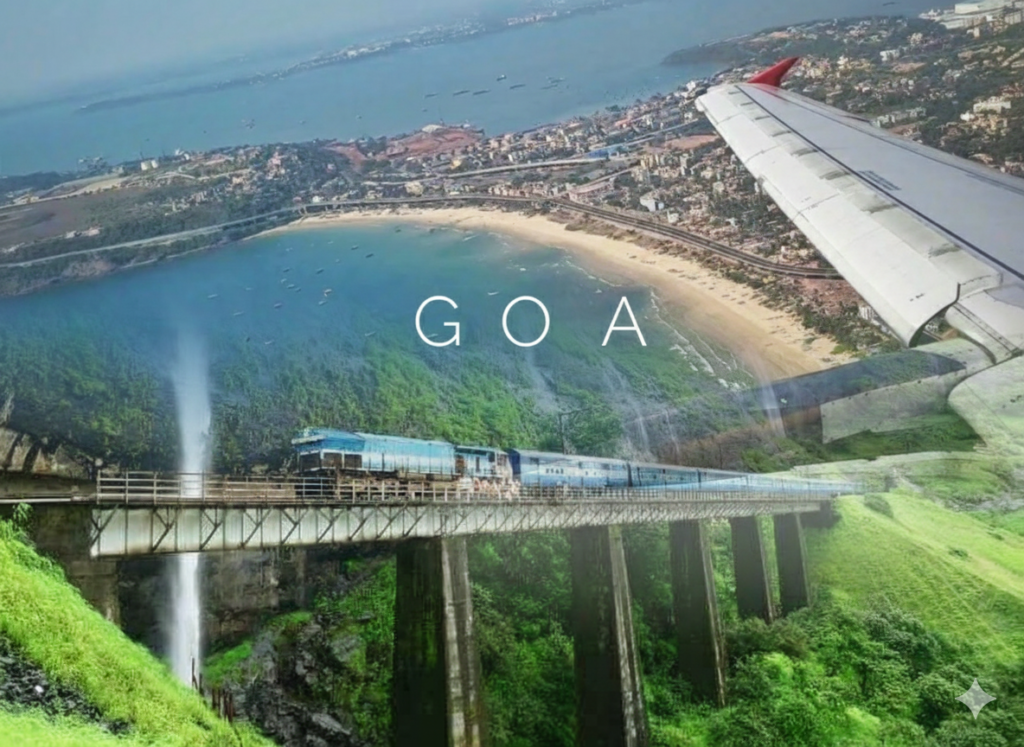
Transportation of Goa
Goa’s transport network is highly developed to support tourism, trade, and local connectivity. Its unique geography—coastal areas, hills, and plains—supports multiple modes of transportation. The main pillars of Goa’s transport system are roadways, railways, waterways, and air transport. Here is a detailed explanation:
1. Road Transport
Goa’s road transport system is extensive, efficient, and well-organised.
National and State Highways
- NH-66 and NH-748 connect Goa with the Konkan region, Maharashtra, and Karnataka.
- State highways link towns, cities, and villages across Goa.
Bus Services
- GSRTC (Goa State Road Transport Corporation) connects major towns and villages.
- Private bus services also operate throughout the state.
Taxis and Cabs
- Taxis and app-based cab services (e.g., Ola, Uber) are popular.
- Goa’s iconic Black-Yellow Taxis are widely used by tourists.
Two-Wheeler Taxi (Pilot)
This unique service in Goa allows passengers to travel on motorcycle taxis.
Scooty & Bike Rentals
Renting scooters and bikes is one of the most convenient and affordable options for tourists.
2. Rail Transport
Goa’s railway system is well connected to major cities across India.
Konkan Railway
- The major rail network of Goa, connecting coastal Maharashtra, Goa, and Karnataka.
- The route is famous for scenic views, bridges, and tunnels.
Important Railway Stations
- Margao (Madgaon): The largest railway station in Goa.
- Vasco da Gama: Another major railway hub.
- Karmali: Convenient for tourists visiting Panaji and nearby areas.

Tourist Train Facilities
- Special tourist trains like the “South India Railway Tour” provide tourism-oriented journeys.
3. Water Transport
Goa’s coastal geography makes waterways an essential mode of transport.
Ferry Services
- Ferries operate on major rivers and bays.
- They transport both passengers and vehicles at low cost.
- Ferry routes include the Mandovi, Zuari, and Chapora rivers.
Cruise & Boat Services
- Mandovi River evening cruises are popular tourist attractions.
- Special boats operate for dolphin watching and island tours.
Cargo Transportation
- Mormugao Port is an important cargo hub for shipping minerals and goods.
4. Air Transport
Air travel is one of the key transport systems supporting Goa’s tourism industry.
Dabolim International Airport
- The primary airport of Goa, located near Vasco-da-Gama.
- Handles both domestic and international flights.
Manohar International Airport (Mopa Airport)
- Goa’s second airport in North Goa, offering expanded flight options.
Major Airlines
- IndiGo, Air India, SpiceJet, and others connect Goa to major Indian and international cities.
5. Self-Transport and Rental Vehicles
- Scooty & Bike Rentals: Easy, affordable, and preferred by tourists.
- Car Rentals: Available for independent travel.
- Cycling: Increasingly popular around beaches and countryside areas.
6. Tourist Transport Services
- City Tour Buses: Operated by Goa Tourism to cover major tourist spots.
- Cruise Tours: Available through government and private operators, offering cultural shows and meals.
7. Eco-Friendly Transportation
- Use of electric bikes and cars is increasing.
- Solar-powered ferry services have been introduced in select areas.
8. Future Plans
- Proposed Metro Rail and Monorail systems.
- Expansion of port and waterway development.
- New bus services to strengthen public transportation.
Conclusion
Goa’s transportation system is highly advanced and well-balanced, connecting the state internally and externally through road, rail, air, and water transport. Its diverse transport infrastructure supports tourism, trade, and everyday mobility for residents and visitors.
References
- Government of Goa – Department of Tourism. “Goa Tourism Information and Updates.”
- Ministry of Statistics and Programme Implementation, Government of India. “State Economy Report – Goa.”
- Goa State Biodiversity Board. “Biodiversity and Wildlife Sanctuaries of Goa.”
- Konkan Railway Corporation Limited. “Rail Connectivity and Services in Goa.”
- UNESCO World Heritage Centre. “Churches and Convents of Goa.”
- Goa Transport Department. “Road, Ferry & Public Transport Information.”
- Food and Culinary Culture of Goa – Goa Tourism Development Corporation (GTDC).
- Historical Archives of Goa – Goa State Central Library.
- Economic Survey of Goa – Department of Planning, Statistics & Evaluation.