
Definition of International Relations: My Academic and Experiential Journey
International Relations (IR) is not merely about diplomatic dialogues between nations—it is a complex web of power, ideas, and human stories. In this article, I will weave together my learning journey, classroom reflections, and real-life experiences to explore how the definition of International Relations extends beyond theories and becomes a lens to understand human behavior, cooperation, and global realities.
Stories, Theories, and Lessons — Why This Introduction Matters
When I first studied Global Politics, it appeared to be a collection of abstract theories and endless terminology. But over time, I realized that concepts like Realism, Liberalism, and Constructivism are not just academic terms—they are living ideas shaping policies, alliances, and even conflicts across the world. This introduction aims to connect the definition of IR with my own experiences so that readers gain both knowledge and perspective.
What You Will Discover Here
- A concise yet insightful definition of International Relations.
- Snapshots of my personal learning experiences (replace these with your own journey).
- Strategic use of SEO keywords for both educational and global readers, such as “International Relations Definition”, “Global Politics”, “India’s Foreign Policy”, and “Globalization”.
Definition of International Relations: A Personal and Academic Journey
International Relations (IR) is not just the study of diplomacy between nations; it is the story of power, cooperation, identity, and conflict that shapes the world. When we explore it both academically and experientially, it becomes more meaningful and transformative. This introduction aims to connect knowledge with lived experience, turning theory into understanding.
Why This Introduction Matters
Theories such as Realism, Liberalism, and Constructivism are not merely academic terms — they represent ways of interpreting global behavior, diplomacy, and policy-making. The goal of this introduction is to help you not only understand the definition of IR but also experience it.
Introduction: My Experience and First Encounter with IR
When I first came across the term International Relations (IR), it seemed like a complex academic field filled with theories, power equations, and diplomatic terminologies. But gradually, I realized that IR is not only about nations and politics — it is also about human behavior, cooperation, and the exchange of ideas across borders. That realization marked the beginning of my journey into the world of IR.
[Add your personal experience here — for example: “During my first year of college, when I attended my initial lecture on Global Politics, I understood how one country’s decision could influence another’s economy and culture.” Or “Participating in a Model UN conference taught me that diplomacy is not just about speeches, but about strategy, negotiation, and understanding perspectives.”]
My Early Learnings from IR
As I began studying IR, I realized that it is not confined to politics alone. It draws from multiple disciplines — political science, economics, history, geography, and sociology. Understanding how global decisions are made was not just an academic pursuit for me; it became an inspiring experience that reshaped the way I viewed the world.
My First Inspiration — From Thought to Reality
When I wrote my first essay on “Power Politics,” I discovered that power is not limited to military strength; it also exists in ideas, culture, and diplomacy. IR taught me that behind every international event lies not only politics but also a deep play of human emotion, ethics, and collective aspiration.
This introduction marks the beginning of my journey where I began to see International Relations not just as a subject, but as a way of life — one that goes beyond borders and inspires us to become global citizens in the truest sense.
The Academic Foundations of IR: The Language of World Politics
International Relations (IR) is more than the study of diplomatic exchanges between states; it is the language of world politics — a conceptual toolkit that helps us decode power, cooperation, conflict, and diplomacy. Through this language we understand how states define their interests and how the world order is formed and transformed.
Academic Groundwork: Theories and Schools of Thought
The foundations of IR rest on several major theoretical traditions. These frameworks guide analysis and offer distinct lenses to interpret global politics.
- Realism: Emphasizes power and security as central to international politics. States act to protect their interests, and cooperation tends to be conditional and interest-driven.
- Liberalism: Highlights institutions, norms, and cooperation. From this perspective, organizations like the United Nations and international law can mitigate conflict and promote collective solutions.
- Constructivism: Argues that international politics is shaped by ideas, identities, and social norms. Material forces matter, but so do beliefs and shared understandings that shape state behavior.
My Learning Experience
Reading these theories initially felt abstract, but over time I observed how they map onto real-world events. [Add your personal/example here — e.g., “Analyzing the Russia–Ukraine crisis showed me how realism explains security competition, while liberal institutional responses reveal attempts at diplomatic containment.”]
Understanding the Language of World Politics
World politics is a form of communication among states, institutions, and societies. IR teaches us to interpret that communication. When a country speaks of “security,” it may imply not just military preparedness but also economic stability, energy access, and cultural integrity.
From Theory to Practice
The academic foundations of IR remind us that news headlines alone cannot explain global events. To truly understand international outcomes we must engage with the ideas, historical contexts, and institutions that shape them— transforming a student into a global thinker.
In the next sections we will explore how these theories operate through institutions such as the UN, IMF, WTO, and regional organizations, and how they influence the practice of foreign policy and global cooperation.
Power, Cooperation, and Conflict: Core Theories of IR
The study of International Relations (IR) revolves around three interlinked pillars: power, cooperation, and conflict. These elements shape global politics and help us understand how states, institutions, and non-state actors pursue their interests, manage disputes, and seek stability.
1. Power: The Central Driver in World Politics
In IR, “power” goes beyond military capability or GDP. It includes diplomatic skill, economic influence, technological leadership, and soft power in the form of cultural attraction and ideas. Realist traditions emphasize that states act primarily to secure their survival and interests—thus power and security remain central concerns.
Thinkers like Hans Morgenthau argued that international politics is fundamentally a struggle for power. From this perspective, balance-of-power dynamics, deterrence, and alliances are key mechanisms for preserving order.
My Learning Note
[Add your personal/example here — e.g., “While researching US–China technological competition, I realized that ‘power’ today also means control over critical technologies and supply chains, not only military strength.”]
2. Cooperation: Managing Interdependence
Liberal approaches highlight how institutions, norms, and economic interdependence enable cooperation among states. Organizations such as the United Nations, the World Trade Organization, and various regional bodies help reduce uncertainty, coordinate policy, and create frameworks for collective action.
From this view, cooperation in trade, health, climate, and development is not only possible but essential for solving transnational problems. Institutional design, norms, and repeated interaction foster trust and predictable behavior among states.
Practical Example
The Paris Agreement on climate change is a prominent example where cooperation—despite differing national interests—produced a shared framework and commitments to address a global challenge.
3. Conflict: Contestation, Change, and Opportunity
Conflict is an unavoidable dimension of IR. Whether political, economic, or identity-based, conflicts often trigger transformation and realignment. Rather than seeing conflict solely as negative, modern approaches analyze how conflict can lead to institutional reform, negotiation, and new norms.
Constructivist scholars emphasize that many conflicts stem from clashing identities, beliefs, and social constructions—meaning that ideas and narratives can be as pivotal as material interests in driving disputes.
Reflection
Studying conflicts—from regional rivalries to trade wars—taught me that a lack of meaningful dialogue often lies at the heart of escalation. IR shows that opening channels for communication and reframing identities can be as important as managing resources or military capabilities.
The Art of Balance: Power and Cooperation Together
Theories of IR suggest that power and cooperation are not mutually exclusive; they coexist in a dynamic balance. States use power to secure their interests but also build institutions and norms to reduce the costs of conflict and enable cooperation. Understanding this balance is crucial to analyzing contemporary global issues.
Conclusion
Power, cooperation, and conflict form the core conceptual triad of International Relations. Grasping how these forces interact transforms a student’s perspective from passive observation to active analysis—equipping them to interpret news, policy, and global trends with clarity and nuance.
From the United Nations to Globalization: The Institutional Role
To truly understand International Relations (IR), one must not only study theories but also the institutional frameworks that sustain world politics. These institutions serve as platforms for dialogue, cooperation, and global governance. From the founding of the United Nations to the rise of globalization, institutions have shaped the modern world order and defined humanity’s collective future.
The United Nations: The Center of Global Peace
Established in 1945 after the devastation of World War II, the United Nations (UN) was created to prevent future wars and to promote peace, security, and human rights. Over the years, it has evolved beyond conflict resolution to address issues like education, environment, health, and humanitarian aid — becoming the most comprehensive platform for global cooperation.
- UN Security Council: Responsible for maintaining global peace and security through collective decision-making.
- UNESCO, WHO, UNICEF: Promote cooperation in education, health, and social welfare.
- General Assembly: The democratic platform where all member nations discuss and deliberate global issues.
The UN’s greatest contribution lies in cultivating a culture of dialogue — where consensus and cooperation outweigh the mere exercise of power.
Global Institutions and Economic Governance
Alongside the UN, several economic and regional institutions have played vital roles in managing globalization and promoting international development.
- World Trade Organization (WTO): Facilitates free trade and fair economic cooperation among nations.
- International Monetary Fund (IMF): Ensures financial stability and assists countries during crises.
- World Bank: Focuses on poverty reduction and sustainable development through financial aid and infrastructure projects.
- Regional Organizations: Such as the European Union (EU), ASEAN, and the African Union (AU), which strengthen regional stability and cooperation.
My Academic Perspective
[Add your experience here — e.g., “During my research, I observed how WTO policies influence developing economies like India. Studying India’s participation in global forums helped me understand that institutional roles are not only about decision-making but also about ensuring fairness and representation in global governance.”]
Globalization: Cooperation Beyond Borders
Since the late 20th century, globalization has transformed the world into an interconnected network. Nations are no longer confined by geography — they are bound together by trade, technology, communication, and culture. Globalization fosters mutual dependence, accelerating innovation and growth while also redefining sovereignty.
However, globalization also brings challenges — including inequality, environmental degradation, and cultural homogenization. IR teaches us that institutions must not merely facilitate economic progress but also preserve balance, justice, and sustainability.
The Need for Institutional Thinking
Institutions are not just bureaucratic structures — they are the embodiment of shared values and collective responsibility. In today’s world, facing crises like climate change, war, and inequality, institutional cooperation serves as the bridge to lasting peace and inclusive growth.
Conclusion
From the United Nations to the era of globalization, institutions have connected nations through dialogue, cooperation, and shared purpose. They remind us that true power lies not in domination, but in collective responsibility and mutual understanding. This institutional foundation remains at the heart of International Relations — a system where boundaries blur and humanity stands united for a common destiny.
Lessons from My Learning Experience: When Theory Met Life
Every student reaches a moment when classroom theories collide with real-world experiences — and that collision transforms information into understanding. For me, the study of International Relations (IR) was exactly that moment. It was not merely an academic discipline filled with concepts and debates; it became a journey that reshaped my perspective on the world.
From Classroom to Reality: My First Realization
When I began studying IR, it appeared to be purely theoretical — filled with frameworks like Realism, Liberalism, and Constructivism. But as I started following global events, diplomatic decisions, and India’s foreign policy, I realized that these theories were alive and working in the world around me.
[Add your experience here — for example: “During the COVID-19 pandemic, when nations came together to share vaccines and technology, I understood that Liberalism is not just a theory, but a life-saving principle.”]
When Theory Connected with Life
I began to see how Realism manifests in national security strategies, how Liberalism reflects in international institutions and cooperative frameworks, and how Constructivism explains the role of identity and perception in global politics. Witnessing these ideas come alive showed me that theories are not abstract — they become policies, actions, and outcomes.
My Personal Takeaway
I learned that IR not only bridges the distance between nations but also reduces the gap between minds and mindsets. It teaches that dialogue, cooperation, and understanding are the foundations of global stability. To me, International Relations is not just about politics — it’s about human connections across borders.
When Learning Changed My Perspective
IR gave me a new way to see the world. Now, when I analyze a conflict, trade policy, or climate negotiation, I look beyond governments and see the interests, fears, and aspirations that drive them. That’s the true power of education — when knowledge turns into empathy.
An Inspiring Moment
I remember once saying during a seminar — “If we view international relations only as competition, we miss its human essence.” That realization stayed with me. IR’s greatest lesson is not merely to argue, but to understand.
My experience as a student of IR taught me that there is no wall between theory and life. When they meet, learning turns into inspiration — one that connects not just nations, but people.
Conclusion
My journey through the study of IR helped me understand that the true essence of international relations lies not in “changing the world,” but in understanding it better. That understanding forms the foundation of peace, cooperation, and global citizenship. And when theory meets life — education transforms into experience.
India’s Foreign Policy and the Role of Asia
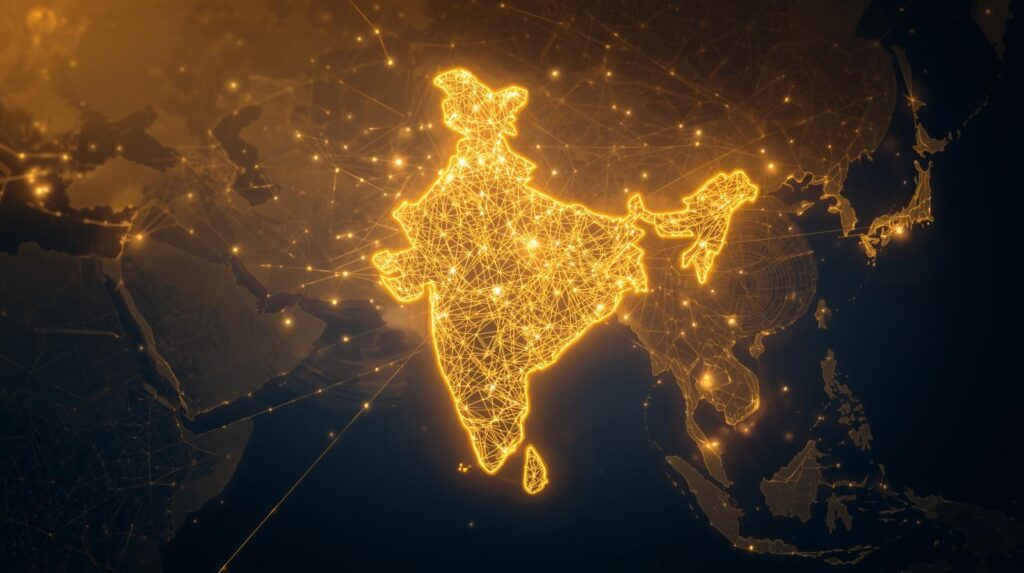
India’s foreign policy is not merely a tool of international diplomacy; it is a reflection of the nation’s civilizational values, moral philosophy, and strategic vision. Since gaining independence, India has shaped its foreign relations on the principles of peace, cooperation, and self-reliance, aiming to build a balanced and stable world order.
Pandit Nehru and the Foundations of Indian Foreign Policy
The foundation of India’s foreign policy was laid by Pandit Jawaharlal Nehru, who envisioned the world as one family — inspired by the ancient Indian philosophy of “Vasudhaiva Kutumbakam” (the world is one family). Nehru chose to keep India independent from global power blocs during the Cold War, establishing the principle of Non-Alignment as the cornerstone of Indian diplomacy.
- Non-Aligned Movement (NAM): Co-founded by India in 1961 along with Yugoslavia, Egypt, and Indonesia, NAM became a collective voice for developing nations during the Cold War.
- Panchsheel Principles: The five principles of peaceful coexistence — mutual respect for sovereignty, non-aggression, equality, mutual benefit, and peaceful coexistence — remain central to India’s foreign policy ethos.
India’s Role in Asia: The Path of Regional Cooperation
India is not just a South Asian nation; it is emerging as a balancing power in Asia. Geographically and strategically located, India’s policies influence the entire region — from the Himalayas to the Indo-Pacific. Its diplomatic approach blends pragmatism with principle, aiming to promote peace and shared prosperity.
Leadership in South Asia
Through organizations like SAARC (South Asian Association for Regional Cooperation), India has sought to strengthen economic, energy, and security ties with neighboring countries such as Nepal, Bhutan, Bangladesh, Sri Lanka, and the Maldives. The “Neighbourhood First” policy reflects India’s commitment to regional solidarity and stability.
Look East to Act East Policy
In the 1990s, India introduced the Look East Policy to deepen economic and strategic ties with Southeast Asian countries. Today, this has evolved into the Act East Policy, emphasizing closer engagement with ASEAN nations in areas of trade, defense, and cultural exchange — reinforcing India’s position as a bridge between South and East Asia.
Asia’s Balance of Power: A New Strategic Equation
Asia has become the epicenter of 21st-century geopolitics. The balance of power among China, Japan, South Korea, and India is continuously reshaping the regional order. India’s participation in the Quad Alliance — alongside the United States, Japan, and Australia — exemplifies its growing role in maintaining a free, open, and inclusive Indo-Pacific region.
India’s Global Image
India’s foreign policy today embodies not just “Vasudhaiva Kutumbakam” but also the spirit of “Sarve Bhavantu Sukhinah” — “May all beings be happy.” Its proactive stance on global issues such as climate change, terrorism, human rights, and economic equality has positioned India as a responsible global power that balances idealism with realism.
Insights from My Learning
[Add your experience here — for example: “While studying India’s foreign policy, I realized that it is not merely a political strategy but a living expression of India’s cultural philosophy and ethical heritage.”] For me, studying Indian diplomacy was not just an academic pursuit, but a realization that a nation can pursue power and principles simultaneously.
Conclusion
India’s foreign policy is not just a set of strategic moves; it is a philosophy rooted in peace, equality, and cooperation. Its growing role in Asia gives this philosophy a global dimension — one that promotes harmony amid diversity. When a nation aligns its national interests with the interests of humanity, it truly earns the title of a “Vishwaguru” — a global teacher and leader of values.
Inspirational Conclusion: The Journey to Becoming a Global Citizen
The study of International Relations (IR) has been for me more than an academic pursuit — it has been a journey of self-discovery. This journey taught me that global politics is not only a story of power and conflict, but also a shared path of human values, dialogue, and cooperation that encourages us to think beyond borders.
Lessons That Took Root
IR showed me that true learning is not merely about accumulating facts, but about gaining understanding. As I delved into state relations, policies, and disputes, I realized that every decision contains a layer of human complexity — and that awareness leads naturally toward a global mindset.
[Add your personal reflection here — e.g., "Studying the UN Sustainable Development Goals made me realize that issues like education, equity, and the environment belong to all of humanity, not just to any single nation."]
A Global Outlook — Thinking Beyond Borders
Today’s world is deeply interconnected — economically, technologically, environmentally, and culturally. Becoming a global citizen is therefore not a choice but a responsibility. IR teaches us to love our nation while also caring for the shared future of humanity.
When Education Becomes Inspiration
My education in IR opened a new lens — one of empathy, coexistence, and collective progress. This subject trains not only nations but individuals to practice the art of balance and understanding. When a student embraces this mindset, they transform from a learner into a global thinker.
A New Chapter — Responsibility and Peace
The journey through International Relations concludes, for me, with the lesson that peace is more than the absence of war — it is the presence of justice, equality, and cooperation. This perspective shapes a true global citizen: someone sensitive to the needs of their community, their country, and the world.
Parting Message
If you are studying International Relations, remember: this field will give you more than knowledge — it can make you an ambassador of humanity. A person who connects through ideas rather than boundaries; who understands that world peace often begins with a compassionate mind.
Ultimately, my journey ends with a simple truth — we are all citizens of one world. Once we accept that, International Relations ceases to be just a subject and becomes a way of life — guiding us to understand, connect, and move forward together.
Conclusion
The path to becoming a global citizen is not a destination but an ongoing process — where every experience, conversation, and idea helps us grow into better, more empathetic humans. That, above all, is the greatest lesson of International Relations: to understand the world, build connections, and progress together.