
Energy Transition vs. Oil Politics: The Battle for Global Dominance
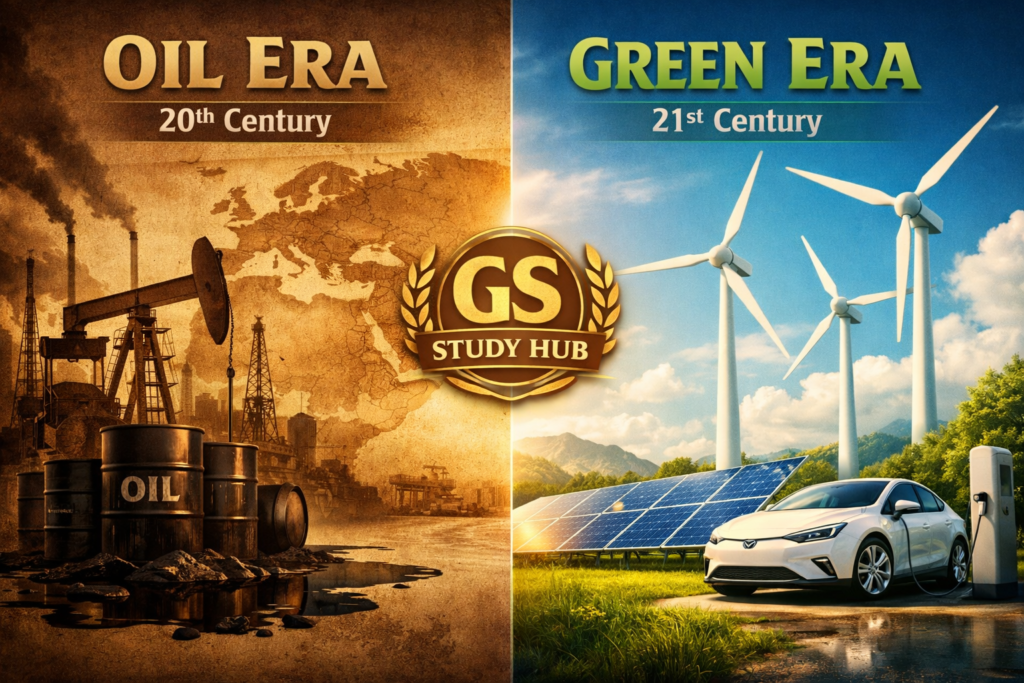
Energy Transition vs Oil Politics is no longer just an academic debate — it has become the defining question of 21st century global power. As renewable energy rises and traditional oil dominance faces structural challenges, the world is witnessing a historic shift in geopolitical influence.
20th Century
The Era of Oil & Petrodollars
21st Century
The Era of Energy Transition
For over a hundred years, the pulse of human civilization has been dictated by the roar of internal combustion engines and the relentless flow of crude oil. Oil wasn't just a commodity; it was a sovereign weapon. It built cities in the sand, triggered world-altering wars, and established a dollar-centric global financial system. But today, the gears of history are grinding toward a new friction point.
Is the Power of Oil Fading?
The short answer is: It is being decentralized. While oil still fuels 80% of global transport, its status as the "Geopolitical King" is under siege.
- Stranded Assets: Multi-billion dollar oil fields are at risk of becoming 'stranded' as climate policies (like the Paris Agreement) force a shift toward Net-Zero.
- The Rise of 'Electrostates': Countries like Norway and China are rapidly electrifying, proving that economic growth can be decoupled from carbon emissions.
- OPEC’s Diminishing Leverage: The ability of oil cartels to shock the global economy is being eroded by the falling costs of Solar and Wind power.
Will Renewables Create a New Geopolitics?
Absolutely. However, it is a common misconception that Green Energy means the end of geopolitics. In reality, it is creating a New Cold War focused on minerals rather than liquid fuel.
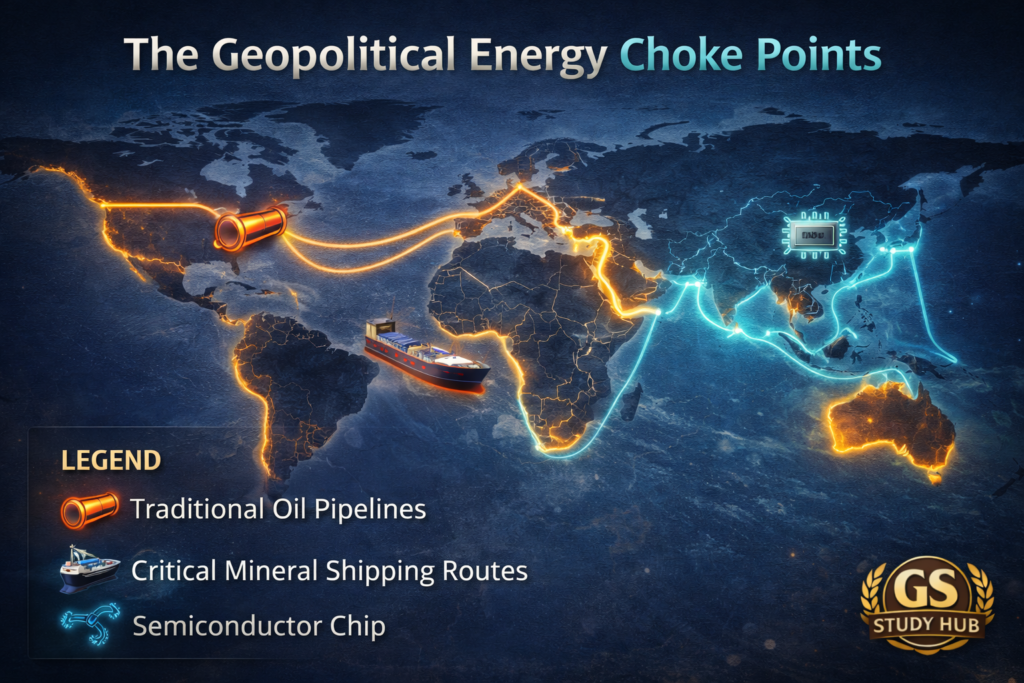
The new "Oil Fields" are the Lithium mines of Chile, the Cobalt reserves of Congo, and the Rare Earth processing plants of China. If the 20th century was about controlling geographic choke points like the Strait of Hormuz, the 21st century is about controlling technological choke points in the supply chain.
Who Will Control the Future?
Control will shift from those who possess the Fuel to those who possess the Formula. The winners will be determined by three critical pillars:
1. The Mineral Monopoly
China currently processes nearly 90% of the world's rare earth elements. The West is scrambling to build 'friend-shoring' alliances to break this monopoly. The country that secures a stable supply of battery minerals will hold the remote control to the world’s transport system.
2. The Hydrogen Frontier
Green Hydrogen is touted as the "Swiss Army Knife" of energy. It can decarbonize steel, shipping, and heavy industry. Nations like India, Australia, and Saudi Arabia are racing to become 'Green Hydrogen Hubs' to replace their reliance on (or export of) fossil fuels.
3. Intellectual Property (IP) Dominance
In the oil era, you just needed a hole in the ground. In the transition era, you need patents. Advanced semiconductors, solid-state batteries, and carbon capture technologies are the new 'nuclear codes' of economic sovereignty.
| Feature | The Oil Era (Old Guard) | The Transition Era (New Guard) |
|---|---|---|
| Core Commodity | Crude Oil & Natural Gas | Critical Minerals & Electrons |
| Geopolitical Focus | Middle East / Russia | China / USA / India / EU |
| Primary Risk | Price Volatility & Wars | Supply Chain Disruptions |
| Economic Engine | Resource Extraction | High-Tech Manufacturing |
Conclusion: The Hybrid Reality
We are not entering a world without oil; we are entering a world where oil is no longer the only game in town. The transition will be messy, marked by "Green Inflation" and energy insecurity. However, the ultimate prize is Energy Independence. For a country like India, which imports billions of dollars of oil, this transition is the greatest opportunity for strategic autonomy since independence.
The crown is moving from the Oil Well to the Silicon Chip. The future is electric, and it is already here.
GeopoliticsHistoryEconomy
The Rise of Oil Politics: The Era of Black Gold
Before the 19th century, the world ran on wood, coal, and muscle. But the discovery of oil in Pennsylvania in 1859, followed by the massive gushers in Baku and the Middle East, signaled a seismic shift in human destiny. Oil was no longer just a lubricant; it became the vitreous lifeblood of industrial civilizations and the ultimate pawn in the game of global empires.
— Henry Berenger, 1919
1. Oil and Imperialism: The Desert Chessboard
The dawn of the 20th century saw a frantic scramble for "concessions." Imperial powers realized that their navies—the primary tools of global dominance—needed to switch from bulky coal to efficient oil. This transition, led by Winston Churchill for the British Royal Navy, turned the Middle East into the most valuable real estate on Earth.
The Significance of the Middle East
The vast, sun-drenched sands of Iraq, Iran, and the Arabian Peninsula sat atop nearly two-thirds of the world's proven reserves. The Anglo-Persian Oil Company (now BP) and the California-Arabian Standard Oil Company (now Chevron) became the corporate arms of Western imperialism. Sovereignty in these regions was often a hollow concept; the real power resided in the "Seven Sisters"—a group of Western oil giants that controlled production, pricing, and distribution with an iron fist.
Colonial Powers and Liquid Sovereignty
Oil dictated the borders drawn after World War I. The Sykes-Picot Agreement and the subsequent mandates were less about cultural boundaries and more about securing pipeline routes. The colonial logic was simple: keep the oil flowing, keep the prices low, and keep the local monarchs dependent on Western military protection.
2. The Petro-Dollar System: The Financial Anchor
If oil was the blood of the economy, the US Dollar was the oxygen. After the Bretton Woods System (which tied the dollar to gold) collapsed in 1971, the world faced financial chaos. However, a masterstroke of diplomacy transformed the dollar from a gold-backed currency to an oil-backed currency.
The Deal of the Century
In 1974, the United States and Saudi Arabia struck a monumental agreement: the Saudis would price all their oil exports exclusively in US Dollars. In return, the US provided the Kingdom with military hardware and security guarantees. This created an artificial, global demand for the greenback. Every country, from Japan to Germany, had to hold dollar reserves just to buy fuel. This "Petro-Dollar" cycle allowed the US to run massive deficits while remaining the world’s undisputed financial hegemon.
3. The 1973 Oil Crisis: The Day the World Stood Still
For decades, the West took cheap oil for granted. That ended in 1973. During the Yom Kippur War, Arab members of OPEC (Organization of the Petroleum Exporting Countries) realized they held a weapon more powerful than tanks: the Embargo.
This crisis was a turning point. It proved that the Global South could challenge the West. OPEC was no longer just a trade group; it was a geopolitical titan that could dictate the fate of world leaders with a single production quota meeting.
4 Energy and Warfare: Pipelines and Battlefields
In the modern era, "National Security" has become synonymous with "Energy Security." Wars are rarely fought for democracy; they are fought for the security of supply.
The Gulf Wars
When Saddam Hussein invaded Kuwait in 1990, the global response was swift. It wasn't just about liberating a small nation; it was about preventing a hostile dictator from controlling 20% of the world's oil supply. The Gulf War was a clear demonstration that the US military was the ultimate guarantor of the global oil flow.
The Russia–Ukraine Energy Conflict
Fast forward to the 21st century: the Russia-Ukraine war has weaponized natural gas. Europe’s dependence on Russian pipelines (like Nord Stream) became a strategic vulnerability. This conflict has proved that "Energy Interdependence" can be used as a tool of blackmail, forcing a frantic and desperate acceleration toward the Energy Transition we see today.
| Event | Key Player | Geopolitical Impact |
|---|---|---|
| 1953 Iranian Coup | CIA / MI6 | Overthrew Mossadegh to prevent oil nationalization. |
| Formation of OPEC (1960) | Venezuela / Saudi / Iraq | Transferred pricing power from companies to nations. |
| Nord Stream Sabotage | Unknown | Permanently severed the energy link between Russia and Germany. |
Summary: A Legacy of Dependence
The history of oil politics is a story of power, greed, and survival. From the colonial concessions of the 1920s to the pipeline wars of the 2020s, oil has been the central theme of international relations. However, as the world moves toward decarbonization, this old guard is facing an existential threat.
The 20th century was defined by who had the oil. The 21st century will be defined by who can survive without it.
Understanding Energy Transition: The Path to a Sustainable Future
Human history is a saga of energy evolution. From the discovery of fire to the Industrial Revolution powered by coal, every leap in energy use has redefined civilization. Today, we stand at the threshold of the most critical shift yet: the Energy Transition. This isn't just a change in fuel; it is a global race to save our planet and secure economic sovereignty for the next thousand years.
1 Defining the Energy Transition: Beyond Renewables
At its core, Energy Transition is the structural transformation of the global energy sector from fossil-based systems of energy production and consumption—including oil, natural gas, and coal—to zero-carbon energy sources like wind and solar, as well as lithium-ion batteries.
However, it is much deeper than simply swapping a coal plant for a solar farm. It involves a fundamental redesign of how we live. This shift is characterized by three major "D's":
- Decarbonization: Reducing the carbon footprint of every kilowatt-hour produced.
- Digitalization: Using AI and Smart Grids to manage energy demand in real-time.
- Decentralization: Moving power generation from massive central plants to rooftop solar and local energy cooperatives.
2 Carbon Neutrality and Climate Change: The "Why"
The driving force behind this transition is the existential threat of Climate Change. For two centuries, we have treated the atmosphere as a free dumping ground for Greenhouse Gases (GHGs). The result? Rising sea levels, extreme weather events, and an unstable global ecosystem.
What is Net-Zero (Carbon Neutrality)?
The goal of the Energy Transition is to reach Net-Zero. This refers to a state in which the greenhouse gases going into the atmosphere are balanced by removal out of the atmosphere. Under the Paris Agreement, nations have pledged to limit global warming to well below 2°C, preferably to 1.5°C. To achieve this, the global energy mix must be 80-90% carbon-free by 2050.
3. The Technological Revolution: Four Pillars of Change
We are finally succeeding because the technology has become cheaper than the problem. The Energy Transition is currently carried on the shoulders of four transformative technologies:
Solar Photovoltaics
The cost of solar energy has plummeted by over 80% since 2010. Sunlight is now the cheapest source of electricity in history.
Wind Power
Giant offshore wind turbines can now power entire cities, providing consistent and clean energy at a massive scale.
Electric Mobility
Transportation is the biggest consumer of oil. EVs are killing the internal combustion engine and cleaning our city air.
Battery Storage
Storage is the "Holy Grail." Modern batteries allow us to use solar power at midnight and wind power on a calm day.
The Frontier: Green Hydrogen & Beyond
While Solar and Wind are great for electricity, industries like steel manufacturing and heavy shipping cannot easily run on batteries. This is where Green Hydrogen enters the frame. By using renewable electricity to split water into hydrogen and oxygen, we create a fuel that emits only water vapor when burned—perfect for "hard-to-abate" sectors.
Challenges on the Horizon
The transition is not without hurdles. It requires a massive increase in the mining of Critical Minerals like Lithium, Cobalt, and Copper. There is also the challenge of 'Energy Justice'—ensuring that developing nations have the funds and technology to skip the fossil fuel stage and go straight to green energy.
Conclusion: A New Economic Order
The Energy Transition is more than an environmental mission; it is the birth of a new economic order. Nations that lead in green technology will be the "Superpowers" of tomorrow. For a country like India, which spends billions on oil imports, the transition offers a path to Energy Independence and a cleaner, healthier future for 1.4 billion people.
New Geopolitics: The Rise of Critical Mineral Diplomacy
In the 20th century, the world’s strategic compass was set by oil derricks and desert pipelines. Today, the needle has shifted. As we pivot toward a decarbonized future, the focus is moving from "Fuel-intensive" systems to "Material-intensive" ones. The new battleground for global supremacy isn't located in the oil fields of the Middle East, but in the brine flats of the Andes and the deep mines of the Congo. Welcome to the era of Critical Mineral Geopolitics.
1. The Lithium Triangle: The New Middle East?
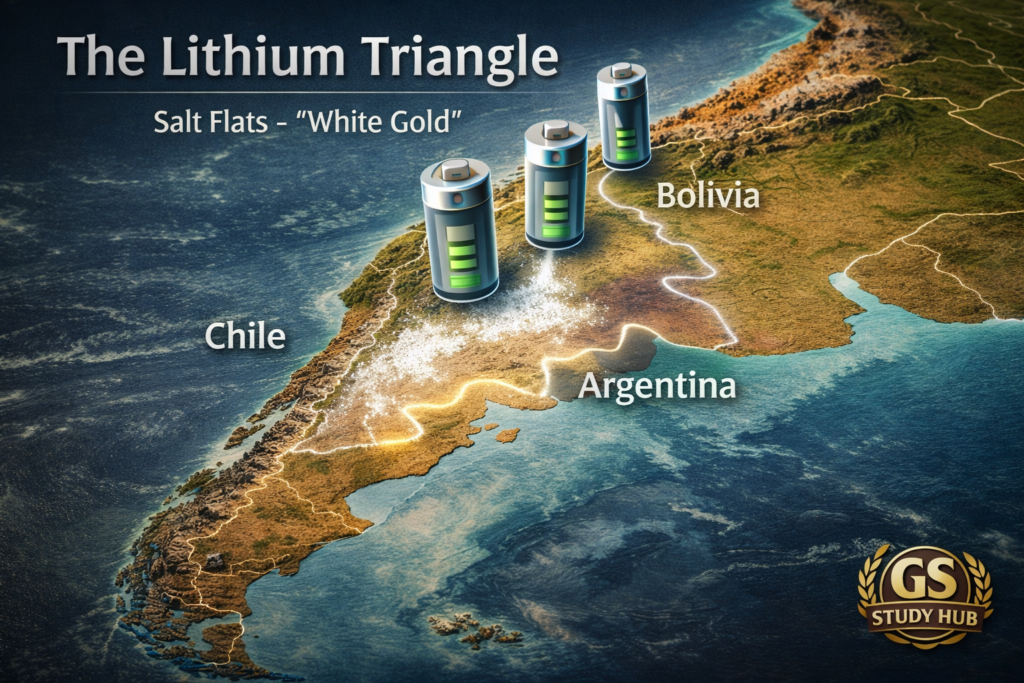
Lithium is often called 'White Gold' because it is the indispensable heart of the modern battery. Geographically, the most significant concentration of this mineral is found in the Lithium Triangle—a high-altitude region spanning Chile, Bolivia, and Argentina. Together, these three nations hold over 50% of the world’s identified lithium reserves.
However, extracting this lithium is a geopolitical challenge. Unlike oil, which can be pumped relatively easily, lithium extraction in this region involves vast evaporation ponds that consume enormous amounts of water in arid ecosystems. This has led to Mineral Nationalism, where governments are seeking to nationalize mines to ensure that the "Green Wealth" benefits their local populations rather than foreign corporations.
Lithium Triangle
Chile, Bolivia, Argentina. Home to massive salt flats (Salars). Control over 50% of global brine-based lithium.
Cobalt & Africa
DRC (Congo). Produces 70% of global cobalt. Faces issues of artisanal mining and human rights scrutiny.
The China Hub
Refining & Processing. Dominates over 80% of global mineral refining capacity regardless of where they are mined.
2. Cobalt and Africa: The Ethics of Energy
While lithium powers the battery, Cobalt ensures its stability and density. The world's dependency on the Democratic Republic of Congo (DRC) for cobalt is staggering—over 70% of global supply originates here. This concentration creates a massive strategic vulnerability.
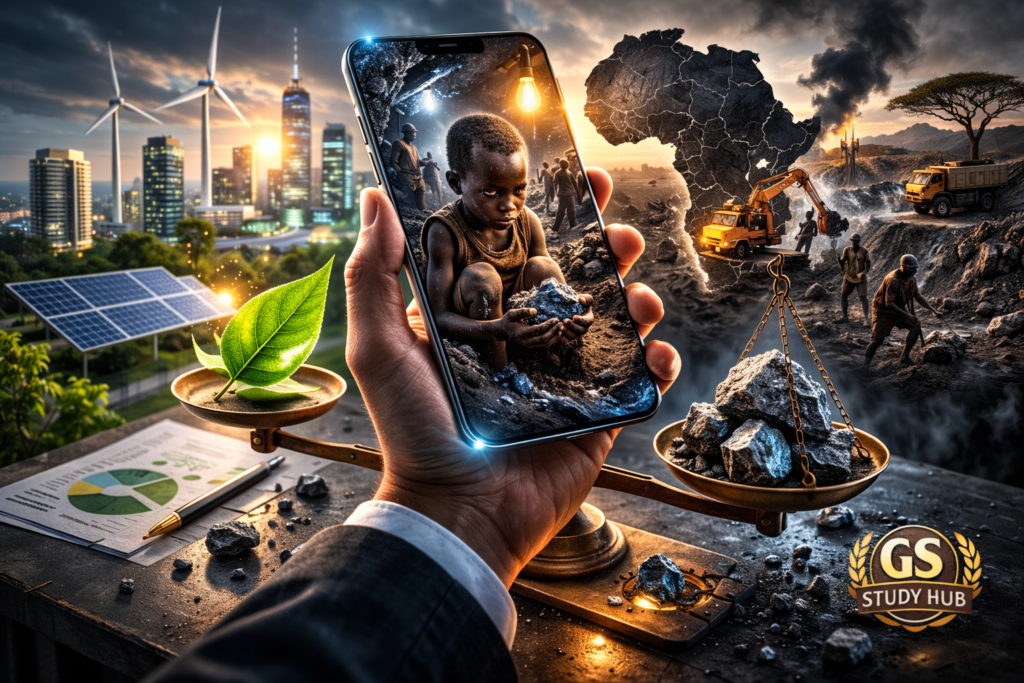
The geopolitics of Cobalt is also an ethical minefield. Much of the mining is "artisanal," involving child labor and hazardous conditions. Global tech giants and EV manufacturers are caught in a dilemma: they need Congo’s cobalt to save the planet from carbon, but the human cost of extraction is a PR nightmare. This has triggered a race to develop "Cobalt-free" batteries, yet for now, the DRC remains the sun around which the battery world orbits.
3. China’s Supply Chain Hegemony: The Great Wall of Batteries
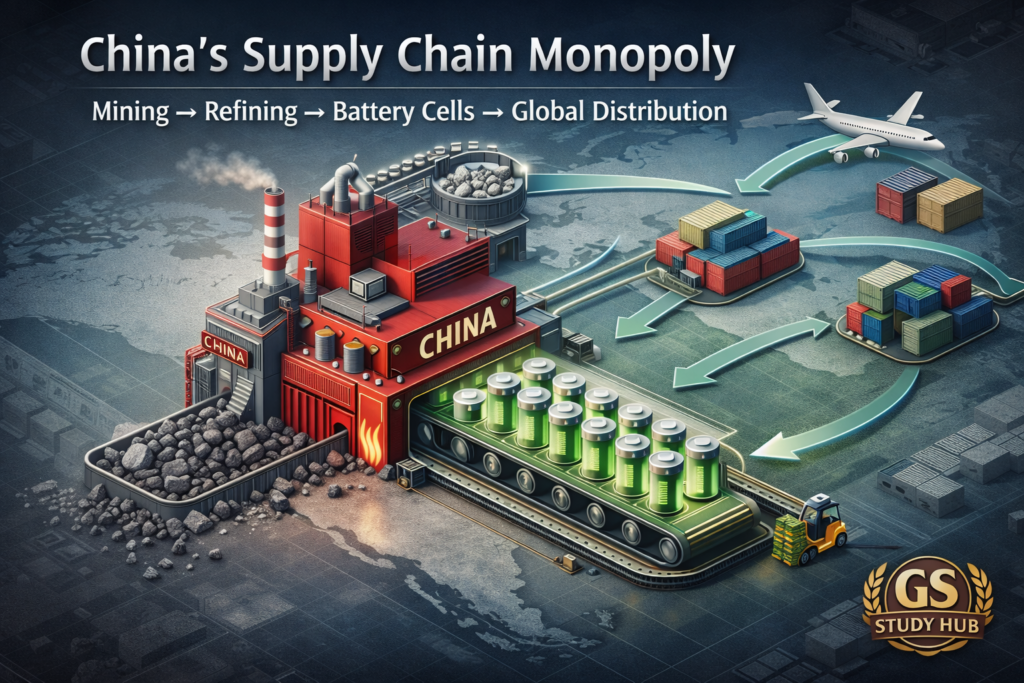
The most alarming aspect of current geopolitics isn't where the minerals are mined, but where they are refined. China has executed a brilliant, multi-decade strategy to dominate the middle of the supply chain.
China's Battery Stranglehold
Mining a mineral is only 10% of the journey; turning it into a battery-grade chemical is the difficult part. China currently controls approximately 80% of global mineral refining. Even if the US or India mines their own lithium, they often have to send it to China for processing. By controlling the Anodes, Cathodes, and Cells, China has effectively become the "OPEC of the 21st Century."
4. Will there be a “Mineral OPEC”?
As nations realize the value of their rocks, the concept of a Sovereign Mineral Alliance is gaining traction. Indonesia, the world’s largest producer of Nickel, has already floated the idea of an OPEC-style cartel for nickel producers.
The goal would be to control production quotas and keep prices high. However, unlike oil, minerals are not "consumed" once used; they can be recycled. This makes a mineral cartel harder to sustain in the long run, but in the short-term transition phase (2025–2040), such an alliance could hold the global economy hostage.
| Mineral | Dominant Miner | Dominant Refiner | Strategic Use |
|---|---|---|---|
| Lithium | Australia / Chile | China (60%) | EV Batteries, Grid Storage |
| Cobalt | DR Congo (70%) | China (80%) | Battery Heat Stability |
| Rare Earths | China (60%) | China (90%) | Jet Engines, Magnets, Wind Turbines |
| Graphite | China | China (100%) | Anodes for all Batteries |
Conclusion: The Road Ahead for India
For India, the stakes couldn't be higher. To achieve its 2070 Net-Zero goal, India must secure its own mineral supply chains. The recent discovery of Lithium in Reasi (J&K) and Degana (Rajasthan) is a start, but India must focus on "Mineral Diplomacy." By joining the Minerals Security Partnership (MSP) led by the US and investing in overseas mines via KABIL, India is trying to bypass the Chinese bottleneck.
The 21st century belongs to those who own the Periodic Table.
Grand Strategies of Great Powers: The Energy Game
Throughout history, the nations that controlled the flow of energy dictated the terms of global trade and security. In the 19th century, coal was the anchor of the British Empire. In the 20th century, oil catapulted the United States to hyper-power status. But in the 21st century, the game has changed. We are moving from a world of Resource Wealth to a world of Technological Monopoly. The battle is no longer just for the "wellhead," but for the "supply chain."
1 United States: Innovation and Re-Shoring
American strategy is built on a "Dual-Track" approach. It aims to remain the world's leading producer of traditional oil and gas while simultaneously trying to seize the lead in the next generation of clean technology.
The Shale Revolution
The 2010s "Shale Boom" turned the US into a net energy exporter, ending decades of vulnerability to Middle Eastern politics. This allowed Washington to use Energy Diplomacy as a coercive tool, sanctioning rivals like Iran and Russia without crashing its own economy.
IRA (Inflation Reduction Act)
The **IRA** is perhaps the most significant piece of climate legislation in history. It isn't just an environmental bill; it is a Protectionist Strategic Policy. By providing nearly $370 billion in subsidies, the US is enticing global manufacturers to move their factories to American soil, aiming to break the "Made in China" dominance in solar panels and EV batteries.
2. China: The "OPEC" of Green Tech
Beijing realized early on that it could never win the "Oil Game" due to its lack of domestic reserves. Instead, it decided to change the board. It invested in the technologies that the world would eventually have to buy.
Solar & Battery Hegemony
China currently produces over 80% of the world's solar panels and nearly 75% of lithium-ion batteries. Through Vertical Integration, China controls everything from the processing of raw lithium to the final assembly of the battery cell. This gives Beijing a "valve" on the world's energy transition; they can speed it up or slow it down as per their strategic interest.
Belt and Road Initiative (BRI)
The BRI is China's mechanism to secure energy corridors. Whether it is deep-water ports in Pakistan or lithium mines in Africa, China is building a 21st-century "Silk Road" where all energy roads lead to Beijing.
3. Europe: The Quest for Strategic Autonomy
For the European Union, the Energy Transition is a matter of Survival. Decades of dependence on cheap Russian gas proved to be a strategic disaster. Now, Brussels is attempting to decouple its economy from geopolitical blackmail.
The EU Green Deal
The goal is to be the first carbon-neutral continent by 2050. To protect its industries, the EU introduced the CBAM (Carbon Border Adjustment Mechanism). This acts as a "Green Tariff," forcing any nation wanting to sell to Europe to meet strict environmental standards, effectively exporting European climate regulations to the rest of the world.
End of Dependency
The Russia-Ukraine war was a wake-up call. Europe is now aggressively building offshore wind farms and a "Hydrogen Backbone" to ensure that no single pipeline can ever threaten its heating or electricity again.
4. Russia: Resource Weaponization
Russia remains a Resource Superpower. Vladimir Putin’s strategy has always been to use energy as a "Geopolitical Wedge" to divide the West.
Pipeline Geopolitics
Through the Nord Stream pipelines, Russia attempted to make Germany and Central Europe permanently reliant on its gas. While the war in Ukraine has severed many of these ties, Russia is now pivoting toward the East, building massive new pipelines to China and increasing LNG (Liquefied Natural Gas) exports to India.
Energy as a Weapon
By cutting off gas flows, Russia demonstrated that energy can be as lethal as artillery. However, this has accelerated the world's move away from gas, potentially leaving Russia with "Stranded Assets" in the long term. Their current strategy is to find new buyers in the "Global South" to replace their lost European market.
5. Middle East: Beyond the Oil Well
The Gulf Monarchies are no longer passive oil suppliers; they are becoming Global Energy Investors. They know the "Age of Oil" is winding down and are racing against the clock.
Saudi Arabia’s Vision 2030
Crown Prince Mohammed bin Salman’s **Vision 2030** is a plan to diversify the Saudi economy. They are using their "Oil Rents" to build the world's largest solar parks and are positioning themselves to be the leading exporters of Green Hydrogen.
Energy Diversification
From the UAE’s nuclear power plants to Qatar’s massive LNG expansion, the Middle East is positioning itself as an "Energy Hub" rather than just an oil hub. They want to ensure that even in a Net-Zero world, the world still has to pay them for "energy," whether it comes in a barrel or a hydrogen tank.
Conclusion: The Future Winner
In this high-stakes game, the winner won't be the country with the most oil, but the country with the most Resilient Supply Chain. As the US and China enter a "Green Cold War," the rest of the world must choose sides or build their own path. For students of Geopolitics, remember: The 20th century was defined by geography (where the oil is); the 21st century is defined by Chemistry (what the battery is made of).
The crown is passing from the Oil King to the Silicon Giant.
Asia’s Emerging Energy Landscape: The New Global Pivot
Asia is no longer just the world’s factory; it is the world’s energy engine. Over 60% of the projected growth in global energy demand over the next two decades is expected to come from this continent alone. However, Asia faces a unique paradox: it is the world's largest importer of fossil fuels while simultaneously being the fastest-growing market for renewable energy. At the heart of this transition are two giants—India and China—redefining the rules of the game.
1. India’s Role: Rise of a Global Energy Leader
India has undergone a tectonic shift in its energy policy, moving from a position of 'Security through Imports' to 'Security through Self-Reliance.' India's Panchamrit (Five Nectar) pledge at COP26 has set a new global benchmark for developing economies.
India’s Solar Mission: Harnessing the Sun
India’s solar journey is nothing short of a miracle. From a mere 2.6 GW in 2014, India has surged past 75 GW in solar capacity. Through the International Solar Alliance (ISA), India has championed the vision of "One Sun, One World, One Grid," positioning itself as the leader of the Global South in climate diplomacy.
Green Hydrogen: The Fuel of the Future
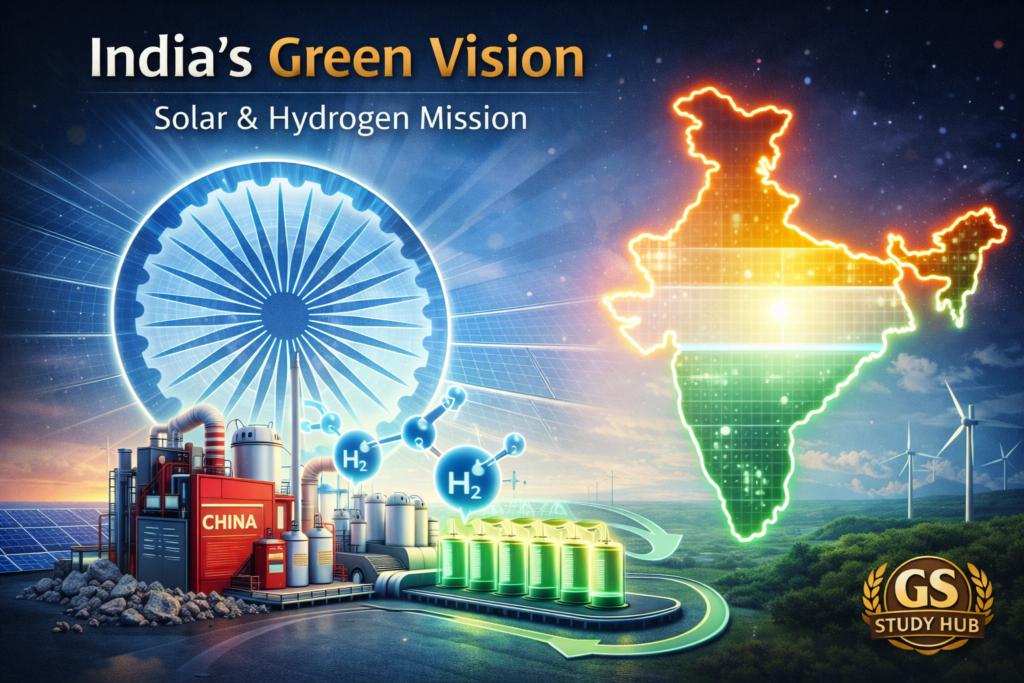
India aims to become a Global Green Hydrogen Hub. Under the National Green Hydrogen Mission, India is targeting the decarbonization of its "hard-to-abate" sectors like steel and fertilizers. This is India’s ultimate weapon to slash its massive oil import bill and achieve strategic autonomy.
Energy Independence (Atmanirbharta)
Under the 'Make in India' initiative, India is shifting from importing technology to manufacturing it. The Production Linked Incentive (PLI) schemes for high-efficiency solar modules and Advanced Chemistry Cells (ACC) batteries are designed to ensure that India isn't just a consumer, but a producer in the new energy world.
2. China vs. India: The Battle for Asian Dominance
The rivalry between China and India in the energy space is a battle of 'Scale' versus 'Trust.' While China spent the last two decades building a near-monopoly on clean-tech manufacturing, India is offering the world a transparent and reliable alternative.
While China currently holds the upper hand in manufacturing capacity, its "OPEC-like" tendency to weaponize supply chains has alerted the world. India is capitalizing on this geopolitical shift, presenting itself as a Trustworthy Global Partner for the energy transition.
3. Technology from Japan and Korea: The Innovation Hubs
In this high-stakes Asian game, Japan and South Korea stand as the 'Technological Superpowers.' While they lack the vast landmass of India or China, they possess the intellectual capital that will shape the future of energy.
Japan’s Hydrogen Economy
Japan realized early on that batteries are not the only solution. Consequently, Japan has mastered Hydrogen Fuel Cell technology. Companies like Toyota and Honda are leading this charge. Furthermore, Japan is investing heavily in 'Deep-Sea Mining' and Methane Hydrates to secure its future resources.
[Image of hydrogen fuel cell vehicle components]South Korea’s Battery Prowess
When it comes to high-end EV batteries (NMC - Nickel Manganese Cobalt), Korean giants like LG Energy Solution and Samsung SDI provide a formidable challenge to Chinese manufacturers. South Korea’s strategy is rooted in 'Quality,' 'R&D,' and 'Intellectual Property.'
The Integration of Asia: Challenges and Opportunities
Asia possesses the sun, the wind, and the brains, but the lack of political synergy remains a hurdle. If India, Japan, and Southeast Asian (ASEAN) nations can succeed in building an 'Asian Power Grid,' the continent will be able to provide the world’s cheapest and most stable green energy.
Conclusion
The energy landscape of Asia is shifting at breakneck speed. India, with its 'Soft Power' and 'Clean Energy Mission,' is emerging as a balancing force in the region. The future Asian superpower will not just be the one that produces the most energy, but the one that develops the technology to store it and the diplomacy to share it across borders.
Will Oil Politics End? The Strategic Reality
The Stone Age did not end because of a lack of stones, and the Oil Age will not end because of a lack of oil. However, the million-dollar question remains: Is the geopolitical supremacy of "Black Gold" finally fading? Will the cartels of the 20th century lose their seat at the global high table? This analysis is not just about energy—it is about the very architecture of global power.
Analysis: The Current Resilience of Crude
1. Current Global Demand: An Unbreakable Bond
Despite the roar of the Energy Transition, the world still consumes over 100 million barrels of oil every single day. While Electric Vehicles (EVs) are eating into the passenger car market, oil remains the undisputed king of heavy industry, petrochemicals, and aviation. From the plastics in your laptop to the fertilizers that feed billions, oil is deeply integrated into the modern survival matrix.
2. The Shift to Emerging Markets
While oil demand is plateauing in Europe and North America, it is surging in India, Southeast Asia, and Africa. For these emerging economies, "Affordable Energy" is the prerequisite for development. As the focus shifts from the West to the East, the center of oil diplomacy is moving from producer-dominance to consumer-leveraged politics.
3. The Petrodollar Fortress: Financial Hegemony
The strongest pillar of oil politics is the 'Petrodollar.' As long as the majority of global oil trade is conducted in USD, the greenback remains the world’s reserve currency. However, the rise of De-dollarization—led by China and Russia trading oil in Yuan or Rubles—threatens the very foundation of American financial supremacy. If the link between oil and the dollar breaks, the geopolitics of finance will change forever.
Conclusion: A Long Transition, Not a Sudden Crash
Oil politics will not vanish overnight. Instead, we are entering a prolonged and turbulent hybrid era where fossil fuels and renewables will coexist in a tense competition. The transition will be evolutionary, not revolutionary.
| Factor | Traditional Oil Politics | New Energy Geopolitics |
|---|---|---|
| Source of Power | Wells & Pipelines | Grids & Mineral Mines |
| Key Players | OPEC, Russia, USA | China, India, EU |
| Political Basis | Control of Supply | Control of Technology |
| Time Horizon | Dominant (Next 30 years) | Rising (The Future) |
Final Thoughts: The Transformation
Is this the end? No. It is the Metamorphosis. Oil politics is moving from the "Barrel" to Carbon Credits and the Hydrogen Economy. The same nations that grew wealthy on oil are now using those riches to buy the future of green energy (e.g., Saudi Arabia’s Vision 2030).
Artificial Intelligence is accelerating the efficiency of renewable grids, smart mobility, and energy forecasting systems. India’s digital transformation plays a major role in this shift. Explore how this technological revolution is unfolding in our article on Digital India AI Revolution 2026.
The Risks of Energy Transition: Unveiling the Hidden Crisis
The **Energy Transition** is often painted as a utopian dream—a world of crystal-clear skies and infinite, free electricity. However, in the realm of high-stakes geopolitics, there is no such thing as a free lunch. Just as oil fueled wars and inequality in the 20th century, the green transition of the 21st century carries its own set of complex and dangerous risks. If we are not careful, we may simply trade our "Oil Shackles" for a new form of "Mineral and Technological Servitude."
1. New Dependencies: From Crude Oil to Critical Minerals
The world is shifting its gaze from **Oil Security** to **Mineral Security**. The hearts of our green future—Electric Vehicles and Grid Storage—depend entirely on Lithium, Cobalt, Nickel, and Copper.
Concentration of the Supply Chain
While the oil market had at least a dozen major producers (OPEC+), the control of critical minerals is far more concentrated. China alone controls nearly 80% of the world's mineral refining capacity. This creates a new strategic bottleneck. If a single nation weaponizes this supply chain, the entire world's green transition could be held hostage, leading to economic paralysis.
2. Technological Inequality: The Green Digital Divide
The Energy Transition is more about Technology than geography. The ability to manufacture high-efficiency solar panels, advanced wind turbines, and solid-state batteries is concentrated in a handful of nations and corporations.
Developed nations (the Global North) are using 'Intellectual Property Rights' (IPR) to keep these technologies expensive and exclusive. This is creating a new 'Green Divide.' Nations that cannot develop their own technology are forced to remain perpetual 'Buyers,' ensuring their economies remain dependent on external powers for the very energy they need to grow.
3. Challenges for Developing Nations: Finance and Infrastructure
For nations like India, those in Africa, and Southeast Asia, the Energy Transition is a 'double-edged sword.' While they suffer most from climate change, the cost of the cure is staggering.
4. Green Colonialism: The New Imperialism
This is the most controversial and dark aspect of the transition. Green Colonialism refers to the exploitation of resources in poor countries to meet the "Green Ambitions" of wealthy ones.
In regions across Africa and Latin America, forests are being cleared and local communities displaced to make room for Lithium and Cobalt mines. Ironically, the minerals extracted from these lands power the luxury EVs in European cities, while the local people living on that land often lack basic access to electricity. It is a New Loot of resources under the banner of environmental protection.
Comparative Analysis of Risks
| Factor | The Fossil Fuel Era | The Green Energy Era (Risks) |
|---|---|---|
| Dependency | Oil-producing nations (OPEC) | Tech and Mineral Refiners (China) |
| Power Base | Geographical Resources | Technological Patents & Innovation |
| Cause of Conflict | Pipelines and Sea Lanes | Mines and Refining Hubs |
| Primary Risk | Price Volatility | Supply Chain Disruptions & Tech Monopolies |
Conclusion: The Need for a Balanced Path
The Energy Transition is non-negotiable, but it must not be 'blind.' The global community must focus not just on carbon reduction, but on Energy Sovereignty and Energy Justice. Providing technology transfer and affordable financing to developing nations is not just a moral obligation; it is a necessity for global stability. Without a fair transition, we may escape the clutches of climate change only to enter an era of global conflict and new forms of energy-based slavery.
“If we fail to recognize the risks, we will trade a climate crisis for a geopolitical one.”
Technological dominance — especially in AI and cutting-edge R&D — is increasingly a core driver of national security strategies. To understand how the US–China tech war is influencing global power dynamics, see our full analysis of the AI tech rivalry and global power shift.
Conclusion: The Sovereign of the Energy Future
The time has come to answer the fundamental question that sparked this entire series: After the dust of the Great Energy Transition settles, whose hand will be on the "Remote Control" of global power? Will it be the oil-rich monarchs of the past, the green-tech titans of the present, or a new breed of financial and technological powerhouses?
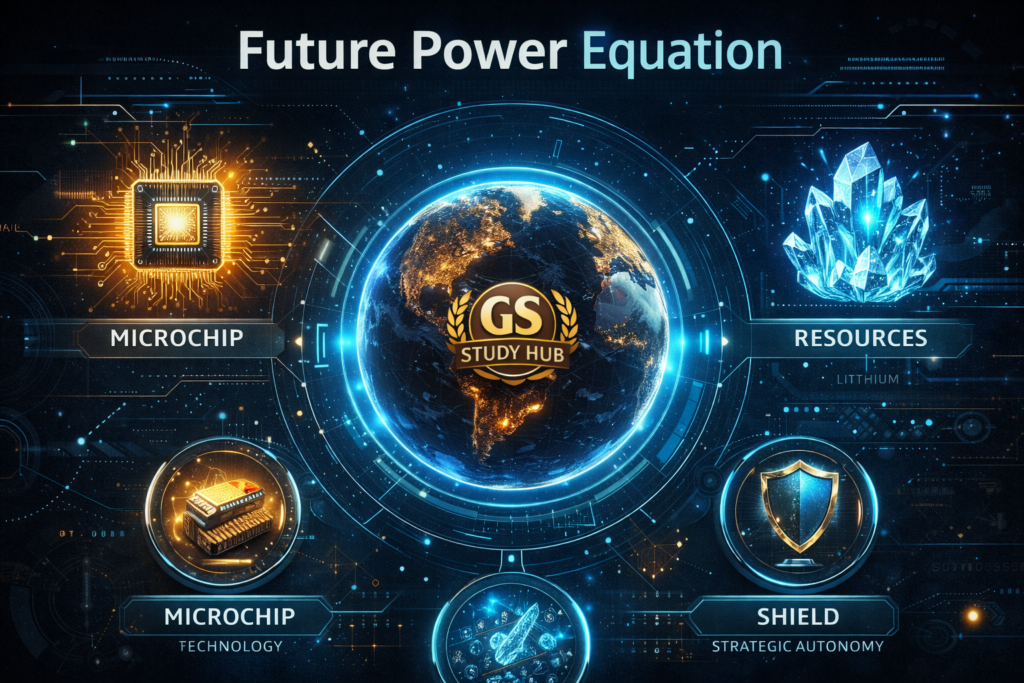
History teaches us that power is never static. It flows toward the intersection of Strategic Foresight and Technological Monopoly. The control of the future will not belong to a single resource, but to a sophisticated ecosystem of innovation and resilience.
The Definitive Answer: The New Power Players
Future dominance will be split into three distinct categories. Nations that can balance all three will emerge as the true global hegemons:
Architects of Technology
Control belongs to those who own the Intellectual Property (IP). Patents in solid-state batteries, green hydrogen electrolysis, and nuclear fusion are the new "nuclear codes" of economic sovereignty.
Sentinels of the Supply Chain
From the lithium mines of the Andes to the high-tech refineries of Asia—whoever secures the Critical Mineral Choke Points will dictate the pace of the global economy.
Masters of Diversification
Reliance on a single source (whether oil or solar) is a vulnerability. The future is Hybrid. National security will depend on a sophisticated mix of traditional and renewable energy baskets.
The Geopolitical Re-Balancing
To control the future, raw technology is not enough; it requires Geopolitical Agility. The map of power is being redrawn before our eyes:
- China’s Gamble: China is currently the "Dictator of the Supply Chain." However, the world is shifting toward a "China Plus One" strategy to break this monopoly.
- American Resilience: Leveraging its massive financial depth and innovation culture, the US is attempting to re-shore clean-tech through legislation like the IRA.
- India’s Ascendance: As a massive market and the voice of the "Global South," India is emerging as a Strategic Balancer. India’s lead in the International Solar Alliance and Green Hydrogen makes it an indispensable player in the new world order.
Final Summary: The Equation of Power
| Factor of Control | Who Benefits? | Strategic Outcome |
|---|---|---|
| Technological Patents | USA, Japan, South Korea | Setting Global Tech Standards |
| Mineral Processing | China, Australia, Chile | Levers of the Global Supply Chain |
| Diverse Energy Basket | India, Saudi Arabia (Vision 2030) | Economic Stability & Immunity to Shocks |
Ultimately, the future belongs to those who understand the Velocity of Change. Nations stuck in the comfort of the old oil era will become obsolete. Conversely, nations that gamble purely on renewables without a resilient backup will face instability.
“True power no longer lies in 'Resources,' but in 'Resilience' and the 'Supply Chain'.”
Explore how global inflation affects low-income and emerging economies in our detailed article: Global Inflation & Its Impact on Developing Countries.
Frequently Asked Questions (FAQs)
Check our 'Geopolitics Masterclass' for more deep-dives.