
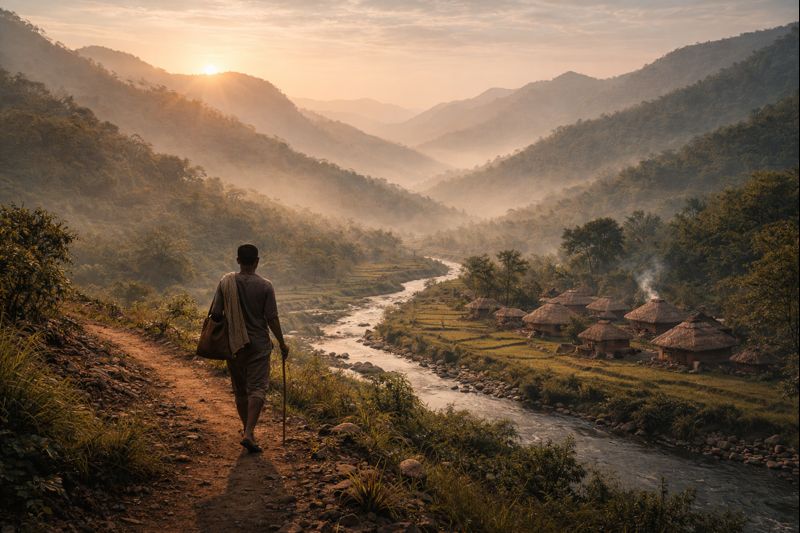
Introduction to the Eastern Ghats
When I first heard the name Eastern Ghats, it was nothing more than a distant mountain range on a map for me. I did not know then that these hills were not just layers of stone and soil, but a living record of India’s geography, culture, and silent struggles. As I began to read, listen, and observe, this ancient range slowly transformed from a geographical term into a deeply human story.
Stretching across Odisha, Andhra Pradesh, Telangana, and Tamil Nadu, this mountain system forms one of the oldest and most overlooked highland regions of India. Unlike the Western Ghats, it does not rise as a continuous wall of peaks, yet its broken ranges carry an uninterrupted legacy of rivers, forests, tribal life, and ancient pathways. Every hill, valley, and river here reflects a delicate balance between nature and civilization.
For me, these hills became more than a subject of study — they became a lesson in patience and resilience. Watching the quiet villages, listening to the stories of local communities, and feeling the rhythm of life shaped by these mountains, I realized that development and survival walk together here, often in painful contradiction.
This article is not written merely to describe the Eastern Ghats, but to share what this landscape taught me. It is a journey through landscapes, memories, and reflections — a story of nature, struggle, and hope. If these words can help you see this region not just as mountains, but as a living heritage, then this introduction has fulfilled its purpose.
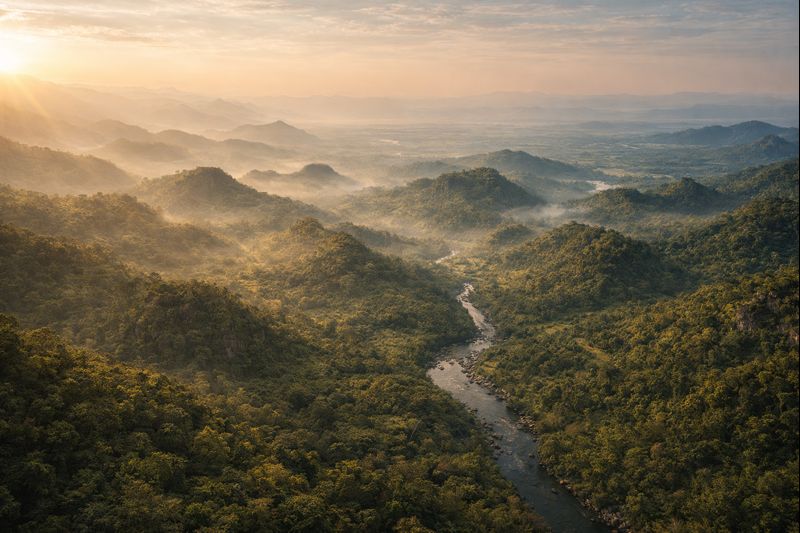
A Brief Introduction to the Eastern Ghats
The Eastern Ghats are one of the oldest mountain systems of India, running parallel to the eastern coast of the country. Although less continuous and lower in elevation than the Western Ghats, this ancient range plays a vital role in shaping the geography, climate, and ecology of eastern India.
These mountains stretch across Odisha, Andhra Pradesh, Telangana, and Tamil Nadu, forming a diverse landscape of hills, plateaus, valleys, and forested regions. Despite their fragmented appearance, this highland belt represents a single geological heritage that has evolved over millions of years.
Geographical Extent of the Range
The range extends from northern Odisha to southern Tamil Nadu, covering a wide belt along the eastern side of the Indian peninsula. Unlike the Western Ghats, it does not form a continuous wall of mountains but appears as scattered hill systems connected by ancient geological formations.
Its average height is lower, yet its geographical influence is significant. It affects rainfall patterns, river systems, soil formation, and human settlement across a vast region of eastern India.
A Mountain Range Divided by Rivers
Major rivers such as the Mahanadi, Godavari, Krishna, and Kaveri cut across these hills, dividing them into several distinct segments. These rivers not only shape the physical structure of the mountains but also support agriculture, settlements, and biodiversity along their courses.
Because of this natural division, the region displays remarkable diversity in landscape and ecology. Each segment of the range carries its own environmental character, making it a unique and dynamic mountain system.

Top-Rated Amazon Product
Sleek design, reliable performance, and excellent user reviews make this product a smart choice for daily use or gifting.
👉 Buy on AmazonHistorical and Cultural Significance of the Eastern Ghats
The Eastern Ghats are not merely a mountain range; they are silent witnesses to some of the oldest chapters of Indian civilization. For centuries, these hills served as natural corridors for trade, migration, spiritual journeys, and cultural exchange. Empires such as the Mauryas, Satavahanas, Chalukyas, and the Vijayanagara Kingdom left their imprint on this region, shaping its social and cultural landscape. Even today, the traditions preserved here reflect a deep connection between history and nature.
The villages and forests scattered across this range have protected cultural practices that remain largely untouched by rapid modernization. This cultural continuity makes the region an important living archive of India’s heritage. Here, history is not confined to monuments or inscriptions; it survives in daily life, rituals, and collective memory.
Tribal Communities and Traditions
This mountain belt is home to several indigenous tribal communities such as the Kondh, Savara, Gond, Paraja, and Jatapu tribes. Their lives are deeply rooted in the forests, hills, and rivers of this landscape. For them, nature is not a resource to be exploited, but a sacred companion that sustains their existence.
Agriculture, forest produce, hunting traditions, and seasonal festivals form the foundation of their social life. Community cooperation, respect for elders, and harmony with nature are central values of tribal society. These traditions offer powerful lessons in sustainability and collective responsibility.
Folk Tales and Philosophy of Life
The folk tales of the Eastern Ghats are more than simple stories; they are expressions of wisdom passed down through generations. Mountains, rivers, animals, and trees often appear as characters, teaching humans lessons about humility, courage, and balance. These stories connect human life with the rhythm of nature.
At the heart of these traditions lies a profound philosophy: humans are not masters of nature, but part of it. The cultural soul of this ancient range reminds us that true prosperity lies in simplicity, respect, and coexistence. This life philosophy continues to define its identity even in the modern age.
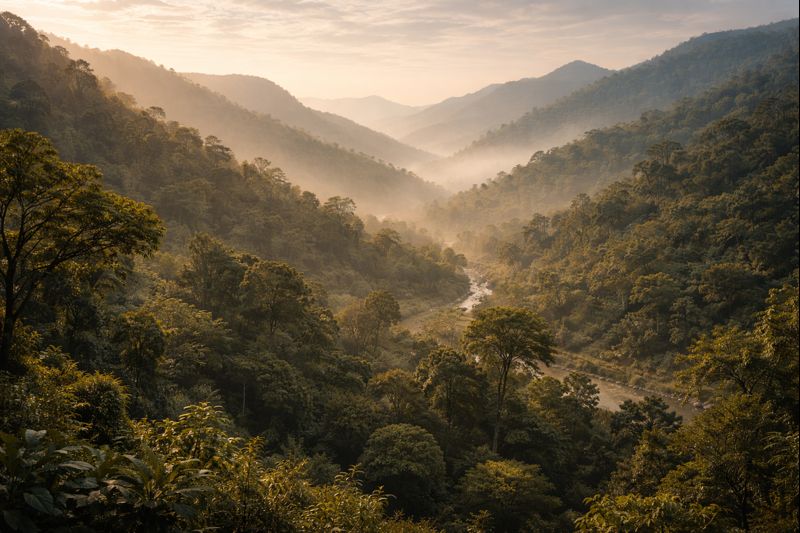
Biodiversity of the Eastern Ghats
The Eastern Ghats are one of the most ecologically rich yet underappreciated mountain systems in India. Due to variations in climate, altitude, and geological structure, this region supports a remarkable range of plant and animal life. Dry deciduous forests, semi-evergreen vegetation, and shrublands coexist here, creating a complex and balanced natural ecosystem.
The biodiversity of this mountain range is not limited to natural beauty alone. It is deeply connected to the livelihood, culture, and traditional knowledge of local communities. For centuries, forests have provided food, medicine, shelter, and identity to the people living in this landscape.
Flora and Medicinal Plants
This region is home to thousands of plant species, many of which have significant medicinal and ecological value. Trees such as neem, sal, teak, bamboo, sandalwood, and mahua are commonly found across these forests. In addition, medicinal herbs like tulsi, ashwagandha, giloy, amla, harad, and bahera are widely used in traditional healing practices.
Tribal communities possess deep knowledge about the healing properties of these plants. For them, the forest is not just greenery, but a living pharmacy. This traditional botanical wisdom represents an invaluable heritage for modern scientific research.
Wildlife and Bird Life
Wildlife in the Eastern Ghats reflects the true vitality of its ecosystem. The region is home to elephants, leopards, sloth bears, jackals, wild boars, and several species of deer. Many reptiles and amphibians also play a crucial role in maintaining ecological balance.
Bird life in this range is equally impressive. Peacocks, hornbills, parrots, owls, eagles, and many migratory birds can be observed here. Their presence indicates the environmental health of the mountain ecosystem.
Every living creature in this highland system, whether large or small, is an essential link in the ecological chain. Protecting such biodiversity is not only a responsibility toward nature, but also toward future generations.

Best Value Amazon Product
Sleek design, reliable performance and great user feedback make this product a smart choice for everyday use or gifting.
👉 Buy on AmazonMy First Encounter with the Eastern Ghats
My first encounter with the Eastern Ghats was not part of a carefully planned journey. It happened by chance, yet it slowly became one of the most meaningful experiences of my life. As the road curved through the hills, the view outside my window began to change — dense forests, gentle slopes, and silent valleys welcomed me into a different world.
At that moment, I realized I was not merely visiting a place; I was stepping into a living poem of nature. Far from the noise and speed of city life, the air itself felt lighter and more honest. This was not only the beginning of a physical journey, but also the start of an inner transformation.
An Unplanned Journey
The journey had no fixed destination. I did not know what awaited me ahead, yet that uncertainty made every step more beautiful. Dusty paths, small villages, smiling children, and simple homes slowly reshaped my understanding of happiness.
Here, people did not follow the clock — they followed the rhythm of nature. Sunrise and sunset mattered more than schedules. Their way of life silently taught me that simplicity is the purest form of wealth.
When Nature Spoke to Me
One evening, as I sat alone among the hills, I felt something I had never experienced before — nature was speaking to me. The whisper of trees, the distant calls of birds, and the gentle touch of the wind felt like a quiet conversation.
In that moment, I understood that nature does not speak in words, but in emotions. It teaches us that silence can be powerful, and stillness can be meaningful. This mountain range gave me my first true lesson of life — to listen to myself through nature.
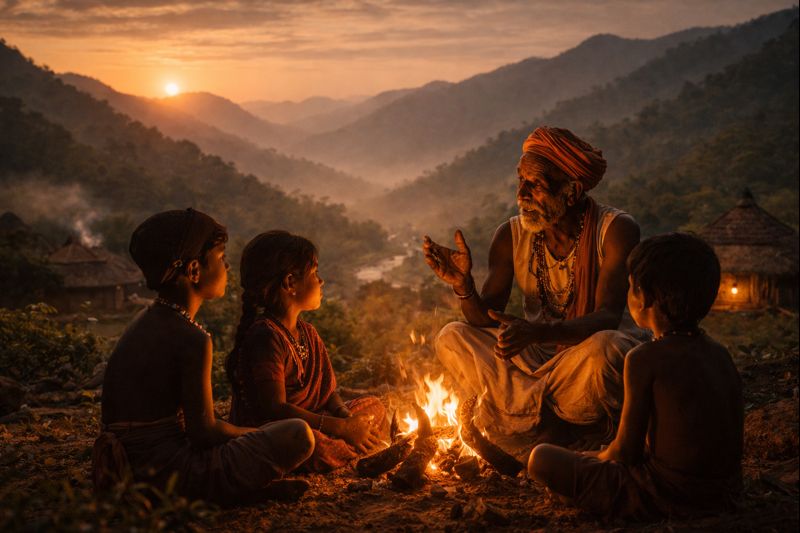
Eastern Ghats and the Struggles of the Present
Today, the Eastern Ghats no longer represent only natural beauty; they stand at the center of a growing conflict between development and environmental survival. Rapid population growth, industrial expansion, and infrastructure projects have placed immense pressure on this fragile mountain ecosystem.
While development is often seen as a necessity, development without environmental responsibility turns into destruction. This ancient range experiences this contradiction every day, quietly bearing the cost of human progress.
Mining and Deforestation
The abundance of mineral resources in this region has attracted extensive mining activities. However, such extraction has severely damaged mountain structures, water sources, and biodiversity. Large sections of hills are being cut away, forests are being cleared, and countless species are losing their natural habitat.
Deforestation has not only displaced wildlife but has also threatened the livelihoods and cultural identity of local tribal communities. Forests that once provided shelter, food, and tradition are now slowly disappearing.
Development Versus Conservation
The greatest challenge facing this mountain system today is finding a balance between development and conservation. Roads, dams, mining projects, and industrial growth are symbols of progress, but when they destroy the environment, their value becomes questionable.
True development is that which fulfills human needs while protecting nature. The Eastern Ghats force us to ask an important question — are we buying present comfort at the cost of future survival?
If responsible decisions are not taken today, future generations may know this region only through books and photographs. The solution to this struggle lies in our collective awareness and action.

Best Value Amazon Product
Sleek design, reliable performance and excellent user feedback make this product a smart choice for everyday use or gifting.
👉 Check Price on AmazonLessons I Learned from the Eastern Ghats
Time spent with the Eastern Ghats taught me that nature does not only provide resources — it teaches us how to live. The calm of the hills, the depth of the forests, and the continuity of the rivers revealed the true meaning of patience, balance, and acceptance.
I realized that this ancient range never complains. For centuries, it has endured human greed, carelessness, and mistakes, yet it continues to nurture life. This silent endurance is its greatest lesson.
The Patience of Nature
Nature’s patience reminds us that meaningful change is never instant. A seed takes years to become a tree, a river struggles to carve its path, and mountains take ages to shape their identity. The Eastern Ghats stand as a living symbol of this timeless patience.
When we understand nature’s rhythm, we begin to realize that rushed development often leads to irreversible destruction. Nature teaches us to pause, observe, and move forward with wisdom.
A Message for Humanity
The greatest message of this mountain system is that humans are not the owners of nature, but its guardians. Every small action — whether cutting a tree or polluting a river — affects the entire ecological system.
If we truly wish to protect our future, we must learn to cooperate with nature rather than fight against it. These hills remind us that real progress is meaningful only when it includes the well-being of the Earth.
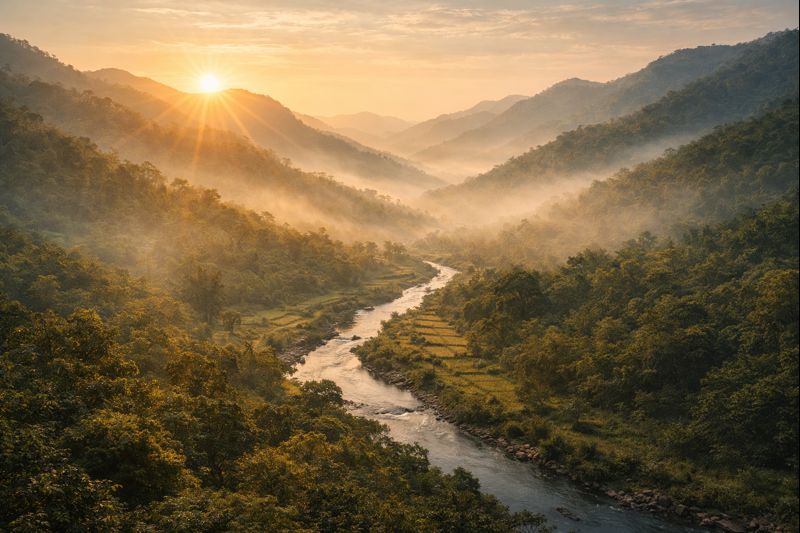
The Future of the Eastern Ghats
The future of the Eastern Ghats does not depend only on government policies or environmental programs, but on the collective awareness and responsibility of society. The decisions we make today will determine whether future generations experience this mountain system as a living landscape or only as a memory in books.
If conservation, education, and sustainable development are given priority, this ancient range can regain its ecological strength and cultural identity. These hills still offer us an opportunity to correct our mistakes and choose a more balanced path forward.
The Role of Youth
Young people play the most crucial role in shaping the future of this region. Through education, technology, and social awareness, they can become powerful voices for environmental protection. They are not just consumers of nature, but potential guardians of its survival.
If the younger generation embraces tree plantation, waste reduction, community action, and respect for local cultures, the future of the Eastern Ghats can be safe, vibrant, and hopeful. The vision of today’s youth will decide the reality of tomorrow.
Conclusion: The Eastern Ghats Are More Than Just Mountains
For me, the Eastern Ghats are not merely a mountain range, but an open book of life. They taught me that the greatest strength of nature lies in its quiet resilience. Every rock, every tree, and every river here reminds us that the relationship between humans and nature should be based on harmony, not conflict.
History, culture, biodiversity, and struggle together shape this ancient range into a living heritage. If we see it only as a tourist destination or resource reserve, we lose its true essence. But if we understand it with respect, protection, and sensitivity, it will remain rich for future generations.
These hills teach us that true development is the one in which nature can also smile. Every small action we take today — awareness, conservation, or responsible consumption — helps shape the future of this region.
In the end, I believe this mountain system is not just geography; it is part of our collective consciousness. If we protect it, we truly protect our own future.
Frequently Asked Questions About the Eastern Ghats
Where are the Eastern Ghats located?
This mountain range is located in eastern India, stretching across Odisha, Andhra Pradesh, Telangana, and Tamil Nadu.
What is the difference between this range and the Western Ghats?
The Western Ghats form a continuous and higher mountain system, while this eastern range is fragmented and comparatively lower in elevation. Both differ in climate, biodiversity, and geological structure.
Why are these hills important?
They are important for biodiversity, water resources, tribal culture, and ecological balance. This region provides habitat to many rare plant and animal species.
Which major rivers flow through this mountain system?
Major rivers such as the Mahanadi, Godavari, Krishna, and Kaveri cut across and divide the Eastern Ghats into several segments.
What are the main threats to this region today?
Mining, deforestation, unplanned development, and climate change are the biggest threats to this fragile ecosystem.
How can we contribute to the conservation of this mountain range?
We can help by spreading environmental awareness, planting trees, using natural resources responsibly, and respecting local communities and cultures.
References
- Geological Survey of India — Studies on the geography and structure of the Eastern Ghats.
- Forest Survey of India — Reports on forest cover and biodiversity of the Eastern Ghats region.
- Ministry of Environment, Forest and Climate Change, Government of India — Documents related to Eastern Ghats conservation.
- National Geographic India — Articles on biodiversity and ecological importance of the Eastern Ghats.
- Tribal Research Institutes — Studies on tribal culture and traditions of the Eastern Ghats.
- Various research papers, travel accounts, and environmental studies that provided information and inspiration for this article.