
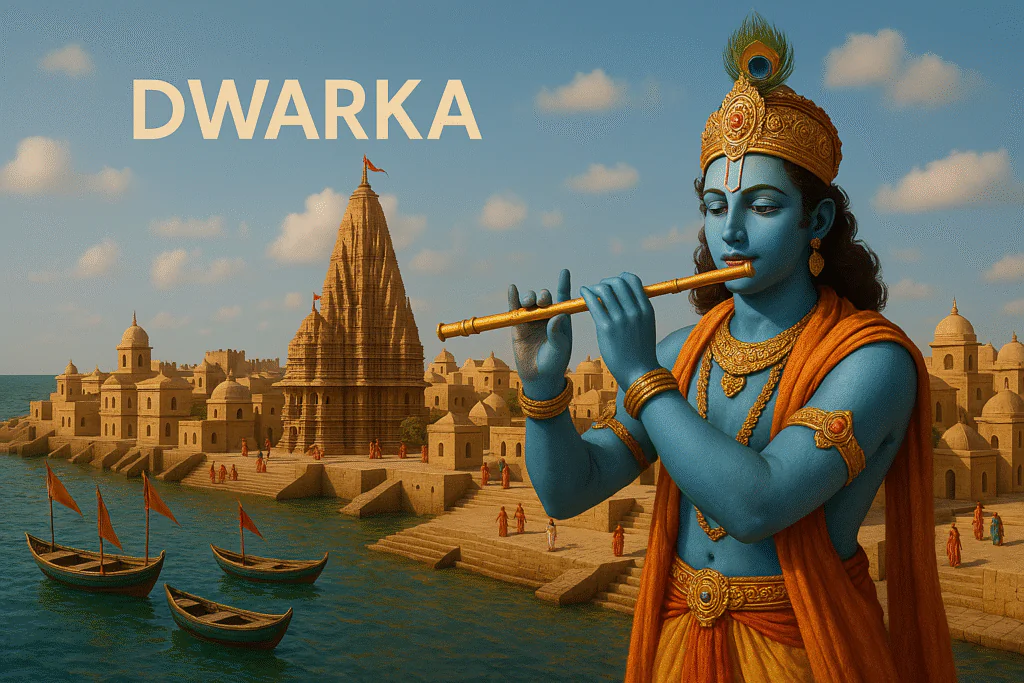

Dwarka City — A Sacred and Historic Jewel of Western India
In this article I share my experiences and learnings about Dwarka — an inspiring, sacred and historically rich city in western India. The aim is to inform pilgrims, travelers and curious readers about Dwarka's geography, history, culture, economy and transport links while keeping the tone hopeful and practical.
1. Short Introduction
Dwarka is a holy and historic city located in the western part of India, in Devbhoomi Dwarka district of Gujarat. It is one of the most venerable places in Hinduism because it is traditionally associated with Lord Krishna. According to the Mahabharata, Dwarka was the capital established by Krishna after he left Mathura.
Dwarka is counted among the Char Dham (the four holy pilgrimage sites: Puri, Dwarka, Badrinath, Rameswaram) and is also one of the seven sacred cities (Saptpuri) in Hindu tradition.
2. Geography
Location
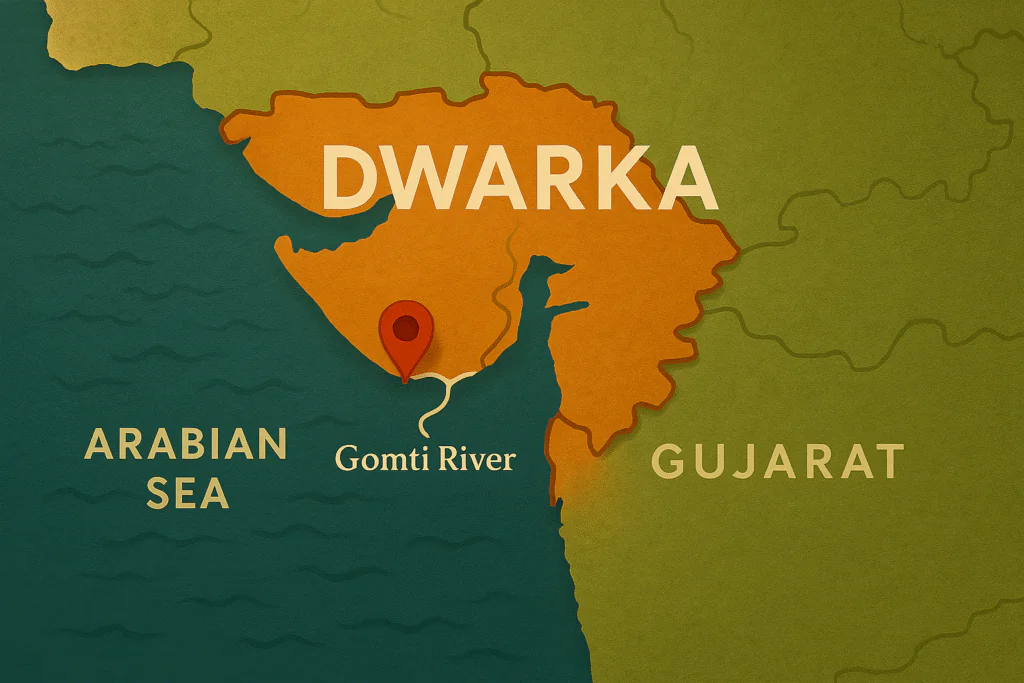
Dwarka lies in western India within the state of Gujarat. It sits near the Arabian Sea on the Gujarat coast and close to the estuary of the Gomti River.
Physical features & climate
- Sea level and coast: The coastline faces the Arabian Sea; parts of the ancient city are believed to have been submerged offshore.
- Approximate elevation: low-lying coastal land (sea bottom evidence approximately 7 meters below in some marine archaeological finds).
- Climate: hot summers, mild-to-cool winters, and moderate monsoon rainfall.
3. History
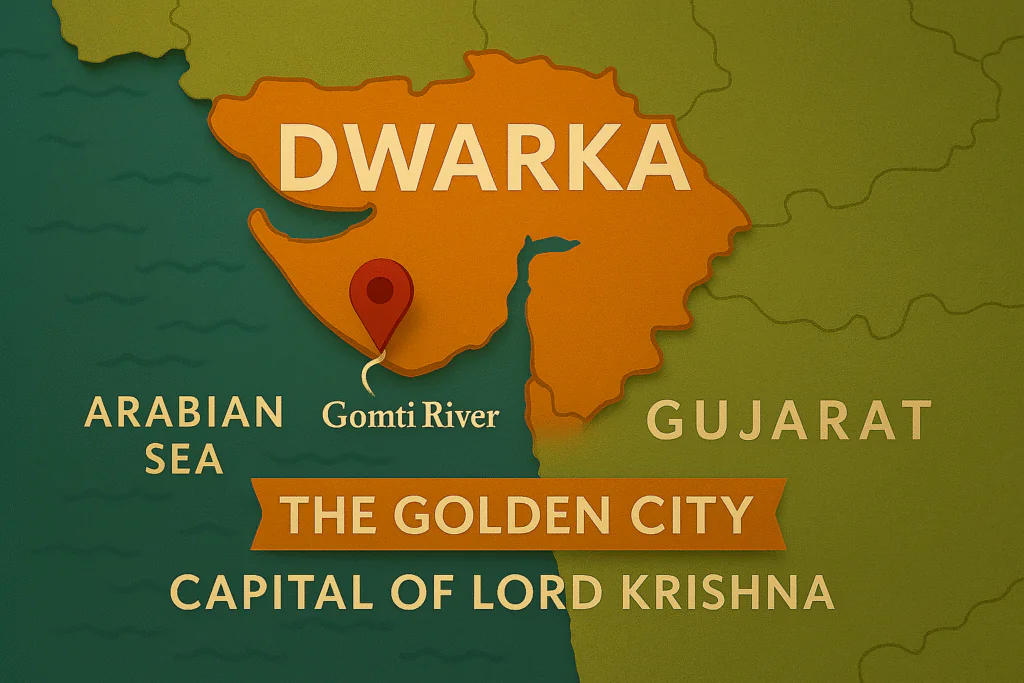
Dwarka is described in ancient texts such as the Mahabharata, Skanda Purana and Bhagavata Purana. It is often called the “Golden City” and is revered as the kingdom of Lord Krishna.
Legend and archaeology both suggest that an ancient Dwarka might have been submerged by the sea; modern marine archaeological discoveries have found remains off the coast that are associated with ancient Dwarka.
4. Religious & Cultural Significance
Major temple
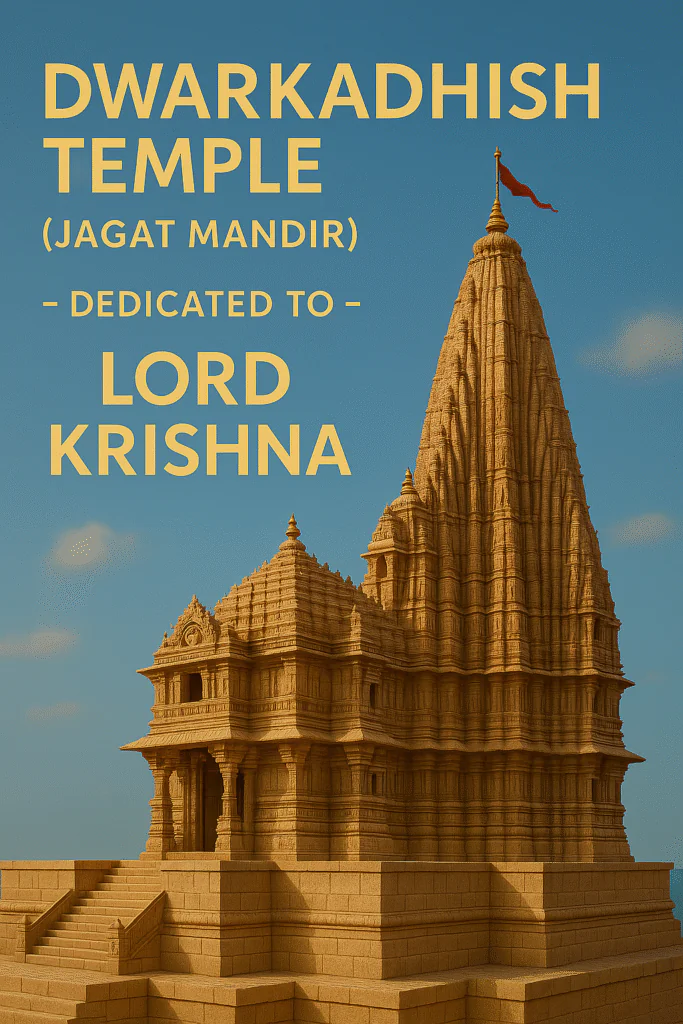
The chief temple is the Dwarkadheesh Temple (also called Jagat Mandir), dedicated to Lord Krishna.
Awesome Amazon Product
Buy on AmazonReligious landscape
- Part of the Char Dham pilgrimage circuit.
- Considered one of the Saptpuri (seven sacred cities with special religious significance).
- Major festivals celebrated here include Janmashtami, Holi, Diwali, and Annakoot — all observed with devotion and large gatherings of pilgrims.
5. Administration
- State: Gujarat
- District: Devbhoomi Dwarka
- Municipality: Dwarka Municipal Corporation / local municipal body
- Assembly constituency: Dwarka
- Lok Sabha constituency: Jamnagar
6. Economy
Dwarka's economy is driven largely by religious tourism and pilgrimage. Other important activities include fishing and small cottage industries based on shellcraft and oyster-related products.
Local businesses often sell religious items, statues, dried fruits and puja materials. In recent years the city has seen modern development focused on hospitality — hotels and pilgrim accommodations have expanded alongside temple-related facilities.
7. Transportation
By road
Dwarka is connected by road to major Gujarati cities such as Ahmedabad, Jamnagar and Rajkot.
By rail
Dwarka has a railway station where many important trains halt, connecting it with other regions.
By air
The nearest commercial airport is Jamnagar (approximately 137 kilometers from Dwarka). From there travelers use road transport to reach the city.
Local transport
Within the city, autos, taxis and rickshaws are available for local travel.
8. Key Highlights
- A major pilgrimage site for Hindus and a place of deep spiritual importance.
- Home to the historic Dwarkadheesh Temple and the confluence of the Gomti River with the sea.
- Marine archaeological discoveries have linked coastal remains to ancient Dwarka.
- A recommended stop on many Chardham and pilgrimage itineraries.
9. Conclusion
Dwarka is not only important for its religious significance but also stands out as a priceless historical and cultural gem of India. It bears witness to the pastimes of Lord Krishna, and today millions of devotees visit to experience faith and calm. Modern Dwarka continues to develop while preserving its antiquity and spirituality — a balance of devotion, culture and thoughtful growth.
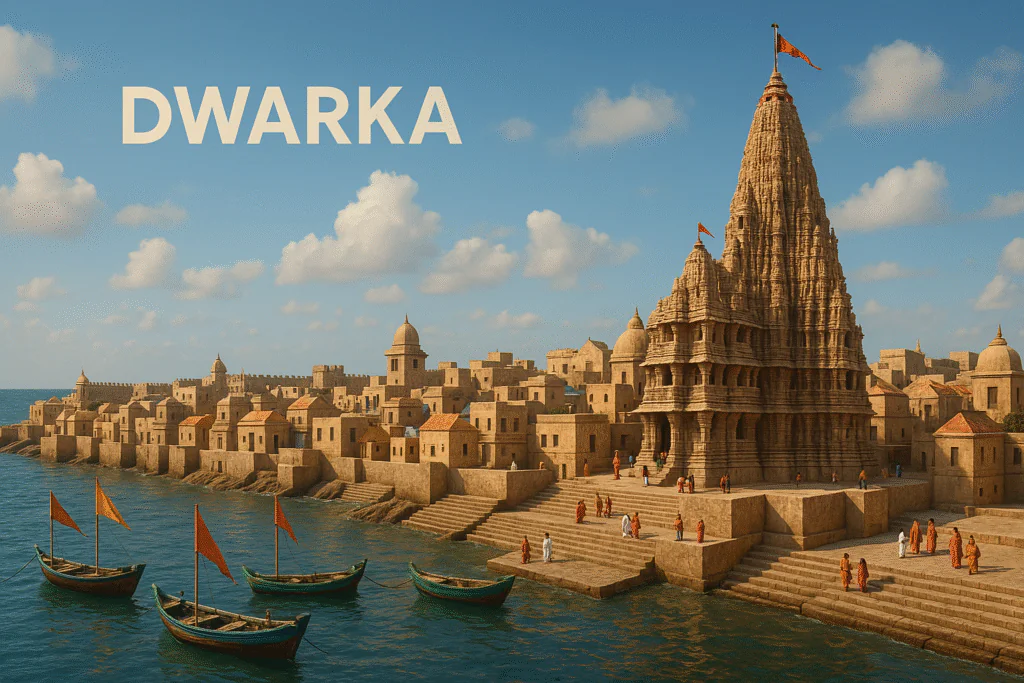
Introduction of Dwarka
Dwarka, located in the westernmost region of Gujarat, India, is one of the most ancient, mythological and sacred cities of Hindu tradition. It holds an exceptionally high place in Hinduism because it is regarded as the karmabhoomi (land of deeds) and the capital of Lord Krishna. Situated on the shores of the Arabian Sea, Dwarka is also known as the “Mokshadayini City” — a place believed to grant spiritual liberation.
The word **Dwarka** is derived from two Sanskrit elements: “Dwar” meaning “door” and “Ka” referring to “moksha” (salvation). Thus, Dwarka is often interpreted as the “Gateway to Salvation.” The city holds immense religious, cultural and historical importance. It is one of the four sacred pilgrimage sites of Hinduism, collectively known as the Char Dham (Badrinath, Puri, Rameswaram, and Dwarka), and is also counted among the Saptpuri — the seven holiest and most ancient spiritual cities.
Historical Background
According to various Puranas and the Mahabharata, after the slaying of Kansa in Mathura, external attacks on the Yadava clan began to increase. To protect his people, Lord Krishna decided to leave Mathura and establish a fortified city on the western coast of India. This newly created city was named Dwarka.
It is believed that the divine architect Vishwakarma constructed this city in the middle of the sea. Some legends say that after Lord Krishna departed for his divine abode, the sea gradually swallowed the entire city. Due to this belief, the concept of the “Submerged Dwarka” has always attracted explorers and archaeologists.
Even today, marine archaeological explorations continue, and many structures, artifacts and remains have been found beneath the Arabian Sea, believed to be parts of ancient Dwarka.
Religious Importance
Awesome Amazon Product
Buy on AmazonDwarka is revered as the sacred city of Lord Krishna. The iconic Dwarkadheesh Temple — also known as the Jagat Mandir — is dedicated to Krishna in his “King of Dwarka” form. The temple is believed to be over 2,000 years old and showcases magnificent architecture.
Every year, millions of devotees visit Dwarka, especially during Janmashtami, when grand celebrations, rituals and cultural events transform the city into a vibrant spiritual hub.
Geographic Situation
Dwarka is situated in the Devbhoomi Dwarka district of Gujarat. The city stands near the banks of the Gomti River and on the coast of the Arabian Sea. It lies at an elevation of about 7 meters above sea level.
The coastal environment keeps the climate relatively humid, and the scenic sea views, sunsets and beaches add immense natural beauty to the city.
Culture and Tourism
Dwarka is not only a major religious center but also a famous tourist destination. Its coastline, sacred ghats and temples make it a serene place to explore. Popular attractions include:
- Gomti Ghat
- Rukmini Devi Temple
- Bet Dwarka
- Dwarkadheesh Temple
- Marine archaeological sites under the sea
The cultural life of Dwarka is rich with devotional songs, bhajans, traditional folk dances and centuries-old customs that continue to thrive.
Conclusion
In essence, Dwarka is a city where faith, history and spirituality blend harmoniously. It is not only the city of Lord Krishna but also a symbol of India’s ancient culture and civilizational pride. Visitors who come here often experience a deep sense of peace, devotion and cultural richness.
Geographical Classification of Dwarka
Dwarka holds special geographical significance due to its strategic location in the western part of Gujarat. Situated at the meeting point of the sea and river, the city is naturally rich, scenic and environmentally unique.
1. Location
- Country: India
- State: Gujarat
- District: Devbhoomi Dwarka
- Coordinates: 22.2394° N, 68.9675° E
- Elevation: Approximately 7 meters above sea level
2. Climate
Dwarka has a typical coastal climate with three major seasons:
● Summer (March – June)
Temperature ranges between 30°C to 42°C.
● Monsoon (July – September)
Receives an average rainfall of 300–400 mm.
● Winter (November – February)
Temperature remains between 10°C to 25°C.
3. Topography
- The land of Dwarka is mostly flat and sandy.
- The city lies along the coast of the Arabian Sea, making it an important marine location.
- The Gomti River enters the city through its estuary and merges into the Arabian Sea at a point known as the Gomti Ghat.
Awesome Amazon Product
Buy on Amazon4. Natural Resources
- Sea: Fisheries, shellfish industry, and mineral salts.
- River: Gomti River provides both water and religious-cultural significance.
- Vegetation: Marine vegetation, coconut trees, date palms and other coastal plants.
5. Ecological Importance
The region around Dwarka hosts diverse marine biodiversity, including:
- Dolphins
- Marine turtles
- Coral reefs
- Various marine plants and fish species
A Marine Bio Research Center is also located nearby, which studies ocean ecology and the submerged remains of ancient Dwarka.
6. Tourist Sites of Geographical Importance
- Gomti Confluence Ghat
- Bet Dwarka — an island accessible by boat
- Arabian Sea Coast
- Rukmini Devi Temple (situated in a semi-desert region)
- Marine archaeological sites — believed to hold relics of submerged ancient Dwarka
Conclusion
Geographically, Dwarka is an extraordinary city shaped by the confluence of the sea and river. Its climate, topography and natural resources make it significant not only as a religious hub but also as an area of ecological and marine scientific importance. The geographic structure of Dwarka beautifully reflects the harmony between nature, culture and spirituality.
Historical Classification of Dwarka
Dwarka’s history is ancient, glorious and deeply enriched with religious significance. The city is widely mentioned in Indian Puranas, the Mahabharata and supported by several archaeological findings. Historically, Dwarka was not only the capital of Lord Krishna but also an advanced marine city, a prosperous commercial hub and an important center of cultural heritage.
1. Mythical History
● Capital of Lord Krishna
According to the Mahabharata and Bhagavata Purana, after the slaying of Kansa, continuous attacks on the Yadavas made Mathura unsafe. To protect the community, Lord Krishna established a fortified and secure city on the seashore — Dwarka.
It is believed that the architect Vishwakarma constructed the city in the middle of the sea and that Dwarka had 84 grand entrance gates.
● Dwarka as a Saptpuri
Dwarka is one of the seven sacred cities known as the Saptpuri: Ayodhya, Mathura, Haridwar, Kashi, Kanchi, Ujjain and Dwarka.
● Dwarka as a Char Dham
Adi Shankaracharya established four main pilgrimage sites (Char Dham), and Dwarka is revered as the western Dham among them.
2. The Mystery of the Submerged City
According to legends, after Lord Krishna departed for his divine abode, the city of Dwarka gradually submerged into the sea. This story finds surprising support from scientific and archaeological investigations.
Marine archaeological explorations conducted in and after 1983 revealed structures on the sea floor, such as:
- Stone walls
- Road-like formations
- Geometrical patterns
- Ancient artifacts and stone structures
These discoveries strongly suggest that Dwarka was not just a mythological settlement but an actual historical marine city.
3. Medieval History
During the medieval period, Dwarka continued to grow as a major spiritual and religious center.
● Connection with Somnath
Dwarka became an important pilgrimage destination alongside Somnath, and the region saw the rise of temples, monasteries and religious traditions.

Awesome Amazon Product
Buy on Amazon● Attacks and Reconstruction
The Dwarkadheesh Temple was destroyed multiple times during invasions by medieval Muslim rulers. However, it was rebuilt every time by devoted kings and followers.
● 16th–17th Century Developments
The Vaishnav tradition and the monastery of Shankaracharya saw revival and expansion during this era, strengthening Dwarka’s spiritual influence.
4. Modern History
● British Period
During British rule, Dwarka remained a small but significant pilgrimage destination, visited by devotees from different parts of India.
● Post-Independence
After India’s independence, Dwarka became part of the state of Gujarat. The city witnessed development in religious tourism, marine archaeology and cultural preservation.
● 2013 — Formation of Devbhoomi Dwarka District
In 2013, the Government of Gujarat formed Devbhoomi Dwarka District, officially declaring Dwarka as a separate administrative district.
Conclusion
From a historical perspective, Dwarka is far more than just a religious city. It stands as a symbol of India’s rich cultural heritage, archaeological legacy and the advanced civilization of Lord Krishna's era. The combination of mythology, historical evidence and marine archaeology makes Dwarka a truly unique and timeless city. Every temple, every stone and every wave of the sea continues to echo its deep, ancient story.
Religious and Cultural Classification of Dwarka
Dwarka is not merely a historical city; it is one of India’s most important religious and cultural pilgrimage destinations. For thousands of years, it has remained a central place for Hindu faith, rituals and traditions. Known as the city of Lord Krishna, Dwarka is considered highly sacred by millions of devotees.
1. Religious Significance
● Dwarka — City of Lord Krishna
Dwarka is regarded as the capital city of Lord Krishna. It is the place where he settled with the Yadava clan after leaving Mathura and established a kingdom based on religion, ethics and public welfare.
● One of the Char Dham
Dwarka is one of the four sacred Dhams established by Adi Shankaracharya:
- Badrinath (North)
- Rameswaram (South)
- Puri (East)
- Dwarka (West)
● Part of the Saptpuri
Dwarka is counted among the Saptamokshadayini Puris — the seven holy salvation cities:
- Ayodhya
- Mathura
- Haridwar
- Kashi
- Kanchi
- Ujjain
- Dwarka
● Dwarkadheesh Temple
The Dwarkadheesh (Jagat Mandir) Temple is dedicated to Lord Krishna in his “Dwarkadhish” form. The temple features:
- Five floors
- 72 intricately carved pillars
- Magnificent ancient architecture
● Other Major Religious Sites
- Rukmini Devi Temple
- Gomti Ghat
- Bet Dwarka — believed to be the personal residence of Lord Krishna
- Nrisinha Temple
- Ghanteshwar Mahadev Temple
2. Religious Traditions and Celebrations
● Janmashtami
The largest and most important festival celebrated in Dwarka is Janmashtami — the birth anniversary of Lord Krishna. Thousands of devotees participate in grand rituals, processions and temple festivities.
● Other Festivals
- Diwali
- Holi
- Rath Yatra
- Sharad Purnima
- Gopashtami
During these festivals, the temples are beautifully decorated and special puja rituals are performed.
● Pilgrimage Traditions
Every year, lakhs of devotees visit Dwarka, especially during:
- Char Dham Yatra
- Dwadas Jyotirlinga Yatra
- Saptpuri Yatra
3. Cultural Identity
● Devotional Music & Kirtan
Daily bhajans, aartis and sankirtans form an integral part of Dwarka’s cultural atmosphere. Numerous devotional hymns and folk songs dedicated to Lord Krishna are sung regularly.
● Theatre & Dance Traditions
Raasleela, Krishna-based dance dramas and tableau presentations represent Dwarka’s long cultural heritage.
● Attire & Traditional Appearance
The traditional attire reflects Gujarati culture, including Bandhani sarees, ghagra-choli and kurta-pyjamas. On festive occasions, elaborate traditional makeup and jewellery are common.
● Food Culture
Dwarka follows a pure vegetarian food tradition. During festivals like Annakut, hundreds of dishes are offered in the temples. Popular offerings include:
- Kheer
- Laddu
- Fruits
- Panchamrit
4. Monasteries and Religious Denominations
Dwarka is home to the Sharada Peeth established by Adi Shankaracharya, which is a major center of Hindu Vedanta philosophy. The Vaishnav, Pushtimarg and Swaminarayan sects also have significant influence in the region.
Conclusion
Dwarka represents a divine confluence of faith, tradition and culture. It is not only the center of Lord Krishna’s divine pastimes but also a living example of India’s spiritual and cultural vibrance. The religious traditions and cultural lifestyle make Dwarka an ideal spiritual-cultural city.
Administrative Classification of Dwarka
Administratively, Dwarka is an important city in Gujarat, recognized for its religious heritage, tourism, cultural value and historical significance. Its administrative framework works under local, district and state-level governance systems.
1. State and District
- State: Gujarat
- Region: Saurashtra
- District: Devbhoomi Dwarka (formed in 2013 after separation from Jamnagar)
- District Headquarters: Khambhalia
Dwarka city comes under this district and functions as an urban municipality.
2. Administrative Units
- Tehsil / Taluka: Dwarka
- Municipality: Responsible for water supply, sanitation, road development, street lighting and civic services.
3. Revenue and Police Administration
District Collector: Heads the district administration, managing law and order, revenue collection and the implementation of government schemes.

Awesome Amazon Product
Buy on AmazonPolice Administration: Dwarka has a local police station under the Gujarat Police Department.
Gujarat Marine Police: A special force ensuring coastal and marine security due to Dwarka’s seashore location.
4. Electoral Administration
- Lok Sabha Constituency: Jamnagar
- Assembly Constituency: Dwarka
Regular elections for panchayats, municipalities, state assembly and Lok Sabha are conducted here.
5. Administrative Services and Departments
- Education Department: Government schools, Sanskrit schools and educational institutions.
- Health Department: PHCs, CHCs and private hospitals.
- Tourism Department: Works to develop Dwarka as a major pilgrimage and tourism hub.
- Archaeology Department: Responsible for studying and preserving the submerged remains of ancient Dwarka.
6. Local Administrative Institutions
- Municipality Board: Includes chairman, vice-chairman and elected councillors.
- Local Development Officer: Implements development schemes such as Swachh Bharat Mission, water supply projects and road construction.
- Dwarka Temple Trust Board: Manages the administration of the Dwarkadheesh Temple with government collaboration.
Conclusion
From an administrative perspective, Dwarka is a well-organized city where religious importance is supported by efficient governance, security systems, tourism development and urban planning. Its administration functions through coordination between state authorities, district officials and local bodies, ensuring both cultural preservation and modern development.
Economic Classification of Dwarka
Dwarka’s economy is primarily pilgrimage-based, tourism-driven and supported by sea-resource activities. Along with religious tourism, fishing, marine businesses, small industries and government services play a significant role in the city’s economic development.
1. Religious Tourism-Based Economy
● Major Economic Pillar
Being the sacred city of Lord Krishna, Dwarka is one of the most important Hindu pilgrimage destinations in India. Major religious attractions such as the Dwarkadheesh Temple, Rukmini Temple, Gomti Ghat and Bet Dwarka attract millions of devotees every year.
● Income Through Tourism Services
- Hotels & Dharamshalas
- Guide services
- Puja materials and souvenirs
- Transportation services
- Local markets & shops
Festivals like Janmashtami, Rath Yatra and Akshaya Tritiya give a major boost to local businesses.
2. Fisheries and Marine Economy
- Due to its coastal location, fishing is one of the oldest and most significant occupations in Dwarka.
- Marine products such as fish, prawns and other seafood are exported to domestic and international markets.
- The Okha Port serves as the primary center for fisheries trade.
- Salt production is common in coastal areas through the evaporation of seawater.
3. Agriculture and Animal Husbandry
Agriculture is limited and mainly rain-dependent.
● Chief Crops
- Millet
- Wheat
- Gram
- Groundnut
Animal husbandry is significant, especially dairy farming in nearby rural areas.
4. Small and Cottage Industries
- Handicrafts, religious souvenirs, conch products, rosaries and Krishna statues.
- Decorative items made from shells, oysters and marine materials.
- Handloom and Gujarati Bandhani clothing such as sarees and dupattas.
5. Government and Services Sector
- Government offices, educational institutions, health services and banking departments.
- Employment through local administration, police, temple trusts and tourism departments.
6. Investments and Development Projects
The Gujarat government is developing Dwarka under several schemes such as:
- Shrine Tourism Circuit
- Heritage City Development Projects
- Sea-coastal protection and infrastructure upgrades
Conclusion
Dwarka’s economy is a balanced model based on religious tourism, fishing, cottage industries and service sectors. Along with spiritual significance, the city shows strong economic growth, making it both culturally sacred and economically self-sustaining.
Transportation Classification of Dwarka
Dwarka is a major pilgrimage and tourism destination, which has led to well-organized, pilgrim-friendly transportation systems. The city is connected by road, rail, air and marine routes to various parts of India.
1. Road Transportation
● Highways
- Dwarka is connected via NH-51, linking it to Porbandar, Jamnagar, Bhavnagar, Veraval and other key cities.
● Bus Services
- GSRTC operates regular buses to Ahmedabad, Rajkot, Vadodara, Surat and Jamnagar.
- Private AC and sleeper buses are also available.
● Local Transport
- Auto-rickshaws, taxis and e-rickshaws.
- Car rentals and mini-bus services for temple visits and sightseeing.
2. Rail Transportation
Dwarka Railway Station (DWK)
Dwarka station is part of the Western Railway Zone under Rajkot Division.
● Major Trains
- Dwarka Express
- Okha Express
- Saurashtra Express
- Vande Bharat (Gandhinagar–Ahmedabad–Okha route)
3. Air Transportation
● Nearest Airport
- Jamnagar Airport — around 130 km from Dwarka.
Regular flights operate to Mumbai, Delhi and Ahmedabad. Taxis and buses connect Dwarka to Jamnagar.
● Future Development
Plans for a small airport or helipad are being explored to support rising tourism.
4. Marine Transportation
● Okha Port
- Located around 30 km from Dwarka.
- Main point for boats traveling to Bet Dwarka.
- Supports marine business and fisheries logistics.
5. Pilgrimage Transportation Services
- Well-maintained pathways connecting Gomti Ghat, Dwarkadheesh Temple and major shrines.
- E-rickshaw and wheelchair services for elderly and disabled pilgrims.
- Package tour buses covering Dwarka, Somnath, Bet Dwarka and nearby temples.
Conclusion
Dwarka’s transportation system is multi-modal, efficient and designed to support millions of pilgrims and tourists. With continuous government improvements, travel to this sacred city has become more accessible and comfortable.
Dwarka: Key Highlights
1. Religious Importance
- City of Lord Krishna and his legendary capital.
- One of the Char Dhams of India.
- Part of the seven sacred Saptpuris.
2. Major Temples
- Dwarkadheesh Temple — height approx. 78.3 meters, 52-yard flag.
- Rukmini Devi Temple
- Bet Dwarka — island believed to be Krishna’s family residence.
3. Antiquarian & Historical Importance
- Archaeological evidence of a submerged ancient city.
- Mentioned in Mahabharata, Skanda Purana and Bhagavata Purana.
4. Tourism & Pilgrimage Center
- Major pilgrimage hub attracting millions during Janmashtami, Rath Yatra and Kartik Purnima.
- Sites like Gomti Ghat, Geeta Temple and Nrusinha Temple.
5. Sea Coastal Beauty
- Beautiful Arabian Sea shoreline.
- Stunning lighthouse views and coastal landscapes.
6. Cultural Traditions & Celebration
- Gujarati folk culture: Garba, Bandhani attire, folk songs.
- Vibrant celebrations of Janmashtami, Holi, Diwali and Rath Yatra.
7. Strong Transportation Network
- Connected via rail, road and marine routes.
- Proximity to Okha Port and Jamnagar Airport.
8. Modern Development & Trust Management
- Continuous development under Gujarat Government & Temple Trust.
- Facilities like Dharamshalas, tourist centers and medical services.
Conclusion — Dwarka
Dwarka is one of India’s most ancient, sacred and historically significant cities, representing the confluence of spiritual devotion, cultural pride and archaeological richness. It is the mythical capital of Lord Krishna and a revered pilgrimage destination in modern India.
Classification Overview:
- Historical: An ancient city dating back to the Mahabharata period.
- Religious: A Char Dham and a Saptpuri admired worldwide.
- Administrative: A well-organized city under Devbhoomi Dwarka district.
- Economic: Based on tourism, fishing, small industries and services.
- Transport: Well-connected through rail, road, marine and air networks.
Dwarka’s true essence lies in its spiritual energy and cultural diversity, attracting millions who seek peace, devotion and a deeper connection with Indian heritage. It is not just a city — it is a living symbol of India’s eternal culture.
