
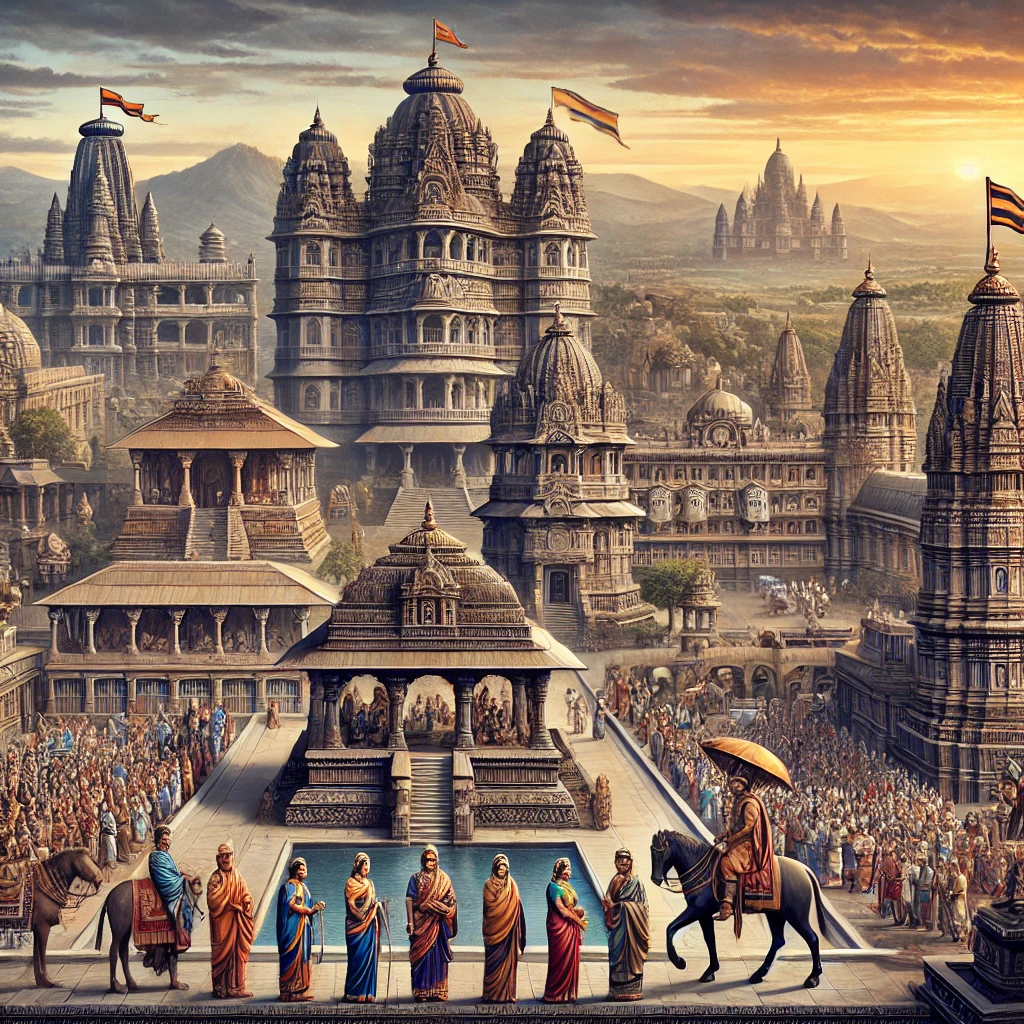
The Rashtrakuta Dynasty: History, Rulers, Culture and Legacy
The Rashtrakuta dynasty was a prominent and influential power in Indian history. It ruled large parts of South India and surrounding regions from the 8th to the 12th centuries. Their empire covered significant territories of present-day Maharashtra, Karnataka, Telangana and Andhra Pradesh.
Origin of the Dynasty
There are various opinions regarding the origin of the Rashtrakutas. Some historians associate the dynasty with the Maharashtra region, while others connect it with Karnataka. The term “Rashtrakuta” means protector of the nation, highlighting their administrative authority.
Important Rulers of the Rashtrakuta Dynasty
Dantidurga (735–756 CE)
Dantidurga is considered the founder of the Rashtrakuta dynasty. He defeated the Chalukyas and laid the strong foundation of the Rashtrakuta Empire.
Krishna I (756–774 CE)
Krishna I constructed the world-famous Kailashnath Temple at Ellora, which stands as a remarkable masterpiece of Rashtrakuta architecture.
Govinda III (793–814 CE)
Govinda III was one of the most powerful rulers of the Rashtrakuta Empire. He expanded the kingdom up to Kannauj in North India and defeated the Pallavas in the south.
Amoghavarsha I (814–878 CE)
Amoghavarsha I ruled for approximately 64 years. He was not only a strong ruler but also a great patron of literature and art. He supported Jainism and contributed significantly to cultural development.
Cultural and Architectural Contributions
- The period of the Rashtrakutas witnessed great progress in art, literature and architecture.
- The caves and temples of Ellora and Ajanta are some of the most iconic examples of Rashtrakuta architectural excellence.
- Sanskrit and Kannada literature flourished under their patronage.

Premium Quality Amazon Product
This product offers excellent build quality, modern design, and reliable performance. Perfect for daily use and long-term durability.
Check Price on AmazonCauses of the Decline
The Rashtrakuta Empire gradually weakened due to internal conflicts and the rise of the Chalukyas. By the end of the 12th century, the dynasty had completely declined.
Conclusion
The Rashtrakuta dynasty remains a golden chapter in Indian history. Their temples, caves and literary contributions continue to inspire historians, artists and scholars. Their legacy is an integral part of India’s cultural and civilizational heritage.
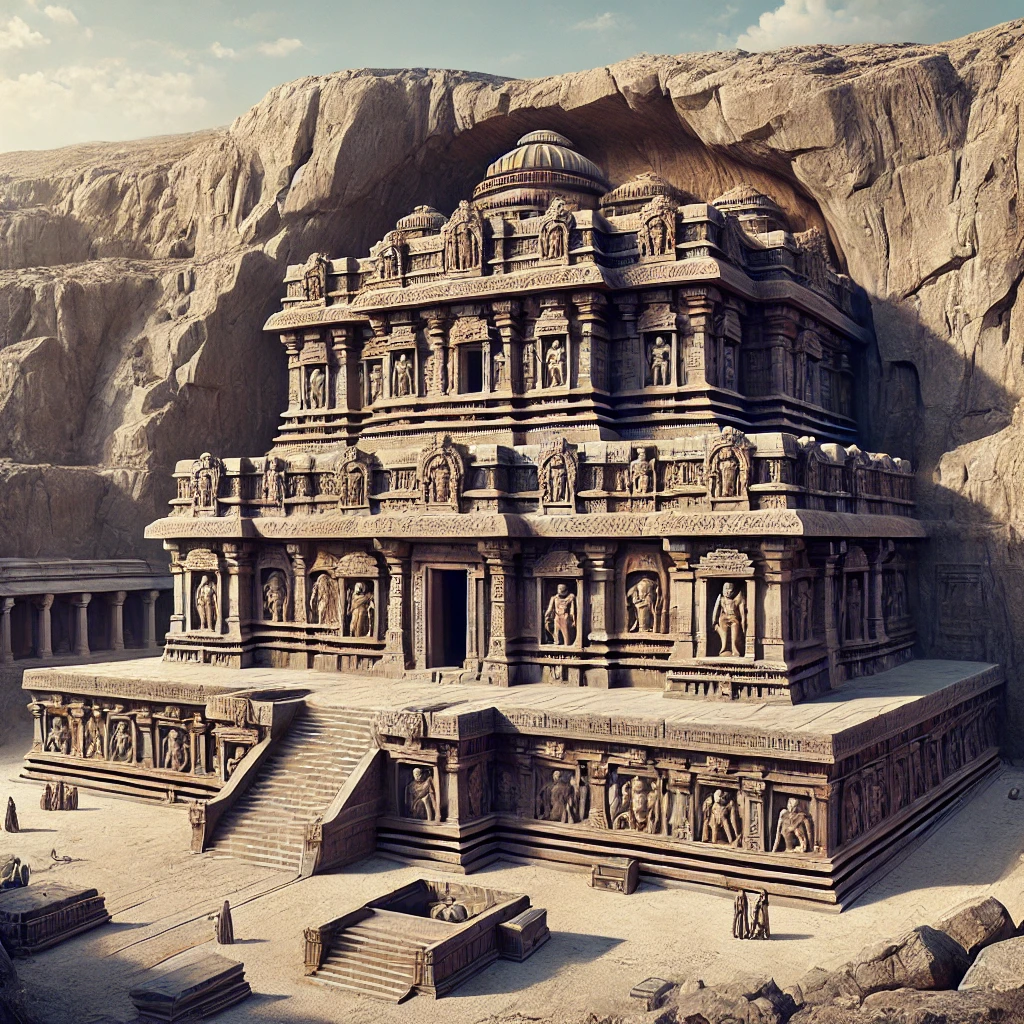
Rashtrakuta Dynasty
The Rashtrakuta dynasty was an important and highly influential power in Indian history. It ruled South India and surrounding areas from the 8th to the 12th centuries. The dynasty is renowned for its architectural, cultural and political contributions that shaped ancient India.
Emergence of the Dynasty
There is disagreement among historians regarding the origin of the Rashtrakutas. It is believed that the dynasty emerged from the ancient regions of Maharashtra and Karnataka. The word “Rashtrakuta” means protector of the nation, reflecting the authority and prestige of this powerful ruling family.
Prominent Rulers of the Rashtrakuta Empire
Dantidurga (735–756 CE)
Dantidurga is considered the founder of the Rashtrakuta Empire. He established his authority by defeating the Chalukya dynasty.
Krishna I (756–774 CE)
Krishna I is famous for his exceptional contribution to architecture. He built the magnificent Kailash Temple at Ellora, a masterpiece of rock-cut art.
Govinda III (793–814 CE)
Govinda III expanded the empire considerably. His authority stretched from Kannauj in North India to the Pallava territories in South India.
Amoghavarsha I (814–878 CE)
Amoghavarsha I was the longest-reigning Rashtrakuta ruler. He patronised Jainism and greatly encouraged Kannada literature and art.
Cultural Contributions
- Literature, art and architecture flourished during the Rashtrakuta period.
- The caves and temples of Ellora and Ajanta are outstanding examples of the architectural excellence of this era.
- Kannada and Sanskrit literature received extensive support from the rulers.

Top-Rated Amazon Product
Discover this popular choice with excellent customer feedback, strong performance, and reliable build quality — ideal for everyday use.
View on AmazonCauses of the Decline
The decline of the Rashtrakuta Empire occurred due to internal disputes, the rise of the Chalukyas and external invasions. By the end of the 12th century, the dynasty had completely disappeared.
Conclusion
The Rashtrakuta dynasty left an enduring impact on Indian history. Their architectural achievements, literature and cultural contributions remain a treasured part of India’s heritage.
Origin of the Rashtrakuta Dynasty
The origin of the Rashtrakuta dynasty has been a subject of debate among historians. This powerful dynasty holds an important place in the ancient history of the Indian subcontinent. Its roots are generally believed to be connected with the regions of Maharashtra and Karnataka.
Dynasty Name and Meaning
The term Rashtrakuta means “protector of the nation (or state)”. This name appears in ancient inscriptions and literary sources, indicating that the rulers were guardians of a strong and organised kingdom.
Different Views on the Origin of the Rashtrakutas
1. Origin from Maharashtra
- Some historians believe that the Rashtrakutas originated in the Maharashtra region.
- They are associated with the ancient Ratti region, also known as the Rathika or Laat region.
- Inscriptions and copper plates of the Rashtrakutas mention connections with Maharashtra.
2. Origin from Karnataka
- According to another view, the Rashtrakutas originated in Karnataka.
- The frequent use of Kannada in their inscriptions supports this perspective.
- Several important temples and caves constructed by Rashtrakuta rulers are found in Karnataka.
3. Origin from North India
- Some historians argue that the dynasty originated from the Rattha or Rathore community in North India.
- However, this theory lacks strong evidence.
Early Mentions and Historical References
- The earliest references to the Rashtrakutas appear after the Gupta period (4th–5th century CE).
- Dantidurga, the founder of the Rashtrakuta Empire, established his independent rule by defeating Kartavirya II of the Chalukya dynasty.
- Rashtrakuta rulers followed Vedic traditions but also supported Jainism and Buddhism.
Evidence from Inscriptions and Copper Plates
- Inscriptions and copper plates have been found across Maharashtra, Karnataka and Andhra Pradesh.
- Most inscriptions are written in Sanskrit and Kannada, indicating their bilingual administrative culture.
- The Ahirbud Copper Plate and the Satara inscription are key sources for studying the origin and early history of the Rashtrakutas.
Conclusion
Although several theories exist regarding the origin of the Rashtrakuta dynasty, it is widely accepted that the dynasty emerged from the cultural and political environment of the Maharashtra and Karnataka regions. Their history is an integral part of the glorious heritage of Indian civilization.
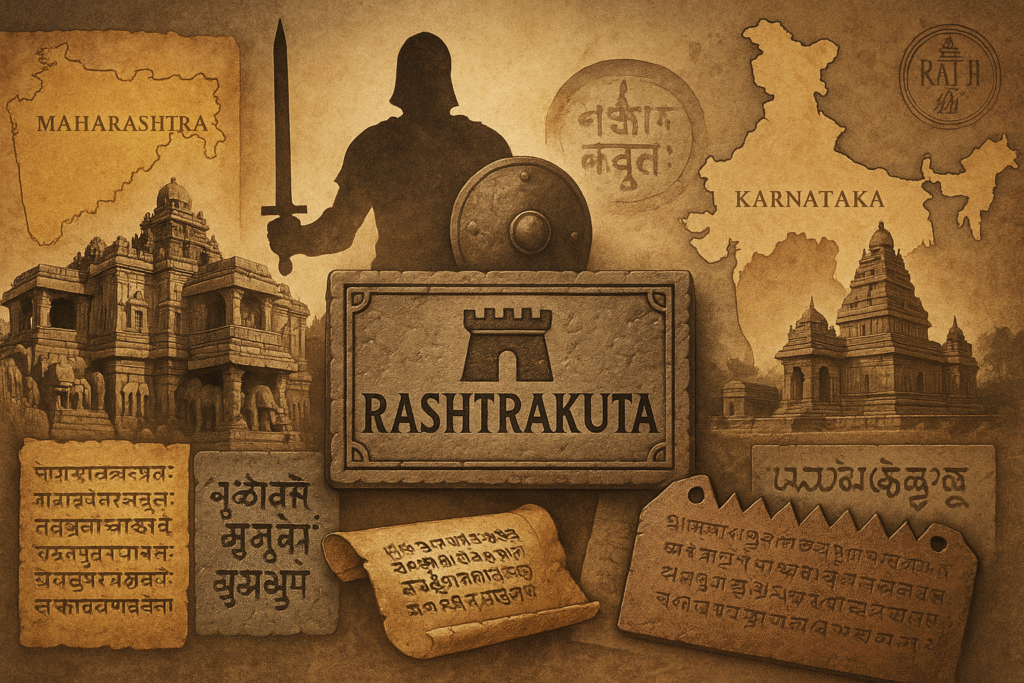
Dynasty Name and Meaning
The name Rashtrakuta means “Protector of the Nation (State)”. It clearly reflects their power, organization and their role in maintaining the stability of the empire.
- “Rashtra” means state or empire.
- “Kuta” means fort, protector or chief.
This name highlights the military strength and administrative capability of the Rashtrakutas. It is also believed that the term Rashtrakuta was associated either with their original homeland or their social status. The Rashtrakuta rulers governed their empire with discipline, diplomacy and efficiency.
Historical Mention of the Term
- The name appears in several ancient inscriptions and copper plates.
- The Rashtrakuta dynasty played a major role in protecting and expanding the “nation”.
- Their name remains inscribed in history along with their glorious empire.
Origin of the Rashtrakutas
Different Views on the Origin of the Rashtrakuta Dynasty
The origin of the Rashtrakuta dynasty has been a topic of debate among historians. Different opinions have been proposed regarding their name, regional relations and social background. The major theories are as follows:
1. View of Origin from Maharashtra
- According to this theory, the Rashtrakutas originated in the Maharashtra region.
- The word “Rashtrakuta” is believed to be associated with the Rati (Laat) region of ancient Maharashtra.
- Inscriptions of Dantidurga and other Rashtrakuta rulers found in Maharashtra support this view.
- Important centres of their rule, such as Ellora and Ajanta, are also located in Maharashtra.
Key Evidence
- Ancient Rashtrakuta inscriptions discovered in Maharashtra.
- Construction of the Kailash Temple at Ellora.
- Inscriptions in Sanskrit and early Marathi.
2. View of Origin from Karnataka

High-Quality Amazon Product
A reliable and well-reviewed choice with great performance and long-lasting quality. Perfect for everyday use and backed by strong customer satisfaction.
Check Latest Price- This view suggests that the Rashtrakuta dynasty originated in Karnataka.
- Kannada language and literature are extensively used in Rashtrakuta inscriptions.
- Many important centres of governance were located in Karnataka, including Manyakheta (modern Malkhed), which served as their capital.
Key Evidence
- Inscriptions written in Kannada.
- Development of Kannada literature under Rashtrakuta patronage.
- The importance of Manyakheta (Malkhed) as their capital.
- Architectural structures built by Rashtrakuta rulers in Karnataka.
3. View of Origin from North India
- Some historians believe the Rashtrakutas originated from the Rath or Rathore community of North India.
- According to this view, they later established their rule in South India.
- However, this theory lacks strong supporting evidence and is not widely accepted.
Key Evidence
- The word “Rath” or “Rathod” appears linguistically related to “Rashtrakuta”.
- Limited references to their influence in North India.
4. Mixed and Regional Origin Theory
- Some scholars believe that the dynasty arose from the combined cultural environment of Maharashtra and Karnataka.
- Their inscriptions, language and architecture reflect traits of both regions.
Key Evidence
- Use of Sanskrit, Kannada and Marathi in Rashtrakuta inscriptions.
- Architectural development in both Maharashtra and Karnataka.
- Political influence in both regions.
Conclusion
The views related to Maharashtra and Karnataka are considered the strongest and most credible regarding the origin of the Rashtrakuta dynasty. The Maharashtra theory is supported by Ellora, Ajanta and related inscriptions, while the Karnataka theory is strengthened by Kannada literature, Manyakheta capital and architectural remains.
Although historians differ on the exact origin of the Rashtrakutas, it is clear that this dynasty occupied an important place in Indian history and established a powerful and influential empire in South India.
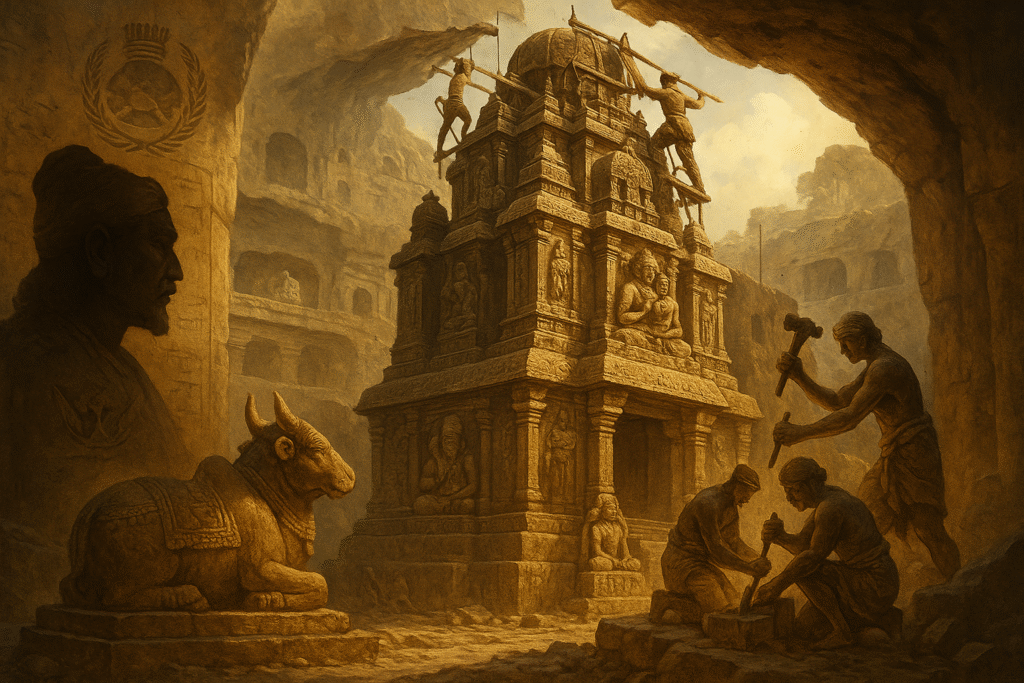
Construction of the Kailash Temple at Ellora
The Kailash Temple of Ellora is considered a unique marvel of Indian architecture and art. Located in the Aurangabad district of Maharashtra, this temple is identified as Cave Number 16 of the Ellora Caves. It was built by the great Rashtrakuta ruler Krishna I (756–774 CE).
Features of Construction
The Entire Temple is Carved from a Single Rock
The Kailash Temple is a monolithic structure carved out of a single massive rock. It represents exceptional engineering skills and architectural excellence of ancient India.
Dedicated to Lord Shiva
The temple is dedicated to Lord Shiva and its design is inspired by Mount Kailash in the Himalayas.
Unique Architectural Features
- The temple height is approximately 32 meters and width about 45 meters.
- It includes intricately carved pillars, pavilions, shikharas, gateways and corridors.
- The walls display exquisite carvings depicting stories from the Mahabharata, Ramayana and various Puranas.
Excavation and Construction Technique
It is believed that the temple was constructed from top to bottom. This is an excellent example of the “cut-and-carve” technique, where artisans started carving from the top of the rock and gradually moved downward.
The construction took nearly 20 years and involved thousands of skilled workers and artisans.
The Art of Sculpture
- Beautiful sculptures decorate both the exterior and interior of the temple.
- Important sculptures include Shiva–Parvati, Ravana lifting Mount Kailash and the large Nandi statue.
Importance of the Temple
Religious Significance
The Kailash Temple is a symbol of India’s spiritual and religious heritage. It reflects the devotion of Rashtrakuta rulers towards Lord Shiva and the Vedic tradition.
Cultural and Historical Significance
The temple illustrates the height of ancient Indian architecture and craftsmanship. It is recognized as a UNESCO World Heritage Site and remains an essential part of India’s cultural legacy.
Global Contribution to Architecture
The architectural brilliance of the temple brought worldwide recognition to Indian craftsmanship. It is one of the largest monolithic temples in the world.
Conclusion
The Kailash Temple at Ellora symbolizes the artistic excellence, prosperity and cultural contributions of the Rashtrakuta dynasty. This architectural wonder represents the golden age of Indian art and continues to attract millions of visitors and devotees.
Rulers of the Rashtrakuta Dynasty
The Rashtrakuta dynasty (735–982 CE) was one of the most prominent dynasties in Indian history. Its rulers strengthened political power and also enriched art, literature and culture. Their rule extended across South and Central India.
Rulers and Their Reigns
1. Dantidurga (735–756 CE)
- Considered the founder of the Rashtrakuta dynasty.
- Defeated Kartavirya II of the Chalukyas and established an independent empire.
- Assumed titles like “Parameshwara” and “Rajadhiraja”.
- Built temples in the Ellora region.
- Patronised Vedic traditions.
2. Krishna I (756–774 CE)
- Successor of Dantidurga and one of the greatest Rashtrakuta rulers.
- Constructed the famous Kailash Temple at Ellora.
- Defeated the Pallavas and strengthened the empire.
- Promoted art, culture and religious devotion.
3. Govinda II (774–780 CE)
- Son of Krishna I.
- Considered a weak ruler.
- Deposed by his younger brother Govinda III.

Quality Amazon Product
A top-rated pick with solid performance and trusted durability. Ideal choice for everyday use with excellent customer satisfaction.
View on Amazon4. Govinda III (793–814 CE)
- One of the most powerful Rashtrakuta rulers.
- Conquered Kannauj and took the title “Trilokemalla” (Conqueror of the Three Worlds).
- Defeated Pallavas, Gangas and Cholas.
- Expanded the empire from Kannauj in the north to Kanyakumari in the south.
5. Amoghavarsha I (814–878 CE)
- Son of Govinda III and the longest-reigning Rashtrakuta ruler.
- Known for his peaceful and religious nature.
- A follower of Jainism; wrote the book “Prashnottaramalika”.
- Patronised Kannada literature and poets like Srivijaya and Jinasena.
- Developed Manyakheta (Malkhed) as a cultural centre.
6. Krishna II (878–914 CE)
- Displayed military power by defeating the Cholas and the Eastern Gangas.
- Faced increasing internal conflicts.
- Encouraged Kannada and Sanskrit literature.
7. Indra III (914–927 CE)
- An able and courageous ruler.
- Restored the empire’s lost prestige.
- Defeated the Pratiharas of Kannauj.
- Under his rule, the empire again reached its peak.
8. Krishna III (939–967 CE)
- The last powerful ruler of the Rashtrakutas.
- Defeated the Cholas and performed a victory ceremony at Thanjavur with Ganga water.
- Promoted temple construction and religious activities.
9. Last Ruler and Downfall
- By the 10th century, internal conflicts weakened the empire.
- The rise of the Chalukyas accelerated the decline.
- Around 982 CE, the Rashtrakuta dynasty collapsed.
Conclusion
The rulers of the Rashtrakuta dynasty played a crucial role in Indian history. They expanded their empire and greatly enriched Indian culture, literature and architecture. Their achievements—such as the Kailash Temple at Ellora, the growth of Kannada literature and their military victories—are timeless chapters of India’s glorious past.
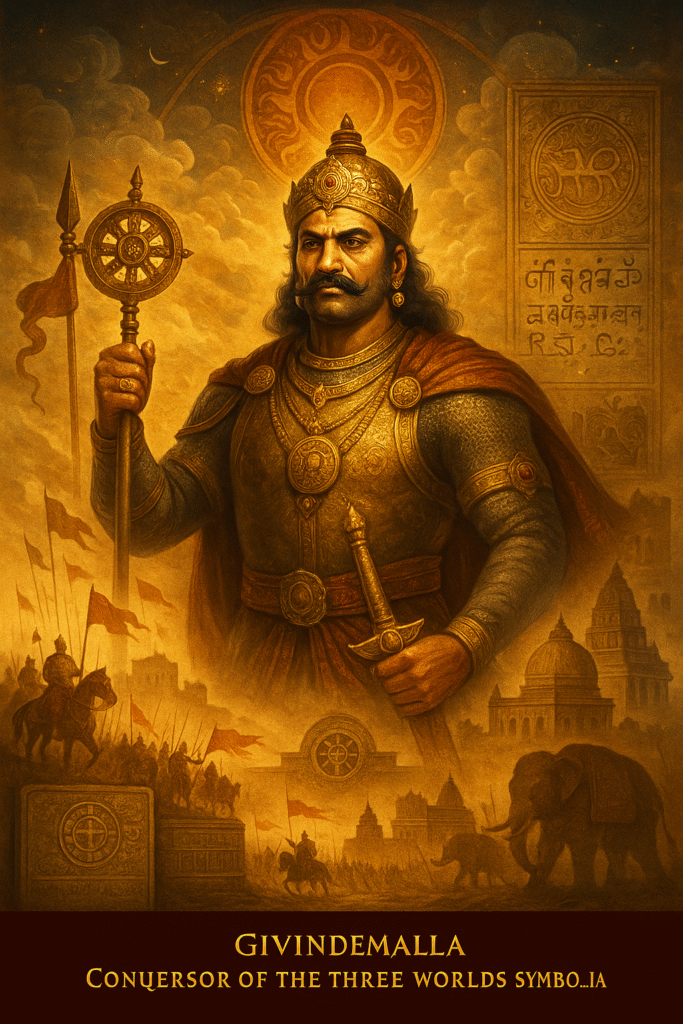
Trilokemalla
Trilokemalla was a royal title meaning “Conqueror of the Three Worlds”. This prestigious title was assumed by the great Rashtrakuta ruler Govinda III (793–814 CE).
Importance of the Title
- Trilokemalla signifies victory in all directions — earth, sky and underworld.
- The title represents immense strength, bravery and a victorious nature.
Govinda III and His Conquests
- Govinda III was one of the most powerful rulers of the Rashtrakuta Empire.
- He conquered Kannauj in North India by defeating the Gurjara-Pratiharas and Palas.
- In South India, he defeated the Pallava, Ganga and Chola dynasties.
- The Rashtrakuta Empire reached its zenith during his reign.
These victorious campaigns made Govinda III worthy of the title Trilokemalla. The title reflects his extraordinary military power and achievements.
Historical Importance of Trilokemalla
- The title showcases not only Govinda III's conquests but also the strength and influence of the Rashtrakuta Empire.
- It highlights the glorious legacy of the dynasty and its significant contribution to Indian history.
Conclusion
The title Trilokemalla symbolises the political and military excellence of Govinda III. Under his rule, the Rashtrakutas rose to great prominence in the Indian subcontinent, and this title remains a historical testament to his achievements.
Prashnottaramaalika (Question and Answer Master)
Prashnottaramaalika is a well-known literary text composed by the Rashtrakuta ruler Amoghavarsha I (814–878 CE). Amoghavarsha was not only a great king but also a scholar, poet and devoted follower of Jainism.
Introduction to the Text
- Prashnottaramaalika is written in Sanskrit.
- It is a religious and ethical treatise presenting Jain teachings in a question-and-answer format.
- The work deals with the principles of religion, ethics and the ideal way of life.
Main Themes and Objectives
Principles of Jainism
The text explains essential Jain values and spiritual teachings.
Morality and Ideals of Life
Its primary aim is to inspire readers to follow the path of virtue and righteousness. It emphasises that correct conduct is necessary for purification of the soul and attainment of liberation.
Question-and-Answer Style
- The treatise uses a curiosity-based question-and-answer structure.
- Complex topics are simplified through clear explanations.
- This makes the text easy to understand for learners and followers of Jain philosophy.
Contribution of Amoghavarsha I
- Amoghavarsha was an efficient ruler, scholar and devoted Jain.
- Through Prashnottaramaalika, he promoted Jain philosophy and contributed significantly to Indian literature.
- The text holds an important place in Jain scriptures and ancient Indian ethical literature.

Top-Rated Amazon Product
A reliable and high-quality choice with excellent performance and strong customer reviews — perfect for everyday use and long-lasting satisfaction.
Check Price on AmazonConclusion
Prashnottaramaalika reflects the scholarship and religious values of Amoghavarsha I. It remains a priceless heritage in Indian literature and Jain tradition. Its teachings continue to inspire the path of morality, spirituality and righteous living even today.
Cultural and Architectural Contributions of the Rashtrakuta Dynasty
The Rashtrakuta dynasty (8th to 10th century CE) enriched Indian culture, art, literature and architecture. They brought political stability and remarkable cultural development, which is often referred to as a cultural golden age in Indian history.
1. Contribution to Architecture
(a) Kailash Temple of Ellora (Cave No. 16)
- Built by the Rashtrakuta ruler Krishna I (756–774 CE).
- A monolithic masterpiece carved out of a single enormous rock.
- Dedicated to Lord Shiva and modeled after Mount Kailash.
- Contains carvings depicting scenes from the Mahabharata and Ramayana.
- Considered one of the greatest achievements in Indian architectural history.
(b) Ajanta and Ellora Caves
- The Rashtrakutas helped preserve and expand the Ajanta and Ellora caves.
- These caves showcase the art of Hinduism, Buddhism and Jainism.
- They are symbols of religious harmony and cultural diversity.
(c) Manyakheta (Malkhed)
- Manyakheta, the capital of the Rashtrakutas, was a major centre of architecture and craftsmanship.
- Several palaces, temples and forts were built here.
(d) Other Architectural Works
- The Rashtrakutas constructed many temples and monasteries across South India.
- Their architectural influence is visible in both Karnataka and Maharashtra.
2. Contribution to Literature
(a) Development of Sanskrit and Kannada Literature
- The Rashtrakutas patronised both Sanskrit and Kannada literature.
- Kannada literature flourished under their rule.
- Amoghavarsha I composed the Sanskrit text “Prashnottaramaalika”.
(b) Development of Jain Scriptures
- The dynasty played an important role in the promotion of Jainism.
- Scholars like Jinasena and Srivijaya wrote important Jain religious texts under their patronage.
(c) Poetry and Drama
- Poet Srivijaya composed Kāvyālaṅkāra in Kannada.
- Trivikrama and other Sanskrit scholars composed epics and literary works.
3. Contribution to Painting and Sculpture
- The Rashtrakutas encouraged painting and sculpture.
- The exquisite carvings of the Kailash Temple demonstrate their sculptural brilliance.
- The Ajanta and Ellora caves exhibit high-quality paintings and artwork.
4. Contribution to Religion and Culture
(a) Religious Tolerance
- The Rashtrakuta rulers supported Hinduism, Buddhism and Jainism.
- People were free to practice their religious and cultural traditions.
(b) Patronage of Jainism
- Amoghavarsha I was a devout follower of Jainism.
- He built Jain temples and promoted Jain scholars and teachings.
(c) Festivals and Cultural Events
- Religious and cultural festivals flourished during their reign.
- Dance, music and theatre were important elements of cultural life.

High-Performance Amazon Product
A quality product with excellent features and strong customer ratings. Durable, reliable, and designed to deliver great performance for every day use.
View on Amazon5. Contribution to Music and Dance
- The Rashtrakutas encouraged classical music and dance.
- Manyakheta served as a prominent cultural centre.
- New innovations in music and dance-drama were introduced during their rule.
Conclusion
The Rashtrakuta dynasty made invaluable contributions to Indian culture and architecture. The Kailash Temple stands as a powerful symbol of their architectural genius and religious devotion. Under their patronage, art, literature and religion reached new heights. Their cultural vision left a profound influence on Indian history and remains visible in the heritage of India today. They were not only warriors but also great patrons and creators.
Fall of the Rashtrakuta Dynasty
The Rashtrakuta dynasty began to decline in the mid-10th century. Multiple factors weakened this once-powerful empire, including internal conflicts, external invasions and growing regional rivalries. The downfall of the Rashtrakutas was a gradual process that ultimately reshaped the political landscape of South India.
1. Internal Conflict
- Power struggles and disputes among the Rashtrakuta rulers weakened the empire from within.
- Frequent wars and succession conflicts disrupted administrative functioning.
- After the reign of Krishna III (939–967 CE), no strong ruler emerged, creating a leadership vacuum.
- Corruption and administrative inefficiency further destabilized the empire.
2. External Aggression
- The empire faced repeated external attacks, which weakened its military strength.
- The Chalukya dynasty grew in power and defeated the Rashtrakutas in the southern regions.
- Conflicts with the Gurjara-Pratihara and Pala dynasties drained resources and military capabilities.
3. Rise of the Cholas
- By the mid-10th century, the Chola Empire expanded aggressively in South India.
- The strong military leadership of the Cholas reduced Rashtrakuta influence.
- Rajendra Chola I (1014–1044 CE) further expanded the Chola Empire and defeated the remaining Rashtrakuta forces.
- This marked the near-complete erosion of Rashtrakuta power in the south.

Top Amazon Product Pick
A well-reviewed, dependable product with quality build and great performance — perfect for everyday use and customer satisfaction.
Check Latest Price4. Disintegration of the Empire
- After their decline, the empire fragmented into several smaller regions.
- Local powers asserted independence, leading to political fragmentation.
- Both the Chalukya and Chola dynasties expanded their territories, ending Rashtrakuta dominance.
Conclusion
The fall of the Rashtrakuta dynasty was a complex process shaped by internal weaknesses, external aggression and rising regional powers. Their downfall marked a turning point in Indian history, especially for South India, where new political forces emerged that shaped future developments.
Overall Historical Importance of the Rashtrakuta Dynasty
The Rashtrakuta dynasty holds an important place in Indian history. From the 8th to the 10th century CE, the Rashtrakutas contributed significantly to politics, architecture, literature and culture.
Architectural Legacy
Their greatest architectural contribution is the magnificent Kailash Temple at Ellora, a UNESCO World Heritage Site and one of the largest monolithic structures in the world. Many temples and religious institutions were also built under their patronage.
Literary Contribution
Kannada and Sanskrit literature flourished under the Rashtrakutas. Amoghavarsha I promoted literature and composed the Sanskrit text Prashnottaramaalika. Many poets and scholars thrived during their rule.
Religious Tolerance
The Rashtrakutas followed and supported various religions, including Hinduism, Jainism and Buddhism. Their religious tolerance promoted social harmony and cultural diversity across the Indian subcontinent.
Final Summary
Although internal conflict, external invasions and political instability led to their decline, the Rashtrakutas left behind a lasting cultural legacy. Their achievements in architecture, literature and religious harmony continue to influence Indian heritage and history.
References

Popular Amazon Product
A reliable and quality-built product with excellent performance and strong customer satisfaction — ideal for everyday use and trusted results.
Check Price on Amazon- Romila Thapar, A History of India, Penguin Books.
- R.S. Sharma, India's Ancient Past, Oxford University Press.
- K.A. Nilakanta Sastri, A History of South India, Oxford University Press.
- Sircar, D.C., Indian Epigraphy, Motilal Banarsidass.
- UNESCO World Heritage Centre – Ellora Caves.
- Indian Archaeological Survey Reports on Ellora & Ajanta Caves.
- Historical inscriptions of the Rashtrakuta period found in Maharashtra & Karnataka.