
Deccan Plateau: A Journey, an Experience, and Life Lessons from the Heart of India
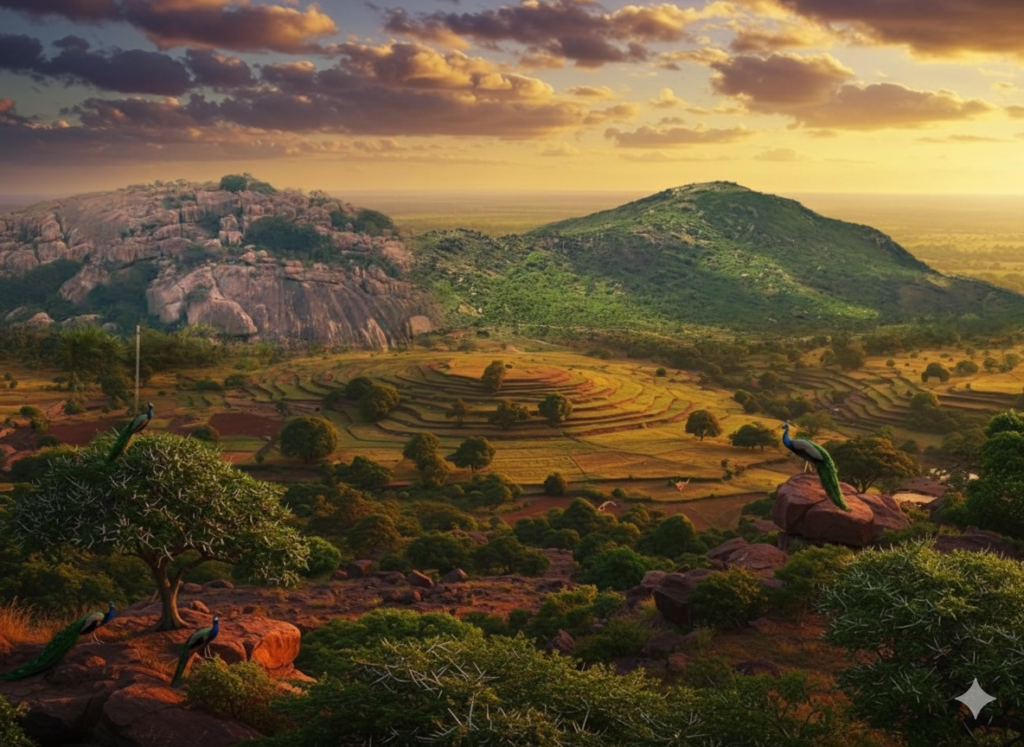
The Deccan Plateau is often seen as just another physical region on the map of India. When I first tried to understand the Deccan Plateau, it appeared to me in the same way. But the moment I began to look beyond textbooks and diagrams, the region transformed into something far deeper and more meaningful. It felt like a living landscape—one shaped by time, endurance, and the quiet strength of nature and human life existing together for centuries.
The soil of the Deccan Plateau tells stories that are not written in words. Its ancient basalt rocks speak of volcanic origins and millions of years of geological change, while its dry climate and open plains reveal the long struggle between humans and nature. At first glance, the land may seem harsh and unyielding, yet beneath this surface lies an extraordinary ability to survive, adapt, and regenerate. This contrast left a deep impression on me.
As I explored more about the Deccan Plateau, I realized that it is not only a geographical entity but also a reflection of human resilience. Generations of people have learned to live with limited rainfall, unpredictable conditions, and challenging terrain. Their lifestyles, agriculture, architecture, and culture are shaped by this land, teaching invaluable lessons about patience, self-reliance, and respect for nature.
Deccan Plateau and History: A Story Written in Stone
The history of the Deccan Plateau is deeply embedded in its rugged terrain, ancient caves, and towering forts. This land has witnessed the rise and fall of powerful dynasties, long periods of cultural exchange, and decisive battles that shaped the course of Indian history. Every stone, pathway, and monument across the Deccan Plateau reflects layers of human experience preserved through time.
From the Satavahanas to the Maratha Empire
The historical journey of the Deccan Plateau begins with the Satavahana dynasty, which played a crucial role in establishing stable administration, trade networks, and cultural growth in the region. The Satavahanas encouraged inland and overseas trade, linking the Deccan with northern India and the wider world.
In later centuries, the Deccan Plateau became the center of powerful kingdoms such as the Chalukyas, Rashtrakutas, and the Vijayanagara Empire. These rulers left behind remarkable architectural and cultural achievements, including rock-cut temples, inscriptions, and planned cities that demonstrate advanced knowledge of art, engineering, and governance.
The medieval period saw the rise of the Deccan Sultanates, followed by the emergence of the Maratha Empire under Chhatrapati Shivaji Maharaj. Using the natural defenses of the plateau—its hills, forts, and difficult terrain—the Marathas developed innovative military strategies and established a powerful political force that challenged imperial rule and redefined regional power in the Deccan Plateau region.
Reading History and Feeling It Come Alive
When I stood before the great forts of the Deccan Plateau, history no longer felt distant or abstract. The massive stone walls, narrow pathways, and strategic viewpoints made it clear that these structures were built not just with skill, but with deep understanding of the land. In those moments, history stepped out of textbooks and became a living presence.
Walking through these forts, I could almost sense the footsteps of soldiers, the urgency of decisions made in times of war, and the resilience of people who defended their land against overwhelming odds. This experience taught me that history is not merely something to be studied—it is something to be felt, understood, and respected. The Deccan Plateau, through its monuments and landscapes, continues to keep this history alive.
Deccan Plateau and History: A Story Written in Stone
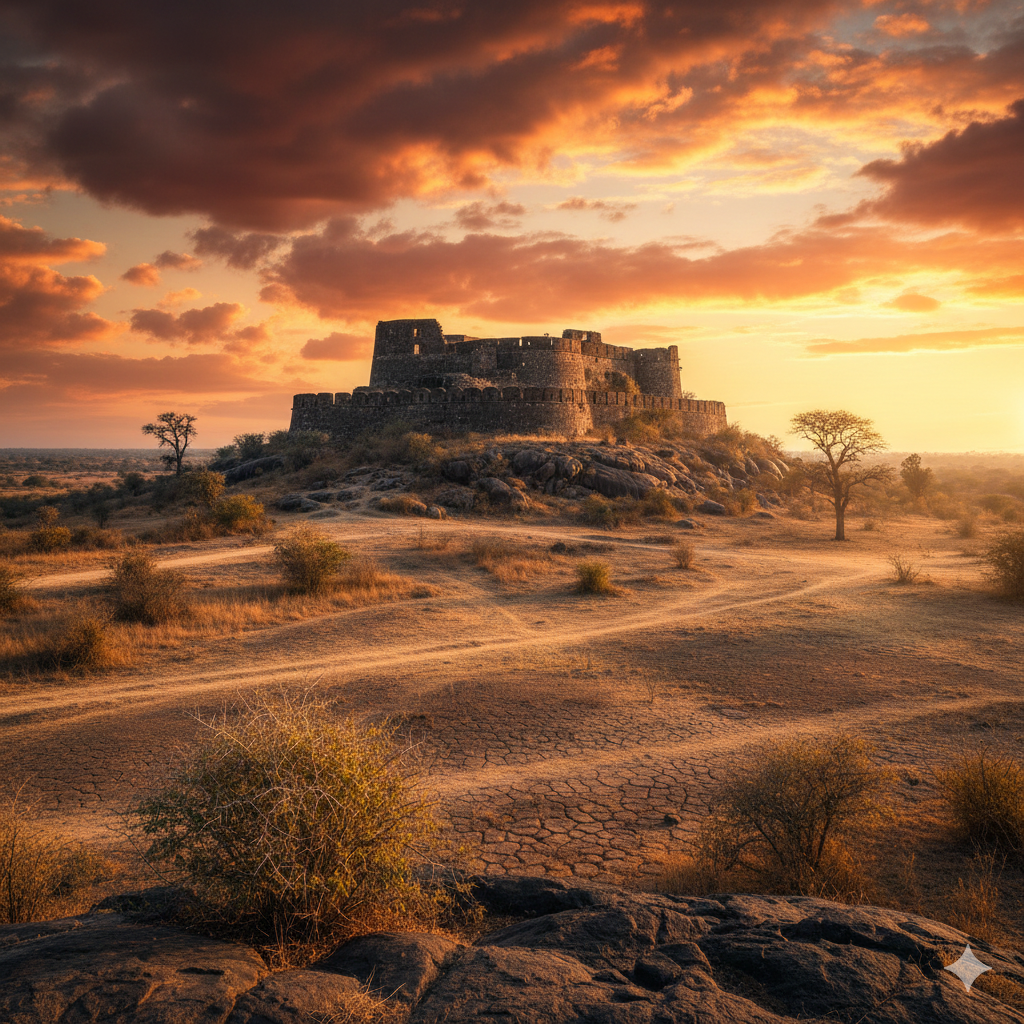
The history of the Deccan Plateau is deeply embedded in its rugged terrain, ancient caves, and towering forts. This land has witnessed the rise and fall of powerful dynasties, long periods of cultural exchange, and decisive battles that shaped the course of Indian history. Every stone, pathway, and monument across the Deccan Plateau reflects layers of human experience preserved through time.
From the Satavahanas to the Maratha Empire
The historical journey of the Deccan Plateau begins with the Satavahana dynasty, which played a crucial role in establishing stable administration, trade networks, and cultural growth in the region. The Satavahanas encouraged inland and overseas trade, linking the Deccan with northern India and the wider world.
In later centuries, the Deccan Plateau became the center of powerful kingdoms such as the Chalukyas, Rashtrakutas, and the Vijayanagara Empire. These rulers left behind remarkable architectural and cultural achievements, including rock-cut temples, inscriptions, and planned cities that demonstrate advanced knowledge of art, engineering, and governance.
The medieval period saw the rise of the Deccan Sultanates, followed by the emergence of the Maratha Empire under Chhatrapati Shivaji Maharaj. Using the natural defenses of the plateau—its hills, forts, and difficult terrain—the Marathas developed innovative military strategies and established a powerful political force that challenged imperial rule and redefined regional power.
Reading History and Feeling It Come Alive
When I stood before the great forts of the Deccan Plateau, history no longer felt distant or abstract. The massive stone walls, narrow pathways, and strategic viewpoints made it clear that these structures were built not just with skill, but with deep understanding of the land. In those moments, history stepped out of textbooks and became a living presence.
Walking through these forts, I could almost sense the footsteps of soldiers, the urgency of decisions made in times of war, and the resilience of people who defended their land against overwhelming odds. This experience taught me that history is not merely something to be studied—it is something to be felt, understood, and respected. The Deccan Plateau, through its monuments and landscapes, continues to keep this history alive.
Drought, Struggle, and the Life Philosophy of the Deccan Plateau
The climate of the Deccan Plateau plays a defining role in shaping both the natural environment and human life. Large parts of the plateau receive low and irregular rainfall, making drought a recurring reality rather than an occasional challenge. Yet, despite these conditions, life on the Deccan Plateau has continued with remarkable determination, demonstrating how human adaptability can overcome environmental limitations.
Low Rainfall and Harsh Living Conditions
Unlike the coastal regions of India, the Deccan Plateau lies in the rain-shadow zone of the Western Ghats, which significantly reduces the amount of monsoon rainfall it receives. As a result, water scarcity is a persistent issue, affecting agriculture, livelihoods, and daily routines. Farmers often depend on unpredictable monsoons, reservoirs, and traditional water-harvesting systems to sustain their crops and communities across the Deccan Plateau region.
The dry climate, combined with high temperatures and hard basalt soil, creates demanding living conditions. Yet these challenges have shaped a unique relationship between people and the land. Cropping patterns, settlement planning, and even food habits have evolved to suit the realities of limited water and harsh weather, reflecting centuries of practical knowledge and adaptation.
A Lesson in Contentment Amid Limited Resources
The Deccan Plateau taught me that scarcity does not necessarily lead to despair. Instead, it often cultivates wisdom. Observing life in this region made me realize that limited resources do not create limited thinking. People learn to value what they have, plan for the future, and use resources with care and respect.
This environment quietly instills a philosophy of contentment and resilience. Rather than seeking excess, life on the Deccan Plateau emphasizes balance, sustainability, and inner strength. These lessons extend far beyond geography, offering timeless guidance for modern life, where abundance often exists alongside dissatisfaction.

Featured Amazon Product
Stylish design, quality finish, and reliable performance make this product a smart choice for everyday use and gifting.
👉 Buy on Amazon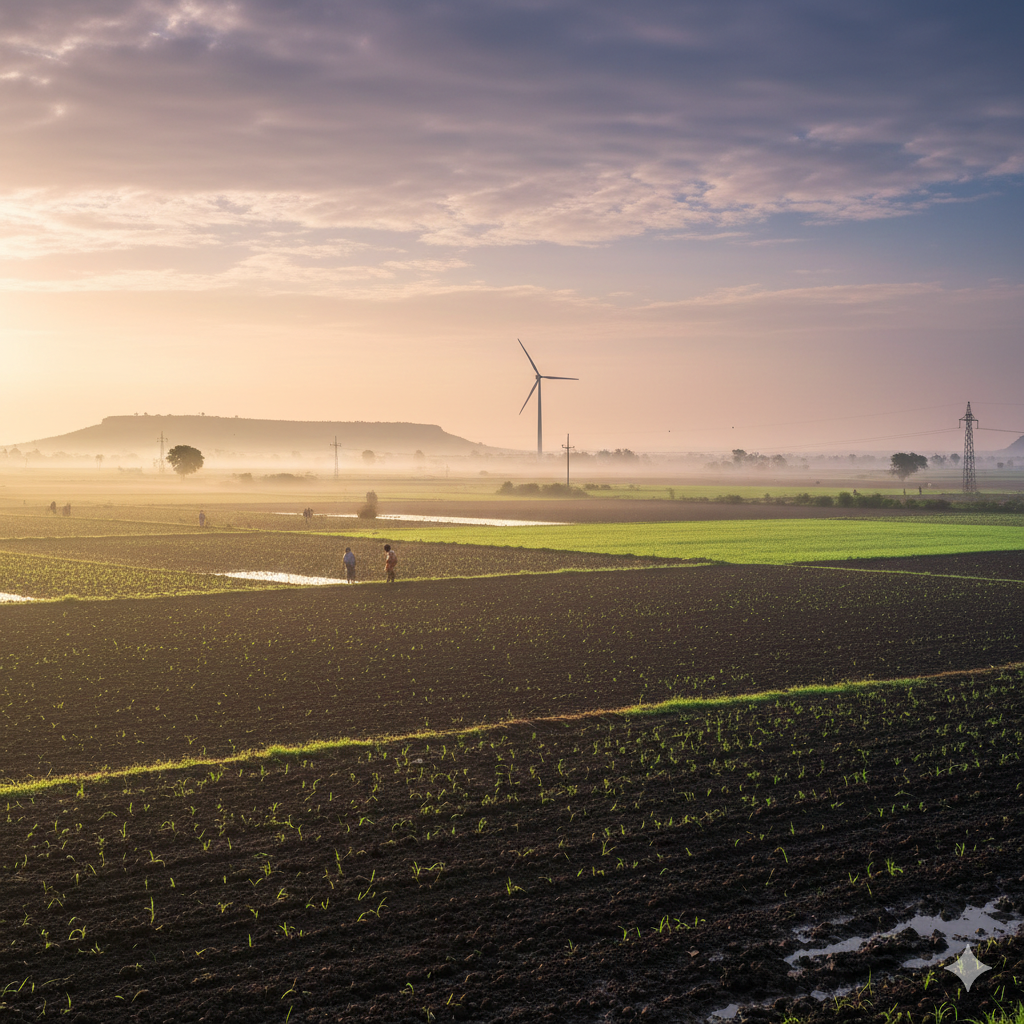
What I Learned from the Deccan Plateau
At the heart of my journey lies the most meaningful realization—the Deccan Plateau is not only a landform to be studied, but a guide that quietly shapes the way one looks at life. Every aspect of this region, from its climate to its people, reflects lessons that extend far beyond geography. Over time, these lessons began to influence my own thinking, choices, and understanding of resilience.
Patience, Stability, and Self-Reliance
Life on this plateau unfolds slowly and deliberately. The land does not change overnight, and neither do the people who live upon it. This taught me the value of patience— the ability to wait, endure, and trust gradual progress. Stability here is not built on abundance, but on consistency and long-term effort.
Self-reliance is another core value deeply embedded in the life of the region. Communities have learned to depend on their own skills, traditional knowledge, and mutual support to survive in challenging conditions. This spirit of independence, balanced with cooperation, reveals a powerful model of sustainable living.
When the Deccan Became My Way of Looking at Life
Today, whenever life becomes difficult or uncertain, my thoughts return to the dry land of the Deccan region. Year after year, despite drought and hardship, the land turns green again with the arrival of rain. This transformation reminds me that hardship is temporary and renewal is always possible.
The Deccan Plateau taught me that strength is not loud or immediate—it is quiet, patient, and deeply rooted. Just like the land itself, true growth takes time. These lessons now form the foundation of my life perspective, guiding me through challenges with calm, confidence, and resilience.

Top Amazon Product Recommendation
Sleek design, dependable performance, and excellent reviews make this product a smart choice for everyday use or gifting.
👉 Buy on AmazonRole of the Deccan Plateau in Modern India
In contemporary India, the Deccan Plateau continues to play a crucial role in shaping the nation’s economic, social, and cultural framework. Far from being only a historical or geographical entity, this elevated region actively contributes to agriculture, mineral resources, industrial development, and cultural identity. Its influence remains deeply interwoven with India’s growth story.
Agriculture on the Deccan Plateau
Agriculture remains the backbone of life across much of this plateau region. The area is known for the cultivation of crops suited to semi-arid conditions, such as millets, pulses, cotton, oilseeds, and sugarcane. Black cotton soil, formed from ancient volcanic basalt, retains moisture and supports farming even in areas with low rainfall.
Modern irrigation projects, dams, and water management systems along rivers like the Godavari, Krishna, and Kaveri have strengthened agricultural productivity. Today, the Deccan Plateau plays a significant role in ensuring food security and sustaining rural livelihoods in India.
Mineral Resources of the Deccan Plateau
This region is rich in mineral resources that support India’s industrial base. Important minerals such as iron ore, manganese, bauxite, limestone, and coal are found across different parts of the plateau. These resources are essential for sectors like steel production, construction, energy, and manufacturing.
Mining activities in the Deccan region have contributed to regional development and employment, making it a vital component of India’s resource economy.
Industrial Development in the Deccan Region
In recent decades, the plateau has emerged as a major hub of industrial and technological growth. Cities such as Bengaluru, Hyderabad, Pune, and Nagpur have become centers of information technology, manufacturing, pharmaceuticals, and education.
The region’s stable landmass, central location, and expanding infrastructure have attracted domestic and international investment, positioning the Deccan Plateau as a key driver of modern economic development in India.
Cultural Significance of the Deccan Plateau
Culturally, this plateau represents a unique blend of traditions, languages, and art forms. Classical music, regional cuisines, folk traditions, and architectural styles reflect centuries of cultural interaction across the region. From ancient temples to medieval forts, the cultural heritage of the Deccan Plateau continues to inspire modern Indian identity.
By balancing tradition with progress, the Deccan Plateau remains not only a geographical heartland but also a cultural and economic pillar of modern India.
Conclusion: The Deccan Plateau as a Source of Strength and Inspiration
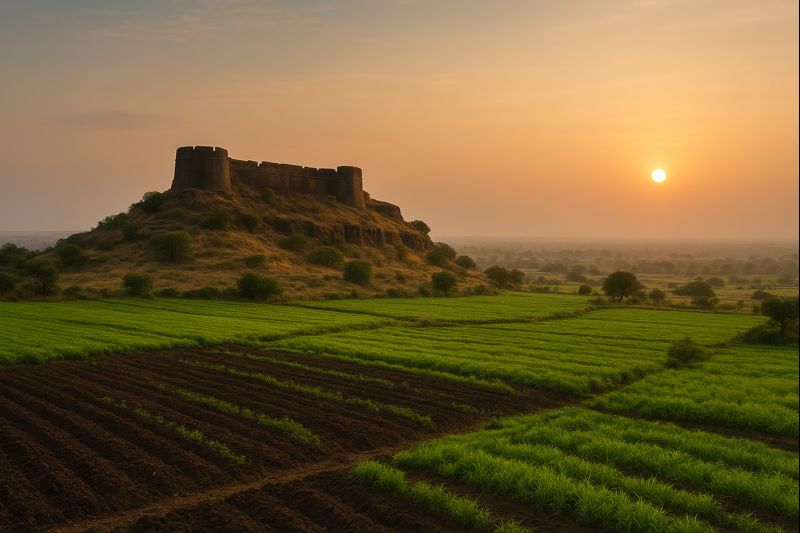
The Deccan Plateau is far more than an elevated stretch of land in southern India. It is a silent teacher, shaped by time, struggle, and endurance. Through its geography, history, and people, this vast region reveals a powerful message—that true strength is built slowly, patiently, and with unwavering resilience.
From ancient volcanic rocks to thriving modern cities, the journey of this plateau mirrors the journey of human life itself. It reminds us that challenges are not obstacles meant to break us, but foundations that shape our character. The land’s ability to endure drought, regenerate after hardship, and sustain life teaches us the value of hope and perseverance.
In a fast-changing world driven by speed and convenience, the Deccan Plateau offers a timeless lesson: growth does not always have to be rapid to be meaningful. Stability, self-reliance, and balance remain the cornerstones of lasting progress. By learning from this land, we learn to face our own struggles with calm determination and deeper wisdom.
Ultimately, the story of this remarkable plateau is also our story. It encourages us to stay grounded during success, patient during adversity, and hopeful even in the driest phases of life. In its quiet strength and enduring presence, the region continues to inspire generations—both on the land and beyond it.
Frequently Asked Questions (FAQ)
What is the Deccan Plateau?
The Deccan Plateau is a large elevated landmass located in southern India. It covers a significant portion of the Indian subcontinent and is known for its ancient volcanic origins, black soil, and semi-arid climate. The plateau is bounded by the Western Ghats and Eastern Ghats and forms the geographical core of peninsular India.
Why is the Deccan Plateau important for India?
This plateau region plays a vital role in India’s development. It supports agriculture, provides rich mineral resources, and hosts major industrial and technological hubs such as Bengaluru, Hyderabad, and Pune. Culturally and historically, it has been home to powerful empires and diverse traditions that continue to shape modern India.
How was the Deccan Plateau formed?
It was formed millions of years ago through extensive volcanic activity. Large lava flows created thick layers of basalt rock, known as the Deccan Traps. Over time, erosion and geological processes shaped the plateau into its present form.
What type of climate does the Deccan Plateau have?
The region generally experiences a semi-arid to tropical climate. Many areas receive low and irregular rainfall because they lie in the rain-shadow region of the Western Ghats. This climate has influenced agriculture, settlement patterns, and lifestyles across the area.
Which rivers originate in the Deccan Plateau?
Several major rivers originate in or flow across this plateau, including the Godavari, Krishna, Kaveri, and Tungabhadra. These rivers are essential for irrigation, drinking water, and economic activities in the region.
What life lessons can be learned from the Deccan Plateau?
The Deccan Plateau teaches valuable life lessons such as patience, resilience, and self-reliance. Its ability to endure harsh conditions and regenerate over time reflects the importance of perseverance, balanced living, and respect for nature in both personal and societal life.

Top Amazon Product
Stylish design, good quality and reliable performance make this product a smart choice for everyday use or gifting.
👉 Buy on AmazonReferences
- NCERT. India: Physical Environment. National Council of Educational Research and Training, New Delhi.
- Britannica, The Editors of Encyclopaedia. “Deccan Plateau.” Encyclopaedia Britannica.
- Government of India. Physiography of India. Ministry of Earth Sciences.
- Wadia, D. N. Geology of India. Tata McGraw-Hill Publishing Company.
- Krishnan, M. S. Geology of India and Burma. CBS Publishers & Distributors.
- Singh, Savindra. Physical Geography of India. Prayag Pustak Bhawan.
- Census of India. Geographical and Climatic Features of Peninsular India.
- Indian Council of Agricultural Research (ICAR). Agricultural Regions of the Deccan Plateau.