
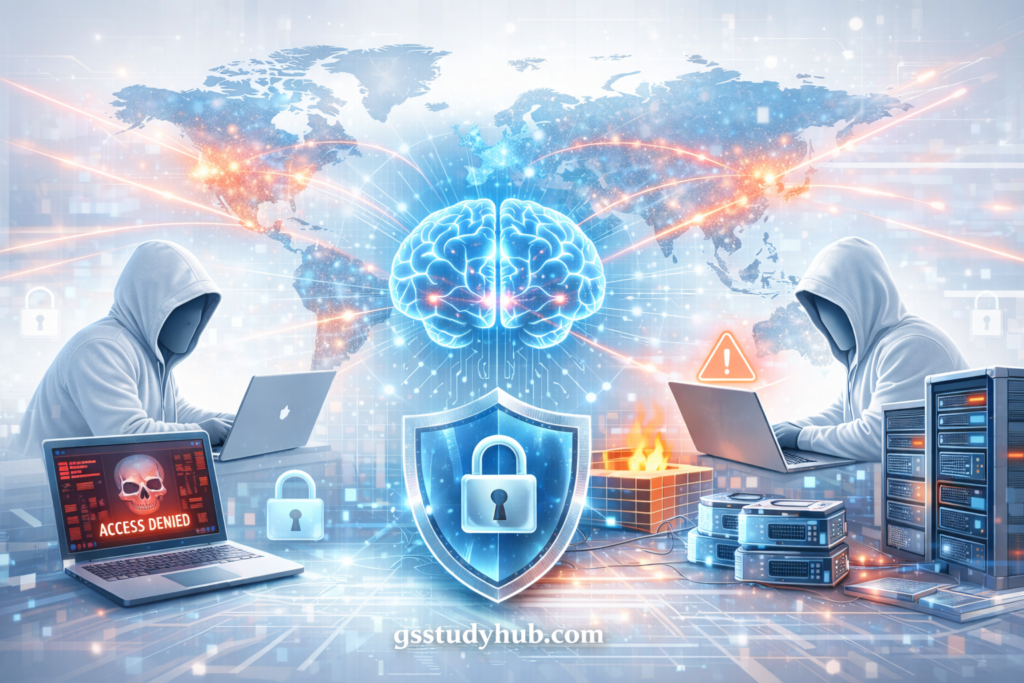
What is Cyber Security?
Cyber Security is the process of protecting computers, mobile devices, networks, servers, and digital data from hacking, viruses, malware, and other cyber threats.
In today’s digital world, almost every activity is connected to the internet—such as online banking, social media, e-commerce, and office work. If this information is not secured, it can lead to serious personal, financial, and social risks.
In simple terms, cyber security acts like a digital shield that protects your data from unauthorized access and cyber attacks.
Main Objectives of Cyber Security
- Protect data from theft and damage
- Secure networks from unauthorized access
- Maintain user privacy
- Prevent hacking and cyber attacks
Key Components of Cyber Security
- Network Security: Protecting networks from unauthorized access
- Application Security: Securing software and applications
- Information Security: Ensuring data confidentiality and protection
- Operational Security: Managing systems and processes securely
Why is Cyber Security Important?
In the modern era, data has become one of the most valuable assets. If it falls into the wrong hands, it can be misused in many harmful ways.
- Protection from online banking fraud
- Safeguarding personal information
- Securing business data
- Strengthening national security
Real-Life Example
Imagine clicking on a fake link and entering your banking details. Within minutes, your money could be stolen. This is a common example of a cyber security failure.
Essential Cyber Security Practices
- Use strong and unique passwords
- Enable Two-Factor Authentication (2FA)
- Avoid clicking on unknown links
- Keep your system and software updated
- Use antivirus and firewall protection
What is Digital Warfare?
cyber security and digital warfare is growing rapidlyDigital Warfare (Cyber Warfare) is a modern form of conflict where countries or organizations use the internet, computer networks, and digital technologies to attack each other. Instead of traditional weapons, the main targets are data, software systems, and critical infrastructure.
In today’s world, wars are not only fought on physical borders but also in cyberspace. In digital warfare, attackers aim to disrupt banking systems, power grids, government databases, and communication networks.
In simple terms, digital warfare is an invisible war where a nation can weaken another country’s economy and security without firing a single bullet.
Key Features of Digital Warfare
- Completely executed through digital platforms
- No physical boundaries or borders
- Attacks are often hidden and difficult to trace
- Low cost but high impact
- Can be launched anytime from anywhere
Types of Digital Warfare
- Cyber Espionage: Stealing confidential or strategic information
- Cyber Attacks: Damaging systems or disrupting networks
- Information Warfare: Spreading misinformation or propaganda
- Infrastructure Attacks: Targeting power, banking, and communication systems
How Digital Warfare Works
Digital warfare involves advanced hacking techniques and coordinated cyber operations:
- Using malware and viruses to infiltrate systems
- Phishing attacks to steal sensitive information
- DDoS attacks to shut down websites and services
- Data breaches and system control operations
Real-World Examples
- Stuxnet Attack: Disrupted Iran’s nuclear program
- Russia–Ukraine Cyber Conflict: Attacks on power grids and government systems
- Election Interference: Attempts to influence democratic processes
Impact of Digital Warfare
- Severe economic damage
- Disruption of government operations
- Public panic and instability
- Threats to national security
How to Prevent Digital Warfare Threats
- Strengthening cyber security infrastructure
- Securing government and private networks
- Using strong encryption technologies
- Adopting AI-based security systems
- Raising public awareness about cyber threats
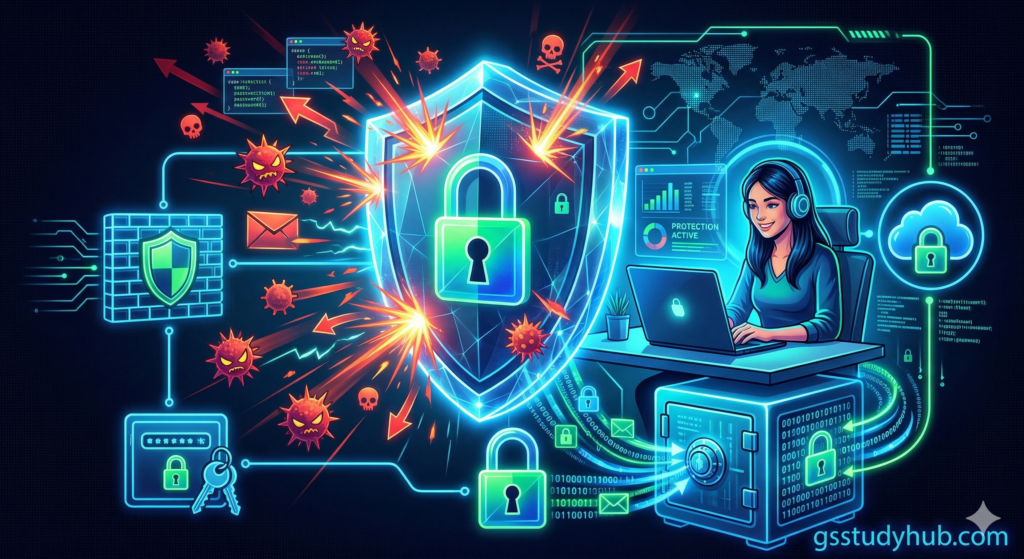
How Do Cyber Attacks Work?
Cyber Attacks are methods used by hackers to steal, damage, or gain unauthorized control over computers, networks, or personal data. These attacks are often silent, fast, and highly sophisticated.
In today’s digital world, cyber attacks have become more advanced. Hackers use modern tools and techniques to exploit system weaknesses (vulnerabilities) and gain access to sensitive information.
In simple terms, a cyber attack is like a trap where the user is tricked or exploited, allowing attackers to take control of data or systems without permission.
Step-by-Step Process of a Cyber Attack
- 1. Target Selection: The attacker chooses a target (individual, company, or system)
- 2. Information Gathering: Collecting data about the target (emails, systems, vulnerabilities)
- 3. Attack Planning: Deciding the type of attack to execute
- 4. Exploitation: Using system weaknesses to launch the attack
- 5. Access & Control: Gaining control over the system and stealing data
- 6. Covering Tracks: Hiding evidence to avoid detection
Common Types of Cyber Attacks
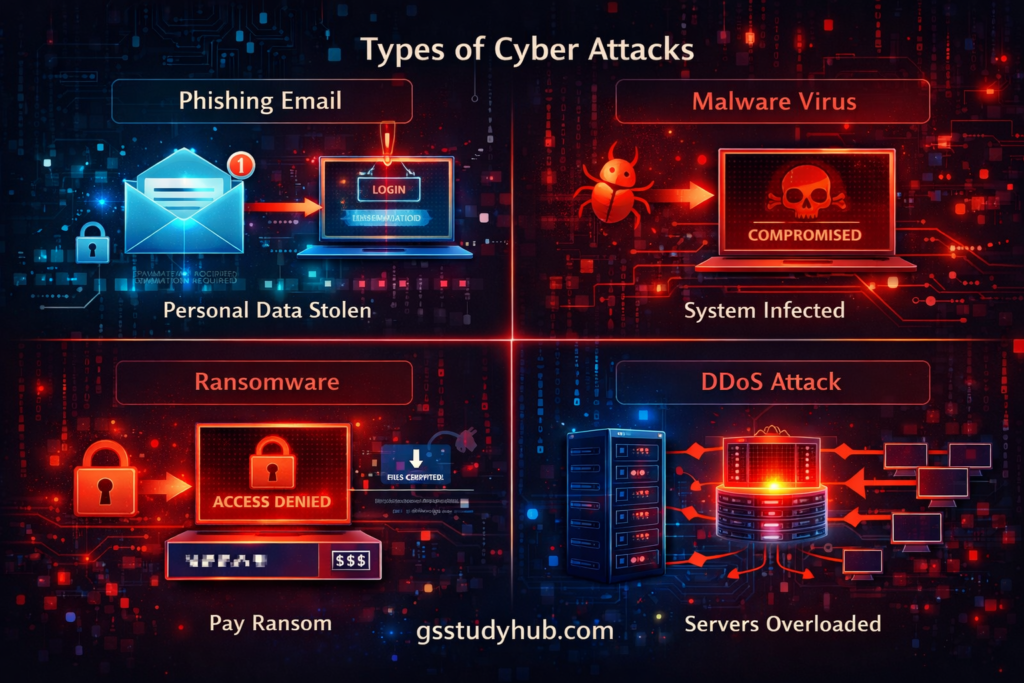
1. Phishing Attack
Fake emails or websites are used to trick users into revealing sensitive information like passwords or banking details.
2. Malware Attack
Malicious software that enters a system to damage it or steal data.
3. Ransomware
The attacker locks your data and demands payment to restore access.
4. DDoS Attack
Overloading a website or server with massive traffic so that it crashes or becomes unavailable.
5. Man-in-the-Middle Attack
Intercepting communication between two parties to steal or manipulate data.
Motives Behind Cyber Attacks
- Financial gain
- Data theft
- Cyber espionage
- Political or terrorist objectives
Impact of Cyber Attacks
- Financial losses
- Data breaches
- Business disruption
- Loss of privacy
How to Protect Yourself
- Use strong and unique passwords
- Enable Two-Factor Authentication (2FA)
- Avoid clicking unknown links
- Keep systems and software updated
- Use antivirus and firewall protection
Why is Cyber Security Important?
Importance of cyber security and digital warfareIn today’s digital era, Cyber Security is not just a technical concept—it has become an essential part of our daily lives. As internet usage grows, cyber threats are also increasing rapidly.
We use smartphones, laptops, and the internet for banking, shopping, social media, and professional work. If our data is not secure, it can lead to serious consequences.
In simple terms, cyber security is important because it protects your digital identity, money, and personal information from cyber threats.
1. Protection of Personal Data
We share a lot of personal information online—such as ID details, bank information, photos, and passwords. If this data is stolen, it can be misused.
2. Prevention of Financial Loss
Online fraud and banking scams are increasing every day. Without proper cyber security, individuals and businesses can suffer major financial losses.
3. Privacy Protection
Everyone has a right to privacy. Cyber security ensures that your personal information remains confidential and is not accessed without permission.
4. Business Security
For companies, data is one of the most valuable assets. A data breach can lead to financial loss and damage to reputation.
5. National Security
Cyber attacks are not limited to individuals. Critical infrastructure such as banking systems, power grids, defense systems, and government databases can be targeted, posing a threat to national security.
6. Protection of Digital Economy
In rapidly growing digital economies like India, cyber security is crucial for ensuring safe online transactions and maintaining trust in digital services.
7. Rising Cyber Crimes
Cyber crimes such as hacking, phishing, data theft, and ransomware attacks are increasing. Strong cyber security measures are necessary to prevent these threats.
Real-Life Example
Imagine entering your banking details on a fake website. Within minutes, your money could be stolen. This shows how important cyber security is in everyday life.
What Can Happen Without Cyber Security?
- Bank accounts can be emptied
- Personal data can be leaked
- Social media accounts can be hacked
- Businesses can collapse
- National security can be compromised
How to Ensure Cyber Security?
- Use strong and unique passwords
- Enable Two-Factor Authentication (2FA)
- Avoid clicking unknown links
- Keep systems and applications updated
- Use antivirus and firewall protection
- Stay aware of cyber threats
Real-World Examples of Cyber Warfare
Cyber Warfare is no longer just a concept—it has become a reality in today’s world. Many countries have already used digital attacks against each other, causing serious damage to systems, economies, and national security.
These incidents show that without using traditional weapons, a nation can still weaken another country through cyber operations.
The following real-world examples highlight how powerful and dangerous cyber warfare has become in the modern era.
1. Stuxnet Virus Attack (Iran)
Stuxnet is considered one of the most famous cyber attacks in history. It was a highly sophisticated malware designed to target Iran’s nuclear program.
- It damaged nuclear centrifuges by manipulating industrial systems
- Operated secretly without immediate detection
- Marked the beginning of modern cyber warfare
2. Russia–Ukraine Cyber Attacks
During the conflict between Russia and Ukraine, cyber attacks played a major role alongside traditional warfare.
- Ukraine’s power grid was hacked, causing blackouts
- Government websites were taken offline
- Cyber operations created panic and disruption among citizens
3. US Election Interference
There have been attempts to influence US elections through cyber means.
- Fake information spread through social media platforms
- Efforts to manipulate public opinion
- An example of information warfare
4. WannaCry Ransomware Attack
WannaCry was a global cyber attack that affected hundreds of thousands of computers worldwide.
- Data was encrypted and locked
- Victims were asked to pay ransom to regain access
- Hospitals, businesses, and government systems were impacted
5. SolarWinds Hack
This was a highly advanced cyber espionage attack targeting major organizations and government agencies.
- Attackers gained access through a software supply chain
- Sensitive data was stolen over a long period
- The breach remained undetected for months
Key Lessons from These Examples
- Cyber warfare is invisible but extremely dangerous
- National security now depends heavily on digital infrastructure
- Strong cyber security systems are essential
- Awareness and preparedness are critical in the digital age
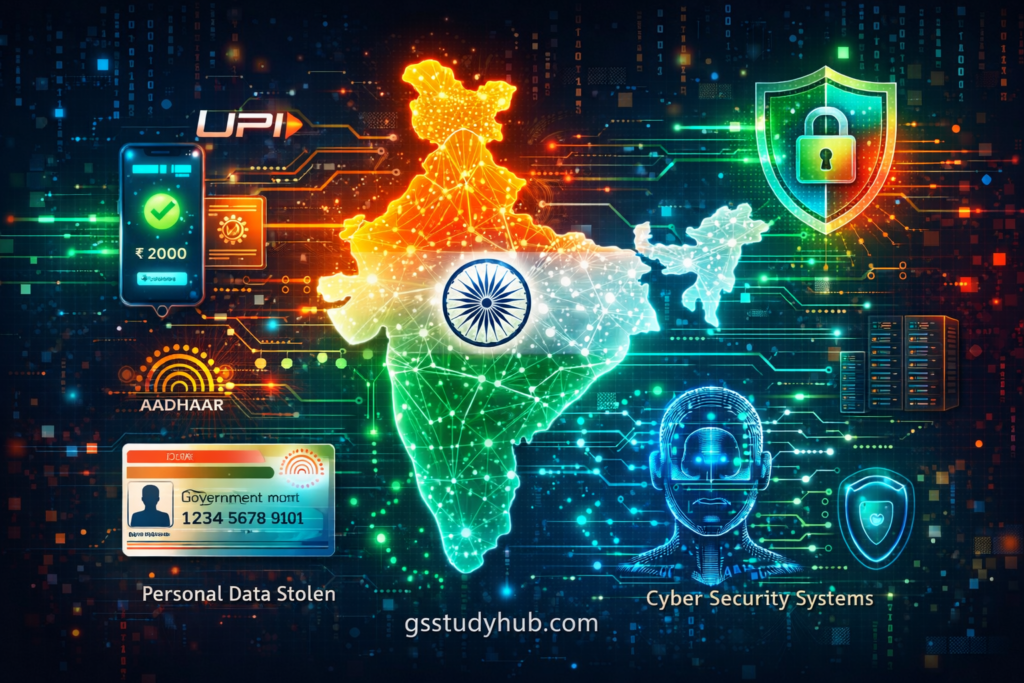
India and Cyber Security
In today’s digital era, India is rapidly moving towards digital transformation. With the rise of online banking, UPI payments, e-governance, and digital services, the importance of cyber security has increased significantly.
As India becomes more digitally connected, the risk of cyber threats is also growing. Therefore, having a strong cyber security framework is essential for the country.
In simple terms, cyber security acts as a protective shield that safeguards India’s digital growth and infrastructure from cyber attacks.
Why Cyber Security is Important for India
- Rapid growth of the digital economy
- Expansion of UPI and online transactions
- Digitization of government services
- Protection of data and privacy
Major Government Initiatives
1. Digital India Mission
This initiative aims to transform India into a digitally empowered society and knowledge economy by providing digital services to citizens.
2. National Cyber Security Policy
This policy focuses on securing the country’s cyber infrastructure and strengthening its ability to respond to cyber threats.
3. CERT-In (Indian Computer Emergency Response Team)
CERT-In is the national agency responsible for monitoring cyber threats and providing guidelines to handle cyber incidents.
Cyber Security Challenges in India
- Phishing and online fraud
- Ransomware attacks
- Attacks on government databases
- Cyber espionage activities
Benefits of Strong Cyber Security in India
- Increases trust in digital services
- Reduces financial losses
- Strengthens national security
- Protects businesses and startups
What Citizens Can Do
- Use strong passwords
- Enable Two-Factor Authentication (2FA)
- Avoid unknown links and suspicious calls
- Keep devices and software updated
- Stay aware of cyber threats
Future of Cyber Security in India
With the growth of technologies like AI, 5G, and digital platforms, cyber security will become even more critical in India. Both the government and private sector are actively working to strengthen cyber defense systems.
Advantages and Disadvantages of Cyber Security and Digital Technology
Future of cyber security and digital warfareIn today’s digital age, cyber security and digital technology have become essential parts of our lives. While they provide speed, convenience, and growth, they also come with certain risks and challenges.
Advantages
- Fast and Secure Communication: The internet and cyber security enable instant communication across the globe.
- Growth of Digital Economy: Online banking, UPI, and e-commerce have accelerated business growth.
- Data Protection: Strong cyber security systems help protect data from theft and hacking.
- Convenience and Time Saving: Many tasks can now be done easily from home using digital platforms.
- Innovation and Opportunities: New technologies and startups continue to grow rapidly.
- Improved National Security: Cyber security helps protect critical infrastructure and national systems.
Disadvantages
- Risk of Cyber Crimes: Hacking, phishing, and data theft are increasing rapidly.
- Privacy Threats: Personal information can be exposed or misused.
- Financial Losses: Online fraud can lead to serious financial damage.
- Overdependence on Technology: Heavy reliance on digital systems can create issues if systems fail.
- Fake News and Information Warfare: Misinformation can spread quickly and influence public opinion.
- Threats to National Security: Cyber attacks can target critical systems and infrastructure.
Why Balance is Important?
Proper use of digital technology and cyber security measures allows us to maximize benefits while minimizing risks. Awareness and responsible usage are key to staying safe in the digital world.
Future Trends in Cyber Security and Digital Warfare
Future of cyber security and digital warfareIn today’s rapidly evolving digital world, Cyber Security and Digital Warfare are advancing at an unprecedented pace. As technology grows, cyber threats are becoming more complex, intelligent, and dangerous.
In the future, cyber security will not just be a protective measure—it will become a fundamental necessity for individuals, businesses, and nations.
Emerging technologies like Artificial Intelligence, Quantum Computing, and Automation will completely transform both cyber attacks and defense systems.
1. AI-Powered Cyber Attacks
Hackers will increasingly use Artificial Intelligence to launch faster and more sophisticated cyber attacks.
- Automated hacking systems
- Deepfake content and advanced phishing
- Rapid identification of system vulnerabilities
2. AI-Based Security Systems
At the same time, AI will also be used to strengthen cyber defense mechanisms.
- Real-time threat detection
- Automated response systems
- Predictive cyber attack prevention
3. Impact of Quantum Computing
Quantum computing has the potential to break traditional encryption methods, posing a major challenge to current security systems.
- Existing security protocols may become obsolete
- Need for quantum-resistant encryption
4. Zero Trust Security Model
The future will shift from “Trust but Verify” to “Never Trust, Always Verify.”
- Continuous verification of users and devices
- Strict access control across networks
5. Internet of Things (IoT) Security
With the rise of smart devices, IoT security will become a major concern.
- Smart devices can be easy targets for hackers
- Strong security for every connected device will be essential
6. Cloud Security Evolution
As more data moves to the cloud, securing cloud environments will become critical.
- Advanced data encryption
- Secure access management
- Multi-layered protection systems
7. Growth of Digital Warfare
Cyber warfare between nations is expected to increase significantly in the future.
- Attacks on government systems
- Disruption of critical infrastructure
- Rise of information warfare and propaganda
8. Increased Cyber Awareness
Awareness about cyber security will grow among individuals and organizations.
- Cyber education in schools and colleges
- Online safety training programs
- Government awareness campaigns
Future Overview (Summary)
- AI and automation will reshape cyber security
- Quantum technology will introduce new challenges
- Cyber security will become essential for everyone
- Digital warfare will grow more powerful and strategic

Key Takeaways
- Cyber security is a necessity: In the digital age, protecting data, systems, and networks is essential for individuals and organizations alike.
- Digital warfare is a reality: Nations are increasingly using cyber attacks alongside traditional warfare to gain strategic advantages.
- Data is the new power: Information has become a critical asset, and those who control it hold significant influence.
- Cyber threats are rapidly increasing: Attacks such as phishing, ransomware, and hacking are becoming more frequent and advanced.
- Personal security is crucial: Individuals must adopt practices like strong passwords, 2FA, and cautious online behavior.
- Cyber security is growing in importance in India: With the expansion of digital services and initiatives, protecting digital infrastructure is more important than ever.
- Future technologies will bring new challenges: Innovations like AI, Quantum Computing, and IoT will reshape both threats and defenses.
- Awareness is the best defense: Staying informed and alert can significantly reduce the risk of cyber attacks.
FAQs (Frequently Asked Questions)
Importance of cyber security and digital warfare1. What is Cyber Security?
Cyber security is the practice of protecting computers, mobile devices, networks, and data from hacking, viruses, and cyber attacks. It ensures the safety of digital information in today’s connected world.
2. What is Digital Warfare?
Digital warfare is a modern form of conflict where countries use internet technologies to attack each other’s systems, data, and infrastructure instead of using traditional weapons.
3. How can cyber attacks be prevented?
Cyber attacks can be prevented by using strong passwords, enabling Two-Factor Authentication (2FA), avoiding unknown links, and keeping systems and software updated.
4. Can an ordinary person become a victim of cyber attacks?
Yes, anyone can become a target of cyber attacks. Hackers often target individuals because they may have weaker security measures compared to large organizations.
5. Why is cyber security important in India?
With the rapid growth of digital services in India, cyber security is essential to protect banking systems, government data, and personal information.
6. What will be the role of cyber security in the future?
Cyber security will become even more important as technologies like AI, IoT, and digital platforms continue to grow, increasing the complexity of cyber threats.
Conclusion
Cyber security and digital warfare is growing rapidlyIn today’s digital era, Cyber Security and Digital Warfare are no longer just technical concepts—they are deeply connected to our personal lives, businesses, and national security.
As technology continues to evolve, cyber threats are becoming more advanced and widespread. Incidents like hacking, data breaches, phishing, and cyber warfare clearly show that awareness and preparedness are more important than ever.
By adopting proper cyber security measures, we can protect our data, finances, and digital identity while building a safer digital future.
Governments, organizations, and individuals all share the responsibility of prioritizing cyber security and making it a part of everyday life.
👉 Start securing your digital life today:
✔ Use strong and unique passwords
✔ Enable Two-Factor Authentication (2FA)
✔ Avoid unknown links and suspicious emails
✔ Keep your systems and applications updated
Remember, in the modern world, data is the most powerful asset—and protecting it is your responsibility.