
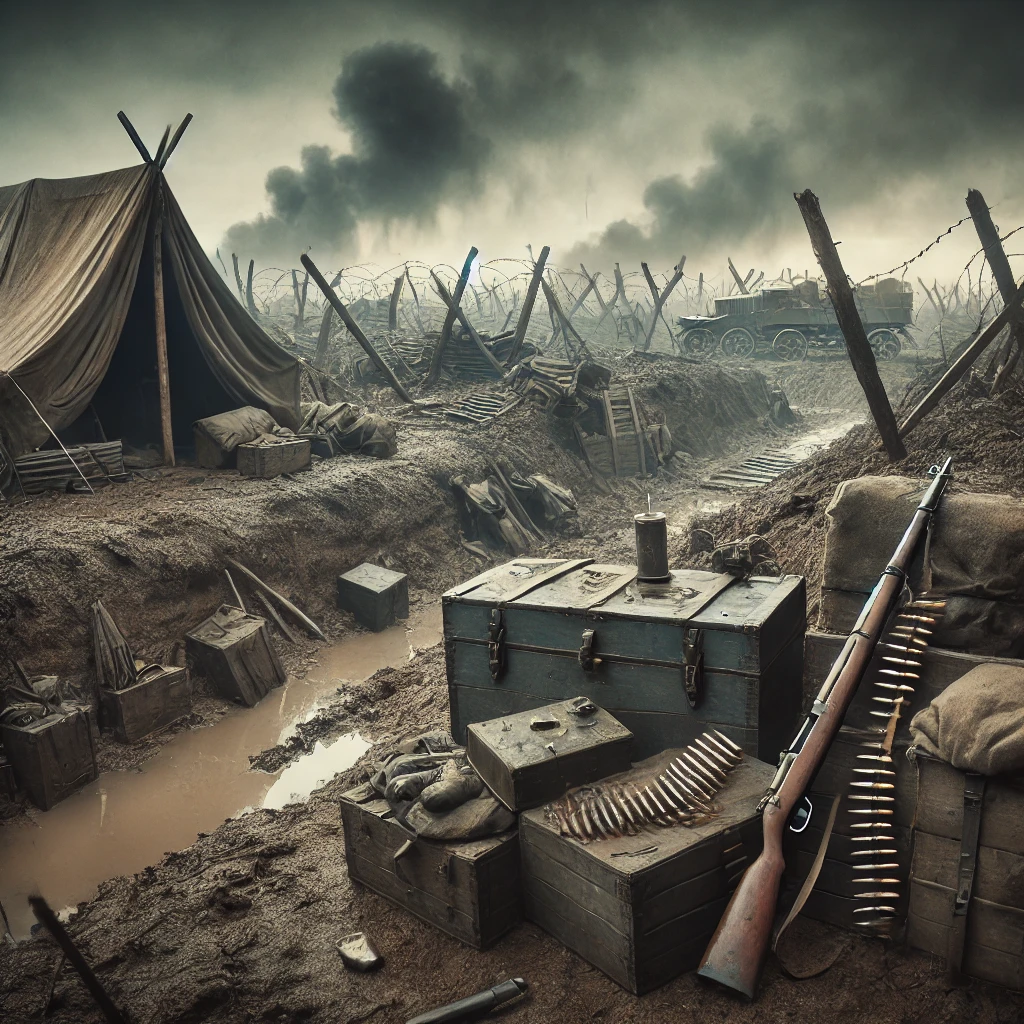
World War I
Detailed Information About the First World War (1914–1918)
World War I lasted from 28 July 1914 to 11 November 1918. The war took place mainly in Europe and involved many of the world's major nations. Before World War II, it was commonly known as “The Great War.”
Major Causes of the War
Several political, economic, and social tensions contributed to the outbreak of World War I. The primary causes are explained below:
Militarism & Alliances
- European countries rapidly increased their military strength and formed alliances for collective security.
Major Factions
- Allied Powers: Britain, France, Russia, later the United States and Italy.
- Central Powers: Germany, Austria-Hungary, Ottoman Empire, and Bulgaria.
Nationalism
- Countries increasingly sought to assert the supremacy of their culture and national identity.
- Nationalist movements were particularly strong in the Balkan region.
Imperialism
- European nations were competing to expand their colonies, escalating global tensions.
- Economic and colonial rivalry between Britain and Germany intensified the conflict.
Sarajevo Assassination
On 28 June 1914, Archduke Franz Ferdinand, the Crown Prince of Austria-Hungary, and his wife were assassinated in Sarajevo by Serbian nationalist Gavrilo Princip. This incident prompted Austria-Hungary to declare war on Serbia, triggering a chain reaction that spread across Europe.
Major Events of the War
The Beginning of the War (1914)
- 28 July 1914: Austria-Hungary declared war on Serbia.
- 1 August 1914: Germany attacked Russia.
- 3 August 1914: Germany attacked France.
- 4 August 1914: Britain declared war on Germany.
Important Battles and Fronts
- Western Front: Fierce fighting between Germany and the Allied forces (France and Britain).
- Eastern Front: Battles between Russia and the Central Powers (Germany and Austria-Hungary).
- Gallipoli Campaign (1915): Britain and France attempted to defeat the Ottoman Empire but failed.
- Battle of Verdun (1916): One of the longest and bloodiest battles between Germany and France.
America Enters the War (1917)
The United States joined the Allies due to Germany’s “unrestricted submarine warfare” and the Zimmermann Telegram, in which Germany encouraged Mexico to attack the U.S.
6 April 1917: The U.S. declared war on Germany.
The Russian Revolution (1917) and Russia’s Withdrawal
In October 1917, the Bolshevik Revolution took place, and the Soviet Union was established under Vladimir Lenin.
Russia formally exited the war in March 1918 through the Treaty of Brest-Litovsk.
End of the War (1918)
- The Allies achieved several decisive victories.
- 11 November 1918: Germany surrendered, marking the end of the war.
Results and Impact
Versailles Treaty (1919)
- Germany was held solely responsible for the war.
- Heavy economic penalties were imposed, and its military capabilities were severely restricted.
- Germany was forced to surrender many colonies and territories.
Emergence of New Countries
- The Austro-Hungarian Empire collapsed, leading to the creation of Austria, Hungary, Czechoslovakia, and Yugoslavia.
- The Ottoman Empire dissolved, resulting in the formation of modern Türkiye.
Establishment of the League of Nations
The League of Nations was established in 1920 to promote global peace. However, it lacked the authority and strength to prevent future conflicts.
Foundation for World War II
The harsh terms of the Treaty of Versailles and Germany’s resulting discontent contributed directly to the rise of extremist politics, ultimately paving the way for World War II (1939–1945).
Conclusion
World War I was a major turning point in global history. It deeply impacted world politics, economies, societies, and international relations. The war revolutionized military strategies, technologies, and diplomacy. However, the failure of the Treaty of Versailles and several unresolved issues laid the foundation for an even more catastrophic global conflict—World War II.
Detailed Information About the First World War (1914–1918)
World War I lasted from 28 July 1914 to 11 November 1918. It was the first global war in modern history, involving countries across Europe, America, Asia, and Africa. It was originally known as “The Great War,” but after World War II it came to be called “World War I.”
Major Causes of the War
The First World War was the result of various political, military, economic, and social tensions. Its main causes are explained below:
🛒 Buy Now on Amazon1. Militarism
- European countries were competing to increase their military power.
- Germany, Britain, France, and Russia were heavily strengthening their armies.
2. Alliances
Two major military blocs had formed in Europe:
- Allied Powers: Britain, France, Russia, Italy (joined in 1915), and America (joined in 1917).
- Central Powers: Germany, Austria-Hungary, the Ottoman Empire (Turkey), and Bulgaria.
3. Nationalism
- European nations increasingly believed their power and culture were superior.
- Nationalist sentiments were especially strong in the Balkan region (Serbia, Bosnia, etc.).
4. Imperialism
- European powers were competing to expand their colonial empires.
- Britain and France had established large colonies, while Germany and Italy lagged behind in this race.
5. Sarajevo Assassination – The Immediate Cause
On 28 June 1914, Archduke Franz Ferdinand, heir to the throne of Austria-Hungary, and his wife were assassinated by Serbian nationalist Gavrilo Princip in Sarajevo. Following this incident, Austria-Hungary attacked Serbia, causing the war to spread across Europe.
Major Events of the War
The Beginning of the War (1914)
- 28 July 1914: Austria-Hungary declared war on Serbia.
- 1 August 1914: Germany attacked Russia.
- 3 August 1914: Germany attacked France.
- 4 August 1914: Britain declared war on Germany.
Important Battles and Fronts
1. Western Front
- Germany adopted the “Schlieffen Plan” to attack France.
- Battle of the Marne (1914): France and Britain successfully stopped Germany.
- The region turned into a “trench warfare” zone, where soldiers stayed in fixed positions for months.
2. Eastern Front
- Fighting took place between Russia and the forces of Germany and Austria-Hungary.
- Due to internal unrest, Russia withdrew from the war in 1917.
3. The Gallipoli Campaign (1915)
- Britain and France attempted to defeat the Ottoman Empire (Türkiye) but failed.
4. Battle of Verdun (1916)
- One of the longest and most intense battles of World War I, fought between France and Germany.
5. America Enters the War (1917)
- The U.S. supported the Allies due to Germany’s “unrestricted submarine warfare” and the “Zimmermann Telegram.”
- 6 April 1917: America declared war on Germany.
6. Russian Revolution and Withdrawal (1917)
- In October 1917, the Bolshevik Revolution took place, and communist rule was established in Russia under Vladimir Lenin.
- In March 1918, Russia signed the Treaty of Brest-Litovsk with Germany and withdrew from the war.
7. End of the War (1918)
- The Allies achieved several decisive victories.
- 11 November 1918: Germany surrendered, officially ending the war.
Results and Impact
1. Treaty of Versailles (1919)
- Germany was held responsible for starting the war.
- Heavy economic penalties were imposed on Germany, and its military power was restricted.
- Germany had to surrender many colonies and territories.
2. Formation of New Countries
- The Austro-Hungarian Empire disintegrated, and Austria, Hungary, Czechoslovakia, and Yugoslavia were formed.
- The Ottoman Empire collapsed, leading to the formation of modern Türkiye.
3. Establishment of the League of Nations
- The League of Nations was established in 1920 to maintain world peace.
- However, it proved ineffective and failed to prevent World War II.
4. Economic and Social Impact
- The European economy suffered massive destruction due to the war.
- Millions of people were killed, and numerous cities were destroyed.
- Post-war instability in many countries contributed to the rise of World War II (1939–1945).
Conclusion
World War I was a turning point in history, profoundly impacting world politics, economies, and societies. It transformed military strategies, weapons, and diplomatic relations. However, the harsh terms of the Treaty of Versailles and several unresolved disputes laid the foundation for World War II, an even more devastating global conflict.
Major Causes of the War
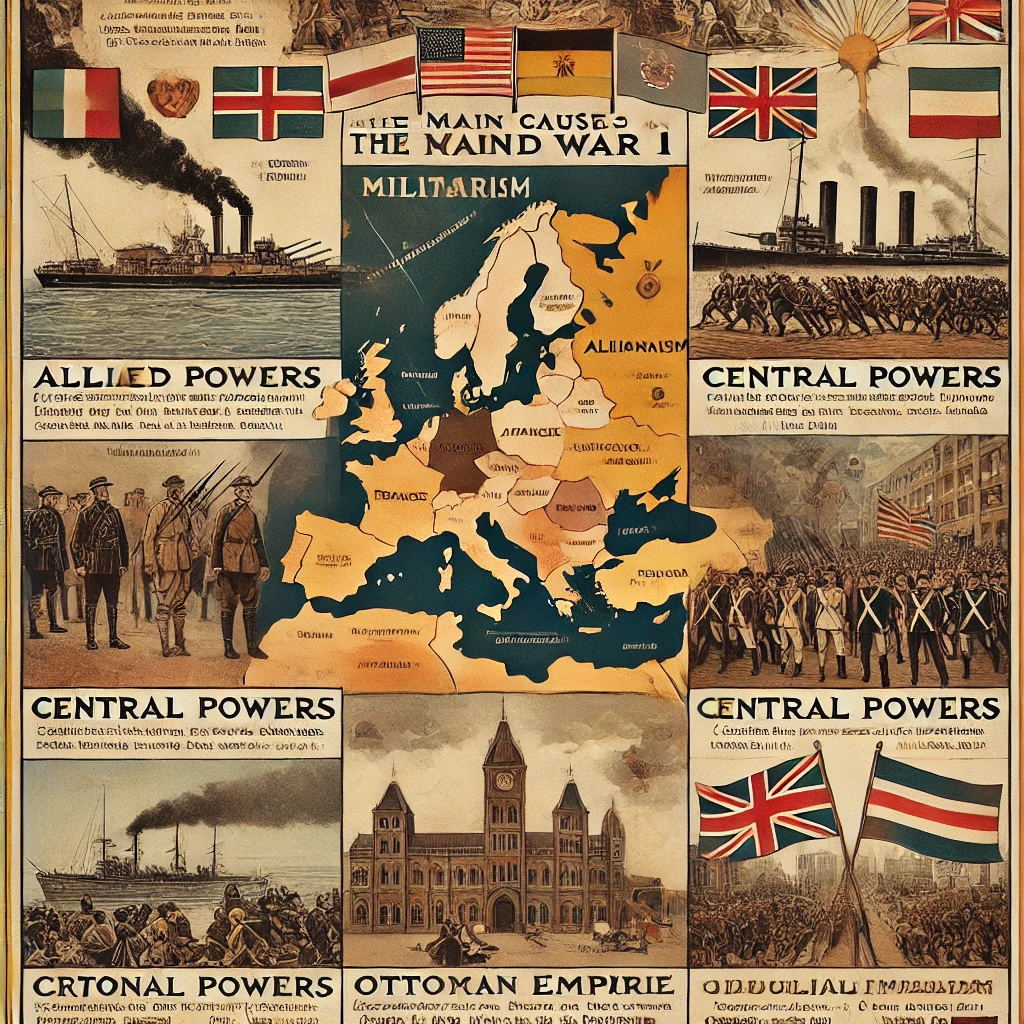
The Main Causes of World War I
1. Militarism
Before the war, European countries were engaged in a race to strengthen their military power. Nations were expanding their armies, building advanced weapons, and preparing for potential conflict.
- Germany tried to build a navy equal to that of Britain, increasing tensions between both countries.
- Russia and France also significantly expanded their troops and armaments.
- The possibility of war grew as every country wanted to have the most powerful army in Europe.
2. Alliances
Before World War I, two major military blocs had emerged in Europe:
- Allied Powers: Britain, France, Russia, Italy (joined in 1915), and the United States (joined in 1917).
- Central Powers: Germany, Austria-Hungary, the Ottoman Empire (Turkey), and Bulgaria.
Because of these alliances, if any one country was attacked, its allied nations also entered the war. This caused the conflict to expand rapidly.
3. Nationalism
The feeling of nationalism was extremely strong in Europe, increasing tensions between countries.
- France and Germany had been hostile since the Franco-Prussian War of 1871.
- Smaller nations in the Balkan region wanted independence—especially Serbia, which wanted to break free from Austria-Hungary.
- In Germany and Italy, nationalism strengthened the desire to increase military power, worrying other nations.
4. Imperialism
There was intense competition among European nations for colonial expansion.
- Britain and France already had vast colonial empires, while Germany and Italy were trying to expand theirs.
- Conflicts arose over colonies in Africa and Asia.
- Germany and Britain, in particular, had strong rivalries for global colonial dominance.
5. Sarajevo Assassination
The immediate cause of World War I occurred on 28 June 1914, when Archduke Franz Ferdinand and his wife were assassinated.
- Franz Ferdinand, the heir to the Austro-Hungarian throne, was killed by Gavrilo Princip, a member of the Serbian nationalist group “Black Hand.”
- Austria-Hungary used the assassination as a reason to declare war on Serbia.
- Russia supported Serbia, and Germany supported Austria-Hungary, leading other countries to join the war.
Conclusion
There were both long-term and immediate causes behind World War I. Militarism, alliances, nationalism, and imperialism had already prepared the ground for conflict. The Sarajevo assassination ignited this tense environment, ultimately leading to the outbreak of war.
Military Factionalism
Military Alliances – A Major Cause of the First World War
European powers formed alliances to protect each other and maintain a balance of power. These alliances were divided into two major blocs:
- Allied Powers
- Central European Powers
The formation of these blocs made the situation more dangerous because any conflict between two countries could immediately involve many others, turning a small dispute into a large-scale war.
Background of Military Factions
During the 19th and early 20th centuries, competition among countries, colonial conflicts, and economic rivalries pushed major powers to form alliances.
Important Treaties Leading to These Alliances
Treaty of the Three Emperors (Dreikaiserbund) – 1873
- Alliance between Germany, Russia, and Austria-Hungary.
- Created by the efforts of German Chancellor Otto von Bismarck.
- Aimed to isolate France.
- Russia later withdrew.
Triple Alliance – 1882
- Included Germany, Austria-Hungary, and Italy.
- Formed to counter the influence of France and Russia.
Triple Entente – 1907
- Included Britain, France, and Russia.
- Formed to contain the growing power of Germany.
Major Military Blocs and Their Characteristics
1. Allied Powers
This group was formed to counter Germany and its allies. Major members included:
- Britain
- France
- Russia
- Belgium
- Serbia
- Japan (joined in 1914)
- Italy (joined in 1915, previously allied with Germany)
- United States (joined in 1917)
Allied Strategy and Objectives
- Limit Germany’s military and political power.
- Protect France and Russia.
- Maintain the security and interests of the British Empire.
2. Central European Powers
This bloc opposed the Allied Powers. Major members included:
- Germany
- Austria-Hungary
- Ottoman Empire (Turkey) – joined in 1914
- Bulgaria – joined in 1915
Strategy and Objectives of the Central Powers
- Expand Germany’s power across Europe.
- Weaken Russia and France.
- Challenge Britain’s dominance at sea.
Effect of Factionalism – How Did the Situation of War Arise?
1. Tensions Increased in Europe
When one country was attacked, its allies also joined the war.
Example:
- On 28 July 1914, Austria-Hungary attacked Serbia.
- Russia supported Serbia, while Germany supported Austria-Hungary.
- France and Britain supported Russia.
- Thus, nearly all of Europe was dragged into the conflict.
2. A Limited Conflict Became a Global War
Without alliances, the conflict might have remained limited to Austria-Hungary and Serbia. But due to alliances, the war expanded to include almost all major European powers.
3. A Race to Increase Military Power
- Countries strengthened their armies and stockpiled weapons.
- Britain and Germany fiercely competed in naval and air force expansion.
Conclusion
Military alliances played a significant role in making World War I far more destructive. Without these alliances, the conflict might have remained local. But due to interconnected military treaties, the war became global and lasted from 1914 to 1918, resulting in massive loss of life.
Allied Powers
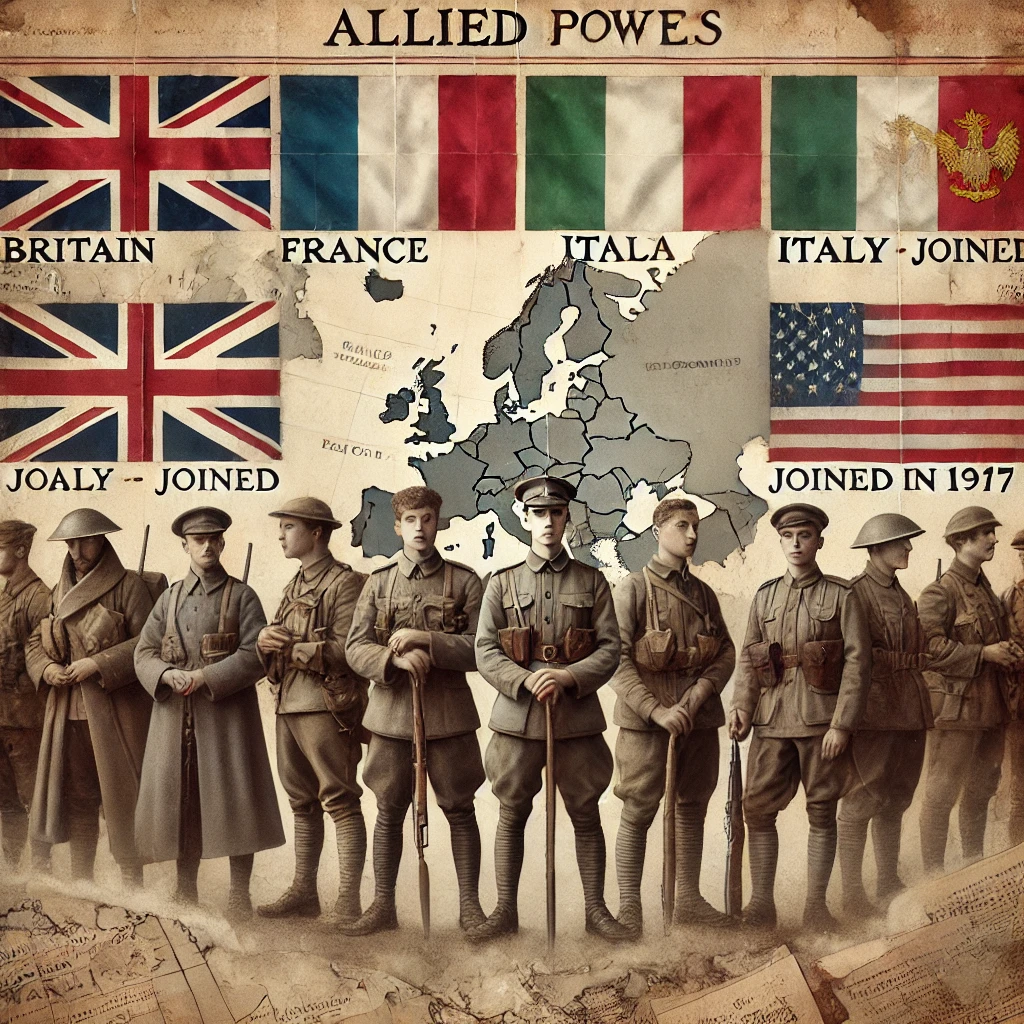
Allied Powers – A Powerful Group in World War I
During the First World War (1914–1918), two major military groups were formed — the Allied Powers and the Central European Powers. The Allied Powers were primarily composed of Britain, France, and Russia. Later, Italy (1915) and the United States (1917) also joined this coalition. The main goal of the Allied Powers was to stop Germany and its allies and maintain balance and security in Europe.
Origin and Growth of the Allies
1. Initial Alliance (Triple Entente – 1907)
Before World War I, a coalition known as the Triple Entente was formed in Europe. It included:
- France
- Russia
- Britain
The primary objective of this alliance was to stop the growing military and political dominance of Germany. During the war, more countries joined this coalition, transforming it into the Allied Powers.
Major Countries of the Allies and Their Role
1. Britain
Entry into the War: 4 August 1914
Main Reasons
- Germany invaded Belgium, a neutral country.
- Britain was the protector of Belgian independence and therefore declared war on Germany.
Role and Contribution
- The British Navy controlled major sea routes.
- They challenged German U-Boat warfare.
- Large numbers of troops came from British colonies such as India, Canada, and Australia.
- Britain fought alongside France on the Western Front.
2. France
Entry into the War: 3 August 1914
Main Reasons
- Germany attacked France under the Schlieffen Plan.
- France and Germany had long-standing hostility since the Franco-Prussian War (1871).
Role and Contribution
- France fought Germany mainly on the Western Front.
- The Battle of Verdun (1916) was critical for France.
- With support from Britain and the U.S., France helped push Germany back.
3. Russia
Entry into the War: 1 August 1914
Main Reasons
- Russia supported Serbia, which was attacked by Austria-Hungary.
- Russia already had tensions with Germany and Austria-Hungary.
Role and Contribution
- Russia fought Germany and Austria-Hungary on the Eastern Front.
- The huge Russian army prevented Germany from focusing fully on the Western Front.
- In 1917, the Bolshevik Revolution led to Russia’s withdrawal.
- In March 1918, Russia signed the Treaty of Brest-Litovsk with Germany.
4. Italy – Joined the Allies in 1915
Entry into the War: 23 May 1915
Main Reasons
- Italy was originally part of the Triple Alliance with Germany and Austria-Hungary.
- Italy declared neutrality and later joined the Allies after the Treaty of London (1915).
- The Allies promised Italy territorial gains from Austria-Hungary after the war.
Role and Contribution
- Italy fought mainly against Austria-Hungary.
- In the Battle of Caporetto (1917), Italy suffered heavy losses.
- It was later supported and strengthened by the Allied forces.
5. United States – Joined the Allies in 1917
Entry into the War: 6 April 1917
Main Reasons
- Germany engaged in Unrestricted Submarine Warfare, attacking American ships.
- The Zimmermann Telegram (1917) revealed Germany’s attempt to incite Mexico against the U.S.
Role and Contribution
- The U.S. sent more than 2 million soldiers, changing the course of the war.
- Its immense industrial and economic strength provided vital support to the Allies.
- The U.S. played a decisive role in Germany’s defeat in 1918.
Allied Victory and End of the War (1918)
- By 1918, the Allies launched a decisive offensive.
- On 11 November 1918, Germany surrendered and the war ended.
- In 1919, the Treaty of Versailles was signed, imposing severe sanctions on Germany.
Conclusion
The success of the Allied Powers was based on their strong alliance strategy, economic strength, naval and air superiority, and especially the entry of the United States. Britain, France, Russia, Italy, and the United States collectively defeated Germany and its allies, bringing the First World War to an end.
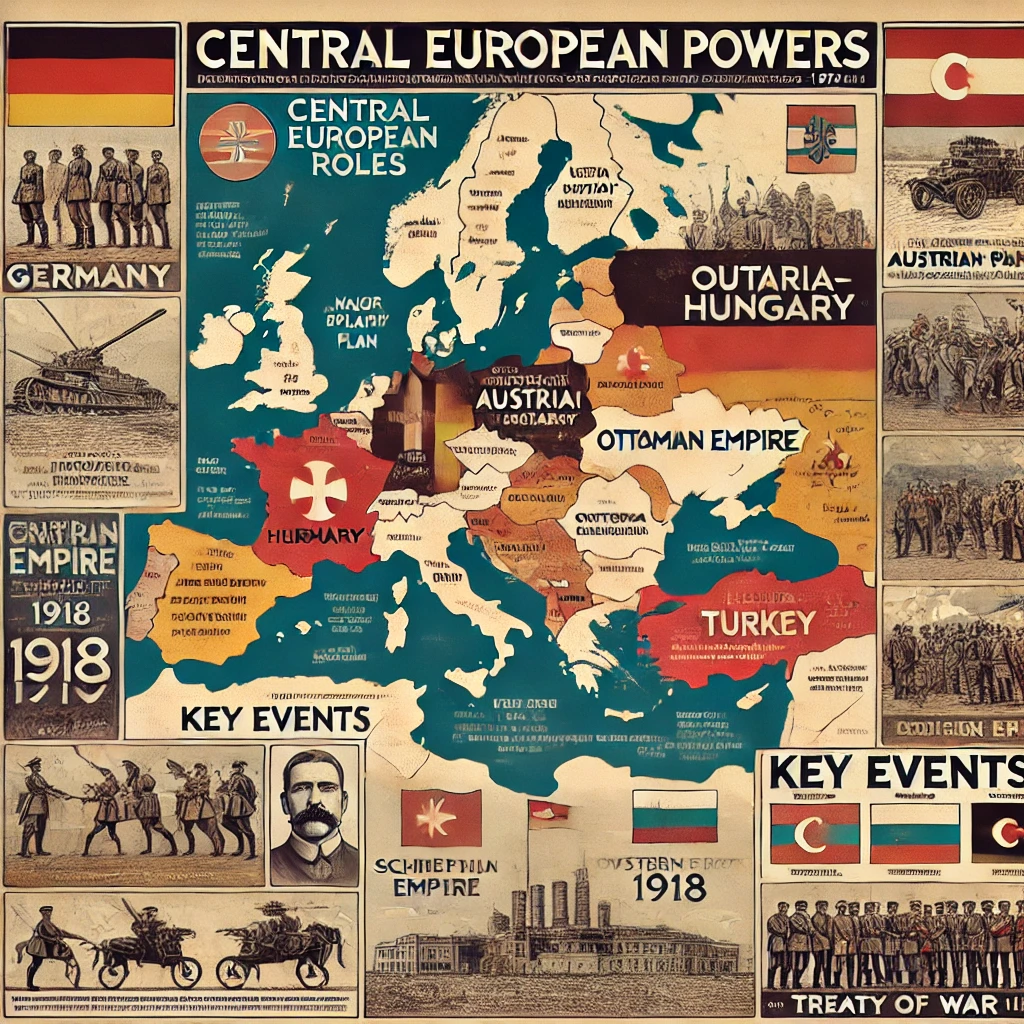
Central European Powers
Central European Powers – The Main Group in World War I
In World War I (1914–1918), two major military blocs emerged:
- Allied Powers
- Central European Powers
The Central European Powers primarily included Germany, Austria-Hungary, the Ottoman Empire (Turkey), and Bulgaria. Their objective was to stop the increasing influence of the Allies (Britain, France, Russia, etc.) and maintain their dominance in Europe.
The Origin and Development of the Central European Powers
🛒 Buy Now on Amazon1. Initial Factionalism (Triple Alliance – 1882)
Before World War I, a coalition known as the Triple Alliance was formed, consisting of:
- Germany
- Austria-Hungary
- Italy (later joined the Allies in 1915)
Later, the Ottoman Empire (1914) and Bulgaria (1915) joined this group, turning it into the Central European Powers.
Major Countries of the Central European Powers and Their Role
1. Germany – The Most Powerful Country
Entry into the War: 1 August 1914
Main Reasons
- Germany wanted to expand its influence in Europe.
- Russia supported Serbia, forcing Germany and Austria-Hungary to declare war on Russia.
- Germany attacked France under the Schlieffen Plan.
Role and Contribution
- Germany fought Britain and France on the Western Front.
- It fought Russia on the Eastern Front.
- German U-Boat tactics disrupted British sea routes.
- Germany had the strongest army and followed an aggressive war strategy.
2. Austria-Hungary – The Country That Started the War
Entry into the War: 28 July 1914
Main Reasons
- The assassination of Crown Prince Archduke Franz Ferdinand by Serbian nationalist Gavrilo Princip.
- Austria-Hungary attacked Serbia, initiating the war.
- Germany supported Austria-Hungary, resulting in the expansion of the war.
Role and Contribution
- Fought against Serbia and Russia.
- Engaged in battles in Eastern Europe and against Italy.
- Heavily dependent on Germany and faced repeated failures.
- By 1918, Austria-Hungary collapsed and surrendered.
3. Ottoman Empire (Turkey) – Joined in 1914
Entry into the War: 29 October 1914
Main Reasons
- The Ottoman Empire wanted to regain territories lost to Britain, Russia, and France.
- Germany persuaded the Ottomans to join the Central Powers.
Role and Contribution
- Gallipoli Campaign (1915–16): The Ottoman army defeated the Allied invasion.
- Caucasus Front: Fought against Russia.
- Mesopotamia & Arabian Region: Fought Britain and Arab rebels.
- In 1918, the Ottoman Empire was defeated by British and Arab forces.
4. Bulgaria – Joined in 1915
Entry into the War: 14 October 1915
Main Reasons
- Bulgaria was dissatisfied with territorial promises made by the Allies.
- Germany and Austria-Hungary offered it greater benefits.
Role and Contribution
- Fought important battles against Serbia.
- In 1918, Bulgaria was defeated and had to surrender.
Defeat of the Central European Powers and End of the War (1918)
- The entry of the United States in 1917 changed the course of the war.
- September 1918: Bulgaria surrendered.
- October 1918: Austria-Hungary collapsed.
- November 1918: Germany surrendered.
- 1920: The Ottoman Empire was divided.
Conclusion
The Central European Powers—Germany, Austria-Hungary, the Ottoman Empire, and Bulgaria—followed aggressive policies during World War I. However, they could not withstand the superior military, economic, and strategic strength of the Allies. By 1918, they were defeated and the war came to an end.
Nationalism
Nationalism – Detailed Information
Introduction
Nationalism is an ideology in which the primary loyalty of individuals or groups is toward their nation. It emphasizes unity, culture, language, traditions, and patriotism. Nationalism has influenced world history deeply and has been a major factor behind independence movements, wars, and political changes.
Definitions of Nationalism
1. Political Perspective
Nationalism represents the desire for national independence, sovereignty, and political self-governance.
2. Cultural Perspective
It is the collective feeling of unity among people who share a common language, culture, tradition, and history.
3. Economic Perspective
Nationalism also refers to policies aimed at protecting and developing a nation's economic resources.
Key Elements of Nationalism
- Cultural Unity: Shared language, religion, and traditions strengthen nationalism.
- Geography & Territory: A defined homeland fosters national identity.
- Political Sovereignty: Desire for self-rule builds nationalist movements.
- Economic Self-sufficiency: Policies promoting self-reliance deepen nationalism.
- Social Cohesion: Collective efforts for progress promote national unity.
Types of Nationalism
1. Liberal Nationalism
- Emphasizes freedom, democracy, and human rights.
- Prominent in Europe & America during the 18th–19th centuries.
- Examples: American War of Independence (1776), French Revolution (1789).
2. Ethnic Nationalism
- Based on shared race, language, and culture.
- Examples: Unification of Germany and Italy in the 19th century.
3. Revolutionary Nationalism
- Supports struggle and revolution against colonialism.
- Examples: India’s freedom struggle, Vietnam War.
4. Religious Nationalism
- Links religion with national identity and politics.
- Examples: Creation of Pakistan, Israel-Palestine conflict.
5. Expansionist Nationalism
- Based on military power and aggressive expansion.
- Examples: Nazi Germany (Hitler), Fascist Italy (Mussolini).
Effects of Nationalism
Positive Effects
- National Integration: Unites people of a nation.
- Freedom Struggles: Inspires anti-colonial movements.
- Economic Development: Encourages self-reliance.
- Preservation of Culture: Safeguards cultural heritage.
Negative Effects
- Ethnic Conflicts: Can cause racial and cultural divisions.
- Wars & Invasions: Aggressive nationalism led to WWI & WWII.
- Chauvinism: Creates hatred toward other nations.
- Narrow-Mindedness: Opposes multiculturalism and globalization.
Major Events of Nationalism in History
1. American War of Independence (1776)
The U.S. gained independence from British colonial rule — one of the earliest nationalist movements.
2. French Revolution (1789)
The people of France revolted against monarchy, inspiring nationalism across Europe.
3. Unification of Germany and Italy (19th Century)
Germany: Unified under Bismarck in 1871. Italy: Unified through the efforts of Garibaldi and Cavour.
4. First World War (1914–1918)
Nationalist rivalries were a major cause of the war.
5. Indian Independence Movement (1857–1947)
Nationalist leaders such as Mahatma Gandhi, Subhas Chandra Bose, and Bhagat Singh led India's struggle against British colonialism.
6. Second World War (1939–1945)
The aggressive nationalism of Hitler and Mussolini triggered this war.
Nationalism in the Modern Era
- Nationalism remains strong even in the 21st century.
- Economic and cultural nationalism is rising in many countries.
- Examples: Brexit (2016), America First Policy.
- Nationalism is sometimes misused, leading to racial and religious conflicts.
Conclusion
Nationalism is a powerful ideology that encourages unity, independence, and self-reliance. However, when extreme, it can result in war, ethnic violence, and aggressive expansionism. A balanced approach is essential to ensure nationalism supports peace, cooperation, and development.
Imperialism
Imperialism – Detailed Information
Introduction
Imperialism is a policy by which a powerful nation establishes political, economic, or cultural control over weaker nations or regions. Its main objectives include territorial expansion, resource exploitation, and increasing global influence.
Aims of Imperialism
- Increasing power and influence
- Controlling natural resources and trade routes
- Establishing cultural and religious dominance
Definitions of Imperialism
Political Perspective
When a country imposes its laws, administration, and governance on other regions.
Economic Perspective
When a wealthy nation exploits the resources and markets of other countries.
Cultural Perspective
When a dominant civilization imposes its language, religion, and cultural values on others.
Major Types of Imperialism
1. Colonial Imperialism
- Direct occupation of foreign territories to create colonies.
- Examples: British rule in Australia & Africa, French rule in Algeria & Vietnam.
2. Economic Imperialism
- Indirect control over another nation's economy and trade.
- Examples: British East India Company's control over India; U.S. influence in Latin America.
3. Cultural Imperialism
- Spreading one's language, religion, and educational systems.
- Examples: Western influence through English, Hollywood, and education.
4. Political Imperialism
- Control over another nation's political system.
- Examples: British control in Egypt & India; U.S. intervention in Iraq and Afghanistan.
5. Military Imperialism
- Using military power to control foreign lands.
- Examples: Nazi Germany's expansion (1939–45), Japan's invasion of China & Korea.
Main Causes of Imperialism
- Industrial Revolution: Need for raw materials and new markets.
- Nationalism: Expanding national prestige and influence.
- Military Strength: Control of sea lanes and trade routes.
- Cultural Superiority: Western belief in "civilizing" other regions.
- Economic Profit: Exploiting natural resources and cheap labor.
Expansion of Imperialism Across the World
1. Imperialism in Europe
- Britain, France, Germany, Portugal, Spain, and Italy built large colonial empires.
2. Imperialism in Asia
- India: British East India Company gained control after 1757; direct British rule began in 1858.
- China: Forced trade through Opium Wars; Britain ruled Hong Kong (1842–1997).
- Japan: Modernized and became imperialist in the 19th century.
3. Imperialism in Africa
- Berlin Conference (1884–85): European nations divided Africa among themselves.
- Britain, France, Portugal, and Germany dominated the continent.
4. Imperialism in the U.S. and Latin America
- U.S. controlled Philippines, Puerto Rico, and Guam.
- Used the Monroe Doctrine to influence Latin America.
Effects of Imperialism
Positive Effects
- Modern education, railways, telegraphs, and medical improvements.
- Cultural exchange among civilizations.
- Growth of global trade.
Negative Effects
- Exploitation and poverty among colonized people.
- Destruction of local languages and cultures.
- Political instability and conflicts in many regions.
- Racial discrimination by imperialist powers.
End of Imperialism and the Modern Era
- World Wars (1914–1945) weakened imperialist powers.
- Independence movements emerged in India (1947), Indonesia (1949), and Africa (1950–70).
- The United Nations (1945) promoted decolonization.
Conclusion
Imperialism shaped global history by spreading modern systems but also causing economic, cultural, and political exploitation. Though colonialism declined in the 20th century, forms of economic and cultural imperialism still influence the modern world.
The Sarajevo Assassination
Sarajevo Assassination – Spark of the First World War
Introduction
The Sarajevo Assassination occurred on 28 June 1914, when Archduke Franz Ferdinand, heir to the Austria-Hungary Empire, and his wife Sophie were assassinated by Gavrilo Princip, a member of the Serbian nationalist group “Black Hand.” This incident triggered a chain reaction that led directly to World War I (1914–1918).
Background to the Sarajevo Massacre
1. Tension Between Austria-Hungary and Serbia
- There were long-standing tensions in the Balkan region.
- In 1908, Austria-Hungary annexed Bosnia and Herzegovina, angering Serbia.
- Serbia wanted to form a “Greater Serbia” including Serb-majority regions of Bosnia.
2. The “Black Hand” Organization
- A Serbian nationalist group aiming to weaken Austria-Hungary.
- Its motto was “Unity or Death.”
- The group believed killing the Archduke would destabilize Austria-Hungary.
Events of the Sarajevo Assassination (28 June 1914)
1. Visit of Archduke Franz Ferdinand
The Archduke and his wife visited Sarajevo to demonstrate the authority of Austria-Hungary and calm Serbian unrest.
2. First Failed Assassination Attempt
A bomb thrown by Nedeljko Cabrinovic missed the Archduke’s car and injured nearby officers.
3. Second and Successful Assassination
- Later in the day, the Archduke’s car took a wrong turn.
- Gavrilo Princip shot two bullets at close range.
- The first bullet killed Sophie instantly.
- The second bullet hit Franz Ferdinand in the neck, killing him within minutes.
- Princip was immediately arrested.
Consequences of the Sarajevo Massacre
1. Austria-Hungary Invades Serbia
- Austria-Hungary blamed Serbia and issued a strict ultimatum on 23 July 1914.
- Serbia accepted most conditions but rejected a few.
- On 28 July 1914, Austria-Hungary declared war on Serbia.
2. Beginning of World War I
- Russia mobilized to support Serbia.
- Germany declared war on Russia.
- France and Britain (Russia’s allies) joined the conflict.
- This transformed a local conflict into a global war.
The Assassin: Gavrilo Princip
- Princip was arrested and put on trial.
- Being under 20 years old, he was not executed.
- He was sentenced to 20 years in prison.
- He died of tuberculosis in 1918.
Historical Significance of the Sarajevo Assassination
- Exposed the political instability of Europe.
- Became a symbol of the clash between nationalism and imperialism.
- Served as the direct trigger for World War I.
- Led to the collapse of Austria-Hungary and the rise of new nations.
Conclusion
The Sarajevo assassination was not just the killing of two individuals — it ignited a global conflict that reshaped the world. After World War I, the Austria-Hungary Empire, Germany, and the Ottoman Empire collapsed, marking a dramatic shift in world politics.
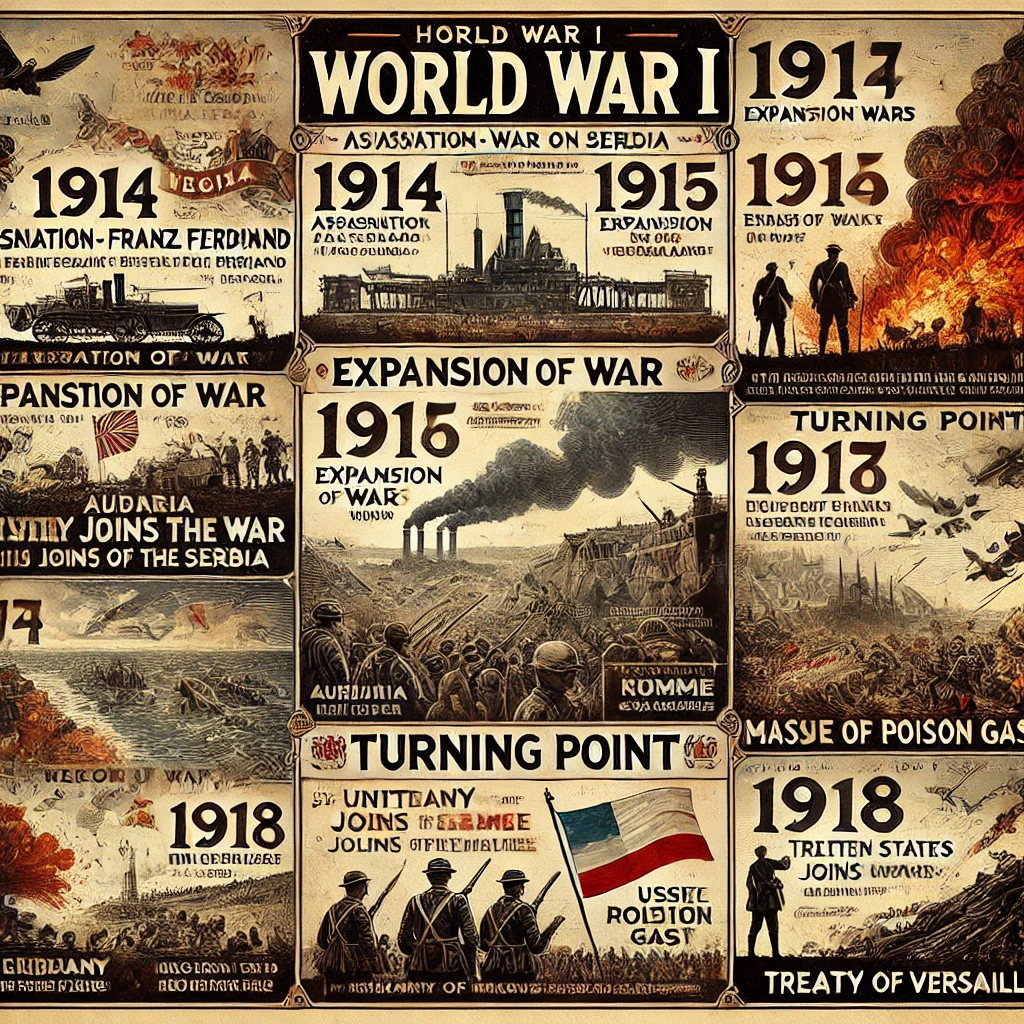
America Enters the War (1917)
America Entered the First World War – Detailed Description
During the First World War (1914–1918), the United States initially followed a Neutral Policy. However, by 1917, circumstances changed dramatically, and on 6 April 1917, America declared war on Germany.
1. U.S. Neutrality (1914–1916)
When the war began, President Woodrow Wilson maintained neutrality.
Reasons for Neutrality
- America did not want to become directly involved in a European conflict.
- The U.S. had trade relations with both Allied and Central Powers.
- The American public was not in favor of joining the war.
However, Germany’s aggressive actions and threats to American interests changed the situation.
2. Major Reasons for America’s Entry into the War
(1) Unrestricted Submarine Warfare
In February 1915, Germany began Unrestricted Submarine Warfare, threatening to sink any ship headed toward Britain.
- 7 May 1915: Germany sank the British passenger ship Lusitania.
- 128 American citizens were killed, causing outrage in the U.S.
- In 1917, Germany restarted aggressive submarine attacks, pushing America closer to war.
(2) The Zimmermann Telegram – January 1917
- German Foreign Minister Arthur Zimmermann secretly sent a telegram to Mexico.
- Germany promised Mexico the territories of Texas, Arizona, and New Mexico if it helped Germany.
- British intelligence intercepted the message and informed the U.S.
- The revelation created strong anti-German sentiment in America.
(3) U.S. Economic Interests
- The U.S. had strong financial ties with Britain and France.
- American banks had given massive loans to the Allies.
- A German victory would have caused huge economic losses for the U.S.
(4) Defense of Democracy
- President Wilson declared that America must fight “a war to save democracy.”
- He also called it “The war to end all wars.”
- According to Wilson, America had to oppose Germany’s growing authoritarianism.
3. America Declares War (6 April 1917)
- 2 April 1917: Wilson asked Congress for permission to join the war.
- 6 April 1917: The U.S. Congress officially declared war on Germany.
- Later, the U.S. also declared war on Austria-Hungary and the Ottoman Empire.
4. Impact of America’s Involvement in the War
(1) New Energy for the Allies
- By 1917, the Allies were exhausted.
- American troops, weapons, money, and supplies gave them new strength.
(2) Increased Pressure on Germany
- Germany was already fighting on several fronts.
- The American Expeditionary Force further weakened German resistance.
(3) Victory in Decisive Battles (1918)
- Second Battle of the Marne (July 1918): Germany was defeated with U.S. support.
- Hundred Days Offensive (Aug–Nov 1918): Continuous Allied attacks forced Germany back.
(4) End of the War – 11 November 1918
- Germany surrendered.
- The First World War officially ended.
5. Conclusion
America’s entry into the war in 1917 changed the entire course of World War I. The U.S. helped strengthen the Allies and played a decisive role in the defeat of Germany. Its decision was driven by the defense of democracy, Germany’s aggressive actions, and America’s economic interests.
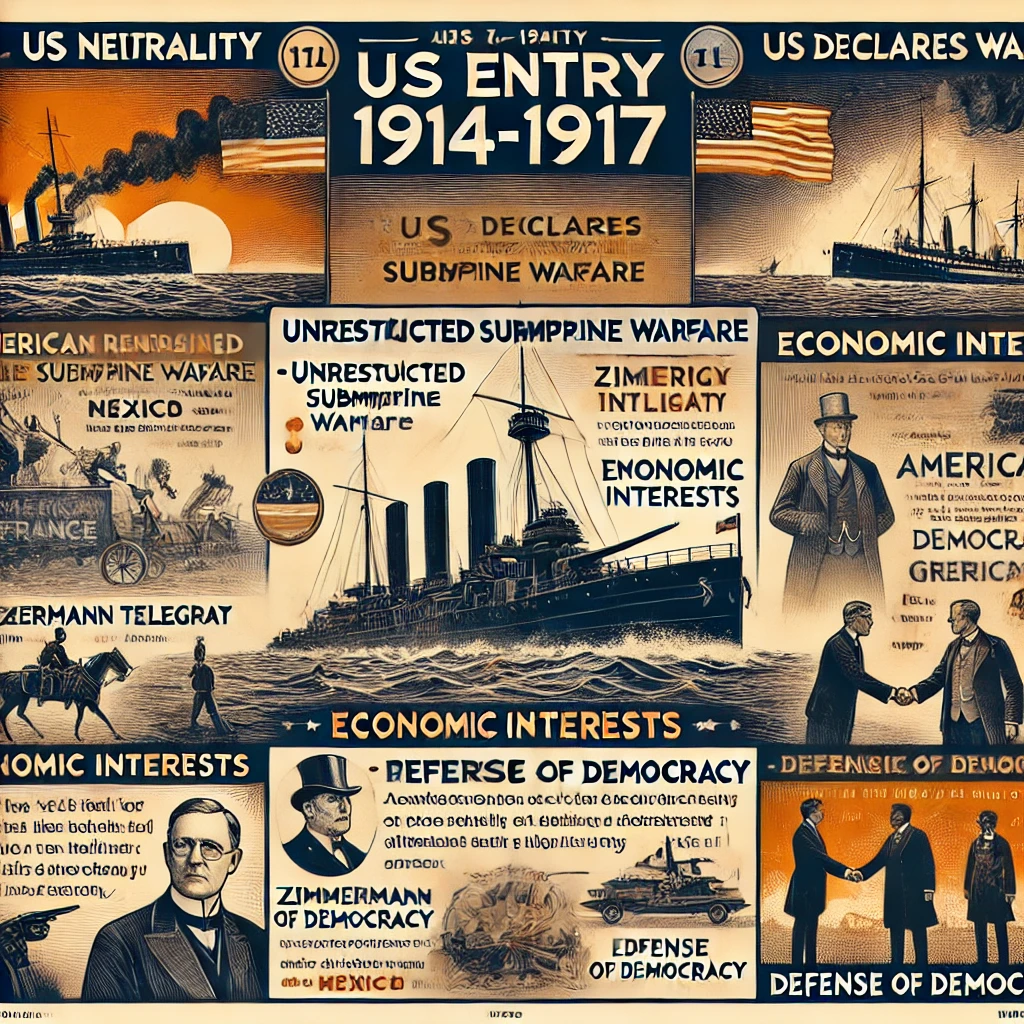
The Russian Revolution (1917) and Russia’s Withdrawal from World War I
Introduction
In 1917, during World War I, two major revolutions took place in Russia:
- February Revolution (March 1917, according to the Gregorian calendar)
- October Revolution (November 1917)
These revolutions ended the rule of Tsar Nicholas II and brought the Bolsheviks to power. The new government signed the Treaty of Brest-Litovsk (March 1918), officially withdrawing Russia from World War I.
1. Reasons for the Russian Revolution
(1) Russia’s Defeat in World War I
- Russia entered the war in 1914.
- The Russian army suffered repeated defeats at the hands of Germany.
- Over 1 million Russian soldiers were killed.
- There was severe shortage of weapons, food, and clothing.
(2) Failed Leadership of Tsar Nicholas II
- The Tsar’s oppressive rule caused widespread public anger.
- The people demanded democracy.
- When Nicholas II personally assumed command of the army, the situation worsened.
(3) Economic Crisis and Famine
- Russia’s economy collapsed due to the war.
- There was extreme food shortage.
- Inflation increased dramatically.
- Workers and farmers faced severe hardship.
(4) Rise of the Bolshevik Party
- Communist ideology (Marxism) rapidly spread in Russia.
- Lenin and the Bolsheviks supported workers and peasants.
- Their slogan was “Peace, Bread, and Land.”
2. February Revolution (March 1917) – End of the Tsar
A. Beginning of the Revolution
- 8 March 1917: Women and workers in Petrograd protested against hunger and war.
- Soon, soldiers joined the protesters.
B. Abdication of Tsar Nicholas II
- 15 March 1917: Tsar Nicholas II abdicated.
- The monarchy ended.
- A Provisional Government was formed under Alexander Kerensky.
C. Continued Participation in the War
- The Kerensky Government decided to continue fighting in World War I.
- The people and the army wanted to withdraw.
- This increased support for the Bolsheviks.
3. October Revolution (November 1917) – Bolsheviks Seize Power
A. Bolshevik Revolt
- Lenin raised the slogan “All Power to the Soviets!”
- 7 November 1917: The Bolsheviks overthrew the Kerensky Government.
- Lenin became the leader of Russia.
- A socialist government was established.
B. Russia Decides to Withdraw from the War
- Lenin called the war a “capitalist war” that brought no benefit to the poor.
- He began peace talks with Germany.
4. Russia’s Withdrawal – Treaty of Brest-Litovsk (March 1918)
A. Peace Treaty
- 3 March 1918: Russia signed the Treaty of Brest-Litovsk with Germany.
- Russia officially withdrew from World War I.
B. Harsh Terms for Russia
- Russia had to surrender Ukraine, Finland, the Baltic states (Latvia, Lithuania, Estonia), and Poland to Germany.
- Russia lost:
- 35% of its land
- 55 million people
- Major coal and grain resources
C. Impact on the Allies
- Pressure on the Allies increased.
- Germany transferred troops to the Western Front.
5. Conclusion
The Russian Revolution of 1917 ended centuries of Tsarist rule and led to the rise of a socialist state. The Bolsheviks immediately withdrew Russia from the war under the Treaty of Brest-Litovsk. Although this weakened the Allies temporarily, the entry of the United States in 1917 later shifted the balance and led to Allied victory. The revolution transformed European politics and paved the way for future global conflicts.
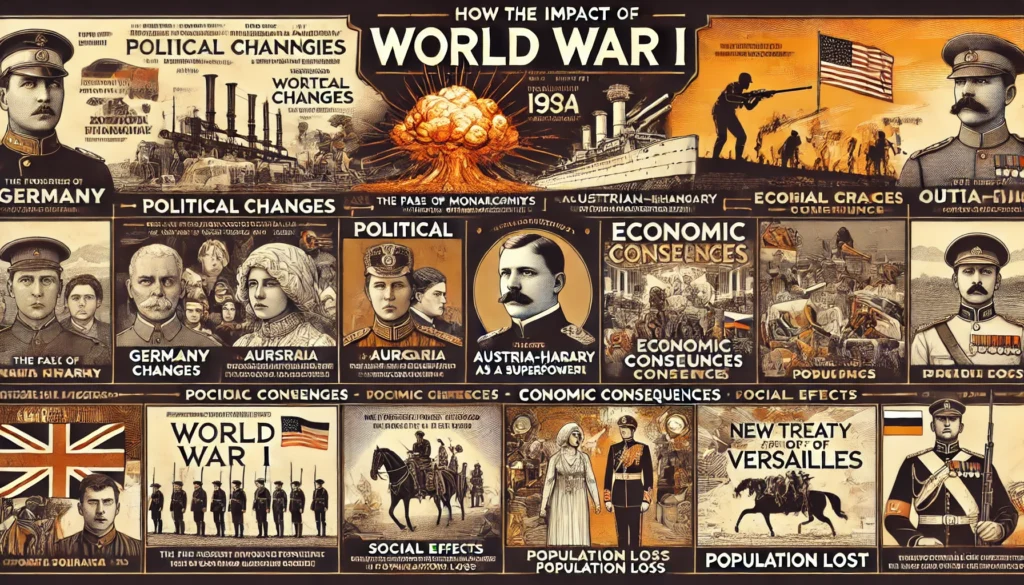
End of The War (1918)
End of the First World War (1918) – Detailed Description
The First World War (1914–1918) came to an end on 11 November 1918, when an armistice agreement was signed between Germany and the Allied Powers. More than 15 million people were killed in the war, and Europe’s political, economic, and social structure changed forever.
1. Main Reasons for the End of the War
(1) America Enters the War (1917)
- In April 1917, the United States joined the war on the side of the Allies.
- The U.S. provided fresh troops, weapons, money, and supplies.
- This strengthened the Allies and weakened Germany significantly.
(2) Weakness of Germany & the Central Powers
- By 1918, Germany, Austria-Hungary, the Ottoman Empire, and Bulgaria were exhausted.
- They suffered heavy losses and faced severe economic crises.
- Public support collapsed and revolts began against their governments.
(3) Russia Withdraws from the War (1918)
- The Russian Revolution in 1917 overthrew the Tsarist regime.
- Treaty of Brest-Litovsk (March 1918) removed Russia from the war.
- Although Germany gained relief on the Eastern Front, Allied pressure increased on the Western Front.
(4) The Allies’ Decisive Offensive Strategy (1918)
- Hundred Days Offensive (August–November 1918) forced German forces to retreat.
- Second Battle of the Marne (July 1918) was a major Allied victory.
(5) Revolt and Revolution Inside Germany
- The German population was tired of war and began a revolt.
- 3 November 1918: Sailors in Kiel mutinied.
- 9 November 1918: Kaiser Wilhelm II abdicated and fled to the Netherlands.
- The new German government immediately began armistice negotiations.
2. Armistice – 11 November 1918
At 11:00 AM on 11 November 1918, Germany and the Allies signed an armistice agreement.
Terms of the Agreement
- Germany surrendered all major weapons.
- Germany withdrew from all occupied territories.
- Allied sanctions and restrictions were imposed on Germany.
The war officially ended, and Europe celebrated the arrival of peace.
3. Main Results of the End of the War
(1) Treaty of Versailles – 28 June 1919
The Treaty of Versailles was signed between Germany and the Allied Powers.
- Germany was held fully responsible for the war.
- Germany had to pay massive war reparations.
- The German army was limited in size and weapons.
- Germany lost many territories and colonies.
This treaty sowed the seeds of World War II (1939–1945).
(2) Political Map of Europe Changed
- The Austro-Hungarian and Ottoman Empires collapsed.
- New independent nations emerged: Poland, Czechoslovakia, Yugoslavia.
- Britain and France gained new colonies.
(3) Establishment of the League of Nations (1920)
- The League of Nations was created to prevent future wars.
- However, the U.S. refused to join, which left the League weak.
(4) Economic Crisis and the Great Depression (1929)
- Europe’s economy was severely damaged due to the war.
- Germany faced poverty and resentment due to harsh reparations.
- The Great Depression (1929) further worsened global economic conditions.
4. Conclusion
The First World War ended on 11 November 1918 when Germany surrendered. The Treaty of Versailles imposed severe restrictions on Germany and reshaped Europe’s political geography. Although the League of Nations was established, it failed to prevent the next global conflict.
In the end, World War I changed world politics deeply and laid the foundation for World War II (1939–1945).
Results and Effects of the First World War (1914–1918)
World War I was one of the most devastating conflicts in global history. It profoundly affected the political, economic, social, and diplomatic foundations of Europe. Its consequences were so deep that it is often called “the war that sowed the seeds of World War II (1939–1945).”
1. Political Impact
(1) End of European Monarchies
The First World War led to the collapse of many major empires:
- German Empire – Kaiser Wilhelm II abdicated.
- Austro-Hungarian Empire – Broken into several smaller nations.
- Ottoman Empire – Replaced by modern Turkey.
- Russian Empire – Became the Soviet Union after the 1917 Revolution.
Monarchies were replaced by democratic and socialist systems across Europe.
(2) Rise of New Political Ideologies
- Fascism and Nazism emerged strongly in Italy and Germany.
- Socialism and Communism spread widely after the Bolshevik Revolution.
- Democratic systems expanded, though many were unstable.
2. Economic Impact
(1) Destruction of Europe’s Economy
- The war devastated the economies of major nations.
- Germany and France suffered heavy destruction.
- Britain, once the world’s strongest economy, became weakened.
(2) Rise of the United States as a Superpower
- The U.S. provided massive financial aid to the Allies.
- After the war, the American economy remained strong.
- The U.S. became the most influential global power.
(3) Heavy Economic Penalties on Germany
- Under the Treaty of Versailles (1919), Germany had to pay huge reparations.
- Its economy collapsed, causing poverty and unemployment.
- This fueled resentment, helping Hitler rise to power and spark World War II.
(4) The Great Depression – 1929
- The global economy became unstable after the war.
- The 1929 financial crash in the U.S. affected the entire world.
3. Social Impact
(1) Massive Loss of Life
- More than 15 million people died in the war.
- A large part of an entire generation was wiped out.
- Millions of women became widows, and many children were left orphaned.
(2) Change in the Status of Women
- For the first time, women worked in factories, industries, and hospitals.
- After the war, women received voting rights in many countries (Britain, U.S., Germany).
(3) Rise in Refugees and Homeless Populations
- Millions lost their homes and became refugees.
- France, Belgium, Serbia, and Russia suffered the worst destruction.
4. Geopolitical Impact
(1) Redrawing of the European Map
- Austria and Hungary split into separate nations.
- Poland regained independence.
- Czechoslovakia and Yugoslavia were newly created.
- Several new states emerged in the Middle East.
(2) Collapse of the Ottoman Empire & Middle East Reorganization
- The Ottoman Empire dissolved completely.
- Britain and France took control of its territories:
- Britain: Iraq, Jordan, Palestine
- France: Syria, Lebanon
- This later contributed to conflicts like the Israel–Palestine dispute.
5. International Impact
(1) Establishment of the League of Nations (1919)
- The League of Nations was formed to maintain peace.
- The U.S. refused to join, making it weak.
- Its failure led to the outbreak of World War II.
(2) Foundation for World War II
- The harsh terms of the Treaty of Versailles angered Germany.
- Fascism and militarism grew in Germany, Italy, and Japan.
- Leaders like Hitler and Mussolini capitalized on public frustration.
6. Impact on Science & Technology
(1) Advancement in Warfare Technology
- Tanks
- Poison gas
- Machine guns
- Submarines
- Warplanes
These technologies were later used in more advanced forms during World War II.
Conclusion
The First World War transformed the global order. Monarchies collapsed, new nations emerged, and ideologies like fascism, communism, and democracy reshaped the political landscape. The U.S. became a world power, while Germany faced harsh penalties that contributed to the rise of Hitler. The League of Nations failed to maintain peace, ultimately leading to World War II.
Thus, World War I was not just a war—it reshaped modern world politics, society, economics, and future international conflicts.
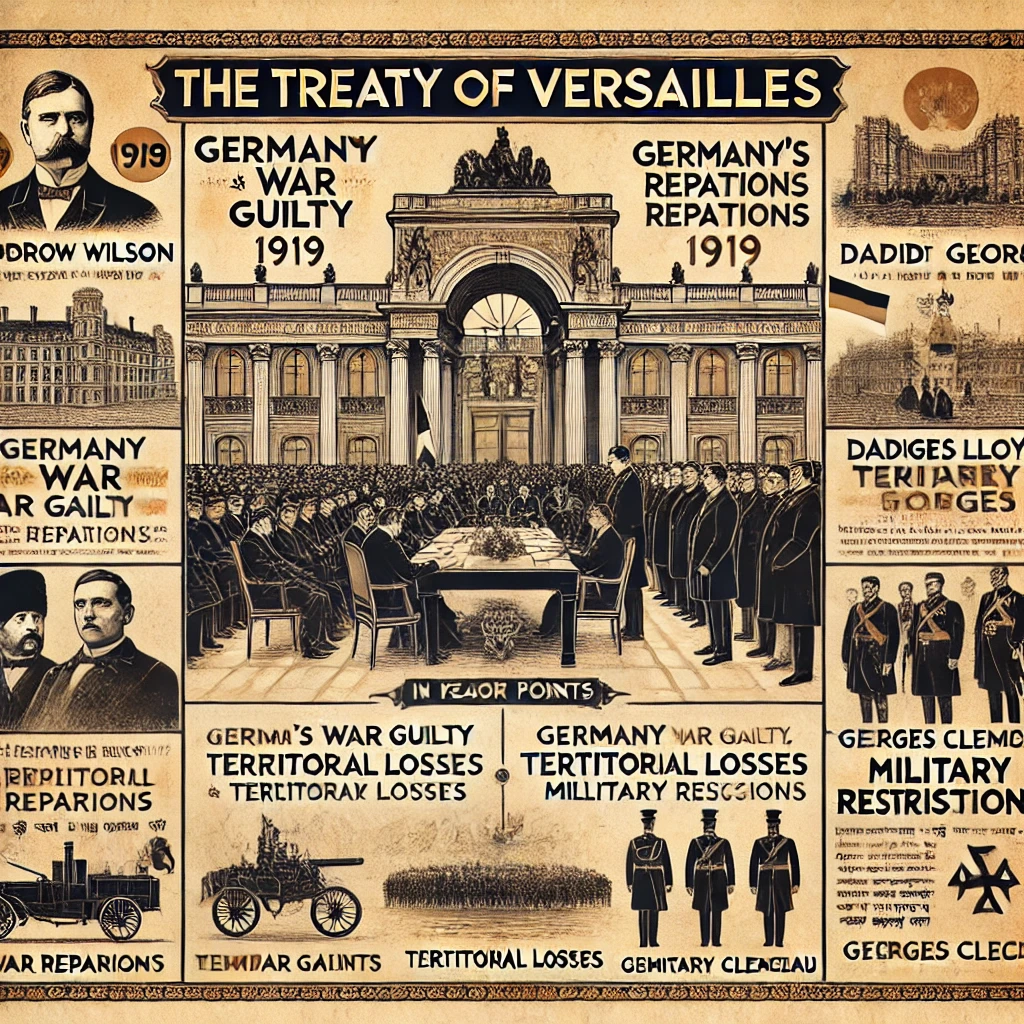
Treaty of Versailles – 1919
The Treaty of Versailles was signed on 28 June 1919 after the end of World War I. It was signed between the Allied Powers and Germany at the Palace of Versailles, France. The treaty aimed to punish Germany and restore peace in Europe, but its harsh terms created resentment that later led to World War II.
1. Background of the Treaty of Versailles
- Germany surrendered on 11 November 1918, ending World War I.
- The Allied nations held Germany responsible for the war and prepared a peace agreement.
- The treaty was drafted during the Paris Peace Conference (1919).
- It was officially signed on 28 June 1919.
2. Main Provisions of the Treaty of Versailles
(1) War Guilt Clause (Article 231)
Germany was held completely responsible for starting World War I. This clause deeply hurt German national pride.
(2) Heavy Reparations on Germany
Germany was ordered to pay £6.6 billion as compensation for war damages to Britain, France and other Allies. These payments destroyed Germany’s already weak economy.
(3) Territorial Losses of Germany
- Alsace-Lorraine returned to France.
- Polish Corridor was created, dividing Germany into two parts.
- Schleswig was given to Denmark.
- Saar region was put under the League of Nations for 15 years.
- All of Germany’s overseas colonies were taken away.
(4) Military Restrictions on Germany
- The German army was reduced to 100,000 soldiers.
- No tanks, submarines or air force allowed.
- Rhineland was declared a demilitarized zone.
(5) Establishment of the League of Nations
The treaty created the League of Nations to maintain world peace. Germany was initially excluded from joining, increasing its isolation.
3. Impact of the Treaty of Versailles
(1) Rise of Hitler and Nazism
The German public saw the treaty as humiliating. Adolf Hitler used this anger to gain support and rise to power in 1933, ultimately leading to World War II.
(2) Political Instability in Europe
The dissolution of major empires and creation of new borders led to long-term instability and conflicts in Europe.
(3) Failure of the League of Nations
The League was unable to enforce its rules. The U.S. did not join, weakening the organization. It failed to prevent Japanese, Italian and German aggression.
(4) Foundation of World War II
The economic and military restrictions imposed on Germany created a desire for revenge. Germany’s invasion of Poland in 1939 directly triggered World War II.
4. Conclusion
The Treaty of Versailles aimed to establish peace, but its harsh provisions deepened resentment in Germany. Instead of preventing war, it paved the way for the rise of Hitler and the outbreak of World War II. Today, the treaty is remembered as one of the most controversial peace settlements in world history.
Formation of New Countries After World War I
After World War I (1914–1918), the political map of Europe and the Middle East changed dramatically. The German, Austro-Hungarian, Ottoman and Russian empires collapsed, leading to the creation of several new independent countries. These changes were formalized through the Treaty of Versailles (1919) and related peace treaties.
1. Formation of New Countries in Europe
(1) Breakup of the Austro-Hungarian Empire
The Austro-Hungarian Empire, once a powerful Central European kingdom, disintegrated after the war. It was divided into smaller independent states.
- Austria
- Hungary
- Czechoslovakia (now the Czech Republic and Slovakia)
- Yugoslavia (later broke into several countries in 1991)
(2) New Countries Created from German Territory
Germany lost several regions under the Treaty of Versailles. These territorial losses helped form or restore new nations.
- Poland – regained independence and received territories from Germany and Russia
- Lithuania
- Latvia
- Estonia
(3) Collapse of the Russian Empire
After the Russian Revolution of 1917, the Russian Empire dissolved and the USSR was formed. Several nations that were once under Russian rule gained independence.
- Finland
- Poland
- Lithuania
- Latvia
- Estonia
However, the Soviet Union re-annexed Lithuania, Latvia and Estonia in 1940.
(4) Collapse of the Ottoman Empire (Turkey) and Creation of New Countries
The Ottoman Empire lost most of its territory. New nations were created under the mandate system of Britain and France.
- Turkey (modern Republic formed in 1923)
- Iraq (British mandate, independence in 1932)
- Syria (French mandate)
- Lebanon (French mandate)
- Jordan (British mandate)
- Palestine (British mandate → later Israel–Palestine conflict)
- Saudi Arabia (combined tribal kingdoms formed new state)
(5) Formation of Baltic and Balkan Countries
• Baltic Region
- Lithuania
- Latvia
- Estonia
• Balkan Region
- Yugoslavia (Serbs, Croats, Slovenes united)
- Czechoslovakia
2. Impact of the Formation of New Countries
(1) Political Instability in Europe
Many new borders were drawn without considering ethnic groups, leading to disputes:
- Poland vs. Germany – over the “Polish Corridor”
- Serbs vs. Croats in Yugoslavia
- Austria & Hungary weakened economically
(2) Rise of Nationalism
New nations triggered nationalist feelings, often resulting in regional conflicts and separatist movements.
(3) Middle East Tensions
Britain and France created artificial boundaries in the Middle East, leading to long-term conflicts:
- Israel–Palestine conflict
- Arab nationalism vs. Western influence
- Sectarian divides in Iraq & Syria
(4) Road to World War II
The newly drawn borders were unstable. Germany sought to regain lost territories. Hitler used this resentment to justify expansion, ultimately starting World War II in 1939.
3. Conclusion
The aftermath of World War I reshaped the world map. The fall of old empires led to the creation of many new countries in Europe and the Middle East. However, these new boundaries brought political instability, nationalism and territorial conflicts, which eventually contributed to World War II. The new countries formed during this period continue to shape global geopolitics today.
Establishment of the League of Nations
The League of Nations — First Global Attempt at Collective Security
The League of Nations was created in the aftermath of World War I as the first major international organization designed to maintain peace and resolve disputes between nations. Proposed by U.S. President Woodrow Wilson in his Fourteen Points, the League was approved at the Paris Peace Conference and formally came into existence after the peace treaties.
Key Facts
- Founded: 10 January 1920
- Headquarters: Geneva, Switzerland
- Initial members: 42 (membership later expanded)
- Predecessor idea: Woodrow Wilson’s Fourteen Points (1918)
Background
The unprecedented destruction of World War I motivated world leaders to find a mechanism that could prevent future wars. During the Paris Peace Conference (1919) the idea of a permanent international body for arbitration, disarmament and collective security gained traction. Although the League was shaped by Allied powers, it was intended to be a universal body for peaceful dispute resolution.
Objectives of the League of Nations
- Preventing wars: Resolve disputes peacefully through negotiation and arbitration.
- Disarmament: Encourage reduction of armaments among nations.
- Collective security: Coordinate a joint response to aggression.
- Protecting minorities: Safeguard minority rights in new and existing states.
- International cooperation: Address global problems such as public health, labor conditions, and refugee relief.
Main Organs of the League
1. Assembly
The Assembly included representatives of all member states; each member had one vote. It met periodically to discuss general policy, admit new members, and approve the budget.
2. Council
The Council was the League’s executive body. It had permanent and non-permanent members and handled urgent political crises and disputes.
3. Secretariat
The Secretariat, based in Geneva, managed the League’s day-to-day administration and provided reports, research and clerical support.
4. Permanent Court of International Justice
Located at The Hague, this court settled legal disputes submitted by states and gave advisory opinions.
5. Specialized Agencies and Commissions
The League created and supported bodies such as the International Labour Organization (ILO), the health organization, mandates commission, and refugee and slavery commissions.
Achievements
- Resolved several international disputes peacefully (for example, settled disputes between Sweden and Finland, and between Greece and Bulgaria).
- Conducted humanitarian work—fighting trafficking, repatriating prisoners, and addressing refugee crises.
- Promoted international cooperation on health (disease control), labor standards (via ILO), and mandates administration.
- Established norms and institutions that informed later global governance, including the United Nations.
Failures and Limitations
- Major powers’ non-participation: The United States never joined, weakening the League’s authority.
- Limited enforcement: The League lacked armed forces and depended on collective will; it could not enforce decisions effectively.
- Inaction on major aggressions: It failed to stop Japan’s invasion of Manchuria (1931), Italy’s conquest of Ethiopia (1935), and later could not contain Nazi Germany.
- Dependence on member consent: Its decisions required cooperation by sovereign states, many of which ignored League rulings when national interest conflicted.
End of the League and Legacy
The League’s influence declined during the 1930s as aggression and rearmament escalated. World War II (1939–1945) proved that the League had failed in its primary purpose. After the war, the League formally dissolved in 1946 and many of its functions, personnel and lessons were transferred to the newly established United Nations (charter signed in 1945), which adopted stronger structures for collective security.
Conclusion
The League of Nations was an ambitious first attempt at global governance and collective security. It achieved meaningful successes in humanitarian and technical cooperation and pioneered multilateral diplomacy. Yet structural weaknesses—especially the absence of key powers and limited enforcement mechanisms—meant it could not prevent renewed global conflict. Its experience directly shaped the design and institutions of the United Nations, which sought to correct many of the League’s shortcomings.
Economic & Social Impact of World War I
Introduction
The First World War (1914–1918) was not only a military and political conflict—it also caused massive economic and social transformations around the world. The war destroyed economies, created widespread unemployment, caused inflation, disrupted families, altered gender roles, and changed the overall social structure of many countries. Its consequences shaped global politics and laid the groundwork for future crises, including the Great Depression and World War II.
1. Economic Effects of World War I
1.1 Collapse of the Global Economy
The war devastated the economies of most European nations. Countries spent nearly all their wealth on military campaigns and were forced to borrow heavily. Banking systems became unstable, industries shut down, and trade routes were disrupted, leading to a widespread economic downturn.
1.2 Economic Decline in Europe
- Europe, once the economic center of the world, lost its global dominance.
- Industries in Germany, France, Britain, and Russia were badly damaged.
- Trade reduced drastically, weakening the economies of major powers.
- Many nations accumulated large war debts, further intensifying financial instability.
1.3 Rise of the United States as a Global Economic Power
The U.S. emerged as the world’s strongest economy after the war. It supplied weapons, food, loans, and industrial goods to the Allies during the conflict and gained enormous financial influence. The U.S. also accumulated the world’s largest gold reserves, making the American dollar a powerful global currency.
1.4 Unemployment and Struggle of the Working Class
After the war, millions of returning soldiers sought employment, but industries had been shut down or weakened. The sudden shift from wartime production to peacetime economies created mass unemployment, especially in Europe. Labor strikes and worker unrest increased as economic hardship grew.
1.5 Inflation and Economic Instability
The value of currency fell across Europe, causing high inflation. Germany suffered the most, facing hyperinflation in the early 1920s. Prices of basic goods increased thousands of times, making life extremely difficult for ordinary citizens. War reparations imposed by the Treaty of Versailles further worsened Germany’s economic crisis.
1.6 Impact on International Trade
- Trade routes destroyed during the war disrupted global commerce.
- Britain and France lost their dominance in export markets.
- Countries like the U.S. and Japan benefited from new global trade opportunities.
2. Social Effects of World War I
2.1 Deep Social Despair
The war caused the deaths of more than 15 million people, creating widespread grief and trauma. Many cities and villages were destroyed, especially in France, Belgium, Russia, and Serbia. Psychological damage and a sense of hopelessness spread across societies.
2.2 Change in the Status of Women
With millions of men fighting on the front lines, women entered the workforce in large numbers. They worked in factories, hospitals, offices, and transport services. After the war, women gained voting rights in several countries, including Britain, the United States, and Germany. This marked the beginning of a new era of women’s empowerment.
2.3 Impact on Family Structure and Population
- Millions of men were killed, leading to a rapid decline in Europe’s population.
- The number of widows and orphans increased drastically.
- Birth rates fell sharply in many countries, destabilizing population balance.
2.4 Refugee Crisis
After the war, millions of people were displaced, especially from Russia, Germany, Austria, and former Ottoman territories. Refugee camps grew across Europe, creating a humanitarian crisis and increasing pressure on economies and governments.
2.5 Rise of Nationalism and Radical Ideologies
The formation of new nations after the war fueled nationalism among ethnic groups. Economic hardship and political instability enabled the rise of extremist ideologies like Fascism in Italy and Nazism in Germany. Leaders like Hitler and Mussolini gained popularity, setting the stage for World War II.
2.6 Impact on Art, Literature, and Culture
Writers and artists expressed their disillusionment through new artistic movements. The “Lost Generation” writers depicted the despair and futility felt after the war. Modernism grew in art, music, and literature as society searched for new meaning amid the ruins.
Conclusion
The First World War fundamentally transformed the world’s economic and social landscape. Europe’s economic dominance collapsed, the U.S. rose as a global power, and widespread inflation, poverty, and unemployment contributed to political instability. Socially, the war reshaped gender roles, family structures, and cultural expressions. The long-term consequences of World War I created the conditions that eventually led to the Great Depression and the Second World War.
Conclusion of World War I
The First World War (1914–1918) was one of the most destructive conflicts in human history. It had deep and lasting political, social, and economic impacts across the world. Lasting for four years, the war caused millions of deaths, widespread destruction, and permanently transformed the political systems and global power structure. The war formally ended on 11 November 1918 when Germany surrendered to the Allied Powers.
1. End of the War and the Treaty of Versailles (1919)
- By late 1918, Germany and its allies had become weak and could no longer continue fighting.
- On 11 November 1918, Germany signed the Armistice, officially ending the war.
- In 1919, the Paris Peace Conference was held, where the victorious Allies—Britain, France, the United States, and Italy—imposed strict terms on the defeated Central Powers.
- The Treaty of Versailles forced Germany to accept full responsibility for the war, pay huge reparations, and surrender territory.
2. Key Results and Impacts
(1) Political Impact
- Four major empires collapsed: German Empire, Austro-Hungarian Empire, Ottoman Empire, and the Russian Empire.
- New nations were formed, including Poland, Czechoslovakia, Hungary, and Finland.
- Many countries abolished their monarchies and adopted democratic or republican systems.
- The League of Nations was established to maintain peace, although it later failed.
(2) Economic Impact
- Post-war Europe faced severe economic collapse and widespread recession.
- Germany suffered the most due to heavy reparations, leading to financial instability.
- The United States emerged as a global economic superpower by financing the Allies during the war.
- Industries, agriculture, and trade were disrupted, increasing unemployment and inflation worldwide.
(3) Social Impact
- Millions of deaths and injuries created a climate of grief and hopelessness in society.
- Women joined the workforce in large numbers, gaining more rights and opportunities—especially voting rights in countries like Britain and the U.S.
- Extreme nationalism and fascist ideologies grew rapidly after the war, particularly in Germany and Italy.
(4) Foundation of World War II
- The harsh terms of the Treaty of Versailles created resentment and anger in Germany.
- Economic hardship and political chaos helped Adolf Hitler and the Nazi Party rise to power.
- In 1939, Germany's invasion of Poland triggered World War II—directly linked to unresolved issues from World War I.
3. Final Conclusion
The First World War was not just a military conflict—it reshaped the entire world. It brought down old empires, created new nations, and transformed political ideologies. While democracy expanded in some regions, totalitarian ideologies like fascism and Nazism also emerged. The League of Nations was created to prevent future wars but proved ineffective in stopping World War II.
Ultimately, World War I profoundly influenced world history and set the stage for the major political, economic, and social developments of the 20th century. Its effects—border changes, social transformations, economic crises, and political instability—are still reflected in modern global affairs.
References
- Hobsbawm, Eric. The Age of Empire: 1875–1914. Vintage Books.
- Keegan, John. The First World War. Alfred A. Knopf.
- Clark, Christopher. The Sleepwalkers: How Europe Went to War in 1914. HarperCollins.
- Hamilton, Richard F. & Holger H. Herwig. Decisions for War, 1914–1917. Cambridge University Press.
- MacMillan, Margaret. Paris 1919: Six Months That Changed the World. Random House.
- Strachan, Hew. The First World War: A New History. Simon & Schuster.
- World War I Archives – National WWI Museum and Memorial.
- United Nations Archives – History of the League of Nations.
Very good