Coastal Plains: The Sea, Civilization, and the Story of My Learning
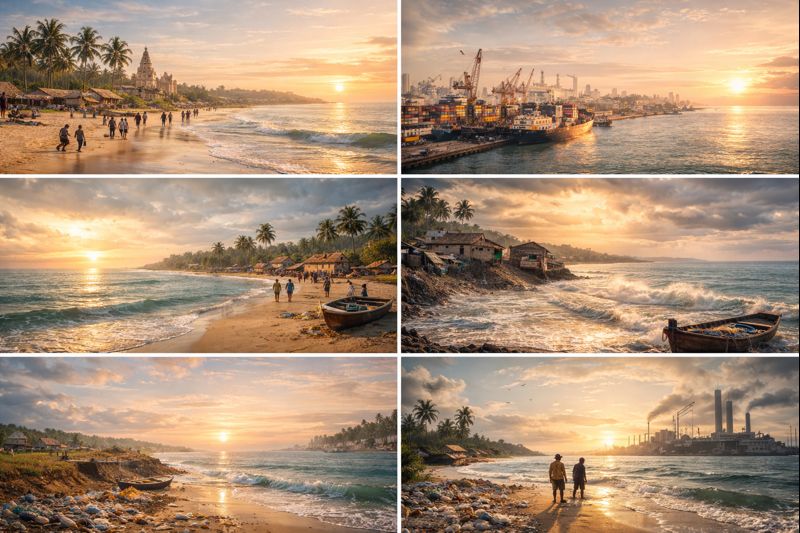
This article is not just a lesson from a geography textbook, but a story woven from my personal experiences, journeys, and the wisdom I gained from life along the coastal plains. When I first stood beside the vast sea, watching the waves touch the endless flat lands, I realized that coastal plains are not merely stretches of sand and soil, but living witnesses of human history and natural harmony.
As I walked along these plains, I felt that every wave carried a memory, every breeze whispered an ancient tale, and every settlement reflected humanity’s timeless relationship with nature. The coastal plains taught me that true development is not measured only by modern buildings and ports, but by the balance between human progress and environmental respect.
Through this article, I invite you to explore not only the geographical structure of coastal plains, but also their cultural soul. This journey will take you beyond maps and diagrams, into the lives of fishermen, traders, travelers, and communities who have shaped their civilizations along the edges of the sea.
If you have always viewed coastal plains merely as a topic for exams, this story may transform your perspective. And if you are a lover of nature, it may deepen your emotional connection with the land and the sea. Let us begin this journey together — a journey of the sea, civilization, and the lessons that life itself teaches us.
High-Quality Study Material for Better Results
- ✔ Structured & easy-to-understand content
- ✔ Clear explanations for quick revision
- ✔ Trusted by many aspirants
- ✔ Ideal for competitive & academic exams
What Are Coastal Plains?
Coastal plains are the regions that stretch between the sea and the inland landmass, where nature and human civilization breathe together. These areas are shaped by the continuous interaction of waves, winds, rivers, and human settlement. They are neither purely marine nor completely terrestrial, but a unique transition zone that connects the ocean with the continent.
During my travels along the coast, I realized that coastal plains are not merely geographical features on a map. They are living spaces where history, culture, trade, and daily life merge into one continuous story. Every shoreline village, every fishing harbor, and every port city reflects the deep relationship between humans and the sea.
A Simple Definition of Coastal Plains
In simple words, coastal plains are flat or gently sloping lands located along the edges of seas and oceans. They are formed by the deposition of sediments brought by rivers, waves, and ocean currents. Because of their fertile soil, mild climate, and easy accessibility, these plains are among the most favorable regions for human settlement.
If we explain it simply, the flat land beside the sea where people live, farm, fish, and trade is called a coastal plain. This simplicity itself shows why coastal plains have always attracted human civilizations.
How Are Coastal Plains Formed?
The formation of coastal plains is a slow and continuous natural process that takes thousands of years. When sea waves strike the shore, they deposit sand, silt, and clay along the coastline. Over time, these materials accumulate and gradually transform into wide, flat landforms.
Rivers also play a vital role in building coastal plains. As rivers flow toward the sea, they carry fertile sediments from inland regions. When these sediments are deposited near the river mouths, they create deltas and broad lowland areas. The Ganga, Godavari, Krishna, and Kaveri rivers are well-known examples of this process in India.
In addition, tidal movements, changes in sea level, and tectonic activities continuously reshape these coastal regions. Because of these forces, they are never completely permanent; instead, they evolve with time, adapting to the natural rhythm of the Earth.
Thus, coastal plains stand as beautiful examples of nature’s patience and creativity, where land is slowly crafted by water and where human life finds both opportunity and responsibility.
Coastal plains of India: A Geographical Journey
The coastal regions of India are not merely physical landforms, but living records of maritime history, cultural exchange, and economic growth. Stretching along a coastline of nearly 7,500 kilometers, these lowland areas connect India to the world through oceans, ports, and civilizations. Each coastal belt tells a unique story of nature’s creativity and human adaptation.
Eastern Coastal Belt
The eastern shoreline along the Bay of Bengal is wide, flat, and extremely fertile. This region extends across West Bengal, Odisha, Andhra Pradesh, and Tamil Nadu. The continuous deposition of sediments by rivers has made this area one of the most productive agricultural zones in India.
Rice, sugarcane, coconut, and several cash crops are widely cultivated here. The openness and gentle slope of the land have encouraged the growth of large settlements, ports, and trading centers since ancient times.
Delta Regions and Their Role
One of the most remarkable features of the eastern coast is the presence of vast delta regions. The deltas of the Ganga, Godavari, Krishna, and Kaveri rivers are among the most fertile and densely populated areas of the country. These fertile tracts are formed by the continuous deposition of fine alluvial soil brought by rivers from inland regions.
Delta regions have played a crucial role in shaping India’s agricultural prosperity, urban development, and cultural heritage. Cities such as Kolkata, Kakinada, Nellore, and Thanjavur owe their growth to the fertile lands and abundant water resources of these areas.
Western Coastal plains
The western shoreline, located along the Arabian Sea, is relatively narrow but rich in natural beauty. It stretches across Gujarat, Maharashtra, Goa, Karnataka, and Kerala. In many places, the Western Ghats run parallel to the coast, creating a breathtaking landscape where mountains meet the sea.
These coastal lowlands support the cultivation of coconut, spices, tea, coffee, and various plantation crops. The region is also famous for its ports, fisheries, and maritime trade activities, which have linked India with foreign lands for centuries.
Konkan, Karnataka, and Malabar Coasts
The western seaboard is traditionally divided into three major sections: the Konkan Coast, the Karnataka Coast, and the Malabar Coast. The Konkan Coast is known for its scenic beaches, green hills, and historic forts. The Karnataka Coast is famous for its busy ports, temples, and fishing communities.
The Malabar Coast, located in Kerala, is world-renowned for its backwaters, spice trade, and rich cultural heritage. Here, the harmony between the sea, rivers, and mountains creates one of the most beautiful natural landscapes in India.
Together, these coastal regions make India not only geographically diverse, but also culturally vibrant and economically strong.
Coastal Plains and Human Civilization
During my journey, I clearly realized how coastal plains gave birth to trade, culture, and unique food traditions. These regions are not just geographical belts, but living classrooms of human history. The settlements along the coast reflect centuries of interaction between humans and the sea, shaping lifestyles that balance survival, creativity, and cooperation.
Every coastal town carries stories of travelers, merchants, and communities who learned to depend on the sea for livelihood and inspiration. The coastal plains became bridges that connected continents, civilizations, and cultures long before modern transportation existed.
Ports and Trade
Since ancient times, coastal plains have served as major centers of trade. Sea routes connected India with Rome, Greece, Arabia, China, and Southeast Asia. Through these maritime routes, spices, textiles, precious stones, and ideas traveled across oceans.
Cities such as Mumbai, Chennai, Kolkata, Kochi, and Visakhapatnam grew around natural harbors, transforming into powerful trading hubs. Even today, most of India’s international trade passes through these ports, making coastal plains the backbone of the nation’s economic network.
The markets, industries, and transport systems developed around these ports show how coastal plains shaped India’s commercial identity on the global stage.
Fishermen and Marine Life
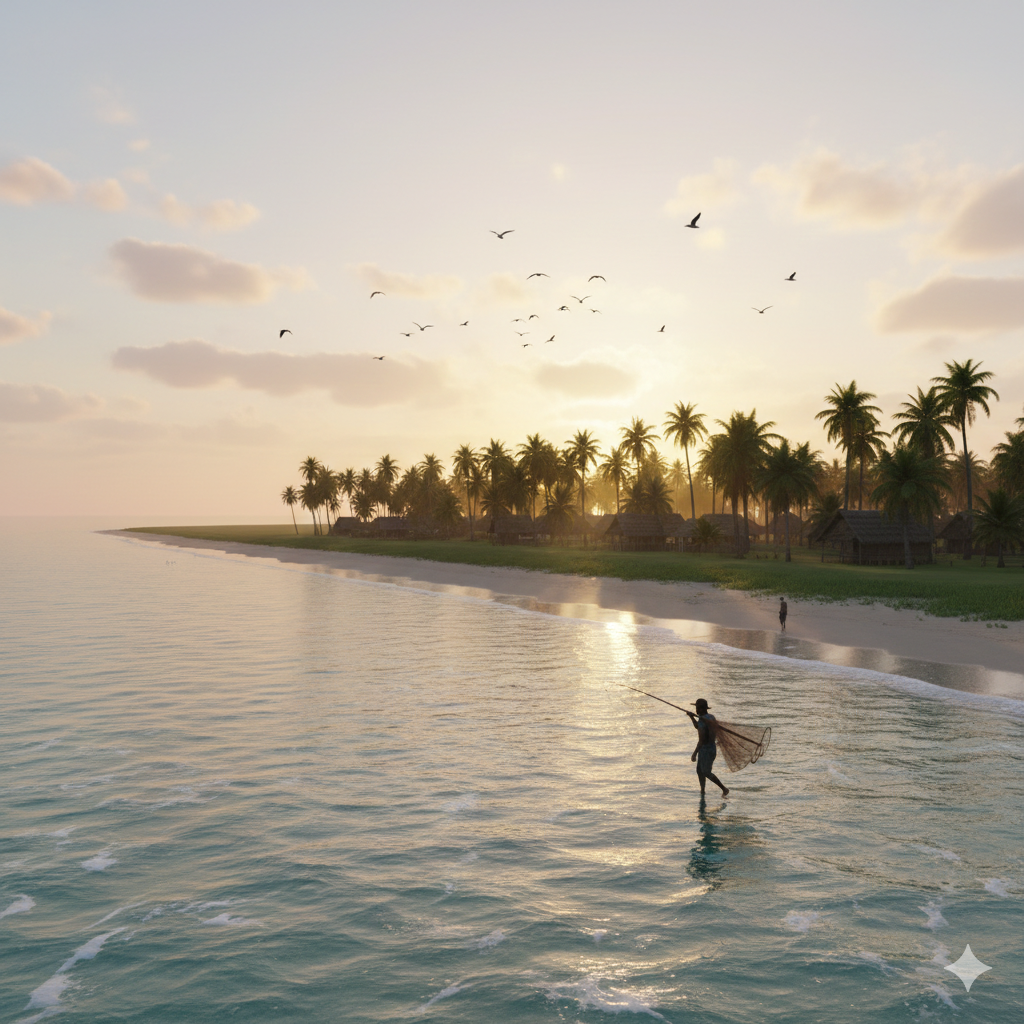
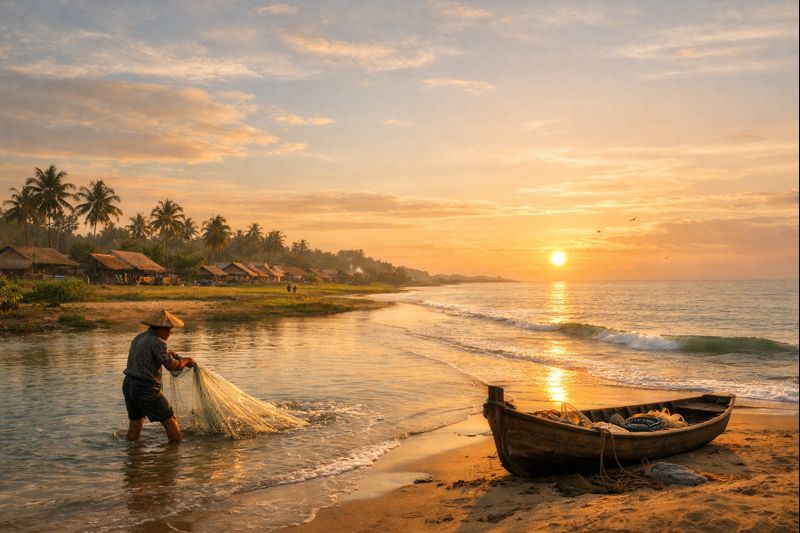
The soul of the coastal plains lives in the daily lives of fishermen. At sunrise, boats moving toward the horizon, nets being cast into the deep waters, and hopeful faces waiting for a good catch form a scene of quiet determination and harmony.
Fishermen are not just workers of the sea; they are guardians of traditional marine knowledge. They understand the language of waves, the rhythm of tides, and the signs of changing weather. Their lives teach us how to live with nature rather than against it.
Marine life has also shaped coastal food culture. Fish, prawns, crabs, and a variety of seafood dishes are an essential part of coastal cuisine. These dishes do not only carry flavor, but also the identity and heritage of coastal communities.
Thus, the relationship between coastal plains and human civilization is not only geographical, but deeply emotional, cultural, and historical. This bond turns coastal plains into more than land — it turns them into living stories of humanity.
Economic Importance of Coastal Plains
Tourism
Coastal plains play a vital role in promoting tourism, which is one of the fastest-growing sectors of the global and Indian economy. The presence of long sandy beaches, scenic coastlines, lagoons, coral reefs, and mangrove forests attracts millions of domestic and international tourists every year. Popular beach destinations, seaside resorts, historic ports, coastal temples, churches, mosques, and cultural festivals contribute significantly to employment generation and regional income.
Tourism-related activities such as hotels, resorts, restaurants, local transport, handicrafts, water sports, cruise tourism, and eco-tourism provide livelihoods to local communities. States with extensive coastal plains benefit from foreign exchange earnings, infrastructure development, and increased investment in hospitality and service industries.
High-Quality Study Material for Better Results
- ✔ Structured & easy-to-read content
- ✔ Clear explanations & revision support
- ✔ Trusted by many aspirants
- ✔ Ideal for competitive & academic exams
Industries and Ports
Coastal plains are the backbone of industrial and trade activities due to their strategic location near the sea. Most major ports, harbors, and shipyards are located in coastal plains because of easy access to international sea routes. These ports facilitate the import of raw materials such as crude oil, machinery, coal, and fertilizers, and the export of finished goods like textiles, automobiles, petroleum products, iron ore, and agricultural produce.
Several industries such as petrochemicals, oil refineries, shipbuilding, steel plants, fertilizer units, seafood processing, salt production, and power plants are concentrated in coastal regions. The availability of flat land, water resources, and efficient transportation networks makes coastal plains ideal for large-scale industrial development.
As a result, coastal plains contribute significantly to national GDP, employment generation, urbanization, and the integration of the national economy with global markets. They act as gateways for international trade and play a crucial role in strengthening economic growth and development.
Environmental Challenges
As beautiful and resourceful as coastal plains are, they are equally fragile. Rapid urbanization, population growth, and climate change have pushed these regions toward serious environmental संकट. During my travels, I realized that nature is quietly warning us — and it is our responsibility to listen.
Coastal Erosion and Sea Level Rise
Climate change has become the greatest threat to coastal plains. Rising sea levels are slowly but steadily eroding coastlines, swallowing villages, farmlands, and settlements. In many regions, the sea is no longer just a source of life, but also a force of uncertainty.
Cyclones, storms, and high tides are now more intense and frequent than before. These extreme events weaken coastal structures and make the lives of fishermen, farmers, and local communities increasingly insecure. Many families are forced to leave their ancestral homes and search for safer places to live.
Sea level rise is not only a loss of land, but also a loss of culture, memories, and identity.
Pollution
High-Quality Study Material for Better Results
- ✔ Structured & easy-to-understand content
- ✔ Clear explanations & quick revision
- ✔ Trusted by many aspirants
- ✔ Ideal for competitive & academic exams
Plastic waste, industrial discharge, chemical substances, and oil spills have become major threats to marine life. Heaps of garbage along coastlines not only destroy the beauty of the sea, but also endanger countless marine species.
Turtles, fish, dolphins, and seabirds often mistake plastic for food, leading to painful deaths. Industrial waste poisons seawater and disturbs the entire marine ecosystem.
Pollution does not remain confined to the ocean. Contaminated water and seafood eventually affect human health as well. Therefore, coastal pollution is not only an environmental issue, but also a social and public health concern.
If we fail to take these challenges seriously today, coastal plains may survive only in books and maps in the future.
My Personal Lessons from Coastal Plains
The coastal plains taught me that stability and change can exist together. The sea looks the same every day, yet it is never truly the same. This simple view became one of my deepest life lessons — to accept change while protecting inner balance.
While walking along these plains, I realized that nature never rushes, yet everything is completed in perfect time. Waves slowly shape rocks, sand gradually forms land, and on that land, civilizations rise. This taught me the power of patience, consistency, and silent effort.
The people living in coastal villages showed me how to respect resources. They take only what they need from the sea and leave the rest for the next generation. This balance is perhaps the most important lesson for our modern world.
I also learned that instability should not always be feared. Storms come, tides rise, but the sea eventually returns to calm. This reminds us that every difficult phase in life is temporary, and peace always finds its way back.
The coastal plains taught me that progress does not mean losing one’s roots. Standing between land and sea, these plains remind us that true strength lies in balance, not in extremes.
When I look back today, I realize that the coastal plains were not just a part of my journey — they quietly became a part of my understanding of life itself. This is the greatest personal lesson they gave me.
High-Quality Study Material for Better Results
- ✔ Structured & easy-to-understand content
- ✔ Clear explanations for quick revision
- ✔ Trusted by many aspirants
- ✔ Ideal for competitive & academic exams
The Future Role of Coastal Plains
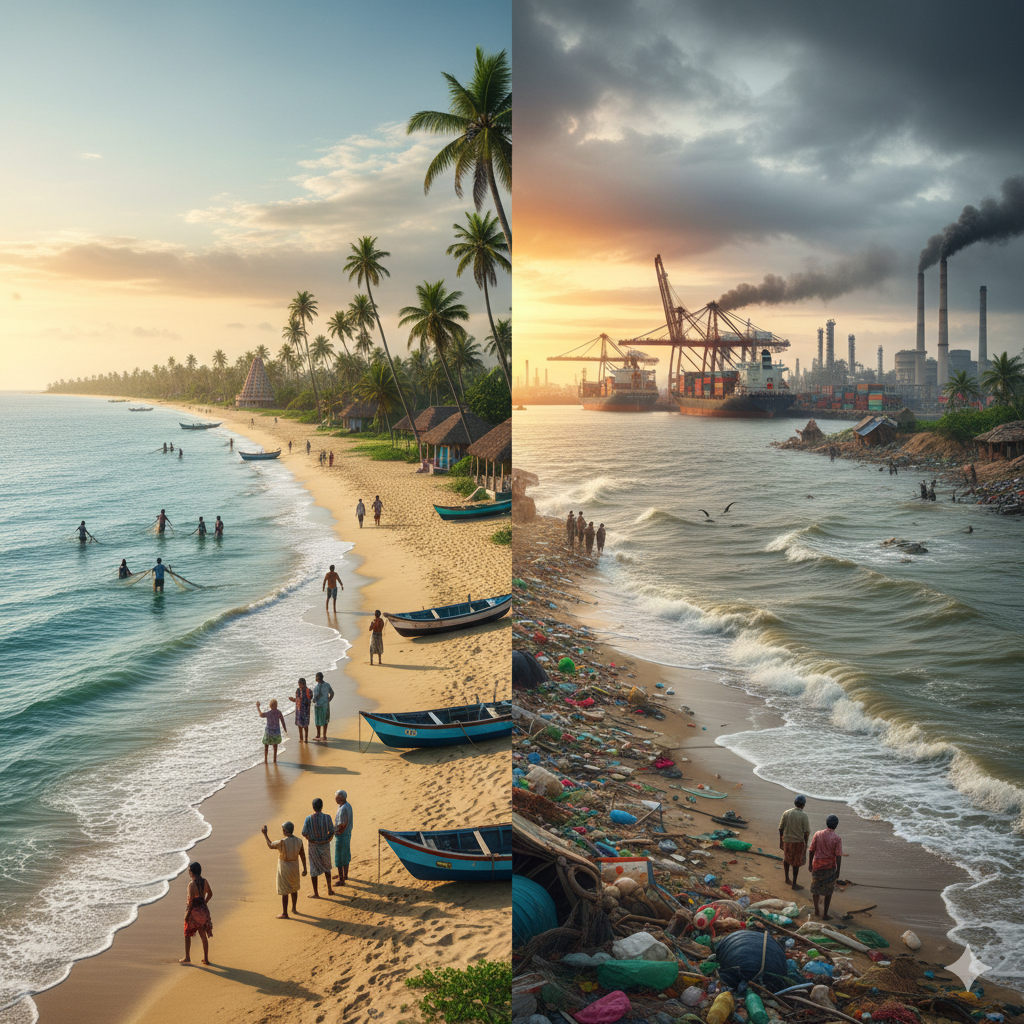
Sustainable development and conservation are the true keys to the future of coastal plains. If we fail to choose a balanced path today, future generations may know these natural treasures only through books and pictures. Coastal plains remind us that nature and progress are not enemies, but partners in growth.
In the coming years, coastal plains can become centers of clean energy, green tourism, marine biodiversity protection, and sustainable fisheries. Wind energy, solar power, and ocean-based energy sources have the potential to make these regions environmentally friendly and economically self-reliant.
Urban planning in coastal cities must go beyond tall buildings and modern infrastructure. Green spaces, water conservation, and disaster management should become core priorities. With rising sea levels, cyclones, and floods, scientific planning and community preparedness will be essential for survival and resilience.
Without the participation of local communities, coastal conservation is impossible. Fishermen, farmers, and coastal residents are the true guardians of these landscapes. Their traditional knowledge, combined with modern science, can protect coastal plains more effectively than policies alone.
In the future, coastal plains should not be seen only as economic zones, but as symbols of environmental balance, cultural heritage, and human responsibility. If we make the right choices today, coastal plains will stand as sources of hope, opportunity, and harmony for generations to come.
Conclusion
Coastal Plains Are Not Just Land, They Are a Philosophy of Life
Coastal plains do not only teach us geography; they teach us how to live. They show us how to maintain balance — between land and sea, tradition and modernity, and development and conservation.
These plains explain the true meaning of resilience. Even after facing waves every day, they do not disappear; instead, they reshape themselves with strength and patience. This lesson is equally powerful for human life — difficulties are not meant to break us, but to refine us.
Coastal plains also teach us the value of cooperation. Here, the sea, rivers, wind, soil, and human beings work together to create life. This harmony is the true foundation of civilization.
If we see coastal plains only as economic resources, we will lose their deeper value. But if we understand them as a philosophy of life, they will continue to guide future generations toward balance, sensitivity, and responsibility.
Ultimately, coastal plains remind us that true progress lies in walking with nature, not against it. And this is the most important lesson of the entire journey.
FAQ Section (Frequently Asked Questions)
What are coastal plains?
Coastal plains are flat or gently sloping landforms located between the sea and the mainland, formed by the deposition of sediments brought by rivers, waves, and ocean currents.
How many types of coastal plains are found in India?
In India, coastal plains are mainly divided into two types: the Eastern Coastal Plains and the Western Coastal Plains.
Why are the Eastern Coastal Plains more fertile?
Because major rivers like the Ganga, Godavari, Krishna, and Kaveri form large deltas in this region, depositing rich alluvial soil that makes the land highly fertile.
Why are the Western Coastal Plains narrow?
The Western Coastal Plains are narrow because the Western Ghats mountain range lies very close to the Arabian Sea, limiting the width of the plains.
What is the economic importance of coastal plains?
Coastal plains support tourism, ports, fisheries, industries, trade, and employment, making them vital to the national economy.
What are the major environmental challenges faced by coastal plains?
Sea level rise, coastal erosion, pollution, climate change, and frequent cyclones are the major environmental challenges faced by coastal plains.
Why are coastal plains important for human civilization?
Coastal plains have been centers of trade, cultural exchange, settlement, and economic development since ancient times.
Why is conservation of coastal plains necessary?
Conservation is essential to protect biodiversity, maintain environmental balance, and secure the future of coastal communities.
What life lessons do coastal plains teach us?
Coastal plains teach us balance, resilience, cooperation, and the importance of living in harmony with nature.
References
- NCERT Geography Textbooks – Class 9 & 11 (Physical Geography of India)
- Geological Survey of India (GSI) Reports on Coastal Landforms
- Ministry of Environment, Forest and Climate Change, Government of India – Official Publications
- National Geographic – Articles on Coastal Geography and Ecosystems
- Indian Council of Agricultural Research (ICAR) Publications
- United Nations Environment Programme (UNEP) – Coastal Ecosystem Reports
- India Meteorological Department (IMD) – Coastal and Marine Studies
- World Bank – Reports on Coastal Development and Climate Change
- Historical Studies on Ancient Indian Maritime Trade