
Introduction: When the Seasons Stopped Following Old Rules
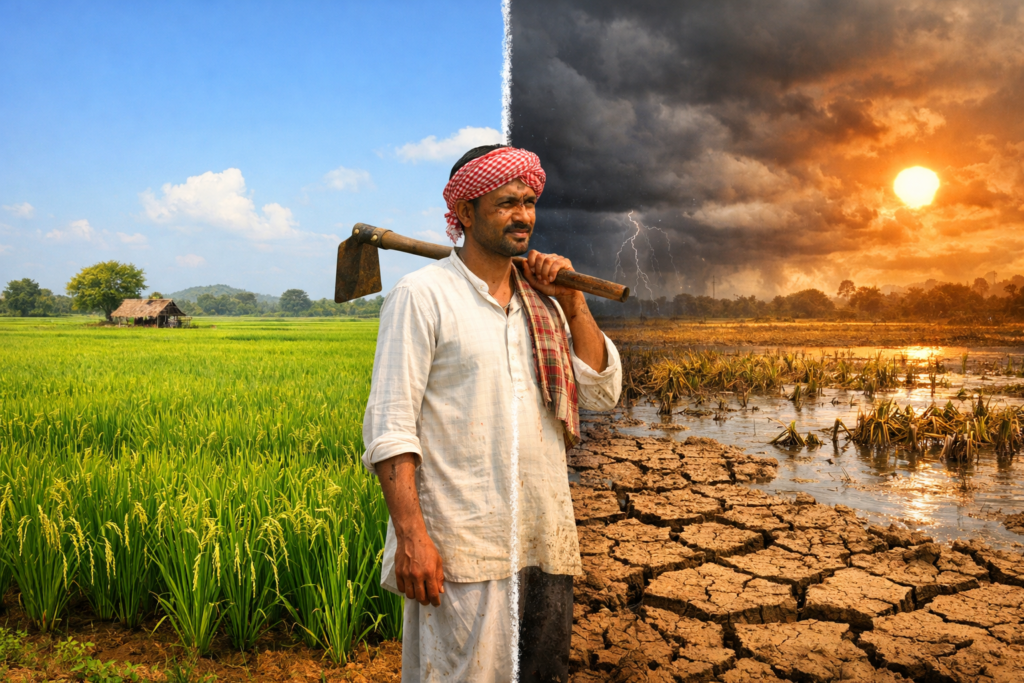
There was a time when seasons followed a predictable pattern. People could easily tell when the rains would arrive, when winter would begin, and when summer would reach its peak. Farmers planned their crops around these patterns, and daily life moved in harmony with nature’s rhythm.
However, in recent years, this balance has started to break down. The weather has become unpredictable—intense heat arriving earlier than expected, sudden heavy rainfall causing floods, and long dry spells damaging crops. These changes are not just environmental issues; they are deeply affecting people’s livelihoods, health, and future security across South Asia.
Climate change and rising natural disasters in South Asia are becoming one of the biggest challenges of our time.A Personal Memory of Changing Weather
In childhood, summers, monsoons, and winters arrived almost like clockwork. School vacations, festivals, and farming activities were all connected to these seasonal cycles. Farmers knew the right time to sow seeds, and families could prepare for the coming weather without much uncertainty.
Today, those patterns are no longer reliable. Some years, extreme heat starts as early as May, making outdoor work almost unbearable. In other years, the monsoon arrives late, and when it finally comes, it brings heavy and destructive rainfall that destroys crops within days. These experiences have made many people realize that the climate is changing in ways that cannot be ignored.
Impact on Both Villages and Cities
The effects of climate change are no longer limited to rural areas. Cities are also experiencing its consequences. In villages, farmers are struggling with irregular rainfall, droughts, and declining crop yields. Meanwhile, urban areas are facing rising temperatures, frequent waterlogging, and worsening air pollution.
Rapid urbanization has turned many cities into heat traps, where concrete structures absorb and retain heat. This makes heatwaves more intense and dangerous for residents. At the same time, rural communities are dealing with drying water sources and increasing costs of farming. In this way, climate change is affecting people across all regions and social groups.
The Early Signs People Ignored
In the beginning, these changes seemed small and insignificant. A slightly hotter summer or a delayed monsoon did not appear to be serious problems. Most people assumed that such variations were part of natural weather cycles and did not pay much attention to them.
But over time, these small changes turned into major challenges. Heatwaves began claiming lives, sudden floods destroyed homes and farmlands, and prolonged droughts deepened water shortages. What once seemed like minor irregularities have now become clear warnings of a much larger climate crisis.

Top Amazon Product
A premium and highly rated product built for excellent everyday performance. Ideal for users seeking durability, comfort, and top-quality Amazon satisfaction.
- Premium build quality
- Easy everyday use
- Top-rated by customers
- Excellent value for money
Understanding Climate Change in South Asia
South Asia is one of the regions in the world where the effects of climate change are being felt most strongly. The region’s large population, agriculture-based economies, and limited resources make it highly vulnerable to natural disasters. Changing weather patterns are leading to extreme heat, unexpected floods, and prolonged droughts, all of which directly affect people’s lives and livelihoods.
In many parts of South Asia, communities depend heavily on natural resources for survival. When the climate becomes unpredictable, it creates uncertainty in farming, water supply, and employment. As a result, climate change is not just an environmental issue here—it is also a social and economic challenge.
The Real Meaning of Climate Change
Climate change does not simply mean rising temperatures. It refers to long-term changes in weather patterns over decades or even centuries. These changes include shifts in rainfall patterns, rising sea levels, more frequent heatwaves, stronger storms, and increased intensity of natural disasters.
Human activities are a major cause of climate change. The excessive use of fossil fuels, deforestation, industrial pollution, and rapid urbanization have increased the amount of greenhouse gases in the atmosphere. These gases trap heat and cause the Earth’s temperature to rise gradually. This process leads to global warming, which in turn disrupts natural climate systems and increases the risk of extreme weather events.
Why South Asia Is One of the Most Vulnerable Regions
South Asia includes countries such as India, Pakistan, Bangladesh, Nepal, Sri Lanka, Bhutan, and the Maldives. The region is geographically diverse, with the Himalayan mountain range in the north, vast river systems in the plains, and coastal areas along the Indian Ocean and the Bay of Bengal. While this diversity makes the region rich in natural resources, it also increases its exposure to climate-related risks.
A large portion of the population in South Asia depends on agriculture, fishing, and other climate-sensitive activities. When rainfall becomes irregular or temperatures rise sharply, these livelihoods are directly affected. In addition, rapidly growing cities often lack strong infrastructure, making them more vulnerable to floods, heatwaves, and other climate-related disasters.
Geographic, Population, and Poverty-Related Factors
Several key factors contribute to South Asia’s vulnerability to climate change. One major factor is its geography. In the Himalayan region, glaciers are melting at an increasing rate, raising the risk of floods in downstream areas. At the same time, coastal regions are facing rising sea levels and stronger cyclones, which threaten homes, agriculture, and infrastructure.
Another important factor is the region’s large and dense population. High population density puts extra pressure on water, food, and energy resources. This makes it harder for governments and communities to cope with the impacts of climate change.
Poverty is also a critical issue. Many people in South Asia live with limited income and weak access to basic services such as healthcare, housing, and clean water. When a natural disaster occurs, they often lack the financial resources and support systems needed to recover. As a result, the impacts of climate change tend to be more severe and long-lasting in this region compared to wealthier parts of the world.
Rising Natural Disasters Across the Region
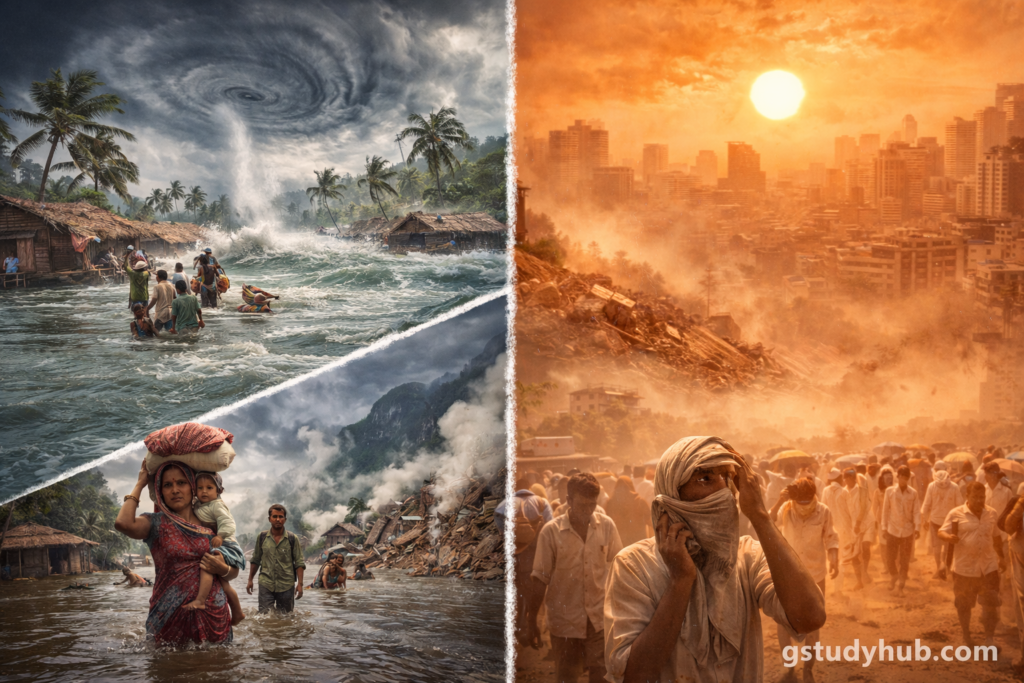
Over the past few decades, the number and intensity of natural disasters in South Asia have increased significantly. Experts believe that there is a direct link between climate change and rising natural disasters in south asia. Rising temperatures, irregular rainfall, sea-level rise, and melting glaciers are making disasters more frequent and more destructive.
These disasters are not only environmental problems. They are also affecting the economy, agriculture, public health, and daily life of millions of people. From floods and heatwaves to cyclones and landslides, the entire region is facing growing challenges that demand urgent attention and long-term solutions.
Flood Risks in India and Bangladesh
Flooding has become a recurring crisis in countries like India and Bangladesh. Major river systems such as the Ganges and Brahmaputra carry enormous amounts of water during the monsoon season, often overflowing and flooding nearby settlements.
Climate change and rising natural disasters in south asia have altered rainfall patterns, leading to sudden and intense downpours. These heavy rains increase the risk of flash floods, destroying homes, crops, and infrastructure.
In low-lying countries like Bangladesh, rising sea levels are making the situation even worse. Agricultural land gets submerged, freshwater sources become contaminated, and many families are forced to migrate in search of safer living conditions.
Changing River Courses and Rising Water Levels
Rapid melting of Himalayan glaciers and irregular rainfall are changing the flow patterns of major rivers. In many areas, rivers are shifting their courses, causing sudden and unexpected flooding.
This is a clear example of climate change and rising natural disasters in south asia. Villages located along riverbanks often face annual destruction of homes, roads, and farmlands. The economic losses are severe, and communities are left struggling to rebuild their lives every year.
Heatwaves in India and Pakistan
Heatwaves are becoming more frequent and intense in India and Pakistan. Summers are lasting longer, and temperatures are reaching dangerous levels, especially in urban and semi-urban areas.
Climate change and rising natural disasters in south asia are pushing temperatures to record highs, putting millions of people at risk. Outdoor workers, farmers, and daily wage laborers are the most vulnerable during extreme heat events.
Water shortages, increased electricity demand, and health problems such as heatstroke are becoming more common during these heatwaves.
Overheating Cities and the Heat Trap Effect
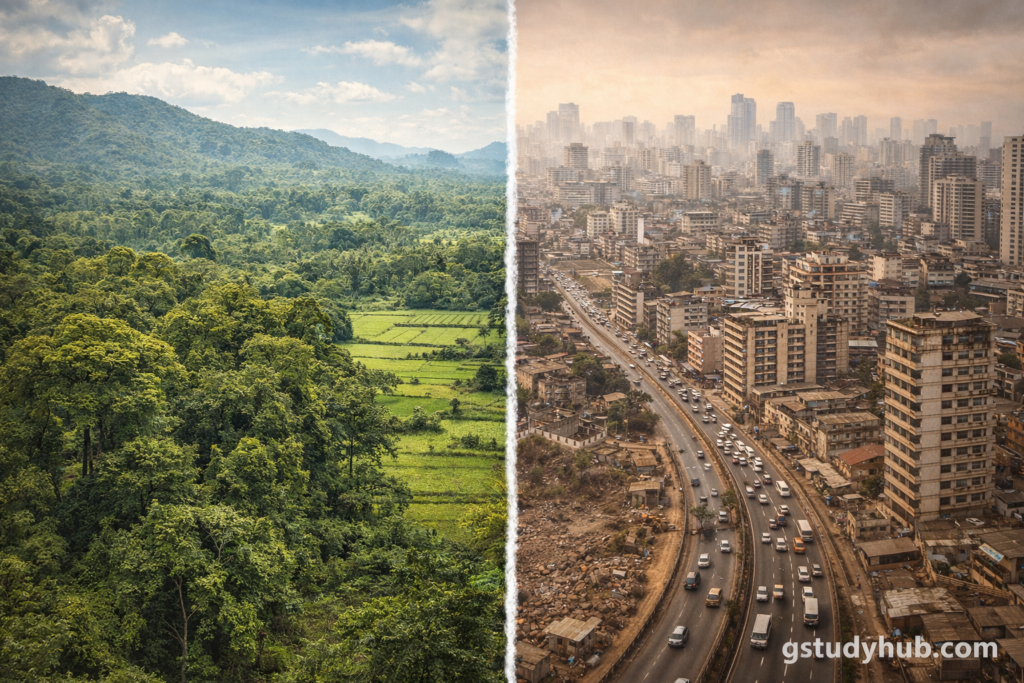
Rapid urbanization has turned many cities into concrete jungles. The lack of green spaces and trees causes cities to absorb and retain more heat, creating what is known as the urban heat island effect.
Climate change and rising natural disasters in south asia have intensified this problem. As a result, city residents face extreme temperatures, power outages, and serious health risks, especially during peak summer months.
Cyclones in the Bay of Bengal
The Bay of Bengal region is one of the most cyclone-prone areas in the world. Rising sea temperatures are making cyclones stronger and more destructive.
This is another clear example of climate change and rising natural disasters in south asia. Coastal areas of India and Bangladesh experience devastating storms almost every year.
Strong winds, heavy rainfall, and storm surges destroy homes, crops, and infrastructure, leaving thousands of families displaced and struggling to recover.
Biggest Challenges for Coastal Communities
Rising sea levels have become one of the biggest threats to coastal regions. In many areas, saltwater is entering farmlands and freshwater sources, making agriculture and drinking water supplies unsafe.
Because of climate change and rising natural disasters in south asia, coastal communities are facing frequent displacement and loss of livelihoods. If these trends continue, the problem could become even more severe in the coming decades.
Landslides in the Himalayan Regions
The Himalayan region is among the most climate-sensitive areas in South Asia. Melting glaciers, irregular rainfall, and excessive construction activities are increasing the frequency of landslides.
Climate change and rising natural disasters in south asia are clearly visible in these mountainous regions, where even moderate rainfall can trigger large and destructive landslides.
Fragile Mountains and Growing Risks
Mountain ecosystems are naturally fragile. When deforestation, road construction, and mining activities increase, the slopes become even more unstable.
Climate change, with its heavy rains and temperature fluctuations, further increases these risks. As a result, landslides are becoming more frequent and more dangerous, threatening both lives and infrastructure in the Himalayan region.

Top Amazon Product
A dependable and well-built product designed for consistent everyday performance. Ideal for users seeking quality, durability, and trusted Amazon satisfaction.
- Premium build quality
- Easy everyday use
- Highly rated by customers
- Great value for money
The Human Stories Behind the Statistics
When we talk about climate change and rising natural disasters in south asia, we often focus on numbers, reports, and economic losses. But behind these statistics are millions of real human stories— farmers losing their crops, families losing their homes, and children growing up in uncertain conditions.
Climate change and rising natural disasters in south asia are not just environmental issues. They are deeply connected to human survival, livelihoods, and the future of entire communities. Understanding these personal struggles helps us realize the true cost of climate change.
Farmers Losing Crops to Unpredictable Rainfall
Most farmers in South Asia depend heavily on rainfall for their crops. In the past, the monsoon followed a relatively predictable pattern, allowing farmers to plan their sowing and harvesting seasons. But today, those patterns are no longer reliable.
Sometimes the rains arrive too early, and sometimes they are delayed for weeks. In many cases, sudden heavy rainfall destroys entire crops within a few days. This uncertainty has made farming more risky and less profitable.
For many small farmers, a single failed crop means falling into debt or losing their land. Climate change and rising natural disasters in south asia have turned agriculture into a daily gamble, where the future depends on unpredictable weather.
Families Displaced by Floods
Every year, floods force thousands of families to leave their homes across South Asia. Villages located near rivers are especially vulnerable, as rising water levels can submerge entire settlements within hours.
When floods strike, families lose not only their homes but also their livelihoods. Crops are destroyed, livestock is lost, and small businesses come to a halt. Many families end up living in temporary shelters for months, struggling with limited access to food, clean water, and healthcare.
Children Growing Up Without Stability
Children are among the most affected victims of natural disasters. When families are repeatedly displaced, children’s education is disrupted. They often have to leave school, and in some cases, they are forced to work at a young age.
Living in unstable conditions, without proper housing or healthcare, affects their physical and mental development. Climate change and rising natural disasters in south asia are creating a generation of children who grow up without the security and opportunities they deserve.
Workers Struggling in Extreme Heat
During heatwaves, daily wage workers are among the most vulnerable groups. Construction workers, farmers, and street vendors often have no choice but to work under the scorching sun.
Extreme heat increases the risk of heatstroke, dehydration, and other serious health problems. However, economic pressure forces many workers to continue working despite these dangerous conditions.
This situation clearly shows that climate change and rising natural disasters in south asia affect the poorest sections of society the most. For them, every change in the weather brings a new struggle for survival.
The Impact of Climate Change on Daily Life
The effects of climate change are not limited to major disasters like floods or cyclones. They are increasingly visible in the daily lives of ordinary people across the region. Climate change and rising natural disasters in south asia are causing water shortages, rising food prices, health problems, and economic instability.
These changes affect everyone, but the poor and middle-class populations feel the impact the most. With limited resources and savings, even small disruptions in weather or prices can create serious challenges for their survival.
Water Scarcity and Drought
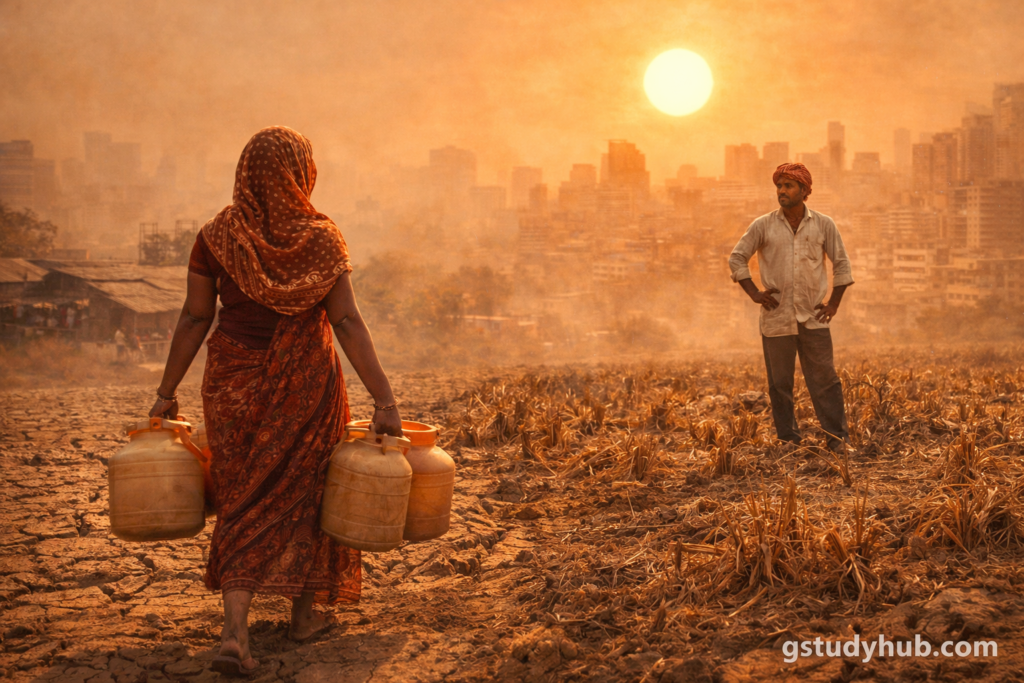
Water scarcity is becoming a serious problem in many parts of South Asia. Irregular rainfall and prolonged droughts are causing rivers, ponds, and groundwater levels to decline rapidly.
In several rural areas, people have to travel long distances just to collect drinking water. For farming communities, this situation is even more difficult. Without sufficient water, crops fail and farmers lose their income.
This clearly shows how climate change and rising natural disasters in south asia are directly affecting daily life, especially in water-dependent regions.
Rising Food Prices and Crop Failures
Climate change has a direct impact on agricultural production. Droughts, floods, and irregular rainfall are making farming more unpredictable. When crops are destroyed, the supply of food in the market decreases, and prices start to rise.
This increase in food prices affects poor and middle-class families the most, because a large portion of their income is spent on food. In this way, climate change and rising natural disasters in south asia are not only environmental problems but also major economic challenges.
Impact on Rural Economies
Rural economies are largely dependent on agriculture. When crops fail repeatedly, farmers lose their income, and local markets also suffer.
Many farmers fall into debt and are forced to migrate to cities in search of work. This reduces employment opportunities in rural areas and creates social and economic imbalances.
Such situations highlight the deep economic impact of climate change and rising natural disasters in south asia on rural communities.
Health Risks from Heat and Pollution
Rising temperatures and increasing pollution are directly affecting public health. During heatwaves, cases of heatstroke, dehydration, and heart-related illnesses increase rapidly.
In cities, air pollution worsens respiratory problems such as asthma and lung diseases. Elderly people, children, and outdoor workers are the most vulnerable groups.
Hospitals often experience a surge in patients during extreme weather conditions, putting additional pressure on the healthcare system. This clearly demonstrates how climate change and rising natural disasters in south asia are impacting everyday life and human health.

Top Amazon Product
A dependable and quality product designed for reliable everyday performance. Ideal for users seeking durability, value, and trusted Amazon satisfaction.
- Premium build quality
- Easy everyday use
- Highly rated by customers
- Great value for money
Economic and Social Consequences
The impact of climate change is not limited to the environment. Climate change and rising natural disasters in south asia are also affecting the economic stability and social structure of the region. Floods, droughts, heatwaves, and cyclones are damaging roads, homes, schools, and hospitals. At the same time, many people are being forced to leave their homes in search of safer and more stable lives.
Damage to Infrastructure
Natural disasters often cause severe damage to essential infrastructure. Heavy rainfall and floods can destroy roads, wash away bridges, and disrupt electricity supply. Cyclones in coastal areas damage homes, schools, hospitals, and communication systems.
When infrastructure is damaged, economic activities slow down or stop completely. Transport, trade, and employment opportunities are affected. As a result, climate change and rising natural disasters in south asia directly slow down economic growth and development in the region.
Migration from Villages to Cities
When crops fail repeatedly or water shortages become severe, rural families often have no choice but to leave their villages. They migrate to cities in search of better jobs and safer living conditions.
This migration puts additional pressure on urban areas. The number of slums increases, and basic services such as water, housing, and healthcare become harder to manage. As a result, social inequality and unemployment continue to grow.
Climate Refugees in South Asia
The number of people forced to leave their homes because of climate-related disasters is rising rapidly. These people are often referred to as “climate refugees.”
In coastal regions, rising sea levels are flooding villages. In riverbank areas, frequent floods are destroying homes. In drought-prone regions, livelihoods are disappearing. Because of climate change and rising natural disasters in south asia, this problem is expected to become even more serious in the coming years.
Impact on Education and Employment
Natural disasters also affect education and employment opportunities. When floods or cyclones occur, schools are often converted into temporary relief camps. As a result, children’s education is interrupted.
Employment opportunities are also reduced. Agriculture, fishing, and small businesses often come to a halt after disasters. Many people lose their livelihoods and are forced to look for work in other regions.
In this way, climate change and rising natural disasters in south asia are creating long-term economic and social challenges, increasing inequality and insecurity across the region.
Why Natural Disasters Are Increasing
In recent years, the number and intensity of natural disasters across South Asia have increased significantly. Floods, heatwaves, cyclones, and landslides are now occurring more frequently and with greater destructive power. One of the main reasons behind this trend is the growing link between climate change and rising natural disasters in south asia.
Environmental imbalance, deforestation, rapid urbanization, and weak disaster management systems are making these problems even more severe. Understanding these causes is essential to finding long-term solutions and reducing future risks.
Rising Global Temperatures
The continuous rise in global temperatures is one of the biggest reasons behind the increase in natural disasters. Industrial activities, excessive use of fossil fuels, and pollution have increased the amount of greenhouse gases in the atmosphere.
These gases trap heat and prevent it from escaping into space, causing the Earth’s temperature to rise gradually. This rise in temperature disrupts weather patterns, leading to more heatwaves, droughts, and heavy rainfall events.
This situation clearly shows the seriousness of climate change and rising natural disasters in south asia, where even small temperature increases can affect millions of lives.
Deforestation and Urban Expansion
Deforestation and rapid urban growth play a major role in increasing natural disasters. When forests are cleared to build roads, buildings, and industrial zones, the natural balance of the environment is disturbed.
Trees help hold the soil together and allow rainwater to seep into the ground. When forests disappear, soil erosion increases, and the risk of floods and landslides becomes higher. This is another major factor behind climate change and rising natural disasters in south asia.
Concrete Cities and Vanishing Green Spaces
Rapid urbanization has turned many green areas into concrete landscapes. Open land and trees have been replaced by roads, buildings, and parking areas.
As a result, rainwater cannot easily soak into the ground and instead collects on streets, causing urban flooding. At the same time, the lack of trees increases city temperatures, making heatwaves more dangerous.
This situation clearly reflects the urban impact of climate change and rising natural disasters in south asia.
Weak Disaster Management and Lack of Awareness
Despite the growing threat of natural disasters, disaster management systems in many parts of South Asia remain weak. Lack of early warning systems, safe shelters, and emergency resources often worsens the impact of disasters.
In addition, public awareness is limited. Many communities do not know what steps to take during emergencies or how to protect themselves.
When the effects of climate change and rising natural disasters in south asia increase, weak management systems and lack of awareness make the damage even more severe. Strengthening disaster preparedness and increasing public awareness are therefore essential steps for the future.
Lessons Learned from Recent Disasters
In recent years, South Asia has faced several major natural disasters. Floods, heatwaves, cyclones, and landslides have affected millions of lives across the region. These events have made it clear that climate change and rising natural disasters in south asia are not just future threats, but present-day realities.
Recent disasters have provided many important lessons. They have shown that emergency relief alone is not enough. Early preparation, strong infrastructure, and public awareness are equally important to reduce losses and save lives.
Lessons from Floods and Heatwaves
Recent floods and heatwaves have acted as strong warnings for both governments and communities. During floods, areas with proper evacuation plans and emergency support systems experienced fewer casualties. However, regions with poor preparation faced much greater damage.
Similarly, during heatwaves, water shortages, power outages, and lack of healthcare facilities increased the suffering of people. These experiences have shown that climate change and rising natural disasters in south asia require long-term planning and stronger infrastructure to protect communities.
The Importance of Early Warning Systems
Early warning systems play a crucial role in reducing the damage caused by natural disasters. If people receive timely information, they can move to safer places and protect their lives and property.
In many coastal areas, early cyclone warnings have helped authorities evacuate millions of people before storms made landfall. As a result, the number of casualties was significantly reduced.
This shows that in the era of climate change and rising natural disasters in south asia, effective warning systems can become one of the most powerful tools for saving lives.
Community-Based Disaster Preparedness
Disaster management is not only the responsibility of governments. Community participation is equally important. When local people are prepared to respond to disasters, the overall damage can be reduced significantly.
At the community level, forming local response teams, identifying safe shelters, and conducting regular drills can make a big difference during emergencies.
With the growing threat of climate change and rising natural disasters in south asia, community awareness and preparedness can become the most effective ways to protect lives and livelihoods in the future.

Reliable Amazon Product for Daily Use
This is a dependable and practical product designed for everyday use. It focuses on functionality, ease of use, and value for money, making it a suitable choice for users who want a simple, reliable solution without paying a premium price.
- Solid build quality for regular use
- Simple and user-friendly design
- Good customer feedback and ratings
- Affordable option with trusted Amazon support
Solutions and Hope for the Future
Although climate change and rising natural disasters have become major challenges for South Asia, solutions are still possible. To reduce the effects of climate change and rising natural disasters in south asia, governments, communities, and individuals must work together.
Effective policies, sustainable technologies, and environmentally responsible lifestyles can help build a safer future. If timely action is taken, it is possible not only to reduce the damage caused by disasters but also to create a more balanced and resilient society.
Sustainable Farming and Water Management
A large part of South Asia’s population depends on agriculture. Therefore, adopting sustainable farming practices is essential. Farming methods that use less water, maintain soil quality, and protect the environment can provide long-term benefits.
Techniques such as drip irrigation, rainwater harvesting, and the use of drought-resistant crops can help farmers cope with the effects of climate change. These measures can significantly reduce the impact of climate change and rising natural disasters in south asia on agricultural communities.
Green Cities and Renewable Energy
As cities continue to grow rapidly, making them environmentally friendly has become a major priority. Green cities include more trees, open spaces, and energy-efficient buildings. This helps lower temperatures and reduce pollution.
The use of renewable energy sources such as solar and wind power can reduce dependence on fossil fuels. This lowers greenhouse gas emissions and slows the pace of climate change. Such steps play a crucial role in addressing climate change and rising natural disasters in south asia over the long term.
Small Lifestyle Changes That Make a Big Difference
Fighting climate change does not depend only on large government policies. Small individual actions can also make a big difference. Saving energy, using water responsibly, reducing plastic use, and choosing public transport are simple steps that benefit the environment.
When millions of people adopt these small changes, their combined impact can be significant. Such collective efforts can help reduce the effects of climate change and rising natural disasters in south asia.
Government Policies and Regional Cooperation
Climate change is a global problem, but solutions must also come from local and regional efforts. Countries in South Asia need to strengthen cooperation and develop shared strategies.
Joint efforts in water management, early warning systems, and environmental protection can help the region deal with climate-related challenges. Governments must invest more in clean energy, green infrastructure, and strong disaster management systems.
Such coordinated actions can reduce the impact of climate change and rising natural disasters in south asia and ensure a safer, more stable future for millions of people.
https://gsstudyhub.com/wildlife-and-natural-resource-conflicts/What Individuals Can Do
Climate change is not only the responsibility of governments and large corporations. Ordinary people also play an important role in protecting the environment. With the growing threat of climate change and rising natural disasters in south asia, every individual can contribute by taking small but meaningful steps.
When millions of people adopt environmentally responsible habits, their combined efforts can create a powerful positive impact on society and future generations.
Small Actions with Big Impact
Many people believe that individual actions are too small to make a difference in a global problem like climate change. However, the truth is that small actions, when taken by large numbers of people, can lead to major change.
Saving energy, using water wisely, planting trees, and separating waste are simple steps that help protect the environment. These actions can play an important role in reducing the effects of climate change and rising natural disasters in south asia.
Daily Habits to Reduce Carbon Footprint
Our everyday habits have a direct impact on the environment. By making small changes, we can significantly reduce our carbon footprint.
- Switch off electrical devices when not in use
- Use public transport, cycling, or walking whenever possible
- Reduce the use of plastic products
- Conserve water in daily activities
- Plant and care for trees and plants
When these habits are adopted by millions of people, their combined effect can be powerful. Such collective efforts can gradually reduce the impact of climate change and rising natural disasters in south asia.
Community Awareness and Education
Community awareness is essential for dealing with climate change. When people understand its causes and consequences, they are more likely to act responsibly.
Environmental education can be promoted through schools, colleges, and social organizations. Cleanliness drives, tree-planting campaigns, and water conservation programs can encourage active community participation.
Such efforts can create long-term positive results in reducing the effects of climate change and rising natural disasters in south asia. When communities are aware and prepared, they can face challenges with greater strength and resilience.
Conclusion: South Asia at a Crossroads
South Asia today stands at a critical turning point, where important decisions about the future must be made. Climate change and rising natural disasters in south asia have repeatedly warned the region that without timely and effective action, the situation could become far more severe in the coming decades.
Rising temperatures, sudden floods, powerful cyclones, and prolonged droughts are clear signs that the natural balance is shifting. This is not just an environmental issue; it is a matter that affects livelihoods, public health, and the future of coming generations.
The Choice Between Crisis and Change
Today, South Asia faces two possible paths. The first path is one where environmental concerns are ignored and natural resources continue to be overused. Following this path will likely lead to more disasters, economic losses, and social instability.
The second path is one where sustainable development, clean energy, and environmental protection become top priorities. If governments, communities, and individuals work together, the impact of climate change and rising natural disasters in south asia can be reduced. This path may be challenging, but it offers the promise of a safer and more stable future.
A Message of Responsibility and Hope
The climate crisis is a shared responsibility. Every individual, community, and nation has a role to play. Small actions, such as saving energy, conserving water, and planting trees, can become the starting point for meaningful change.
South Asia’s greatest strength lies in its young population and strong community spirit. If these strengths are directed toward sustainable goals, the region can transform the challenges of climate change and rising natural disasters in south asia into opportunities for growth and resilience.
This is not a time for fear, but a time for responsibility and hope. With the right decisions and collective action, South Asia can move toward a safer, more balanced, and prosperous future.
Frequently Asked Questions (FAQ)
What are the main natural disasters in South Asia?
The most common natural disasters in South Asia include floods, heatwaves, cyclones, droughts, and landslides. The region’s diverse geography, which includes mountains, coastal areas, and major river systems, makes it highly vulnerable to such events. Climate change and rising natural disasters in south asia have increased both the frequency and intensity of these disasters.
Why is this region so vulnerable to climate change?
A large portion of South Asia’s population depends on agriculture and natural resources. High population density, poverty, weak infrastructure, and geographic diversity make the region more sensitive to climate-related risks. As a result, the impact of climate change and rising natural disasters in south asia is more visible and severe here.
How does climate change affect farmers?
Climate change is altering rainfall patterns and increasing the risk of droughts and floods. Unpredictable weather conditions damage crops and reduce farm productivity. As a result, farmers often face financial losses and may fall into debt. This is one of the most direct impacts of climate change and rising natural disasters in south asia.
Can natural disasters be prevented?
Natural disasters cannot be completely prevented, but their impact can be reduced. Better disaster management, early warning systems, strong infrastructure, and environmental protection measures can help minimize damage. These steps are essential to deal with climate change and rising natural disasters in south asia.
What can individuals do to fight climate change?
Individuals can take small but meaningful steps to help fight climate change. Saving energy, conserving water, planting trees, and reducing plastic use are simple actions that have a positive environmental impact. When more people adopt such habits, the overall effects of climate change and rising natural disasters in south asia can be reduced.

Top Rated Amazon Product
This is a highly rated and well-reviewed product designed to deliver reliable everyday performance. It combines durability, comfort, and value, making it a smart choice for users who want long-term satisfaction with trusted Amazon quality.
- Strong and durable build quality
- User-friendly design for daily use
- Excellent customer ratings and reviews
- Good balance of price and performance
References
- IPCC – Climate Change Assessment Reports
- UNEP – Climate Change Reports
- World Bank – South Asia Climate Studies
- Asian Development Bank (ADB) Reports
- National Disaster Management Authority (NDMA), India
- India Meteorological Department (IMD)
- World Health Organization (WHO)
- FAO – Agriculture and Climate Change Reports