
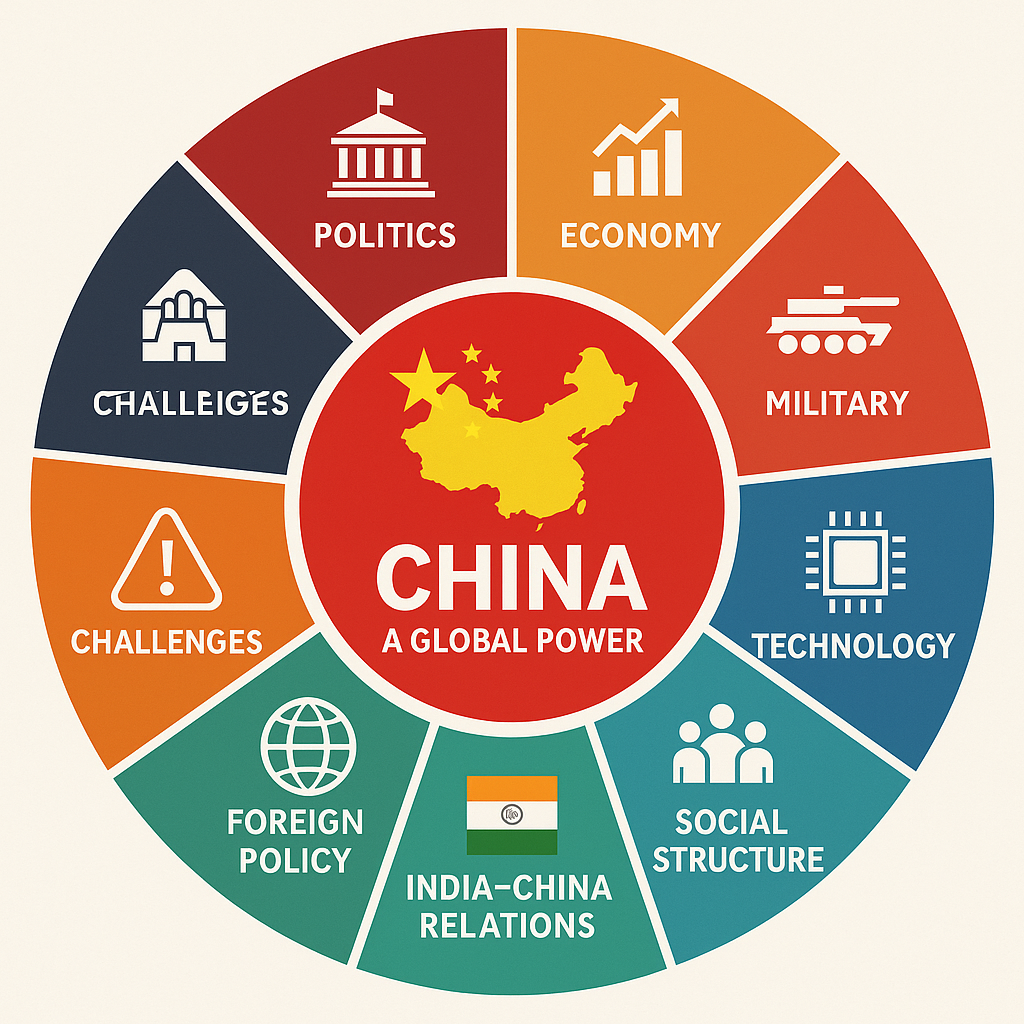
China 2025: A Powerful Yet Challenging Global Force
1. Introduction
China, officially the People’s Republic of China (PRC), stands as one of the most influential nations of the 21st century. With its massive population, expanding economy, growing military capabilities, and technological ambition, the East Asian power plays a decisive role in shaping global politics and economics.
2. Historical Background
The civilization of this region dates back nearly 4,000 years to the Xia Dynasty. Successive dynasties such as Han, Tang, Ming, and Qing enriched its culture, governance, science, and philosophy. After the 1911 revolution ended imperial rule, the Republic was formed. In 1949, Mao Zedong established a communist state under the Communist Party.
3. Political Structure and Governance
The People’s Republic operates under a one-party communist framework led by the Communist Party of China (CPC). The National People’s Congress (NPC) is the highest state institution. Xi Jinping currently serves as President and Party General Secretary, consolidating political authority within the central leadership.
4. Economic Development and Policies
The country possesses the world’s second-largest economy. Market reforms initiated by Deng Xiaoping in 1978 transformed a centrally planned system into a socialist market economy.
Main Economic Drivers
- Large-scale manufacturing
- Export-oriented industries
- Digital and technology platforms (Huawei, Tencent, Alibaba)
- Belt and Road Initiative (BRI)
However, rising debt, inequality, demographic pressure, and trade tensions remain serious structural challenges.
5. Military Strength and Strategic Vision
The People’s Liberation Army (PLA) ranks among the largest armed forces globally. Significant investments in cyber warfare, artificial intelligence, hypersonic missiles, naval expansion, and space capabilities demonstrate long-term strategic planning.
6. Technology and Scientific Innovation
- Global leadership in 5G infrastructure
- Tiangong Space Station and lunar missions
- Rapid AI and quantum computing development
- Dominance in fintech and digital commerce
7. Society and Demographic Shifts
With a population exceeding 1.4 billion, demographic transition is now a critical issue. The former One-Child Policy (1979–2015) significantly altered population growth patterns, resulting in ageing and workforce concerns.
8. Human Rights and Governance Concerns
- Issues in Hong Kong and Xinjiang
- Strict internet regulation under the “Great Firewall”
- Limited press and political dissent
9. Foreign Policy and Global Diplomacy
- Expansion through Belt and Road Initiative
- Strategic investments across Africa and Asia
- South China Sea territorial disputes
- Competitive relations with the US, India, Japan, and Australia
10. India–China Relations
- Border tensions including Doklam and Galwan Valley
- Strong trade ties but significant imbalance
- Strategic rivalry in the Indo-Pacific
11. Environmental and Climate Responsibility
- Largest global carbon emitter
- Major solar and wind energy investments
- Serious pollution and water scarcity concerns
12. Cultural Influence and Soft Power
- Spread of Mandarin language
- Martial arts and global cuisine popularity
- Confucius Institutes worldwide
13. Major Contemporary Challenges
- Economic slowdown
- Ageing population
- Taiwan tensions
- Strategic distrust in Western alliances
14. Conclusion
China represents both opportunity and uncertainty in global affairs. Its powerful economy, technological ambition, and military modernization have elevated it to superpower status. Yet structural weaknesses, demographic shifts, and geopolitical rivalry pose long-term risks.
The future trajectory of this Asian giant will significantly influence global stability, economic trends, and strategic balance in the decades ahead.
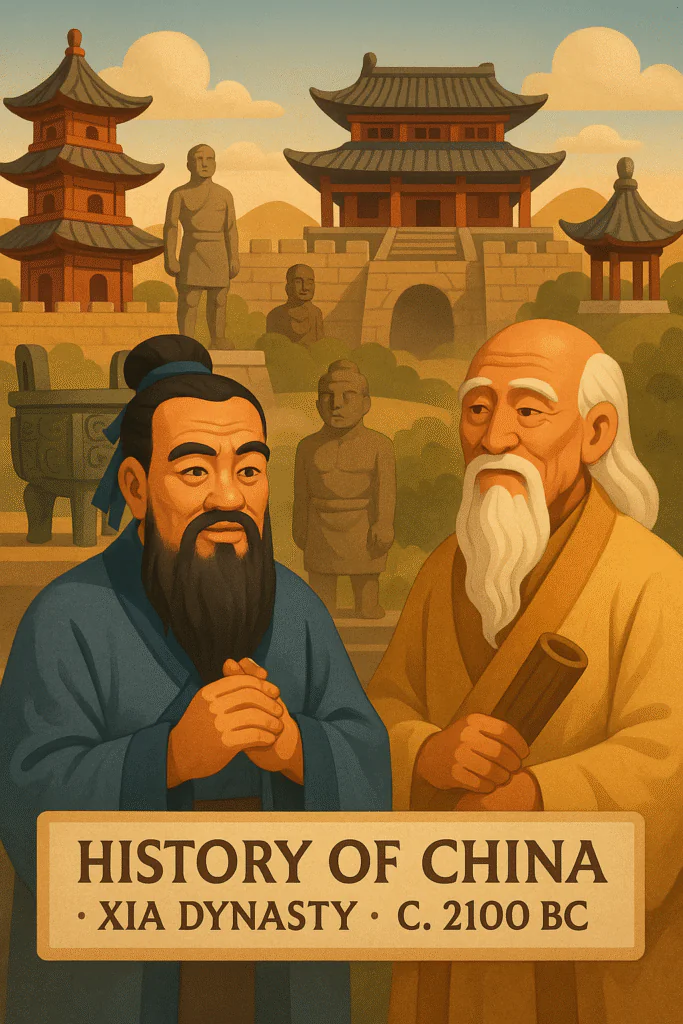
Historical Background of China: From Ancient Civilization to Global Power
The history of China represents one of the world’s oldest continuous civilizations. Its origins are traditionally traced to around 2100 BCE with the Xia Dynasty. Subsequent dynasties such as the Shang and Zhou laid strong philosophical, cultural, and administrative foundations. Thinkers like Confucius and Lao Tzu shaped ethical and political thought — ideas that still influence governance and social values today.
2.1 Imperial Era and Political Unification
The imperial period formally began with the Qin Dynasty (221–206 BCE), which unified the warring states for the first time under a centralized administration. Emperor Qin Shi Huang standardized currency, measurements, and script, while initiating early construction of what later became the Great Wall.
Later dynasties — including Han, Tang, Song, Yuan, Ming, and Qing — expanded cultural influence, technological innovation, military organization, and commercial networks. The Tang and Ming periods are widely regarded as “Golden Ages,” marked by flourishing Silk Road trade linking East Asia with Central Asia, India, and Europe.
2.2 Foreign Intervention and Internal Decline
The 19th century brought significant instability. Western imperial powers, particularly Britain, weakened sovereignty through the Opium Wars (1839–42; 1856–60). Unequal treaties forced the opening of treaty ports and increased foreign influence.
Simultaneously, major uprisings such as the Taiping Rebellion and Boxer Rebellion further weakened the Qing Dynasty, accelerating imperial collapse.
2.3 Revolution, Republic, and Communist Victory
The 1911 Revolution ended over two millennia of imperial rule. The Republic of China was established under Dr. Sun Yat-sen. However, political fragmentation continued, with rivalry between the Kuomintang (KMT) and the Communist Party.
Following Japan’s invasion (1937–45) and the end of World War II, Mao Zedong led the Communist Party to victory. In 1949, the People’s Republic of China was proclaimed, while the KMT government retreated to Taiwan.
2.4 Reform Era and Global Rise
Mao’s campaigns — including the Great Leap Forward and the Cultural Revolution — caused major social and economic disruptions. After 1978, Deng Xiaoping introduced market-oriented reforms and global integration.
This transformation triggered rapid industrialization, export expansion, urbanization, and technological growth. By the 21st century, the nation emerged as a central force in global politics, trade, and security affairs.
Political Structure and Governance Model
The political system operates under a single-party structure, where ultimate authority rests with the Communist Party of China (CPC). The model emphasizes centralized leadership, long-term strategic planning, and political stability over multiparty competition.
3.1 The Communist Party of China (CPC)
Since 1949, the CPC has remained the dominant ruling institution. It functions not only as a political party but as the core authority over state administration, the military, judiciary, and major economic sectors.
Key Party Institutions
- Central Committee: Elected during the National Congress every five years.
- Politburo: A 25-member body shaping strategic decisions.
- Politburo Standing Committee: The most powerful leadership circle, typically 7 members.
3.2 Supreme Leadership Structure
Xi Jinping simultaneously holds three critical positions:
- President (Head of State)
- General Secretary of the CPC
- Chairman of the Central Military Commission
The consolidation of these roles reflects highly centralized authority. In 2018, constitutional amendments removed presidential term limits, allowing extended leadership continuity.
3.3 Government Framework
National People’s Congress (NPC)
The NPC is formally the highest legislative body. In practice, it ratifies policy decisions developed by Party leadership.
State Council
The State Council serves as the executive branch and is led by the Premier. Currently, Li Qiang holds this position.
Local Administration
Governance operates at provincial, municipal, and county levels. However, all local authorities ultimately remain accountable to central Party leadership.
3.4 Military Authority and Civil Liberties
The People’s Liberation Army (PLA) reports directly to the Central Military Commission of the CPC, ensuring military loyalty to Party leadership.
Political dissent, independent media, and unrestricted religious expression remain limited. Digital monitoring systems and internet regulation policies are justified as tools for maintaining stability and national security.
3.5 Defining Features of the Governance Model
- Centralized Decision-Making
- Development-Focused Authoritarianism
- Strong State Nationalism
- Judiciary Aligned with Party Policy
This framework is officially described as “Socialism with Chinese Characteristics.” It blends market-driven growth with centralized political authority.
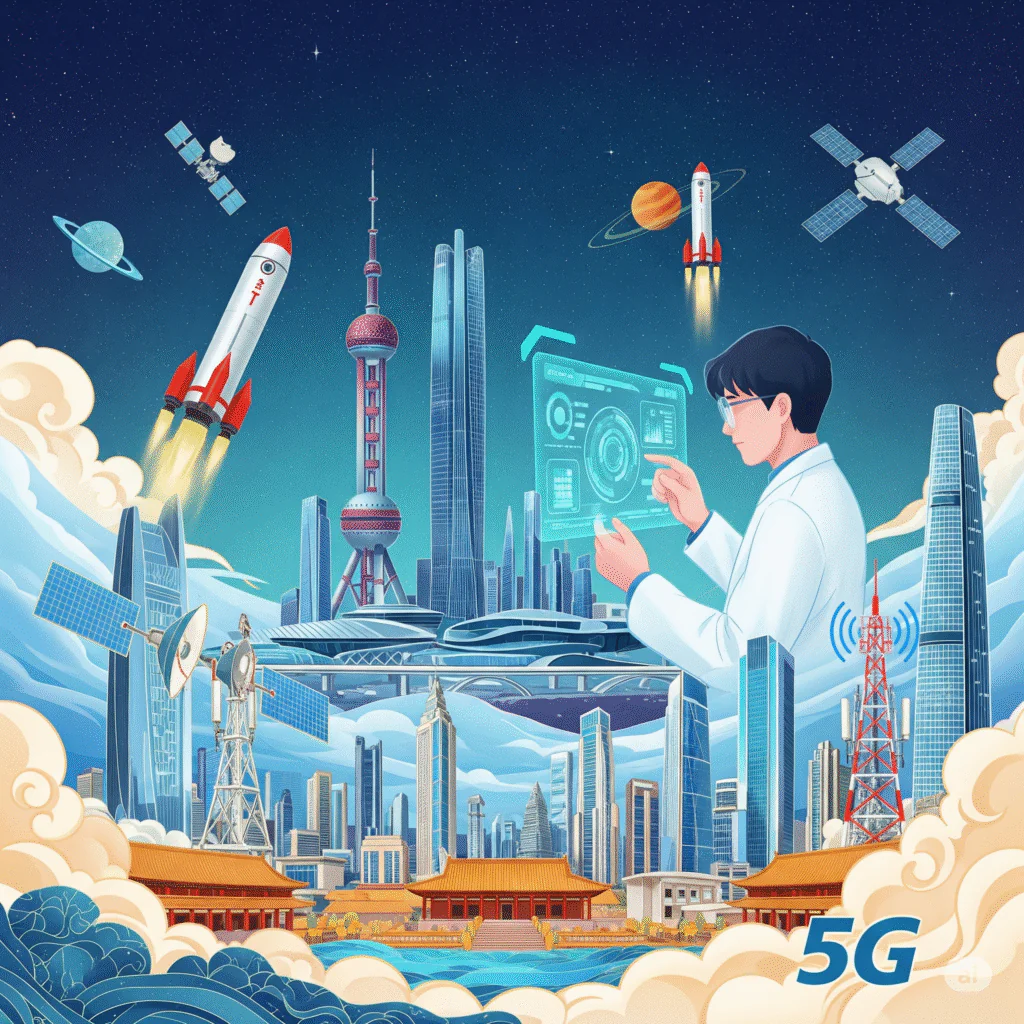
4. Economic Development and Strategic Policies
The economic transformation of China stands among the most dramatic development stories of the modern era. From a largely agrarian and centrally controlled system in the mid-20th century, the country evolved into a manufacturing, technological, and financial powerhouse within four decades. This transition was driven by pragmatic reforms, state planning, global trade integration, and gradual market liberalization.
4.1 Transition: From Central Planning to Market Socialism
Following the establishment of the People’s Republic in 1949, a Soviet-style planned economy was adopted. Campaigns such as the Great Leap Forward (1958–62) and the Cultural Revolution (1966–76) caused severe economic disruption and institutional instability.
A decisive turning point came in 1978 when Deng Xiaoping introduced the “Reform and Opening-Up” policy. Major reforms included:
- Replacement of collective farming with the household responsibility system
- Creation of Special Economic Zones (SEZs) such as Shenzhen
- Encouragement of foreign direct investment (FDI)
- Gradual restructuring of state-owned enterprises
This hybrid framework — officially termed “Socialism with Chinese Characteristics” — combined market incentives with continued political oversight.
4.2 Phases of Economic Expansion
Industrial Surge (1980–2000)
- Rapid growth in steel, textiles, construction, and heavy industry
- Low-cost labor positioned the country as the “Factory of the World”
Export-Led Global Integration (2000–2015)
- World Trade Organization (WTO) membership in 2001
- Integration into global supply chains
- Massive accumulation of foreign exchange reserves
Innovation and Domestic Consumption Era (2015–Present)
- Shift toward services and consumer-driven growth
- “Made in China 2025” strategy focusing on AI, semiconductors, EVs, and biotechnology
- Expansion of digital platforms and fintech ecosystems
4.3 Belt and Road Initiative (BRI)
Launched in 2013, the Belt and Road Initiative represents a long-term infrastructure and connectivity strategy. Its objectives include:
- Building ports, railways, and highways across Eurasia and Africa
- Strengthening trade corridors
- Expanding economic and geopolitical influence
While the initiative provides infrastructure financing to developing nations, critics argue that certain projects may increase debt dependency.
4.4 Regulatory Model and State Capitalism
- Five-Year Plans: Outline strategic national priorities.
- State Control of Key Sectors: Energy, banking, telecom, and defense remain under strong public ownership.
- Private Sector Dynamism: Firms such as Alibaba and Tencent operate globally but remain subject to regulatory oversight.
4.5 Structural Challenges
- Ageing population and shrinking workforce
- Real estate sector instability
- Technology export restrictions from Western nations
- Rising public and corporate debt
Economic Outlook
The hybrid development model has delivered sustained growth and poverty reduction, yet structural imbalances and geopolitical tensions pose long-term risks. Future stability will depend on innovation capacity, financial reform, and demographic adaptation.
5. Military Power and Strategic Modernization
The People’s Liberation Army (PLA) has undergone rapid modernization over the past two decades. Once focused primarily on territorial defense, it now operates with broader regional and global objectives.
5.1 Organizational Structure of the PLA
- PLA Ground Force (PLAGF)
- PLA Navy (PLAN)
- PLA Air Force (PLAAF)
- PLA Rocket Force (PLARF)
- Strategic Support Force (Cyber & Space Operations)
The military answers directly to the Central Military Commission, chaired by the top Party leadership — ensuring institutional loyalty to political authority.
5.2 Defense Spending and Modernization Goals
- Defense budget exceeding $230 billion (2024 estimate)
- Goal of building a “world-class military” by 2049
Modernization Priorities
- Aircraft carriers and blue-water naval expansion
- 5th-generation stealth aircraft (J-20)
- Hypersonic missile systems
- Cyber warfare and AI-enabled battlefield systems
5.3 Strategic Doctrine
The guiding principle remains “Active Defense,” but contemporary doctrine emphasizes deterrence, rapid response, and technology-driven warfare.
- A2/AD Strategy: Restricting adversarial military access in nearby maritime zones.
- Intelligentized Warfare: Integration of AI, data dominance, and automation.
- Assertive Diplomacy: More vocal strategic positioning in international disputes.
5.4 Nuclear Capabilities
The country maintains a nuclear triad:
- Land-based intercontinental ballistic missiles (ICBMs)
- Submarine-launched ballistic missiles (SLBMs)
- Air-delivered nuclear capability
Recent arsenal expansion has intensified global strategic competition.
5.5 Regional and Global Presence
- Increased naval activity in the South China Sea
- Frequent air and naval exercises near Taiwan
- Infrastructure and military logistics expansion in the Indian Ocean
- Participation in UN peacekeeping operations
Strategic Outlook
Military modernization now supports broader geopolitical ambitions. If current trends continue, the PLA may rival established Western powers in advanced warfare capabilities within the coming decades.
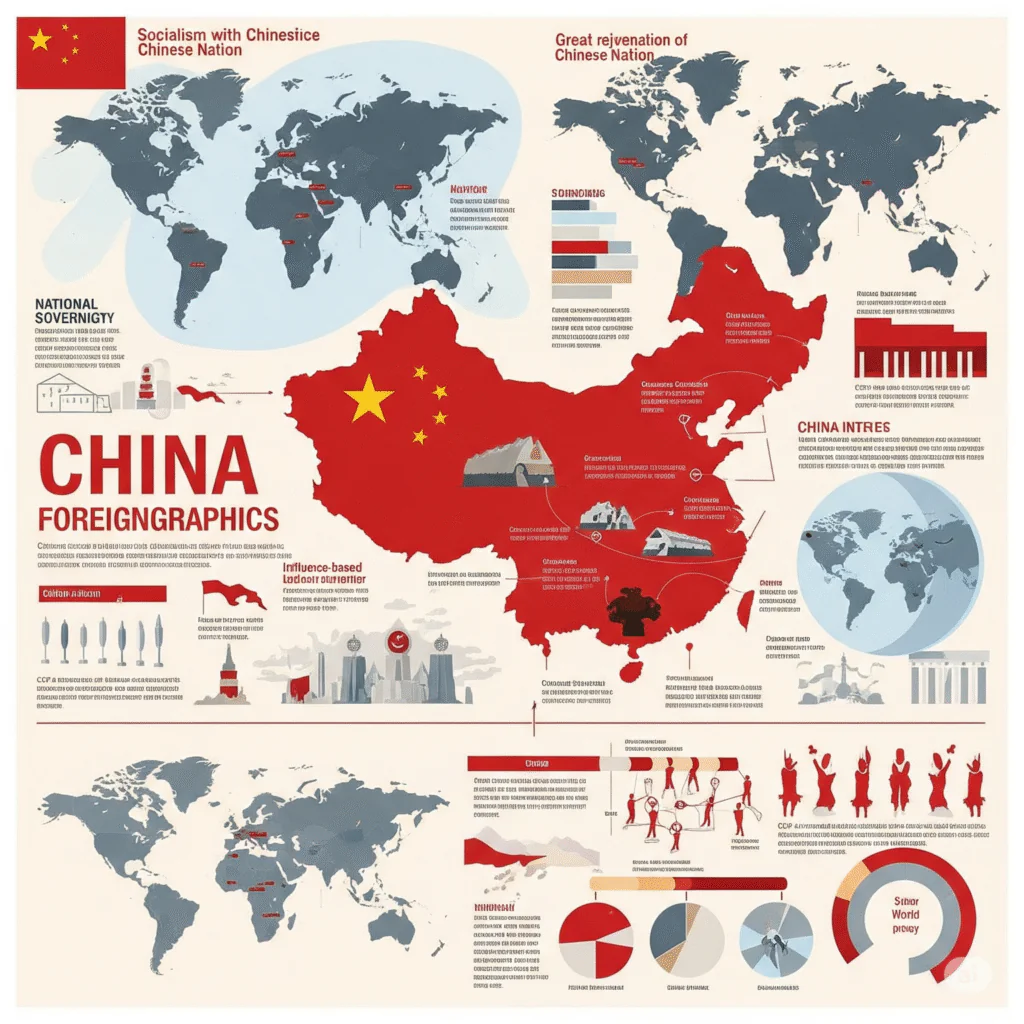
6. Science and Technology: Innovation, Strategy, and Global Competition
Over the last three decades, China has emerged as a major technological power. Once largely dependent on foreign innovation, it now invests heavily in research, advanced manufacturing, artificial intelligence, and space exploration. Science and technology policy is closely aligned with national security, economic modernization, and strategic autonomy.
6.1 Research and Development (R&D)
Annual R&D expenditure has crossed an estimated $600 billion (approximately 2.6% of GDP by 2024). Major innovation clusters are concentrated in Beijing, Shanghai, and Shenzhen. The country ranks among the top globally in scientific publications, patent filings, and engineering graduates.
6.2 Artificial Intelligence (AI)
Artificial intelligence is designated a national priority, with an official ambition to become the global leader by 2030. Applications include facial recognition, autonomous systems, predictive analytics, and industrial automation.
- Baidu – AI-driven search and autonomous driving research
- iFlytek – Speech recognition technologies
- SenseTime – Computer vision and security analytics
AI integration into governance and surveillance systems has also sparked debate regarding privacy and civil liberties.
6.3 Space Exploration and Strategic Autonomy
- Chang’e lunar missions (including the first far-side moon landing)
- Tianwen-1 Mars mission
- Tiangong modular space station
- Beidou satellite navigation system
These achievements demonstrate a transition from technological follower to independent space power.
6.4 Digital Economy and Telecommunications
The country leads in 5G deployment and is actively researching 6G networks. Digital payments through platforms such as Alipay and WeChat Pay dominate domestic commerce. The digital yuan (e-CNY) represents one of the world’s most advanced central bank digital currency experiments.
6.5 Semiconductor Strategy and Supercomputing
Technology export restrictions have accelerated domestic chip production efforts. Firms such as SMIC are expanding fabrication capabilities, though high-end chip dependency remains a strategic vulnerability.
High-performance computing systems like the Sunway and Tianhe series place the country among global leaders in supercomputing.
6.6 Biotechnology and Health Research
Advances in gene editing, pharmaceuticals, and vaccine development expanded during the COVID-19 period. Biotechnology progress, especially in CRISPR research, continues to raise ethical discussions internationally.
6.7 Quantum and Cyber Capabilities
Quantum communication satellites and encrypted networks demonstrate leadership in secure communications. Cyber capabilities form a core pillar of national defense and digital sovereignty strategy.
Conclusion: Technology Outlook
Technological modernization has become central to long-term national strategy. While significant progress is evident across AI, space, telecom, and computing, ongoing competition in semiconductors and international tech tensions remain defining challenges.
7. Social Structure and Demographic Transition
The social framework reflects a combination of traditional values, socialist governance, and rapid modernization. Urbanization, rising income levels, and digital transformation have reshaped lifestyles, yet demographic pressures and inequality remain pressing concerns.
7.1 Population Trends
- Total population (2024): approximately 1.41 billion
- Population decline began in 2022
- Eastern regions are densely populated; western provinces remain sparsely inhabited
7.2 Population Policy Evolution
The One-Child Policy (1979–2015) successfully slowed population growth but created long-term demographic imbalances. Subsequent Two-Child and Three-Child policies aim to stabilize fertility rates, though high urban living costs and shifting social preferences limit impact.
7.3 Urban–Rural Divide and Social Stratification
Urban residents benefit from stronger infrastructure, education, and employment opportunities. The hukou (household registration) system continues to restrict full social integration for migrant workers in major cities.
7.4 Education and Social Mobility
Compulsory education spans nine years. The Gaokao examination remains a primary mechanism of upward mobility, though access to elite education is uneven across regions.
7.5 Health and Social Welfare
Healthcare provision combines public and private services. Pension reform and rural healthcare coverage remain ongoing policy priorities.
7.6 Gender and Cultural Change
Gender imbalances persist due to historical preferences, though female educational participation has risen significantly. Delayed marriage and declining birth rates are reshaping family structures.
7.7 Ethnic and Religious Diversity
Han Chinese constitute roughly 92% of the population, alongside 55 officially recognized minority groups. Religious traditions include Buddhism, Taoism, Islam, Christianity, and Confucian heritage practices. Policies in regions such as Xinjiang and Tibet remain controversial internationally.
Conclusion: Social Outlook
Demographic ageing and inequality represent major structural challenges. Long-term social stability will depend on welfare reform, labor market adaptation, and inclusive growth strategies.
8. Human Rights, Governance, and Information Control
The governance model prioritizes stability, economic development, and centralized authority. This approach frequently conflicts with Western liberal human-rights standards, resulting in sustained international criticism.
8.1 Media and Expression
State-owned outlets dominate traditional media. Independent journalism faces legal constraints, especially on politically sensitive topics.
8.2 Internet Regulation
The “Great Firewall” restricts access to major global platforms, while domestic alternatives dominate the digital ecosystem. Content filtering, surveillance technology, and cybersecurity laws regulate online discourse.
8.3 Social Credit Mechanisms
Behavior-based rating systems aim to enhance compliance and financial reliability. Critics argue such systems risk excessive surveillance and reduced civil autonomy.
8.4 Religious Regulation
Five religions receive official recognition under state oversight. Unregistered religious activity may face restrictions.
8.5 Xinjiang and International Concerns
Allegations of detention facilities, ideological re-education, and surveillance targeting Uyghur communities have triggered global condemnation. Authorities reject accusations and describe policies as counter-extremism measures.
8.6 Academic and Political Dissent
Universities operate under Party supervision. Political activism and dissent may result in legal consequences. The 2020 Hong Kong National Security Law intensified global debate over autonomy and freedoms.
Conclusion: Governance Model
The political system emphasizes collective stability over individual liberal rights. How this balance evolves will significantly shape both domestic legitimacy and international perception in the coming decades.
9. Foreign Policy and Global Diplomatic Strategy
China’s foreign policy seeks to protect sovereignty, secure economic interests, expand geopolitical influence, and promote what it describes as a multipolar international order. Under the leadership of the Communist Party, diplomacy is closely linked to the broader vision of national rejuvenation and long-term strategic autonomy.
In the 21st century, China has transitioned from a relatively low-profile diplomatic posture to a more assertive and system-shaping global strategy.
9.1 Core Principles of External Policy
- Peaceful Development: Economic rise without formal military alliances or direct expansionism.
- Non-Interference: Opposition to intervention in domestic political matters of sovereign states.
- Mutual Benefit (“Win-Win” Cooperation): Economic partnerships framed as shared growth opportunities.
- One-China Principle: Taiwan is considered an inseparable part of national territory.
- South-South Cooperation: Strategic engagement with Africa, Latin America, and developing Asia.
9.2 Belt and Road Initiative (BRI)
Launched in 2013, the Belt and Road Initiative represents a large-scale infrastructure and connectivity network spanning Asia, Europe, Africa, and parts of Latin America.
Strategic Objectives
- Expansion of trade corridors (ports, railways, logistics hubs)
- Energy security through pipeline and maritime routes
- Financial integration via Chinese development banks
Controversies
- Debt sustainability concerns
- Transparency and governance issues
- Geopolitical competition with G7 and Indo-Pacific alternatives
9.3 China–United States Strategic Rivalry
Relations between China and the United States are characterized by structural competition, interdependence, and selective cooperation.
Major Tensions
- Trade and tariff disputes since 2018
- Semiconductor and advanced technology restrictions
- Taiwan Strait military signaling
- Human rights and governance concerns
Current Dynamics
- Simultaneous economic interdependence and strategic decoupling
- US framing of China as its primary long-term competitor
- “De-risking” supply chains rather than full disengagement
9.4 India–China Relations
The bilateral relationship combines economic cooperation with persistent strategic distrust.
Cooperation Areas
- BRICS, SCO, and G20 coordination
- Substantial bilateral trade volumes
Strategic Frictions
- Line of Actual Control (LAC) tensions and the 2020 Galwan clash
- China–Pakistan Economic Corridor concerns
- Regional competition in the Indo-Pacific
The relationship remains defined by a delicate balance between border stabilization and economic continuity.
9.5 Engagement with the Global South
China’s investment-driven diplomacy in Africa, Latin America, and Southeast Asia focuses on infrastructure financing, resource access, and political goodwill.
- Large-scale development loans
- Energy and mineral partnerships
- Growing defense cooperation
This model provides diplomatic leverage in international forums and strengthens influence among developing economies.
9.6 Strategic Partnerships: Russia and Iran
Russia
- Expanded energy trade
- Joint military exercises
- Increased alignment amid Western sanctions on Moscow
Iran
- 25-year strategic cooperation agreement (2021)
- Energy imports and infrastructure projects
- Balancing relations despite US sanctions
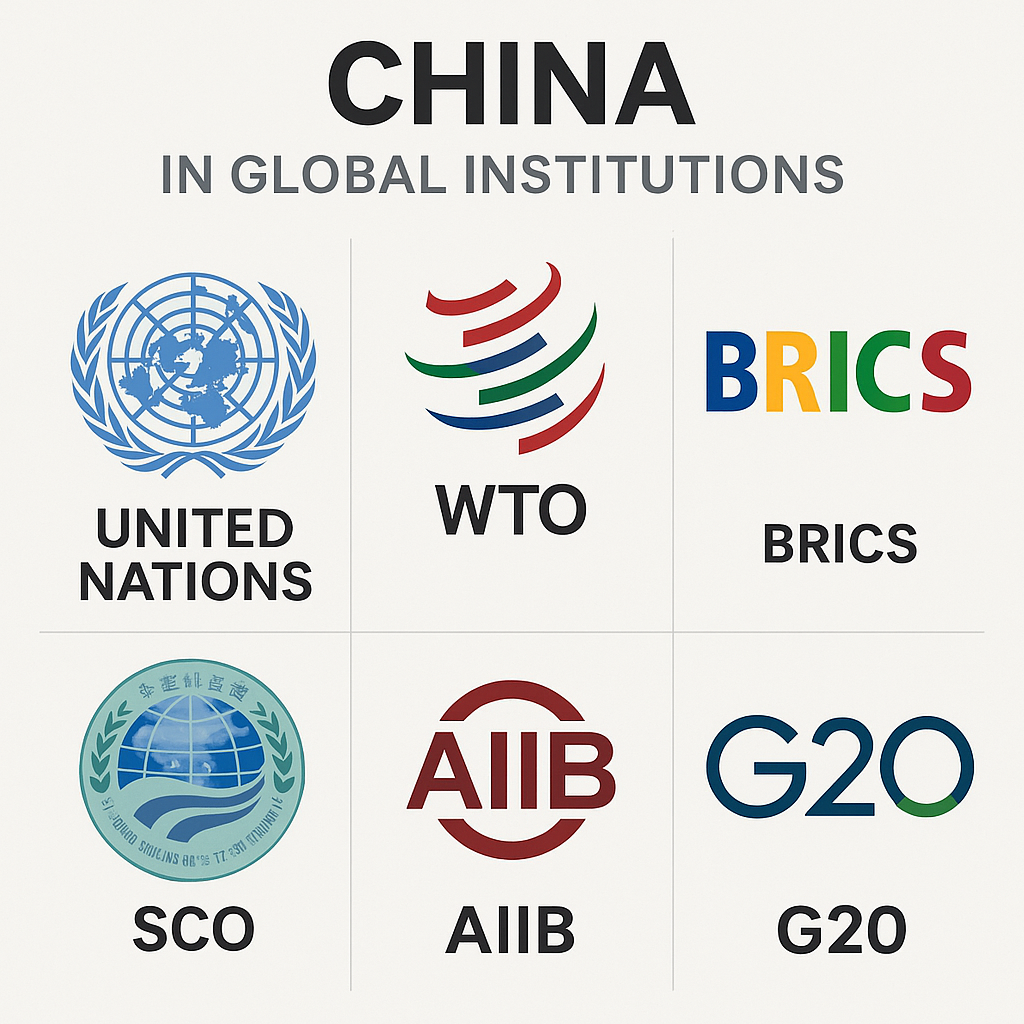
9.7 Multilateral Engagement
- United Nations: Permanent Security Council member with veto authority.
- WTO: Active participant in global trade governance.
- BRICS: Platform promoting alternative financial architecture.
- SCO: Regional security cooperation body.
- AIIB: China-initiated multilateral development bank.
9.8 Assertive Diplomacy (“Wolf Warrior” Approach)
A more confrontational diplomatic style has emerged in recent years, characterized by direct rebuttals to criticism, active digital diplomacy, and a readiness to challenge Western narratives.
Supporters view it as confidence; critics argue it increases geopolitical polarization.
Strategic Outlook
China’s foreign policy now aims not merely to participate in the existing global system, but to shape it. Economic scale, technological capacity, and military modernization serve as pillars of this ambition. However, rising mistrust, regional tensions, and systemic competition with established powers will continue to define its diplomatic trajectory in the coming decades.
10. India–China Relations: Cooperation, Competition, and Strategic Tension
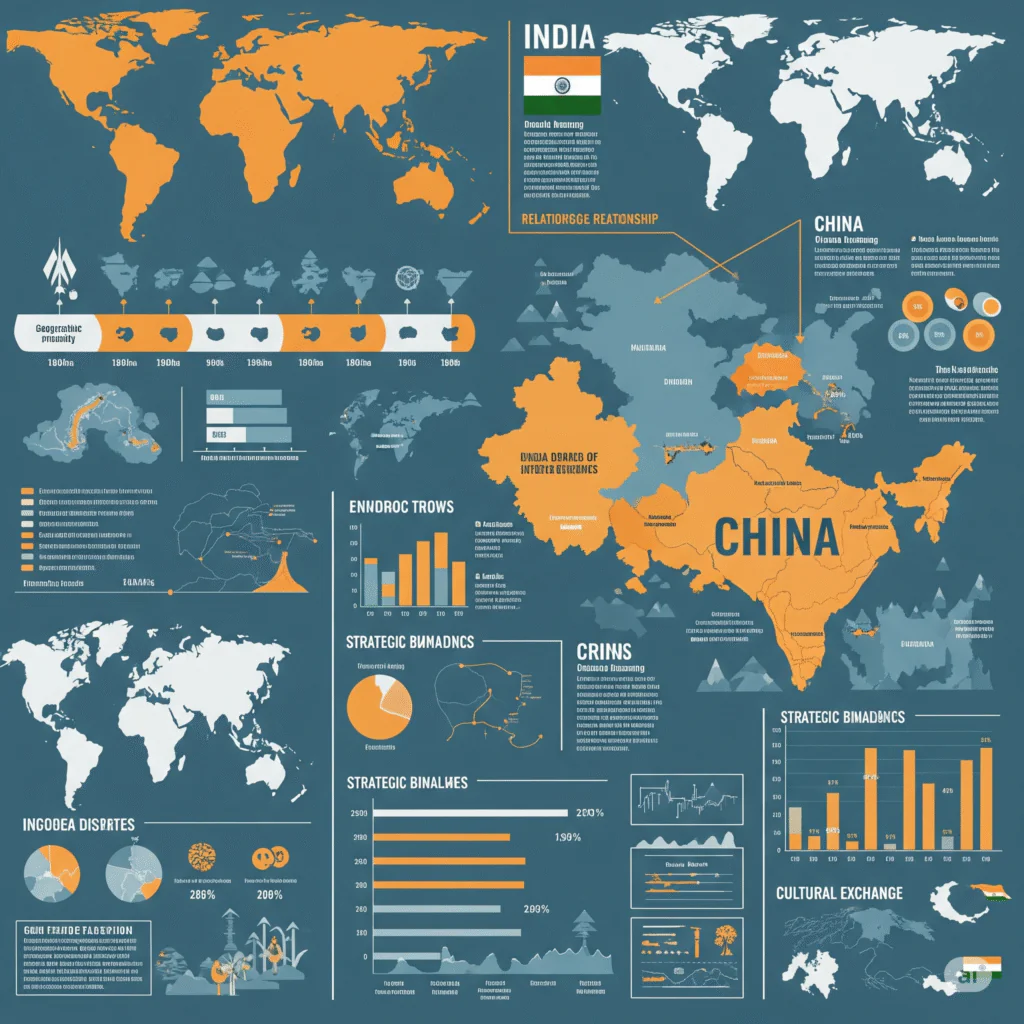
India and China, two civilizational states and emerging global powers, share a relationship marked by simultaneous engagement and rivalry. While economic interdependence has expanded significantly, territorial disputes and strategic mistrust continue to define the structural limits of cooperation.
10.1 Historical Foundations
- Ancient cultural exchanges through Buddhism and Silk Road networks.
- 1950s diplomatic optimism symbolized by “Hindi–Chini Bhai–Bhai.”
- 1962 border conflict fundamentally reshaped bilateral trust.
- Gradual normalization beginning in the late 1980s.
10.2 Border Dispute and Security Concerns
The unresolved Line of Actual Control (LAC), stretching approximately 3,488 km, remains the core strategic fault line in bilateral relations.
Disputed Sectors
- Aksai Chin: Administered by China, claimed by India.
- Arunachal Pradesh: Administered by India, claimed by China as “South Tibet.”
Recent Escalations
- Doklam standoff (2017)
- Galwan Valley clash (2020)
Post-2020, mutual suspicion deepened, and both sides significantly reinforced border infrastructure.
10.3 Economic Interdependence
- Bilateral trade exceeded $118 billion (2023).
- India faces a substantial trade deficit.
- Strategic restrictions on Chinese investment and digital platforms followed the 2020 crisis.
Despite security tensions, economic disengagement remains partial rather than complete.
10.4 Strategic Competition in the Indo-Pacific
- India’s participation in the Quad counters expanding Chinese maritime presence.
- Opposition to the China–Pakistan Economic Corridor (CPEC).
- Rising naval competition in the Indian Ocean Region.
Outlook
Future stability depends on border management mechanisms, economic recalibration, and the ability to prevent localized crises from escalating into broader confrontation.
11. Environment and Climate Governance
As the world’s largest emitter of greenhouse gases and a manufacturing superpower, China occupies a central position in global climate politics. Its environmental trajectory has both domestic and international implications.
11.1 Environmental Pressures
- Severe air pollution in industrial regions.
- Water stress in northern provinces.
- Biodiversity threats from rapid infrastructure expansion.
11.2 Emissions and Commitments
- Approximately 28% of global CO₂ emissions.
- Carbon peak target by 2030.
- Carbon neutrality target by 2060.
11.3 Renewable Energy Leadership
- World leader in solar panel production.
- Major wind energy capacity.
- Large-scale hydropower infrastructure.
- Rapid expansion of electric vehicle manufacturing.
China’s Emissions Trading Scheme (ETS), launched in 2021, is the largest carbon market globally.
11.4 Structural Challenges
- Continued reliance on coal for energy security.
- Local enforcement inconsistencies.
- Balancing economic growth with sustainability.
Strategic Assessment
China’s climate strategy reflects dual imperatives: industrial competitiveness and global legitimacy. Its long-term credibility will depend on measurable emission reductions and transparent reporting.
12. Cultural Influence and Soft Power Strategy
Beyond economic and military instruments, China deploys cultural diplomacy to expand influence and shape global narratives. Soft power serves as a complementary pillar of its broader strategic ambition.
12.1 Language and Education
- Global promotion of Mandarin language.
- Confucius Institutes as cultural outreach platforms.
- International student scholarship programs.
12.2 Media and Digital Outreach
- Expansion of CGTN and Xinhua overseas broadcasting.
- Global cultural penetration via digital platforms and entertainment.
12.3 Symbolic Diplomacy
- Panda diplomacy as goodwill gesture.
- Promotion of traditional arts and martial practices.
12.4 Limitations
- State-controlled narrative affects credibility.
- Human rights controversies reduce attraction value.
- Political suspicion in Western democracies.
Strategic Outlook
China’s cultural diplomacy seeks to project a peaceful and civilizational identity. However, soft power effectiveness depends not only on cultural appeal but also on political trust and openness.
13. Contemporary Structural Challenges
Despite its rise as a leading economic and technological power, China faces deep structural pressures that will shape its long-term trajectory. These challenges span demographics, economic restructuring, technological competition, governance, environmental sustainability, and geopolitical rivalry. Their management will determine whether China consolidates or slows its ascent.
13.1 Demographic Transition and Ageing Society
- Population decline began in 2022 after decades of strict birth control policies.
- Total Fertility Rate fell below 1.0 in 2023, among the lowest globally.
- Rapid ageing increases pressure on pensions, healthcare systems, and labor markets.
- Shrinking workforce may reduce productivity growth and domestic consumption.
Demographic imbalance represents one of the most serious long-term structural constraints.
13.2 Economic Slowdown and Structural Adjustment
- Growth rates have moderated from double-digit expansion to mid-single digits.
- Real estate sector distress and local government debt pressures.
- Rising youth unemployment and weak household consumption.
- Risk of entering the “middle-income trap” without innovation-led productivity gains.
Transitioning from investment-driven growth to high-value innovation remains a central policy test.
13.3 Technology Restrictions and Strategic Decoupling
- Advanced semiconductor export controls by the US and allies.
- Restrictions on Chinese firms in Western markets.
- Increased emphasis on domestic self-reliance in AI, aerospace, and chip manufacturing.
- Global supply chain fragmentation and “de-risking” trends.
Technological sovereignty has become both an economic and national security priority.
13.4 Social Pressures and Inequality
- Urban–rural disparities persist.
- Hukou system limits full social integration of migrant workers.
- Rising housing costs and youth disillusionment (“lying flat” phenomenon).
Maintaining social cohesion amid slowing growth presents a governance challenge.
13.5 Governance Centralization and Policy Risks
- Increased concentration of authority under top leadership.
- Reduced institutional checks and collective decision-making.
- Policy shifts (e.g., tech regulation, zero-COVID) demonstrated rapid state intervention capacity but also market uncertainty.
Highly centralized governance enables swift execution but may heighten systemic risk if policy errors occur.
13.6 Environmental and Energy Pressures
- Continued reliance on coal for energy security.
- Water scarcity and regional ecological stress.
- Balancing industrial competitiveness with carbon neutrality commitments.
13.7 Geopolitical Competition
- Strategic rivalry with the United States.
- Security coalitions such as Quad and AUKUS.
- Border tensions with India.
- Growing scrutiny of overseas investments under BRI.
China’s external environment has become more competitive and strategically constrained than in the early 2000s.
Strategic Assessment
China’s contemporary challenges are not isolated problems but interconnected structural pressures. Demographics affect growth; growth affects legitimacy; legitimacy shapes foreign policy posture. The next decade will determine whether reform, innovation, and institutional adaptation can offset mounting internal and external constraints.
14. Final Assessment and Strategic Outlook
China’s transformation from imperial civilization to revolutionary state and then to global economic powerhouse is one of the most consequential developments of the modern era. Its governance model, state-led capitalism, technological ambition, and geopolitical assertiveness have reshaped global power dynamics.
Economically, China lifted hundreds of millions out of poverty and became a central node in global supply chains. Militarily, it modernized at unprecedented speed. Technologically, it narrowed the gap with advanced economies in multiple sectors. Diplomatically, it seeks to shape institutions rather than merely operate within them.
At the same time, structural demographic decline, slowing growth, external strategic competition, and governance centralization introduce uncertainty. International skepticism over transparency, human rights, and political openness also affects China’s soft-power reach.
Long-Term Outlook
China’s future role will depend on several critical variables:
- Successful economic rebalancing toward innovation and domestic demand.
- Effective demographic and social policy reform.
- Management of strategic competition without escalation.
- Credible climate and sustainability implementation.
- Institutional resilience under centralized governance.
Regardless of trajectory, China will remain a defining actor in the 21st-century international system. Whether it becomes a stabilizing pillar of a multipolar order or a focal point of systemic rivalry will shape global politics, economics, and security for decades to come.
References
- Council on Foreign Relations (CFR) – China Studies
- Brookings Institution – China Research
- Fairbank, J. K. & Goldman, M. – China: A New History
- Shambaugh, D. – China’s Future