
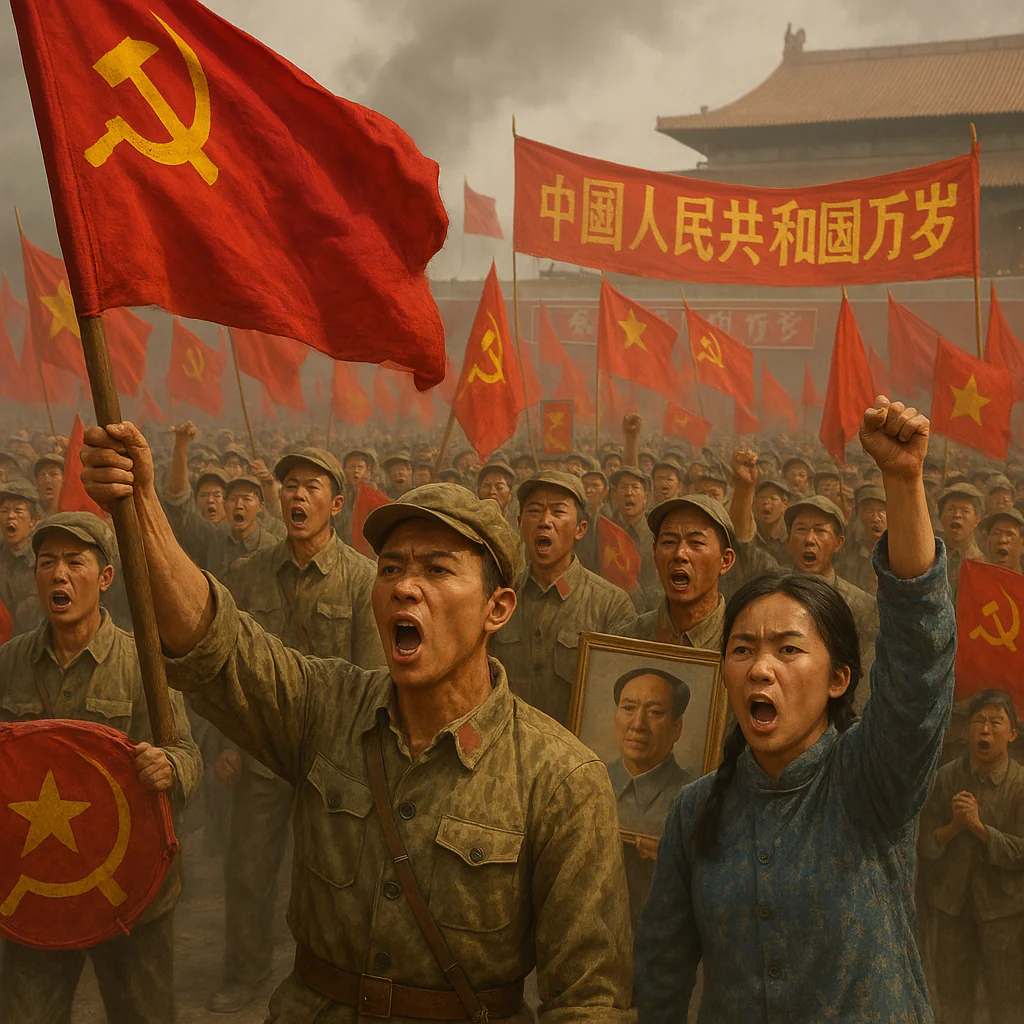
China in the Communist Revolution (1949)
A concise, inspiring narration of the background, main causes, and lessons of the revolution that reshaped China and Asia.
1. Background
To understand the Communist Revolution of 1949 we must look at the early 20th century. China entered this era burdened by deep social, political and economic problems. The fall of the Qing (Manchu) monarchy in 1911 ended centuries of imperial rule and left a power vacuum.
Monarchy's downfall and political fragmentation
The 1911 collapse of the Qing dynasty removed the old central authority. Without a stable national government, regional military leaders — warlords — seized control of different parts of the country, creating insecurity and local conflict.
Rise of competing parties
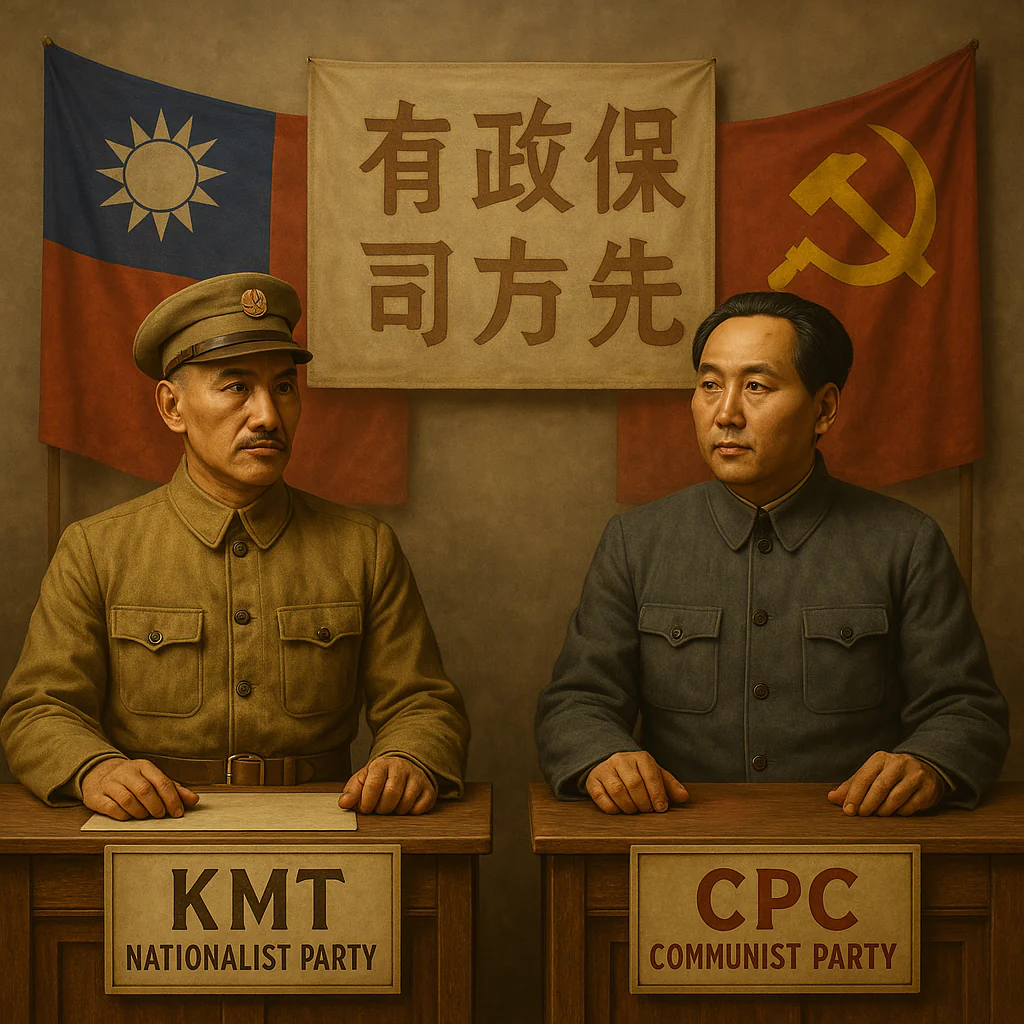
Two major forces vied for China’s future. The Kuomintang (KMT), led by Chiang Kai-shek, sought to build a centralized nationalist state. The Chinese Communist Party (CPC), led by Mao Zedong, organized around communist ideas and sought mass support in the countryside.
Agrarian society and inequality
China was predominantly agricultural. Most peasants were poor and heavily burdened by taxes, debt and insecurity, while land ownership remained concentrated among wealthier landlords. This deep rural inequality made radical solutions appealing.
Japanese invasion (1937–1945)
Japan’s invasion during the Second World War weakened national institutions. The Communists’ resistance and guerrilla actions increased their prestige in rural areas, while the Nationalist government struggled with military setbacks and internal problems.
International influence
The success of the Bolsheviks in Russia (1917) — and the Soviet Union’s later ideological influence — helped spread communist ideas in China. Leninist and Stalinist thought provided both inspiration and, at times, material support.

Premium Amazon Product – Reliable Quality & Performance
Discover this well-crafted product offering dependable performance and everyday convenience. With solid build quality and strong customer satisfaction, it’s an excellent choice for personal use or gifting. Click below to view the current price, full specifications, and authentic reviews on Amazon.
View on AmazonSummary — Background: Deepening social inequality, political fragmentation, the KMT’s weaknesses, the Japanese invasion, and growing Communist grassroots organization together prepared the ground for the revolution that culminated in 1949 under Mao Zedong’s leadership.
2. Chief Reasons (Main Causes)
The Communist victory in 1949 resulted from many interlocking causes — social, political, economic and international. Below are the principal factors.
Social inequality
The majority of China’s population were peasants living in poverty and exploitation. Large landowners controlled most arable land. Communist promises of land redistribution and social justice resonated strongly with the rural poor.
Nationalist (KMT) failure
Chiang Kai-shek’s government was widely criticized for corruption, authoritarianism and poor governance. The KMT often failed to address peasants’ and workers’ needs, eroding public trust and legitimacy.
Mao Zedong and Communist strategy
Mao adapted communist doctrine to China’s social reality by focusing on a rural base. The CPC organized peasants, promoted land reform and offered a vision of equality and popular participation — winning mass support across villages.
Japanese invasion and wartime dynamics (1937–1945)
During the war with Japan, the CPC’s guerrilla strategy and local governance strengthened its ties to rural communities. The KMT’s setbacks and perceived failures in wartime defense further shifted popular sympathy toward the Communists.
Civil war and KMT weaknesses (1927–1949)
A prolonged struggle between Nationalists and Communists exhausted the KMT politically and militarily. Corruption, low morale, and poor discipline weakened Nationalist forces, while the Communists built a disciplined “Red” army with popular support.
Soviet Union support
The Soviet Union provided ideological guidance, political backing, and in some phases material assistance to Communist forces, bolstering their international standing and capabilities.
Communist propaganda and organization
The CPC used powerful slogans — land to the tiller, unity of workers and peasants, and liberation from exploitation — to mobilize the masses. Village-by-village organizing and mass campaigns created a wide base for revolutionary action.
Summary — Causes: The 1949 revolution was the culmination of decades of grievances and failures: inequality, weak governance, wartime dynamics, disciplined Communist organization, and international influences combined to produce a mass, rural-based revolution under Mao’s leadership.
Author’s reflection
The Chinese Communist Revolution shows how structural inequality, institutional failure, and effective grassroots organising can transform a nation's destiny. These are lessons that remain relevant when we think about social change today.
Main Causes of the Communist Revolution in China (1949)
The Communist Revolution in China (1949) was the result of several deep-rooted social, political, and military factors. Below is a clear, detailed and structured explanation of the major causes that created the foundation for Mao Zedong’s victory and the rise of the People’s Republic of China.
1. Social Inequality – A Major Cause of the Revolution
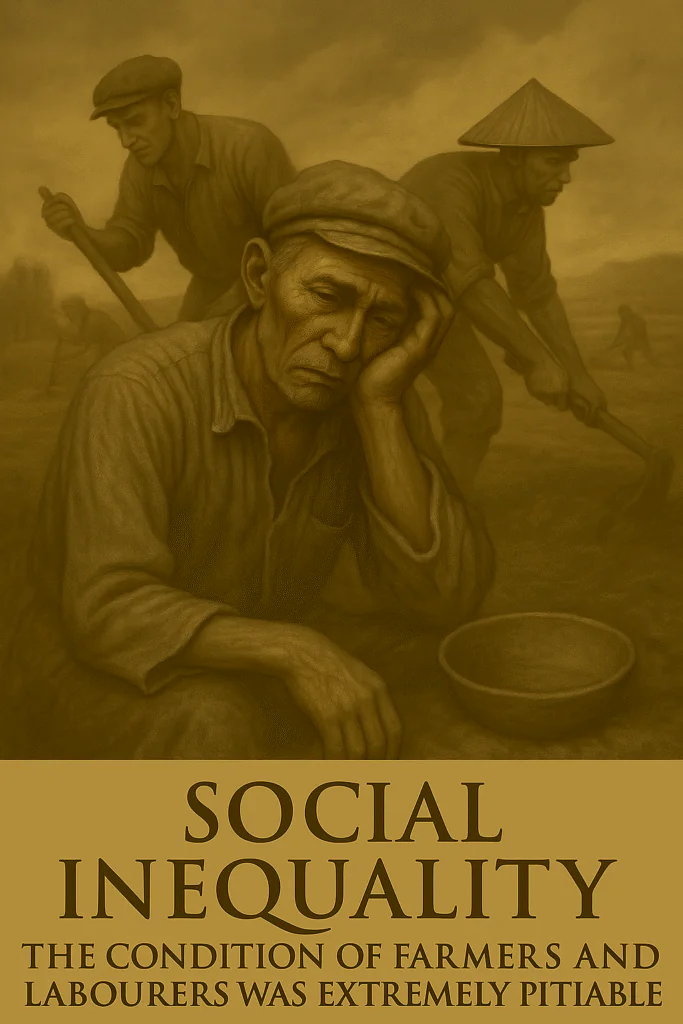
Social inequality was one of the most powerful reasons behind the Communist Revolution. China’s society had long suffered from extreme injustice, especially among poor farmers and labourers. This widespread suffering created deep anger and conditions ripe for revolution.
1.1 Zamindari (Landlord) System and Exploitation
China was an agricultural society, but most of the land was owned by a small elite class.
- Only about 10% of wealthy elites controlled more than 70% of the agricultural land.
- Over 80% of farmers were landless or owned very little land.
1.2 Exploitation of Farmers
- Farmers worked on landlords’ land and gave a large part of their crops as rent.
- High taxes, debt, and unbearable interest rates trapped them in poverty.
- Landlords often tortured farmers or confiscated their land.
1.3 Lack of Education and Basic Services
- Villages lacked access to education, healthcare, and employment.
- Government positions and power remained in the hands of wealthy elites.
1.4 Condition of Women and Lower Social Groups
- Women faced child marriage, trafficking, violence, and lack of property rights.
- Lower social groups suffered discrimination and exploitation.
1.5 Impact of Communist Propaganda
The Communist Party mobilized the exploited classes using slogans like **“Land to the farmers”**, **“Equality and justice”**, and promises of ending exploitation.
Conclusion — Social Inequality
Social inequality created an explosive environment in China. The Communists understood this perfectly and organized the masses accordingly. This inequality became one of the deepest roots of the Communist Revolution.
2. Corrupt Administration – Failure of the Nationalist (KMT) Government
The Nationalist Government under Chiang Kai-shek became increasingly corrupt and inefficient. This destroyed public trust and pushed millions toward the Communist movement.
2.1 Corruption Under Chiang Kai-shek
- Government officers frequently accepted bribes.
- The poor received no justice or support from the administration.
- The legal system mostly favoured the rich.
2.2 Misuse of Wartime Aid
During WWII, the United States sent major financial and military aid to China.
- A large part of this aid was stolen or sold on the black market by corrupt officials.
- This destroyed morale in the army and increased public anger.
2.3 Inflation and Economic Crisis
- Uncontrolled printing of currency led to massive inflation.
- The price of basic items skyrocketed (e.g., bread in Shanghai reached thousands of yuan in 1948).
- The public struggled to buy even basic food.
2.4 Failure in Disaster Relief
- During floods, droughts, and famine, the government failed to provide aid.
- Relief materials went mostly to officials and their families.
2.5 Communists Seen as More Trustworthy
While the KMT grew more corrupt, the Communists maintained discipline, equality, and public welfare in their controlled areas. As a result, people shifted their support to the CPC.
Conclusion — Corrupt Administration
The administrative failure of the KMT played a major role in turning the masses toward Communist leadership. This collapse of governance made the Communist movement appear more honest and people-centered.
3. Japanese Invasion (1937–1945) – A Turning Point for the Revolution
The Japanese invasion dramatically reshaped China’s political landscape. It exposed weaknesses in the Nationalist government and strengthened Mao’s Communist movement.
3.1 Background of the War
- Japan captured Manchuria in 1931, then attacked China fully in 1937.
- The conflict lasted until Japan’s surrender in 1945.

Premium Amazon Product – Trusted Quality & Everyday Performance
Discover this reliable, high-performance product designed for everyday use with excellent build quality. Perfect for personal use or gifting, it offers great value and satisfaction. Click below to see the latest price, full specifications, and real customer reviews on Amazon.
View on Amazon3.2 Failure of the Nationalist Government
- The Nationalists were unable to effectively resist Japanese forces.
- They focused more on fighting Communists than on defending China.
- Public anger and mistrust of the KMT increased.
3.3 Communist Strategy and Growing Popularity
- The Communists fought Japan using guerrilla warfare.
- They built strong networks in rural regions.
- The people saw them as true defenders of the nation.
3.4 Strengthening of Rural Base
- Communists focused on villages while KMT focused on cities.
- They implemented local governance, land distribution, and social reforms.
3.5 Suffering of the Masses
- Millions were killed or displaced.
- Atrocities such as the Nanjing Massacre caused deep trauma.
- The Communists gained support due to their honest and active role.
Conclusion — Japanese Invasion
The war exposed the KMT’s weaknesses and highlighted the Communists’ strength. This strengthened Mao's movement and helped pave the way for Communist victory in 1949.
4. The Communist Strategy – Foundation of Their Success
Mao Zedong and the Communist Party developed a unique strategy that combined military tactics, social reforms, and ideological re-shaping. This strategy formed the base of their victory.
4.1 Focus on Rural Areas
Mao believed China’s strength lay in its peasants.
- The CPC built its base among poor farmers.
- They promised land redistribution and justice.
4.2 Land Reform and Social Justice
- Land was taken from landlords and redistributed to farmers.
- Women and lower social groups were given more rights.
4.3 Guerrilla Warfare
- Small, mobile, disciplined groups attacked enemy forces.
- They used forests, mountains, and rural terrain effectively.
4.4 The Long March (1934–35)
A 6,000-mile strategic retreat that saved the Communist movement and established Mao as the uncontested leader.
4.5 Mass Mobilization
- Village courts, volunteer teams, education camps, and reforms were established.
- The CPC presented itself as a “party of the people.”
4.6 Propaganda and Ideology
- Mao adapted Marxism–Leninism to China’s local conditions.
- He created a “people’s revolution” rooted in rural culture.
4.7 Organized and Disciplined Army
- The Red Army was strict, disciplined, and respectful toward civilians.
- Soldiers were ordered not to harm the people or seize their property.
Conclusion — Communist Strategy
The Communist strategy combined social reform, ideological transformation, and superior military tactics. It turned the CPC into a powerful mass movement capable of overthrowing the KMT in 1949.
5. Internal Civil War (1927–1949) – The Final Struggle
The Chinese Civil War between the KMT and CPC lasted more than two decades and became a decisive factor in the Communist victory.
5.1 Beginning of the Civil War (1927)
Initially, the KMT and CPC worked together under Sun Yat-sen’s policies. But in 1927, Chiang Kai-shek launched a violent attack on Communists (Shanghai Massacre), officially beginning the Civil War.
5.2 First Phase (1927–1937)
- The KMT suppressed the Communists.
- The CPC built rural bases and formed the Red Army.
- The Long March became a turning point.
5.3 WWII Period (1937–1945)
- A temporary united front formed to fight Japan.
- Distrust between KMT and CPC continued.
- The CPC quietly expanded its rural power.
5.4 Final Phase (1946–1949)
- After Japan’s surrender, full-scale war resumed.
- The KMT, though supported by America, was internally weak.
- The CPC advanced from rural areas to major cities and captured Beijing and Nanjing.
5.5 Result — Communist Victory
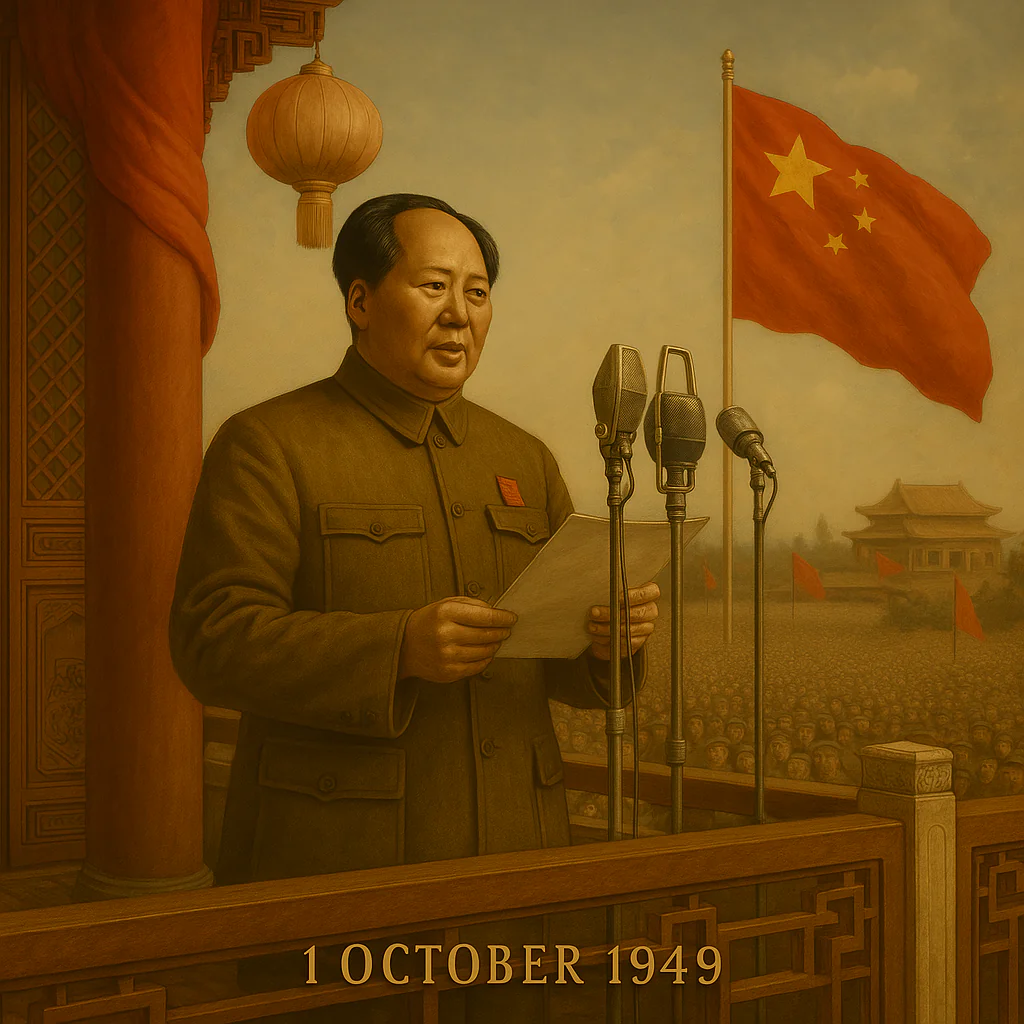
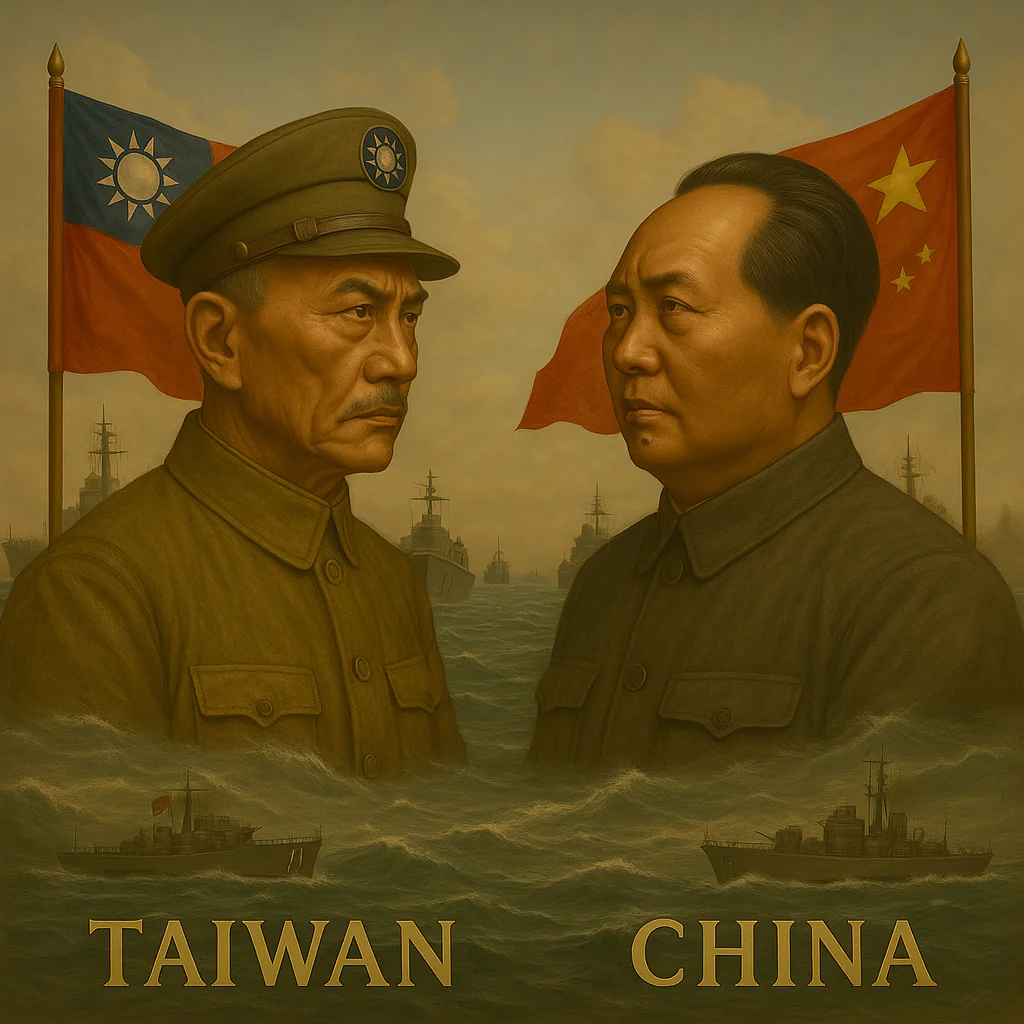
On 1 October 1949, Mao Zedong proclaimed the **People’s Republic of China**. Chiang Kai-shek fled to Taiwan, establishing a separate Nationalist government there.
Conclusion — Internal Civil War
The Civil War represented not just a military conflict but a battle between two opposing ideologies: Communism and Capitalism. Communist discipline, mass appeal, and effective leadership ultimately ensured their victory.
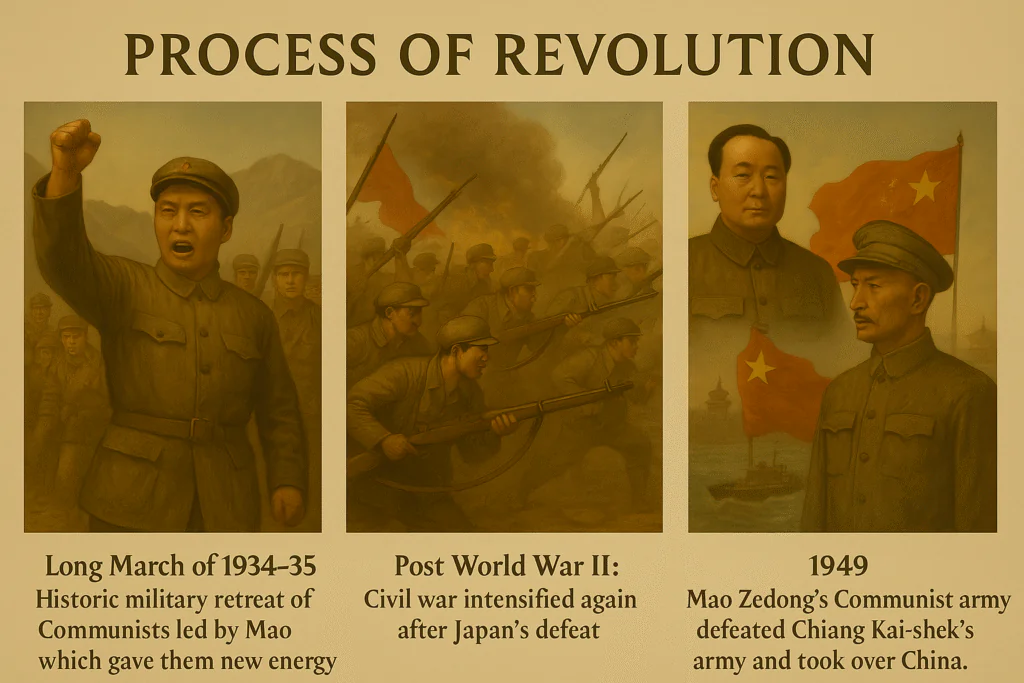
3. The Process of the Communist Revolution in China (1949)
The Communist Revolution of 1949 was not a sudden event. It was the result of a long and gradual process that began in the 1920s and continued until 1949. This process involved ideological development, mass mobilization, guerrilla warfare, political strategy, and the rising influence of the Communist Army.
1. Rise of the Communist Party (1921)
The Communist Party of China (CPC) was founded in 1921, inspired largely by the success of the Russian Bolshevik Revolution (1917). In the early years, the CPC even cooperated with the Kuomintang (KMT) to strengthen national unity and modernization.
2. Beginning of Conflict Between Nationalists and Communists (Since 1927)
In 1927, after the Shanghai Massacre, the KMT launched violent attacks on Communists, marking the beginning of the Chinese Civil War. Forced out of urban areas, the Communists moved toward rural regions and built a strong base among farmers.

Premium Amazon Product – Quality, Performance & Value
Explore this well-built product crafted to deliver dependable performance and everyday convenience. With a trusted design and excellent user satisfaction, it’s ideal for personal use or gifting. Click below to see the latest price, full specifications, and real customer reviews on Amazon.
View on Amazon3. The Long March (1934–1935)
When Nationalist forces surrounded Communist bases, Mao Zedong led a historic strategic retreat—known as the Long March. Around 90,000 Communist fighters travelled roughly 6,000 miles through some of the toughest terrains in China.
Only about 10,000–15,000 survived, but the Long March became a symbol of endurance, courage, and commitment. It also established Mao Zedong as the undisputed leader of the Communist movement.
4. The Second World War Period (1937–1945)
After Japan invaded China in 1937, the Nationalists and Communists formed a temporary alliance to defend the nation. However, distrust remained strong between the two sides.
During this period:
- The Communists expanded their influence in rural areas.
- They increased their number of troops and supporters.
- They used guerrilla tactics effectively against Japanese forces.
5. Renewed Civil War After World War II (1946–1949)
After Japan surrendered in 1945, the Nationalists and Communists resumed their civil war. The Nationalist government was weakened by corruption, inflation, and loss of public support.
The Communists, on the other hand, had:
- A disciplined and motivated army
- Strong public support from farmers and workers
- Effective leadership and land reform programs
One by one, major cities fell to Communist control, and the Nationalists rapidly lost ground.
6. Victory and Establishment of Communist Rule (1949)
On 1 October 1949, Mao Zedong announced from Tiananmen Square:
Chiang Kai-shek retreated to Taiwan and established a separate Nationalist government there.
Conclusion
The Communist Revolution of 1949 was the result of ideological struggle, social injustice, wartime dynamics, effective organization, and powerful leadership. This long process transformed China from its imperial past and laid the foundation for a socialist future under Communist rule.
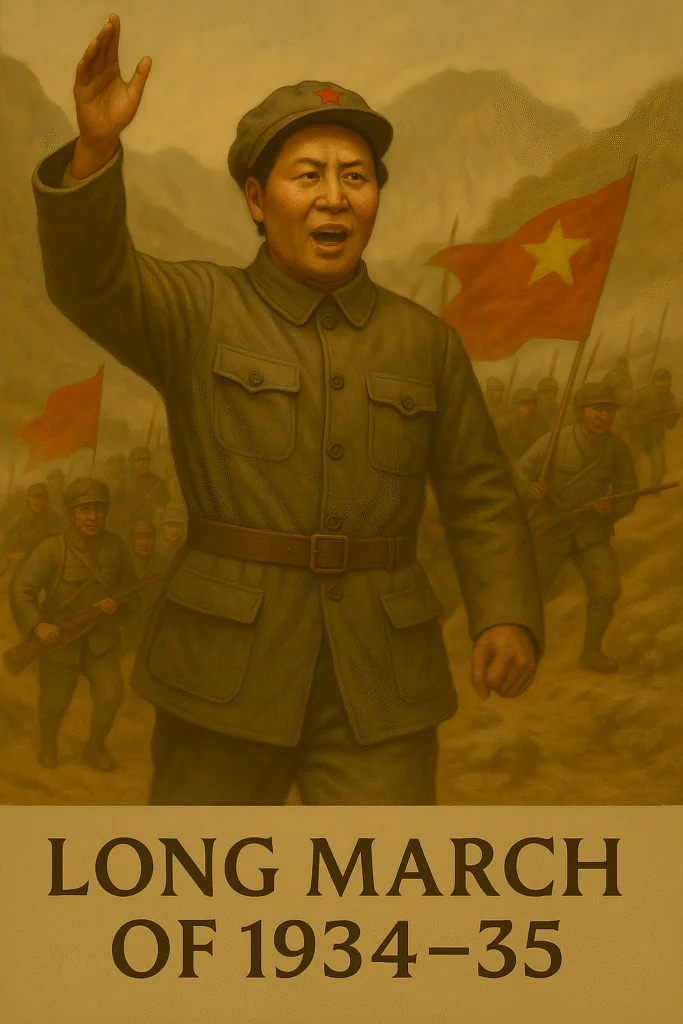
1934–35 Long March (The Long March)
In the history of the Communist Revolution in China (1949), the Long March stands as a monumental turning point. It was not only a military retreat but also a symbol of the Communist Party’s resilience, ideological strength, courage, and leadership.
1. What Was the Long March?
The Long March (1934–1935) was a massive military retreat covering nearly 6,000 miles. Under the leadership of Mao Zedong, around 80,000–90,000 soldiers and workers of the Communist Party of China (CPC) marched from southern China toward the northwest.
The main objective was to escape the encirclement of the Nationalist Army (Kuomintang – KMT) and reach a safer base to continue the struggle.
2. Why Did the Long March Happen?
In the early 1930s, the Nationalist Government launched several military campaigns to destroy Communist bases.
- The Fifth Campaign (1934) proved extremely destructive.
- The Communists were forced to abandon their Jiangxi Soviet Government.
- Retreating and reorganizing was the only option to survive and keep the revolution alive.
3. Route and Hardships
The marchers faced unimaginable challenges.
- Crossed mountains, rivers, swamps, frost-covered peaks, and enemy territories.
- Total distance: **about 6,000 miles (9,600 km)**.
- Route: From Jiangxi (South China) to Shanxi Province (Northwest China).
- Out of 90,000 marchers, only about 10,000–15,000 survived the journey.
4. Rise of Mao Zedong
During the Long March, Mao Zedong demonstrated exceptional leadership, strategy, and vision. His ideas and military planning strengthened his position within the Communist Party.
After the Long March, Mao became the undisputed leader of the CPC.
5. Symbolic Importance
The Long March became a powerful symbol of:
- Struggle and sacrifice
- Commitment and ideological purity
- Courage in the face of impossible odds

Top-Rated Amazon Product – Balanced Quality & Reliability
Discover this expertly crafted product designed for dependable everyday performance. Built with quality materials and thoughtful features, it’s perfect for personal use or gifting. Click below to view the latest price, full specifications, and authentic customer reviews on Amazon.
View on AmazonFor the Chinese public, it represented a “victory of revolutionary spirit.” Later, it became a central theme in Communist propaganda and national pride.
Conclusion
The Long March was not merely a military retreat—it was an ideological journey that revived the Communist movement. It showcased Mao Zedong’s leadership, strengthened public support, and laid the foundation for the ultimate victory of the 1949 Communist Revolution.
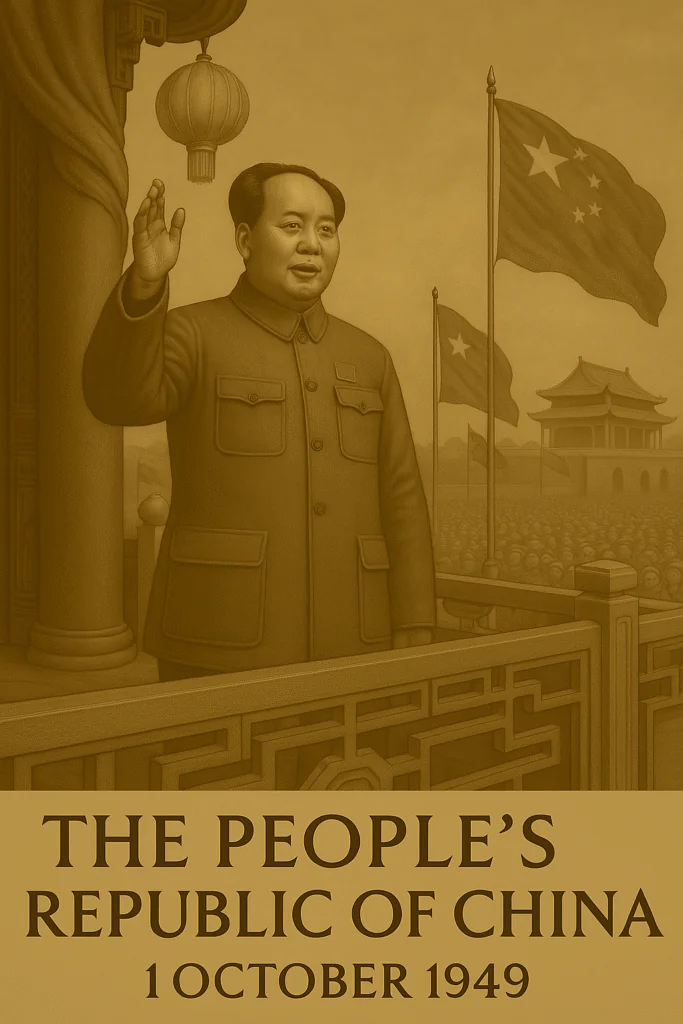
4. Results of the Communist Revolution in China (1949)
The Communist Revolution of 1949 did far more than replace one government with another. It transformed China’s political, social, economic, and foreign policy landscape. Below are the major outcomes of this historic revolution.
1. Establishment of the People’s Republic of China
On 1 October 1949, Mao Zedong addressed the nation from Tiananmen Square and declared the establishment of the People’s Republic of China (PRC).
- China’s ancient imperial order disappeared permanently.
- The Nationalist (KMT) capitalist government collapsed.
- A one-party Communist state came into existence.
2. Nationalist Government’s Retreat to Taiwan
After defeat, Chiang Kai-shek and the Nationalist leadership fled to Taiwan and established a separate government there.
- This led to a long-term political conflict between China and Taiwan.
- The division remains one of Asia’s major geopolitical issues even today.
Premium Amazon Product – Stylish Design & Trusted Performance
Check out this premium product crafted for excellent performance and everyday ease of use. With quality materials and a trusted design, it’s ideal for personal use or as a thoughtful gift. Click below to see the current price, full specifications, and real customer reviews on Amazon.
View on Amazon3. Land Reforms and the Establishment of Socialism
- Land owned by landlords was confiscated and redistributed to farmers.
- Industries, banks, and major businesses were nationalized.
- A centrally planned economy began to replace the earlier economic structure.
- Education, healthcare, and employment sectors came under state control and planning.
4. Major Shifts in Social Structure
- Women received equal rights, including freedom of marriage and property rights.
- Landlordism, feudal customs, and exploitative social practices were abolished.
- Education and literacy programs received strong encouragement.
5. Rise of Mao Zedong as Supreme Leader
Mao Zedong emerged as the highest authority in China. His ideology, known as Maoism, shaped both society and the state.
- His policies significantly influenced China’s direction.
- Future campaigns like the Great Leap Forward and Cultural Revolution deeply affected China’s development.
6. Global Impact and Cold War Alignment
The birth of Communist China changed global political dynamics, especially during the Cold War.
- China aligned closely with the Soviet Union in the early years.
- The U.S. and Western nations refused to recognize the PRC for decades.
- The revolution inspired communist movements in Korea, Vietnam and other Asian countries.
7. China’s Representation in the United Nations
After 1949, the United Nations continued to recognize Taiwan’s Nationalist government as the official representative of China.
However, in 1971, the PRC finally gained:
- Permanent membership in the UN
- The crucial seat on the UN Security Council
Conclusion
The Communist Revolution of 1949 reshaped China from its roots. It dismantled feudal, capitalist, and colonial influences, introduced socialism, and provided China with a new ideological and political direction. Its impact continues to shape China’s domestic and global role even today.
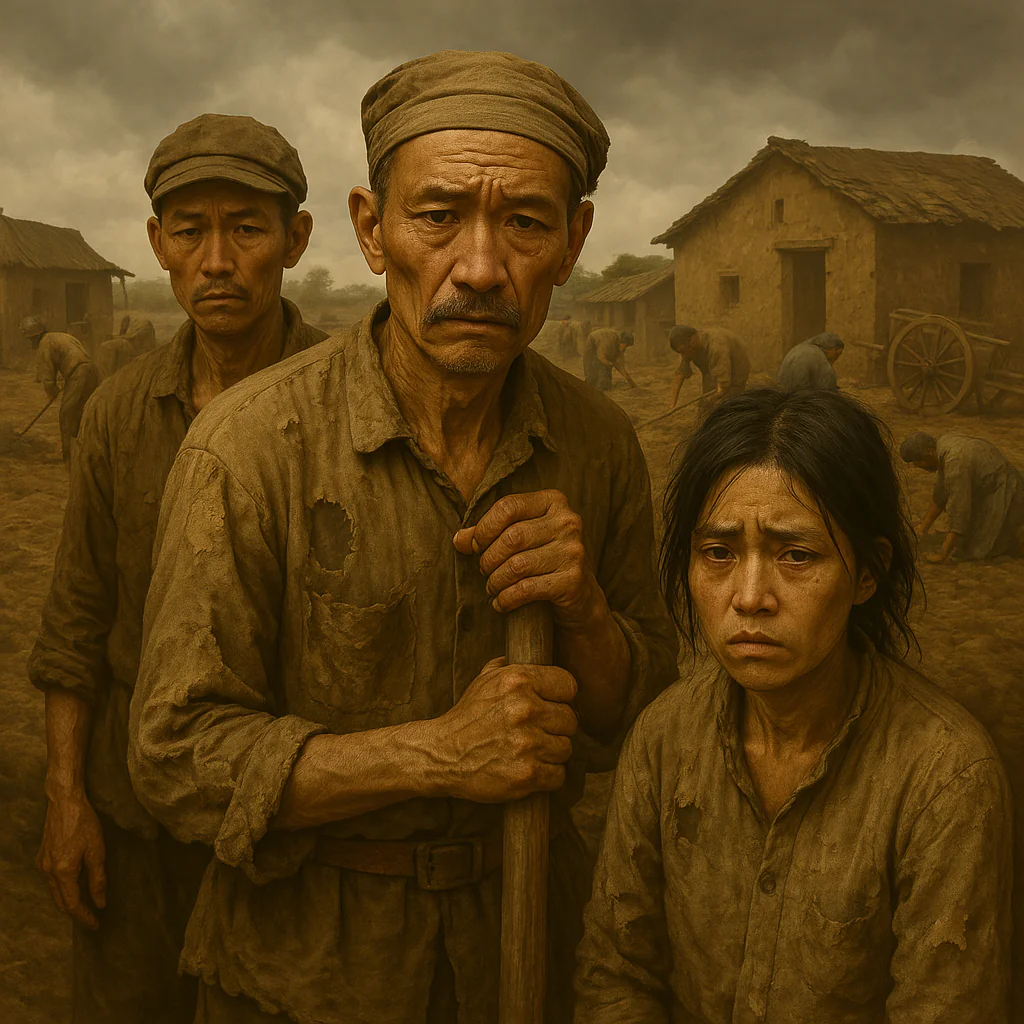
Socialist Policies After the Communist Revolution in China (1949)
After the Communist Revolution of 1949, China—under the leadership of Mao Zedong—implemented a system based on socialism. These policies aimed to achieve social equality, land redistribution, industrial growth, and centralized political control. The objectives were to create a just, exploitation-free, and collective society.
1. Land Reform Policy
One of the earliest and most impactful policies was land redistribution.
- Land owned by landlords was confiscated and distributed to poor farmers.
- The slogan “Land to the tiller” created enthusiasm among rural peasants.
- Millions of farmers received land ownership for the first time.
- This effectively ended the centuries-old landlord system.
2. Industrialization and Nationalization
- Major industries, banks, mines, and transport networks were nationalized.
- Private enterprises were gradually reduced or absorbed by the state.
- Heavy industries such as steel, coal, and machinery became priority sectors.
3. Planned Economy (Five-Year Plans)
Following the Soviet model, China adopted centralized economic planning.
- The first Five-Year Plan began in 1953.
- The government set production targets, distribution systems, and investment directions.
- Early plans focused heavily on industrial development and infrastructure building.
4. Collective Agriculture System
During the 1950s, China reorganized agricultural production.
- Farmers were grouped into cooperatives to share tools, land, and labor.
- These cooperatives eventually grew into large-scale “People’s Communes.”
- Collective farming replaced individual land ownership.
5. Education and Healthcare Reforms
- Education became increasingly free and accessible, especially in rural regions.
- China launched basic healthcare programs like the “Barefoot Doctors.”
- Literacy rates improved significantly in just a few years.
6. Women Empowerment Policies
- Women were granted legal equality with men.
- Child marriage, dowry, and polygamy were legally restricted or abolished.
- Women gained rights to education, employment, and property.
7. Establishment of an Equal and Classless Society
- The government sought to eliminate class distinctions and feudal privileges.
- Slogans like “Everyone is a worker” promoted a collective identity.
- The aim was to build a society based on equality, cooperation, and social justice.

Premium Amazon Product – Quality, Performance & Style
Discover this well-designed, high-quality product built to deliver reliable performance and everyday convenience. Ideal for personal use or as a gift, it blends style with practical functionality. Click below to view the latest price, complete specifications, and verified customer reviews on Amazon.
View on AmazonConclusion
The socialist policies introduced after 1949 reflected Mao Zedong’s ideology and vision of an equal, exploitation-free society. While many reforms had positive outcomes—especially in land ownership, literacy, and health—some later campaigns, such as the Great Leap Forward and the Cultural Revolution, proved excessively harsh and resulted in significant failures. Together, these policies defined the early socialist structure of modern China.
Cold War in a New Front: China–Taiwan Conflict
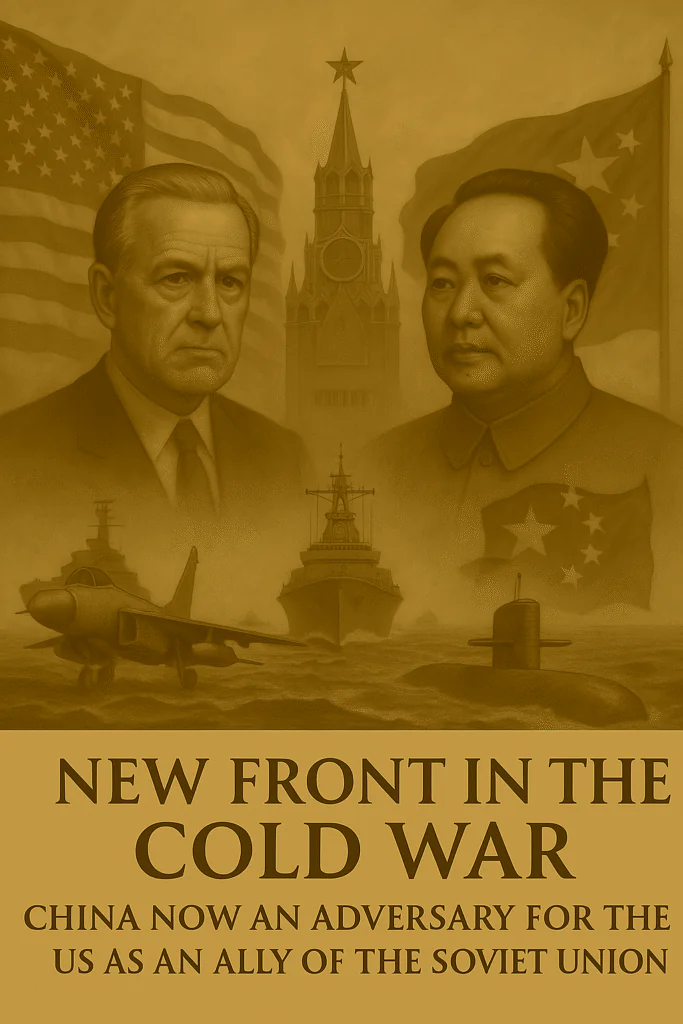
The original Cold War (1945–1991) signified ideological and military rivalry between the United States and the Soviet Union. In the 21st century, growing tensions between China and Taiwan—backed by U.S. involvement—are increasingly being described as a “New Cold War.”
1. Why Is It Called a “New Cold War”?
Today, two major world powers are again face-to-face:
- United States – democracy and capitalism
- China – one-party communist rule
Taiwan has become the central flashpoint of this global rivalry—just as Berlin, Korea, and Cuba were during the 20th-century Cold War.
2. Taiwan as a Strategic Front
- Taiwan is the world’s largest hub for advanced semiconductor (chip) technology.
- The U.S. provides Taiwan with economic, technological, and military support.
- China claims Taiwan as part of its territory and openly talks about “reunification”—even by force if necessary.
3. U.S.–China Global Competition
| Area | United States | China |
|---|---|---|
| Government System | Democracy | Communism / One-Party Rule |
| Economy | Capitalism | State-Controlled Capitalism |
| Military Policy | Protect Taiwan | Reintegrate Taiwan |
| Technology | Global leadership | Self-reliance & competition |
4. Rising Military Activity Around Taiwan
- China frequently breaches Taiwan’s air defense zone and conducts large naval drills.
- Taiwan is boosting its defense budget.
- The U.S. sells advanced weapons to Taiwan, upsetting China.
- Japan, Australia, and South Korea express concern over growing tensions.
5. Polarization in International Diplomacy
- Pro-Taiwan Group: U.S., Europe, Japan, Australia
- Pro-China Group: China, Russia, Iran
This division reflects Cold War–style ideological and geopolitical polarization.
6. Comparing the Old and New Cold Wars
| Aspect | Cold War (20th Century) | New Cold War (21st Century) |
|---|---|---|
| Main Powers | U.S. vs Soviet Union | U.S. vs China |
| Key Conflict Zones | Berlin, Korea, Cuba | Taiwan, South China Sea |
| Weapons | Nuclear arms | Cyber, AI, chips, drones |
| Ideology | Capitalism vs Communism | Democracy vs Authoritarian Communism |
Conclusion
The Taiwan crisis has become the focal point of a new global power struggle. It represents not merely a territorial dispute but a clash over global power balance, technological supremacy, and ideology. If left unresolved, this conflict could seriously threaten world peace and economic stability.
5. Global Influence of the Communist Revolution in China (1949)
Mao Zedong’s victory in 1949 reshaped not only Asia but also the global political landscape. It affected the Cold War, transformed global power dynamics, and inspired communist movements across continents.
1. Spread of Communism in Asia
- China inspired communist movements in Vietnam, Korea, Cambodia, and Laos.
- It provided ideological and military support to these nations.
- This led to major Cold War conflicts in Asia.
2. Changing Cold War Power Balance
- Before 1949, the Cold War was primarily U.S. vs USSR.
- After China’s communist victory, a powerful “Third Force” emerged—“Red China.”
- U.S. feared the “Domino Theory”: that Asian countries would fall to communism one by one.
- This contributed to the Korean War (1950) and Vietnam War (1955–75).
3. Impact on the United Nations and Global Diplomacy
- Initially, Taiwan held China’s seat in the United Nations.
- In 1971, the PRC was recognized as the legitimate representative of China.
- China received a permanent seat on the UN Security Council.
4. Influence on India and Neighboring Countries
- India was among the first to recognize the PRC in 1950.
- The 1962 India–China war reshaped regional power equations.
- Pakistan, Nepal, and Bangladesh saw increasing Chinese influence.
5. Intensification of Capitalism vs Communism
- China’s rise strengthened global communist ideologies.
- U.S. responded by forming alliances like SEATO and CENTO to contain communism.
- Cold War spread deeper into Asia as a result.
6. Inspiration for Global Revolutionary Movements
- African and Latin American groups adopted Maoist ideas.
- China supported these nations through infrastructure, training, and aid.
Conclusion
The Communist Revolution of 1949 demonstrated that even a vast and previously colonially influenced nation could undergo radical transformation. It reshaped global politics, empowered communist movements worldwide, and redefined Asia's geopolitical landscape.
6. Final Conclusion – China’s Communist Revolution (1949)
The Communist Revolution of 1949 was not just a political power shift—it was one of the most significant global events of the 20th century. Under Mao Zedong, the Communist Party reshaped China’s ideology, economy, and international position.
Main Conclusion Points
- Long-term conflict: The revolution was the result of decades of civil war, Japanese invasion, and social inequality.
- Mao’s leadership: Mao guided China through ideological, economic, and social transformation.
- Social change: Land reforms, women’s rights, education, and healthcare improved dramatically.
- Global impact: The revolution opened a new front in the Cold War and positioned China as a major power.
- Mixed outcomes: While the revolution achieved equality and national strength, campaigns like the Great Leap Forward and Cultural Revolution brought devastation.

Premium Amazon Product – Reliable Quality & Everyday Use
Discover this well-designed, high-quality product made to deliver dependable performance and practical functionality for daily needs. With solid build quality and positive user satisfaction, it’s an excellent choice for personal use or gifting. Click below to view the latest price, detailed specifications, and verified customer reviews on Amazon.
View on AmazonFinal Summary
The Communist Revolution transformed China from a feudal and semi-colonial society into a modern socialist nation. Despite its controversies and hardships, it stands as a defining moment in China’s history and a major turning point in the world’s balance of power.