
Introduction — My Journey Through the Central India Plateau
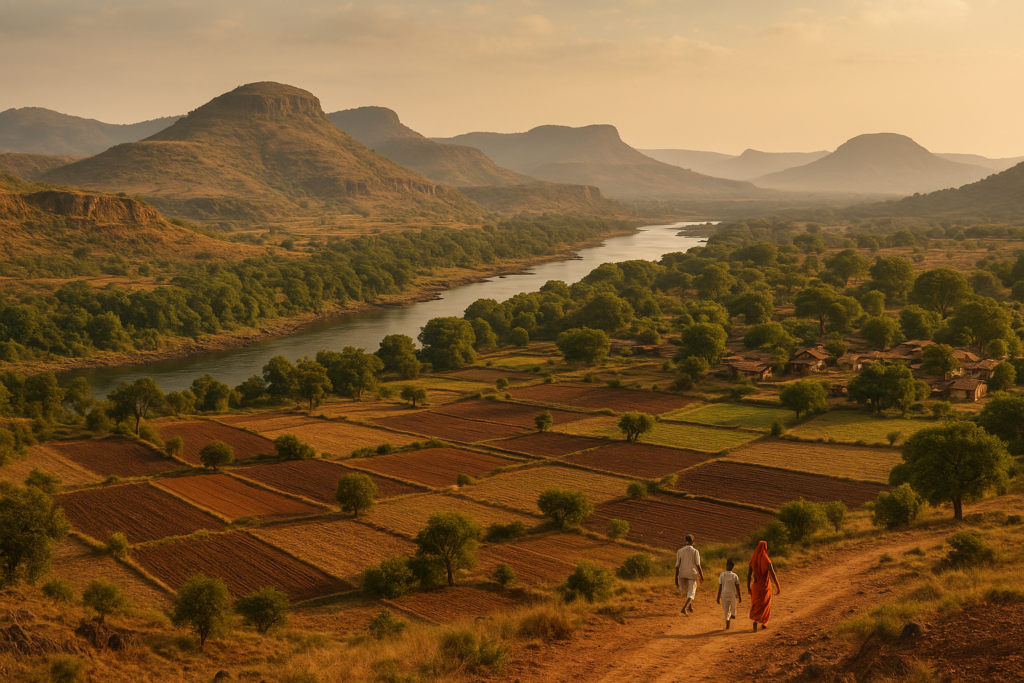
The Central India Plateau is not just a geographical region; it is a living landscape that carries centuries of history, cultural diversity, and ecological richness within its vast stretches. My first journey into this plateau was not planned as an exploration, yet it became one of the most meaningful experiences of my life. From the rugged hills to the dense forests, from scattered tribal settlements to fertile agricultural fields, every element of this land seemed to whisper its own story. Walking through the plateau, I realized that the true essence of this region lies not only in its physical form but also in the people who live here and the harmony they share with nature.
During my travels, I observed the daily lives of farmers, interacted with tribal communities, and understood how their culture, traditions, and livelihoods are deeply connected to the land. The red and black soil fields, seasonal rivers, rocky surfaces, and wide-open landscapes create both opportunities and challenges for the people of this region. Yet, their resilience, simplicity, and determination make the Central India Plateau a fascinating example of coexistence between humans and nature. My experiences here taught me to see beyond maps and textbooks—to feel the pulse of the land through its stories, struggles, and silent strengths.
In this article, I aim to present the Central India Plateau not just through facts and data, but through the perspective of someone who has walked its paths and felt its essence. This introduction sets the tone for a deeper exploration of its geography, climate, soil types, cultural identity, economic activities, challenges, and future possibilities. Whether you are a student, a researcher, a traveler, or simply someone curious to learn about this region, I hope this journey becomes as enriching for you as it was for me.

Geography — The Physical Landscape of the Central India Plateau
The Central India Plateau is one of the most significant physiographic regions of the Indian subcontinent, often described as the “inner heartland” of India. Spreading across large parts of Madhya Pradesh, Chhattisgarh, eastern Maharashtra, and portions of Rajasthan, this plateau showcases an extraordinary blend of ancient rock formations, wide undulating surfaces, forested hills, and river valleys. The average elevation of this region ranges from 300 to 600 meters above sea level, though certain parts rise as high as 900 meters, creating a landscape that is both rugged and mesmerizing.
Geologically, the Central India Plateau is among the oldest landmasses of India. The rocky foundations of this region—comprising igneous and metamorphic rocks—are believed to be millions of years old. The Vindhya and Satpura mountain ranges form the major structural backbone of this plateau, running roughly parallel to each other and creating natural boundaries in the north and south. Along with them, the Maikal Hills, the Malwa Plateau, Bundelkhand uplands, and the Baghelkhand region contribute to the geographical diversity, making this plateau a combination of highlands, ridges, escarpments, and shallow depressions.
The plateau is also the birthplace of several major rivers that play a vital role in shaping the ecology and economy of Central India. Rivers such as the Narmada, Tapti, Chambal, Betwa, and Son originate from different parts of the plateau and flow across the region in unique directions. The east–west flow of the Narmada and Tapti is particularly remarkable, as most major Indian rivers follow a north–south or northeast–southwest pattern. These river valleys, some of which are among the oldest rift valleys in the world, have not only carved fertile plains but have supported human settlement and agriculture for centuries.
The physical features of the plateau are highly varied. From flat-topped hills and rolling uplands to deep valleys and basaltic plains, the landscape displays a striking range of landforms. The volcanic Malwa region is known for its fertile black soil, while Bundelkhand is dominated by granite hills and rocky outcrops. In contrast, the Baghelkhand plateau contains wide stretches of sandstone and limestone. Rainfall distribution across the region is uneven, leading to high agricultural productivity in some areas and recurring droughts in others. This environmental contrast greatly influences the lifestyle and economy of the population.
The Central India Plateau is also rich in natural resources. It contains significant deposits of coal, manganese, bauxite, iron ore, and limestone, making it an important mineral belt of India. As a result, several industrial zones have developed around mining clusters and river basins. Additionally, large parts of this plateau are covered with dense forests that support diverse flora and fauna. These forests are crucial not only for biodiversity but also for sustaining tribal communities whose cultural practices and livelihoods are closely tied to the natural environment.
In summary, the geography of the Central India Plateau is a remarkable blend of ancient geological history, diverse landforms, rich natural resources, and ecological significance. Understanding this region’s physical characteristics provides a meaningful foundation for appreciating its culture, economy, and the challenges faced by its people. The plateau is not just a geographical formation— it is a dynamic landscape that continues to shape and influence life in Central India.
Climate and Soil — The Natural Foundation of the Central India Plateau
The climate of the Central India Plateau is primarily characterized by a tropical sub-humid pattern, marked by intense summers, moderate winters, and rainfall that depends heavily on the southwest monsoon. Temperatures in the summer months often rise to 42–45°C, particularly in the low-lying and open plateau regions. In winter, the temperature drops significantly, reaching 8–10°C in certain elevated zones. This wide range of temperature variation plays an important role in shaping the region’s agricultural practices, vegetation types, and the daily lifestyle of the people who live here.
Rainfall distribution across the plateau is highly uneven, which makes it one of the most climatically diverse interior regions of India. While some areas receive more than 1,000 mm of rainfall annually, others—especially the western and north-western stretches—often record less than 600 mm. Such disparity frequently leads to drought-like conditions, affecting agriculture and water availability. Because farming here largely depends on monsoon rains, even a slight delay or deficit in rainfall can significantly impact crop production. As a result, traditional practices like rainwater harvesting, check-dams, and community ponds continue to serve as vital systems for sustaining rural life.
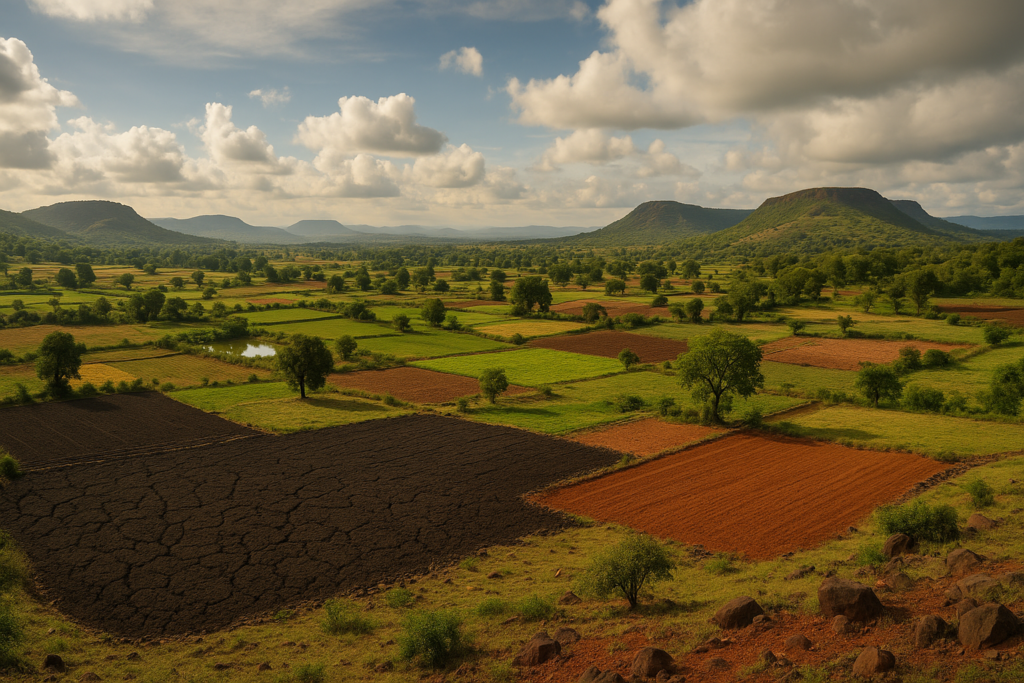
The soil composition of the Central India Plateau is equally diverse, shaped over millions of years by geological processes, climatic variations, and natural erosion. The region contains several major soil groups: black soil, red soil, alluvial loam, sandy soil, and lateritic soil. Black soil, also known as regur, is found predominantly in volcanic regions such as the Malwa Plateau. Renowned for its moisture-retaining capacity, this soil is ideal for cotton, soybean, wheat, and pulse cultivation. Its fine texture and high clay content allow it to expand during the rainy season and contract during the dry season.
Red soil, common in Bundelkhand and Baghelkhand, is rich in iron and has a characteristic reddish color. Although it drains quickly and has low water-holding capacity, it can become productive with proper irrigation and the addition of organic matter. Lateritic soil is typically found in the forested and hilly zones that receive higher rainfall. While lateritic soil is moderately fertile, it requires replenishment of essential nutrients to support agricultural use. Many communities rely on mixed cropping, composting, and traditional soil conservation methods to maintain soil health.
Over the years, soil fertility in different parts of the plateau has been affected by erosion, deforestation, irregular rainfall, and overuse of chemical fertilizers. Rocky terrain also limits cultivation in several areas. However, river valleys and low-lying basins contain highly fertile alluvial soils, making them centers of dense settlement and agricultural activity. With growing climate challenges, sustainable practices such as organic farming, mulching, watershed management, and afforestation are increasingly becoming essential for long-term ecological balance and agricultural productivity in the plateau.
People and Culture — The Living Soul of the Central India Plateau
The Central India Plateau is not defined merely by its hills, valleys, or geological structures; its true identity lives in the people who inhabit this land and the culture they have preserved for generations. This region is home to a rich mosaic of tribal communities, rural settlements, traditional artisans, and farming families whose lives are deeply intertwined with nature. Major indigenous groups such as the Gonds, Bhils, Baigas, Korkus, and Saharias form the cultural backbone of the plateau. Their languages, myths, songs, rituals, and collective values create a cultural landscape as diverse and vibrant as the plateau itself.
The people of this region are known for their simplicity, resilience, and strong sense of community. In many villages, collective labor and shared responsibilities remain central to daily life. Whether it is sowing seeds, harvesting crops, building houses, or preparing for festivals, the spirit of cooperation is seen everywhere. Among tribal communities, the relationship with “jal–jungle–zameen” (water–forest–land) is not just economic, but spiritual. They believe that nature is a guardian force, and respecting it is a fundamental part of life. This deep ecological wisdom has helped these communities adapt to changing climates and survive in challenging environments.
Music and dance form the heart of cultural expression in the Central India Plateau. The energetic Gondi dance of Mandla, the rhythmic Karma dance of the Baigas, the expressive Gavari of the Bhils, and the melodious folk instruments like the madal, dhol, mandar, and bamboo flutes enrich the social fabric of the region. These performances are not merely entertainment; they are a medium to celebrate seasons, honor deities, strengthen community bonds, and narrate stories of struggle and hope. Festivals such as Hareli, Karma, Nawakhai, Bhagoria, and various harvest rituals showcase the close connection between people, agriculture, and nature.
Traditional arts and crafts of the plateau are another essential part of its identity. Gond painting, one of the region’s most renowned artistic traditions, reflects a unique dot-and-line technique depicting animals, forests, myths, and ancestral stories. Bhil art, wooden carvings, terracotta figures, bamboo craft, and indigenous jewelry highlight the creativity of local artisans. These art forms are not only cultural heritage but also a means of livelihood for many families. Over the years, they have gained national and international recognition, enabling artisans to preserve their tradition while finding new economic opportunities.
The food culture of the plateau is rooted in native crops and forest produce. Millets such as kodo, kutki, and bajra form the dietary base, along with rice, maize, wild tubers, leafy greens, and seasonal fruits. Mahua, perhaps the most iconic forest product of the region, is used in sweets, traditional liquor, and various culinary preparations. The use of sal leaves and tendu leaves reflects a sustainable lifestyle where natural materials are utilized without harming the environment. Traditional cooking methods ensure that meals remain nutritious and closely connected to nature.
My own journey through this region allowed me to witness this cultural richness firsthand. One evening, in a small village surrounded by forested hills, I saw a group of elders and youth performing the Karma dance under the soft glow of lanterns. The rhythm of the drums, the graceful movements, and the collective harmony in their expressions revealed more than any written text could explain. In another village, a farmer shared his wisdom with me, saying, “Life here is not easy, but when community and nature stand with you, nothing feels impossible.” His words captured the essence of the plateau’s culture—strength, unity, and a deep respect for the land.
In essence, the people and culture of the Central India Plateau form a living narrative of coexistence, creativity, resilience, and harmony. Their traditions are not static remnants of the past but evolving practices that continue to guide daily life. This cultural diversity not only enriches the identity of the region but offers valuable lessons on sustainable living, community cooperation, and the timeless bond between humans and nature.
Economy — The Foundation of Livelihood and Development in the Central India Plateau
The economy of the Central India Plateau is shaped by its natural resources, agricultural traditions, forest-based livelihoods, and mineral wealth. While urbanization has expanded in recent decades, a significant share of the population still belongs to rural and tribal communities whose lives revolve around land, forests, and seasonal activities. The region’s economic structure reflects a balance between age-old practices and emerging industries, creating a complex yet dynamic system that continues to evolve.
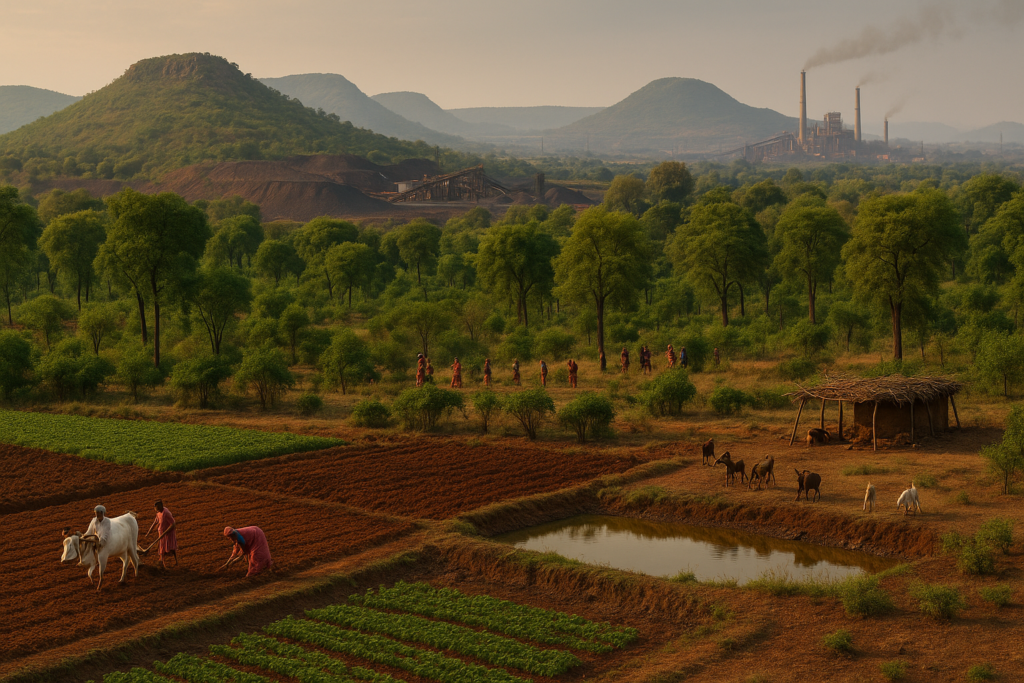
Agriculture forms the backbone of the plateau’s economy. Despite uneven rainfall, limited irrigation facilities, and rocky terrain in many parts, farmers cultivate a variety of crops suited to the soil and climate. Black soil areas, such as the Malwa region, support crops like soybean, wheat, cotton, and oilseeds, while red soil zones in Bundelkhand and Baghelkhand produce millets (kodo, kutki, bajra), pulses, maize, and groundnuts. Since agriculture here is largely dependent on the monsoon, even minor variations in rainfall can influence productivity. In recent years, watershed projects, check-dams, farm ponds, and micro-irrigation technologies have helped improve agricultural resilience.
Animal husbandry also plays a crucial role in sustaining rural livelihoods. Cattle, buffalo, goats, and sheep provide an important source of supplementary income. In many tribal communities, poultry and pig rearing are common and contribute significantly to household earnings. The availability of grazing grounds, forest resources, and agricultural by-products supports these activities and makes them sustainable. Dairy cooperatives have expanded in several districts, helping stabilize income and strengthen the rural economy.
The mineral wealth of the Central India Plateau gives the region a distinct economic identity. Large deposits of iron ore, bauxite, manganese, limestone, coal, and dolomite have encouraged the development of steel plants, cement industries, power stations, and mining-based manufacturing units. These industries generate employment for thousands of people and contribute significantly to local and state economies. However, mining also brings challenges such as land degradation, displacement, and ecological imbalance, making sustainable practices essential for long-term development.
Non-timber forest products (NTFP) form a lifeline for tribal communities. Items like mahua flowers, tendu leaves, harra, bahera, gum, sal seeds, medicinal plants, and honey are collected seasonally and sold in local markets. These resources not only support household income but also empower women, who play a major role in collection and processing. Cooperative societies and government programs have helped improve the value of NTFP by providing better storage, pricing, and marketing opportunities.
Handicrafts contribute significantly to the cultural and economic identity of the region. Gond paintings, Bhil art, bamboo craft, terracotta sculptures, wood carvings, and traditional jewelry reflect the artistic genius of local artisans. With the expansion of digital marketplaces and e-commerce platforms, these products have reached national and international customers, offering artisans improved income and recognition. Craft clusters and training programs have further strengthened this sector, making it an important driver of rural entrepreneurship.
Seasonal migration is another important feature of the plateau’s economic landscape. Due to limited employment opportunities in certain months, many individuals travel to nearby towns and industrial zones in search of work. Although migration offers financial benefits, it also affects family structures and social life. In recent years, local industries, food-processing units, skill development programs, and rural employment schemes have emerged as alternatives that reduce the need for long-distance migration.
Overall, the economy of the Central India Plateau is a blend of traditional livelihoods and modern growth avenues. Agriculture, livestock, and forest resources remain its foundational pillars, while mining, small-scale industries, handicrafts, and services provide new pathways for development. The true strength of this region lies in its people—their hard work, adaptability, and deep connection to the land. With balanced planning, sustainable practices, and community participation, the plateau holds immense potential for inclusive and long-lasting economic progress.

Challenges — Key Issues Facing the Central India Plateau
Despite its cultural richness, natural resources, and historical significance, the Central India Plateau faces several critical challenges that affect both its environment and the lives of its people. The first and most pressing challenge is irregular and insufficient rainfall. Due to its plateau-like structure, the region experiences uneven monsoons, resulting in recurring droughts. Since a large part of the population depends on rain-fed agriculture, even a slight variation in the monsoon can severely impact crop yields and farming income. This climatic uncertainty continues to place stress on rural livelihoods.
Water scarcity is another major concern. Soil erosion, depletion of forest cover, and excessive groundwater extraction have led to a steep decline in water availability across many villages. During summer, several settlements face acute shortages, forcing people—often women and children—to walk long distances to fetch drinking water. Traditional sources such as ponds, wells, and natural streams have either dried up or become neglected over time. While community-led water conservation efforts and watershed projects have brought improvements in some areas, a large portion of the plateau still struggles with water insecurity.
Limited access to education and healthcare also poses significant challenges. Many tribal and remote villages lack adequate schools, qualified teachers, and proper learning facilities. As a result, dropout rates remain high, particularly among girls. Healthcare systems face similar hurdles. Primary health centers often suffer from shortages of doctors, medicines, and essential equipment. For serious treatments, villagers must travel long distances to district towns, making timely healthcare difficult. These gaps widen socio-economic inequalities and slow overall development.
Mining activities, although economically valuable, have created environmental and social problems in several pockets of the plateau. Unregulated or poorly managed mining leads to deforestation, soil degradation, air pollution, and contamination of water sources. Tribal communities, whose lives are closely linked to forests and land, are disproportionately affected by displacement and loss of livelihood. Balancing economic growth with environmental sustainability remains a major challenge for policymakers.
Climate change is emerging as a long-term threat to the region. Rising temperatures, shifting rainfall patterns, and increasingly frequent droughts are putting additional pressure on agriculture, livestock, and natural ecosystems. These changes also endanger native flora and fauna, which form an essential part of the plateau’s ecological balance. Strengthening climate resilience through afforestation, sustainable farming practices, rainwater harvesting, and community awareness has become crucial for ensuring the region’s future stability.
Stories and Lessons — Life Experiences from the Central India Plateau
Every region carries countless stories within its soil, rivers, forests, and people. The Central India Plateau is no exception. As I traveled through its villages, forests, rocky uplands, and agricultural fields, I realized that the true essence of this land is reflected not just in its geography but in the lives of the people who inhabit it. Their resilience, wisdom, cultural richness, and deep connection with nature reveal lessons far more powerful than any textbook description. The following stories represent the spirit of this plateau—stories of struggle, hope, unity, and transformation.
Story 1: The Farmer of Bundelkhand — A Journey Through Drought and Determination
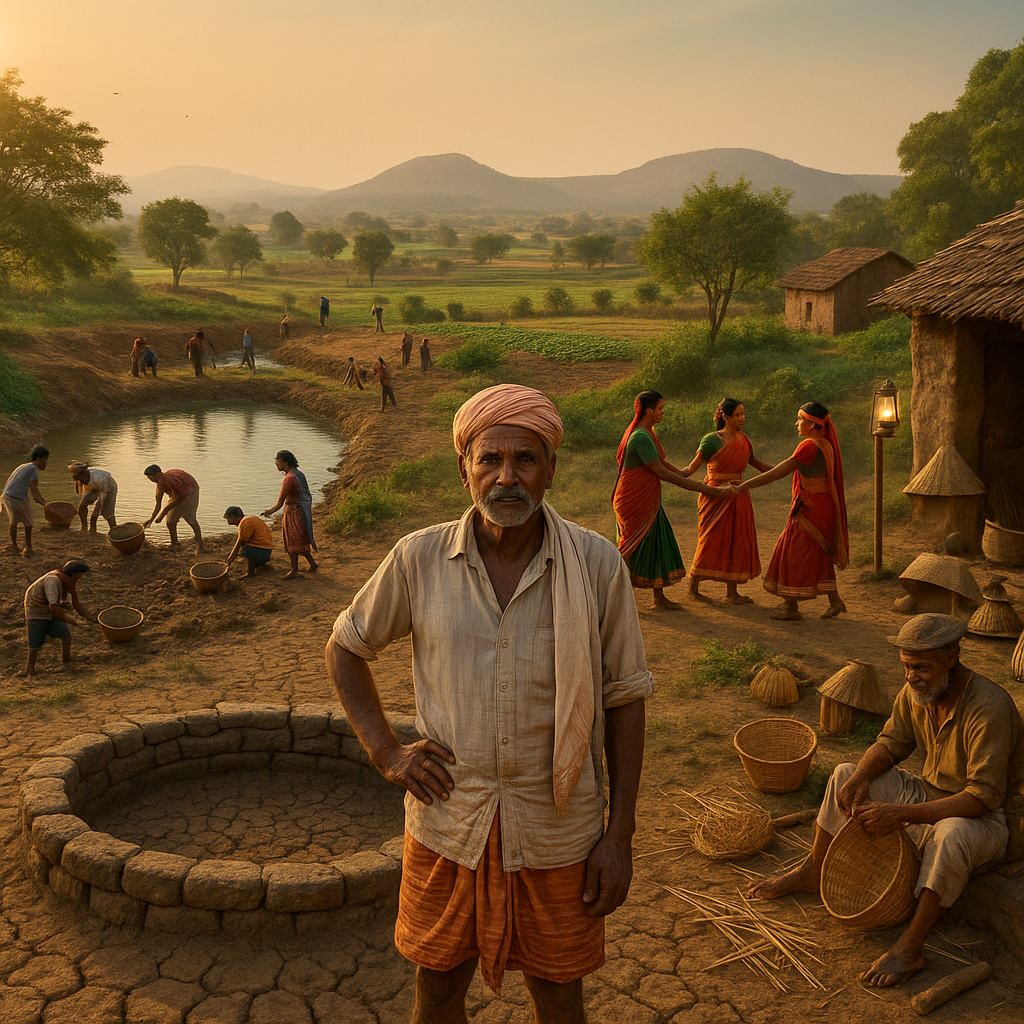
During my journey through Bundelkhand, I reached a small village where the earth was cracked and dry under the scorching heat. It felt as if the land itself was yearning for rain. There I met a farmer named Ramswaroop, who sat beside a nearly dried-up well, his eyes fixed on the distant sky as if waiting for clouds to appear. When I asked him whether the rainfall had been inadequate this year, he smiled gently—a smile that carried exhaustion, but also hope.
He shared that his three-acre field once flourished with millet and oilseeds, but for the past several years, irregular monsoons had damaged his crops repeatedly. Still, he refused to give up. Along with other villagers, he helped revive an old pond that had been neglected for decades. “We had no money,” he said, “but we had hands and we had unity.” When the rains finally returned the next year, the pond filled up and Ramswaroop’s field turned green again.
This experience taught me that hope is not a passive feeling—it is a conscious decision. Ramswaroop’s determination and the collective effort of the villagers reminded me that communities can overcome even the toughest challenges when they move forward together. The harsh geography and climate of the plateau may test them, but their spirit remains unbroken.
Story 2: The Karma Dance in a Tribal Village — A Celebration of Unity
One evening, I found myself in a tribal village nestled deep within the forests of the plateau. As dusk settled, the soft glow of lanterns illuminated the open ground. Suddenly, the rhythmic beat of drums filled the air—slow at first, then rising in perfect harmony. It was time for the traditional Karma dance, performed by the youth and elders together.
The dancers formed a large circle, holding hands as they moved gracefully to the rhythm. Their synchronized steps symbolized unity, gratitude toward nature, and the cyclical flow of life. A wise elderly woman sitting next to me whispered, “We share our sorrows, and we share our joys. That is Karma.” Her words reflected a profound truth—here, community was not just a social structure; it was a lifeline.
Watching the dance, I realized that culture is more than rituals and traditions—it is the emotional glue that binds people together. In regions where water scarcity, limited resources, and economic challenges are part of daily life, this sense of unity becomes essential for survival. The Karma dance was not just a performance; it was a reminder that harmony and cooperation can carry a community through the deepest hardships.
Story 3: The Bamboo Craftsman — Patience, Skill, and Identity
Another memorable encounter was with a bamboo craftsman named Raghunath, who lived on the outskirts of a forest. He worked in a small workshop with his family, creating baskets, mats, and beautifully carved decorative items from bamboo. His fingers moved with extraordinary speed and precision, as if he held a lifelong conversation with the material he shaped.
When I asked him whether this work was difficult, he laughed and replied, “The work is not difficult; the times are difficult. But when our hands stay busy, even difficult times become lighter.” Raghunath explained that his art had been passed down through generations, but modern machine-made products had made it harder for artisans like him to find consistent markets. Still, he persisted. “When someone praises my handmade work,” he said, “I feel my identity is alive.”
His words made me realize that traditional skills are not just economic assets—they carry cultural memory, pride, and identity. With proper support, fair markets, and recognition, these skills can empower communities and offer sustainable livelihoods, even in challenging environments.
Key Lessons from These Stories
- Community is the strongest foundation: Individual effort may falter, but collective effort can overcome deep-rooted challenges.
- Living in harmony with nature is essential: The people of the plateau remind us that respecting natural resources is the key to survival and sustainability.
- Traditional knowledge has lasting value: When combined with modern opportunities, indigenous skills can open new economic pathways.
- Hope and perseverance shape outcomes: Even under harsh climatic and economic conditions, determination can transform lives.
- There is beauty in struggle: The stories of this region show that struggle is not a barrier—it is a powerful teacher that builds resilience.
These stories are not isolated experiences. They reflect the enduring spirit of the Central India Plateau—a region where people face hardships with strength, creativity, and unity. They demonstrate that true development goes beyond infrastructure and industry; it includes cultural preservation, emotional well-being, and collective empowerment. The lessons learned here are universal, reminding us that resilience grows where community bonds are strong and where hope is nurtured even in the harshest landscapes.

Future and Solutions — Pathways Toward Sustainable Development
The Central India Plateau, despite its challenges, holds immense potential for sustainable development. Its natural diversity, cultural strength, and abundant resources offer a strong foundation for future growth—provided the right strategies are implemented. The future of this region depends on adopting development models that balance ecology, economy, and community well-being. By combining traditional knowledge with modern technology, the plateau can emerge as a model for inclusive and sustainable progress.
Water management is the most urgent priority for the region’s future. With rainfall remaining uneven and agriculture largely monsoon-dependent, conservation-oriented solutions are essential. Reviving traditional ponds, constructing check-dams, contour bunding, promoting rooftop rainwater harvesting, and recharging groundwater can significantly improve water availability. Several villages have already demonstrated that community-led water conservation initiatives can transform barren landscapes into productive farmlands. Scaling such efforts across the plateau could secure water for both agriculture and daily needs.
Sustainable agricultural practices will play a major role in shaping the economic resilience of the region. Techniques such as organic farming, crop diversification, mulching, mixed cropping, and agroforestry help maintain soil fertility while reducing dependence on chemical inputs. Encouraging drought-resistant and low-water crops can further stabilize agricultural incomes. Additionally, establishing local processing units for millets, pulses, and forest produce can add value to raw materials and generate local employment opportunities.
Forest conservation and biodiversity protection are equally critical for the future. Forests are not only ecological buffers but also essential to the cultural and economic identity of tribal communities. Strengthening community-based forest management, expanding afforestation programs, and improving the collection and processing of non-timber forest products (NTFP) can enhance both environmental sustainability and rural livelihoods. Empowering tribal communities to participate in decision-making will ensure long-term stewardship of natural resources.
Social development—especially in the fields of education, healthcare, and skill training—forms another pillar of sustainable progress. Improving school infrastructure, promoting digital learning, and introducing vocational training can equip youth with skills suitable for evolving job markets. Mobile health services, telemedicine, and well-equipped primary health centers can bridge existing healthcare gaps. When human development strengthens, economic and environmental solutions naturally become more effective.
In conclusion, the future of the Central India Plateau depends on coordinated efforts that integrate community participation, scientific planning, and ecological sensitivity. When people become active partners in change rather than passive beneficiaries, sustainable development becomes not just a goal but a lived reality. With the right vision, this plateau has the potential to transform into a thriving example of harmony between nature, culture, and progress.
Conclusion — A Deeper Understanding of the Central India Plateau
The Central India Plateau is far more than a geographical formation; it is a living tapestry of nature, culture, resilience, and human wisdom. Its landscapes, communities, challenges, and stories illustrate how deeply human life is shaped by the environment. The people of this region teach us that true development emerges from harmony—harmony with nature, with community, and with shared values. With collective effort, sustainable practices, and respect for traditional knowledge, the plateau has the potential to become a model of balanced and inclusive growth. The lessons learned here remind us that progress is meaningful only when it uplifts both people and the environment.
Frequently Asked Questions (FAQ)
1. Which states does the Central India Plateau cover?
The plateau spans major parts of Madhya Pradesh, Chhattisgarh, eastern Maharashtra, and sections of Rajasthan. In some areas, its geographical features extend into Uttar Pradesh and Jharkhand as well.
2. What are the primary economic activities in this region?
Agriculture, livestock rearing, mining, handicrafts, and non-timber forest products (NTFP) form the core of the region’s economy. Small industries and food-processing units are also emerging in several districts.
3. What are the major challenges faced by the Central India Plateau?
Irregular rainfall, water scarcity, soil erosion, limited access to healthcare and education, and environmental impacts of mining are some of the key challenges that affect daily life and development.

References
- Survey of India Reports — Official geographical and topographical data on Central India.
- Indian Geographical Society — Research papers on the Central India Plateau region.
- India Meteorological Department (IMD) — Climate and rainfall statistics.
- Ministry of Agriculture & Farmers Welfare — Soil types and agricultural data.
- Tribal Research Institute (TRI), Bhopal — Studies on tribal culture and community practices.
- Indian Bureau of Mines (IBM) — Annual reports on mineral resources and mining activities.
- National Rural Livelihood Mission (NRLM) — Reports on rural development and livelihood initiatives.