
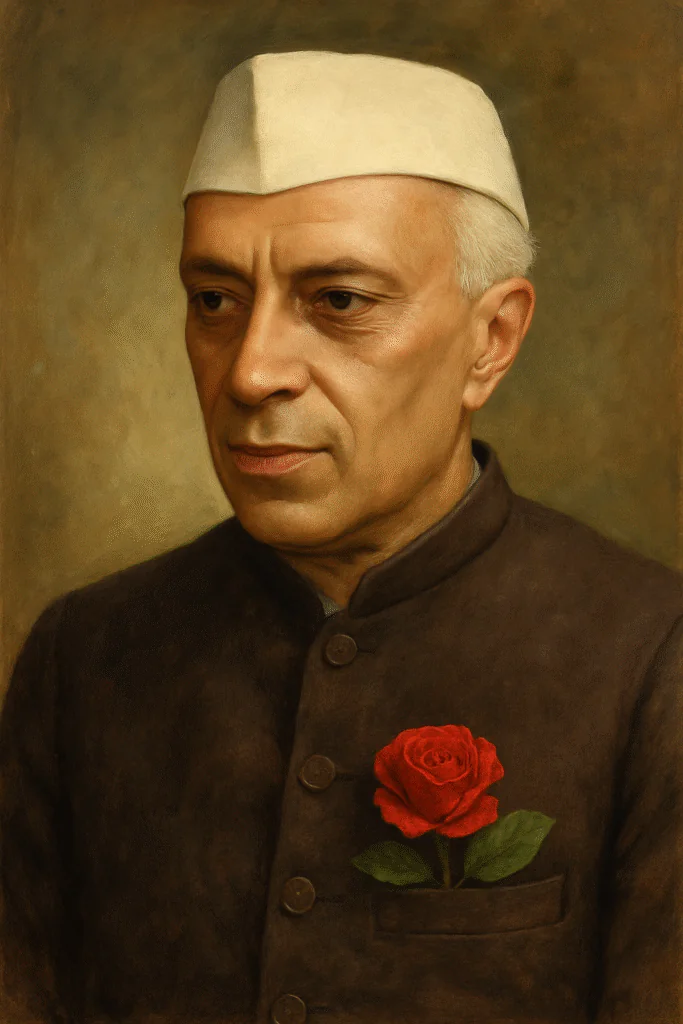
Biography of Pandit Jawaharlal Nehru
holds an indelible place in history as the great leader of the Indian freedom struggle, the first Prime Minister of independent India, and the architect of modern India. His biography is not only a mirror of Indian politics, but also the story of an era in which India moved from slavery to independence.
Early Life and Education
Pandit Nehru was born on 14 November 1889 in Allahabad (now Prayagraj) in Uttar Pradesh. His father Motilal Nehru was a famous lawyer and a senior leader of the Indian National Congress. Nehru’s mother Swaroop Rani was a religious and cultured woman.
Nehru ji received his early education at home from English teachers. At the age of 15, he was sent to Harrow School in England. From there he went to study at Trinity College, Cambridge University and obtained a bachelor’s degree in natural sciences. After this, he studied law from Inner Temple, London and returned to India in 1912.
Role in Indian Independence Movement
Coming Under the Influence of Mahatma Gandhi
Within a few years of returning to India, Nehru became active in Indian politics. He met Mahatma Gandhi at the Lucknow session of the Congress in 1916, which completely changed his political outlook. Under Gandhi’s leadership, Nehru actively participated in the Non-Cooperation Movement, Civil Disobedience Movement and Quit India Movement.
Leadership Role in Congress
Nehru was made the President of the Indian National Congress during the Lahore session in 1929. The resolution of Poorna Swaraj was passed in this session. Under his leadership, the Congress fought a decisive battle against British rule.
First Prime Minister of Independent India
Eve of Independence
When India became independent on 15 August 1947, Nehru ji gave the historic “Salute to the Tricolour” speech:
“At the stroke of the midnight hour, when the world sleeps, India will awaken to life and freedom.”
Policies and Achievements
1. Five Year Plans
He laid the foundation of economic policies based on socialist principles. The first five-year plan was implemented in 1951, the main objective of which was agricultural reform.

Top Rated Amazon Product
Trusted and highly reviewed product with excellent customer feedback. Check the latest price & availability on Amazon.
👉 Check on Amazon2. Industrialization and Science
Nehru established heavy industries, steel plants, and atomic energy research institutes. He laid the foundation of Indian Institutes of Technology (IITs) and Indian Space Research Organisation (ISRO) to promote scientific thinking.
3. Non-Aligned Movement
In foreign policy, Nehru initiated the Non-Aligned Movement, which gave India an opportunity to adopt an independent global view, keeping it away from Cold War politics.
Love for Children and ‘Chacha Nehru’
Pandit Nehru loved children very much. Children used to call him ‘Chacha Nehru’. His birthday, 14 November, is celebrated as ‘Children’s Day’ all over India.
Writings and Literary Contributions
Nehru was also an accomplished writer. The major books written by him are:
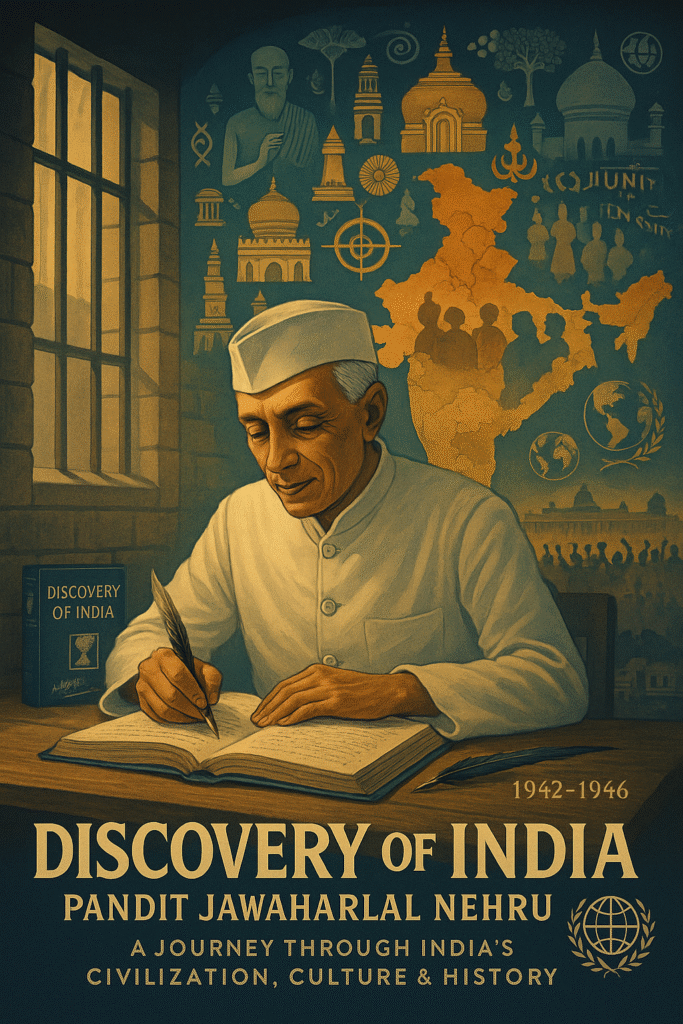
- Discovery of India (Bharat Ek Khoj) – Based on the cultural heritage of India.
- Glimpses of World History – Collection of letters on history.
- Towards Freedom – Details of the freedom struggle.
Demise and Final Moments
Nehru ji died of a heart attack in Delhi on 27 May 1964. His death was the end of an era. Even today his life, philosophy and vision give direction to India’s path of development.
Life of Pandit Nehru – At a Glance (Mermaid Diagram)
timeline
    title Life of Pandit Jawaharlal Nehru
    1889 : Born – Allahabad
    1905 : Harrow School, England
    1912 : Returned to India and started practicing law
    1919 : Active role in politics
    1929 : Became Congress President, proposed Poorna Swaraj
    1947 : Became the first Prime Minister of India
    1951 : First Five Year Plan begins
    1964 : Death – New Delhi
Conclusion
Pandit Jawaharlal Nehru was not only the first Prime Minister of independent India, but he was also a visionary leader, an excellent thinker and a true patriot. His contribution is still alive in the political, social and economic structure of India. His policies and ideas will remain a source of inspiration for generations to come.
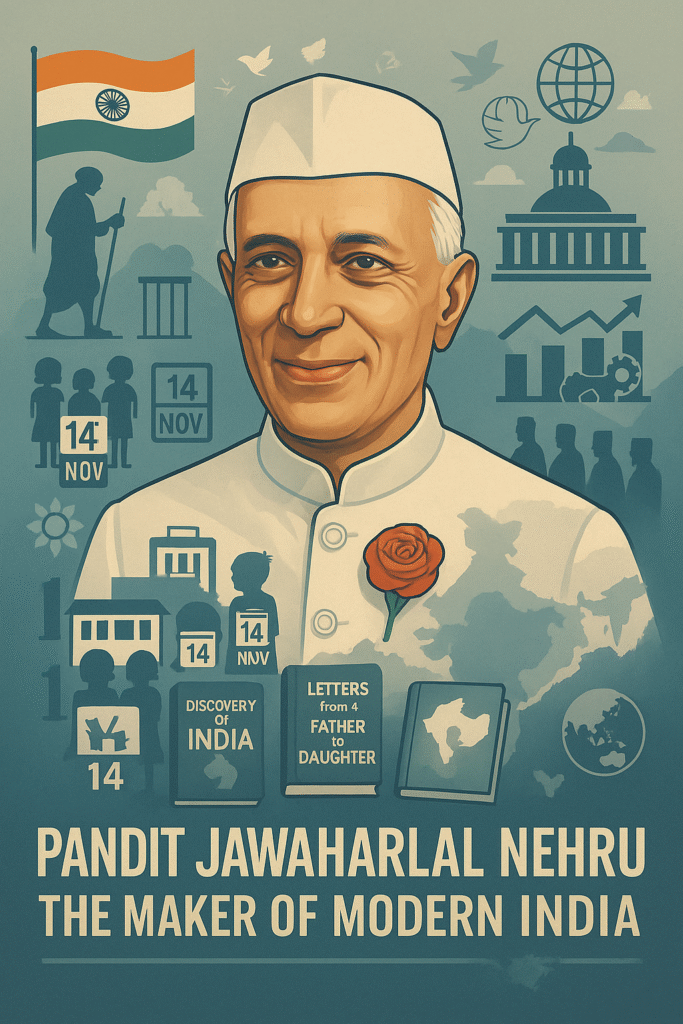
Biography of Pandit Jawaharlal Nehru – The Maker of Modern India
Pandit Jawaharlal Nehru is a personality in Indian history whose thinking, leadership and actions played an important role in making India a strong nation after independence. He became the first Prime Minister of independent India and his ideas, policies and vision strengthened the foundation of the country.
Early Life
Jawaharlal Nehru was born on 14 November 1889 in a prosperous Kashmiri Brahmin family in Allahabad (now Prayagraj), Uttar Pradesh. His father Pandit Motilal Nehru was a successful lawyer and freedom fighter. His mother’s name was Swarup Rani Nehru.
Nehru ji received his early education at home. After that he went to England for higher education, where he graduated in science from Harrow School, Eton College and then Trinity College, Cambridge. After this he studied in these colleges of London. He returned to India in 1912 after completing his law studies from Temple.
Contribution in Indian Freedom Struggle
Inspiration from Gandhiji
1916, Nehru devoted himself completely to the freedom movement. He actively participated in the Non-Cooperation Movement (1920), Civil Disobedience Movement (1930) and Quit India Movement (1942) and was imprisoned several times.
Leadership in Congress

Recommended Amazon Product
Well-reviewed and trusted product loved by users. Check the latest price, deals & availability on Amazon.
👉 View on Amazon1929. In the same session, he declared Purna Swaraj (complete independence). In 1946, he became the Prime Minister of the interim government and in 1947, the first Prime Minister of independent India.
Achievements as Prime Minister
1. Economic Plans and Development
Nehru initiated the five-year plans, which enabled industrialization, agricultural development and infrastructure creation in India. He promoted public sector units (PSUs) and gave national priority to science and technology.
2. Contribution to Education and Science
His efforts led to the establishment of institutions like IIT, IIM and AIIMS. He promoted scientific thinking and logical approach.
3. Non-Aligned Movement
Nehru ji started the Non-Aligned Movement, through which India avoided direct alliance with any global power and formed its own independent foreign policy.
Chacha Nehru and Child Love
Nehru ji loved children very much. He believed that children are the future of the country. Due to this feeling of his, he came to be known as ‘Chacha Nehru’ and his birthday, 14 November, is celebrated as ‘Children’s Day’.
Literary Contributions
Nehru ji was also a great writer. His major works are as follows:
- Discovery of India – Detailed description of the history, culture and civilization of India.
- Glimpses of World History – A collection of letters based on world history.
- Father’s Letters to Daughter – A collection of letters written to Indira Gandhi.
Demise and Memory
27 May 1964 in Delhi. With his death India lost a visionary leader and a true patriot. Even today his policies, ideas and contributions resonate in Indian society and politics.
Life-span Summary (Mermaid Diagram)
timeline
    title Jawaharlal Nehru – Life Journey
    1889 : Born – Allahabad
    1905 : Education in England
    1912 : Returned to India, started practicing law
    1916 : Meeting with Gandhiji, active participation in politics
    1929 : Became Congress President
    1947 : Became the first Prime Minister of India
    1951 : First Five Year Plan implemented
    1964 : Death – New Delhi
Conclusion
Pandit Jawaharlal Nehru was a multifaceted personality – a leader, a thinker, a writer, and a beloved uncle to children. The values and policies he established helped India develop as a modern nation. He is one of the great heroes of Indian history whose memory will always remain immortal.
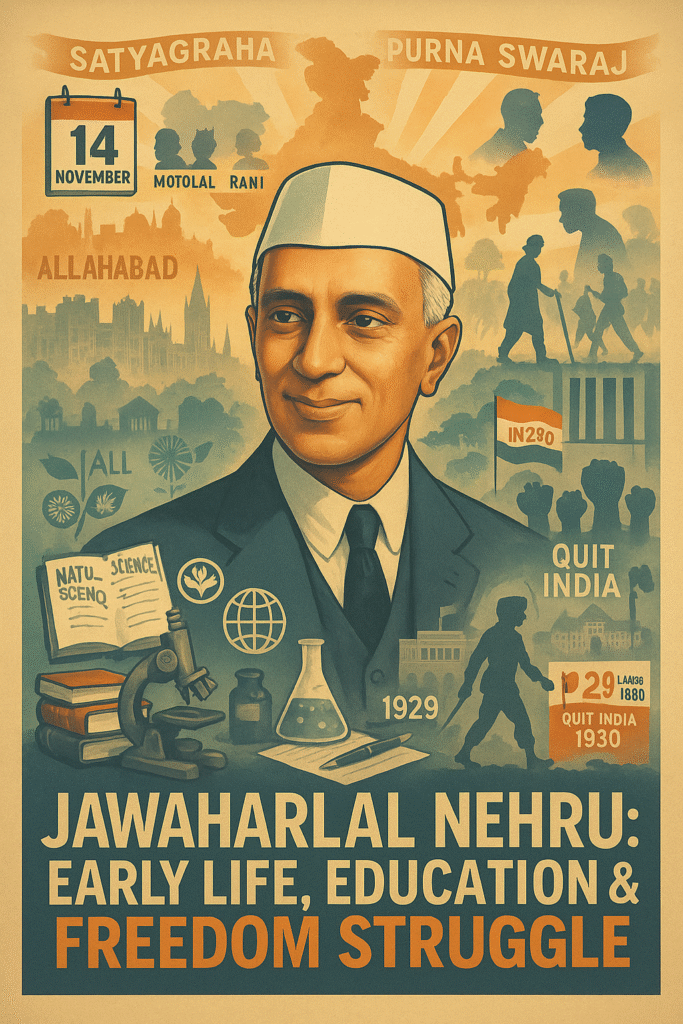
Biography of Pandit Jawaharlal Nehru
Pandit Jawaharlal Nehru is one of those great personalities of Indian history who not only played an important role in getting independence for India, but also made a decisive contribution in deciding the direction and condition of independent India. His life is an inspirational saga, which gives a unique glimpse of struggle, thoughts, leadership and nation building.
Nehru ji is called the architect of modern India because he laid the foundation for establishing India as a scientific, secular and democratic nation. He was not just a politician, but a thinker, writer and a sensitive person with deep sympathy for children. His personality was multifaceted – on one hand he was a diplomat who made India’s strong presence in international politics, and on the other hand he was also children’s favourite “Chacha Nehru”.
It is clear from the preamble that Nehru ji’s life and work are the foundation of an era in which India broke the chains of slavery and moved towards freedom, equality and development. His philosophy of life is still alive in the soul of modern India.
Early Life and Education
Pandit Jawaharlal Nehru was born on 14 November 1889 in the historic city of Allahabad (now Prayagraj) in Uttar Pradesh. He belonged to a rich, educated and prestigious Kashmiri Brahmin family. His father Pandit Motilal Nehru was a famous lawyer of that time and a senior leader of the Indian National Congress. Mother Swarup Rani Nehru was a religious, humble and cultured woman.
Nehru ji’s childhood was spent in a prosperous environment. He was brought up in a modern and progressive thinking family, where education and freedom of thought were given special importance. There was a beautiful amalgamation of Indian and Western cultures in his house, which made his personality broad-minded.
Early Childhood Education
Nehru ji received his early education at home. English teachers were specially appointed for him who taught him western education, science, history and philosophy. From childhood, he was an intelligent, curious and serious student. He had a keen interest in reading books and learning new things.

Highly Rated Amazon Product
Trusted product with positive customer reviews and performance. Check the latest price & availability on Amazon.
👉 View on AmazonHigher Education Abroad
At the age of 15, he was sent to England for higher education. There he first studied in Harrow School and then Eton College, which were considered among the most prestigious schools of that time. After this he took admission in Trinity College of the University of Cambridge, from where he graduated in Natural Science.
During his education, he became acquainted with Western culture, ideologies and political theories. He studied subjects like philosophy, politics, history and sociology in depth, which developed a global outlook in him.
Law Studies and Return to India
After graduation, Nehru ji studied law from Inner Temple in London. In 1912, he obtained a law degree and returned to India. On returning to India, he practiced law in the Allahabad High Court for some time, but he did not find satisfaction in the legal profession. During this time, he was attracted towards the Indian Independence Movement and soon became fully active in politics.
Nehru’s education made his personality multi-faceted. He was influenced by Western modernity, but was also deeply connected to Indian culture and values. His education made him a leader with a global perspective, who was equally firm in the roots of Indianness.
Role of Pandit Jawaharlal Nehru in Indian Freedom Struggle
Pandit Jawaharlal Nehru was a hero of the Indian freedom struggle who gave a new direction to the freedom struggle with youthful energy, intellect and social consciousness. He entered the freedom movement in the beginning of the 20th century and remained an important face of every freedom movement for the next four decades.
Coming Under the Influence of Gandhiji
A turning point in Nehru’s political life came when he addressed the Lucknow session of the Congress in 1916. Mahatma Gandhi’s ideology of Satyagraha, non-violence and public participation deeply influenced Nehru. From here onwards, he started seeing politics as a mass movement and not just an elite activity.
Non-Cooperation Movement (1920–1922)
Nehru ji took part in the Non-Cooperation Movement under the leadership of Gandhi ji. He gave up his legal practice, boycotted government institutions and organized the people against the British rule. This movement established him as a popular leader among the people.
Civil Disobedience Movement (1930)
Started by Gandhiji in 1930, Salt Satyagraha and Nehru took active part in the Civil Disobedience Movement. He called for breaking the laws of the British government all over India and went to jail. This was the period when he started being recognized as the young face of the Congress and the future leader.
President of the Congress and the Declaration of Poorna Swaraj
In 1929, at the Congress session held in Lahore, he was elected President of the Congress. In this session, the resolution of Complete Independence was passed to celebrate 26 January 1930 as Independence Day. It was from here that the demand for India’s independence was openly placed before the British Empire.
Quit India Movement (1942)
When Gandhiji gave the call of ‘Quit India’ in 1942, Nehru ji organized the movement across the country. He was put in jail along with other prominent leaders, where he remained imprisoned for about three years. This movement was the decisive phase of the freedom struggle.
Leadership of Interim Government and Independence
In 1946, Nehru ji was appointed the Prime Minister of the Interim Government of India. At this time he started taking responsibility of the administration of India and took the final steps towards independence. When India became independent on 15 August 1947, Pandit Nehru became the first Prime Minister of the country and he delivered the historic “Tryst with Destiny” speech.
Conclusion
Nehru’s role was not just that of a leader, but he was the ideological, strategic and emotional pillar of the freedom struggle. He took the movement to the masses, involved the youth, and defined independence not just as a political goal but as social and economic liberation.
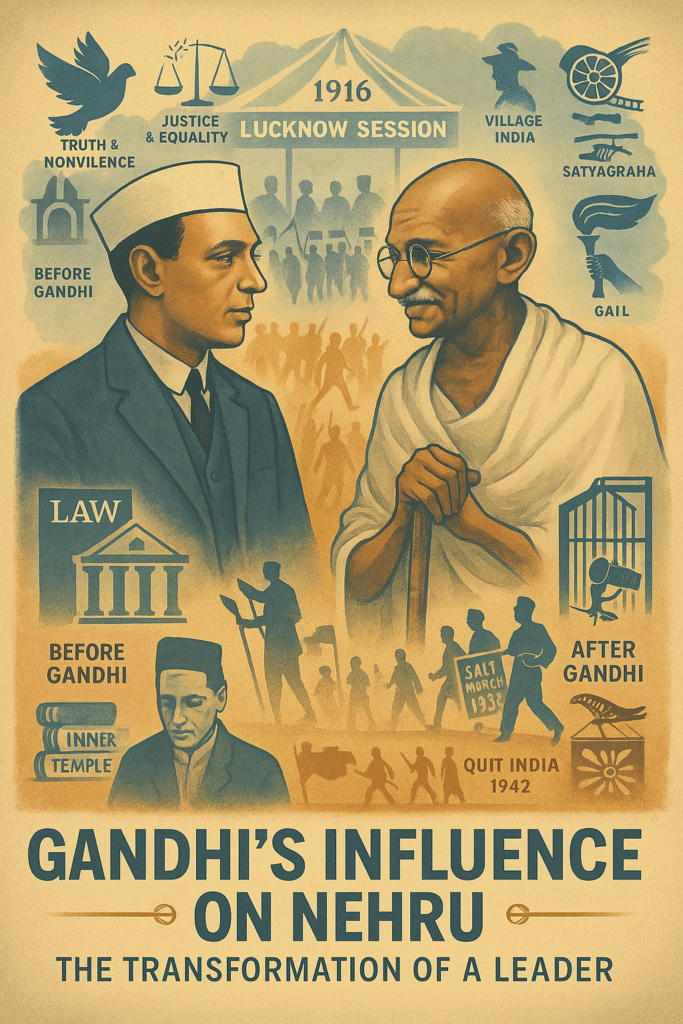
Coming under the Influence of Mahatma Gandhi
In the life of Pandit Jawaharlal Nehru, Mahatma Gandhi’s impact was very deep and far-reaching. Before meeting Gandhiji, Nehruji was an educated, modern and western-thinking person, who wanted to serve the country through constitutional reforms and legal methods. But the first meeting with Gandhiji changed the direction of his thinking, understanding and working.
First Meeting – Lucknow Session 1916
Nehru first met Gandhi in 1916 in Lucknow, when the Indian National Congress session was held. Gandhi had become famous for his Satyagraha movements in South Africa at that time and after returning to India, he was becoming active in Indian politics. This meeting attracted Nehru towards Gandhi’s ideology and personality.
Influence of Gandhiji’s Ideology

Highly Rated Amazon Product
Trusted and well-reviewed product with great customer feedback. View the latest price, offers & availability on Amazon.
👉 View on AmazonGandhi’s truth and non-violence, his struggle based on freedom, his connection with the Indian people, his idea of self-reliance and direct opposition against the British – all these influenced Nehru ji very much. Especially Gandhi ji’s belief that freedom should not be the goal of only the educated people, but should also be the voice of ordinary Indians living in villages, proved to be a complete change in Nehru ji’s thinking.
Populist View of Politics
After coming in contact with Gandhiji, Nehru ji started the work of connecting politics with the people. He no longer talked only about ideas, but started connecting with farmers, workers and youth on the ground. He realized that the Indian freedom movement cannot succeed unless there is active participation of the common people in it.
Actively Involved in the Struggle Against British Rule
Inspired by Gandhiji’s influence, Nehru ji:
- Left advocacy and became a full-time freedom fighter.
- Played an active role in the Non-cooperation Movement (1920), Salt Satyagraha (1930), and Quit India Movement (1942).
- He visited jails and strongly opposed the policies of the British government.
Features of the Relationship Between Nehru and Gandhiji
Although Nehru and Gandhi often had differences of opinion – especially on questions of science, technology and socialism – their relationship was characterised by deep respect and trust. Gandhi always regarded Nehru as “his successor” and believed that the future of independent India was safe in his hands.
Conclusion
Mahatma Gandhi’s influence made Nehru a conscious, dedicated and public-spirited leader. With Gandhiji’s inspiration, he not only understood political struggle, but also learned the way to turn it into a mass movement. The Gandhi-Nehru duo strengthened the foundation of India’s independence and gave a new direction to the country.
Leadership Role in Congress
Pandit Jawaharlal Nehru was one of the prominent leaders of the Indian National Congress who transformed the organization into a strong nationalist movement by connecting it with youth, farmers, workers and the general public. His role in the Congress was not only that of a leader but also that of a thinker, planner and mass leader who gave new direction and energy to the freedom struggle.
Initial Association with Congress
Nehru ji formally took active membership of the Congress in 1919. Initially, he represented the youth in the Congress and had radical views against the British. He wanted the Congress movement to be more widespread and mass-based.
Active Participation in the Organization
When Mahatma Gandhi started the Non-Cooperation Movement in the 1920s, Nehru ji started participating actively in various programs of the Congress. He soon became known for his youthful character and established himself as a popular speaker. His charming personality, scholarship and oratory skills made him popular among the public.
Role as Congress President
Nehru ji was selected as Congress President six times:
- 1929 – Lahore Session: In this historic session, the decision of Complete Independence was taken and 26 January 1930 was declared as Independence Day.
- He continued to lead the Congress even in the years 1936, 1937 and 1946.
Ideology and Approach
Nehru within the Congress was a supporter of socialist ideology. He wanted freedom to be not only political, but also social and economic equality should also be ensured. He presented the idea of scientific thinking, industrial development and a planned economic system in the Congress.
Motivating the Youth
Nehru ji played an important role in uniting the youth in the Congress. Under his leadership, students, youth, intellectuals and working class joined the activities of the Congress. He instilled enthusiasm, patriotism and a spirit of sacrifice in the youth.
Quit India Movement and Congress Leadership
In 1942, when Mahatma Gandhi started the ‘Quit India Movement’, the entire leadership of the Congress – including Nehru ji – was sent to jail. Even in difficult circumstances, the Congress remained united and the public’s faith in it remained intact. Nehru ji’s strategic thinking and organizational ability kept the Congress united.
Interim Government and Congress Leadership at the Time of Independence
In 1946, the Congress formed an interim government in which Nehru ji was appointed Prime Minister. By this time he had become the supreme leader of the Congress. When India became independent on 15 August 1947, he became the first Prime Minister of independent India representing the Congress.
Conclusion
Pandit Jawaharlal Nehru’s role in the Congress was not just that of a politician, but that of a guide, thinker and mass leader. He transformed the Congress into a mass movement, modernized its ideology and made it a strong organization for achieving independence. Under his leadership, the Congress remained the most prominent and influential force in the Indian freedom struggle.
First Prime Minister of Independent India
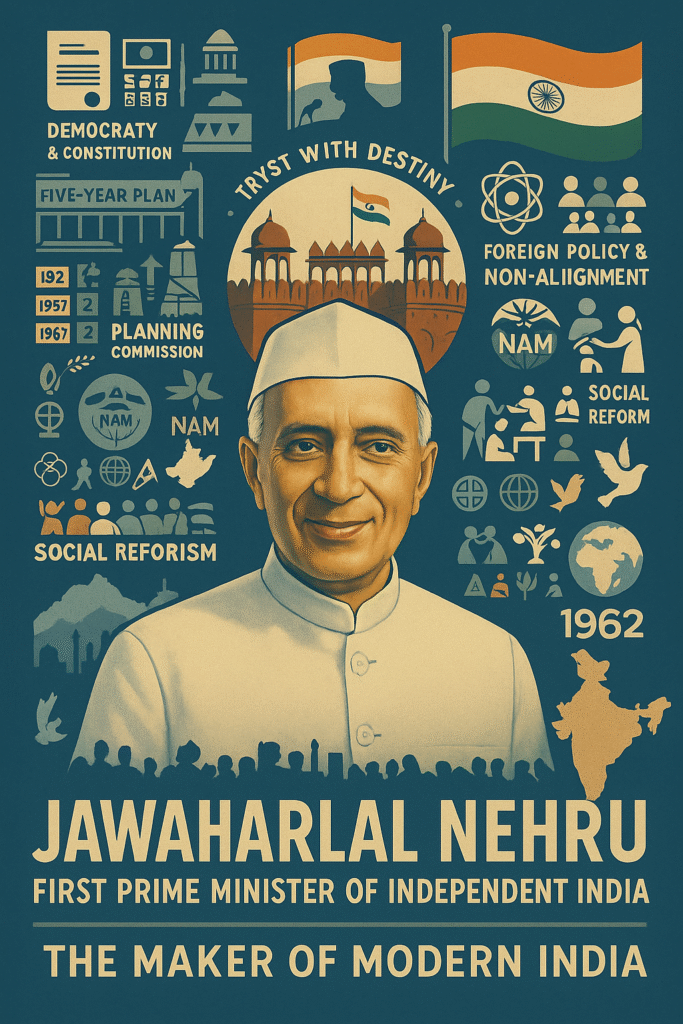
On 15 August 1947, Pandit Jawaharlal Nehru became the first Prime Minister of independent India. His post was not just a political appointment, but the responsibility of a leader who took charge of giving direction to a new nation after centuries of slavery. The way Nehruji led India after independence became the foundation of Indian democracy, development and international identity.
Ascension to the Prime Minister’s Post
During the formation of the interim government in 1946, Nehru ji was made its head, which made it clear that he would be the Prime Minister in independent India. When India became independent on 15 August 1947, Nehru ji gave a historical speech from Delhi’s Red Fort – known as “Tryst with Destiny”. In this speech, he envisioned an India based on justice, liberty and equality.
Strengthened the Foundation of Democracy
Nehru ji strengthened the roots of democracy in India. He supported the framing of the Constitution and ensured that India became a secular, republican and democratic nation. Under his leadership, successful general elections were held in 1952, 1957 and 1962 – symbolising the success of India’s democracy.
Industrialisation and Planned Development
Mr Nehru is called the “Maker of Modern India” because he laid the foundation for economic and industrial development. Under his leadership:
- The Indian Planning Commission was established.
- Five-year plans were started.
- Heavy industries, steel plants, and power projects were promoted.
- Science, technology and technical education were prioritised — e.g., IITs, ISRO and AIIMS were established.
His thinking was: “If we want to get rid of poverty, we have to industrialize.”
Foreign Policy and Non-Aligned Movement
Nehru’s foreign policy was based on the Non-Alignment Movement (NAM). During the Cold War, he adopted an independent policy instead of taking the side of either the US or the Soviet Union. He was a supporter of cooperation and self-reliance among third world countries.
Message of Social Reform and Unity
Nehru ji gave India a secular identity. He made efforts toward equality and unity. He adopted the policy of treating all religions, languages and castes equally. He promoted women’s education, upliftment of Dalits and scientific thinking.
Challenges and Criticisms
- The Sino-Indian War of 1962 and India’s defeat led to criticism of his foreign and defence policies.
- Despite planned development, poverty and unemployment could not be solved as expected.
Demise
Nehru ji died on 27 May 1964. His death marked the end of an era. He left a lasting mark in the direction of making India a modern nation.
Conclusion
Pandit Jawaharlal Nehru was a visionary Prime Minister who not only governed independent India but also guided it to become a respected nation on the world stage. The foundations he laid for Indian democracy, constitution, science, education, foreign policy and social harmony remain the pillars of modern India even today.
Eve of Independence
The eve of independence – the night of 14 August 1947 – was the most emotional, historical and transformative moment in Indian history. This was the night when India became a single nation after centuries of slavery, exploitation and struggle. This night was not only a celebration of India’s independence, but also the moment to take an oath to rebuild the country.
Historical Background
During the 1940s, the policies of the British government during the Second World War and the Quit India Movement (1942) weakened British rule. Ultimately, on 3 June 1947, under the Mountbatten Plan, India was declared a free nation. Independence and partition were announced.
According to this plan, on 15 August 1947, India and Pakistan would come into existence as two independent nations.
Midnight Meeting of the Constituent Assembly
On the night of August 14, 1947, a special meeting of the Indian Constituent Assembly was called. This meeting began at 11:00 PM and lasted until the first moments of 15 August. On this historic occasion, the members of the Constituent Assembly accepted the country as a democratic, independent nation.
Nehru Ji’s Historical Speech – “Tryst with Destiny”
In this meeting, Pandit Jawaharlal Nehru delivered his famous speech “Tryst with Destiny”. This speech not only added dignity to the moment but also clarified India’s future direction. Nehru ji said:
“At the stroke of the midnight hour, when the world sleeps, India will awake to life and freedom.”
He expressed his commitment to fight poverty, inequality and injustice and vowed to build a modern, inclusive India.
Celebrations and Public Joy
The eve of Independence was celebrated as a festival across India. People welcomed this historic moment by lighting lamps, distributing sweets, hoisting flags and raising patriotic slogans. This night was full of pride, joy and tears.
The Pain of Partition
Even though the night celebrated freedom, it was also marked by the pain of partition. The division of India and Pakistan forced millions to face displacement, riots and death. Therefore, joy and sorrow were both present that night.
Conclusion
The eve of independence was not just a date, but a moment when India began to shape its future. Nehru ji’s speech, the meeting of the Constituent Assembly and the celebrations of the people together made this the most memorable night in Indian history.
Policies and Achievements

Top Rated Amazon Product
Highly recommended product with strong customer feedback. Check the latest price, deals, and availability on Amazon.
👉 View on AmazonThe policies adopted and achievements accomplished by Pandit Jawaharlal Nehru as the first Prime Minister of independent India are still considered the foundation of India’s development. He envisioned an India that was modern, progressive, based on scientific thinking and rooted in social justice, secularism and democracy.
🏛️ Key Policies
1. Planned Economic Development
- The Indian Planning Commission was established in 1950.
- Five-Year Plans were started to promote coordinated development in agriculture, industry, irrigation, education and health.
- The aim was poverty alleviation, self-reliance and balanced regional development.
2. Policy of Industrialization
- Public sector was given top priority.
- Steel plants, power projects and national-level industries were promoted.
- Heavy industry and machine-building were called the “Temples of Modern India”.
3. Agricultural Reforms
- Land reforms, abolition of zamindari and securing rights for farmers were initiated.
- The foundation of the Green Revolution was laid during his period.
4. Priority to Education and Science
- Establishment of IITs, AIIMS, UGC and ISRO.
- Beginning of National Science Policy to promote scientific temper.
- Promotion of free and compulsory primary education.
5. Secularism and Socialism
- India was developed as a secular state.
- Equal civil rights, anti-discrimination policies and women empowerment were promoted.
6. Foreign Policy – Non-Aligned Movement
- India neither sided with America nor the Soviet Union, but adopted a free and balanced non-aligned policy.
- Nehru was among the founding leaders of the Non-Aligned Movement (NAM).
Major Achievements
| Area | Achievements |
|---|---|
| Political | Successful establishment of democratic system; fair conduct of three general elections. |
| Economic | Planned development; beginning of industrialization; expansion of public sector. |
| Education | Establishment of IITs, AIIMS, UGC; development of scientific thinking. |
| Foreign Policy | Leadership of NAM; promotion of Asian-African cooperation. |
| Social | Establishment of secularism; empowerment of women and Dalit rights. |
🔷 Mermaid Timeline (Order of Strategies and Achievements)
timeline
    title Major policies and achievements of Pandit Nehru
    1950 : Establishment of Planning Commission
    1951 : First Five Year Plan
    1956 : Emphasis on industrialization in the Second Plan
    1958 : IIT and AIIMS started
    1960 : Establishment of the Non-Aligned Movement
    1962 : China War – Rethink on defence policy
Conclusion
Pandit Jawaharlal Nehru’s policies touched every aspect of the nation — Constitution, democracy, science, education and foreign policy. His achievements were decisive steps toward making India a self-reliant, modern and progressive nation. His contributions remain a source of inspiration in the process of nation-building even today.
References

Amazon Popular Choice Product
Trusted and popular product with positive customer feedback. Check the latest price & availability on Amazon.
👉 View on Amazon- Nehru, Jawaharlal. The Discovery of India. Penguin Books.
- Nehru, Jawaharlal. Glimpses of World History. Penguin Books.
- Nehru, Jawaharlal. Letters from a Father to His Daughter. Jawaharlal Nehru Memorial Fund.
- Gopal, Sarvepalli. Jawaharlal Nehru: A Biography. Harvard University Press.
- Brown, Judith M. Modern India: The Origins of an Asian Democracy. Oxford University Press.
- Government of India Archives – Speeches of Pandit Jawaharlal Nehru (1947–1964).
- Indian National Congress Historical Records – Freedom Movement Documents.
- Nehru Memorial Museum & Library – Digital Archives and Manuscripts.