
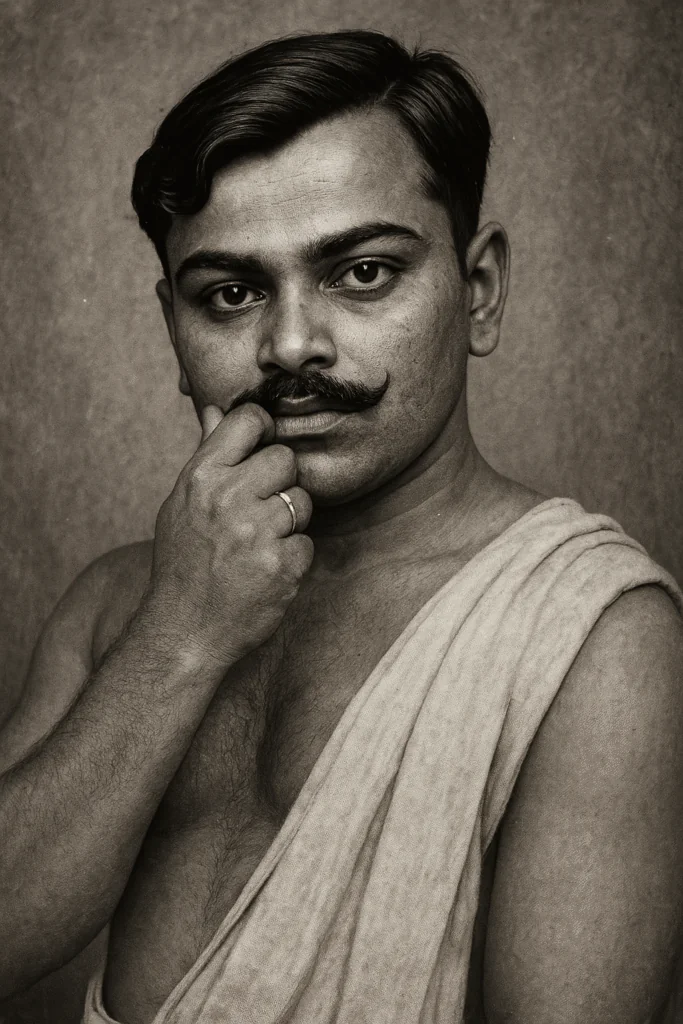
Chandrashekhar Azad: Life, Struggle, and Legacy
Introduction
Name: Chandrashekhar Tiwari (renamed during the freedom struggle as Chandrashekhar Azad)
Birth: 23 July 1906
Birthplace: Bhabhra village, Alirajpur district, Madhya Pradesh
Death: 27 February 1931 (age 24 years)
Death Place: Allahabad (now Prayagraj), Uttar Pradesh
Nationality: Indian
Fame: Great revolutionary of India, member of the Hindustan Socialist Republican Association (HSRA)
Early Life
Chandrashekhar Azad was born into a simple Brahmin family. His father’s name was Pandit Sitaram Tiwari and his mother’s name was Jaggarani Devi. His childhood was marked by poverty and struggle. He was sent to Varanasi to study, where he learned Sanskrit and was deeply influenced by the growing freedom movement.
Childhood and Education
His parents originally belonged to Unnao, Uttar Pradesh, but had migrated to Bhabhra village, Madhya Pradesh, shortly before his birth. His mother wished for him to become a Sanskrit scholar and priest. Therefore, he was sent to Varanasi, where he studied in a Sanskrit school and lived in temples with priests.
Inclination Towards Patriotism
During his time in Varanasi, he was inspired by Mahatma Gandhi’s Non-Cooperation Movement in 1921. At just 15 years old, he participated in this movement and was arrested by the British police.
His Iconic Court Statement
When presented before the magistrate, he responded boldly:
- Name: Azad
- Father’s Name: Swatantrata
- Address: Jail
This fearless statement stunned everyone present. From that day, he became known as Chandrashekhar Azad, a symbol of rebellion and courage.
Beginning of His Revolutionary Life
Azad’s revolutionary journey began at the age of 15 when he joined Gandhi’s Non-Cooperation Movement. This marked the beginning of his lifelong fight for India’s freedom.
Participation in the Non-Cooperation Movement
Seeing people rise against British rule inspired him deeply. He joined demonstrations and raised slogans like “Vande Mataram” and “Bharat Mata Ki Jai”. His fearless answers in court turned him into a national symbol of youth rebellion.
Awesome Product Name Here
लिखें यहाँ छोटा विवरण — मुख्य फीचर्स, उपयोग और उपयोगकर्ता लाभ। यह SEO के लिए महत्वपूर्ण है।
* As an Amazon Associate I earn from qualifying purchases.
Disagreement with Gandhiji
When Gandhiji withdrew the Non-Cooperation Movement after the Chauri-Chaura incident, Azad felt disappointed. He believed that complete freedom could not be achieved through peaceful means alone. This pushed him towards the path of armed revolution.
Joining Revolutionary Organizations
Azad joined the Hindustan Republican Association (HRA), which later became the Hindustan Socialist Republican Association (HSRA). He worked alongside Ram Prasad Bismil, Bhagat Singh, Rajguru, Sukhdev, and other legendary revolutionaries.
Main Objectives of Azad
- To free India from British rule
- To create a socialist and exploitation-free India
- To inspire the youth with patriotism and a spirit of sacrifice
Role in HSRA
Chandrashekhar Azad soon emerged as one of the most dynamic leaders of HSRA. He played a vital role in several key revolutionary activities.
Major Incidents
Kakori Incident (1925)
Azad was involved in the Kakori train action in which government treasury was looted from a British train.
Revenge for the Murder of Lala Lajpat Rai (1928)
Azad, along with Bhagat Singh and Rajguru, participated in the assassination of British officer J.P. Saunders, who was responsible for Lala Lajpat Rai’s death.
Viplav Yojana
Azad played a key role in creating revolutionary strategies to overthrow the British government.
Martyrdom
On 27 February 1931, Chandrashekhar Azad was surrounded by British police at Alfred Park (now Chandrashekhar Azad Park) in Allahabad. True to his vow — “the British police will never capture me alive” — he fought bravely and used his last bullet on himself, achieving martyrdom.
Chandrashekhar Azad’s Motto
“I was free, am free, and will remain free.”
Legacy
- Azad’s sacrifice inspired countless Indian youth.
- Many parks, educational institutions, and memorials have been named after him.
- Alfred Park is now officially known as Chandrashekhar Azad Park.
- His bravery has been portrayed numerous times in Indian cinema.
Conclusion
Chandrashekhar Azad is a name that stands for courage, sacrifice, and unshakeable patriotism. His determination breathed new life into India’s freedom struggle and continues to inspire generations.

Hindustan Socialist Republican Association (HSRA)
The Hindustan Socialist Republican Association (HSRA) was a major revolutionary organization during India’s freedom struggle. Its primary goal was to end British rule through armed revolution and establish a socialist republic in India.
Establishment
- Establishment Year: 1928
- Establishment Place: Ferozeshah Kotla Fort, Delhi
- Former Name: Hindustan Republican Association (HRA)
Founding Members
- Chandrashekhar Azad
- Bhagat Singh
- Rajguru
- Sukhdev
- Ram Prasad Bismil (Founder of HRA)
- Jogesh Chandra Chatterjee
- Shiv Verma
- Other dedicated revolutionaries
Objectives
- To end British rule
- To establish a socialist republic in India
- To create economic, social, and political equality
- To build an exploitation-free society
Main Slogans and Declarations
- “Inquilab Zindabad!” – Popularized by Bhagat Singh
- “Sarfaroshi ki tamanna ab hamare dil mein hai”
- “Our enemy should know that we can die for our country!”
Major Activities
Murder of Saunders (1928)
- Revenge for the death of Lala Lajpat Rai
- Involved: Bhagat Singh, Rajguru, Chandrashekhar Azad
Assembly Bomb Case (1929)
- Bhagat Singh and Batukeshwar Dutt threw a bomb in the Central Assembly.
- The bomb was meant only to make noise, not to kill anyone.
- They allowed themselves to be arrested to present their ideology in court.

Best Product Name Here
Add a concise product description here that highlights the key features and benefits to boost SEO.
* As an Amazon Associate I earn from qualifying purchases.
Kakori Incident (1925)
- Carried out by HRA (before HSRA was formed)
- Objective: To loot the government treasury from a British train
- Involved: Ram Prasad Bismil, Ashfaqulla Khan, and others
Sacrifice and Legacy
- Bhagat Singh, Rajguru, and Sukhdev were hanged on 23 March 1931.
- Chandrashekhar Azad sacrificed his life in Alfred Park, Allahabad, by shooting himself to avoid being captured by the British.
- The courage and ideology of these revolutionaries inspired a massive wave of youth revolution across India.
Historical Role of HSRA
HSRA demonstrated that India’s independence could be pursued not only through non-violent movements but, when necessary, through revolutionary paths as well. The organization played a crucial role in shaping the direction of militant nationalism.
Sources and Documents
HSRA issued the famous manifesto “The Philosophy of the Bomb”, which explained that revolution was essential to end exploitation, inequality, and slavery under British rule.
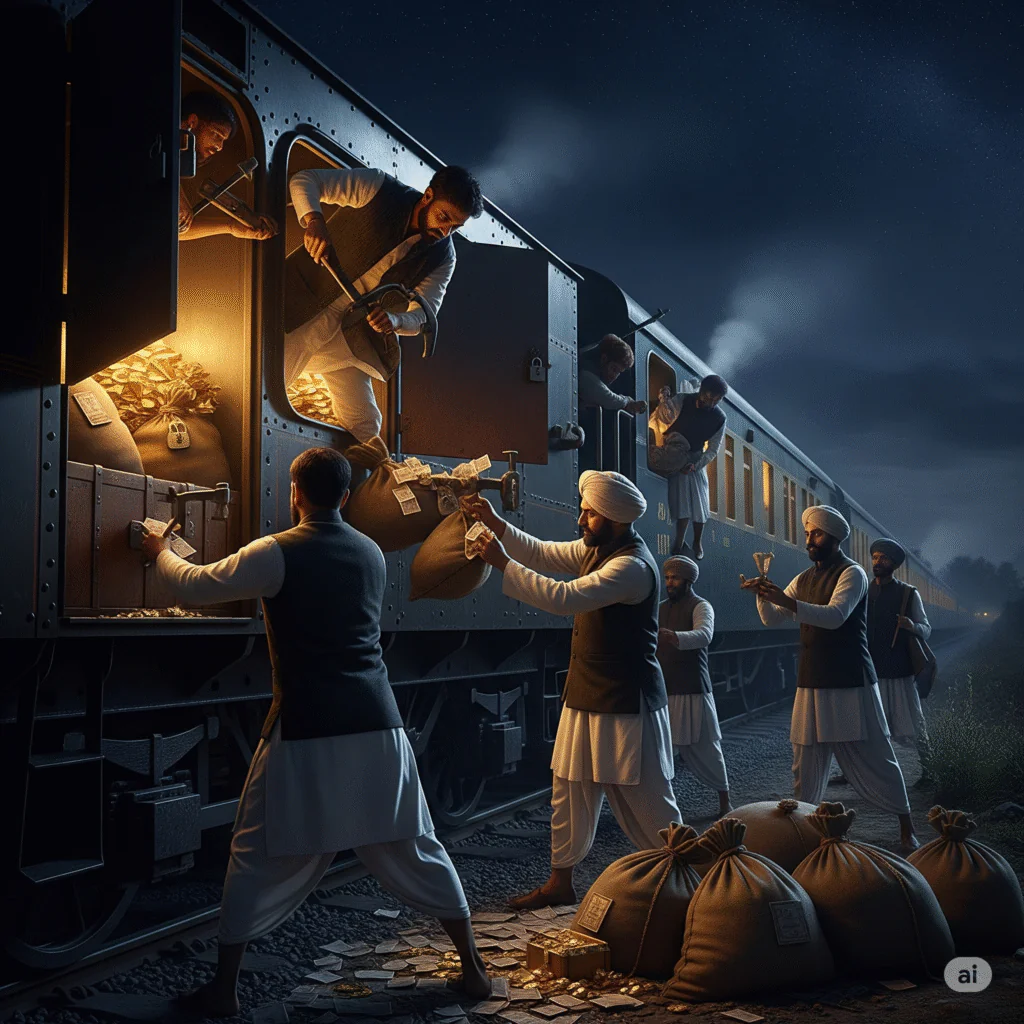
Kakori Kand – 1925
The Kakori incident was a historic revolutionary event in the Indian freedom struggle. It took place on 9 August 1925. The objective of this incident was to loot the British government’s treasury to fund revolutionary activities and challenge British authority.
Place of Incident
- A small town named Kakori
- Located in Lucknow district of Uttar Pradesh
- Situated on the Lucknow–Saharanpur railway route
Objectives of the Incident
- To loot the British treasury
- To use the money for revolutionary activities and weapon purchasing
- To show the British government that the youth of India would no longer remain silent
Main Plan
- Planned by the Hindustan Republican Association (HRA)
- Led by: Ram Prasad Bismil
- The treasury was kept in the guard compartment of the government train
- On 9 August 1925, the 8 Down Saharanpur–Lucknow passenger train was stopped near Kakori
- The train was halted, the iron safe broken, and the boxes of money were looted
Main Revolutionaries (Participants)
- Ram Prasad Bismil (Leader)
- Ashfaqulla Khan
- Rajendra Lahiri
- Chandrashekhar Azad
- Thakur Roshan Singh
- Mukundi Lal
- Banwari Lal
- Keshav Chakravarty
- Sachindranath Bakshi
British Reaction and Arrests
- The British government intensified the investigation
- Many revolutionaries were arrested
- 19 people related to the Kakori incident were put on trial
Brave Revolutionaries Sentenced to Death
- Ram Prasad Bismil
- Ashfaqulla Khan
- Rajendranath Lahiri
- Thakur Roshan Singh
They were hanged on 19 December 1927. Their sacrifice ignited a spark of revolution among Indian youth.
Importance and Impact
- The incident became a symbol of armed rebellion against the British
- The name of HRA spread across the country
- It gave new direction to the revolutionary movement
- The Hindu-Muslim unity of Ashfaqulla Khan and Bismil became an inspiring example
Slogan and Sentiment
“Sarfaroshi ki tamanna ab humare dil mein hai,
Dekhna hai zor kitna baazue-qatil mein hai.”
– Ram Prasad Bismil
Revenge for the Murder of Lala Lajpat Rai (1928)
The brutal lathi charge on Lala Lajpat Rai and his death triggered strong emotions across the nation. To avenge this injustice, Bhagat Singh, Rajguru, and Chandrashekhar Azad planned an attack, which is known in history as the Saunders Murder Case.
Background: Opposition to Simon Commission
- In 1928, the British sent the Simon Commission to India without any Indian representation
- It was opposed nationwide
- On 30 October 1928, Lala Lajpat Rai led a peaceful protest in Lahore
Slogan Raised
“Simon Go Back!”
Lathi Charge and Death
- Lahore’s SP James A. Scott ordered a brutal lathi charge on the protesters
- Lala Lajpat Rai suffered severe injuries
- He died on 17 November 1928
Lalaji’s Words
“Every blow on my body will be a nail in the coffin of the British Empire!”
Revenge Plan: Killing Saunders
- HSRA revolutionaries decided to avenge Lajpat Rai’s death by killing J.A. Scott
- The plan was made by Bhagat Singh, Rajguru, and Chandrashekhar Azad
- By mistake, ASP John P. Saunders was shot instead of Scott
Details of the Incident (17 December 1928)
- Rajguru stopped Saunders
- Bhagat Singh fired the shots
- Chandrashekhar Azad provided cover and injured a constable who chased them
- All revolutionaries escaped successfully
Fugitive Bhagat Singh
To evade the police, Bhagat Singh cut his hair and moustache and escaped to Kolkata in disguise. Soon after, he carried out the Central Assembly Bomb Case (1929).
Importance and Impact
- Showed that Indian youth would not tolerate injustice
- Bhagat Singh and his comrades became national heroes
- Revolution was shown not merely as violence but as a battle of ideas

Amazing Product Name Here
Add a concise and compelling description highlighting key features and why someone would want this product.
* As an Amazon Associate I earn from qualifying purchases.
Message of HSRA
“Our aim is not to take revenge, but to raise our voice against injustice.”
“Long live the revolution!”
Revolutionary Plan by HSRA and Chandrashekhar Azad
The “Viplav Yojana” (Revolutionary Plan) was a secret and daring strategy created by the Hindustan Socialist Republican Association (HSRA). It aimed to overthrow British rule through armed revolution.
Objectives of the Plan
- To end British rule
- To make India an independent socialist republic
- To spread revolutionary ideas among the masses
- To prepare the youth for armed struggle
Key Points of the Viplav Yojana
Arrangement of Weapons
- Azad, Bhagat Singh, and other comrades aimed to make weapons and bombs
- Bomb-making labs were established in Lahore, Kanpur, and Delhi
Attacks on Government Establishments
- Targets included British officials, railways, telephone lines, and government buildings
- The goal was to weaken British governance
Connecting Youth with the Organization
- Youth in colleges and cities were inducted into HSRA
- They were prepared for revolutionary struggle
Promotion of Revolutionary Literature
- Manifestos like “The Philosophy of the Bomb” were published
- Pamphlets, books, and posters were widely distributed
Leadership and Guidance
- Chandrashekhar Azad – Chief strategist and mentor
- Bhagat Singh – Ideological guide
- Sukhdev, Rajguru, Yashpal, Batukeshwar Dutt – Key activists
Reasons for Failure
- British intelligence agencies learned about the plan
- Many HSRA members were arrested
- Lack of equipment and resources in some places
- Haste and communication gaps among leaders
Sacrifice of Chandrashekhar Azad – End of the Plan
On 27 February 1931, Chandrashekhar Azad was surrounded by British police in Alfred Park, Allahabad. True to his vow, he shot himself with the last bullet to avoid arrest. After his martyrdom, the Viplav Yojana gradually weakened.
Historical Role of the Viplav Plan
- It proved that revolutionaries had a concrete plan to change power
- It strengthened the spirit of sacrifice, courage, and patriotism
- It boosted the revolutionary stream of India’s freedom struggle
Famous Slogan
“Bombs and pistols do not bring revolution.
The sword of revolution is sharpened on the whetstone of ideas.”
– Bhagat Singh
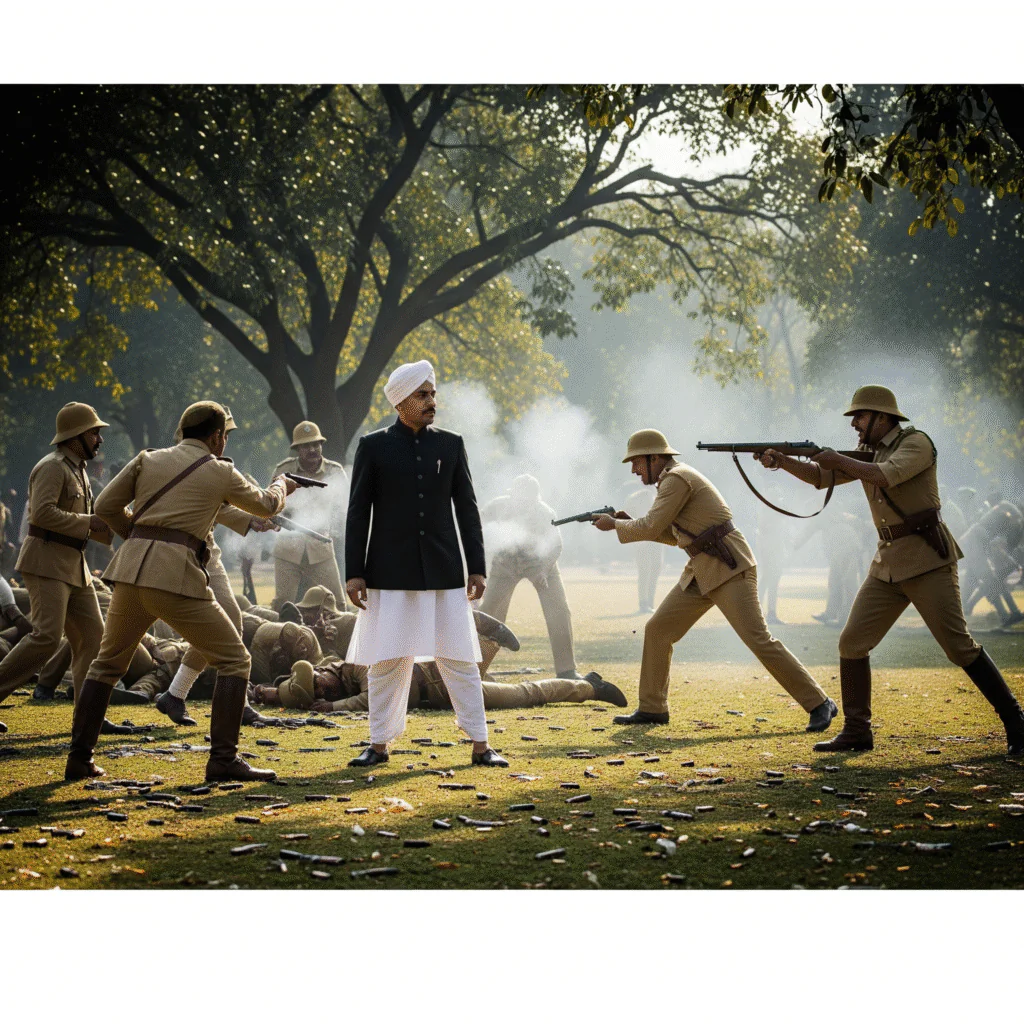
Death of Chandrashekhar Azad (Martyrdom)
Date of Death: 27 February 1931
Place: Alfred Park, Allahabad (now Prayagraj)
Age: Only 24 years
Details of the Incident
After the death of Lala Lajpat Rai in 1928, Bhagat Singh, Chandrashekhar Azad, and their companions killed Saunders to avenge the injustice. Since then, the British police were aggressively searching for HSRA revolutionaries. During this period, Chandrashekhar Azad was working underground in Allahabad.
Last Encounter in Alfred Park
On 27 February 1931, Azad reached Alfred Park (now Chandrashekhar Azad Park) to meet his companion Sukhdev Raj. The police, acting on secret information, surrounded the entire park and trapped him from all sides.
Encounter and Sacrifice
- Azad fought bravely with his Colt pistol
- He single-handedly kept the police at bay, giving his comrades time to escape
- When only one bullet remained, he used it on himself to avoid arrest
- He fulfilled his vow: “I was free, I am free, and I will die free.”
Honors After His Death
- The British police could never capture Chandrashekhar Azad alive
- The entire nation was filled with grief and pride after his martyrdom
- Alfred Park was renamed Chandrashekhar Azad Park
- He became a timeless symbol of courage, sacrifice, and patriotism
Emotion of His Last Words
“We will face the enemy’s bullets, Azad hi rahe hain, azaad hi marenge!”
Motto of Chandrashekhar Azad

Amazing Product Title Goes Here
Add a short, compelling description with the product’s main features and benefits here.
* As an Amazon Associate I earn from qualifying purchases.
Chandrashekhar Azad believed in absolute freedom, self-respect, and sacrifice. His motto reflects his fearless personality, ideology, and commitment to the nation.
Main Motto
“I was free, am free, and will remain free!”
— Chandrashekhar Azad
This statement was made when he was arrested for the first time. In the British court, he declared his name as “Azad”, his father’s name as “Swatantrata”, and his address as “Jail”. From that day, “Azad” became a permanent part of his identity.
Other Inspirational Quotes and Thoughts
1.
“We will face the bullets of the enemy,
We have been free, we will die free!”
2.
“There is something special in the soil of this country,
Which gives birth to a free man every time.”
3.
“The sword of revolution is sharpened on the whetstone of ideas.”
(Originally Bhagat Singh’s thought, but deeply believed by Azad)
Importance of These Thoughts
- They filled Indian youth with courage, confidence, and patriotism
- Azad’s words remain symbols of freedom, rebellion, and self-esteem even today
- His ideals continue to inspire generations across India
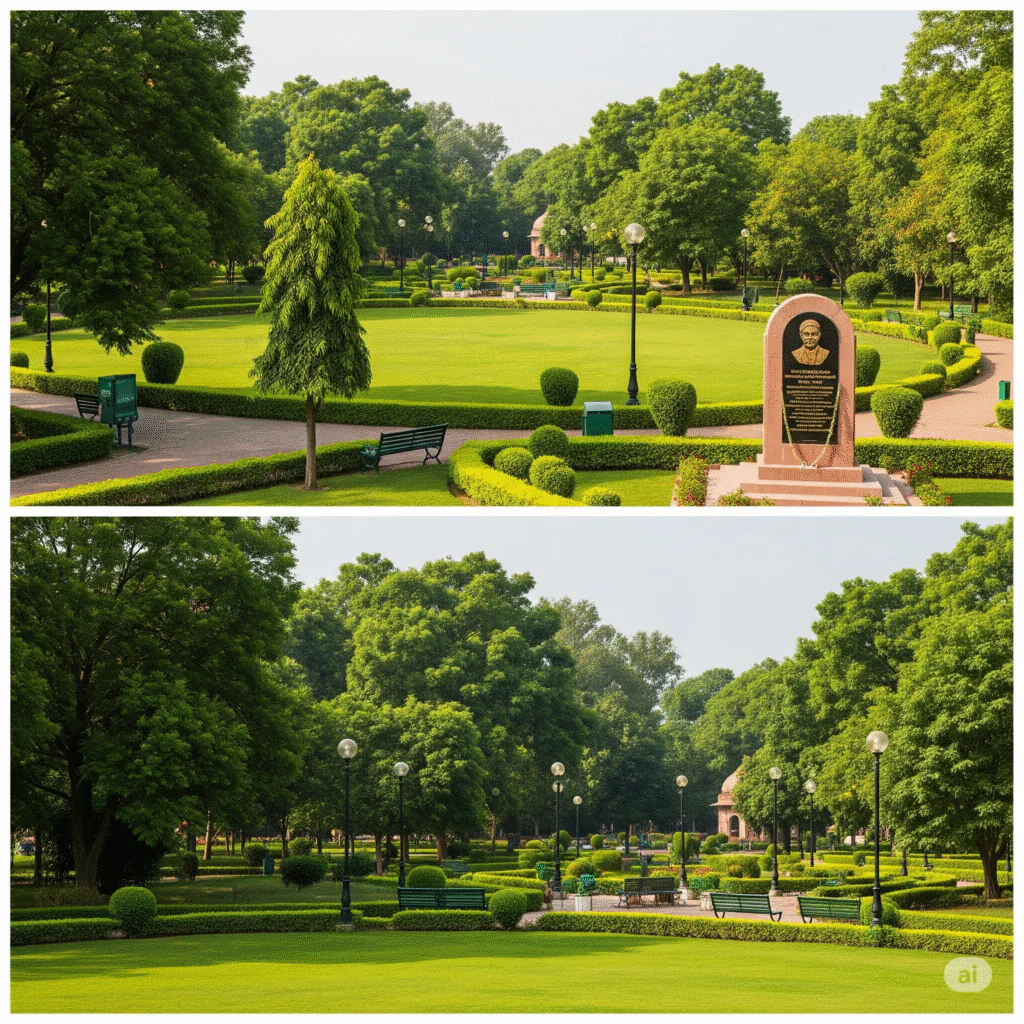
Legacy of Chandrashekhar Azad
The life and sacrifice of Chandrashekhar Azad form an inspirational chapter of the Indian freedom struggle. He was not only a courageous revolutionary but also a living example of self-confidence, patriotism, and sacrifice. His legacy continues to live in the heart of India.
1. Indelible Mark in the Freedom Struggle
- Chandrashekhar Azad organized and strengthened the Hindustan Socialist Republican Association (HSRA).
- He promoted and shaped the ideology of armed revolution.
- His sacrifice encouraged thousands of youth to dedicate themselves to the service of Mother India.
2. Legacy of Ideas and Ideals
Azad fought for freedom and self-respect throughout his life. His motto:
“I was free, am free, and will die free.”
This continues to teach every Indian the lessons of fearlessness, dignity, and self-respect.
3. Memorials and Named Places
- Alfred Park, Allahabad—where he was martyred—was renamed:
- 👉 Chandrashekhar Azad Park
- Several cities and institutions are named after him, including:
- Chandrashekhar Azad Nagar
- Chandrashekhar Azad University (Kanpur)
- Roads, colleges, and railway stations
4. Depiction in Literature and Cinema
Several films, plays, and TV serials have portrayed the life of Chandrashekhar Azad, such as:
- “The Legend of Bhagat Singh”
- “Shaheed”
- “23 March 1931 – Shaheed”
From children’s books to history textbooks, his story is taught to every generation.
5. Source of Inspiration for Youth
Even today, Chandrashekhar Azad remains an idol for Indian youth. He teaches:
- How to face injustice with courage
- How to dedicate oneself completely for the nation
- How to uphold self-respect at all costs
Conclusion
Chandrashekhar Azad’s legacy is not limited to words—it is engraved in India’s heart, history, and soul. His life remains a symbol of patriotism, and his sacrifice stands as a pillar of India’s independence.

Amazing Product Title Here
Enter a concise and compelling description here highlighting the key features and benefits of the product.
* As an Amazon Associate I earn from qualifying purchases.
Conclusion — Chandrashekhar Azad’s Life and Message
Chandrashekhar Azad was one of the most courageous, fearless, and idealistic revolutionaries of India’s freedom struggle. From a young age, he decided to dedicate his entire life to the independence of the country—and he fulfilled that promise to the last breath.
Key Points Summary
- He fearlessly opposed the British even in his childhood, adopting the name “Azad”.
- He organized the HSRA and played a major role in historic events such as:
- Kakori Incident (1925)
- Saunders Murder (1928)
- Viplav Yojana (Revolutionary Plan)
- His ideology, slogans, and thoughts still inspire millions of Indian youth.
- He proved through his life that freedom demands courage, sacrifice, and unwavering dedication.
What Does Chandrashekhar Azad Teach Us?
- To live with self-respect
- To raise our voice against injustice
- To have the courage to sacrifice for the nation
- To channelize youth power in the right direction
His Martyrdom — A Voice That Still Echoes
“We will face the enemy’s bullets, We have been free, we will die free!”
Chandrashekhar Azad is not just a name—he is an idea, a movement, and an immortal inspiration in the heart of every patriot.
References
Books and Literature
- V.B. Singh – Mahanayak of Indian Freedom Struggle
- K.K. Khalkho – Shaheed-e-Azam Chandrashekhar Azad
- Bipin Chandra – India’s Freedom Struggle
Online Sources
- National Archives of India – Records on freedom fighters
- India Today Archive – “Chandrashekhar Azad – Life and Struggle”
- Culture and Heritage Portal, Government of India – Freedom Struggle Section
Newspapers and Magazines
- The Hindu – Historical Special Issue
- Old issues of Aaj and Pratap newspapers