
Introduction: My Journey, Nature’s Silent Warnings, and the Purpose of This Article
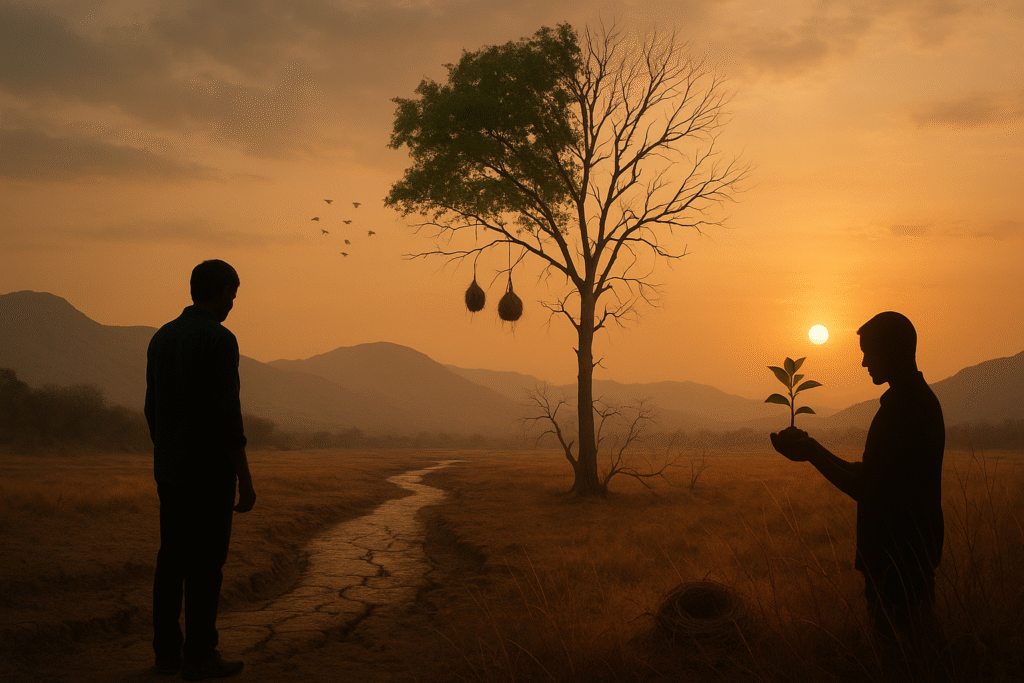
A few years ago, I began noticing a change in the landscapes I had always taken for granted. The hills that once looked lush were turning pale, the familiar bird calls were slowly fading, and the small river near my hometown — the one that had never disappointed us during summer — had shrunk into a thin, lifeless stream. That was the moment I realized that biodiversity loss is not just a scientific phrase; it is a crisis unfolding quietly around us.
 | 👉 Buy on Amazon |
| As an Amazon Associate I earn from qualifying purchases. | |
I started asking myself a simple question: Why is this happening? Is it only the changing climate, or are we gradually tearing apart the very ecological fabric that keeps our world alive? And if this really is a crisis, then the most important question is: Can we still do something about it?
This article is my attempt to answer those questions — through a blend of personal observations, scientific insights, local experiences, and actionable steps that anyone can follow. My goal is to help you understand that biodiversity loss is not just about plants and animals; it is directly linked to our food, our water, our economy, our health, and the future we want to pass on to the next generation.
Throughout this article, I will guide you through three essential stages — understanding, feeling, and acting. You will learn why ecosystems are degrading, how this degradation impacts people and nature, and what practical steps individuals and communities can take to begin restoring balance. I will also share the lessons I learned while witnessing these changes up close — lessons that may ignite a spark of awareness and responsibility within you.
Why Is Biodiversity Declining? Major Causes Explained
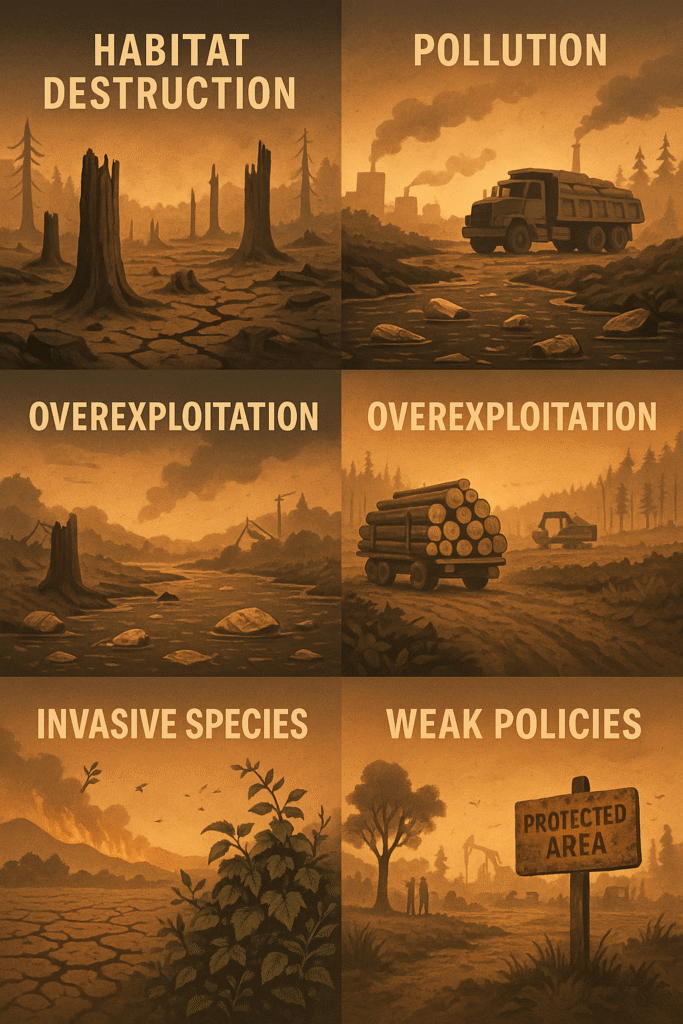
Biodiversity loss is not the result of a single factor. It is a complex outcome of human actions, climate pressures, ecological imbalance, and unsustainable development practices. Understanding the root causes is essential if we want to reverse this trend and protect the ecosystems that support life. Below are the six major drivers of biodiversity loss that are reshaping natural habitats across the world.
1. Habitat Destruction
Habitat destruction is the single most significant reason behind global biodiversity decline. Expanding cities, commercial agriculture, road networks, mining, deforestation, and river modification have fragmented or erased natural habitats that species depend on for survival. When forests are cleared or wetlands drained, entire ecological communities collapse. I have personally witnessed once-dense patches of woodland near my region reduced to barren land within a decade. As the vegetation disappeared, the birds, insects, and small mammals that relied on it slowly vanished too. Habitat destruction not only eliminates space but breaks the interconnected relationships between species, making recovery extremely difficult. Once the natural home of a species is lost, it rarely returns to its original state.
2. Pollution
Pollution—whether chemical, plastic, air, noise, or light—has become one of the most silent but deadly threats to biodiversity. Pesticides, fertilizers, and industrial chemicals contaminate soil and water, weakening plants, poisoning freshwater life, and disrupting breeding cycles. Plastic pollution has grown into a global crisis, with microplastics now detected in rivers, oceans, birds, fish, and even human bodies. I remember how a local river that once supported turtles and freshwater fish gradually became choked with plastic bags, bottles, and chemical foam. The decline was visible, and yet unnoticed by many. Pollution does not just kill directly—it weakens immunity, alters habitats, and makes ecosystems more vulnerable to further stress.
 | 👉 Buy on Amazon |
| As an Amazon Associate I earn from qualifying purchases. | |
3. Overexploitation of Natural Resources
Humans have been extracting natural resources far faster than nature can replenish them. Overfishing, illegal wildlife hunting, excessive logging, overharvesting of medicinal plants, and unsustainable groundwater extraction have pushed many species to the brink of collapse. When fish populations decline due to overharvesting, entire marine food webs shift. When forests are logged at a pace faster than they regrow, not only trees but thousands of dependent insects, birds, and mammals decline with them. The imbalance between consumption and natural regeneration is widening rapidly. Overexploitation weakens ecosystems’ ability to bounce back, making them more vulnerable to climate change, invasive species, and further degradation.
4. Climate Change
Climate change has become a powerful and unpredictable force driving biodiversity loss worldwide. Rising temperatures, unpredictable rainfall patterns, prolonged droughts, melting glaciers, forest fires, and warming oceans are forcing species to adapt, migrate, or vanish. Flowering seasons are shifting, migratory birds are arriving earlier or later than expected, and many animals are unable to cope with rapid environmental changes. Coral reefs are bleaching, polar habitats are shrinking, and tropical species are moving to higher altitudes in search of cooler climates. Climate change disrupts the delicate balance of ecosystems. Even small changes in temperature or rainfall can break the timing of pollination, breeding, and migration—leading to cascading effects across entire food chains.
5. Invasive Species
Invasive species—organisms that move or are introduced outside their natural range—pose a major threat to native biodiversity. These species often reproduce quickly, compete aggressively for resources, and lack natural predators in their new environment. I have seen invasive plants in rural regions spread so fast that they suffocated farmland and grassland areas within a few years, making it harder for native plants to survive. Aquatic systems face similar threats when non-native fish or plants disrupt local populations. Invasive species can alter soil chemistry, water availability, and entire habitat structures. Their impact often grows exponentially and is extremely difficult to reverse once established.
6. Weak Policies and Economic Pressures
Poor environmental regulations, weak enforcement, inadequate planning, and short-term economic priorities are major contributors to biodiversity loss. Development projects often proceed without proper ecological assessment, and communities directly affected by ecosystem degradation are rarely included in decision-making. Many industries and agricultural sectors prioritize quick profits over sustainable practices, putting long-term ecosystem health at risk. When policies fail to protect natural spaces, businesses and individuals default to practices that degrade land, water, and wildlife. Strong laws, community participation, and economic incentives for conservation are essential to reversing biodiversity decline. Without good governance, even well-designed conservation efforts struggle to succeed.

Impacts of Biodiversity Loss — Effects on Nature, Society, and Human Life
Biodiversity loss is not just about species disappearing quietly from forests, rivers, or oceans. Its impact reaches far beyond wildlife and touches the core of human existence — our food, water, economy, culture, and even our emotional well-being. When a species vanishes, the ecosystem loses one of its supporting pillars. Below are the major impacts of biodiversity loss that are now shaping our world in visible and invisible ways.
1. Ecological Impacts
Biodiversity forms the foundation of healthy ecosystems. When species decline, the natural balance collapses. Plants depend on pollinators; predators control herbivore populations; microbes keep soil fertile; and every organism plays a role in nutrient cycles. A decline in pollinators, for example, affects hundreds of plant species, leading to reduced seed production and weaker forests. Similarly, if soil organisms decrease, soil fertility drops, slowing down tree growth and affecting entire food webs. Even small disturbances create ripple effects throughout the ecosystem. A missing bird species might mean an insect population grows uncontrollably. A missing plant species may result in soil erosion. When ecosystems become unstable, their ability to recover from storms, fires, and climate shocks also weakens.
2. Impacts on Food and Water Security
Our food system relies entirely on biodiversity. Over 75% of global food crops depend on pollinators such as bees, butterflies, and birds. When these species decline, crop yields fall, threatening the livelihoods of farmers and food security for millions. Water systems are equally affected. Forests, wetlands, and grasslands naturally filter water, recharge groundwater, and regulate river flow. But when biodiversity declines in these ecosystems, rivers shrink, lakes dry faster, and groundwater levels drop. In many regions, I have seen ponds that once held water for months now drying up within weeks due to the loss of native vegetation. Reduced biodiversity directly affects agriculture, livestock, fisheries, and drinking water availability.
 | 👉 Buy on Amazon |
| As an Amazon Associate I earn from qualifying purchases. | |
3. Economic Impacts
A large portion of the global economy depends on nature — agriculture, fisheries, forestry, medicine, industry, and tourism. When biodiversity declines, these sectors suffer major financial losses. Farmers spend more on pesticides when natural pest-controlling species disappear. Coastal communities lose income when fish populations collapse. Tourism suffers when forests thin, wildlife disappears, or coral reefs bleach. The long-term economic cost of biodiversity loss is far greater than the short-term gains made through unsustainable development. Nations lose ecosystem services worth billions of dollars every year — most of which cannot be restored easily.
4. Impacts on Human Health
Healthy ecosystems regulate diseases naturally. When biodiversity declines, disease-spreading organisms such as mosquitoes, rodents, and ticks multiply faster. Studies show that deforestation and habitat fragmentation increase the risk of outbreaks like malaria, dengue, and Lyme disease. Many of the world’s medicines come from plants, fungi, and microorganisms. As these species disappear, we lose potential cures for future diseases. Biodiversity loss also affects mental health. Natural spaces reduce stress and anxiety, while degraded landscapes increase psychological distress — a phenomenon now known as “ecological grief.”
5. Social and Cultural Impacts
Many communities — especially Indigenous and rural groups — have cultural traditions, livelihoods, and identities deeply linked to local species and ecosystems. When forests degrade or species vanish, their cultural practices, folk stories, traditional knowledge, and even spiritual beliefs weaken. Biodiversity loss is not just ecological degradation; it is also the erosion of cultural diversity and heritage that has been preserved for centuries.
6. Emotional and Psychological Impacts
The decline of nature affects us emotionally. Watching rivers dry, forests shrink, or birds disappear triggers a deep sense of loss and helplessness. Many researchers call this feeling “ecological grief” — the sadness that comes from witnessing environmental destruction. Nature provides peace, inspiration, and emotional grounding. As natural spaces vanish, human well-being suffers. People feel disconnected, stressed, and mentally fatigued. Biodiversity loss is not only harming ecosystems; it is quietly reshaping the emotional balance of society.
Case Study: My Personal Story — A River, a Village, and the Slow Disappearance of Biodiversity
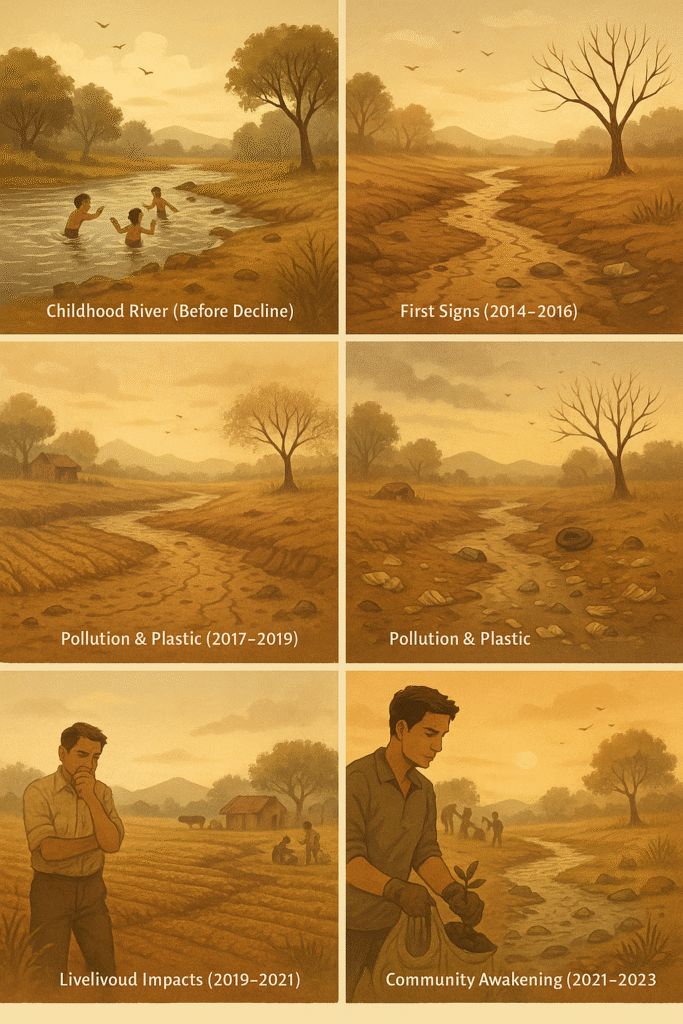
Biodiversity loss is not a distant concept for me; it is something I have watched unfold right in front of my eyes. The village where I grew up had a small river running nearby — a river that was the heart of our childhood, our fields, our festivals, and our local economy. We called it our “lifeline.” No matter how harsh the summers were, the river always carried enough water to sustain people, animals, and crops. But over the last decade, I have seen that river slowly shrink, lose its color, lose its sounds, and lose its life. This is the story of how my understanding of biodiversity loss began — not from books, but from witnessing a living ecosystem collapse before my eyes.
First Signs: Changing Rainfall and Drying Landscapes (2014–2016)
Around 2014, the first warning signs became clear. The monsoon patterns began shifting. Rains arrived late, ended early, and often came in sudden bursts that didn’t replenish the soil. The river that once flowed steadily during summers began shrinking sooner than expected. Trees along the banks looked less vibrant, and dry leaves began covering the ground. Birds that once greeted every morning with their calls suddenly became fewer. At first, villagers believed it was a temporary “weather phase,” but the silence in the landscape felt unusual.
Farmers noticed something even more concerning — crop yields declined. The soil felt weaker, “tired,” as they described it. The natural insects that helped with pollination and pest control were becoming scarce. I didn’t know it then, but I was witnessing the first stage of biodiversity loss: the silent disappearance of the species that keep ecosystems functioning. It was no longer just a forest issue; it was becoming an agricultural and economic issue as well.
Second Signs: The River Shrinks and Plastic Takes Over (2017–2019)
In 2017, the river looked visibly smaller. For the first time in my life, I could walk across it without getting wet above my ankles. The water that once flowed strong was now slow, shallow, and fragmented. Kids who used to swim now avoided the river because the banks had become muddy, slippery, and filled with plastic waste. The disappearance of wildlife was even more heartbreaking. The small fish, freshwater turtles, and birds that were once abundant had almost vanished. What replaced them was garbage — plastic bags, bottles, wrappers, and even industrial waste carried from upstream areas.
Many locals dismissed these changes, saying, “Times are changing; this is natural.” But I could sense something deeper. The river was not just losing water; it was losing its ecological soul. With less water came fewer insects, which meant fewer birds. With fewer trees came fewer nesting sites, fewer fruits, and less shade. The entire ecosystem was unraveling, one thread at a time.
 | 👉 Buy on Amazon |
| As an Amazon Associate I earn from qualifying purchases. | |
Third Signs: Community Struggles and Livelihood Impacts (2019–2021)
By 2019, the consequences had reached people’s lives in a way no one could ignore anymore. Farmers complained that the soil was no longer fertile. Where once a single irrigation was enough, they now needed twice as much water — water that was no longer available. The canals that once fed the fields were half-dry.
Many families began selling their cattle because fodder was becoming scarce. Youth started migrating to cities for work as agriculture became unpredictable. This was not just an environmental change — it was the slow breakdown of a village’s social and economic backbone.
The elders in the village would say, “When the trees went, the rain went. When the rain went, the people went.” Their words were simple, but they captured the heart of the crisis. For the first time, villagers began connecting the dots — reduced vegetation meant less rain, less rain meant dying rivers, and dying rivers meant dying livelihoods. It became clear that this was not merely a water problem; it was a biodiversity problem.
Fourth Signs: Awakening and Collective Action (2021–2023)
After years of decline, something changed around 2021. The crisis had become too visible to ignore, and finally, discussions began about doing something rather than waiting for things to fix themselves.
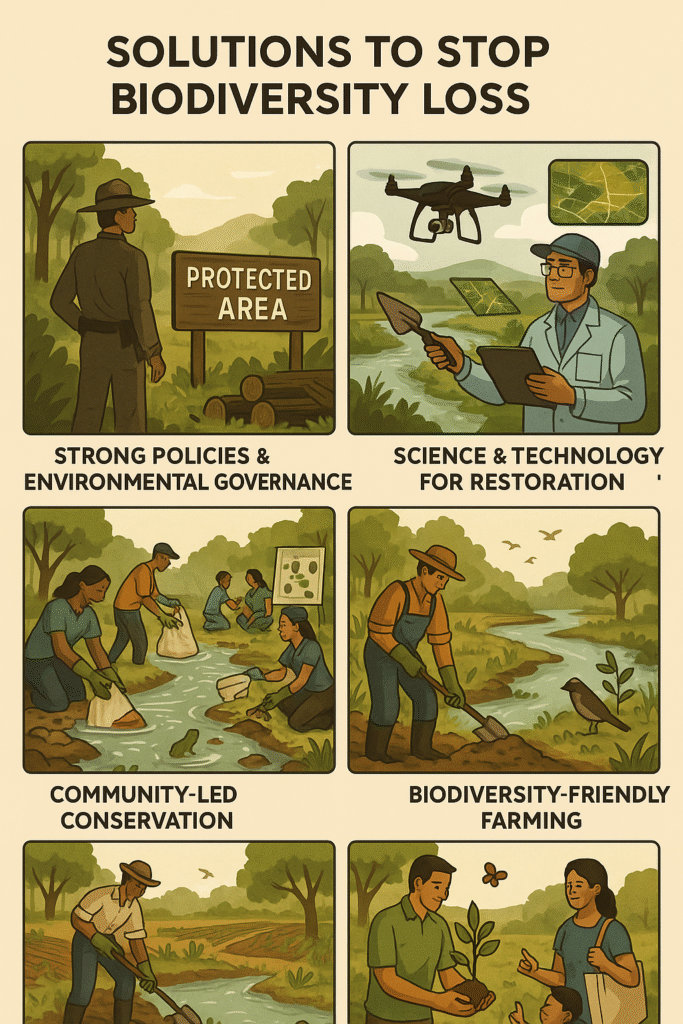
The village council organized river-cleaning drives. Local youth groups joined in, removing plastic, clearing blocked water channels, and planting new saplings along the riverbanks. I became part of this initiative as well. We set up a small nursery focused on native plant species — neem, acacia, khejri, rohida — the trees that naturally hold the soil together and survive in harsh climates. Slowly, very slowly, change began. A few bird species returned. Rainwater stayed longer in the riverbed. People felt a sense of ownership again — something they had lost over the years.
Five Key Lessons This Story Taught Me
- Nature always sends warnings — but humans often respond late.
- Biodiversity loss affects not just wildlife but agriculture, the local economy, and community well-being.
- Even small, community-led actions can trigger meaningful ecological restoration.
- Native species are more powerful than exotic ones in reviving dead or damaged ecosystems.
- Conservation only succeeds when people feel connected to the land they live on.
This story is not just about one river, one village, or one ecosystem. It represents thousands of places across the world where biodiversity is quietly disappearing and people are feeling the impacts in real time. But the most important message from this story is simple yet powerful: It is never too late to act — if we start today.
 | 👉 Buy on Amazon |
| As an Amazon Associate I earn from qualifying purchases. | |