

Agriculture In India: Key Areas of Improvement
Agriculture In India is not only the backbone of the nation’s economy but also the primary source of livelihood for millions. Over time, Agriculture In India has undergone significant reforms aimed at modernization, higher productivity, and better income security for farmers. This article presents a clear and structured understanding of these improvements.
🇮🇳 Major Improvements in Agriculture In India
1. Green Revolution – 1960s
- Introduction of High-Yielding Variety (HYV) seeds.
- Increased use of chemical fertilizers.
- Expansion of modern irrigation technologies.
- Massive rise in wheat and rice production.
- Most impact seen in Punjab, Haryana, and Western Uttar Pradesh.
2. Agricultural Marketing Reforms
e-NAM (National Agriculture Market)
- Provided farmers an online platform to sell their produce.
- Reduced dependence on intermediaries.
APMC Act Amendments
- Many states allowed farmers to sell produce outside traditional mandis.
3. Irrigation and Water Resource Management
Pradhan Mantri Krishi Sinchai Yojana (PMKSY)
- Aim: “Water for Every Farm.”
- Expansion of micro-irrigation (drip and sprinkler systems).
4. Crop Insurance and Financial Security
Pradhan Mantri Fasal Bima Yojana (PMFBY)
- Insurance coverage against natural calamities and crop damage.
- Low premium rates for farmers.
Kisan Credit Card (KCC)
- Affordable loans at low interest rates.
5. Increase in Minimum Support Price (MSP)
- MSP increased for major crops like wheat, rice, and pulses.
- Ensured fair and stable prices for farmers.
6. The 2020 Farm Laws (Controversial) and Repeal
- Three major farm laws were introduced to reform Agriculture In India:
- Farmers' Produce Trade and Commerce Act
- Farmers' Empowerment and Protection Agreement Act
- Essential Commodities (Amendment) Act
- Due to nationwide protests by farmers, the laws were repealed in 2021.
7. Promotion of Organic and Natural Farming
- Bharatiya Prakritik Krishi Paddhati (BPKP).
- Zero Budget Natural Farming (ZBNF) promotion.
- Encouragement for chemical-free farming.
8. PM-KISAN: Direct Income Support
- ₹6000 per year transferred directly to eligible farmers' bank accounts.
9. Agricultural Mechanization and Technology Support
- Drone usage for spraying pesticides and fertilizers.
- Agritech startups promoting smart and precision farming.
🧾 Additional Improvements Strengthening Agriculture In India
1. Irrigation and Water Management
- Micro-irrigation (drip/sprinkler) encouraged under PMKSY.
- Greater focus on water conservation and rainwater harvesting.
2. Insurance & Credit Support
- PMFBY provides protection against crop loss.
- KCC offers low-interest loans to farmers.
3. Technology and Mechanization
- Subsidies for tractors, threshers, and advanced equipment.
- Drone technology for crop monitoring and spraying.
✅ Conclusion
Overall, Agriculture In India continues to evolve through policy reforms, technology adoption, and financial inclusion. While challenges such as climate change, small landholdings, and market volatility remain, sustained improvements are helping Agriculture In India move toward modernization and long-term sustainability.
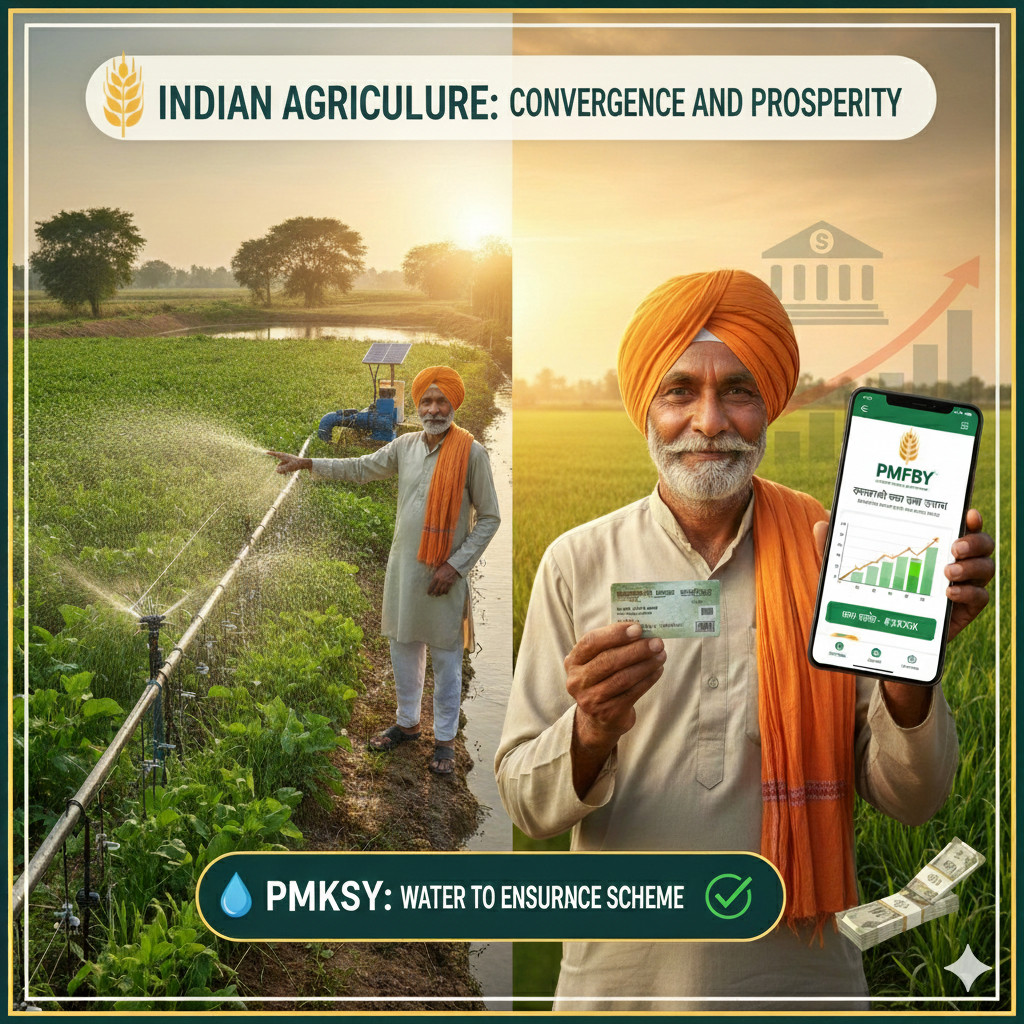
Green Revolution – 1960
The Green Revolution in India began in the 1960s as an agricultural improvement program aimed at increasing food grain production and achieving national food security. It became one of the most important turning points in the history of Indian agriculture.
📌 Definition
The Green Revolution refers to the process in which advanced agricultural techniques, high-yielding variety (HYV) seeds, chemical fertilizers, pesticides, and modern irrigation systems were introduced to dramatically increase agricultural productivity.
Background
- After independence, India struggled with severe food shortages.
- The 1965 Indo-Pak War and widespread drought worsened the food crisis.
- India had to import wheat under the PL-480 program from the United States.
- To overcome this crisis, India adopted the high-yield farming techniques developed by scientist Norman Borlaug.
🔬 Key Elements of the Green Revolution
- HYV Seeds: Improved varieties of wheat and rice designed for higher productivity.
- Chemical Fertilizers & Pesticides: To supply essential nutrients and protect crops from diseases.
- Irrigation Expansion: Widespread use of canals, tube wells, and modern irrigation systems.
- Mechanization: Use of tractors, harvesters, and other machines.
- Government Support: Subsidies, credit facilities, and Minimum Support Price (MSP).
📊 Major Results
| Aspect | Description |
|---|---|
| 🔼 Increase in Production | Wheat and rice production increased manifold. |
| 🇮🇳 Self-Reliance | India became self-sufficient in food grains. |
| 💰 Farmer Income Rise | Farmers in certain regions saw a rise in income. |
| 🌍 International Recognition | India became a leader in agricultural technology adoption. |
📍 Regions Most Affected
The Green Revolution had the greatest impact in Punjab, Haryana, and Western Uttar Pradesh.
⚠️ Negative Aspects
- Overemphasis on wheat and rice reduced crop diversity.
- Heavy use of chemicals decreased soil fertility.
- Small farmers benefited less than large landholders.
- Water depletion and environmental problems increased.
✅ Conclusion
The Green Revolution saved India from famine and brought a major transformation in food grain production. However, it also created environmental and social challenges that must be addressed in future agricultural policies. The lesson learned is that technology and policy together can take agriculture to new heights.
Agricultural Marketing Reforms in India
Agricultural marketing reforms aim to ensure that farmers receive fair prices, gain direct access to markets, and reduce dependence on intermediaries. For decades, Indian farmers relied on local mandis and middlemen, often failing to get the right value for their produce. To improve this situation, the government initiated multiple reforms.
📌 Meaning of Agricultural Marketing
Agricultural marketing is the process through which farmers deliver their produce to consumers or traders. It includes storage, transportation, grading, price determination, and selling.
🚜 Major Agricultural Marketing Reforms
1️⃣ e-NAM (National Agriculture Market) – 2016
- An online trading platform connecting mandis across India.
- Increased transparency and reduced the role of middlemen.
- More than 1000 mandis are now integrated with e-NAM.
- Farmers get real-time price information and competitive rates.
2️⃣ Reforms in APMC Acts
- Earlier, farmers could sell only in government-regulated mandis.
- This made them dependent on commission agents.
- Many states amended APMC Acts allowing farmers to sell outside mandis as well.
3️⃣ Permission for Direct Marketing
- Food processing companies, retailers, and traders can now purchase directly from farmers.
- Farmer Producer Organisations (FPOs) were promoted to help farmers sell collectively.
4️⃣ Warehouse Receipt System
- Farmers can store crops in warehouses and sell later at better prices.
- Warehouse receipts can be used to obtain loans from banks.
5️⃣ Information Through Digital Platforms
- Farmers receive market prices, weather updates, and mandi conditions via SMS, apps, and portals.
6️⃣ The Three Farm Laws (2020) – Now Repealed
- Government introduced three laws aimed at:
- Providing freedom to sell outside mandis.
- Allowing contract farming.
- Removing stock limits for private companies.
- Due to nationwide protests, these laws were repealed in 2021.
✅ Conclusion
Agricultural marketing reforms aim to provide farmers with market freedom, transparency, and stronger bargaining power. Although gaps in rural infrastructure and digital access still exist, these reforms remain an important step toward strengthening India's agriculture-based economy.

Irrigation and Water Resource Management in India
Irrigation and Water Resource Management in India play a vital role in strengthening agricultural productivity. Since a large part of Indian farming depends on monsoon rainfall, efficient irrigation systems and sustainable water management are essential for long-term food security and climate resilience.
📌 Meaning of Irrigation
Irrigation is the process of supplying water to crops as needed, especially when natural rainfall is insufficient. Effective irrigation systems help reduce dependency on uncertain monsoons.
🛠️ Major Improvements in Irrigation and Water Resource Management in India
1️⃣ Pradhan Mantri Krishi Sinchai Yojana (PMKSY) – 2015
Slogan: “Har Khet Ko Pani” (Water for Every Farm)
- Expansion of irrigation facilities.
- Focus on water conservation.
- Promotion of micro-irrigation (drip and sprinkler systems).
- Integrated plan combining central and state schemes.
2️⃣ Micro Irrigation Systems
Drip Irrigation
- Water is supplied drop-by-drop directly to the roots of crops.
Sprinkler System
- Water is sprinkled evenly over the crop field like rainfall.
Benefits:
- 40–60% water savings.
- Reduced energy consumption.
- Better fertilizer efficiency.
3️⃣ Water Conservation Campaigns
- Jal Shakti Abhiyan (2019): Focus on reviving water bodies, rainwater harvesting, and water conservation.
- Awareness programs promoting efficient use of water.
4️⃣ Irrigation Projects
- Major Projects: Bhakra Nangal, Indira Gandhi Canal, Sardar Sarovar, etc.
- Small and medium irrigation projects for rural regions.
⚠️ Challenges in Irrigation and Water Resource Management in India
- Over-extraction of groundwater.
- Inequality in irrigation access across regions.
- Limited access to modern irrigation technology for small farmers.
✅ Conclusion
Overall, Irrigation and Water Resource Management in India are essential for sustainable agriculture and environmental balance. Continued investment in technology, conservation, and farmer awareness will determine future success.
Agricultural Insurance in India and Financial Security
Agricultural Insurance in India provides a safety net to farmers against natural disasters, crop failure, and market risks. Given the uncertainty of climate and weather conditions, insurance schemes and financial support systems are critical for protecting farmers’ income.
📌 Objectives of Agricultural Insurance
- Compensation for crop damage caused by natural disasters.
- Prevent farmers from falling into debt traps.
- Provide financial stability through risk management.
🌾 Major Agricultural Insurance Schemes in India
1️⃣ Pradhan Mantri Fasal Bima Yojana (PMFBY) – 2016
Objective: Compensation for crop loss due to drought, floods, hailstorms, pests, etc.
- Kharif crops – 2% premium
- Rabi crops – 1.5% premium
- Commercial & horticulture crops – 5% premium
- Remaining premium shared by Central and State Governments.
- Claims directly transferred to farmers’ bank accounts.
2️⃣ Weather-Based Crop Insurance Scheme (WBCIS)
- Insurance based on rainfall, temperature, and weather conditions.
- Beneficial for small and marginal farmers.
💳 Other Financial Security Measures
Kisan Credit Card (KCC)
- Low-interest loans for seeds, fertilizers, and equipment.
- Interest subsidies for timely repayment.
Pradhan Mantri Kisan Samman Nidhi (PM-KISAN)
- ₹6,000 per year to eligible farmer families through DBT.
Agriculture Infrastructure Fund (AIF)
- Loans for warehouses, cold storage and processing units.
- Support for FPOs and cooperatives.
⚠️ Challenges
- Delay in claim settlements.
- Lack of awareness among farmers.
- Transparency concerns.
✅ Conclusion
With proper implementation and awareness, Agricultural Insurance in India can significantly improve financial stability for farmers and strengthen the overall agricultural economy.
Agriculture In India: Irrigation and Agricultural Insurance
Agriculture In India plays a crucial role in ensuring food security, rural employment, and economic stability. Since a large portion of farming depends on rainfall, efficient irrigation systems and financial protection schemes are essential for strengthening agriculture in India.
🌊 Irrigation and Water Resource Management in Agriculture In India
Irrigation and water resource management are fundamental pillars of Agriculture In India. Due to unpredictable monsoons and uneven rainfall distribution, modern irrigation systems are necessary to maintain consistent agricultural productivity.
📌 Meaning of Irrigation
Irrigation is the process of supplying water to crops when rainfall is insufficient. Efficient irrigation reduces dependency on monsoons and supports sustainable agriculture in India.
🛠️ Major Improvements
1️⃣ Pradhan Mantri Krishi Sinchai Yojana (PMKSY)
- Slogan: “Har Khet Ko Pani”
- Expansion of irrigation facilities
- Promotion of drip and sprinkler systems
- Water conservation focus
2️⃣ Micro Irrigation Systems
Drip Irrigation: Supplies water directly to plant roots.
Sprinkler System: Sprays water evenly like rainfall.
- 40–60% water savings
- Improved fertilizer efficiency
- Reduced energy consumption
3️⃣ Major Irrigation Projects
- Bhakra Nangal Project
- Indira Gandhi Canal
- Sardar Sarovar Project
⚠️ Challenges
- Groundwater over-extraction
- Regional inequality in irrigation access
- Limited technology access for small farmers
✅ Conclusion (Irrigation)
Efficient water management strengthens Agriculture In India by ensuring stable production and climate resilience.
🌾 Agricultural Insurance in Agriculture In India
Agriculture In India is highly vulnerable to droughts, floods, pests, and climate change. Agricultural insurance schemes provide financial protection and income stability to farmers.
📌 Objectives of Agricultural Insurance
- Compensation for crop damage
- Prevention of farmer debt traps
- Income security and risk management
🌱 Major Insurance Schemes
1️⃣ Pradhan Mantri Fasal Bima Yojana (PMFBY)
- Low premium rates (2% Kharif, 1.5% Rabi)
- Government shares remaining premium
- Direct benefit transfer of claims
2️⃣ Weather-Based Crop Insurance Scheme (WBCIS)
- Compensation based on rainfall and temperature
- Useful for small and marginal farmers
💳 Financial Security Measures
Kisan Credit Card (KCC)
- Low-interest agricultural loans
- Support for seeds and fertilizers
PM-KISAN Scheme
- ₹6,000 annual income support via DBT
Agriculture Infrastructure Fund (AIF)
- Loans for cold storage, warehouses, processing units
⚠️ Challenges
- Delay in insurance claim settlement
- Lack of awareness
- Transparency concerns
✅ Conclusion (Insurance)
Financial protection schemes significantly strengthen Agriculture In India by reducing risk and improving farmer confidence.
🏁 Final Conclusion
Overall, Agriculture In India depends on efficient irrigation systems, sustainable water management, and strong financial security mechanisms. Government initiatives such as PMKSY, PMFBY, KCC, and PM-KISAN are transforming the agricultural sector.
With improved technology adoption, farmer awareness, and policy support, Agriculture In India can achieve long-term sustainability, rural prosperity, and economic growth.
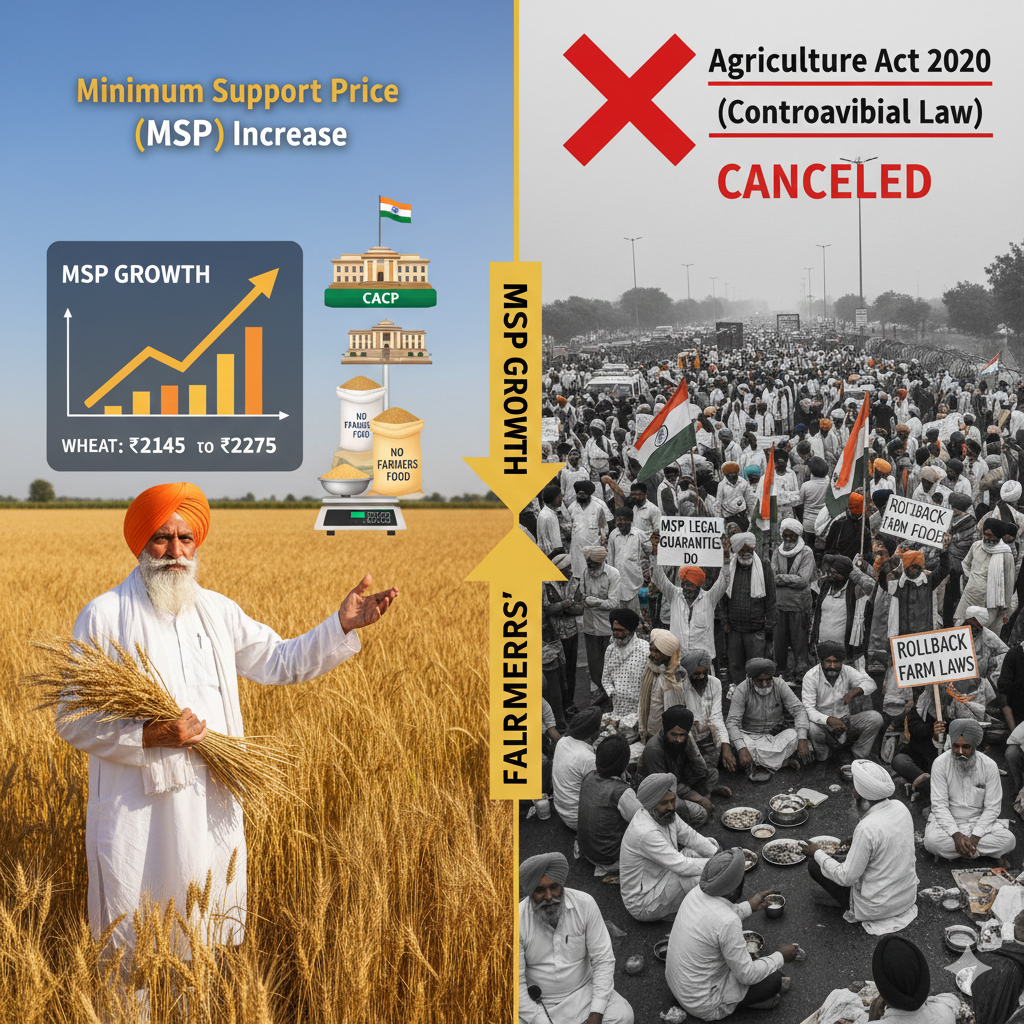
Minimum Support Price (MSP) in India
Minimum Support Price (MSP) in India is a government-backed pricing mechanism that guarantees farmers a minimum rate for their produce, regardless of market fluctuations. It aims to protect farmers from sudden price crashes and ensure fair and stable income.
🧾 Objectives of Minimum Support Price (MSP)
- Ensure remunerative prices to farmers.
- Protect against market volatility.
- Maintain national food security through procurement.
- Encourage higher agricultural production.
🏢 Who Fixes the MSP?
- The Central Government declares MSP based on recommendations of the Commission for Agricultural Costs and Prices (CACP).
- Factors considered include cost of production, demand–supply conditions, global prices, and consumer interest.
🌾 Crops Covered Under MSP
The Government announces MSP for 23 crops under the framework of Minimum Support Price (MSP) in India.
1️⃣ Major Kharif Crops
- Paddy, Maize, Millets, Sorghum, Groundnut, Soybean
2️⃣ Major Rabi Crops
- Wheat, Gram, Lentil, Mustard, Barley
3️⃣ Commercial Crops
- Cotton, Sugarcane, Sesame, Sunflower, Pigeon Pea
📊 Example: Recent Increase in MSP (Illustrative)
| Crop | 2022–23 MSP | 2023–24 MSP | Increase |
|---|---|---|---|
| Wheat | ₹2,125 | ₹2,275 | ₹150 |
| Rice | ₹2,040 | ₹2,183 | ₹143 |
| Gram | ₹5,230 | ₹5,440 | ₹210 |
| Mustard | ₹5,450 | ₹5,650 | ₹200 |
Note: MSP is revised annually by the Union Cabinet.
📈 Benefits of Minimum Support Price (MSP) in India
- Provides income stability to farmers.
- Strengthens rural economy.
- Ensures government procurement for public distribution.
⚠️ Challenges & Criticism
- Only a limited section of farmers benefit directly.
- Procurement mainly focused on wheat and rice.
- Debate over legal guarantee of MSP during reform discussions.
✅ Conclusion
Overall, Minimum Support Price (MSP) in India remains a crucial instrument for farmer protection and agricultural stability. Expanding procurement coverage and improving transparency can enhance its effectiveness.
Farm Laws 2020 and the MSP Debate
In 2020, the Central Government introduced three agricultural reform laws. While the government argued these laws would increase competition and market access, many farmers feared they could weaken the Minimum Support Price (MSP) in India system.
📃 Summary of the Three Farm Laws
1️⃣ Farmers’ Produce Trade and Commerce Act, 2020
- Allowed sale outside APMC mandis.
- Enabled electronic trading.
- Tax-free trade outside mandis.
2️⃣ Farmers (Empowerment and Protection) Agreement Act, 2020
- Legalized contract farming.
- Pre-agreed pricing arrangements.
- Local dispute resolution system.
3️⃣ Essential Commodities (Amendment) Act, 2020
- Removed several food items from essential commodities list.
- Encouraged private investment in storage and supply chains.
🚩 Farmers’ Objections
| Issue | Concern |
|---|---|
| No Legal MSP Guarantee | Farmers feared weakening of MSP system. |
| Corporate Dominance | Concern over exploitation through contracts. |
| Weakening APMC | Mandis might lose importance. |
| Limited Legal Recourse | Disputes restricted to SDM level. |
🏕️ Farmers’ Protest (2020–2021)
- Large-scale protests near Delhi borders.
- Movement lasted nearly 13 months.
- Major participation from Punjab, Haryana, Western UP.
📢 Repeal of Farm Laws
- After multiple negotiation rounds, the government repealed all three laws in November 2021.
✅ Final Conclusion
The 2020 farm reform episode highlighted the importance of trust and dialogue in agricultural policy. Any reform affecting Minimum Support Price (MSP) in India must involve strong consultation with farmers to ensure confidence and stability in the sector.
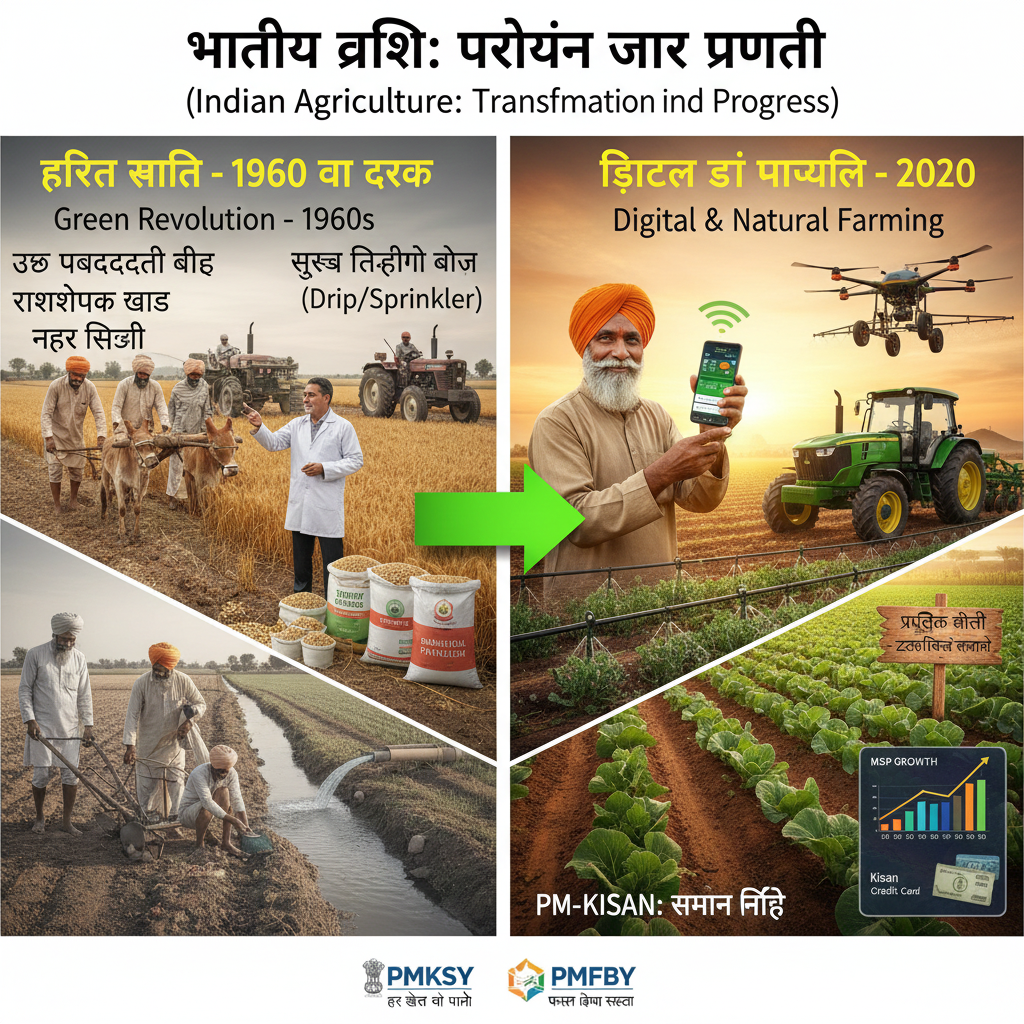
Agricultural Development in India
Agricultural Development in India has evolved significantly over the years through reforms in organic farming, income-support schemes, irrigation expansion, and agricultural mechanization. Sustainable practices and technological innovation are now central to strengthening farmers’ income and ensuring long-term food security.
🌿 Promotion of Organic and Natural Farming
Excessive use of chemical fertilizers and pesticides has harmed soil fertility and environmental balance. As part of Agricultural Development in India, the promotion of organic and natural farming is gaining importance.
1️⃣ Organic Farming
Definition
Organic farming avoids chemical fertilizers and pesticides. Natural inputs such as compost, neem extracts, Jeevamrit, and bio-pesticides are used instead.
Benefits
- Improves soil fertility
- Provides chemical-free food
- Protects biodiversity
- Enhances long-term sustainability
Government Support
- PKVY: Cluster-based organic farming promotion
- NPOF: Organic fertilizer production and training
- PGS-India: Simplified certification system
- APEDA: Export support for organic products
2️⃣ Natural Farming (ZBNF)
Natural farming, promoted by Subhash Palekar, relies on indigenous resources and avoids chemical inputs completely.
- Jeevamrit
- Beejamrit
- Mulching
- Wapsa
These practices strengthen Agricultural Development in India by reducing input costs and promoting eco-friendly farming.
💰 Pradhan Mantri Kisan Samman Nidhi (PM-KISAN)
PM-KISAN is a major income-support scheme that contributes to Agricultural Development in India by providing direct financial assistance to farmers.
Financial Assistance
₹6,000 per year transferred through Direct Benefit Transfer (DBT) in three installments.
Objectives
- Strengthen farmer income
- Support agricultural expenses
- Promote financial stability
Achievements
- 11+ crore beneficiaries
- ₹2.80 lakh crore distributed (approx.)
🚜 Agricultural Mechanization and Technology
Mechanization and technological innovation are accelerating Agricultural Development in India by improving productivity and reducing manual labor.
Major Machines
- Tractors
- Seed drills
- Harvesters
- Sprayers
- Drip irrigation systems
Technological Support
- GPS-based smart farming
- Drone spraying technology
- Weather forecasting apps
- eNAM digital marketplace
Benefits
- Higher productivity
- Reduced labor costs
- Time efficiency
- Improved crop quality
⚠️ Challenges in Agricultural Development
- Small landholdings
- Climate change impact
- Limited access to modern machinery
- Market price fluctuations
- Lack of farmer awareness
✅ Conclusion
Overall, Agricultural Development in India depends on a balanced combination of sustainable farming, income support schemes, irrigation management, and modern technology adoption.
With coordinated policy reforms, farmer training, and innovation, Agricultural Development in India can ensure food security, rural prosperity, and long-term economic stability.
❓ Frequently Asked Questions (FAQ) – Agricultural Development in India
1. What is Agricultural Development in India?
Agricultural Development in India refers to the overall improvement of farming practices, productivity, farmer income, irrigation systems, technology adoption, and sustainable agriculture policies.
2. What are the major factors driving Agricultural Development in India?
Major factors include organic and natural farming promotion, PM-KISAN income support, agricultural mechanization, irrigation expansion, crop insurance schemes, and digital marketplaces like eNAM.
3. How does PM-KISAN support Agricultural Development in India?
PM-KISAN provides ₹6,000 annually to eligible farmers through Direct Benefit Transfer (DBT), helping them manage agricultural expenses and improve financial stability.
4. Why is mechanization important for Agricultural Development in India?
Mechanization improves efficiency, reduces labor costs, increases crop productivity, and promotes modern farming practices, contributing significantly to agricultural growth.
5. What challenges affect Agricultural Development in India?
Key challenges include climate change, small landholdings, water scarcity, limited access to technology, and market price fluctuations.
References
- Ministry of Agriculture & Farmers Welfare, Government of India – https://agricoop.nic.in
- PM-KISAN Scheme Official Portal – https://pmkisan.gov.in
- Pradhan Mantri Fasal Bima Yojana (PMFBY) – https://pmfby.gov.in
- e-NAM National Agriculture Market – https://enam.gov.in
- Commission for Agricultural Costs & Prices (CACP) – https://cacp.dacnet.nic.in
- APEDA Organic Farming Support – https://apeda.gov.in
- NITI Aayog Reports on Agriculture Reforms – https://niti.gov.in
- Jal Shakti Abhiyan (Water Conservation) – https://jalshakti.gov.in
- National Mission for Sustainable Agriculture – https://nmsa.dac.gov.in
- Indian Council of Agricultural Research (ICAR) – https://icar.org.in