
The Human Side of the Middle East Conflict
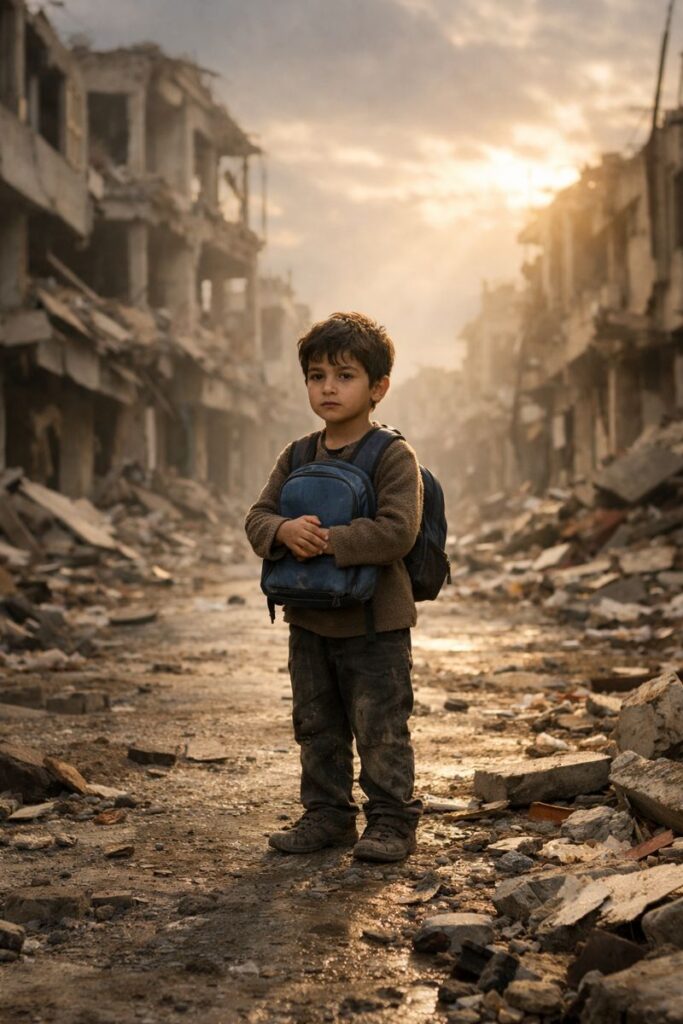
When I first learned about Gaza, I did not understand politics. I did not understand borders, ideologies, or power games. I understood only pain. I saw broken buildings, frightened faces, and silent streets that once carried laughter. In that moment, Gaza was no longer a place on a map — it became a wound in my heart.
The Middle East Conflict is often explained through numbers, treaties, and headlines. But behind every statistic lies a human life. A child who wanted to go to school. A mother who wanted to protect her family. A father who wanted to return home alive. These ordinary dreams are the true victims of extraordinary violence.
As I explored the Middle East Conflict deeper, I realized that it is not only about Israel or Palestine. It is about how humanity treats humanity when fear becomes stronger than compassion. It is about how power speaks louder than suffering, and how silence becomes a form of agreement.
This article is not written to defend one side and attack another. It is written to defend humanity itself. It is written from my experiences, my reflections, and my emotional journey while trying to understand a conflict that has stolen too many futures.
This is not just a story of war. This is a story of pain, resilience, loss, and hope. And above all, this is a story of humanity struggling to survive between politics and power.
The Historical Roots of the Middle East Conflict
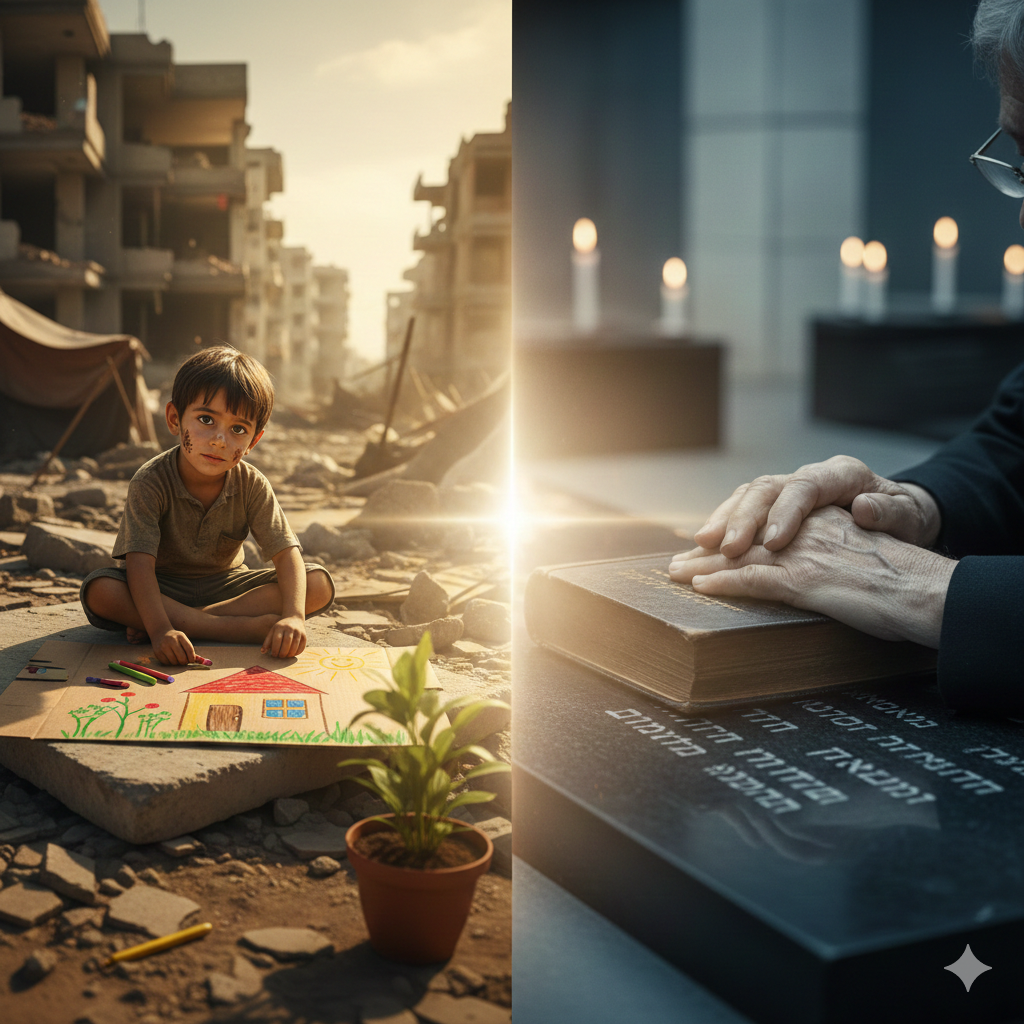
To understand the Middle East Conflict, we must travel back in time. This conflict did not begin with rockets or walls; it began with decisions made far away from the people who would later suffer from them. It is a story shaped by empires, promises, and power struggles that ignored human emotions and local realities.
The land known today as Israel and Palestine has always been more than territory. It has been a home, a sacred space, and an identity for millions. Yet, history repeatedly treated it as a political chessboard — laying the fragile foundations of what would later become the Middle East Conflict.
Ottoman Empire to British Mandate
For nearly four centuries, this region was part of the Ottoman Empire. During this time, different religious communities — Muslims, Christians, and Jews — lived together under a shared administrative system. Life was not perfect, but coexistence was possible.
After the First World War, the Ottoman Empire collapsed. The control of this land passed into British hands under what became known as the British Mandate. This transition marked the beginning of a new and dangerous chapter.
Britain now held the power to shape the political future of the region. However, instead of uniting communities, British policies deepened divisions. Promises were made to different groups at the same time, creating expectations that could never peacefully coexist.
The famous Balfour Declaration of 1917 supported the idea of a Jewish homeland in Palestine, while the Arab population was also promised independence. Two national dreams were planted on the same soil.
How Colonial Decisions Changed Lives Forever
Colonial decisions were written in official documents, but their consequences were written on human lives. Borders were drawn without considering families, cultures, and centuries of connection to the land. What seemed like lines on a map became walls inside hearts.
For Jewish communities, these decisions created hope for safety after centuries of persecution. For Palestinians, they slowly created a feeling of displacement in their own homeland. Both sides carried pain, but in different forms.
These colonial policies did not create peace; they created unresolved questions. They did not offer solutions; they offered future conflicts. Generations were born into a struggle they never chose.
When I reflect on this history, I realize that wars often begin long before the first bullet is fired. They begin when power ignores people, and when decisions are made without compassion.
 Amazon.com/images/I/414Uv9UrtFL._SY445_SX342_.jpg" alt="Amazon Product Image">
Top Choice Amazon Product
Premium quality, reliable performance, and excellent user feedback make this product a smart choice for daily use or gifting.
👉 Buy on AmazonBirth of Israel and Palestinian Displacement
The year 1948 stands as one of the most defining moments in Middle Eastern history. It marked the official birth of the State of Israel, a moment of fulfillment for Jewish communities who had long dreamed of a homeland after centuries of persecution. At the same time, it marked the beginning of displacement, loss, and uncertainty for millions of Palestinians.
This single historical event reshaped the political, social, and emotional landscape of the entire region. What appeared as liberation to one side appeared as dispossession to the other. From this point forward, the conflict was no longer only about land — it became about memory, identity, and survival.
1948: A Year of Two Different Memories
For Israelis, 1948 is remembered as the year of independence. It represents hope, safety, and the rebirth of a nation after unimaginable suffering during The Holocaust. It is a symbol of resilience and national pride.
For Palestinians, however, 1948 is remembered as the Nakba, meaning “catastrophe.” More than 700,000 Palestinians were forced to leave or flee their homes. Entire villages disappeared, and families were scattered across borders, refugee camps, and foreign lands.
Thus, the same year lives in two different histories — one written with celebration, the other written with grief. These contrasting memories continue to influence political attitudes and emotional wounds even today.
One Celebration, One Catastrophe
While flags were raised and independence was declared in new Israeli cities, countless Palestinian families were walking away from their homes with nothing but memories and hope of return. Doors were locked, keys were saved, and generations grew up hearing stories of houses they had never seen.
This was not only a physical displacement. It was a psychological and cultural rupture. Losing a home is painful, but losing a sense of belonging is even more devastating. The refugee identity became a permanent reality for millions of Palestinians.
At the same time, Israel was struggling to build a nation surrounded by hostility and insecurity. Fear and survival shaped its early political and military mindset. Both societies were born into trauma — but in very different ways.
When we look back at 1948, it becomes clear that history is not simply about winners and losers. It is about how one moment can carry joy for some and lifelong sorrow for others. And when such memories are left unresolved, they turn into future conflicts.
This is why 1948 is not just a year in history books. It is a living memory that still breathes in every conversation about Israel and Palestine today.
Gaza: A Land of Strength and Suffering
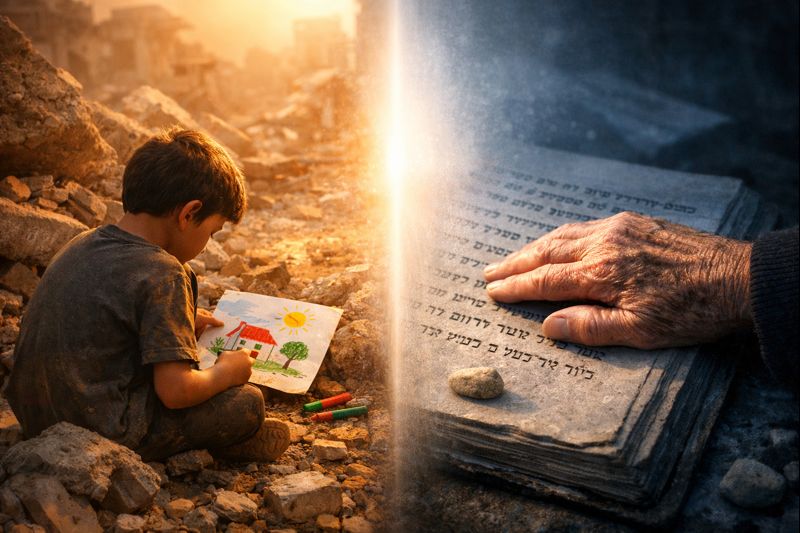
Gaza is not just a place on a map; it is a symbol of human endurance. Surrounded by conflict, restrictions, and uncertainty, Gaza continues to breathe through the courage of its people. Here, suffering is visible, but so is strength. Every street carries scars, yet every home carries hope.
The people of Gaza have learned to live with loss, but they have not learned to live without dignity. Their lives remind the world that resilience is not the absence of pain, but the decision to move forward despite it.
Daily Life Inside Gaza
Daily life in Gaza is a struggle for normalcy. Families wake up unsure whether electricity will stay, whether clean water will flow, and whether the day will pass in peace. Children go to school with bags on their backs and fear in their hearts. Parents smile, even when they are exhausted by uncertainty.
Hospitals often lack medicine, schools lack resources, and homes lack security. Yet markets open, prayers continue, and conversations about tomorrow never stop. Gaza survives because its people refuse to surrender their humanity.
Here, life is not measured in luxury, but in survival. And survival itself becomes a form of resistance.
What I Learned from Gaza’s Children
Gaza’s children taught me lessons no classroom ever could. Their eyes hold stories of explosions, but also dreams of peace. They draw pictures of homes, not weapons. They speak of future careers, not future battles.
One child once said, “I want to become a doctor so I can save people, not run from bombs.” That sentence stayed with me forever. It showed me that even in the darkest environments, the human spirit chooses light.
These children taught me that hope does not need comfort to grow. It only needs belief. They taught me that innocence can survive even when childhood is stolen.
From Gaza’s children, I learned that the strongest voices in the world are not the ones shouting in power, but the ones whispering dreams in the middle of fear.
Amazon.com/images/I/51b-jqkjdGL._SX342_SY445_.jpg" alt="Amazon Product Image">Top Amazon Product Pick
Stylish and durable build, reliable performance, and high user satisfaction make this a great daily-use product.
👉 Buy on AmazonIsrael’s Perspective: Security, history and Fear
To understand Israel’s actions and policies, one must first understand its deep sense of insecurity. Israel does not see itself only as a modern nation-state, but as a historical refuge for a community that faced centuries of persecution. For many Israelis, survival is not a political slogan — it is a collective memory.
Every security decision in Israel is influenced by the belief that existence itself can never be taken for granted. This mindset shapes military strategies, diplomatic relations, and public opinion. Security, therefore, is not just a policy priority — it is a national psychology.
The Holocaust Shadow on Israeli Mindset
The Holocaust is not only a chapter in history books for Israelis; it is a living emotional reality. The systematic murder of six million Jews during World War II created a permanent scar on Jewish consciousness. This trauma taught generations that weakness could mean extinction.
Israeli children grow up learning that the world once remained silent while their ancestors were destroyed. This lesson creates a strong belief that Israel must always protect itself, even if it has to stand alone.
Because of this historical wound, many Israelis view threats not as political disagreements, but as potential repetitions of history. This perception deeply influences how Israeli society reacts to conflict and criticism.
Fear as a Political Tool
When fear becomes deeply rooted in society, it naturally turns into a powerful political instrument. In Israel, fear is often used to justify strict security measures and aggressive policies. Leaders present harsh decisions as necessary acts of survival.
Fear simplifies complex realities. It divides the world into “us” and “them.” It reduces empathy and strengthens defensive thinking. While fear can protect in the short term, it can also blind a society to the suffering of others.
Political narratives built on fear rarely create peace. They create obedience, silence, and long-term hostility. When fear becomes the foundation of governance, dialogue becomes weakness and compromise becomes betrayal.
From this perspective, I learned that fear is not only an emotion — it is a force that can shape nations, justify violence, and delay reconciliation. And unless fear is replaced by understanding, history continues to repeat itself in different forms.
Palestinian Perspective: Identity Without a Nation
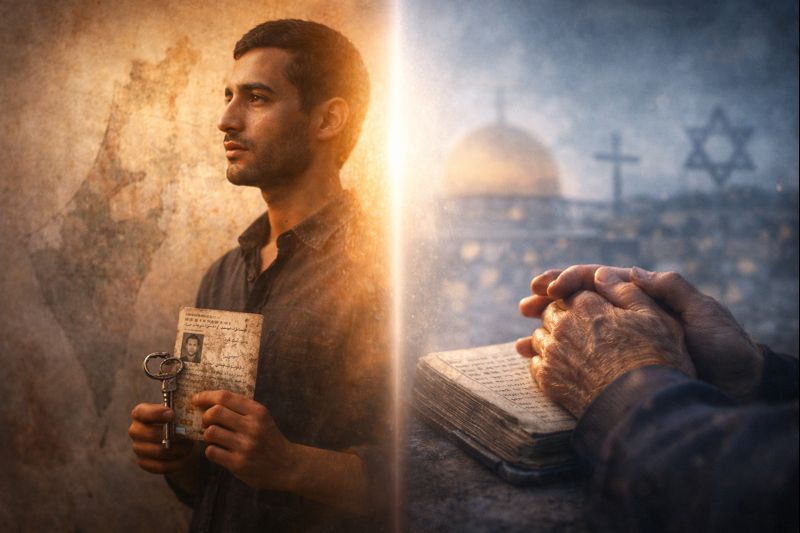
For Palestinians, the conflict is not only about politics or territory. It is about identity — an identity that exists without a fully recognized nation. Generations have grown up knowing who they are, yet not knowing where they truly belong. Their struggle is not just to own land, but to be acknowledged as a people with dignity and rights.
Living without a sovereign homeland has shaped Palestinian identity into one built on memory, resistance, culture, and hope. Their nation lives more in stories, traditions, and dreams than in borders on a map — a reality deeply connected to the broader Middle East Conflict.
Life Under Occupation
Life under occupation means living with constant uncertainty. Checkpoints, permits, surveillance, and restrictions become part of daily routine. Simple actions like visiting relatives, attending school, or reaching hospitals often depend on permission.
This reality slowly affects the human spirit. Freedom becomes limited, opportunities become rare, and fear becomes familiar. Yet, Palestinians continue to build families, celebrate festivals, educate their children, and preserve their culture.
Under occupation, resistance is not always violent. Sometimes, resistance is simply surviving with dignity.
Living Without Borders and Rights
Living without clear borders means living without security. Living without full rights means living without protection. For many Palestinians, citizenship is uncertain, movement is restricted, and legal identity is fragile.
This condition creates a feeling of invisibility — as if existence is constantly questioned. Yet, Palestinians refuse to disappear. Their poetry, music, food, language, and memories keep their identity alive.
They teach the world that borders do not define a nation — people do. And rights are not gifts given by power, but truths demanded by humanity.
From the Palestinian experience, I learned that identity can survive without a nation, but peace cannot survive without justice.
Amazon.com/images/I/71cU3A9uf3L._SY466_.jpg" alt="Amazon Product Image">Top Rated Amazon Product
Stylish design, reliable performance and excellent user reviews make this product a smart choice for everyday use or gifting.
👉 Buy on AmazonThe Role of religion in the Conflict
Religion plays a deeply sensitive and complex role in the Middle East conflict. What was meant to guide humanity toward compassion, humility, and peace has often been transformed into a symbol of ownership, identity, and power. Faith, which should unite hearts, has repeatedly been used to divide lands and people.
In this conflict, religion is not only a personal belief system — it has become a political language. Sacred history is turned into modern justification, and spiritual devotion is mixed with territorial claims. As a result, disagreements that could have been political become emotional, and emotions become unbreakable barriers.
Jerusalem: A City of Three Faiths
Jerusalem is not just a city; it is a spiritual heartbeat for three major religions — Judaism, Christianity, and Islam. For Jews, it holds the memory of the ancient Temple. For Christians, it is the city of Jesus Christ’s final days. For Muslims, it is home to the Al-Aqsa Mosque, one of the holiest sites in Islam.
Each faith sees Jerusalem not only as sacred, but as essential to its identity. This shared holiness, instead of creating unity, has turned into a source of rivalry. Every stone carries prayer, and every prayer carries history.
When sacred places become political symbols, compromise becomes almost impossible. Because land can be negotiated, but faith cannot be traded.
When God Is Used for War
The most dangerous moment in any conflict is when God is used to justify violence. When people believe that their war is divine, they stop listening to human pain. They stop questioning their actions. They stop seeing the other side as human.
In such situations, God is no longer a source of mercy, but a shield for power. Religion is no longer about love, but about control. And the true spirit of faith is lost beneath political ambition.
Every side claims moral superiority, every side claims sacred rights, and every side forgets that all religions teach respect for life. The battlefield becomes holy, and the victim becomes invisible.
From this reality, I learned a painful lesson: God never creates wars — humans do. And when humans bring God into their wars, they make those wars even harder to end.
Media, Propaganda and Global Silence
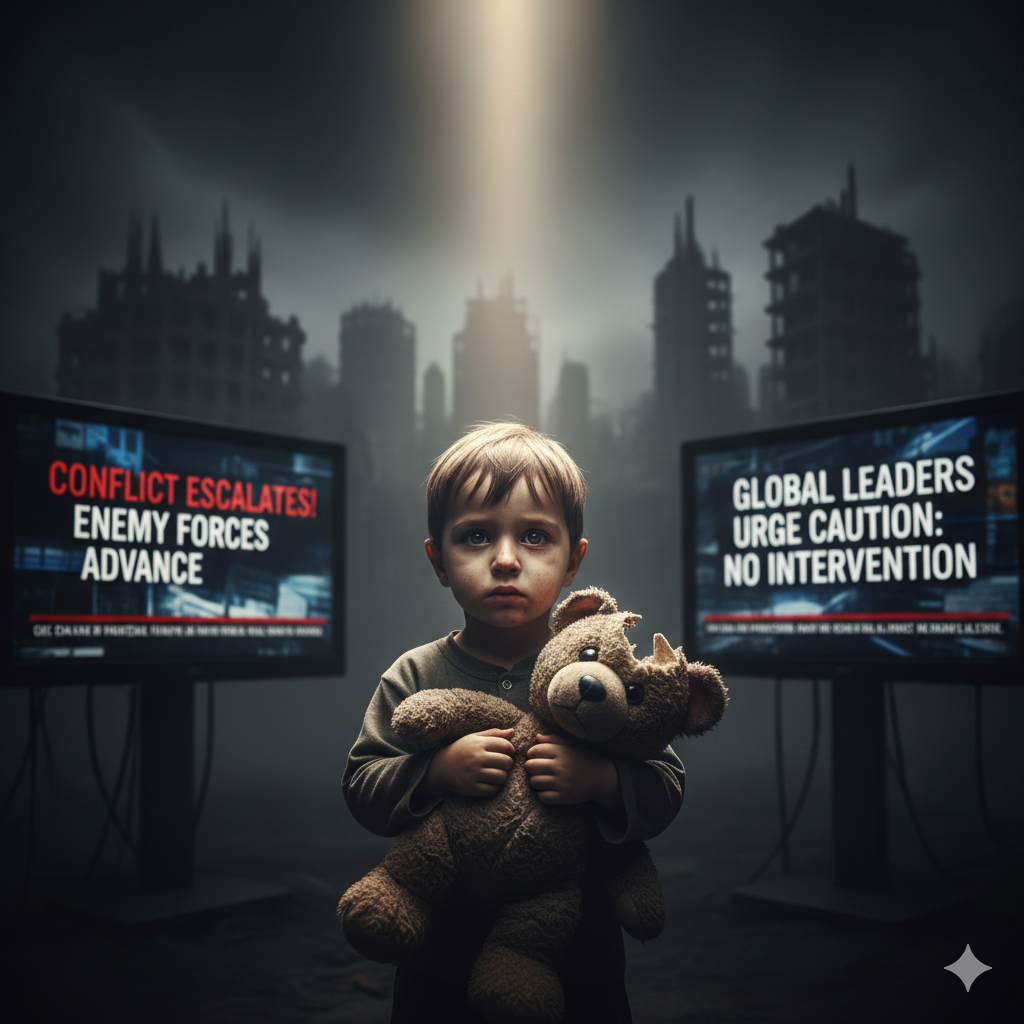
In modern conflicts, weapons are not only carried by soldiers — they are also carried by words, images, and headlines. Media has become one of the most powerful battlefields of the Middle East conflict. What the world believes is often decided not by reality, but by what is shown, repeated, and emphasized.
While bombs destroy cities, narratives shape opinions. And opinions, in turn, decide who receives sympathy, who receives support, and who remains invisible.
How Narratives Are Controlled
Every conflict has multiple stories, but only a few are allowed to dominate global attention. Powerful nations, institutions, and media houses often decide which version of reality becomes acceptable truth.
Language itself becomes a tool of control. One side is described as “defending,” while the other is described as “attacking.” Some deaths are called “tragic,” others are called “collateral.” These small word choices quietly change how human suffering is valued.
Social media has given people a voice, but it has also created confusion. Emotional images spread faster than verified facts. As a result, truth is often replaced by viral convenience.
Truth as the First Casualty
It is often said that in war, truth is the first casualty. In the Middle East conflict, this statement feels painfully accurate. Truth is filtered, edited, delayed, and sometimes completely buried.
When truth disappears, justice becomes impossible. And when justice becomes impossible, peace becomes only a slogan.
Global silence makes this loss even more dangerous. When the world chooses comfort over conscience, silence becomes a form of participation. Silence allows suffering to continue without challenge.
From this conflict, I learned that truth does not die because it is weak — it dies because it is inconvenient. And whenever truth is sacrificed, humanity loses a part of itself.
Amazon.com/images/I/41MT8V9L71L._SX342_SY445_.jpg" alt="Amazon Product Image">Amazon Product Recommendation
Reliable quality, sleek design and great user reviews make this a solid choice for everyday use or gifting.
👉 Buy on AmazonThe Human Cost of the Conflict
Every conflict has a price, but the true cost is never measured in destroyed buildings or political outcomes. It is measured in broken families, silent childhoods, and uncertain futures. In the Middle East Conflict, the deepest wounds are not on the land — they are in human hearts.
Behind every headline lies a personal story. A story of someone who lost a home, a loved one, or a sense of safety. The Middle East Conflict does not only take lives; it changes the meaning of living.
Children, Women and Lost Futures
Children and women carry the heaviest burden of this conflict. Children grow up hearing explosions instead of lullabies. Their playgrounds become ruins, and their dreams become fragile.
Women carry pain in silence. They protect their families, mourn their losses, and still try to keep hope alive. Many become both parents at once — nurturing life while surviving loss.
For both, the future is often shaped by fear rather than freedom. Opportunities are limited, education is interrupted, and dreams are postponed without choice.
What War Does to Innocence
War steals innocence before childhood can fully exist. When a child understands death before understanding life, something inside humanity is broken.
Innocence is replaced by alertness. Smiles are replaced by questions. Trust is replaced by caution. And slowly, the natural joy of being human fades.
This loss of innocence is not just personal — it is global. Because every child who loses innocence takes away a piece of the world’s future.
From this conflict, I learned that war does not only kill people — it kills possibilities. And when possibilities die, peace becomes harder to imagine.

What This Conflict Taught Me About Life
While studying the Middle East Conflict, I did not only learn about history, politics, or borders — I learned about human nature. I learned how easily power can silence compassion, and how quickly suffering can become normal when it does not affect us directly.
The Middle East Conflict taught me that wars are not only fought on land; they are fought inside human conscience. And often, the greatest battle is between empathy and indifference.
Power Without Humanity Is Destruction
Power in itself is not evil. Power can protect, build, and guide. But when power walks without humanity, it becomes destruction. In this conflict, I saw how strength was often used not to heal wounds, but to deepen them.
True power should reduce fear, not create it. True strength should protect life, not dominate it. Yet, when power becomes ego, it stops serving people and starts ruling over them.
This taught me that the greatness of a nation is not measured by its weapons, but by its ability to remain human even in danger.
Silence Is Also a Crime
One of the hardest lessons I learned is that violence is not the only crime in a conflict — silence is also a crime. When injustice happens and we choose comfort over courage, we become part of the problem.
Silence allows suffering to continue. Silence protects the powerful. Silence buries the voices of the weak. And slowly, silence teaches society to accept cruelty as normal.
History does not only remember those who committed injustice. It also remembers those who witnessed it and chose not to speak.
From this conflict, I learned that humanity survives not through weapons, but through voices. And sometimes, the bravest act is simply refusing to stay silent.
Is Peace Still Possible?
After decades of violence, loss, and mistrust, the question naturally arises — is peace still possible? The answer is not simple, but it is not impossible. history shows that even the longest conflicts can change when people choose understanding over revenge.
Peace does not begin in treaties; it begins in minds. It begins when pain is acknowledged, when suffering is respected, and when humanity is placed above political pride.
Role of Youth and New Thinking
The youth of today carry a different kind of responsibility. They are not prisoners of the past, but witnesses to its consequences. Israeli and Palestinian young voices increasingly question hatred instead of inheriting it.
Education, global exposure, and digital communication have allowed young minds to see beyond propaganda. Many now understand that their future cannot be built on the ruins of endless conflict.
Youth have the courage to imagine a future where coexistence is not weakness, but wisdom. Their new thinking challenges old narratives and opens doors that were once closed by fear.
Hope Is the Last Border
Borders can be closed, walls can be built, and trust can be broken — but hope cannot be imprisoned. Hope is the last border that no conflict can cross.
Hope teaches us that peace is not the absence of pain, but the presence of compassion. It reminds us that humans are capable of forgiveness, growth, and transformation.
From this conflict, I learned that peace does not arrive suddenly. It grows slowly in conversations, in courage, and in kindness.
And perhaps one day, when hope becomes stronger than hatred, peace will no longer be a question — it will be a reality.
Conclusion: Humanity Must Win
The Middle East Conflict is not only the story of Gaza, Israel, and Palestine — it is the story of humanity being tested. It shows us what happens when power becomes stronger than compassion, and when silence becomes more comfortable than truth.
Throughout this journey, we have seen history, politics, religion, media, and human suffering shaped by the Middle East Conflict. But above all, we have seen people — people who love, fear, hope, and endure. Their pain cannot be fully explained by maps or agreements.
The children of Gaza, the identity of Palestinians, the fears of Israelis, and the silence of the world together teach us one powerful lesson: peace is not created by weapons, but by understanding.
Hatred never heals hatred. Violence never creates justice. And silence never protects innocence. Peace can only grow when humans choose humanity over ideology.
This article does not stand for one side — it stands for human dignity. Because in the end, the most important question is not who was right or wrong, but whether we remained human.
If this conflict teaches us anything, it is this: humanity must win. Only then can peace truly survive.
Frequently Asked Questions About the Middle East Conflict
What is the main cause of the Gaza and Palestine conflict?
The main causes of the Middle East Conflict include historical disputes, territorial claims, political decisions, and issues related to identity, security, and human rights.
Is peace between Israel and Palestine possible?
Peace is possible, but resolving the Middle East Conflict requires honest dialogue, mutual understanding, respect for human rights, and a commitment to humanity over politics.
What is the living situation of common people in Gaza?
People in Gaza live under severe restrictions, limited resources, and constant insecurity, with children and women being the most affected.
What role does religion play in this conflict?
Religion plays both a spiritual and emotional role, especially regarding Jerusalem, but it is often mixed with political interests, making the conflict more complex.
How does media influence this conflict?
Media shapes public opinion through language, images, and narrative framing, which can influence how the world understands the situation.
What lessons can humanity learn from this conflict?
The conflict teaches that hatred, violence, and silence do not bring solutions. Only dialogue, compassion, and justice can lead to lasting peace.
What can ordinary people do to support peace?
Ordinary people can support peace by spreading awareness, promoting empathy, respecting different perspectives, and standing for human dignity.
References
- United Nations Human Rights Reports on Gaza and Palestine
- BBC News – Middle East Conflict Special Coverage
- Al Jazeera – Israel and Palestine Historical Analysis
- UNRWA Official Reports on Palestinian Refugees
- Amnesty International – Human Rights Situation in Gaza
- Human Rights Watch – Israel-Palestine Conflict Reports
- Encyclopedia Britannica – history of Israel and Palestine
- Stockholm International Peace Research Institute (SIPRI) Reports
- International Crisis Group – Middle East Conflict Studies
- World Health Organization (who) Reports on Gaza Humanitarian Conditions