
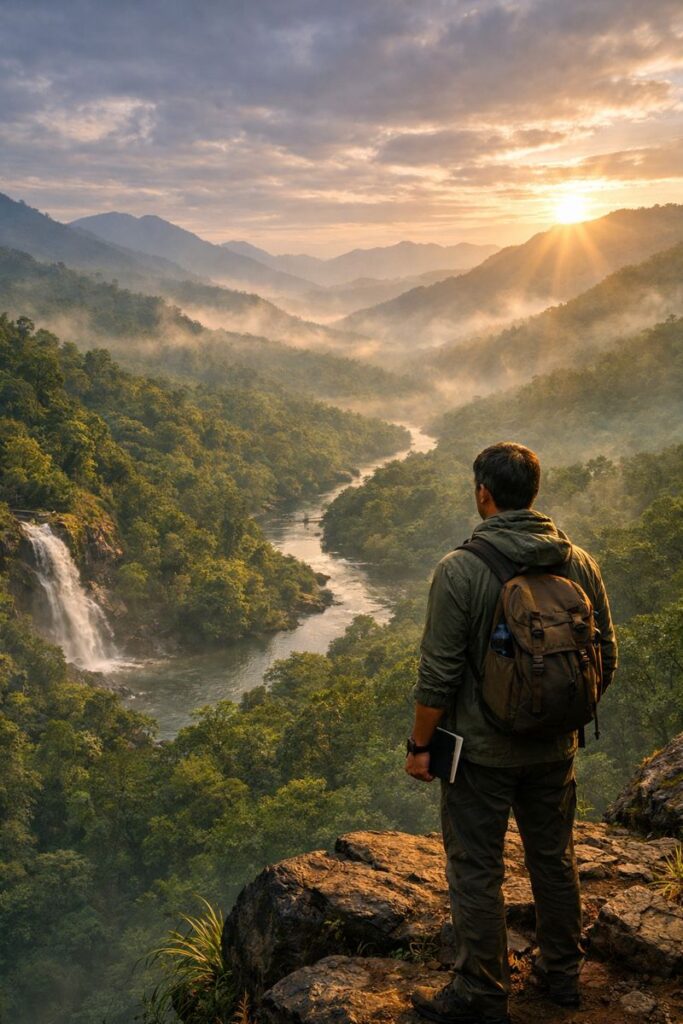
Western Ghats UPSC is an important topic for Geography, Environment, Biodiversity, and Ecology sections in UPSC Prelims and Mains examination.
Geographical Introduction of the Western Ghats
The Western Ghats are one of the most significant mountain ranges in India, stretching parallel to the western coast for nearly 1,600 kilometers. This majestic range extends from the Tapi River region in Gujarat to Kanyakumari in Tamil Nadu, passing through Maharashtra, Goa, Karnataka, Kerala, and Tamil Nadu.
The average elevation of this mountain system ranges between 900 and 1,600 meters. The highest peak, Anamudi, located in Kerala, rises to about 2,695 meters above sea level. This range is also popularly known as the Sahyadri Hills.
It plays a crucial role in India’s monsoon mechanism by blocking the moisture-laden winds from the Arabian Sea. As a result, heavy rainfall occurs on the western slopes, ensuring water availability for rivers, agriculture, and human settlements in southern India.
History of the Region
The history of this region is ancient and deeply rooted in Indian civilization. References can be found in Vedic literature, Puranas, and early historical texts. In ancient times, these hills were considered sacred lands where sages and scholars practiced meditation and learning.
Several powerful dynasties such as the Mauryas, Satavahanas, Chalukyas, Rashtrakutas, Hoysalas, and the Vijayanagara Empire ruled parts of this landscape. As a result, it became a center of cultural, religious, and architectural development.
During the colonial period, the British introduced large-scale plantations of tea, coffee, and spices, which significantly altered the natural landscape and ecological balance of the region.
UNESCO World Heritage Status
In 2012, this mountain range was declared a UNESCO World Heritage Site due to its exceptional ecological value, rich biodiversity, and high level of endemism. This recognition highlights its global environmental importance.
It is counted among the world’s 36 biodiversity hotspots and is home to thousands of plant species, hundreds of bird species, and a wide variety of mammals, reptiles, and amphibians — many of which are found nowhere else on Earth.
UNESCO’s recognition reminds us that this natural treasure is not only India’s pride but also a shared heritage of humanity, making its conservation a global responsibility.
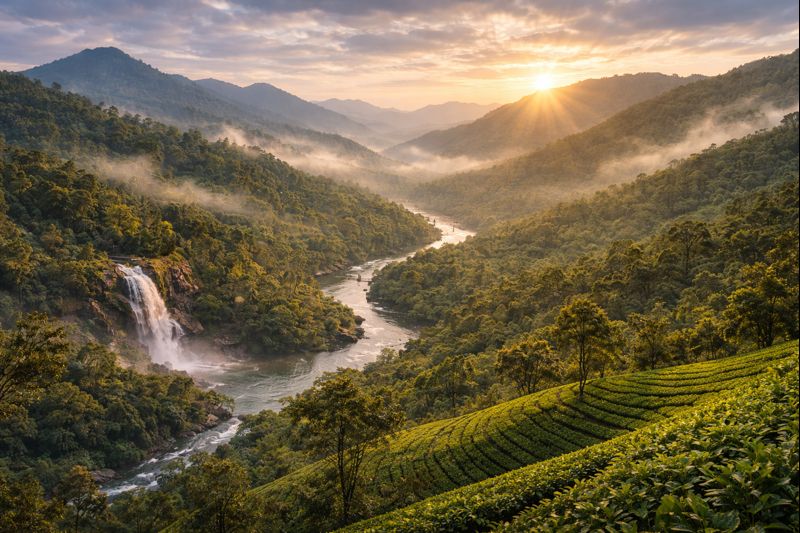
Geographical Introduction of the Western Ghats
The Western Ghats are one of the most significant mountain ranges in India, stretching parallel to the western coast for nearly 1,600 kilometers. This majestic range extends from the Tapi River region in Gujarat to Kanyakumari in Tamil Nadu, passing through Maharashtra, Goa, Karnataka, Kerala, and Tamil Nadu.
The average elevation of this mountain system ranges between 900 and 1,600 meters. The highest peak, Anamudi in Kerala, rises to about 2,695 meters above sea level. This range is also popularly known as the Sahyadri Hills.
It plays a crucial role in India’s monsoon mechanism by blocking moisture-laden winds from the Arabian Sea. As a result, heavy rainfall occurs on the western slopes, ensuring water availability for rivers, agriculture, and human settlements across southern India.
History of the Region
The history of this region is ancient and deeply rooted in Indian civilization. References can be found in Vedic literature, Puranas, and early historical texts. In ancient times, these hills were considered sacred lands where sages and scholars practiced meditation and learning.
Several powerful dynasties such as the Mauryas, Satavahanas, Chalukyas, Rashtrakutas, Hoysalas, and the Vijayanagara Empire ruled parts of this landscape. As a result, it became a center of cultural, religious, and architectural development.
During the colonial period, the British introduced large-scale plantations of tea, coffee, and spices, which significantly altered the natural landscape and ecological balance of this mountain ecosystem.
UNESCO World Heritage Status
In 2012, this mountain range was declared a UNESCO World Heritage Site due to its exceptional ecological value, rich Biodiversity, and high level of endemism. This recognition highlights its global environmental importance.
It is counted among the world’s 36 biodiversity hotspots and is home to thousands of plant species, hundreds of bird species, and a wide variety of mammals, reptiles, and amphibians — many of which are found nowhere else on Earth.
This international recognition reminds us that these ancient highlands are not only India’s natural treasure but also a shared heritage of humanity, making conservation a global responsibility.
Biodiversity of the Western Ghats
The Western Ghats are recognized as one of the world’s most important biodiversity hotspots. The unique combination of Geography, climate, and rainfall has created a rich and complex ecosystem that supports an extraordinary variety of plant and animal life. This landscape is often described as the biological heart of India.
This mountain range includes tropical evergreen forests, semi-evergreen forests, deciduous forests, and montane grasslands. Each ecosystem plays a vital role in maintaining ecological balance and supporting life in surrounding regions.
Floral Wealth
The floral diversity of this region is remarkable. More than 7,400 plant species have been recorded here, many of which are endemic to these hills. Trees such as sandalwood, teak, bamboo, and mahogany are commonly found, along with a wide range of medicinal plants.
Medicinal plants like Ashwagandha, Tulsi, Brahmi, and Haritaki are widely used in traditional Indian systems of medicine such as Ayurveda. These species represent centuries of indigenous knowledge and natural healing practices.
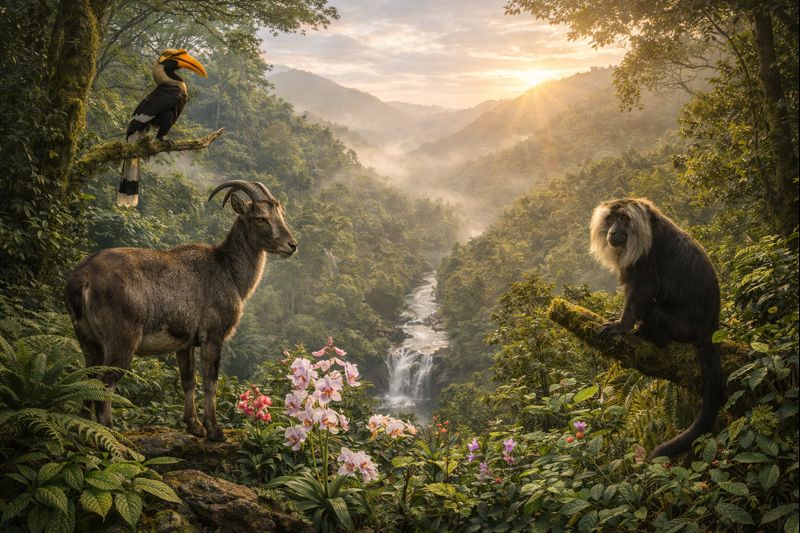
In addition to trees and herbs, this biodiversity hotspot is home to rare orchids, colorful flowering plants, climbers, mosses, and ferns, which together create a vibrant and ecologically significant plant ecosystem.
Rare Wildlife
This region provides shelter to many rare and endangered animal species, several of which are found nowhere else in the world. Species such as the Nilgiri Tahr, Lion-tailed Macaque, Malabar Civet, Nilgiri Langur, and Sloth Bear highlight its ecological importance.
Bird species like the Malabar Trogon, Great Indian Hornbill, and Nilgiri Flycatcher are iconic representatives of these hills. The area is also rich in amphibians and reptiles, many of which are newly discovered and still being studied by scientists.
The survival of these rare wildlife species depends entirely on the protection of forests, rivers, and mountain ecosystems. Conserving this biodiversity is not only an environmental responsibility but also a commitment to future generations.
Human Impact on the Western Ghats
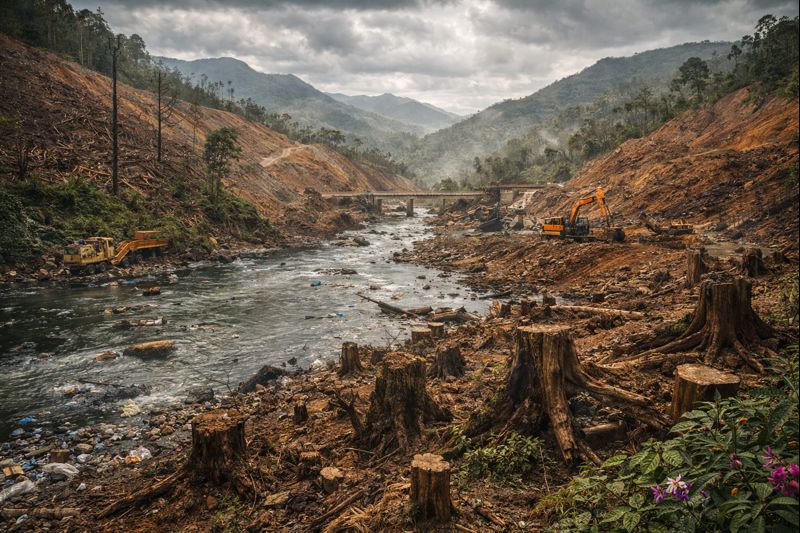
Human activities have deeply affected the natural beauty and ecological balance of the Western Ghats. Rapid population growth, industrialization, urban expansion, and unplanned development projects have placed enormous pressure on this fragile ecosystem. Areas once known for dense forests and clean rivers are now facing serious environmental challenges.
Uncontrolled human intervention has destroyed natural habitats of wildlife and disturbed climate patterns and rainfall cycles. These changes directly impact agriculture, water availability, and the livelihood of local communities.
Deforestation
Deforestation is one of the most serious environmental problems in this mountain region. Large forest areas have been cleared for timber extraction, agricultural expansion, mining, road construction, and residential projects. As a result, wildlife habitats have been destroyed, and many species are now threatened with extinction.
The loss of forests increases soil erosion, leading to landslides and floods. It also raises carbon dioxide levels in the atmosphere, accelerating climate change and global warming.
Threat to Water Resources
Rivers originating from this range are the lifeline of southern India, but today they are facing severe threats. Dam construction, industrial waste, domestic sewage, and illegal sand mining have reduced both the quality and quantity of water resources.
Pollution of rivers and lakes has harmed aquatic life and created serious health risks for human populations. In many regions, the shortage of clean drinking water has become a major concern.
If these water systems are not protected in time, future generations will face severe scarcity. Therefore, conserving these vital ecosystems is one of our most important responsibilities today.
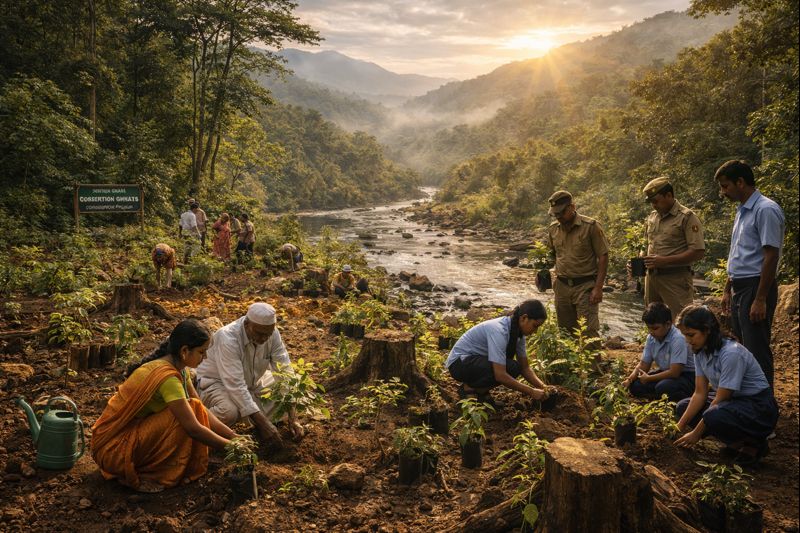
Conservation Efforts and Solutions
The conservation of the Western Ghats is not only the responsibility of the government, but a shared duty of scientists, local communities, policymakers, and every citizen. Without timely and effective action, this priceless natural heritage may suffer irreversible damage.
Sustainable development is the key solution, where environmental protection, economic growth, and social welfare move together in harmony. Forest protection, water conservation, Biodiversity monitoring, and environmental education must be given the highest priority.
Government Initiatives
Both central and state governments of India have taken several important steps to protect this mountain ecosystem. Wildlife Protection Acts, the establishment of national parks and wildlife sanctuaries, and Environmental Impact Assessment (EIA) regulations are major policy measures in this direction.
Expert committees such as the Gadgil Committee and the Kasturirangan Committee have recommended declaring large parts of this region as ecologically sensitive zones. These recommendations aim to balance development with environmental conservation.
In addition, biodiversity management committees, forest conservation projects, and river rejuvenation programs form a vital part of these long-term protection efforts.
Role of Community Participation
Community participation plays a crucial role in conservation efforts across these hills. Local communities understand the ecosystem better than anyone else, and their traditional knowledge must be respected and included in planning.
Non-governmental organizations, environmental activists, students, and citizens can contribute through tree plantation drives, water conservation campaigns, cleanliness programs, and awareness initiatives.
When every individual realizes that protecting nature means protecting our own future, true and lasting conservation becomes possible. These mountains are not just landscapes — they are a responsibility we must carry together.
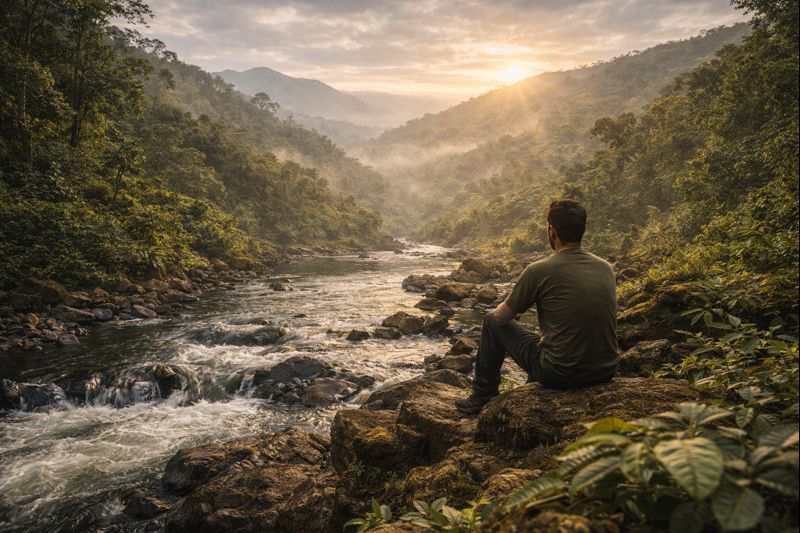
My Journey of Self-Reflection
My journey to the Western Ghats was not just a physical trip through mountains and forests, but a deep journey within myself. Standing among silent hills, flowing rivers, and dense green landscapes, I realized how disconnected modern life has made us from nature. The calmness of this mountain range gave me a rare chance to truly listen to my own thoughts.
This experience taught me that true happiness does not come from speed, noise, or material success, but from balance, simplicity, and respect for life. These majestic hills became a mirror in which I could see both my strengths and my responsibilities.
Life Lessons from Nature
This region taught me that nature is the greatest teacher. Mountains show patience, rivers teach continuity, and forests demonstrate selfless support for countless forms of life.
I learned that the relationship between humans and the natural world should not be based on exploitation, but on gratitude and protection. When we harm the environment, we slowly harm ourselves.
These ancient highlands also reminded me that every small action matters. Even a single tree saved, a river protected, or a voice raised for conservation can shape the future.
A Message for Future Generations
To future generations, my message is simple yet powerful: never forget that nature is your greatest inheritance. This natural heritage, like many other ecological treasures, is not just a tourist destination, but a living classroom of life.
If you protect nature today, nature will protect you tomorrow. Respect every tree, every river, and every mountain, because they carry the breath of humanity within them.
The story of this magnificent landscape does not end here. It continues with every promise we make to preserve, respect, and protect our planet.
FAQ – Western Ghats UPSC
Why are the Western Ghats important for UPSC?
The Western Ghats are important for UPSC because they are a UNESCO World Heritage Site and one of the world’s major Biodiversity hotspots.
Which states are covered by the Western Ghats?
The Western Ghats pass through Gujarat, Maharashtra, Goa, Karnataka, Kerala, and Tamil Nadu.
Which is the highest peak of the Western Ghats?
Anamudi Peak in Kerala is the highest peak of the Western Ghats.
What are the major threats to the Western Ghats ecosystem?
Deforestation, mining, urbanization, river pollution, and climate change are major threats.
Conclusion
The Western Ghats are not merely a mountain range, but the living soul of India’s natural heritage. Their forests, rivers, Biodiversity, and cultural significance remind us that the relationship between humans and nature is deeply connected and inseparable.
Through this article, I have shared my experiences, observations, and lessons to highlight that the conservation of the Western Ghats is not only an environmental necessity, but also a moral responsibility for all of us.
Only by maintaining a balance between development and conservation can we ensure a safe, healthy, and sustainable future for the coming generations.
The Western Ghats teach us that cooperation with nature, not conflict, is the true path of human progress. This is the central message and lasting lesson of this journey.

Top Amazon Choice Product
Sleek design, reliable performance, and great user feedback make this product a smart choice for everyday use or gifting.
👉 Buy on AmazonReferences
- UNESCO World Heritage Committee – Official reports on the Western Ghats
- Ministry of Environment, Forest and Climate Change, Government of India – Western Ghats conservation documents
- Western Ghats Ecology Expert Panel (Gadgil Committee) Report
- Kasturirangan Committee Report on Western Ghats ecological assessment
- Geological Survey of India publications
- National Biodiversity Authority of India reports
- World Wide Fund for Nature (WWF) and IUCN conservation studies
- Peer-reviewed research papers, environmental journals, and academic articles
These references ensure the authenticity, scientific accuracy, and reliability of the information presented in this article.