
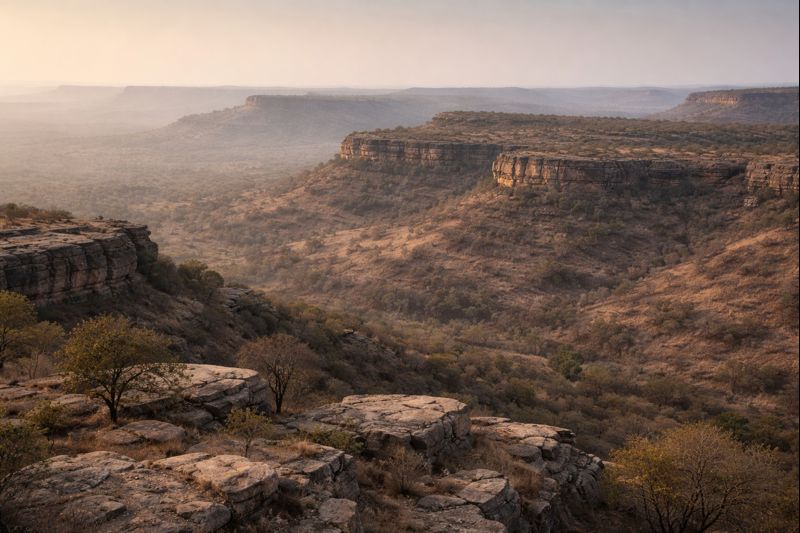
Vindhyachal and Satpura Mountain Ranges: Geography, History, Cultural Significance, and Life Lessons

When I began exploring the geography of central India, I was not merely tracing lines on a map or memorizing physical features. Instead, I found myself drawn into the silent presence of two ancient mountain systems— the Vindhyachal and the Satpura ranges. To me, these mountains were not just geological formations, but quiet witnesses to the rise of rivers, civilizations, and human thought.

What started as academic curiosity soon transformed into deeper reflection. As I studied their landforms, histories, and influence on human settlement, I realized that the Vindhyas and the Satpuras shape far more than landscapes. They divide climatic zones, guide river systems, and quietly influence how communities live, adapt, and survive. Their impact is subtle, yet profoundly enduring.

This article is an attempt to weave my learning and personal insights into a narrative journey. Through the stillness of the Vindhyachal Range, I discovered lessons of balance and patience. Through the living forests of the Satpura Range, I encountered movement, resilience, and renewal. This is not merely a study of mountains, but a reflection on how nature teaches us to understand life itself.

Amazon Product Image

Premium Amazon Product

Stylish design, dependable performance, and excellent user feedback make this product a great choice for everyday use or gifting.

👉 Buy on Amazon
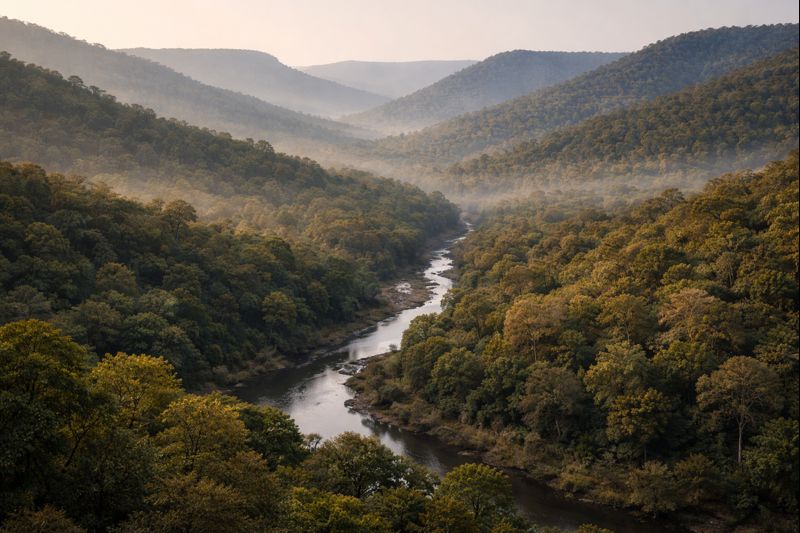
Vindhyachal Mountain Range: The Stable Backbone of Central India

Geographical Location and Extent

The Vindhyachal Mountain Range is one of the oldest mountain systems of India, extending from the eastern part of Gujarat in the west to the regions of Bihar and Jharkhand in the east. It primarily passes through Madhya Pradesh and the southern parts of Uttar Pradesh, forming a natural geographical boundary between the Indo-Gangetic Plain to the north and the Deccan Plateau to the south.

Although the Vindhyas are not very high in elevation, their geographical influence is extensive. They play a crucial role in determining river courses, climatic zones, and patterns of human settlement across central India.

Relief Features and Geological Structure

The Vindhyachal Range is predominantly plateau-like in nature, characterized by flat-topped hills, steep escarpments, and wide rocky surfaces. Geologically, it is composed mainly of ancient sedimentary rocks such as sandstone, limestone, and shale, which have remained relatively stable over millions of years.

Unlike young fold mountains, the Vindhyas exhibit minimal tectonic activity. Continuous processes of weathering and erosion have shaped the range into broad ridges rather than sharp peaks, giving it a balanced and enduring landscape.

My Personal Perspective on the Vindhyas

To me, the Vindhyachal Range represents quiet strength and stability. It does not dominate the landscape through height, but influences it through continuity and balance.

Studying the Vindhyas taught me that endurance often matters more than visibility. Their silent presence reflects how steady foundations, rather than dramatic change, sustain civilizations and natural systems over time.

Satpura Mountain Range: Green Landscapes, Wildlife, and Dynamic Life

Location and Origin of the Name

The Satpura Mountain Range is located in central India, south of the Vindhyachal Range. It extends from eastern Gujarat in the west to the borders of Chhattisgarh and Odisha in the east, passing through the states of Madhya Pradesh and Maharashtra.

The name “Satpura” is derived from the Sanskrit words Sapta (seven) and Parvata (mountain), meaning “a range of seven mountains.” This name reflects the region’s multiple parallel hills and diverse topographical features.

Forests, Rivers, and Biodiversity

The Satpura region is one of the most densely forested areas of India. It is dominated by teak, sal, bamboo, and mixed deciduous forests, creating a rich habitat for a wide variety of plant and animal species.

Situated between the Narmada and Tapi river systems, the Satpura Range benefits from abundant water resources. This ecological richness supports several national parks and wildlife sanctuaries, making the region a stronghold of biodiversity, including tigers, leopards, sloth bears, and numerous endemic species.

Life Lessons from the Satpuras

The forests and flowing rivers of the Satpura Range taught me the importance of movement and adaptability. Unlike silent stability, life here thrives through constant change and renewal.

To me, the Satpuras are not merely a geographical formation, but a living classroom that demonstrates how harmony with nature creates resilience, balance, and continuity in human life.

Amazon Product Image

Amazon Recommended Product

Stylish and reliable build quality paired with excellent performance makes this product a great choice for everyday use and gifting.

👉 Buy on Amazon
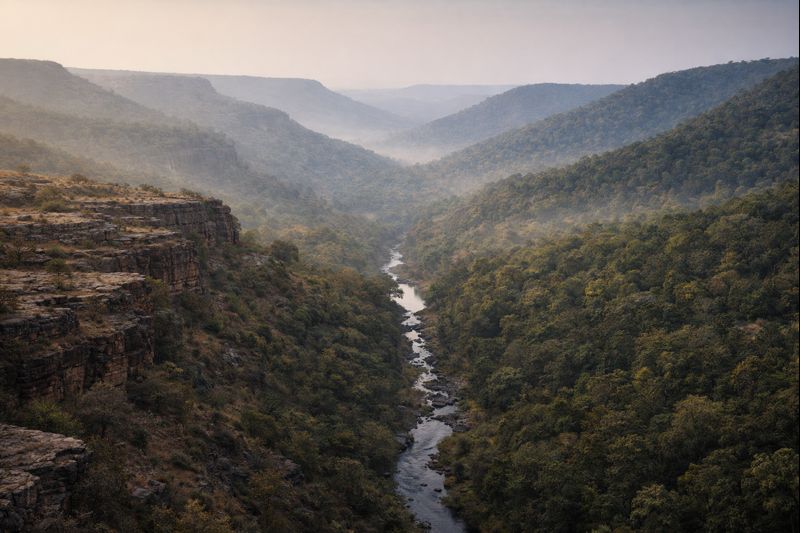
Vindhyachal and Satpura: A Balance of Stability and Dynamism

Differences in Geography and Structure

The Vindhyachal and Satpura mountain ranges differ significantly in their geographical character, yet together they shape the physical landscape of central India. The Vindhyachal Range is relatively lower in elevation and predominantly plateau-like, with broad ridges, flat-topped hills, and ancient rocky formations. Its stable geological nature reflects long-term balance rather than dramatic change.

In contrast, the Satpura Range is higher, more rugged, and ecologically dynamic. It features deep valleys, steep slopes, dense forests, and varied landforms. These characteristics make the Satpuras more active in terms of erosion, water flow, and biodiversity. While the Vindhyas symbolize stability, the Satpuras represent movement and natural vitality.

Impact on Culture and Civilization

The Vindhyachal Range has historically supported agricultural settlements and river-based civilizations. Its relatively open terrain and proximity to fertile plains encouraged the growth of organized societies, trade routes, and long-established cultural traditions.

The Satpura Range, on the other hand, nurtured forest-based and tribal cultures. Communities such as the Gond, Bhil, and Baiga developed lifestyles deeply connected to forests, wildlife, and seasonal rhythms. Together, the Vindhyachal and Satpura ranges illustrate how geography directly influences patterns of human culture, belief systems, and modes of survival across India.

Vindhya–Satpura in History and Ancient Texts

Mythological References in the Ramayana and the Mahabharata

The Vindhya and Satpura mountain ranges occupy an important place in India’s ancient literature and mythological traditions. In the Ramayana, this region is often described as a sacred forest zone, associated with ascetic life, hermitages of sages, and spiritual discipline. During the period of exile, Lord Rama, Sita, and Lakshmana are believed to have passed through parts of the Vindhya forests, giving the region deep religious and symbolic significance.

The Mahabharata also refers to the forested landscapes of central India as spaces of penance, learning, and moral reflection. The Vindhya–Satpura region is portrayed as a bridge between worldly life and spiritual pursuit, highlighting its role as a zone of transition, meditation, and inner transformation.

Tribal Civilizations and Living Traditions

For centuries, the Vindhya and Satpura ranges have been home to some of India’s oldest tribal communities. Groups such as the Gond, Bhil, Baiga, Kol, and Korku developed distinct civilizations rooted in forests, mountains, and seasonal rhythms.

Their traditions, folklore, music, dances, and belief systems are deeply intertwined with the natural environment. Mountains, rivers, trees, and animals are not seen merely as resources, but as sacred elements of life. Through these living traditions, the Vindhya–Satpura region continues to preserve a cultural heritage that connects nature, history, and human identity.

Amazon Product Image

Top Amazon Product Choice

Sleek design, reliable performance, and excellent user satisfaction make this product a smart choice for everyday use or gifting.

👉 Buy on Amazon
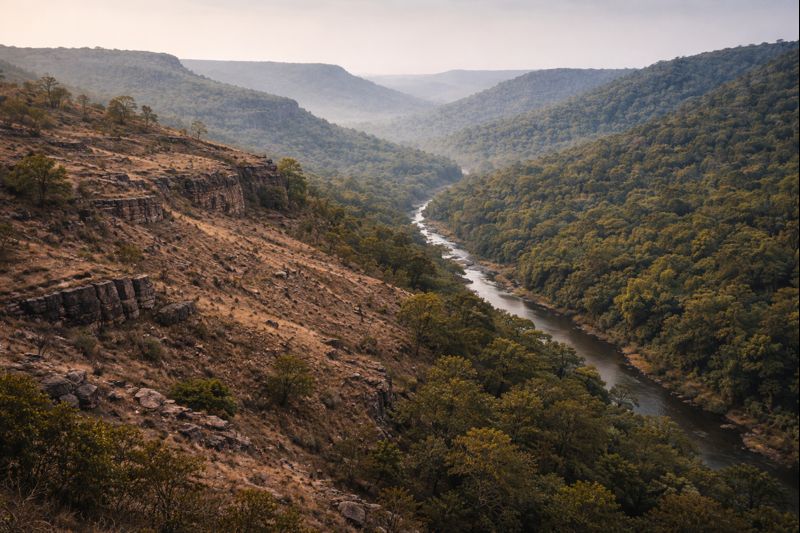
Origins of Rivers and Human Civilization

The Vindhyachal and Satpura mountain ranges are not only significant geographical formations but also major sources of rivers that have shaped the climate, agriculture, and human civilization of central India. The rivers originating from these ranges have provided water, fertile land, and natural routes for settlement and cultural development.

Narmada River

The Narmada River originates from the Amarkantak region in Madhya Pradesh, where the Vindhyachal and Satpura ranges come close to each other. It flows westward and eventually empties into the Arabian Sea, making it one of the few major west-flowing rivers of India.

Since ancient times, the Narmada Valley has been a cradle of human settlement, agriculture, and spiritual life. The river is regarded as sacred, and civilizations along its banks have played a crucial role in shaping the social and cultural landscape of central India.

Son River

The Son River originates from the Vindhyachal Mountain Range and flows northward to join the Ganga River. As an important tributary of the Ganga, it strengthens the river system of northern India.

The fertile plains along the Son River supported early agricultural communities and contributed to the growth of stable settlements. Its waters have long influenced the economic and social life of the regions it passes through.

Tapi River

The Tapi River rises from the Satpura Mountain Range and flows westward toward the Arabian Sea. Along with the Narmada, it is one of the most important west-flowing rivers of central India.

The Tapi River basin encouraged agricultural expansion, trade routes, and urban development in parts of the Deccan Plateau and western India. Its continuous flow has helped maintain ecological balance and sustain human life in surrounding regions.

Environmental Challenges and the Need for Conservation

Mining, Industrial Pressure, and Deforestation

The Vindhyachal and Satpura mountain ranges are currently facing serious environmental challenges. Due to the presence of rich mineral resources, large-scale mining activities have expanded across these regions, causing significant ecological imbalance.

Widespread deforestation has reduced forest cover, threatened biodiversity, and disrupted natural water systems. Mining on hill slopes has increased soil erosion, land degradation, and water pollution, directly affecting both wildlife and human communities dependent on these fragile ecosystems.

My Sense of Responsibility

Studying and reflecting on these mountain ranges made me realize that environmental conservation is not solely the responsibility of governments or institutions, but a shared moral duty of every individual. The Vindhyas and the Satpuras have sustained human civilization for centuries; protecting them is now our collective obligation.

For me, conservation goes beyond symbolic actions. It requires a conscious lifestyle that respects natural limits, promotes sustainable development, and values long-term ecological balance over short-term gain. Without such awareness, future generations may know these mountains only through books and photographs.

Amazon Product Image

Top Amazon Product

Stylish and reliable, this product combines quality design with excellent performance — a strong choice for everyday use or gifting.

👉 Buy on Amazon

Importance of the Vindhyachal and Satpura Ranges for Modern India

In modern India, marked by rapid urbanization and environmental stress, the Vindhyachal and Satpura mountain ranges hold growing significance. These ranges are not merely physical landforms, but foundational systems that support water security, climate stability, and ecological diversity across central India.

Water Security

The Vindhyachal and Satpura ranges serve as the source regions for several major rivers, including the Narmada, Son, and Tapi. These rivers supply water for agriculture, drinking purposes, and industrial use across vast regions of the country.

Through rainwater retention, groundwater recharge, and regulation of river flow, these mountain systems play a vital role in ensuring long-term water security for millions of people.

Climate Balance

The forests and elevations of the Vindhyachal and Satpura ranges help regulate regional climate conditions. They moderate temperature extremes, influence rainfall patterns, and reduce the impact of droughts and heat waves.

In the context of climate change, the ecological stability of these mountain systems acts as a natural buffer, supporting agricultural resilience and human survival.

Biodiversity

The Vindhya–Satpura region is one of India’s important centers of biodiversity. Its forests, wildlife sanctuaries, and national parks provide habitat for numerous plant and animal species, including several endangered and endemic forms of life.

Protecting this biodiversity is essential not only for environmental balance but also for sustaining livelihoods, public health, and the long-term ecological future of the nation.

Conclusion: Life’s Balance Learned from the Mountains

The Vindhya Range taught me the quiet strength of patience, the ability to stand firm without demanding attention. The Satpura Range, on the other hand, revealed the importance of movement— growth that flows, adapts, and embraces change.

Together, these mountains shaped my understanding of balance in life. Stability without stagnation, and motion without chaos. In a world rushing toward constant achievement, they remind us that true progress lies in harmony— between stillness and effort, reflection and action.

The mountains do not speak, yet they guide. They do not compete, yet they endure. From their silent presence, I learned that life’s greatest strength comes from staying grounded while continuing to move forward.

Frequently Asked Questions (FAQs)

What is the difference between the Vindhyachal and Satpura ranges?

The Vindhyachal Range is relatively stable, plateau-like, and lower in elevation, while the Satpura Range is higher, more rugged, and rich in forest cover. The Vindhyas mainly influenced agricultural settlements, whereas the Satpuras supported forest-based and tribal cultures.

Where does the Narmada River originate?

The Narmada River originates from the Amarkantak region in Madhya Pradesh, near the meeting zone of the Vindhyachal and Satpura ranges.

Why is the Vindhya–Satpura region important for India?

The Vindhya–Satpura region is crucial for water security, climate balance, and biodiversity. Rivers originating from these ranges support agriculture, human settlements, and ecological stability across central India.

What role do these mountain ranges play in modern environmental conservation?

These mountain systems act as natural climate regulators, biodiversity hotspots, and sources of major rivers. Protecting them is essential for sustainable development and long-term environmental balance in India.

Amazon Product Image

Top Amazon Product Choice

Sleek design, reliable performance, and excellent user feedback make this product a smart and practical choice for everyday use or gifting.

👉 Buy on Amazon

References

  • NCERT Geography Textbooks
  • Geological Survey of India (GSI)
  • Ancient Indian Literature and Texts
  • Physical Geography of India – Standard Academic Sources
  • Government Publications on Environment and Forests

Leave a Comment

Your email address will not be published. Required fields are marked *

Scroll to Top