
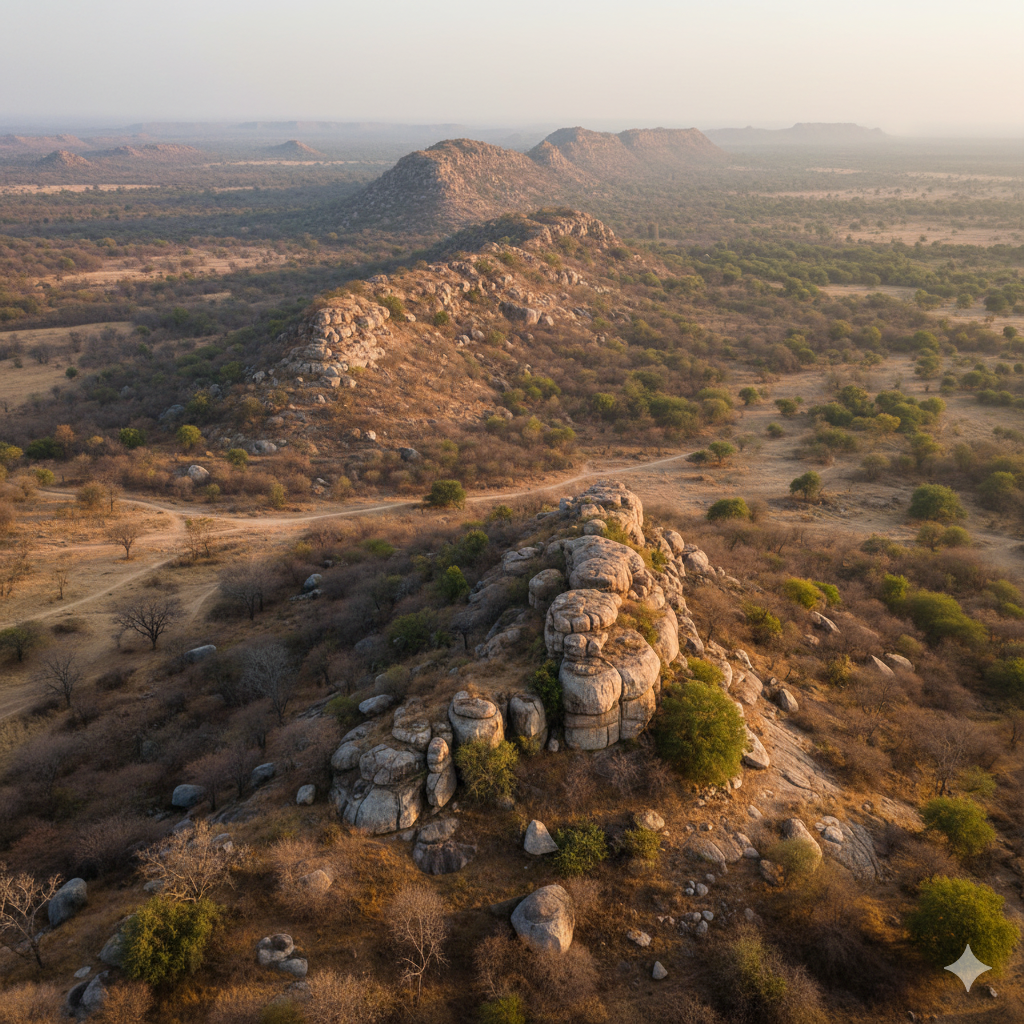
Introduction: When the Aravalli Became More Than Just Mountains
The Aravalli Range is not merely one of the oldest mountain systems in the world; it is a silent witness to the passage of time, human civilization, and environmental change. Stretching across western India, the Aravallis have shaped climate patterns, supported ancient settlements, and acted as a natural barrier against desert expansion for thousands of years. Despite its modest height, the range holds immense geographical and ecological significance.
This article explores the Aravalli Range not only as a physical landform, but as an experience and a source of life lessons. Along with geographical, historical, and environmental insights, it weaves in personal reflections to highlight how the resilience, stability, and quiet strength of the Aravallis offer meaningful guidance for sustainable development and modern life.
 amazon.com/images/I/91t+BGq9hsL._SY466_.jpg" alt="Amazon Product Image">
Top Amazon Product Recommendation
Stylish design, reliable performance, and excellent customer reviews make this product a great choice for everyday use or gifting.
👉 Buy on AmazonGeographical Overview of the Aravalli Range
The Aravalli Range is one of the oldest mountain systems in India and holds great geographical significance. Its location, structure, and long geological history have played a crucial role in shaping the physical landscape, climate patterns, and human settlements of north-western India.
Extent and Location of the Aravalli Range
The Aravalli Range extends for approximately 800 kilometers across western India. It begins near Palanpur in Gujarat and stretches northeastward through Rajasthan, passing major regions such as Udaipur, Ajmer, and Alwar, before continuing into Haryana and the National Capital Region of Delhi.
Geographically, the Aravallis act as a natural divide between the Thar Desert to the west and the fertile plains of eastern Rajasthan and northern India, influencing rainfall distribution and regional climate conditions.
Geological Structure and Age
The rocks of the Aravalli Range belong to the Precambrian era and are estimated to be over two billion years old, making the range older than the Himalayas. The mountain system is primarily composed of igneous and metamorphic rocks, including quartzite, schist, gneiss, and marble.
Due to prolonged erosion over millions of years, the Aravalli Range has relatively low elevations today. However, despite its reduced height, it remains geologically significant and stands as a symbol of ancient stability and endurance in the Indian subcontinent.
Role of the Aravalli Range in history and Civilization
The Aravalli Range has played a significant role in shaping the historical and cultural development of the Indian subcontinent. Beyond its geographical importance, the range provided natural protection, water resources, and mineral wealth that supported early human settlements and the growth of ancient civilizations.
Ancient Civilizations and the Aravalli
The influence of the Aravalli Range can be traced back to the Harappan civilization and the Vedic period. Seasonal rivers and water sources originating in the Aravalli region created favorable conditions for agriculture and permanent settlements. In addition, the availability of copper and other minerals contributed to tool-making and trade activities during the Harappan era.
During the Vedic period, the Aravalli region was often associated with forest landscapes that supported hermitages, pastoral life, and early spiritual traditions. Thus, the range contributed not only to material development but also to the cultural and philosophical foundations of ancient India.
Rajput Forts, Culture, and the Aravalli
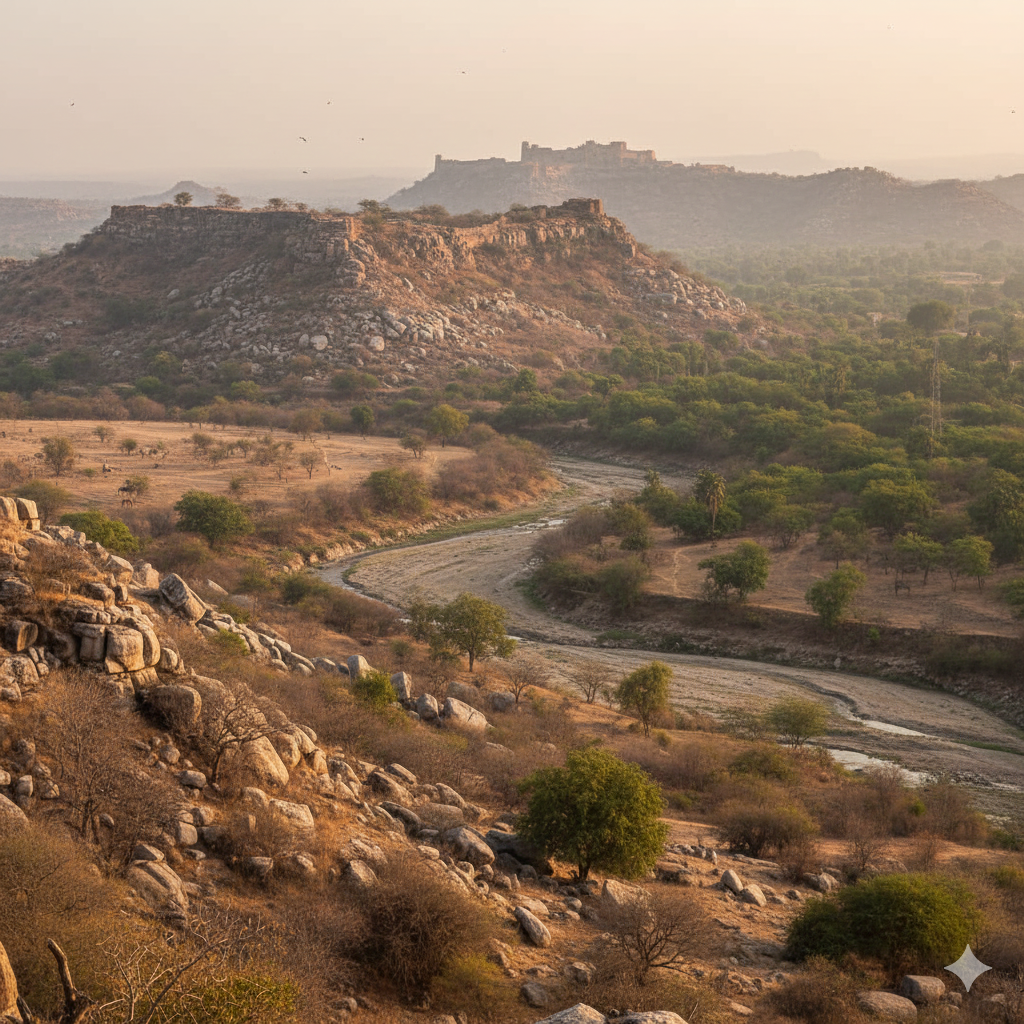
In medieval India, the Aravalli Range became the stronghold of Rajput power and culture. Its rugged hills provided natural defense, leading to the construction of formidable forts and settlements. Historic sites such as Chittorgarh, Kumbhalgarh, and the temples of Ranakpur flourished in the shelter of the Aravallis.
These forts and cultural centers stand as enduring symbols of Rajput valor, architectural excellence, and artistic heritage. Through them, the Aravalli Range emerged as a landscape of resistance, cultural continuity, and historical identity.
amazon.com/images/I/81k0KD9-OPL._SX550_.jpg" alt="Amazon Product Image">Great Amazon Product Choice
Stylish design and dependable performance make this product a solid option for everyday use or gifting with excellent user feedback.
👉 Buy on AmazonContribution of the Aravalli Range to Environmental Balance
The Aravalli Range plays a crucial role in maintaining environmental balance in north-western India. Acting as a natural ecological barrier, it influences climate patterns, regulates rainfall distribution, and supports fragile ecosystems in arid and semi-arid regions. The environmental significance of the Aravallis extends far beyond their physical presence.
Role of the Aravalli in Preventing desertification
The Aravalli Range functions as a natural wall that helps restrict the eastward expansion of the Thar Desert. By obstructing dry desert winds and supporting vegetation cover, the range slows down the process of desertification. The degradation of the Aravallis could accelerate the spread of arid conditions into Rajasthan, Haryana, and the National Capital Region.
Vegetation in the Aravalli region helps bind the soil, reduce wind erosion, and retain moisture. This ecological function is vital for sustaining agriculture and preventing land degradation in surrounding areas.
Wildlife and Biodiversity
The Aravalli Range is a significant center of biodiversity, supporting dry deciduous forests and a wide variety of flora and fauna. Plant species such as dhok, babul, and khejri thrive in this region, creating habitats for diverse wildlife.
The range provides shelter to several animal species, including leopards, hyenas, jackals, nilgai, and numerous bird species. This rich biodiversity plays a key role in maintaining ecological balance and supports the livelihoods and traditional practices of local communities.
What the Aravalli Taught Me: A Personal Perspective
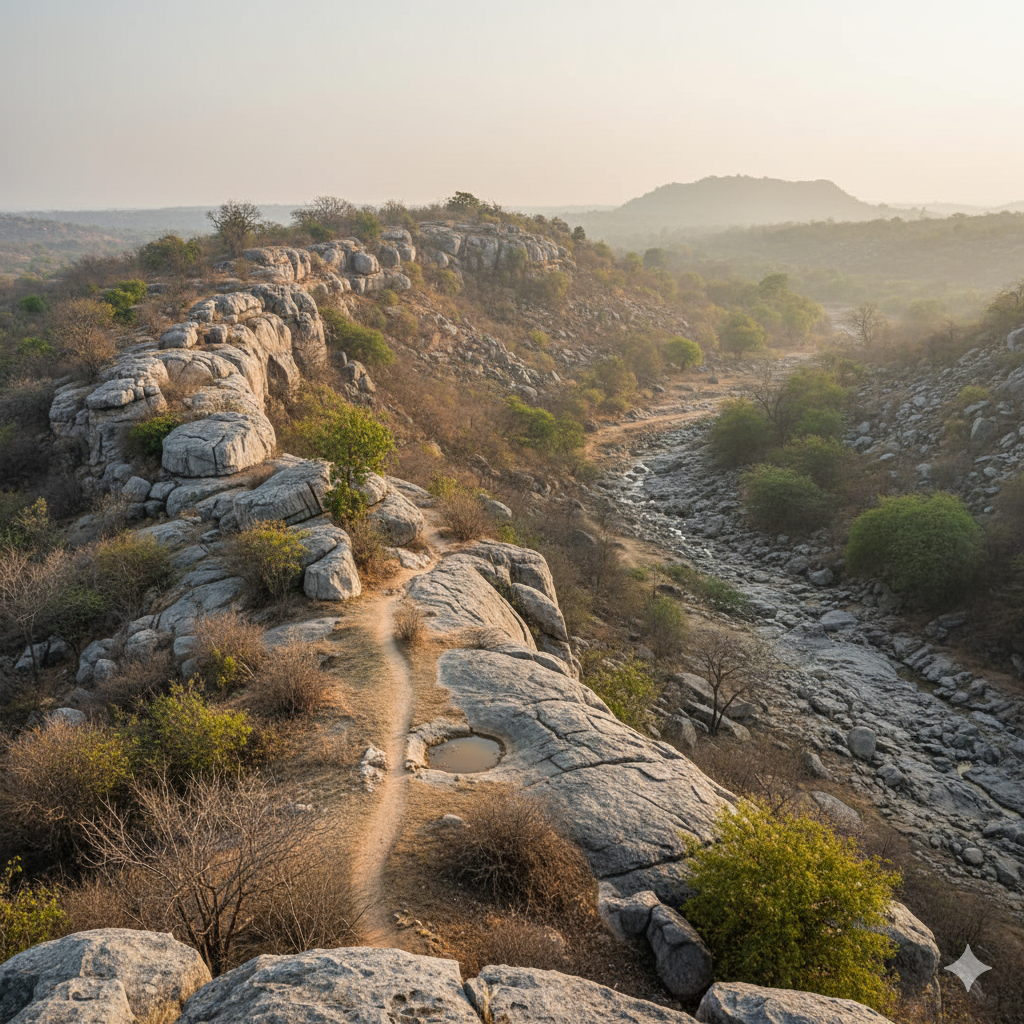
When I experienced the Aravalli Range beyond textbooks and maps, standing amid its silent hills and weathered rocks, I began to understand its deeper meaning. The Aravallis are not tall or dramatic, yet they have endured for millions of years. Their quiet presence speaks of resilience, patience, and the strength of continuity.
Endurance Over Time
The Aravalli taught me that greatness does not come from height or visibility, but from consistency and persistence. While younger mountain ranges rose sharply and changed rapidly, the Aravallis absorbed the passage of time without losing their identity.
In life, when challenges appear unrelenting, remaining steady and true to one’s values—like the Aravallis—becomes the greatest form of strength.
When the Aravalli Became My Life Perspective
The sparse vegetation growing from the rocky surface of the Aravallis reminds me that growth is possible even under limited resources and harsh conditions. Slow progress, obstacles, and uncertainty are not signs of failure; they are stages of resilience and maturity.
Whenever impatience or discouragement arises, the calm and unwavering presence of the Aravalli Range reminds me that endurance itself is a form of victory. In this way, the Aravallis have become more than mountains—they have become my life perspective.
amazon.com/images/I/51sRLFDGA+L._SY445_SX342_.jpg" alt="Amazon Product Image">Top Amazon Product Choice
Stylish design and excellent performance make this a trusted option for everyday use or gifting — a great value pick with positive user feedback.
👉 Buy on AmazonImportance of the Aravalli Range in Modern India
In the rapidly changing socio-economic landscape of modern India, the importance of the Aravalli Range has increased significantly. Amid rising urbanization, industrial expansion, and water scarcity, the Aravallis function as a critical natural system supporting environmental stability in north-western India. Their role highlights the urgent need to balance development with ecological sustainability.
Role in Groundwater Conservation
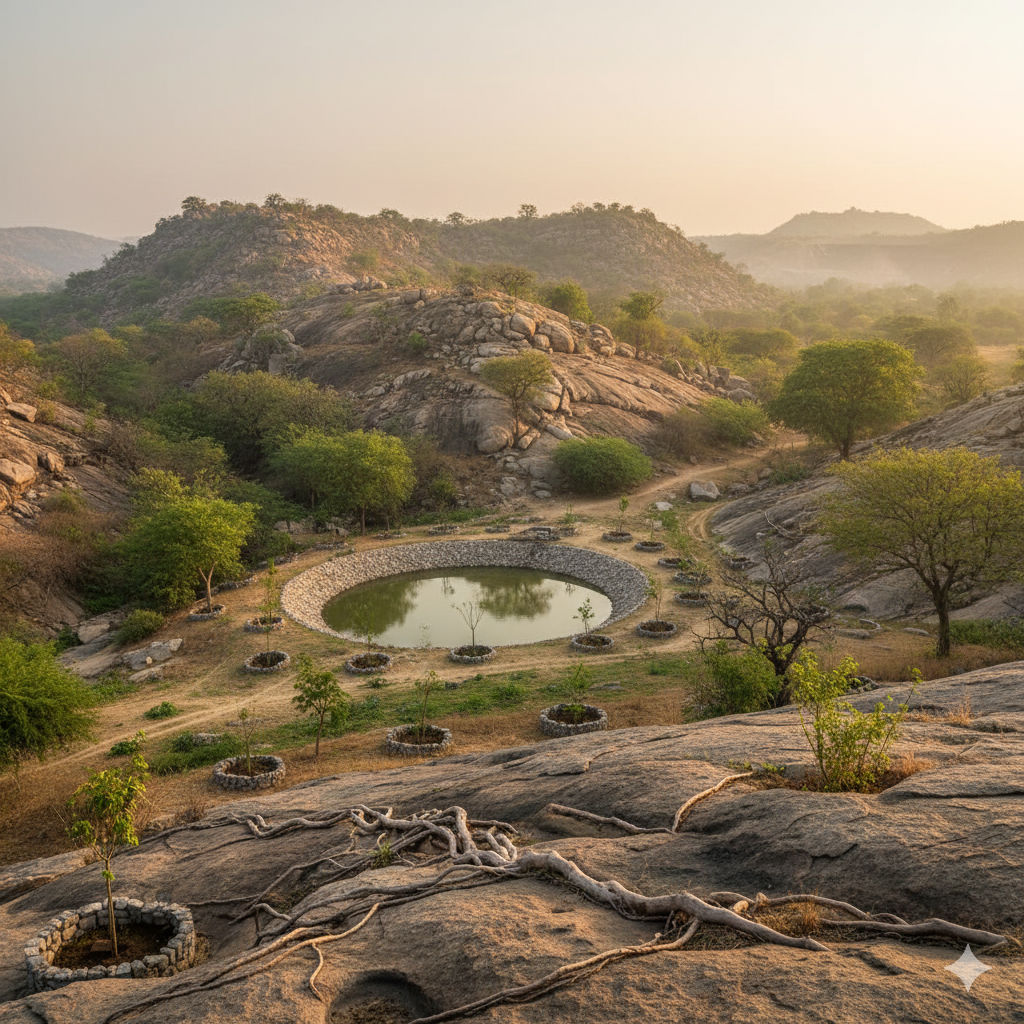
The Aravalli Range plays a vital role in groundwater conservation. Its rocky formations, fractures, and soil cover allow rainwater to percolate slowly into underground aquifers, contributing to natural water recharge. Traditional water-harvesting systems such as stepwells, johads, and ponds developed around the Aravallis are closely linked to this natural hydrological process.
In regions such as Rajasthan, Haryana, and the National Capital Region, where groundwater levels are rapidly declining, the preservation of the Aravalli ecosystem is essential for long-term water security.
Mining, Urbanization, and Environmental Threats
In recent decades, the Aravalli Range has faced severe pressure from mining activities, unregulated construction, and expanding urban settlements. Extensive extraction of stone and minerals has damaged the natural structure of the hills, leading to soil erosion, loss of water sources, and declining Biodiversity.
Uncontrolled urbanization in the Aravalli region has further intensified environmental stress and amplified the effects of climate change. Addressing these challenges requires redefining development priorities and recognizing the conservation of the Aravalli Range as a national environmental responsibility.
Conservation of the Aravalli Range: A Collective Responsibility
The conservation of the Aravalli Range is not solely the responsibility of governments or environmental organizations; it is a shared duty of society as a whole. If the degradation of the Aravallis continues unchecked, its consequences will extend far beyond geography, directly affecting water security, climate stability, and the quality of life of future generations.
Unchecked mining, illegal construction, and unsustainable development threaten the very foundation of this ancient mountain system. Protecting the Aravallis requires strict regulation of destructive activities, large-scale afforestation, and the active participation of local communities supported by environmental awareness.
Conserving the Aravalli Range is, in essence, an investment in the future. Every effort made today—no matter how small—helps secure ecological balance, sustainable development, and a healthier environment for generations to come.
Conclusion: The Aravalli—A Lesson from Nature and a Warning for the Future
The Aravalli Range is more than a collection of ancient hills; it is a powerful lesson offered by nature itself. It teaches us that true development is not defined by speed, height, or expansion, but by stability, balance, and long-term sustainability. Standing silently for millions of years, the Aravallis remind us that endurance and harmony are the foundations of lasting progress.
At a time when rapid development is triggering serious environmental challenges, the Aravalli Range serves as a clear warning. Ignoring nature in the name of growth can ultimately lead to irreversible damage. Conserving the Aravallis is not only about protecting the environment—it is about safeguarding our civilization, our resources, and the future of coming generations.
By understanding and applying the lessons of the Aravalli, it is possible to pursue a model of development that is balanced, responsible, and beneficial for both humanity and nature.
Frequently Asked Questions (FAQs)
Where is the Aravalli Range located?
The Aravalli Range stretches from Gujarat through Rajasthan and Haryana to the National Capital Region of Delhi. It is one of the oldest mountain ranges in India.
Why is the Aravalli Range considered ancient?
The rocks of the Aravalli Range belong to the Precambrian era and are estimated to be over two billion years old, making it older than the Himalayas.
What is the environmental importance of the Aravalli Range?
The Aravalli Range plays a crucial role in preventing desertification, conserving groundwater, regulating climate, and supporting Biodiversity in north-western India.
What are the major threats to the Aravalli Range?
Illegal mining, unregulated urbanization, deforestation, and industrial expansion are the major threats to the Aravalli ecosystem.
Why is conservation of the Aravalli Range important?
Conserving the Aravalli Range is essential for water security, climate resilience, and ecological balance. It ensures the protection of natural resources for future generations.
amazon.com/images/I/51iKc+gTXqL._SY445_SX342_.jpg" alt="Amazon Product Image">Premium Amazon Product
Modern design, durable build quality and dependable performance make this product a smart choice for everyday use or gifting.
👉 Buy on AmazonReferences
- Government of India, Ministry of Environment, Forest and Climate Change — The Aravalli Range: environmental importance and Conservation Challenges
- Geological Survey of India — Geological Structure and Evolution of the Aravalli Range
- NCERT Geography Textbooks (Classes IX–XII) — Physical Geography of India
- United Nations Environment Programme (UNEP) — Ecological Balance in Arid and Semi-Arid Regions
- Indian Environmental Research Journals — Impact of the Aravalli Range on desertification and Biodiversity
- Rajasthan Forest Department — Biodiversity Conservation in the Aravalli Region