
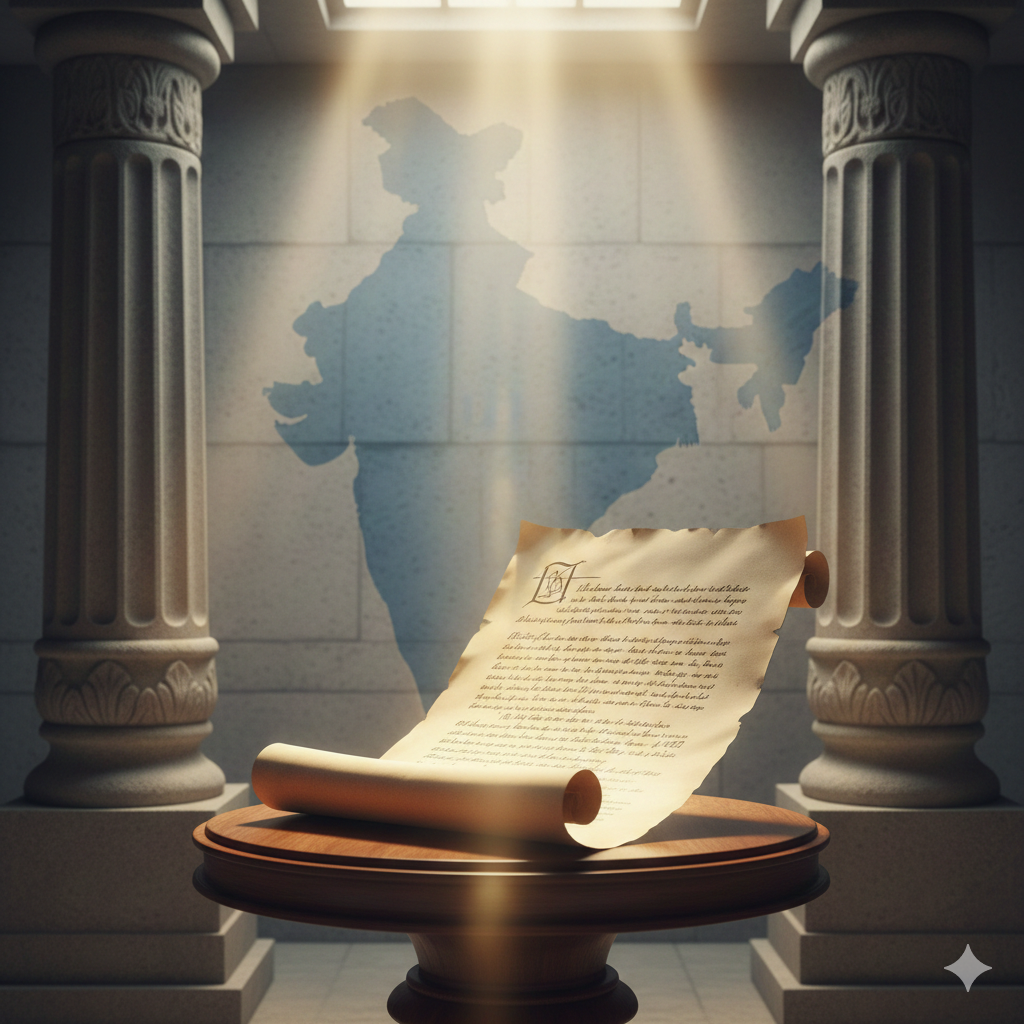
The structure of the Constituent Assembly was not merely an administrative arrangement; it was the foundation upon which Indian democracy was built. When I first began studying the Constituent Assembly, it appeared to be just another historical topic. However, as I explored its composition, representation, and internal functioning, I realized that it reflected India’s deep commitment to diversity, inclusion, and democratic dialogue.
The members of the Constituent Assembly did more than draft a constitution—they shaped a vision for future generations. Their debates, disagreements, and collective decisions demonstrate that democracy is not simply about governance, but about patience, cooperation, and shared responsibility.
This article examines the structure of the Constituent Assembly not only through facts and constitutional provisions, but also through my personal learning experience. It aims to help readers understand why the structure of the Constituent Assembly was crucial and why it continues to remain relevant in contemporary India.
 Amazon.com/images/I/61dyGMI8joL._SY466_.jpg" alt="Amazon Product Image">
Top Amazon Choice Product
Sleek design, reliable performance, and excellent user feedback make this product a smart choice for everyday use or gifting.
👉 Buy on AmazonWhat Was the Constituent Assembly?
The Constituent Assembly was a representative body established to frame the Constitution of independent India. It was not merely a formal institution, but a platform that brought together India’s political leadership, social diversity, and democratic aspirations. Through deliberation and debate, the Constituent Assembly laid the foundation of India’s political system, fundamental rights, and constitutional governance.
Background of the Formation of the Constituent Assembly
The demand for a Constituent Assembly emerged during the Indian freedom struggle, as national leaders believed that India’s Constitution should be drafted by Indians themselves rather than imposed by a foreign authority. After the Second World War, increasing political pressure on the British government created the conditions for initiating the process of constitution-making in India.
Role of the Cabinet Mission Plan
In 1946, the British government sent the Cabinet Mission to India to propose a framework for constitutional development. Under the Cabinet Mission Plan, the formation of the Constituent Assembly was approved, and its members were to be elected indirectly by the provincial legislative assemblies. This plan provided India with the opportunity to draft its own Constitution and laid the formal foundation for the functioning of the Constituent Assembly.

Structure of the Constituent Assembly
The structure of the Constituent Assembly was designed to ensure broad and inclusive representation of India’s diverse population. Its composition reflected the political realities of the time and aimed to bring together representatives from both British Indian provinces and princely states. This structure played a crucial role in making the constitution-making process representative and democratic.
Number of Members of the Constituent Assembly
The total strength of the Constituent Assembly was fixed with the objective of providing adequate representation to different regions and political units of India. The allocation of seats was based largely on population and administrative divisions.
Total Members and Their Classification
The Constituent Assembly originally consisted of a total of 389 members. Out of these, 296 members were elected from the provinces of British India, while 93 members represented the princely states. This classification ensured participation from both directly administered territories and semi-autonomous princely regions.
The provincial representatives came from various provinces of British India, whereas the princely state representatives were nominated by their respective rulers. This dual representation reflected the complex political structure of pre-independence India.
Basis of Representation in the Constituent Assembly
Representation in the Constituent Assembly was based primarily on population and provincial structure. Each province was allocated seats in proportion to its population, ensuring that larger provinces had greater representation while smaller regions were not excluded from the constitution-making process.
Selection of Provincial Representatives
Provincial representatives were chosen through indirect elections conducted by the provincial legislative assemblies. These elections were held on the basis of communal representation, allowing different communities to elect their representatives in accordance with the political framework of that period.
Representation of the Princely States
The representatives of the princely states were not elected through popular elections. Instead, they were nominated by the rulers of the respective princely states. Although this method lacked direct democratic participation, it ensured the involvement of princely states in the framing of the Indian Constitution and facilitated national integration.
Amazon.com/images/I/51zhLmvXStL._SY445_SX342_.jpg" alt="Amazon Product Image">Featured Amazon Product
Modern design, dependable performance, and excellent reviews make this item a great choice for daily use or gifting.
👉 Buy on AmazonSocial Diversity in the Constituent Assembly
The Constituent Assembly was not only a political body but also a reflection of India’s vast social diversity. It included representatives from different religions, regions, languages, and social backgrounds. This inclusive composition ensured that the concerns, aspirations, and experiences of various sections of society were considered during the framing of the Constitution.
Participation of Women in the Constituent Assembly
Although the number of women members in the Constituent Assembly was limited, their contribution was significant and far-reaching. Women members actively participated in debates related to fundamental rights, social justice, equality, and human dignity. Their presence challenged traditional social barriers and strengthened the democratic character of the Constitution.
The participation of women in the Constituent Assembly conveyed a powerful message that independent India would be based on the principles of equality and inclusion, recognizing women as equal stakeholders in nation-building.
My Learning: When Representation Made Me Reflect
While studying the role of women in the Constituent Assembly, I realized that true democracy is not measured only by numbers, but by the impact of ideas and voices. Despite their small representation, women members played a decisive role in shaping constitutional values that continue to guide Indian democracy.
This aspect of the Constituent Assembly is deeply inspiring for me. It demonstrates that meaningful representation goes beyond presence—it involves responsibility, courage, and a commitment to inclusive values. This learning reshaped my understanding of representation and democratic participation.
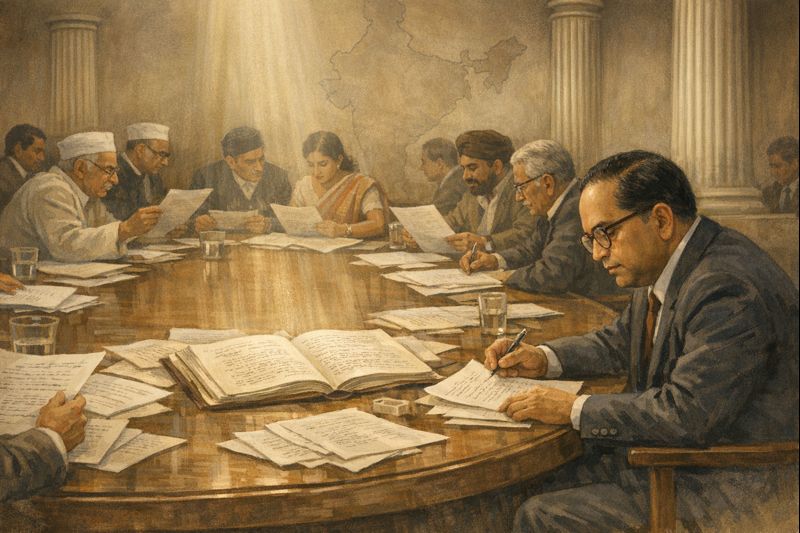
Internal Structure and Committees of the Constituent Assembly
The work of the Constituent Assembly was extensive and complex. To ensure efficiency and detailed deliberation, the Assembly established several committees to examine different aspects of the Constitution. These committees played a vital role in organizing discussions, formulating proposals, and presenting well-considered recommendations to the Assembly.
Major Committees of the Constituent Assembly
The Constituent Assembly set up a number of important committees to deal with specific constitutional issues. Among them were committees related to federal structure, fundamental rights, minority safeguards, and constitutional drafting. These committees laid the groundwork for the key provisions of the Indian Constitution.
Drafting Committee and Dr. B. R. Ambedkar
The Drafting Committee was one of the most significant committees of the Constituent Assembly. It was chaired by Dr. B. R. Ambedkar, who played a central role in shaping the final text of the Constitution. His deep knowledge of constitutional law, commitment to social justice, and clarity of thought made the Indian Constitution a comprehensive and progressive document.
The Drafting Committee carefully examined the recommendations of various committees, incorporated the views expressed during debates, and prepared a coherent and systematic draft of the Constitution. This task required not only legal expertise but also a strong sense of balance and vision.
Committees Related to Federal Structure
The committees concerned with federal structure focused on defining the distribution of powers between the Union and the States. Their objective was to establish a balanced federal system with a strong central authority capable of maintaining national unity.
Based on the recommendations of these committees, provisions related to centre–state relations, legislative powers, and administrative responsibilities were incorporated into the Constitution. These provisions continue to form the foundation of India’s federal system.
Amazon.com/images/I/71bABer1kwL._SX679_.jpg" alt="Amazon Product Image">Featured Amazon Product
Sleek design, reliable performance and highly rated user reviews make this product a great choice for daily use and gifting.
👉 Buy on AmazonMy Personal Learning: What I Understood While Studying the Constituent Assembly
When I began studying the Constituent Assembly in detail, I realized that it was not merely a historical institution, but a living lesson in democracy. At first, the Assembly appeared to me as a gathering of well-known leaders and prominent figures. However, as I explored its structure, debates, and membership, my understanding gradually deepened.
The Constituent Assembly Was Not Only About Leaders
The Constituent Assembly included not only national leaders but also teachers, lawyers, social reformers, scholars, and representatives from diverse communities. This wide range of backgrounds demonstrated that the making of the Constitution was a collective effort rather than the vision of a few individuals.
This realization taught me that democracy is not limited to leadership alone; it is built on representation, participation, and shared responsibility. Every voice that contributes to the common good strengthens the democratic process.
Relevance of the Structure of the Constituent Assembly in Today’s India
In contemporary India, discussions on democracy, rights, and duties continue to draw meaning from the structure of the Constituent Assembly. Its inclusive composition reminds us that unity can emerge from diversity through dialogue and mutual respect.
For me, this understanding has been deeply inspiring. If consensus could be achieved among such diverse voices during that period, it reinforces the belief that present-day challenges can also be addressed through democratic dialogue and cooperation. This, in essence, is the enduring lesson of the Constituent Assembly.

Importance of the Structure of the Constituent Assembly for Modern India
The structure of the Constituent Assembly remains highly relevant in modern India. Its inclusive and representative composition laid the democratic foundation on which India’s constitutional framework continues to function. The principles of representation, dialogue, and consensus adopted by the Assembly continue to guide democratic governance in the country.
The Constituent Assembly demonstrated that a diverse society could achieve unity through constitutional dialogue and mutual respect. This approach continues to shape India’s federal system, democratic institutions, and commitment to social justice.
In an era marked by political complexity and social change, the structure of the Constituent Assembly serves as a reminder that strong democracies are built on inclusion, constitutional morality, and respect for diverse viewpoints.
Conclusion: The Most Important Lesson I Learned from the Structure of the Constituent Assembly
The structure of the Constituent Assembly was not merely a historical arrangement; it was a reflection of the democratic spirit that shaped independent India. Its inclusive composition, balanced representation, and culture of dialogue laid the foundation for a Constitution that continues to guide the rights, duties, and governance of millions of citizens.
While studying this subject, I realized that democracy does not survive only through institutions, but through values. The Constituent Assembly demonstrated that consensus is possible even in a deeply diverse society when the guiding principles are national interest, justice, and constitutional morality.
In present-day India, as democratic challenges evolve, the structure of the Constituent Assembly reminds us that inclusion, dialogue, and respect for differing viewpoints are essential for sustaining a strong and resilient democracy. This enduring lesson remains the Assembly’s greatest legacy—and my most meaningful learning.
Frequently Asked Questions (FAQ)
What was the Constituent Assembly?
The Constituent Assembly was a representative body established to draft the Constitution of independent India. It laid the foundation of India’s democratic and constitutional framework.
How many members were there in the Constituent Assembly?
The Constituent Assembly originally consisted of 389 members, including 296 representatives from British Indian provinces and 93 representatives from the princely states.
Under which plan was the Constituent Assembly formed?
The Constituent Assembly was formed under the Cabinet Mission Plan of 1946, which provided India the opportunity to frame its own Constitution.
How were the members of the Constituent Assembly selected?
Members from the provinces were chosen through indirect elections by the provincial legislative assemblies, while representatives of the princely states were nominated by their respective rulers.
Why was the structure of the Constituent Assembly important?
The structure of the Constituent Assembly was important because it ensured representation of India’s social, political, and regional diversity, enabling the creation of an inclusive and democratic Constitution.
What is the relevance of the Constituent Assembly in modern India?
The Constituent Assembly remains relevant today as its principles of inclusion, dialogue, and constitutional morality continue to guide India’s democratic institutions and governance.
Amazon.com/images/I/51F7AsDefnL._SY445_SX342_.jpg" alt="Amazon Product Image">Top Amazon Product Choice
Sleek design, reliable performance, and great user satisfaction make this product a smart choice for everyday use or gifting.
👉 Buy on AmazonReferences
The content of this article is based on standard constitutional texts, historical records, and authoritative academic sources. The following references were consulted to ensure factual accuracy and analytical depth regarding the structure of the Constituent Assembly:
- The Constitution of India – Government of India (Official Publication)
- Constituent Assembly Debates, Dr. B. R. Ambedkar and other members
- Granville Austin, The Indian Constitution: Cornerstone of a Nation
- D. D. Basu, Introduction to the Constitution of India
- NCERT Textbooks – Indian Polity (Class XI–XII)
- Government of India official websites and parliamentary archives .