
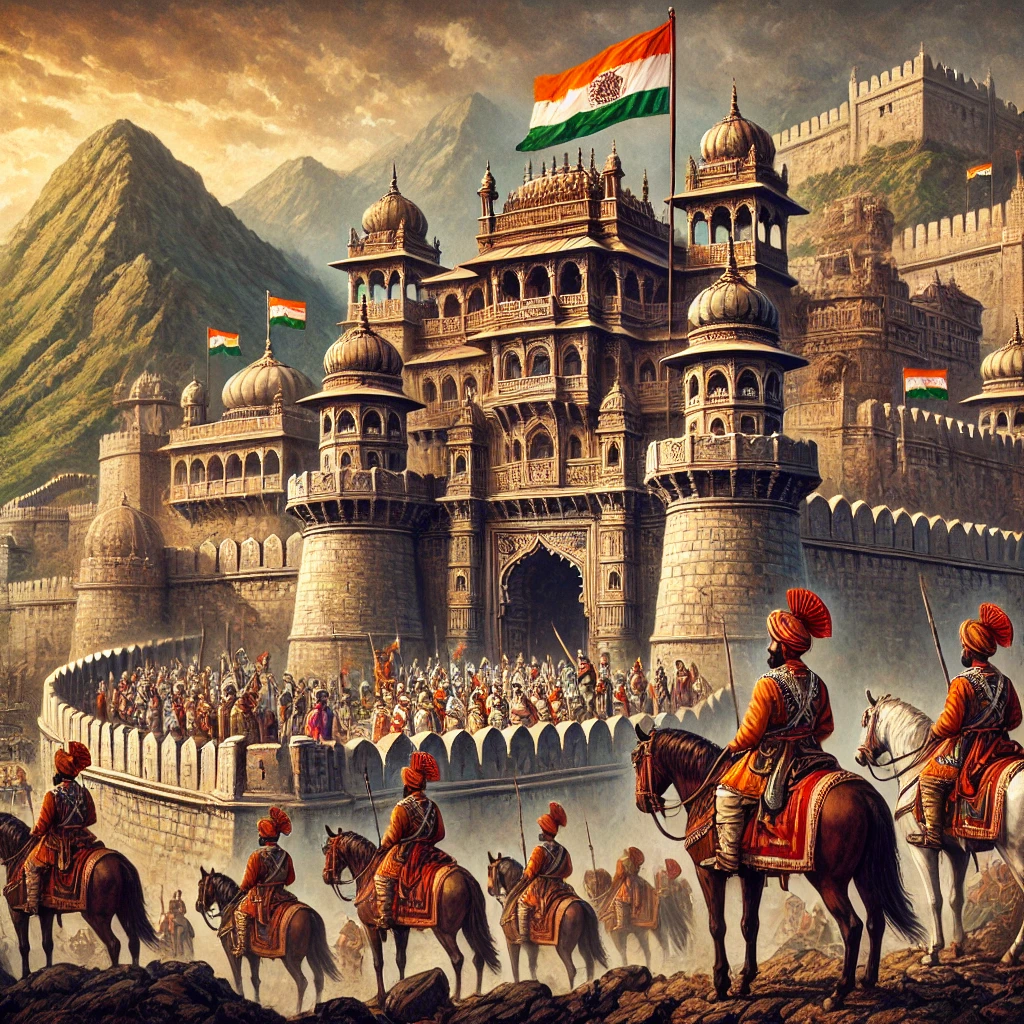
What was the Maratha Empire?
The Maratha Empire was a powerful Indian empire founded by Chhatrapati Shivaji Maharaj in 1674 in western India. It expanded rapidly during the 18th century under the Peshwas and became the dominant power in India before declining after the Third Battle of Panipat (1761) and the Anglo-Maratha Wars.
The Maratha Empire – Rise, Expansion, Administration & Legacy
The Maratha Empire was one of the most powerful political and military forces in Indian History. Founded by Chhatrapati Shivaji Maharaj in 1674, the empire challenged Mughal dominance and later expanded across large parts of the Indian subcontinent under the leadership of the Peshwas. The Marathas are remembered for their guerrilla warfare, strong administrative system, naval power, and the idea of Hindavi Swarajya. For UPSC aspirants, the Maratha Empire is an extremely important topic in Modern and Medieval Indian History due to its political, military, administrative, and cultural significance.
Establishment of the Maratha Empire
The Maratha Empire was founded in 1674 when Shivaji Maharaj proclaimed himself “Chhatrapati”. He built a disciplined army, strengthened strategic forts, and designed an administration that supported swift decision-making. His mastery in guerrilla warfare helped the Marathas challenge powerful enemies including the Mughals.
Initial Expansion and Growth
Under Shivaji Maharaj’s leadership, the Maratha Empire expanded across the Western Ghats, Konkan coast, and parts of South India. After his rule, his son Sambhaji Maharaj and later Maratha rulers continued expanding the empire through military skill and political alliances.
Significant Contributors
- Shivaji Maharaj: Founder of the empire; architect of military and administrative reforms.
- Sambhaji Maharaj: A valiant warrior who defended the empire from Mughal invasions.
- Peshwas: Prime ministers such as Balaji Bajirao and Nana Phadnavis strengthened governance and expanded Maratha influence across India.
Administrative System of the Marathas
The Administrative Structure designed by Shivaji Maharaj was organized, efficient, and ahead of its time.
Key Administrative Features
1. Ashtapradhan Mandal
An eight-minister council responsible for managing different aspects of governance.
2. Chauth and Sardeshmukhi
A taxation system used to collect revenue from territories under Maratha influence.
3. Military Strategy
Use of guerrilla tactics and strategically placed forts made the Marathas militarily formidable.
Peak of the Maratha Empire
During the 18th century, the Marathas controlled large parts of India. Under Peshwa Bajirao I and II, their influence extended from Bengal to regions close to Afghanistan. Before the Third Battle of Panipat (1761), the Marathas were the largest power in India.
The Third Battle of Panipat
The year 1761 marked a major setback for the Maratha Empire. Despite the defeat, Maratha power did not vanish immediately; it weakened gradually over time.

Causes of the Decline
- Internal conflicts and leadership disputes.
- Rising influence of the British East India Company.
- Administrative and military challenges.
Ultimately, the empire came to an end in 1818 after defeat by the British.
Cultural Contributions of the Maratha Empire
The Marathas enriched India through contributions in literature, architecture, religion, and social reforms. Their cultural legacy continues to be celebrated in Maharashtra even today.
Conclusion
The Maratha Empire remains a powerful symbol of courage, self-rule, and organizational excellence in Indian history. Studying the achievements of Shivaji Maharaj and his successors reminds us of the importance of strong leadership, unity, and commitment to cultural identity. Their journey is not just a historical chapter — it is a timeless lesson in determination and self-reliance.
Read more related history topics here: Indian History Articles
Frequently Asked Questions (FAQ)
1. Who founded the Maratha Empire?
Chhatrapati Shivaji Maharaj founded the Maratha Empire in 1674.
2. What was the administrative system of the Marathas?
The Marathas followed the Ashtapradhan system, a council of eight ministers, and implemented revenue systems like Chauth and Sardeshmukhi.
3. When did the Maratha Empire reach its peak?
The empire reached its peak in the 18th century during the Peshwa era, extending from Bengal to near Afghanistan.
4. What caused the decline of the Maratha Empire?
The decline was mainly due to internal conflicts, British expansion, and administrative weaknesses.
5. When did the Maratha Empire end?
The empire ended in 1818 after defeat by the British East India Company.
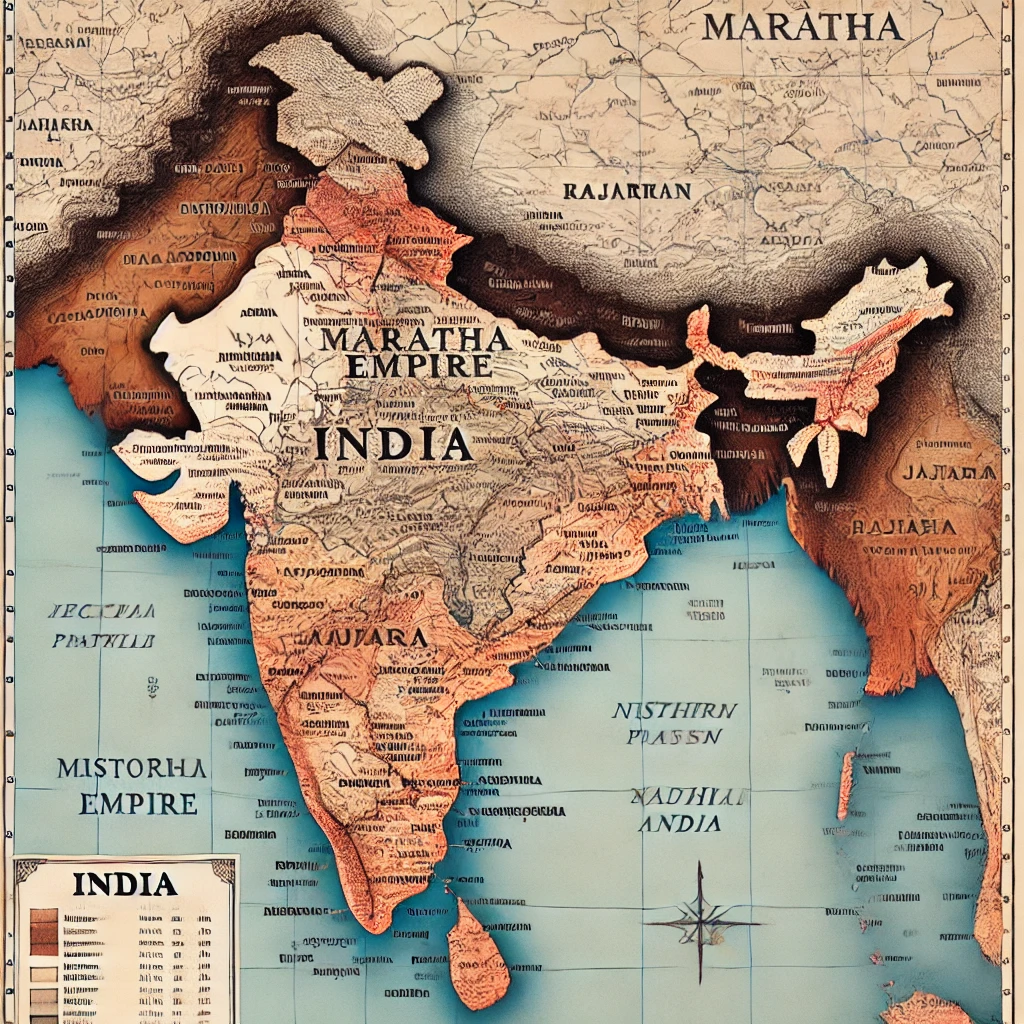
Maratha Empire UPSC Important Facts
- Founder: Chhatrapati Shivaji Maharaj
- Established: 1674
- Capital: Raigad
- Main Idea: Hindavi Swarajya
- Famous Battle: Third Battle of Panipat (1761)
- Administrative Council: Ashtapradhan Mandal
- Important Tax System: Chauth and Sardeshmukhi
- End of Empire: 1818 after Anglo-Maratha Wars
The Establishment of the Maratha Empire
The establishment of the Maratha Empire was one of the most historic and heroic chapters in Indian History. This remarkable achievement is credited to Chhatrapati Shivaji Maharaj, whose vision of Swarajya (self-rule) stood as a powerful resistance against the Mughal Empire and other foreign forces in the 17th century. His strategic skills, efficient leadership, and unwavering determination laid the foundation of a new era of independence.
Background to the Founding of the Empire
Mughal and Adilshahi Influence
- In the 17th century, much of India was dominated by the Mughal Empire and Deccan sultanates like Adilshahi, Nizamshahi, and Qutbshahi.
- Maharashtra was under the rule of the Adilshahi Sultanate of Bijapur.
- The people faced hardships due to oppressive rule and irregular taxation.
Contribution of Shivaji’s Family
- Shahaji Bhosale, Shivaji’s father, served as a high-ranking general in the Bijapur Sultanate.
- Jijabai, Shivaji’s mother, instilled in him the ideals of Swarajya and Maratha cultural values.
- Dadoji Konddev, Shivaji’s mentor, trained him in military discipline and administration.
Beginning of the Establishment
Capture of Torna Fort (1646)
In his early years, Shivaji captured Torna Fort in 1646 — his first major military victory. Soon after, he took control of Kondhana (Sinhagad), Purandar, and several other forts. These victories openly challenged the Adilshahi Sultanate and strengthened Shivaji’s emergence as an independent leader.
Idea of Independence
Shivaji introduced the powerful concept of Swarajya — a system of self-reliant and independent governance. He raised his voice against Mughal and Adilshahi oppression, viewing Swarajya as essential for protecting Maratha culture and public welfare.
Conflicts and Strategic Victories
Conflict with Adilshahi
Shivaji led several campaigns against the Adilshahi Sultanate. The Adilshahi commander Afzal Khan was defeated and killed by Shivaji in the famous Battle of Pratapgad (1659). This triumph was a major demonstration of Shivaji’s strategic genius and leadership.
Conflict with the Mughals
- Shivaji opposed the expansionist agenda of the Mughal Empire.
- In 1664, he successfully raided Surat, showcasing the growing strength of the Marathas.
- He executed a daring attack on Lal Mahal in Pune, humiliating Aurangzeb’s general Shaista Khan.

Formal Establishment of the Empire (1674)
On 6 June 1674, Shivaji Maharaj was coronated at Raigad Fort and formally declared himself Chhatrapati (Supreme King). This marked the official beginning of the Maratha Empire and symbolized the dream of Hindavi Swarajya – self-rule for the people of India.
Shivaji established a model of governance that was secular, just, and focused on public welfare.
Key Strategies Behind the Establishment
1. Importance of Forts
Shivaji constructed and controlled an extensive network of nearly 300 forts, each placed at strategically significant locations, forming the backbone of Maratha defense.
2. Guerrilla Warfare (Ganimi Kava)
Shivaji mastered guerrilla tactics — sudden attacks followed by swift retreats. These methods proved highly effective against large, slow-moving enemy armies.
3. Political and Administrative Structure
Ashtapradhan Mandal
Shivaji built an organized administrative system consisting of an eight-minister council known as the Ashtapradhan Mandal, responsible for various departments of governance.
Tax System
He introduced a just and fair revenue system, implementing Chauth and Sardeshmukhi taxes to support the growing needs of Swarajya.
The Importance of the Establishment
Political Freedom
The rise of the Maratha Empire highlighted the importance of independence and self-respect in the face of foreign domination.
Religious Tolerance
Shivaji respected all religions. He protected Hindu temples while showing sensitivity and tolerance toward Muslim communities.
Cultural Renaissance
The Maratha Empire revitalized Marathi language, culture, and art, contributing to a broader Indian cultural revival.
Conclusion
The establishment of the Maratha Empire was the result of the vision, courage, and leadership of Chhatrapati Shivaji Maharaj. It marked a turning point in Indian History, fulfilling the dream of Swarajya against foreign rule. This foundation not only made the Maratha Empire a powerful force but also revived Indian culture and strengthened the spirit of self-respect and independence.
Read related historical articles here: Indian History Section
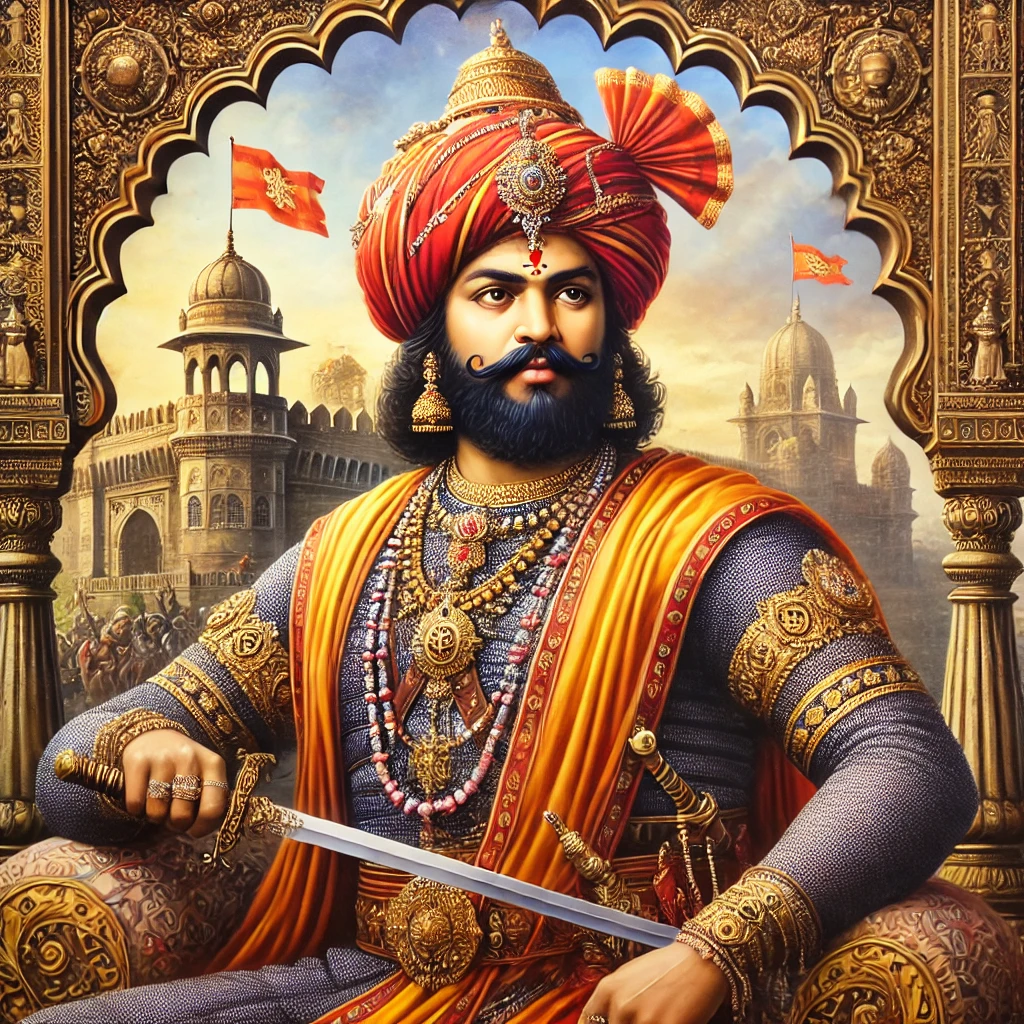
Founder of the Maratha Empire
Chhatrapati Shivaji Maharaj, the founder of the Maratha Empire, was one of the greatest and most inspiring rulers in Indian History. His life, personality, and statecraft remain a guiding model for India’s freedom movement and administrative excellence. He not only laid the foundation of a powerful empire but also strengthened Indian cultural identity and the principle of self-rule.
Early Life of Shivaji Maharaj
Birth and Family
- Born: 19 February 1630, Shivneri Fort (Maharashtra)
- Father: Shahaji Bhosale – a military officer under the Bijapur Sultanate
- Mother: Jijabai – who taught Shivaji values of Maratha culture, Hinduism, and bravery
- Shivaji was named after Lord Shiva.
Education and Early Influences
- Shivaji received training in politics, military strategy, and religion from an early age.
- His mother Jijabai and mentor Dadoji Konddev played a crucial role in shaping his character.
- The Ramayana, Mahabharata, and teachings of Sant Tukaram and Sant Eknath deeply influenced him.
Shivaji’s Struggle to Establish His Empire
Idea of Independence
Shivaji Maharaj presented the concept of Swarajya (self-rule), aimed at achieving independence from foreign powers such as the Mughals and the Adilshahi Sultanate. This vision reflects his strong determination, leadership, and commitment to justice.
Early Victories
- Capture of Torna Fort (1646): Shivaji’s first major military success.
- Raigad, Sinhagad, and Purandar: Strengthened his position by capturing several key forts.
- Conflicts with Adilshahi: Victories against the Bijapur Sultanate established Shivaji as a rising power in the Western Ghats.
Shivaji’s Military Prowess
Guerrilla Warfare (Ganimi Kava)
Shivaji developed a highly effective system of guerrilla warfare known as Ganimi Kava. This technique focused on:
- Attacking in small, fast-moving groups
- Exploiting enemy weaknesses
- Retreating swiftly before counterattacks
Development of the Navy
Shivaji built India’s first organised navy to protect the Konkan coastline. He established key naval bases at:
- Sindhudurg
- Vijaydurg
- And several other sea forts
System of Government
Ashtapradhan Mandal (Council of Eight Ministers)
Shivaji created an efficient Administrative Structure known as the Ashtapradhan Mandal, consisting of eight key ministers:
- Peshwa: Prime Minister
- Amatya: Finance and Revenue
- Mantri: Internal supervision
- Senapati: Commander-in-Chief
- Sumant: Foreign Affairs
- Sachiv: Documentation and Records
- Nyayadhish: Justice Department
- Panditrao: Religious Affairs
Tax System
- Chauth: 25% of revenue
- Sardeshmukhi: 10% of revenue
These systems ensured financial stability and fair governance.

Main Achievements of Shivaji Maharaj
Coronation (1674)
In 1674, Shivaji was coronated at Raigad Fort and officially declared Chhatrapati. This coronation marked the revival of Hindu kingship and symbolized the establishment of Hindavi Swarajya.
Conflict with the Mughals
- Shivaji successfully challenged Aurangzeb and the Mughal Empire’s dominance.
- He defeated Mughal forces on multiple occasions, displaying unmatched courage and strategy.
Cultural Preservation
- Shivaji promoted Marathi culture, language, and literature.
- He protected Hindu temples and encouraged Religious Tolerance.
Death and Legacy of Shivaji Maharaj
Death: 3 April 1680, Raigad Fort. Even after his passing, the Maratha Empire expanded further under his successors and the Peshwas.
Heritage
- Shivaji Maharaj inspired India’s freedom struggle.
- His life demonstrates leadership, organization, courage, and patriotism.
- He is honored as the creator of Hindavi Swarajya.
Conclusion
Chhatrapati Shivaji Maharaj was a great warrior, visionary administrator, and just ruler. His life remains a timeless example of struggle, success, and dedication to justice. His legacy continues to inspire millions, making him immortal in the pages of Indian History.
Read more about Maratha history here: Explore More Articles
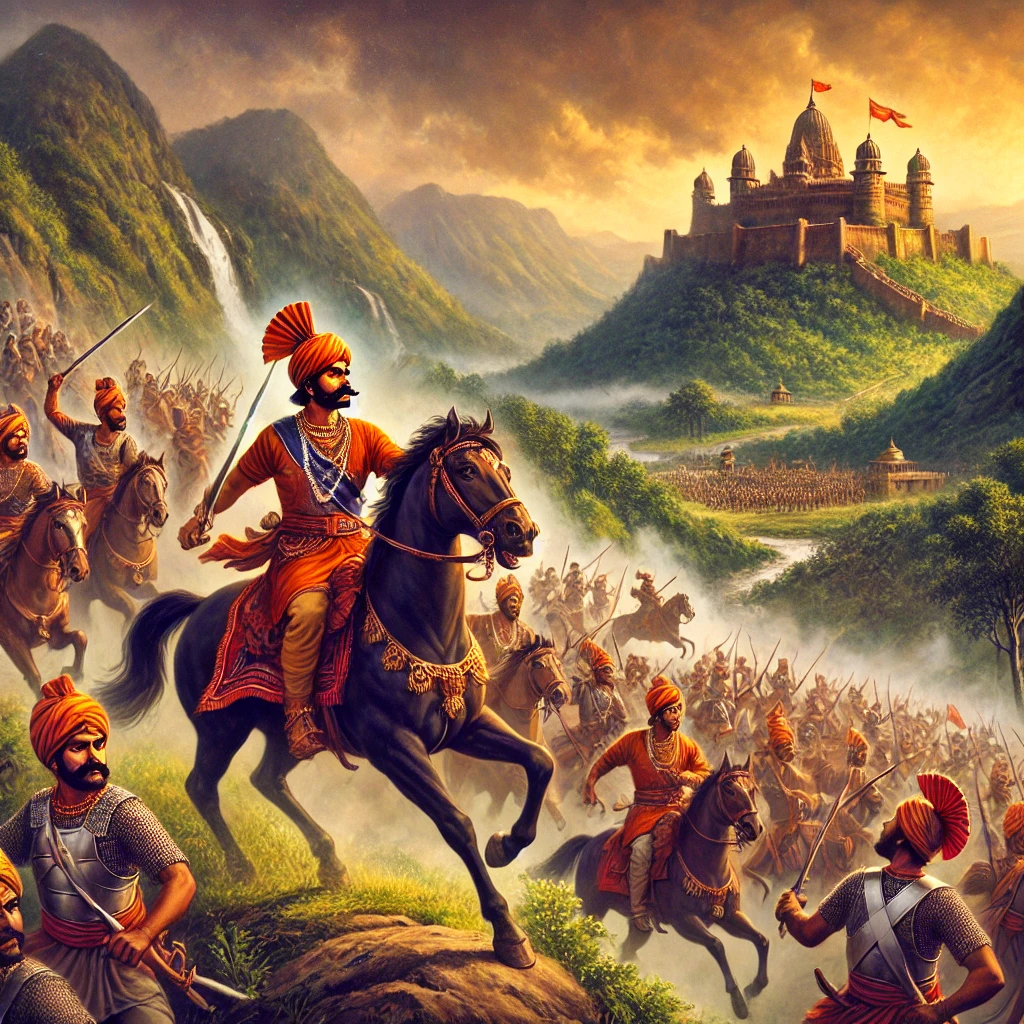
The Administrative System of the Maratha Empire
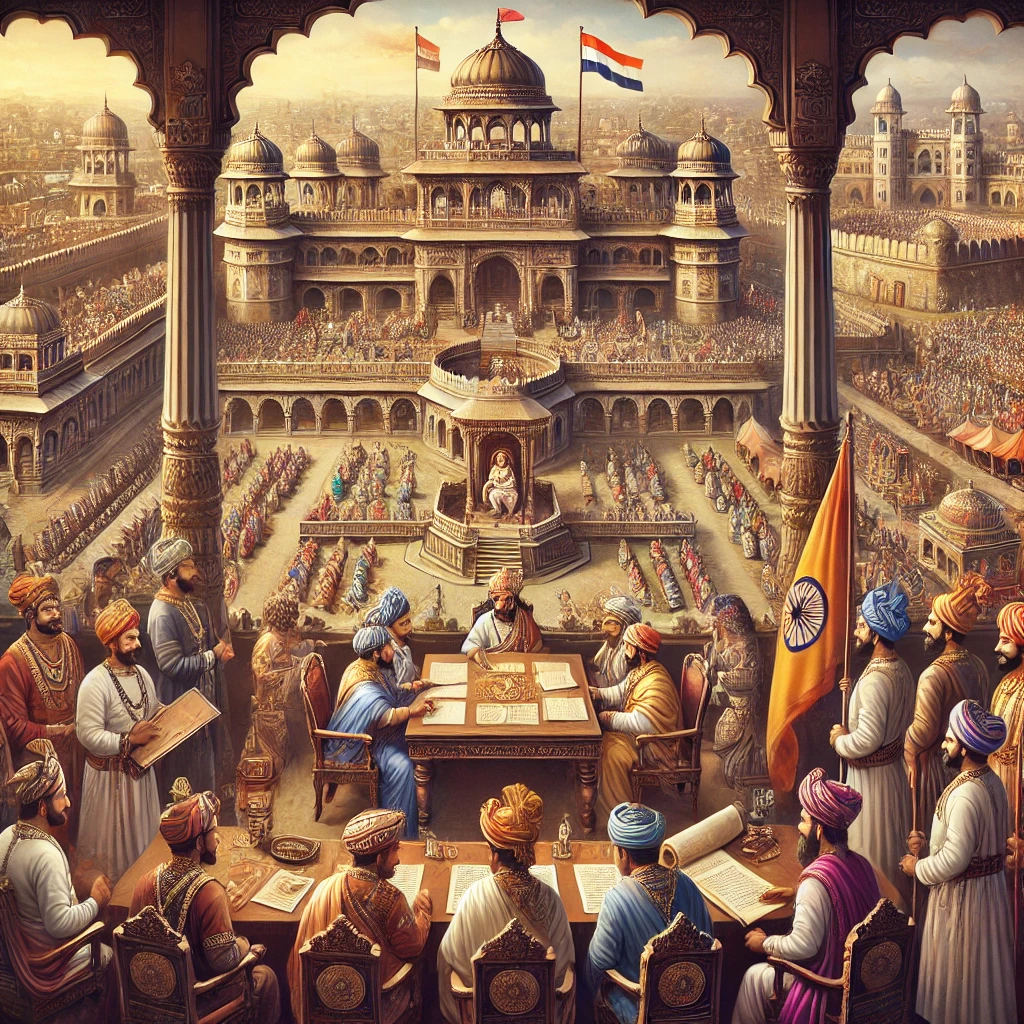
The administrative system of the Maratha Empire is a remarkable example of the organizational and governing skills of Chhatrapati Shivaji Maharaj. Shivaji created a strong, systematic, and effective Administrative Structure based on the ideals of justice, efficiency, self-rule, secularism, and social welfare. His model of governance ensured economic prosperity, military strength, and stable administration throughout the empire.
Key Administrative Features
1. Ashtapradhan Mandal (Council of Eight Ministers)
For effective governance, Shivaji established the Ashtapradhan Mandal, a council of eight ministers who were responsible for different administrative departments. They advised the Chhatrapati and implemented state policies.
Major Members of the Ashtapradhan Mandal
- Peshwa (Prime Minister): Chief administrator of the empire. The first Peshwa was Moropant Pingle.
- Amatya (Finance Minister): Supervised revenue and financial management.
- Secretary / Sachiv (Record Keeper): Maintained administrative documents and accounts.
- Sumant (Foreign Minister): Managed diplomatic relations and peace treaties.
- Senapati (Military Chief): Directed army operations and military strategies.
- Panditrao (Religious Head): Supervised religious matters and social functions.
- Nyayadhish (Chief Judicial Officer): Administered justice and legal affairs.
- Mantri (Interior Minister): Oversaw general governance and coordination of state functions.
2. Central and Provincial Government
Central Government
- Shivaji maintained a centralized system where the king had the final authority.
- The Ashtapradhan Mandal worked under the supervision of the Chhatrapati.
Provincial Government
- The empire was divided into subhas (provinces) managed by subedars.
- Subedars handled local administration, revenue collection, and military duties.
3. Military Administration
Organized Army
- Shivaji maintained a permanent, disciplined army.
- The army was divided into cavalry (asvarhi) and infantry (padati).
Management of Forts
- Shivaji built and controlled around 300 forts.
- Each fort was administered by a Havaldar or Killedar responsible for its defense and resources.
Guerrilla Warfare (Ganimi Kava)
Shivaji’s military success relied heavily on guerrilla tactics—swift attacks followed by rapid retreats. These strategies were especially effective in the rugged terrain of the Western Ghats.
4. Revenue System
Chauth and Sardeshmukhi
- Chauth: 25% tax collected from conquered territories.
- Sardeshmukhi: Additional 10% tax imposed on regions under Maratha influence.
Systematic Tax Collection
- Shivaji replaced oppressive taxes with fair revenue policies.
- Only reasonable taxes were collected from farmers.
Land Measurement and Assessment
- Revenue was assessed based on the fertility and productivity of land.
- Officials regularly surveyed land to ensure fair taxation.
5. Justice System
- Shivaji established a well-organized judicial framework.
- Nyayadhish resolved disputes at the local and state level.
- Strict punishments ensured law, order, and security.
6. religion and Culture
- Shivaji’s governance was secular and inclusive.
- Protection of Hindu temples and pilgrimage centers.
- Respect for the Muslim community: Patronage to Muslim religious leaders and sites.
7. Business and Economy
- Shivaji encouraged trade and protected merchants.
- Developed a strong navy to secure maritime trade routes.
- Promoted artisans, traders, and local industries.
8. Administration of Forts
Forts were the backbone of Shivaji’s administrative and military system.
- Each fort was managed by a Killadar (fort commander).
- He ensured security, storage of resources, and discipline within the fort.
9. Social Welfare
- Shivaji worked for the welfare of farmers and common people.
- Tax relief was provided during famines and natural disasters.
- Women’s safety was a priority; crimes against women were punished severely.
Features of Shivaji’s Administration
- Strength and Discipline: A disciplined system for both administration and military.
- Balanced Governance: Combination of centralization and local autonomy.
- Equality and Justice: Equal opportunities for all classes and communities.
- Innovative Methods: Modern practices like land measurement, structured taxation, and guerrilla warfare.
Conclusion
The administrative system developed by Chhatrapati Shivaji Maharaj was rooted in justice, efficiency, and public welfare. His reforms made the Maratha Empire an organized, powerful, and sustainable state. Shivaji’s administrative model guided his successors and played a major role in the rise of the Marathas under the Peshwas.
Read more about the Maratha Empire: Explore Related Articles
Frequently Asked Questions (FAQs)
who founded the Maratha Empire?
Chhatrapati Shivaji Maharaj founded the Maratha Empire in 1674.
What was the main objective of Shivaji Maharaj?
The main objective of Shivaji Maharaj was to establish Hindavi Swarajya or self-rule.
What was the Ashtapradhan Mandal?
The Ashtapradhan Mandal was a council of eight ministers formed by Shivaji Maharaj for efficient administration.
Why is the Third Battle of Panipat important?
The Third Battle of Panipat (1761) weakened the Maratha Empire and changed the political balance of India.
What caused the decline of the Maratha Empire?
Internal conflicts, weak leadership, and the rise of the British East India Company caused the decline of the Maratha Empire.
Who were the Peshwas?
The Peshwas were the prime ministers of the Maratha Empire who later became the real rulers during the 18th century.
Why is the Maratha Empire important for UPSC?
The Maratha Empire is important for UPSC because it played a major role in weakening Mughal rule and shaping Indian political History.
Third Battle of Panipat
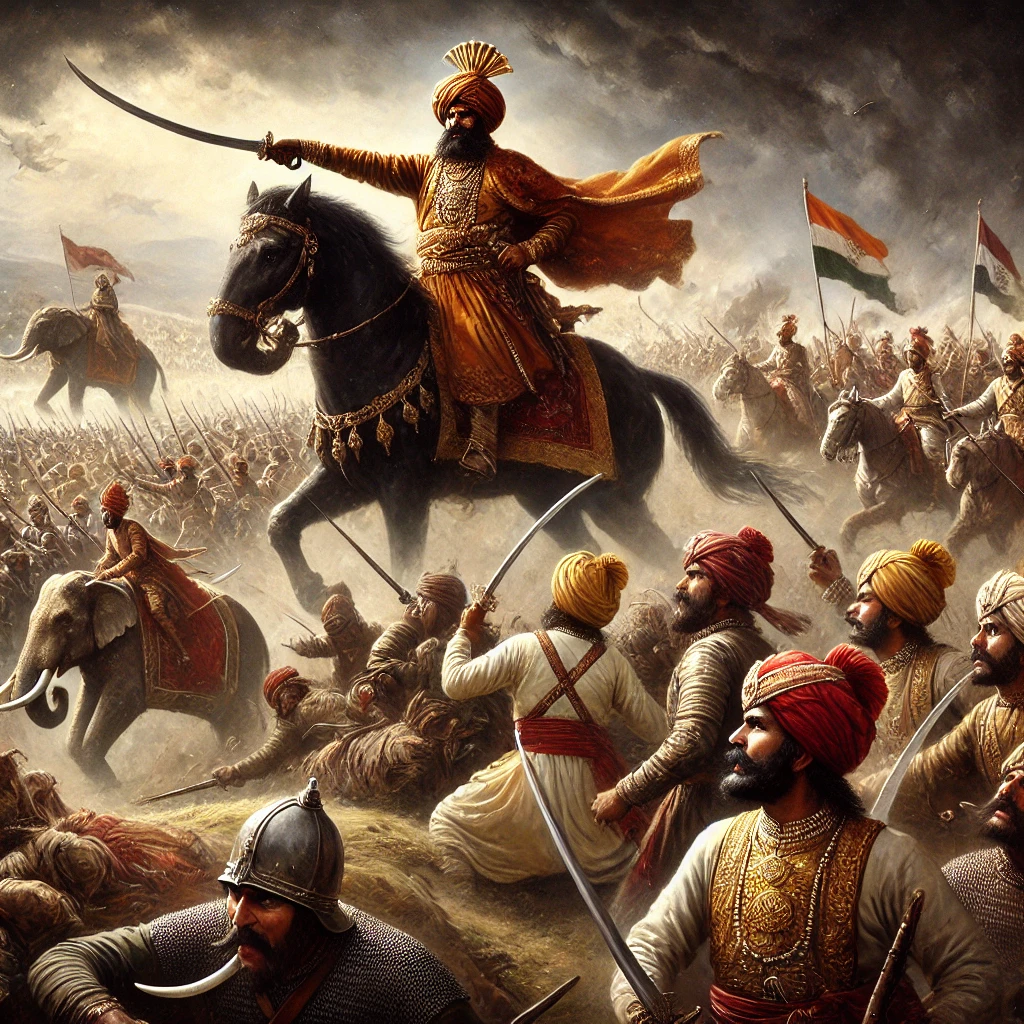
The Third Battle of Panipat, fought on 14 January 1761, is one of the most decisive and impactful battles in Indian History. It took place between the Maratha Empire and the Afghan forces led by Ahmad Shah Abdali (also known as Ahmad Shah Durrani). The battle significantly altered the political structure and balance of power in the Indian subcontinent.
Background
1. Expansion of the Maratha Empire
- By the mid-18th century, the Marathas controlled large parts of North India.
- After supporting the weakened Mughal Empire in Delhi, they became the dominant political force.
2. Ambitions of Ahmad Shah Abdali
- Abdali invaded India multiple times, intending to control the wealthy northern regions.
- He captured Delhi in 1757 but failed to hold it.
3. Advance Toward Panipat
- During 1759–1760, Abdali secured Punjab and Delhi and strengthened his army.
- The Marathas marched north to defend their influence and honour.
- The core cause of the battle was the struggle for dominance in North India.
Maratha Army and Leadership
- Commander-in-Chief: Sadashivrao Bhau
- Artillery Head: Ibrahim Khan Gardi
- Notable Leaders: Malharrao Holkar, Jayappa Scindia, Viswasrao
- Army Strength: ~70,000 soldiers & over 100,000 followers (camp followers, families, merchants)
Strength of the Maratha Army
- Strong artillery, cavalry, and infantry.
- European-style cannons & musketeers under Ibrahim Khan Gardi.
Afghan Military and Leadership
- Leader: Ahmad Shah Abdali
- Allies: Najib-ud-Daula (Rohilla chief), Shuja-ud-Daula (Awadh Nawab), various north Indian forces
- Army Strength: ~60,000 trained soldiers
Strength of the Afghan Army
- Expertise in fast cavalry attacks.
- Large numbers of archers, swordsmen, and heavy horsemen.
Events of the War
1. Initial Strategy
- The Marathas fortified their camp at Panipat.
- Abdali cut their supply lines, causing food shortages.
2. Beginning of the Battle
On 14 January 1761, Marathas launched the attack. Ibrahim Khan Gardi’s artillery initially dominated, but Afghan cavalry soon counter-attacked.
3. Turning Point
- Lack of coordination and exhaustion weakened the Marathas.
- Afghan forces surrounded and crushed Maratha cavalry.
4. End of the Battle
- The Maratha army was almost completely destroyed.
- Sadashivrao Bhau and many top leaders attained martyrdom.
- Civilian families accompanying the army faced severe atrocities.
Consequences of the War
1. Heavy Loss to the Maratha Empire
- The empire lost many of its finest commanders and soldiers.
- Maratha influence in North India declined sharply.
2. Impact on Indian Politics
- The defeat destabilised Indian politics.
- The Mughal Empire lost its remaining strength.
3. Rise of the British East India Company
- The political vacuum allowed British expansion.
4. Abdali’s Influence
- He plundered India but did not stay long.
Importance of the Battle
- One of the deadliest clashes in Indian history (~100,000 deaths).
- An emotional and cultural shock for Maratha society.
- The Marathas later recovered, proving their resilience.
Conclusion
The Third Battle of Panipat reshaped the future of the Indian subcontinent. Although the Marathas were defeated, their ability to rebuild demonstrated their strength and positioned them as leaders in India’s later struggle for freedom.
Causes of the Collapse of the Maratha Empire
The fall of the Maratha Empire was the result of multiple factors—internal conflicts, administrative weaknesses, and rising British power. Below are the major causes in detail:
1. Internal Conflict and Factionalism
- Autonomy of regional chiefs: Gaekwad, Holkar, Scindia, and Bhosale began acting independently.
- Rebellions against the Peshwas: Rivalries weakened unity.
- Lack of collective leadership: Leadership declined after the zenith period.
2. Growing Influence of the British East India Company
Diplomatic Strategy
The British adopted a “divide and rule” policy, widening gaps between Maratha chiefs.
Three Anglo–Maratha Wars (1775–1818)
- First Anglo–Maratha War (1775–1782): Marathas won, but British strengthened their position.
- Second Anglo–Maratha War (1803–1805): British annexed Maratha territories.
- Third Anglo–Maratha War (1817–1818): Complete defeat; Peshwa Bajirao II surrendered.
British Military and Administrative Strength
- Superior weapons and disciplined army.
- Advanced administration compared to the Marathas.
3. Military and Administrative Weaknesses
- Post-Panipat decline in military morale and discipline.
- Central administration weakened by regional autonomy.
- Over-dependence on Chauth and Sardeshmukhi revenue.
4. Major Defeats
- Panipat (1761): Psychological and military blow.
- Third Anglo–Maratha War (1817–1818): Final collapse of the empire.
5. Other Causes
- Repeated foreign invasions weakened the economy.
- Internal religious and cultural disagreements.
Conclusion
The collapse of the Maratha Empire was not due to one event but a combination of internal divisions, economic issues, military weaknesses, and British diplomacy. Though the empire fell in 1818, its legacy deeply influenced India's fight for independence.
Cultural Contributions of the Maratha Empire
The Maratha Empire made lasting contributions to Indian culture through architecture, religion, literature, art, and social reform. These achievements reflect the vision of Maratha rulers and their commitment to cultural development.
1. Contribution to Architecture
Forts and Fortifications
- Rajgad, Raigad, Shivneri: Icons of military architecture.
- Pratapgarh Fort: A strategic and historical monument.
Temple Construction
- Built numerous temples across Maharashtra and beyond.
- Parvati Temple (Pune) and Dagdusheth Ganpati Temple—examples of Maratha style.
- Kashi Vishwanath Temple rebuilt by Ahilyabai Holkar.
2. Religion and Tolerance
- Revival of Hinduism and Vedic studies.
- Patronage to pilgrimage centers (Kashi, Ujjain, Somnath).
- Protection of Muslim places of worship; promotion of communal harmony.
3. Literature and Education
- Growth of Marathi literature and Bhakti poetry.
- Encouragement to saints like Tukaram and Dnyaneshwar.
- Peshwa-era schools promoted Sanskrit and Marathi education.
4. Art and Music
- Patronage of Indian classical music.
- Promotion of folk arts like Lavani and Tamasha.
5. Social Reforms
- Ahilyabai Holkar promoted women’s rights and education.
- Shivaji reduced caste discrimination and recruited lower-caste soldiers.
- Support for widows and orphans through shelters and institutions.
6. Cultural Approach in Administration
- Implementation of Swarajya based on local language and traditions.
- Balanced religious and social laws in judicial processes.
7. Bhakti Literature & Social Harmony
- Saint poets enriched spiritual literature.
- Abhanga and devotional songs became popular among the masses.
8. International Influence
- Ahilyabai Holkar rebuilt temples even outside India (Nepal).
Conclusion
The cultural contributions of the Maratha Empire enriched Indian society across architecture, religion, literature, music, and social reform. Their legacy continues to influence India’s culture and heritage even today.
Explore more articles on Maratha history: Click here