
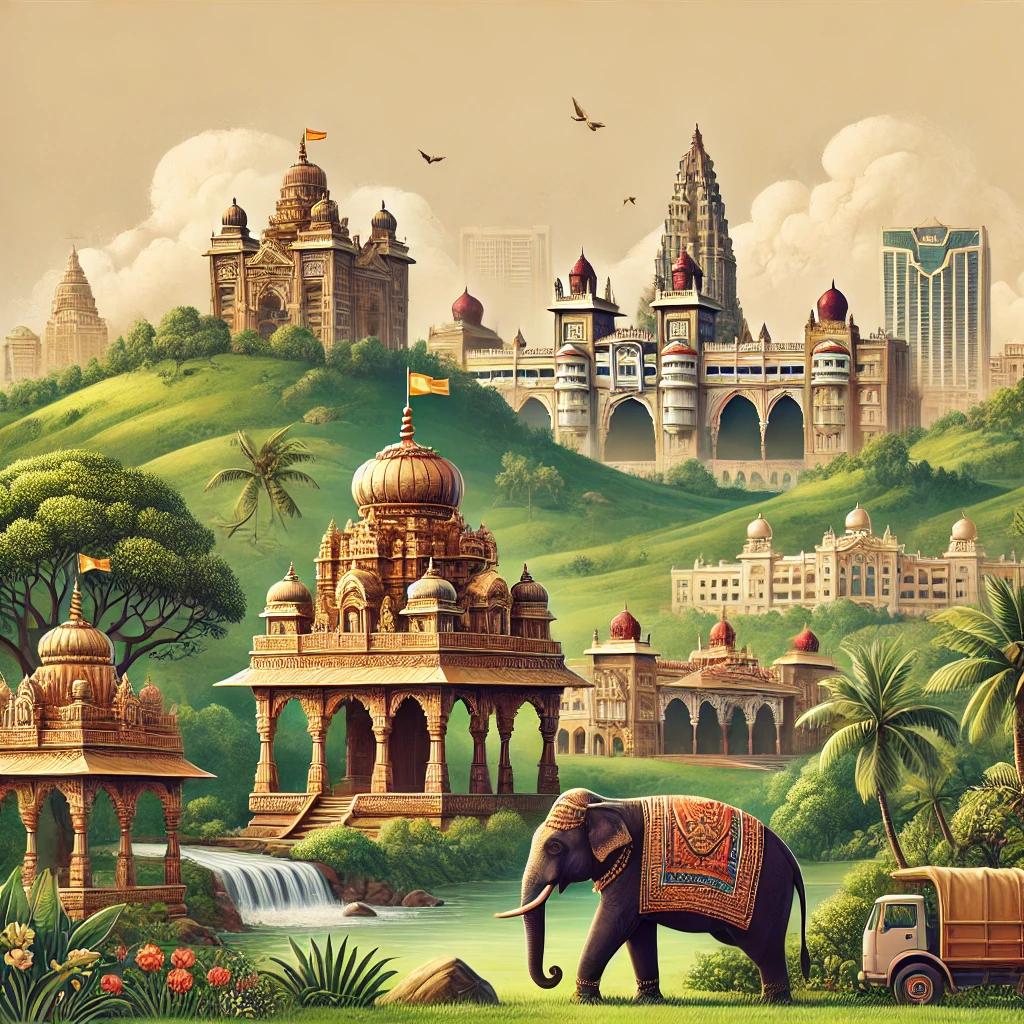
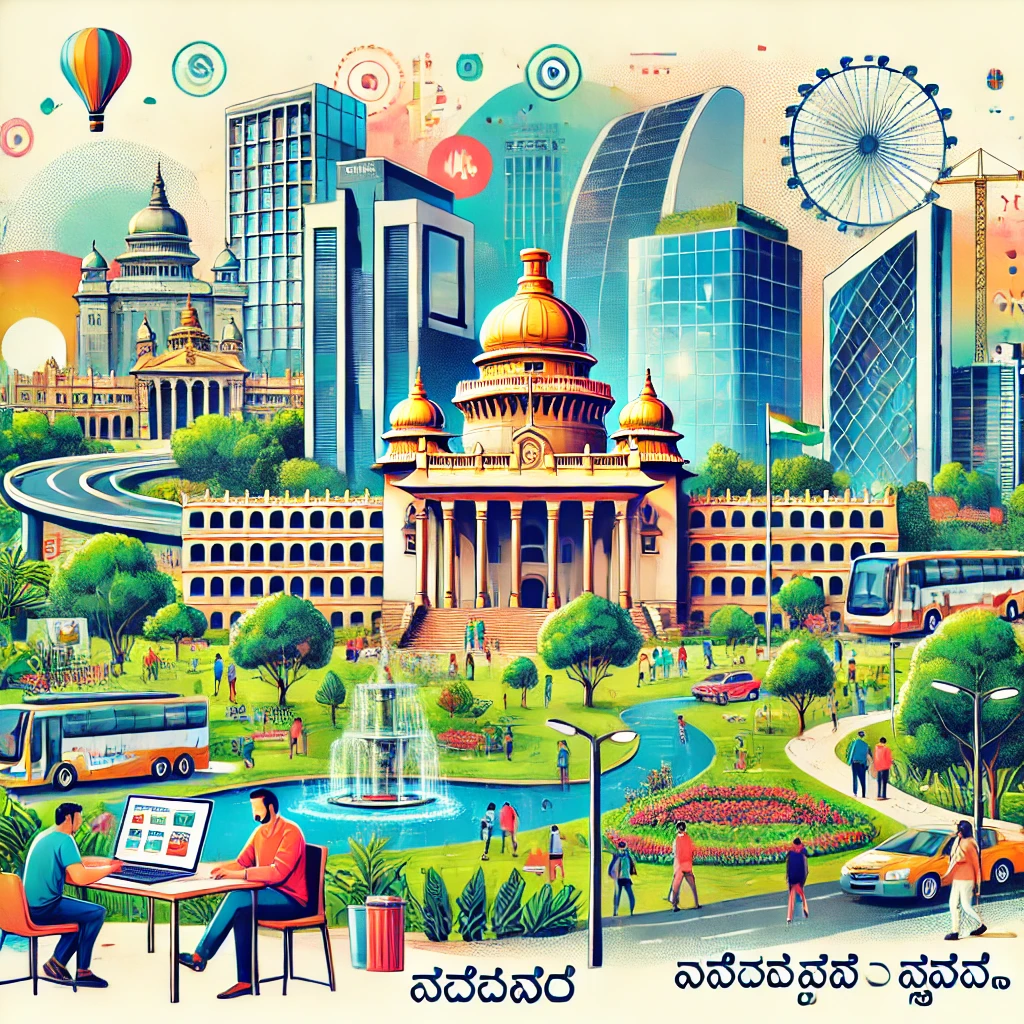
Silicon Valley of India: Bengaluru (Bangalore)
Bengaluru (Bangalore) is widely known as the “Silicon Valley of India,” a title earned because of its thriving IT industry, global tech presence, and vibrant startup ecosystem. As the capital of Karnataka, Bengaluru stands as the core of India’s technological growth, innovation, research, and cultural diversity.
Why Bengaluru is Called the Silicon Valley of India
The title was given to Bengaluru due to the concentration of Indian and global technology companies, advanced IT infrastructure, and a strong talent pool. The city has become a meeting point of innovation, modernity, education, and multicultural harmony.
Location and Significance
Geographical Location
Bengaluru is located on the Deccan Plateau in South India at an elevation of about 920 meters above sea level. This gives the city its famous year-round pleasant climate.
Tech Hub Significance
Today, Bengaluru stands as one of the world’s major startup capitals and India’s most important IT hub.
History of Bengaluru as a Tech City
Bengaluru earned the title of “Silicon Valley of India” in the late 20th century as global and Indian software companies began establishing their offices here. Supportive state policies and an educated workforce played a major role in this transformation.
1940–50s
- Establishment of Hindustan Aeronautics Limited (HAL)
- Formation of Indian Space Research Organisation (ISRO)
1990s
The software revolution accelerated Bengaluru’s rise as IT companies expanded rapidly.
Today’s Bengaluru
The city is now synonymous with technological innovation, startups, and global tech operations.
Bengaluru: Hub of the IT Industry
Bengaluru hosts the headquarters and offices of major Indian and global technology companies.
Major Indian IT Companies
- Infosys
- Wipro
- TCS
- HCL
- IBM India
Global Tech Giants in Bengaluru
- Microsoft
- Amazon
- Oracle
- Intel
Technological Parks and Special Zones
- Electronic City – One of India’s largest IT clusters.
- Whitefield – Major corporate and residential hub.
- International Tech Park Bengaluru (ITPB) – Global tech center.
Bengaluru’s Startup Ecosystem
Bengaluru is known for its strong startup culture and is home to multiple unicorns (companies valued at over $1 billion).
Major Startups from Bengaluru
- Byju’s
- Swiggy
- Zomato
- Flipkart
Startup Incubators
NASSCOM, along with several private accelerators and co-working hubs, supports entrepreneurs and innovators.
Education and Research in Bengaluru
The city is home to some of India’s most prestigious academic and research institutions:
- Indian Institute of Science (IISc)
- Indian Space Research Organisation (ISRO)
- Indian Institute of Management Bangalore (IIM-B)
- National Centre for Biological Sciences (NCBS)
Culture and Lifestyle of Bengaluru
Beyond technology, Bengaluru is known for its cultural diversity, modern lifestyle, and greenery.
Languages Spoken
Kannada is the primary language, while English, Hindi, Tamil, Telugu, and Malayalam are widely spoken.
Main Attractions
- Lal Bagh Botanical Garden
- Cubbon Park
- Bangalore Palace
- Tipu Sultan’s Summer Palace
- MG Road & Church Street nightlife
Bengaluru’s Pleasant Climate
Due to its elevation, Bengaluru enjoys mild, pleasant weather throughout the year, making it one of India’s most preferred cities for living and working.
Challenges Faced by Bengaluru
- Traffic congestion due to rapid population growth.
- Water scarcity because of urban expansion.
- Environmental concerns including pollution and reduction of green spaces.

Conclusion
Bengaluru, the “Silicon Valley of India,” has become a global symbol of technology, innovation, startups, and education. The city represents modern India—vibrant, ambitious, intelligent, and culturally diverse. Its influence continues to shape the future of technology not only in India but around the world.
For related readings, explore our article here: Read More About Indian Cities and Technology
Frequently Asked Questions (FAQ)
1. Why is Bengaluru called the Silicon Valley of India?
Due to its high concentration of IT companies, global tech presence, startups, and strong research ecosystem.
2. Which are the major IT hubs in Bengaluru?
Electronic City, Whitefield, and International Tech Park Bengaluru (ITPB).
3. What makes Bengaluru attractive for startups?
Skilled talent, incubators, investors, global connectivity, and supportive government policies.
4. What are Bengaluru’s major challenges?
Traffic congestion, water scarcity, and environmental pressure due to rapid urbanization.
5. Is Bengaluru a good place to live?
Yes, due to pleasant weather, job opportunities, education, and vibrant lifestyle.
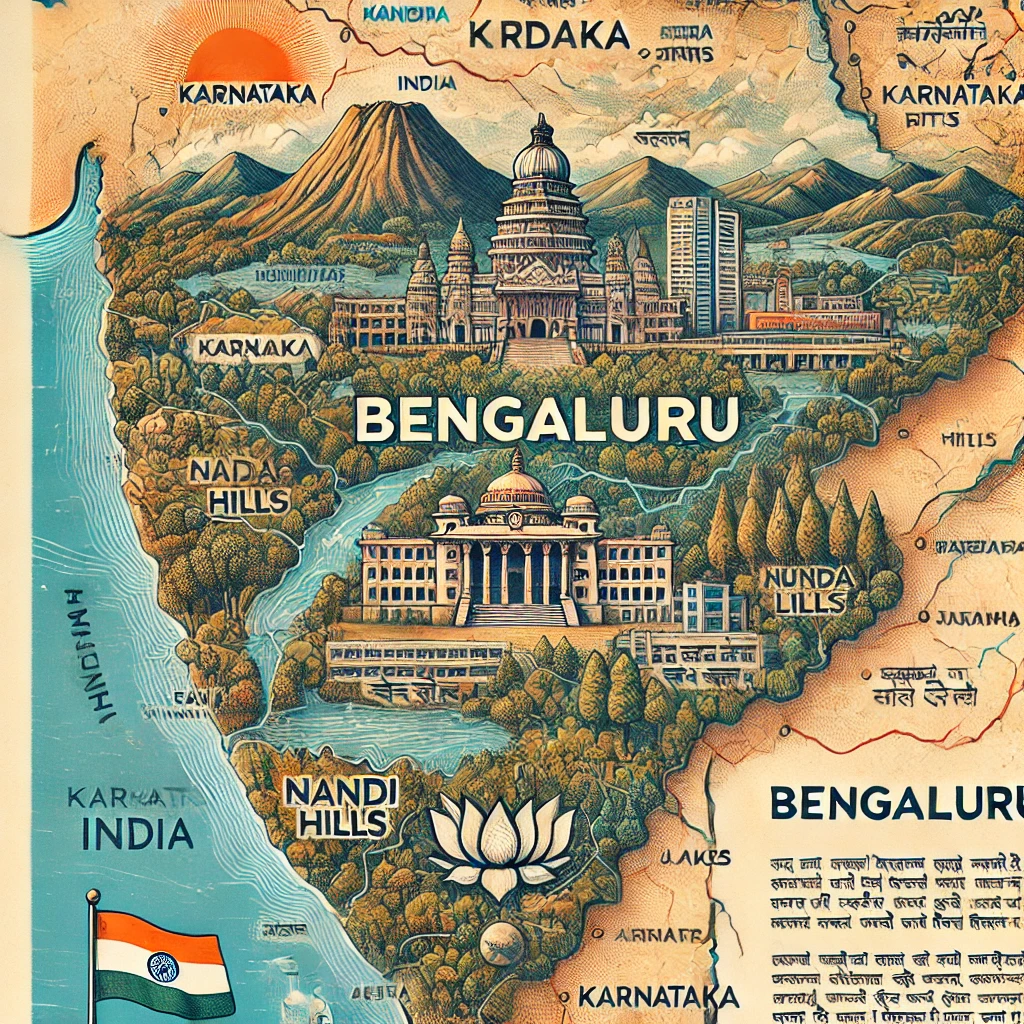
Geographical Location of Bangalore
Bangalore, known as the “Silicon Valley of India,” is located in South India. It is the capital city of Karnataka and lies on the Deccan Plateau. Its geographical setting and natural features make it a unique and attractive metropolitan city.
Status and Area
- Latitude and Longitude: 12.97° N and 77.59° E
- Elevation: Approximately 920 metres (3,018 ft) above sea level
- Area: About 741 square kilometres
The city’s high elevation contributes to its cool and pleasant climate throughout the year.
Topographical Features
Part of the Deccan Plateau
Bangalore lies on the Deccan Plateau, giving it a mix of plains and gentle hills.
Hills and Rocky Terrain
The region contains several small hills and rocky stretches that add to its natural landscape.
Soil Type
The soil found in Bangalore includes red soil and black soil, which are suitable for agriculture and horticulture.
Weather and Climate
Bangalore is famous for its pleasant weather throughout the year due to its altitude.
- Summer: Maximum temperature reaches around 35°C
- Winter: Minimum temperature ranges from 10–15°C
- Monsoon: Average annual rainfall is about 970 mm
Because of its high elevation, the temperature remains lower compared to many other Indian cities—even during summer. It is often described as a “cool city in summer.”
Water Sources of Bangalore
Bangalore depends on a combination of natural and man-made water sources.
Lakes
- Ulsoor Lake
- Hebbal Lake
- Madiwala Lake
Rivers
Although no major rivers pass directly through the city, nearby regions are supported by:
- Arkavathi River
- Dakshina Pinakini River
Groundwater
Groundwater levels have decreased in recent years due to rapid urbanisation and growing population.
Flora and Fauna
Green Areas
Bangalore is known for its greenery and large public parks.
- Lal Bagh: Famous for rare and exotic trees
- Cubbon Park: Often called the “Lungs of Bangalore”
Wildlife
Elephants and various species of birds are found in nearby forests and wildlife sanctuaries.
Transport and Connectivity
Bangalore’s geographical location gives it excellent connectivity with major cities across South India.
By Road
Connected via major national highways:
- NH 44
- NH 48
- NH 75
Rail Network
Under South Western Railway, Bengaluru is linked to most major South Indian cities.
Air Travel
Kempegowda International Airport (BIAL) is located about 40 km from the city centre.
Urbanization and Expansion
Bangalore’s urban footprint has been expanding rapidly.
- Electronic City (South) – Major IT zone
- Devanahalli (North) – Rapidly developing due to airport and new projects
New residential, industrial and technology zones are continuously being added, leading to fast-paced urban growth.
Conclusion

Bangalore’s geographical location makes it both economically powerful and culturally significant. Its climate, elevation, greenery, lakes, and rapid urban development make it one of India’s most preferred cities for living and working. The blend of nature and modern infrastructure gives Bengaluru a unique identity.
For more detailed insights on Bengaluru and Karnataka, visit our related article: Explore More About Karnataka
Frequently Asked Questions (FAQ)
1. Why does Bangalore have pleasant weather throughout the year?
Because it is located at a high elevation (920 metres) on the Deccan Plateau, keeping temperatures moderate.
2. Is Bangalore located in the Deccan Plateau?
Yes, Bangalore is geographically part of the Deccan Plateau, giving it its characteristic terrain.
3. Does Bangalore have any major rivers?
No major rivers pass through the city, but rivers like Arkavathi and Dakshina Pinakini flow near its outskirts.
4. Why is Bangalore facing water scarcity?
Rapid urbanisation, population growth, and declining groundwater levels contribute to water challenges.
5. What type of soil is found in Bangalore?
Red soil and black soil are the most common types found in the region.
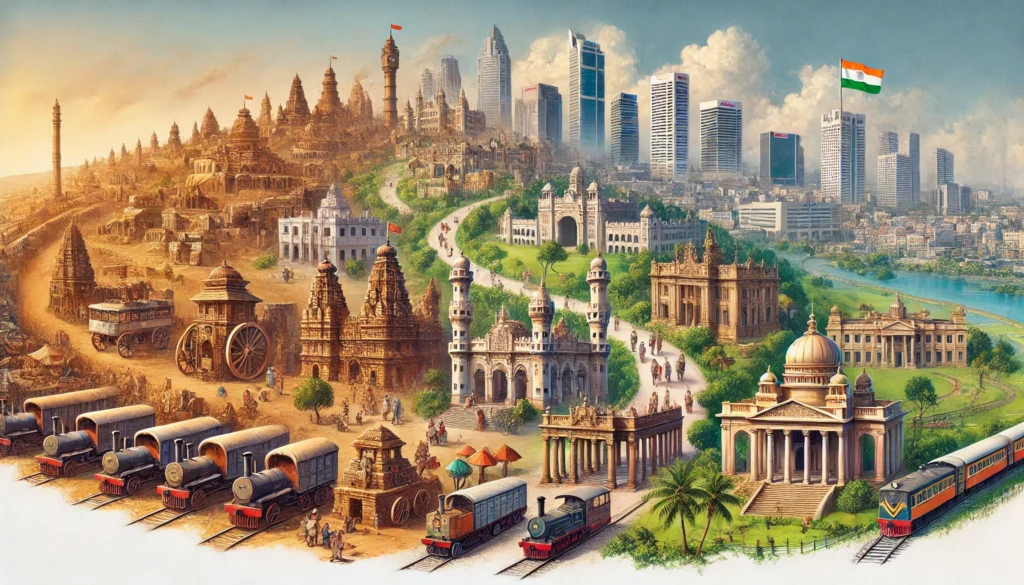
History of the Vijayanagara Empire
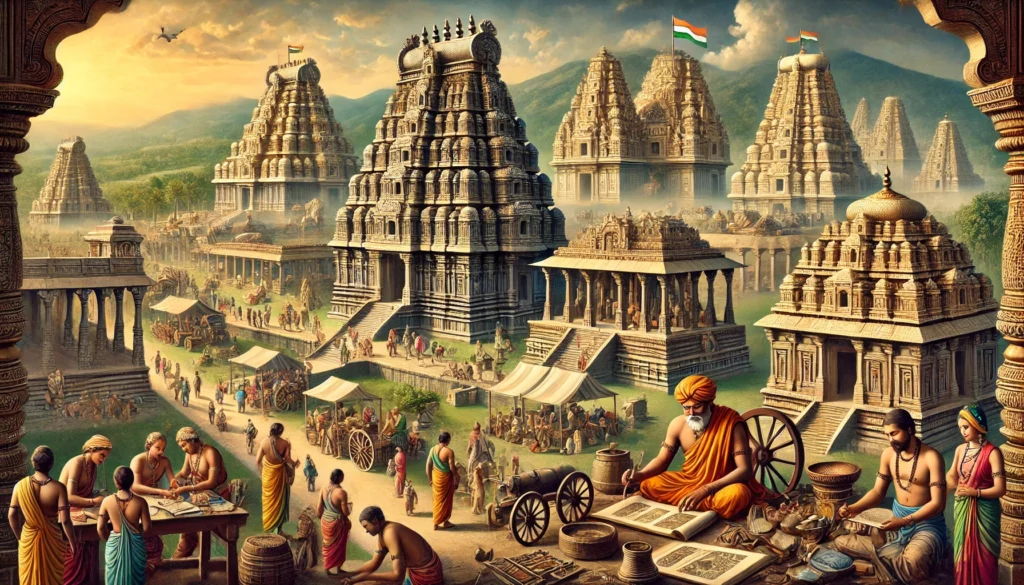
The Vijayanagara Empire (1336–1646) was one of the most prominent, powerful, and culturally rich empires in Indian history. Founded in South India, it ruled the Deccan region for nearly 300 years and became well known for its achievements in art, culture, architecture, literature, military strength, and administration.
Establishment of the Vijayanagara Empire
- The empire was founded in 1336 by two brothers, Harihara and Bukka Raya.
- They were originally officers under the Hoysala Empire but later established an independent kingdom.
- The capital of the empire was Vijayanagara (Hampi), located on the banks of the Tungabhadra River.
- The primary purpose of the empire’s formation was to defend South India from invasions by the Delhi Sultanate and other northern powers.
Great Rulers of the Vijayanagara Empire
Harihara and Bukka Raya (1336–1356)
The founders who expanded the early boundaries of the empire and established its administrative foundation.
Devaraya I (1406–1422)
- Strengthened the empire militarily and economically.
- Reformed the army and fought several battles against the Bahmani Sultanate.
Krishnadevaraya (1509–1529)
Considered the greatest ruler of the empire, Krishnadevaraya took Vijayanagara to its peak in power, culture, and prosperity.
- Expanded the empire through victorious military campaigns.
- Promoted art, literature, and architecture.
- Was given the title “Andhra Bhoja” for his justice, wisdom, and literary support.
Social and Cultural Contributions
1. Religion and Culture
- The Vijayanagara rulers were major patrons of Hinduism.
- Shaiva and Vaishnava sects were highly influential.
- Many iconic South Indian temples and religious monuments were built during this time.
2. Art and Architecture
Vijayanagara architecture is admired for its beauty, symmetry, and intricate stone carvings.
- Temples such as the Virupaksha Temple, Vitthala Temple, and the Lotus Mahal in Hampi are iconic examples.
- Massive gopurams (temple gateways) and detailed sculptures were major features of this era.
3. Literature
- Languages like Sanskrit, Kannada, Telugu, and Tamil flourished.
- Emperor Krishnadevaraya composed the Telugu literary masterpiece “Amuktamalyada.”
- Many scholars translated classical texts and created new works during this cultural golden period.
Economic Prosperity
The Vijayanagara Empire was economically strong, thriving on agriculture, trade, and craftsmanship.
- Hampi became a major commercial centre with markets for textiles, spices, gems, and precious metals.
- Foreign trade grew, with strong economic relations with Arabia, Persia, and European nations.
- Advanced irrigation systems were built along the Tungabhadra River to support agriculture and population growth.
Military Power of the Vijayanagara Empire

The empire maintained a powerful and well-organized military force.
- Large armies consisting of elephants, cavalry, and infantry.
- Construction of forts and fortified cities for defensive strength.
- Advanced war strategies and alliances to protect the empire from Deccan Sultanates.
Causes of the Decline
The downfall of the Vijayanagara Empire began after the famous Battle of Talikota (1565).
- The combined forces of the Deccan Sultanates — Bijapur, Ahmadnagar, Golconda, and the Bahmani remnants — defeated the empire.
- The capital city Hampi was plundered and destroyed.
- After this devastating defeat, the empire gradually weakened and eventually collapsed by 1646.
Heritage and Legacy of the Vijayanagara Empire
The Vijayanagara Empire left an everlasting impact on India’s cultural and historical identity.
- Its grand temples, palaces, and monuments still stand as symbols of artistic excellence.
- Hampi is recognized as a UNESCO World Heritage Site.
- The empire played a crucial role in preserving and enriching South Indian languages, traditions, and religious practices.
Conclusion
The Vijayanagara Empire remains a golden chapter in Indian history. It was not only a military and economic powerhouse but also a leading centre of art, culture, and religion. Its influence can still be seen today in the vibrant cultural heritage of South India.
For more related historical content, explore our article here: History of Bangalore
Frequently Asked Questions (FAQ)
1. Who founded the Vijayanagara Empire?
The empire was founded in 1336 by the brothers Harihara and Bukka Raya.
2. Who was the greatest ruler of the Vijayanagara Empire?
Krishnadevaraya (1509–1529) is widely regarded as the greatest ruler of the empire.
3. What was the capital of the Vijayanagara Empire?
The capital was Vijayanagara, located at present-day Hampi on the banks of the Tungabhadra River.
4. Why did the Vijayanagara Empire decline?
The empire declined after the Battle of Talikota in 1565, when the combined Deccan Sultanates defeated Vijayanagara and destroyed Hampi.
5. What is the legacy of the Vijayanagara Empire?
Its architecture, temples, literature, and cultural contributions continue to influence South Indian heritage, and Hampi is a UNESCO World Heritage Site.
Economy of the Vijayanagara Empire
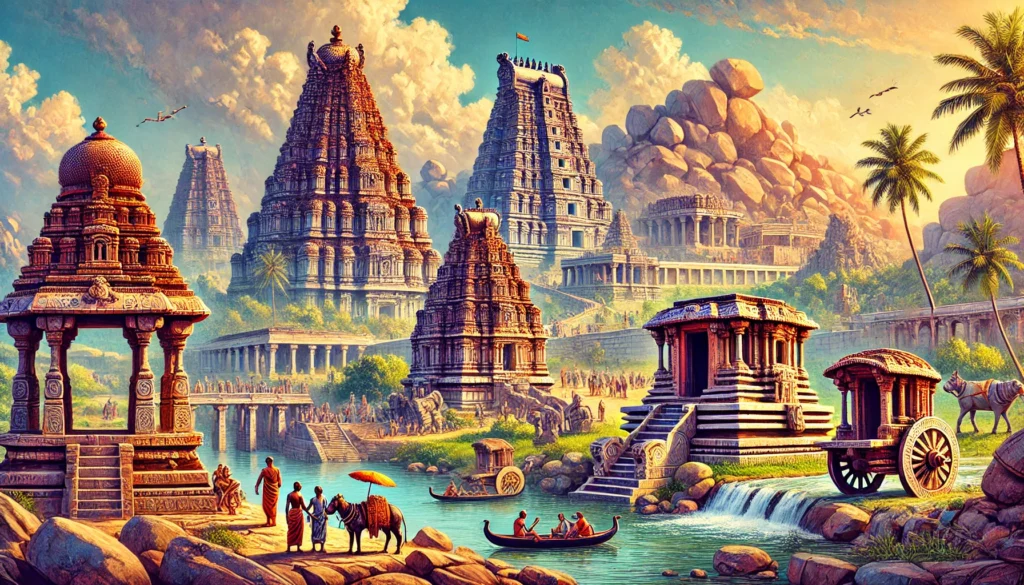
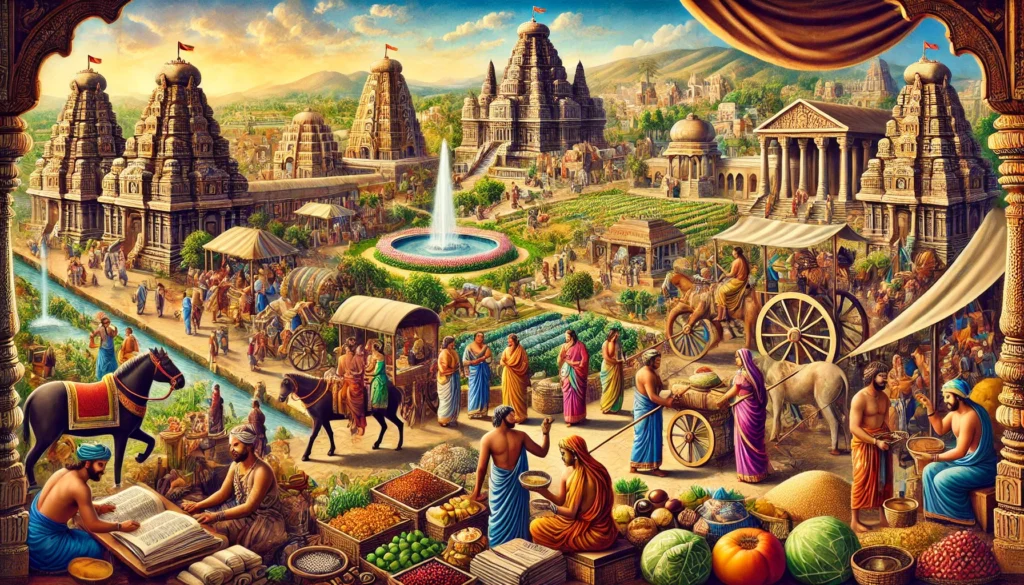
The Vijayanagara Empire (1336–1646) was one of the most prosperous, wealthy, and well-organized empires in Indian History. Its economy was built on strong foundations of agriculture, trade, industry, and craftsmanship. Through both local and international commerce, the empire became the economic and cultural centre of South India.
Key Pillars of the Economy
1. Agriculture
Agriculture was the backbone of the Vijayanagara economy.
- The fertile lands near the Tungabhadra River made large-scale farming possible.
- Rice, jowar, bajra, wheat, pulses
- Cash crops: spices, cotton, sugarcane, betel nut
- Construction of canals, ponds, tanks, and reservoirs
- Extensive canal networks from the Tungabhadra River
2. Trade
Local Trade
- Large markets for textiles, spices, metals, and agricultural goods.
- Hampi and nearby regions became major trading hubs.
International Trade
- Trade links with Arabia, Persia, China, Africa, and Europe.
- Exports: spices, silk, ivory, gemstones, cotton textiles.
- Imports: horses, metal goods, foreign textiles.
Maritime Trade
- Ports such as Goa, Hooghly, and the Malabar Coast supported sea trade.
- The shipbuilding industry was highly advanced.
3. Industry and Craftsmanship
Industries were an important source of income and employment.
Major Industries:- Textile Industry: Cotton and silk weaving.
- Metal Industry: Gold, silver, bronze, and copper work.
- Craftsmanship: Stone sculptures, temple carvings.
- Weapons Manufacturing: Production of advanced arms for the empire.
4. Coinage and Currency System
- The Vijayanagara Empire had a highly developed monetary system.
- Coins were made of gold, silver, and copper.
- The famous gold coin “Pagoda” was used for government and commercial transactions.
- Coins featured images of rulers and religious symbols.
5. Tax and Revenue System
The empire had a structured and efficient revenue administration.
Major Taxes:- Land Tax on cultivated lands.
- Trade Tax on domestic and foreign trade.
- Gifts and Donations from merchants and landowners.
- Construction of temples and public works.
- Development of irrigation systems and road networks.
- Military and administrative expenses.
6. Markets and Business Centres

- Hampi served as the main trading centre of the empire.
- Markets were famous for gold, spices, and ivory.
- Foreign traders such as Arabs and Portuguese actively participated.
The Role of Women in the Economy
- Women participated actively in cottage industries such as weaving and handicrafts.
- Some women contributed to trade and agricultural activities.
Social and Economic Prosperity
- Economic growth supported advancements in art, culture, and education.
- Large sums were spent on temple construction and religious events.
- The prosperity of the empire is reflected in its monumental architecture and cultural heritage.
Collapse of the Economy
The downfall of the Vijayanagara economy began after the Battle of Talikota (1565).
- Hampi was plundered, causing massive destruction of trade centres and industries.
- The economy weakened rapidly, and the empire eventually collapsed by 1646.
Conclusion
The Vijayanagara Empire became a powerful economic force through strong agriculture, trade networks, and craftsmanship. Though wars and invasions weakened its economic structure, the legacy of its prosperity and economic policies still influences South Indian culture today.
To explore related topics, read our detailed article here:
Culture and Tradition of the Vijayanagara Empire
Frequently Asked Questions (FAQ)
1. What was the main source of the Vijayanagara economy?
Agriculture was the backbone of the economy, supported by advanced irrigation systems.
2. Which items were exported by the Vijayanagara Empire?
Spices, silk, gemstones, cotton textiles, and ivory were major export items.
3. What was the most famous coin of the empire?
The gold coin known as the Pagoda was widely used.
4. How did Hampi contribute to the economy?
Hampi served as the major commercial hub with active participation from foreign traders.
5. What led to the economic decline of the empire?
The Battle of Talikota (1565) caused destruction of trade networks and industrial centres, leading to economic collapse.
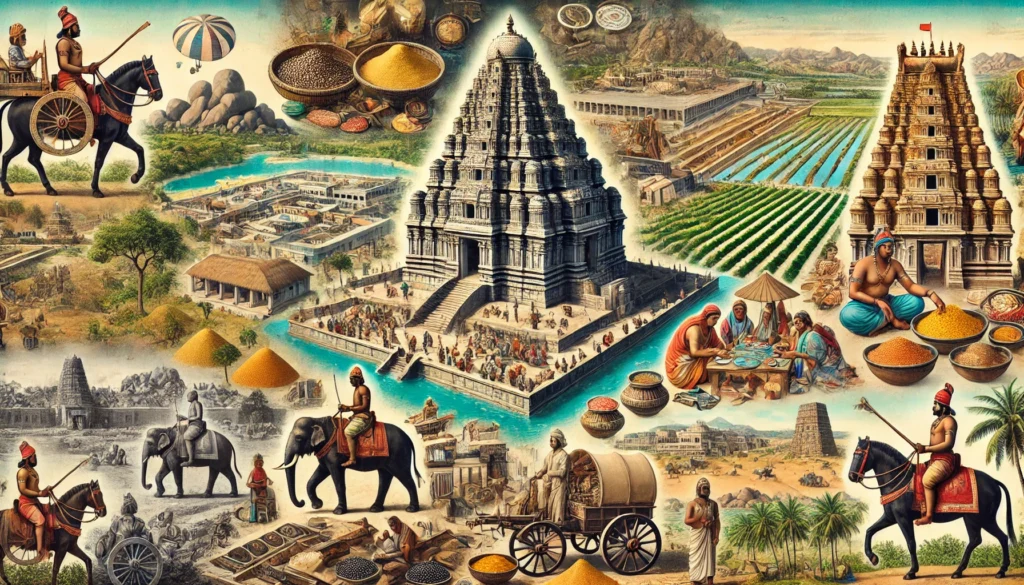
Main Facts of the Vijayanagara Empire
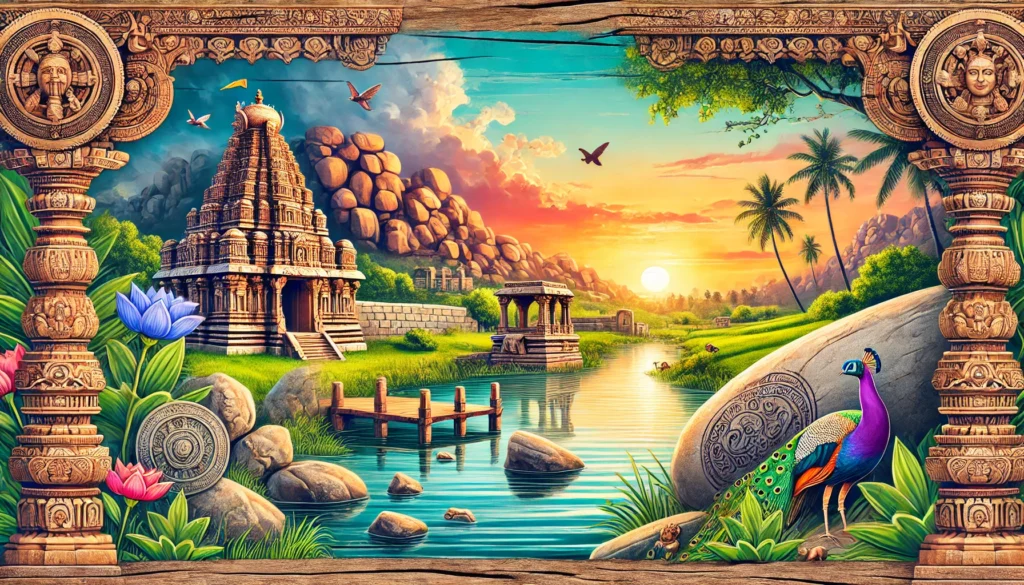
The Vijayanagara Empire (1336–1646) is a major chapter in Indian history. It emerged in South India and became one of the most powerful empires of its time. Known for its military strength, administration, architectural brilliance, and economic prosperity, the empire left a remarkable legacy. Below are some of its most important facts explained clearly.
1. Establishment and Ruling Dynasties
- The Vijayanagara Empire was founded in 1336 by Harihara and Bukka Raya.
- The empire was ruled by four major dynasties:
- Sangam Dynasty (1336–1485)
- Saluva Dynasty (1485–1505)
- Tuluva Dynasty (1505–1565)
- Aravidu Dynasty (1565–1646)
- Krishnadevaraya (1509–1529) of the Tuluva dynasty is considered the greatest ruler and his reign is known as the Golden Age of the empire.
2. Capital and Region
- The capital of the empire was Hampi in Karnataka, declared a UNESCO World Heritage Site in 1986.
- The empire covered large parts of present-day Karnataka, Andhra Pradesh, Tamil Nadu, and Kerala.
3. Administrative System
- The administration was highly organized and well-structured.
- The king was the supreme authority but was assisted by ministers, governors, and local chiefs.
- Land tax was the main source of revenue.
- Laws were influenced by Religion, social norms, and moral values.
4. Economy
- The economy was based on agriculture, trade, crafts, and industries.
- The fertile plains of the Tungabhadra River supported rich agriculture.
- Hampi became a major international trading centre.
Imports: Horses, metal goods, foreign textiles
- Gold coins called Pagodas, along with silver and copper coins, were used in trade.
5. Art and Architecture
The Vijayanagara Empire is famous for its grand temple architecture, sculptures, and artistic style.
Features:- Huge gopurams (entrance towers)
- Intricate stone carvings
- Musical pillars in temples
- Virupaksha Temple
- Vitthal Temple
- Hemakuta Hill Temples
- Lotus Palace
The architecture shows a strong influence of the Dravidian style.
6. Religion and Culture
- The empire was a major patron of Hinduism.
- However, Jainism and Islam were also respected and supported.
- Temples served as cultural, educational, and social hubs.
- Dance, music, and literature flourished during this time.
- Languages such as Sanskrit, Kannada, Telugu grew significantly.
- Tenali Ramakrishna
- Allasani Peddanna
7. Military Power
- The Vijayanagara Empire maintained one of the strongest armies in South India.
- The army included infantry, cavalry, elephants, and artillery.
- Foreign horses were imported to improve cavalry strength.
- Fortifications and strong ramparts protected the kingdom.
8. Major Wars and Collapse
- The Battle of Talikota (1565) marked the turning point in the empire’s history.
- The combined forces of the Deccan Sultanates defeated the Vijayanagara army.
- The capital Hampi was plundered and destroyed.
- The Aravidu dynasty attempted to maintain the empire but gradually lost power.
9. Tourism and Heritage
- Hampi remains a major centre of historical, cultural, and natural tourism.
- Protected UNESCO heritage sites include:
- Virupaksha Temple
- Vitthal Temple
- Stone Chariot
- Lotus Palace
10. Influence of the Vijayanagara Empire
- The empire had a deep and lasting influence on South Indian culture, religion, and society.
- Its administrative and economic policies stabilised the region for centuries.
- The architectural contributions of Vijayanagara remain a symbol of Indian cultural pride.
Conclusion
The Vijayanagara Empire ruled South India for nearly 300 years and stands as one of the greatest empires in Indian history. Its economic strength, cultural diversity, military power, and architectural brilliance continue to inspire historians, tourists, and culture enthusiasts today.

For deeper insights into Vijayanagara history, visit:
History of the Vijayanagara Empire
Frequently Asked Questions (FAQ)
1. Who founded the Vijayanagara Empire?
The empire was founded by Harihara and Bukka Raya in 1336.
2. Which dynasty ruled the Vijayanagara Empire during its Golden Age?
The Tuluva dynasty, especially under Krishnadevaraya, ruled during the Golden Age.
3. What was the capital of the Vijayanagara Empire?
The capital was Hampi, now a UNESCO World Heritage Site.
4. What was the main economy of the empire based on?
The economy was based on agriculture, trade, handicrafts, and international commerce.
5. Why did the Vijayanagara Empire decline?
The Battle of Talikota (1565) led to its downfall when the Deccan Sultanates defeated the empire and destroyed Hampi.