
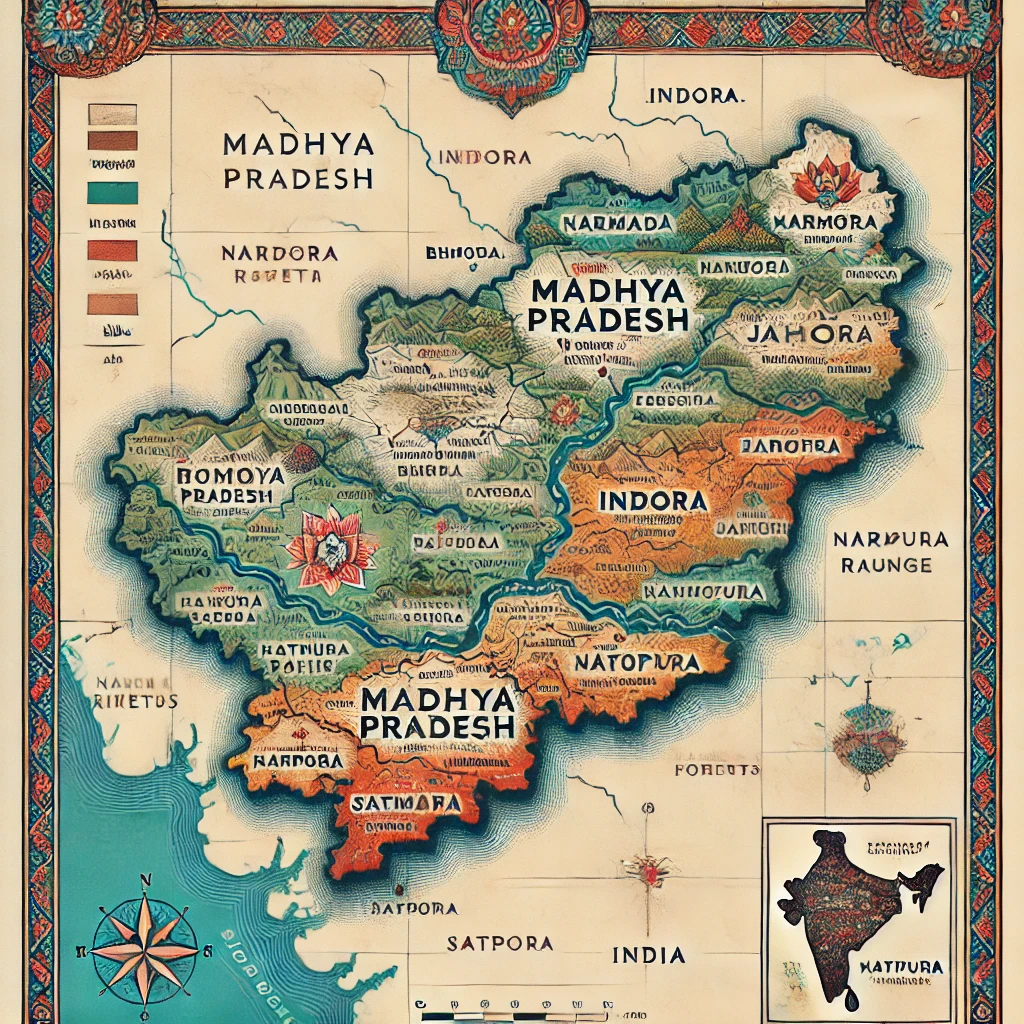
Madhya Pradesh: The Heartland of India — Geography, Culture, History and My Learnings
Explore Madhya Pradesh – the Heart of India 🌏 Discover 15+ best tourist places, rich culture, history, temples, wildlife & hidden gems. Complete 2026 travel guide with facts & tips.While studying and understanding Madhya Pradesh, I gradually realized that this state is not just a geographical center of India, but also a living example of how history, culture, nature, and modern development can coexist. Known as the “Heartland of India”, Madhya Pradesh reflects the soul of the country in its landscapes, people, and traditions.
Introduction to Madhya Pradesh
Madhya Pradesh is located in the central part of India and holds immense geographical, cultural, and historical significance. Its diversity makes it one of the most important states in the Indian Union, both strategically and culturally.
1. Geographical Location and Extent
Location
Madhya Pradesh lies between 21°6′ North to 26°30′ North latitude and 74°9′ East to 82°48′ East longitude, placing it at the very heart of India.
Boundaries
- Uttar Pradesh – North
- Rajasthan – West
- Maharashtra – South
- Chhattisgarh – East
- Gujarat – West
Area and Administrative Facts
- Total Area: 3,08,252 sq. km (about 9.38% of India)
- Capital: Bhopal
- Largest City: Indore
- Divisions: 10
- Districts: 52
2. Natural Features
One of my strongest impressions of Madhya Pradesh is its exceptional natural diversity, which shapes the lifestyle and economy of the state.
Major Physical Features
- Mountain Ranges: Vindhya and Satpura
- Major Rivers: Narmada, Tapti, Chambal, Betwa, Son
Forests and Biodiversity
- Nearly 30% of the land is under forest cover
- Major national parks: Kanha, Bandhavgarh, Pench
Fertile Regions
- Malwa Plateau
- Narmada Valley
3. History and Cultural Heritage
The history of Madhya Pradesh spans thousands of years and reflects the rise and fall of powerful civilizations.
Ancient Period
- Janapadas such as Chedi, Avanti, and Malava
- Mahakaleshwar Temple of Ujjain
Medieval Period
- Regions like Malwa, Bundelkhand, and Gwalior
- Khajuraho Temples built by the Chandela rulers
Modern Period
- State reorganization in 1956
- Separation of Chhattisgarh in 2000
4. Population and Society
- Total Population (2011): 7.26 crore
- Literacy Rate: 70.6%
Tribal Communities
About 21% of the population belongs to Scheduled Tribes, including Gond, Bhil, Baiga, and Korku communities. Their traditions add depth to the cultural fabric of the state.
5. Economy

⭐ Editor's Choice
Discover a highly rated product selected for its quality, functionality, and positive customer feedback.
View Details & Reviews →Madhya Pradesh has a mixed economy rooted in agriculture, minerals, and industry.
Agriculture
- Major crops: Wheat, soybean, gram, pulses
Mineral Resources
- Coal, diamond, limestone
Industries
- Cement
- Automobiles
- Textiles
- Pharmaceuticals
Tourism Economy
- World Heritage Sites: Khajuraho, Sanchi, Bhimbetka
- Religious Centers: Mahakaleshwar, Omkareshwar
6. Culture and Traditions
Language
Hindi is the official language of the state.
Folk Dances and Music
- Dances: Gaur, Gangaur, Terhatali
- Music: Pandavani, flute traditions
Festivals
- Kumbh Mela (Ujjain)
- Tansen Music Festival (Gwalior)
7. Major Tourist Places
Natural Attractions
- Pachmarhi
- Bhedaghat (Marble Rocks of Narmada River)
Historical Sites
- Gwalior Fort
- Mandu
National Parks
- Kanha
- Bandhavgarh
- Satpura
8. Administrative Structure
- Legislative Assembly: 230 Members
- Governor: Constitutional Head
- Chief Minister: Executive Head
- High Court: Jabalpur
9. Current Identity and My Learnings
Today, Madhya Pradesh stands as a state where ancient heritage blends seamlessly with modern development. Known as the “Tiger State” and “Diamond State”, it taught me that progress does not require abandoning roots—it requires respecting them.
Understanding Madhya Pradesh helped me appreciate how geography shapes culture, how history influences governance, and how diversity strengthens unity.
Frequently Asked Questions (FAQ)
What is Madhya Pradesh famous for?
Madhya Pradesh is famous for its rich history, national parks, tiger reserves, Khajuraho temples, and cultural diversity.
Why is Madhya Pradesh called the Heart of India?
It is called the Heart of India because of its central geographical location and its cultural and historical significance.
Which rivers are important in Madhya Pradesh?
The major rivers include the Narmada, Tapti, Chambal, Betwa, and Son.
What are the major economic activities of Madhya Pradesh?
Agriculture, mining, manufacturing industries, and tourism are the main economic activities.
Which tribes live in Madhya Pradesh?
Major tribes include Gond, Bhil, Baiga, and Korku.
Related Internal Links
Geographical Structure of Madhya Pradesh
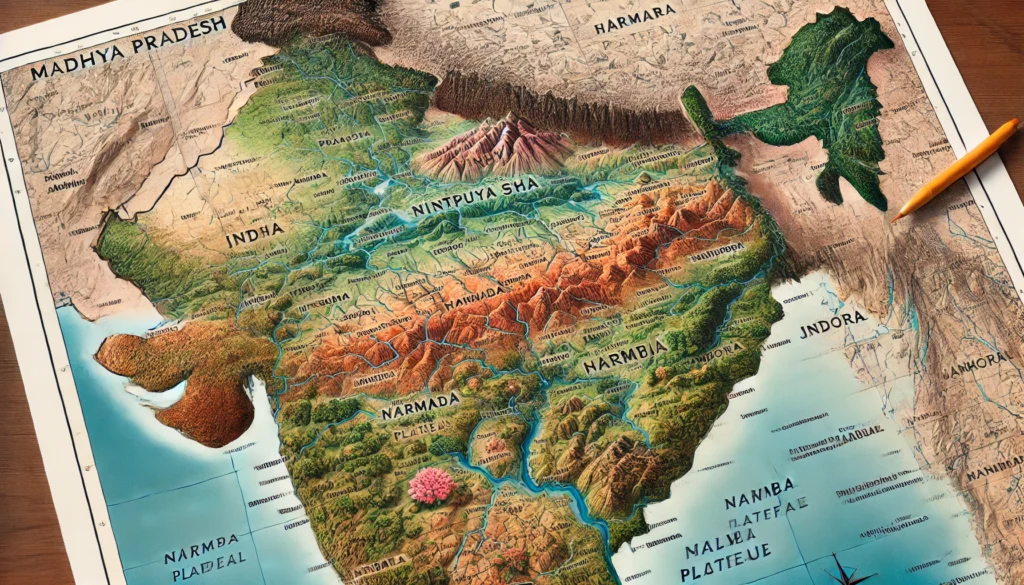
Madhya Pradesh is geographically located in the central part of India. While studying its physical features, I realized that the land of this state is a perfect blend of plateaus, mountain ranges, rivers, forests, and mineral-rich regions. This diversity makes Madhya Pradesh unique from natural, agricultural, and environmental points of view.
1. Geographical Location and Extent
Latitude and Longitude
Madhya Pradesh is situated between 21°6′ North to 26°30′ North latitude and 74°9′ East to 82°48′ East longitude. This central location gives the state strategic and climatic balance.
Boundaries
- Uttar Pradesh – North
- Rajasthan – West
- Maharashtra – South
- Chhattisgarh – East
- Gujarat – East/West
Elevation
Most of the state lies at an average height of 300–600 meters above sea level, which influences its climate and agricultural patterns.
2. Plateaus and Mountain Ranges
Madhya Pradesh is dominated by plateaus and hill ranges, which play a key role in river systems and soil formation.
Vindhya Mountain Range
- Located in the central part of the state
- Separates the Narmada Valley from the Ganga Basin
- Average height: 300–600 meters
Satpura Mountain Range
- Located in the southern part of Madhya Pradesh
- Lies between the Narmada and Tapti rivers
- Dhoopgarh (1,350 m) is the highest peak
Malwa Plateau
- Spread across the western part of the state
- Famous for black (Regur) soil
- Major wheat-producing region
Bundelkhand Plateau
- Located in the north-eastern part of the state
- Rocky terrain
- Less suitable for agriculture
Baghelkhand Plateau
- Situated in the eastern part of the state
- Rich in mineral resources like coal and limestone
3. Rivers and Water Systems
Madhya Pradesh is considered one of the water-rich states of India due to its extensive river network.
West-Flowing Rivers
Narmada River
- Lifeline of Madhya Pradesh
- Originates from Amarkantak
- Flows into the Arabian Sea
- Religious towns like Omkareshwar and Maheshwar lie on its banks
Tapti River
- Originates from the Satpura Range
- Flows towards the Arabian Sea
Mahi and Chambal Rivers
- Flow through Madhya Pradesh into Rajasthan and Gujarat
East-Flowing Rivers
Son River
- Originates from the Baghelkhand Plateau
- Joins the Ganga River in Bihar
Betwa and Ken Rivers
- Tributaries of the Yamuna River
4. Climate
The climate of Madhya Pradesh is predominantly tropical, with distinct seasons.
- Summer: 25°C to 45°C
- Winter: 10°C to 25°C
- Monsoon: July to September
- Average Annual Rainfall: Around 1,000 mm
5. Soil Types
Different types of soils support varied agricultural practices in Madhya Pradesh.
Black Soil (Regur Soil)
- Found in Malwa Plateau and Narmada Valley
- Suitable for cotton and soybean
Red and Yellow Soil
- Found in Satpura and Vindhya regions
- Suitable for wheat and pulses
Brown Soil
- Found in forested regions
Loamy Soil
- Found along the banks of Chambal and other rivers
6. Forests and Biodiversity
Approximately 30% of the geographical area of Madhya Pradesh is covered with forests, making it ecologically significant.
Major national parks and Sanctuaries
- Kanha National Park
- Bandhavgarh National Park
- Panna National Park
- Satpura National Park

⭐ Editor's Choice
Discover a highly rated product selected for its quality, functionality, and positive customer feedback.
View Details & Reviews →Biodiversity
Tigers, chital, sambhar, deer, and vultures are commonly found here. Due to its large tiger population, Madhya Pradesh is known as the “Tiger State of India”.
7. Mineral Wealth
Madhya Pradesh is rich in mineral resources, which significantly contribute to the state’s economy.
- Coal
- Diamond and Emerald
- Limestone
- Dolomite
- Bauxite
These minerals strengthen industrial growth and provide employment opportunities.
Conclusion: Geographical Significance of Madhya Pradesh
The geographical diversity of Madhya Pradesh makes it rich in natural and cultural terms. Its rivers, mountains, plateaus, and forests not only support agriculture and water resources but also help maintain ecological balance. Studying this diversity helped me understand how geography shapes the economy, environment, and lifestyle of a region.
Frequently Asked Questions (FAQ)
Why is Madhya Pradesh geographically important?
Madhya Pradesh is centrally located in India and has diverse physical features such as plateaus, rivers, forests, and mineral resources.
Which mountain ranges are found in Madhya Pradesh?
The Vindhya and Satpura mountain ranges are the major ranges found in the state.
Which is the most important river of Madhya Pradesh?
The Narmada River is considered the most important and lifeline of the state.
Why is Madhya Pradesh called the Tiger State?
Because it has the highest population of tigers and several major tiger reserves.
What types of soil are found in Madhya Pradesh?
Black, red and yellow, brown, and loamy soils are found in different regions of the state.
Related Internal Links
History and Cultural Heritage of Madhya Pradesh
The history and cultural heritage of Madhya Pradesh is among the oldest and richest in India. The state has been a center of ancient civilizations, Mahajanapadas, powerful dynasties, and major cultural movements. Its historical monuments, religious centers, and vibrant folk traditions together make Madhya Pradesh culturally significant and historically profound.
1. Ancient History
(i) Prehistoric Period
Bhimbetka Caves
The Bhimbetka Caves represent some of the earliest known human settlements on Earth. These caves provide strong evidence of Stone Age civilization.
- Rock paintings depicting hunting, dancing, and daily life
- Continuous human occupation from the Paleolithic period
- Declared a UNESCO World Heritage Site
(ii) Mahajanapada Period (6th Century BCE)
During the Mahajanapada period, Madhya Pradesh was home to some of the sixteen MahaJanapadas of ancient India.
Avanti Mahajanapada (Ujjain)
- Ujjain was the principal city
- A major center of culture, religion, and trade
(iii) Maurya and Gupta Period
Maurya Empire (4th Century BCE)
- Development under Chandragupta Maurya and Emperor Ashoka
- The Sanchi Stupa, built during Ashoka’s reign, became a major Buddhist center
Gupta Empire (4th–6th Century CE)
The Gupta period is often called the “Golden Age of Indian History”.
- Remarkable progress in art, science, and culture
- Flourishing of classical Indian civilization
2. Medieval History
(i) Chandela Dynasty (9th–13th Century)
- Construction of the world-famous Khajuraho Temples
- Temples known for unique architecture and sculptural excellence
- Development of forts and water reservoirs
(ii) Malwa Sultanate (15th Century)
- Mandu emerged as the cultural and administrative center
- The legendary love story of Baz Bahadur and Rani Roopmati
Architectural Wonders of Mandu
- Jahaz Mahal (Ship Palace)
- Hindola Mahal
(iii) Mughal and Maratha Period
- The Mughals made the region an important administrative area
- In the 18th century, the Marathas gained control over Gwalior and Malwa
3. Modern History
(i) British Period
- The region became part of British India in the 19th century
- Princely states such as Gwalior, Indore, and Bhopal were formed
(ii) Contribution to the Freedom Struggle
- Freedom fighters like Rani Lakshmibai of Jhansi and Tatya Tope were associated with this region
- Peasant movements and rebellions in the Chambal Valley strengthened the freedom movement
(iii) State Reorganization
- Formation of Madhya Pradesh on 1 November 1956
- Chhattisgarh separated on 1 November 2000 as a new state
4. Cultural Heritage
(i) Religious Significance
Madhya Pradesh has been a major center of multiple religious traditions.
- Hinduism: Mahakaleshwar (Ujjain), Omkareshwar, Amarkantak
- Buddhism: Sanchi Stupa
- Jainism: Sonagiri, Kundalpur
- Islam: Taj-ul-Masjid, Bhopal
(ii) Folk Traditions and Dances
Folk Dances
- Gaur
- Rai
- Matki
Folk Songs
- Pandavani
- Nimari Songs
Festivals and Fairs
- Simhastha Kumbh Mela (Ujjain)
- Mandu Festival
- Khajuraho Dance Festival
(iii) Architecture and Sculpture
- Khajuraho Temples (UNESCO World Heritage Site)
- Gwalior Fort
- Sanchi Stupa
- Palaces and reservoirs of Mandu
(iv) Crafts and Handicrafts
- Chanderi and Maheshwari sarees
- Dhokra metal craft
- Gond tribal paintings
5. national parks and Biodiversity

⭐ Editor's Choice
Discover a highly rated product selected for its quality, functionality, and positive customer feedback.
View Details & Reviews →National parks such as Kanha, Bandhavgarh, and Pench make Madhya Pradesh a paradise for wildlife enthusiasts and nature lovers.
6. Importance of Heritage in Tourism
- Khajuraho, Sanchi, and Bhimbetka showcase India’s ancient history
- Religious centers like Ujjain and Omkareshwar attract millions of pilgrims
Conclusion: The soul of the Heartland
The history and cultural heritage of Madhya Pradesh are deeply rooted in Indian civilization. From prehistoric cave paintings to grand temples and medieval forts, the state reflects the glorious journey of India’s past. Its cultural diversity, religious importance, and historical depth truly make Madhya Pradesh the “Heartland of India.”
Frequently Asked Questions (FAQ)
Why is Madhya Pradesh historically important?
Because it has been a center of ancient civilizations, Mahajanapadas, dynasties, and cultural movements.
Which UNESCO World Heritage Sites are in Madhya Pradesh?
Khajuraho Temples, Sanchi Stupa, and Bhimbetka Rock Shelters.
Which dynasties ruled Madhya Pradesh in medieval times?
The Chandela dynasty, Malwa Sultanate, Mughals, and Marathas ruled the region.
Why is Madhya Pradesh important for religious tourism?
It hosts major Hindu, Buddhist, Jain, and Islamic religious centers.
What role did Madhya Pradesh play in India’s freedom struggle?
Freedom fighters like Rani Lakshmibai and Tatya Tope were associated with the region.
Related Internal Links
Population and Society of Madhya Pradesh
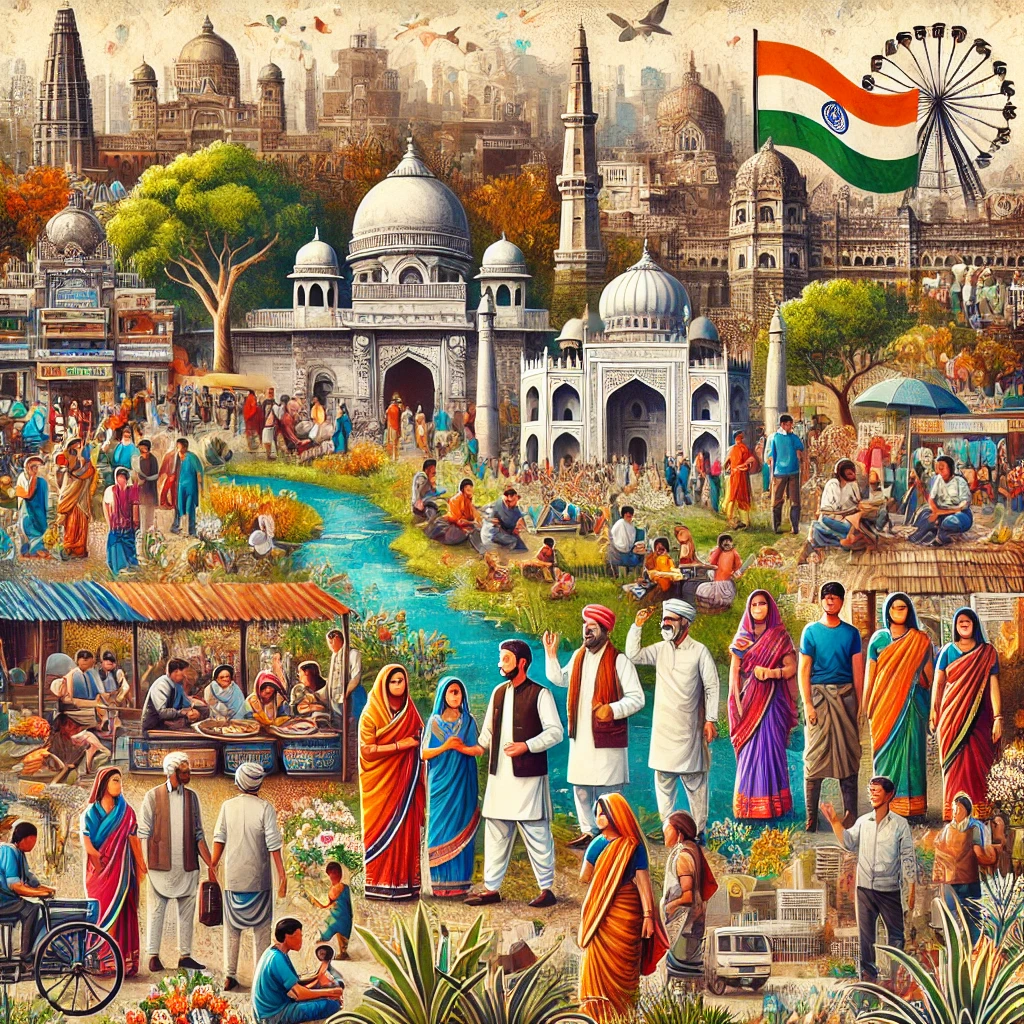
Madhya Pradesh, known as the “Heartland of India”, is socially and demographically diverse. Different castes, tribes, religions, and languages coexist in the state, reflecting India’s cultural unity and pluralistic social structure.
1. Population
(i) Total Population (Census 2011)
- Total Population: 7,26,26,809 (7.26 crore)
- Male: 3,76,12,920
- Female: 3,50,13,889
- Population Rank: 5th in India
- Population Density: 236 persons per sq. km
- Population Growth Rate (2001–2011): 20.3%
(ii) Urban and Rural Population
- Rural Population: 72.37%
- Urban Population: 27.63%
The rural population mainly depends on agriculture and forest-based livelihoods.
(iii) Sex Ratio
- 931 females per 1000 males
- Lower than the national average of 943
(iv) Literacy Rate
- Total: 70.6%
- Male: 80.5%
- Female: 60.0%
Literacy levels are comparatively lower in rural and tribal regions.
2. Structure of Society
(i) Religious Structure
Despite religious diversity, the state maintains social harmony.
(ii) Caste Structure
Scheduled Castes (SC)
- 15.62% of total population
- Major groups: Chamar, Kori, Valmiki
Scheduled Tribes (ST)
- 21.10% of total population
- Major tribes: Gond (largest), Bhil, Baiga, Korku, Saharia
(iii) Languages
- Official Language: Hindi
- Regional Dialects: Malvi, Bagheli, Bundeli, Nimari, Gondi
3. Social Structure and Characteristics
(i) Tribal Society
Madhya Pradesh is the largest tribal state of India. Tribal communities depend on forests, agriculture, and natural resources.
- Baiga: Knowledge of herbs and natural medicine
- Bhil: Archery skills and traditional dances
- Gond: Folk art and painting
(ii) Rural Society
- Agriculture as the main occupation
- Strong belief in traditions and collectivism
(iii) Urban Society
- Major cities: Indore, Bhopal, Gwalior, Jabalpur
- Higher levels of education and industrialization
- Modern lifestyle with traditional values
4. Social Problems and Challenges
- Gender Inequality: Low sex ratio, limited women employment
- Tribal Backwardness: Poor education and health facilities
- Poverty: High in rural areas
- Social Divisions: Caste and community-based disparities
5. Efforts by the State Government
Women Empowerment
- Ladli Laxmi Yojana
- Chief Minister Kanya Vivaah Yojana
Education and Tribal Development
- Sarva Shiksha Abhiyan
- Hostels and schools in tribal areas
- Forest Rights Act
Poverty Alleviation
- MNREGA
- Self-employment schemes
6. Culture and Traditions
- Festivals: Diwali, Holi, Dussehra
- Tribal Festivals: Bhagoria Haat, Karma
- Fairs: Kumbh Mela (Ujjain), Tansen Music Festival (Gwalior)
Economy of Madhya Pradesh
Madhya Pradesh has a diversified and growing economy based on agriculture, mineral resources, industries, and tourism. Its central location makes it strategically important for trade and industrial development.
1. Agriculture

⭐ Editor's Choice
Discover a highly rated product selected for its quality, functionality, and positive customer feedback.
View Details & Reviews →(i) Role in Economy
- About 70% population depends on agriculture
- Contribution to GSDP: ~30%
(ii) Major Crops
- Kharif: Soybean, paddy, maize
- Rabi: Wheat, gram, mustard
- Known as the “Dal Bowl of India”
- Also called the “Soybean State”
(iii) Irrigation
- Major rivers: Narmada, Chambal, Tapti
- 45% agricultural land irrigated
- Major projects: Indira Sagar, Bargi Dam
(iv) Government Schemes
- PM Kisan Samman Nidhi
- Chief Minister Kisan Welfare Scheme
- Crop Insurance Scheme
2. Mineral Resources
- Leading producer of diamond, limestone, dolomite, copper
- Coal fields: Singrauli, Umaria
- Panna district famous for diamond mining
3. Industry
(i) Contribution
- Industries contribute about 25% to GSDP
(ii) Major Industries
- Cement: Katni, Satna, Rewa
- Textiles: Chanderi, Maheshwari
- Food Processing: Indore, Bhopal, Gwalior
- Chemicals & Fertilizers: Nagda, Neemuch
- Pharmaceuticals: Indore, Bhopal
(iii) Industrial Areas
- Pithampur – Automobile & Pharma hub
- Mandideep – Industrial Park
4. Service Sector
- Contribution to GSDP: ~45%
- Tourism, IT & BPO, education, healthcare
5. Tourism Industry
- Called the “Tourist State of India”
- Religious: Ujjain, Omkareshwar
- Cultural: Khajuraho, Sanchi
- Natural: Kanha, Bandhavgarh, Pachmarhi
6. Fiscal Situation and GSDP
- GSDP (2022–23): Approx ₹13 lakh crore
- Contribution to national economy: 3.5%
7. Social and Economic Challenges
- Poverty and unemployment
- Rural-urban inequality
- Education and health gaps
- Water scarcity
8. Future Prospects
- Agricultural modernization
- Mineral-based industries
- IT parks and startups
- Environmental conservation
Conclusion
The population, society, and economy of Madhya Pradesh together reflect the true character of India’s heartland. With sustained reforms in education, industry, agriculture, and social welfare, the state has the potential to play a major role in India’s future economic growth.
Related Internal Links
Culture and Traditions of Madhya Pradesh
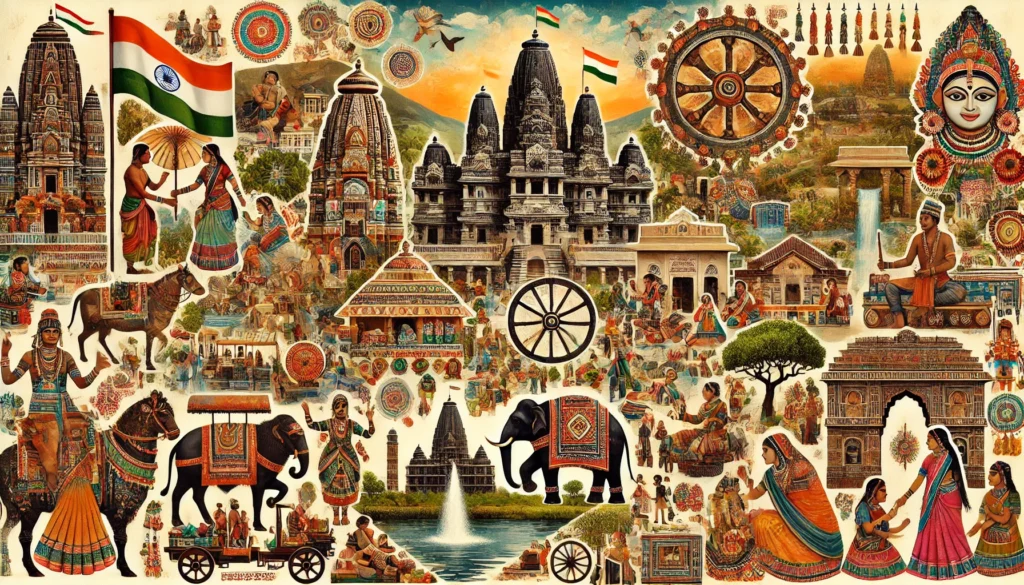
Madhya Pradesh is often called the “Cultural Heart of India”. The culture of the state is a unique amalgamation of diversity, traditions, and artistic expression. Its historical heritage, tribal traditions, folk art, music, dance, and religious richness together form the cultural soul of Madhya Pradesh.
1. Religious and Cultural Diversity
(i) Religious Diversity
- Hinduism: Mahakaleshwar (Ujjain), Omkareshwar, Sharda Temple (Maihar)
- Jainism: Khajuraho, Sonagiri, Kundalpur
- Buddhism: Sanchi Stupa
- Other religions: Christianity, Sikhism, Islam, and tribal faiths
(ii) Cultural Diversity
The cultural diversity of Madhya Pradesh is reflected in its many ethnic and religious communities. Each community follows its own customs, traditions, and rituals, contributing to the state’s composite culture.
2. Folk Art and Traditional Crafts
(i) Folk Art
- Gond Painting: Based on nature, folklore, and myths
- Mandana Painting: Traditional wall and floor art
- Bhil Painting: Use of dots and colorful symbols
(ii) Handicrafts and Textiles
- Chanderi and Maheshwari sarees
- Metal crafts and jewellery
- Wood and stone carving (Khajuraho, Gwalior)
3. Folk Dance and Music
(i) Folk Dances
- Rai Dance – Bundelkhand region
- Karma Dance – Gond and Baiga tribes
- Phag Dance – Holi festival
- Wedding and celebratory dances
(ii) Folk and Classical Music
- Bundeli folk songs and heroic ballads
- Nirguni bhajans of Kabir and saints
- Gwalior Gharana of classical music
- Tansen Music Festival
4. Festivals and Fairs
(i) Religious and Social Festivals
- Diwali and Holi
- Navratri and Durga Puja
- Bhagoria Market – Bhil tribes
- Karma Festival – Gond tribes
(ii) Important Fairs
- Simhastha Kumbh (Ujjain)
- Khajuraho Dance Festival
- Chanderi Festival
- Tansen Music Festival (Gwalior)
5. Tribal Culture and Traditions
(i) Major Tribes
- Gond
- Bhil
- Baiga
- Korku
- Saharia
(ii) Lifestyle and Beliefs
- Nature- and forest-based lifestyle
- Festivals like Karma, Sarhul, Bhagoria
- Nature worship and ancestor veneration
6. Food and Cuisine
(i) Traditional Dishes
- Dal-Bafla
- Indori corn-based dishes
- Rogan Josh and kebabs
- Malwa sweets
(ii) Local Drinks
- Mahua liquor
- Sharbat and Thandai
Major Tourist Places of Madhya Pradesh
Madhya Pradesh is also known as the “Tourist State of India”. Its historical monuments, religious sites, natural beauty, and wildlife sanctuaries attract tourists from India and abroad.
1. Historical and Cultural Sites
Khajuraho (Chhatarpur)
- UNESCO World Heritage Site
- Kandariya Mahadev and Lakshman Temples
- Khajuraho Dance Festival
Sanchi (Raisen)
- Great Stupa
- Ashoka Pillar
Gwalior Fort
- Mansingh Palace
- Gujari Mahal Museum
Orchha (Tikamgarh)
- Raja Ram Temple
- Jahangir Mahal
Bhimbetka Caves
- Prehistoric rock paintings (30,000 years old)
2. Religious Places
- Mahakaleshwar – Ujjain
- Omkareshwar – Khandwa
- Amarkantak – Origin of Narmada and Son
- Chitrakoot – Ramayana-linked site
3. Natural Sites and Wildlife
- Pachmarhi – Hill station
- Kanha and Bandhavgarh national parks
- Satpura National Park
- Bhedaghat – Marble Rocks and Dhuandhar Falls
4. Urban Tourist Centers
- Bhopal – City of Lakes
- Indore – Business capital
- Ujjain – Religious and cultural hub
Current Identity of Madhya Pradesh
Today, Madhya Pradesh is emerging as a major state of India with economic strength, cultural richness, and historical importance. Its identity is shaped by agriculture, industry, culture, tourism, and social development.
1. Economic Identity
- Agriculture-based economy
- Major crops: Wheat, rice, soybean, maize
- Rich mineral resources and coal production
- Growth in power and solar energy
2. Cultural and Religious Identity
- Khajuraho, Sanchi, Bhimbetka
- Mahakaleshwar, Omkareshwar, Amarkantak
- Strong folk traditions in art and literature
3. Natural and Tourism Identity
- National parks and wildlife sanctuaries
- Lakes, forests, mountains
⭐ Editor's Choice
Discover a highly rated product selected for its quality, functionality, and positive customer feedback.
View Details & Reviews →4. Urbanization and Development
- Rapid growth of cities like Indore and Bhopal
- Indore among the cleanest cities of India
5. Social and Political Identity
- Strong tribal and folk culture
- Progress in education and health
- Active political participation at national level
Conclusion
The culture, traditions, tourism, and evolving identity of Madhya Pradesh together reflect harmonious development. Its ancient heritage, religious importance, natural beauty, and social diversity firmly establish Madhya Pradesh as one of India’s leading states and the true heartland of the nation.