
Introduction – My First Encounter with Buddhism
In the ups and downs of life, there are moments when we are forced to look within ourselves. I too went through a phase when my mind was confused, restless, and constantly searching for peace. In that inner search, I unexpectedly came across the teachings of Buddhism – a path that not only changed my thoughts but also transformed the way I looked at my entire life. That is why the Origin of Buddhism is not just a historical topic for me, but a deeply personal and transformative journey.
An Ordinary Day That Changed My Perspective
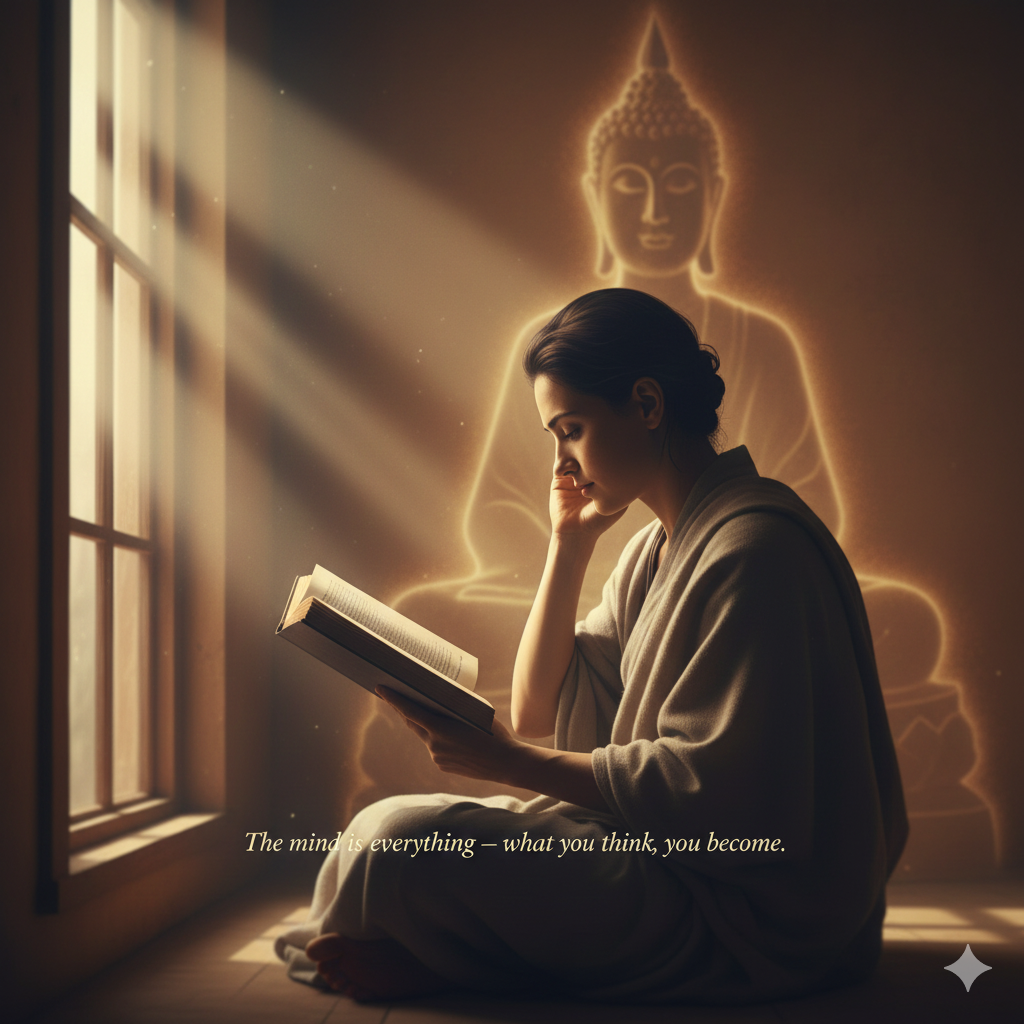
It was a completely ordinary day on the outside, but for me it turned out to be a turning point. Like every other day, I was lost in worries – pressure of work, complications in relationships, and a mind that refused to stay still. In the middle of that mental noise, I happened to read a simple line: “The mind is everything – what you think, you become.” This one sentence struck me deeply. For the first time, I realized that maybe the real problem was not in life itself, but in the way I was seeing and reacting to life. That small moment quietly opened the door that led me towards Buddhism and sparked my curiosity about the Origin of Buddhism.

Example Product Title
👉 Buy on AmazonDisclosure: As an Amazon Associate, I earn from qualifying purchases.
The First Time I Truly Felt the Name “Buddha”
Since childhood I had heard the name “Buddha” many times – in textbooks, temples, and stories. But one day, when I started reading about his life in detail, something shifted inside me. I understood that Buddha was not merely a historical figure, but a state of awakened awareness. The simplicity of his thoughts, the depth of his compassion, and the silence in his gaze (as described in books and images) touched me from within. It felt as if a gentle voice inside was saying, “Pause and look at your own mind. The peace you are searching for outside has always been quietly present within you.” This realization motivated me to explore the Origin of Buddhism more seriously.
Mental Confusion and the Search for Inner Peace
At that time my inner world was full of conflict – worries about the future, regrets about the past, and dissatisfaction with the present. I felt as if I was constantly running, without really knowing why or where. In this confusion, I began to explore Buddhist ideas and teachings. Gradually I realized that the real struggle was not with the outer world, but with my own uncontrolled mind. Buddhism taught me to observe my thoughts, to acknowledge my emotions instead of suppressing them, and to understand myself with honesty and compassion.
A Book, an Incident, or a Person Who Inspired Me
The visible beginning of this journey started with a book – a simple introduction to the life and teachings of Gautama Buddha. As I turned each page, it felt like someone was gently holding my hand and guiding me. Every chapter seemed to answer a question that I had never fully expressed, but had always carried within. Later, a few real-life incidents and some insightful people I met strengthened this connection even more. Slowly I came to understand that Buddhism is not just a religion or a set of rituals; it is a conscious, peaceful, and balanced way of living. That realization is what makes this article, and the topic of the Origin of Buddhism, so personally meaningful to me.
Ancient India – The Social Background of the Rise of Buddhism
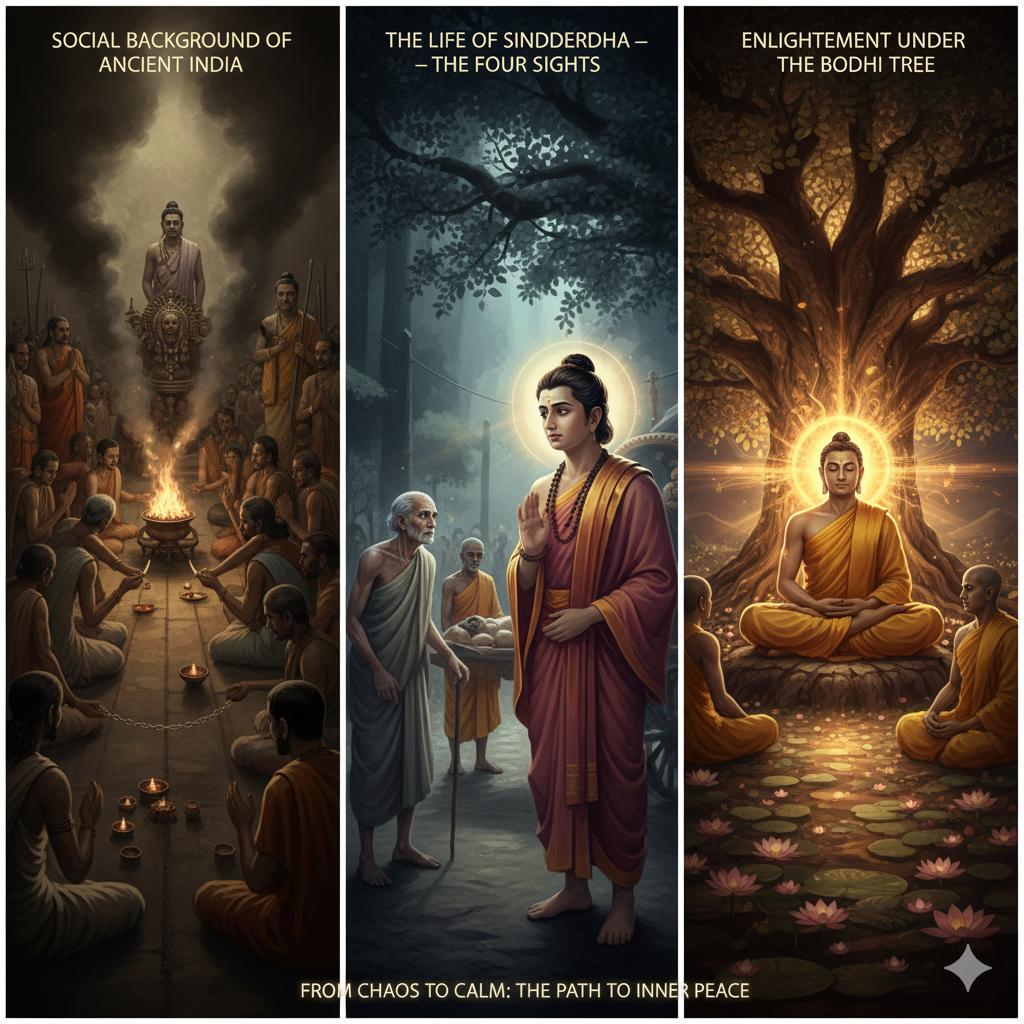
To understand the rise of Buddhism, it is essential to understand the social and religious background of ancient India. Buddhism did not emerge in a vacuum; it arose in a society struggling with many layers of inequality, rigid traditions, and deep human suffering. On one side, there was a strict caste hierarchy that divided people into higher and lower groups, and on the other side, religion was increasingly reduced to complex rituals rather than Inner Peace. The lives of ordinary people were full of hardship, exploitation, and insecurity. Without this context, the Origin of Buddhism cannot be fully appreciated.
Social Inequality and Human Suffering
The society of that time was clearly divided into four main varnas – Brahmins, Kshatriyas, Vaishyas, and Shudras. A person’s birth largely decided their social status, opportunities, and level of respect. The upper varnas enjoyed special access to education, religious rituals, and power, while the lower groups had to live a life of hard labour, service, and subordination. This system created deep social wounds and a constant sense of injustice, which later became one of the important factors behind the Origin of Buddhism.
For many people, doors to learning, worship, and social respect were almost closed. They were seen more as instruments of work than as complete human beings with dignity and rights. This inequality was not just economic; it caused psychological and spiritual pain as well. In such a suffocating environment, the idea that every human being has equal worth was nothing less than revolutionary – and this is exactly what Buddhism began to proclaim.
Religion as Ritual – Versus Inner Peace
Over time, the true spirit of religion – inner transformation, wisdom, and compassion – began to fade into the background, and outward rituals took centre stage. Grand sacrifices, complex ceremonies, lengthy chanting of mantras, and impressive public rituals were seen as the main way to gain merit and liberation. These rituals were often expensive and difficult for ordinary people to perform, and the knowledge of them remained in the hands of a small priestly class.
Many people, even while performing religious duties, felt empty and unchanged inside. They prayed, made offerings, and followed customs, yet anxiety, fear, and dissatisfaction remained. Religion became more about “What have I done outwardly?” than “What kind of person am I becoming inwardly?” Questions like “Am I more compassionate, more honest, more peaceful?” started losing their importance.

Example Product Title
👉 Buy on AmazonDisclosure: As an Amazon Associate, I earn from qualifying purchases.
In this atmosphere, Buddhism raised a quiet but powerful question: Is true religion merely about external acts, or is it about freeing the mind from ignorance, greed, and hatred? Buddha’s message shifted the focus from ritual fires outside to the fire of craving and anger burning inside the human heart. This shift—from ritual to inner awareness—became one of the key reasons behind the Origin of Buddhism and its growing appeal among thoughtful people.
Similar Problems I See in My Own Life and Times
When I read about the social background of ancient India, I often feel that although the forms have changed, some fundamental problems remain the same today. Even now, we see various kinds of inequality – economic gaps, social discrimination, and the constant race for status and recognition. People may not always use the word “caste” openly, but subtle hierarchies and labels still exist in many spaces.
On the religious and spiritual level too, outward show sometimes becomes more important than inner honesty. We may go to temples, mosques, churches, or spiritual events, but do not always pause to ask: “Am I becoming a kinder human being? Am I a little less angry, less jealous, less harsh than before?” I have seen this tendency in society, and honestly, I have seen it in myself as well.
There have been times when I myself got lost in appearances – in looking “right” from the outside, while ignoring what was happening within my own mind. Reading about Buddhism helped me realize that true change does not begin with labels, identities, or rituals; it begins when I dare to look within and accept what I see there.
In this way, the social background of ancient India does not remain just a historical description for me. It becomes a mirror in which I can see my own time and my own life. The same human tendencies—towards division, show, and imbalance—still exist. And that is precisely why the message of Buddhism— of equality, inner awareness, and compassion— continues to be deeply meaningful even today.
Core Principles of Buddhism – From Understanding to Living
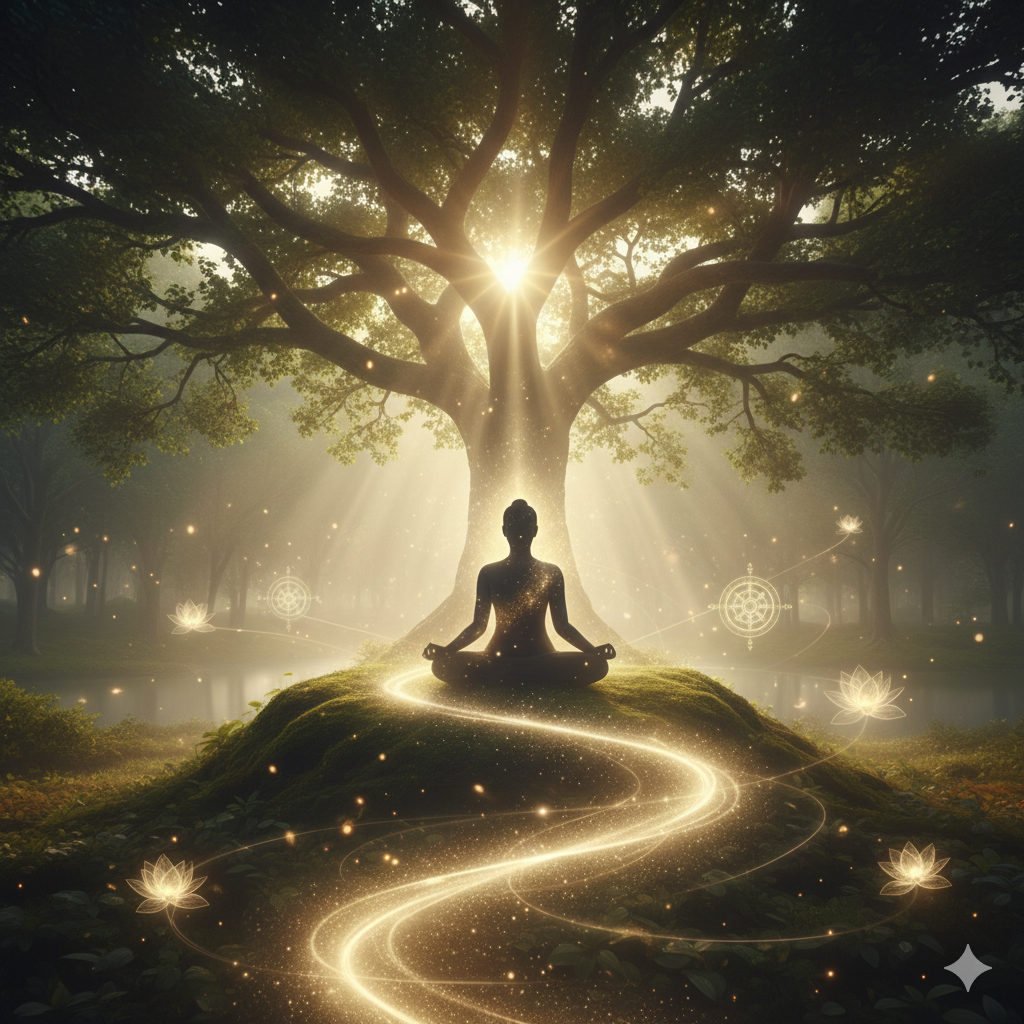
When we hear the word “knowledge,” we often think of books, lectures, or religious scriptures. But in Buddhism, true knowledge means seeing life as it really is – without running away from it, without decorating it, and without lying to ourselves. It is the courage to look directly at our own pain, fear, habits, and inner truth. What I love most about Buddhist principles is that they are not just meant to be studied, they are meant to be lived. These living insights form the philosophical core behind the Origin of Buddhism.
The Four Noble Truths, the Noble Eightfold Path, the Middle Path, and the values of compassion, loving-kindness, and non-violence gradually started shaping the way I think, speak, and act in daily life. They did not change my outer world overnight, but they deeply changed the way I relate to that world.
Four Noble Truths – Suffering, Cause, Cessation, and Path

Example Product Title
👉 Buy on AmazonDisclosure: As an Amazon Associate, I earn from qualifying purchases.
At the heart of Buddhism are the Four Noble Truths. The first truth says: there is suffering in life. It does not mean that life is only suffering, but that no one’s life is completely free from pain – illness, separation, failure, insecurity, fear, and inner conflicts. The second truth says: suffering has a cause. Most of the time, that cause is not outside us, but in our own craving, attachment, and ignorance. Understanding this insight is essential to grasp the Origin of Buddhism.
The third truth says: suffering can end. If the cause can be understood and released, then the suffering connected to it can also decrease. The fourth truth says: there is a path that leads to the end of suffering – this is known as the Noble Eightfold Path. For me, these Four Noble Truths changed the way I looked at my problems. Instead of only saying “I am suffering,” I slowly started asking, “Why am I suffering, what is the root, and what can I change within myself?” Shifting responsibility from the outside world to my own mind was not easy, but it was the beginning of real freedom.
Noble Eightfold Path – From Right View to Right Mindfulness
The Noble Eightfold Path, in simple language, is a practical roadmap for living wisely and peacefully. It has eight interconnected parts: right view, right intention, right speech, right action, right livelihood, right effort, right mindfulness, and right concentration. These are not rigid rules, but clear directions to observe how we are living.
It invites us to ask: “What am I thinking? What intention is behind my words and actions? Is my way of speaking, working, and living increasing peace or increasing confusion – for myself and for others?” When I tried to apply these points in my own life, I realized that sometimes my goals were good, but my way of speaking or acting was harsh or careless. The Eightfold Path helped me see that having a “right goal” is not enough – the “way” to that goal also needs to be kind, mindful, and honest.
Middle Path – From Extremes to Balance
The Middle Path, taught by Buddha, felt extremely practical and realistic to me. It is neither a life of blind indulgence nor a life of self-torture. Not overworking to the point of collapse, and not drowning in laziness either. Not glorifying our ego, and not hating ourselves. In almost every area of life, extremes may look attractive for a while, but in the long run they create exhaustion, guilt, and imbalance.
I noticed that many times I pushed myself too hard in work, ignoring my health, rest, and mental space. Then suddenly, I would feel like quitting everything out of frustration. The Middle Path taught me the value of steady, balanced steps – balanced food, balanced rest, balanced effort, and balanced speech. It gently pulled me out of the mindset of “either everything or nothing,” and helped me respect small consistent progress. This balanced philosophy is a defining feature of the Origin of Buddhism.
My Life Struggles and the Light of Buddhist Thoughts
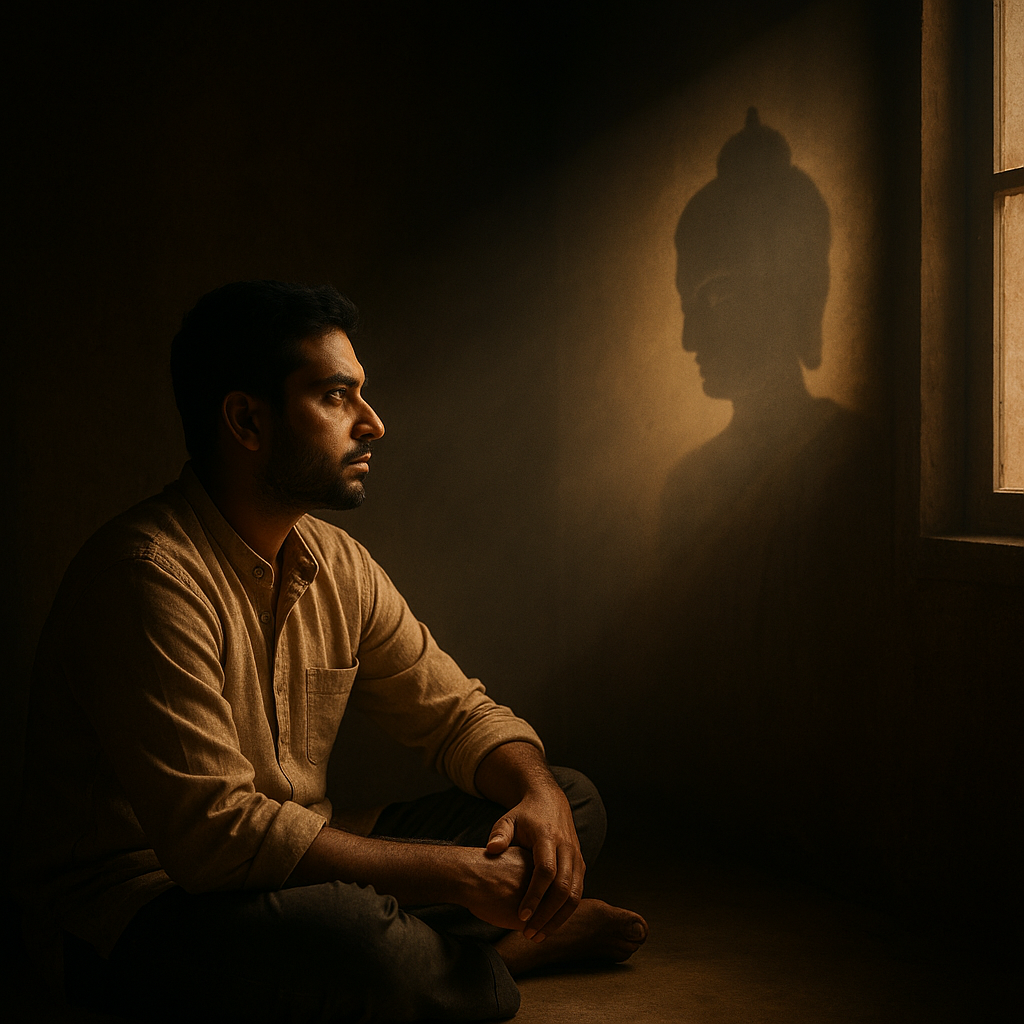
My connection with Buddhism was not the result of a sudden religious decision, but the outcome of a long and often painful inner journey. On the surface, life looked “normal” – work was going on, relationships existed, daily routine was there – but deep inside, there was confusion, exhaustion, and a strange emptiness that I could not easily explain in words. It was this silent inner turbulence that gradually pushed me to look within, and in that process, my curiosity about the Origin of Buddhism began to deepen like a quiet source of light.
In this section, I want to share a few personal struggles where it felt as if everything was falling apart – and how, in those very dark moments, Buddhist ideas helped me develop mental strength, balance, and a new way of seeing myself and the world. This is not a perfect story; it is an honest one. Its imperfections are exactly what make it real.
A Difficult Phase – When Everything Seemed to Fall Apart

Example Product Title
👉 Buy on AmazonDisclosure: As an Amazon Associate, I earn from qualifying purchases.
I clearly remember that phase of life when so many things went wrong at the same time. There was pressure at work, results were not matching expectations, and the fear of financial instability was constantly hanging over my head. On top of that, misunderstandings had crept into some close relationships, which made me feel even more alone. It genuinely felt as if the ground beneath my feet was slipping away.
Around this time, I happened to pick up a book related to Buddhism. It was not a planned spiritual step – just a mixture of curiosity and desperation. But as I read through its pages, I felt as if someone was gently reading my inner confusion and then offering quiet answers. When I read the line, “There is suffering in life,” I strangely felt relieved. Gradually I realized that understanding the Origin of Buddhism was not just about history, but about understanding my own human experience.
Mental Strength Gained from Buddhist Teachings
Slowly, I began to understand that Buddhist ideas would not magically erase my problems, but they could give me a new inner strength to face them. The Four Noble Truths, the Noble Eightfold Path, and the emphasis on compassion and mindfulness moved from being just philosophical concepts to becoming practical tools for survival and growth. These teachings, rooted in the Origin of Buddhism, started reshaping the way I responded to difficulties.
The Importance of Buddhism in Today’s World – A Message for the Reader
We are living in an age where external comforts have increased, but Inner Peace seems to be decreasing. Mobile phones, internet, social media, fast-paced careers, competition, relationship pressure – in the middle of all this, we look “connected” from the outside, but feel deeply lonely and exhausted inside. Stress, depression, anxiety, comparison, and inferiority complex have become common problems of our time. In such an environment, Buddhism is not just an ancient religion connected to the Origin of Buddhism, but a living art of managing the mind.

Example Product Title
👉 Buy on AmazonDisclosure: As an Amazon Associate, I earn from qualifying purchases.
Buddhist teachings do not tell you to leave everything and run away to the forest. They teach you how to live more consciously, more balanced, and more compassionately in the very same life – with the same job, family, and responsibilities. That is why, in today’s world of constant pressure and distraction, the wisdom that emerged from the Origin of Buddhism feels more relevant than ever.
A Calm Path Amid Stress, Depression, and Confusion
Today many people appear normal from the outside, but inside they are drowning in stress and anxiety. Work targets, academic pressure, uncertainty about the future, unstable relationships, and the constant race to look “perfect” on social media – together all of this creates deep mental fatigue.
In such a situation, Buddhism offers two powerful tools – Acceptance and Mindfulness. Acceptance means not running away from your pain, stress, or fear, but honestly acknowledging, “Yes, I am struggling right now.” Mindfulness means learning to watch your mental state, thoughts, and emotions without running away from them and without judging them. These practical insights, rooted in the Origin of Buddhism, continue to guide millions even today.

Example Product Title
👉 Buy on AmazonDisclosure: As an Amazon Associate, I earn from qualifying purchases.