
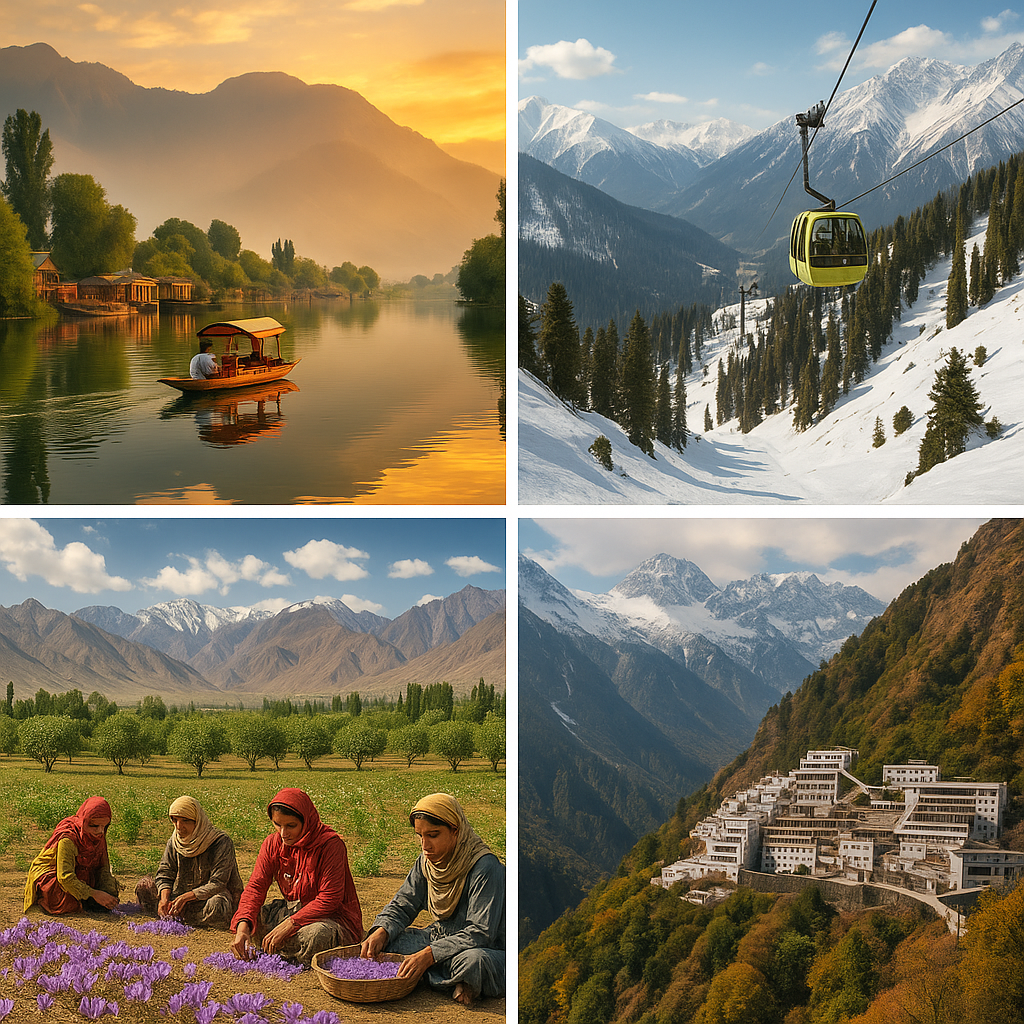
Why is Jammu and Kashmir called “Paradise on Earth”?
From snow-covered Himalayas to Dal Lake houseboats, this region is one of the most beautiful and strategically important parts of India.
In this complete 2026 guide, explore geography, culture, tourism, economy, and Article 370 — all in one place.
Jammu and Kashmir — Paradise on Earth
Introduction
Jammu and Kashmir is a union territory in northern India, celebrated for its spectacular landscapes, rich cultural heritage, and complex history. Often described as “Paradise on Earth,” the territory comprises diverse regions — principally Jammu and the Kashmir Valley (Ladakh is now a separate union territory since 2019).
Geography & Major Regions
The territory presents a striking geographical variety, each area with its own identity and attractions.
Kashmir Valley
Nestled within the Himalayas, the Kashmir Valley is world-famous for its lush valleys, lakes, and snow-clad mountains. Towns like Srinagar, Gulmarg, Pahalgam and Sonamarg are celebrated for scenery and outdoor activities.
Jammu
The Jammu region blends hilly terrain and plains and is widely known as the “City of Temples.” It is an important centre for religious tourism.
Karakoram & Surrounding Ranges
Northern ranges including parts of the Karakoram contribute majestic high-altitude landscapes to the territory’s terrain.
Boundaries & Area
- North: China
- West: Pakistan
- East: Ladakh (union territory)
- South: Himachal Pradesh and Punjab
- Total area: approximately 55,673 sq. km (approx.)
History & Administration
Jammu and Kashmir has a long and layered history. During the partition of India in 1947, Maharaja Hari Singh acceded to India. Until 2019 the region enjoyed special provisions under Articles 370 and 35A of the Indian Constitution — those provisions were removed in August 2019. Since 2019, the region has been administered as union territories: Jammu & Kashmir and Ladakh (Ladakh was separated in 2019).
Administrative Seats
The territory observes a summer capital and a winter capital tradition:
- Summer capital: Srinagar
- Winter capital: Jammu
Culture & Traditions
The culture of Jammu and Kashmir is a rich fusion of Hindu, Muslim, Sikh and Buddhist traditions. Religious diversity and community coexistence form a key part of the region’s identity.
Languages
Major languages spoken in the region include Kashmiri, Dogri, Urdu, Hindi and English.
Arts, Crafts & Cuisine
- Handicrafts: Pashmina shawls, Kashmiri carpets, paper-mâché, sozni embroidery and fine wood carving are internationally renowned.
- Food & Drink: Wazwan is the traditional multi-course Kashmiri feast. Kashmiri kahwa (green tea with spices) and noon chai (salted pink tea) are local favourites.

⭐ Editor's Choice
Discover a highly rated product selected for its quality, functionality, and positive customer feedback.
View Details & Reviews →Tourism — Places to Visit
Tourism is central to the region’s identity and economy. The area attracts visitors for natural beauty, pilgrimage sites and winter sports.
Key Destinations
- Srinagar: Dal Lake, houseboats, Nishat Bagh and Shalimar Bagh.
- Gulmarg: Skiing, the Gulmarg Gondola and alpine meadows.
- Pahalgam: Scenic trekking, riverside views and nature trails.
- Vaishno Devi (Jammu): A major pilgrimage site that draws millions of devotees annually.
- Amarnath: Famous for the ice Shivlinga in the Amarnath cave (seasonal pilgrimage).
Activities
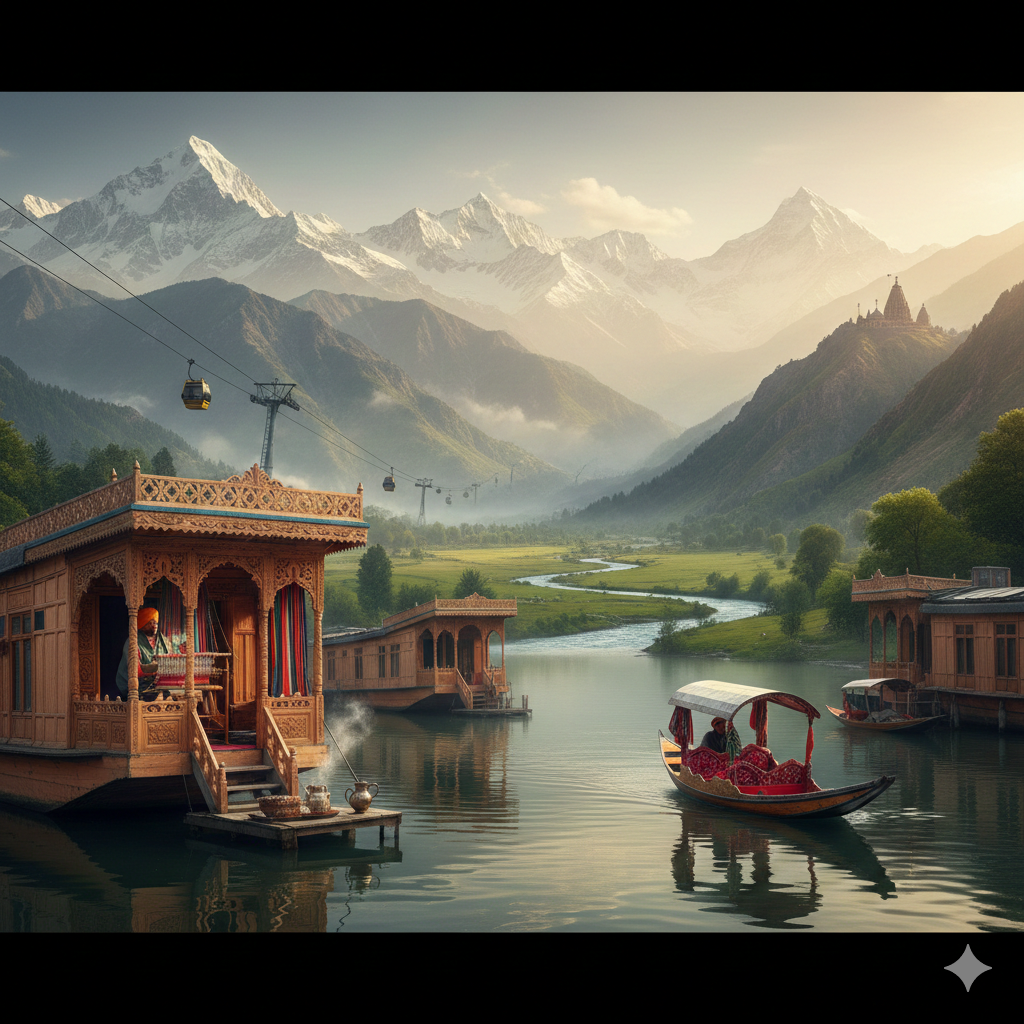
- Shikara rides on Dal Lake and staying in traditional houseboats.
- Skiing and snowboarding in Gulmarg during winter months.
- Trekking, trout fishing, and nature photography in many valleys.
Economy & Livelihood
The economy combines agriculture, horticulture, handicrafts and tourism. Many local livelihoods depend directly on these sectors.
Agriculture & Horticulture
- Major crops and products: saffron, apples, walnuts and almonds.
- Kashmiri apples and saffron are particularly prized and contribute significantly to the local economy.
Handicrafts & Industry
Handwoven shawls, carpets and embroidered textiles are important export items and a hallmark of Kashmiri craftsmanship.
Important Facts & Social Notes
- Festivals: Eid, Diwali, Baisakhi, Navreh and other local observances reflect the region’s plural traditions.
- Aquatic resources: Dal Lake and the Jhelum River are central natural and cultural features in the valley.
- Conflict & Recovery: The region has experienced territorial disputes and episodes of violence in the past. Since the constitutional changes of 2019 the administrative framework has changed and the area continues to evolve politically and socially.
Conclusion — Why Jammu and Kashmir Matters
Jammu and Kashmir is simultaneously a place of extraordinary natural beauty and deep cultural heritage. Its landscapes, crafts, festivals, and cuisine offer an experience that is both humbling and inspiring. Whether you come for pilgrimage, adventure, or a quiet stay by the lake, the region leaves a lasting impression and invites respectful curiosity about its people and history.
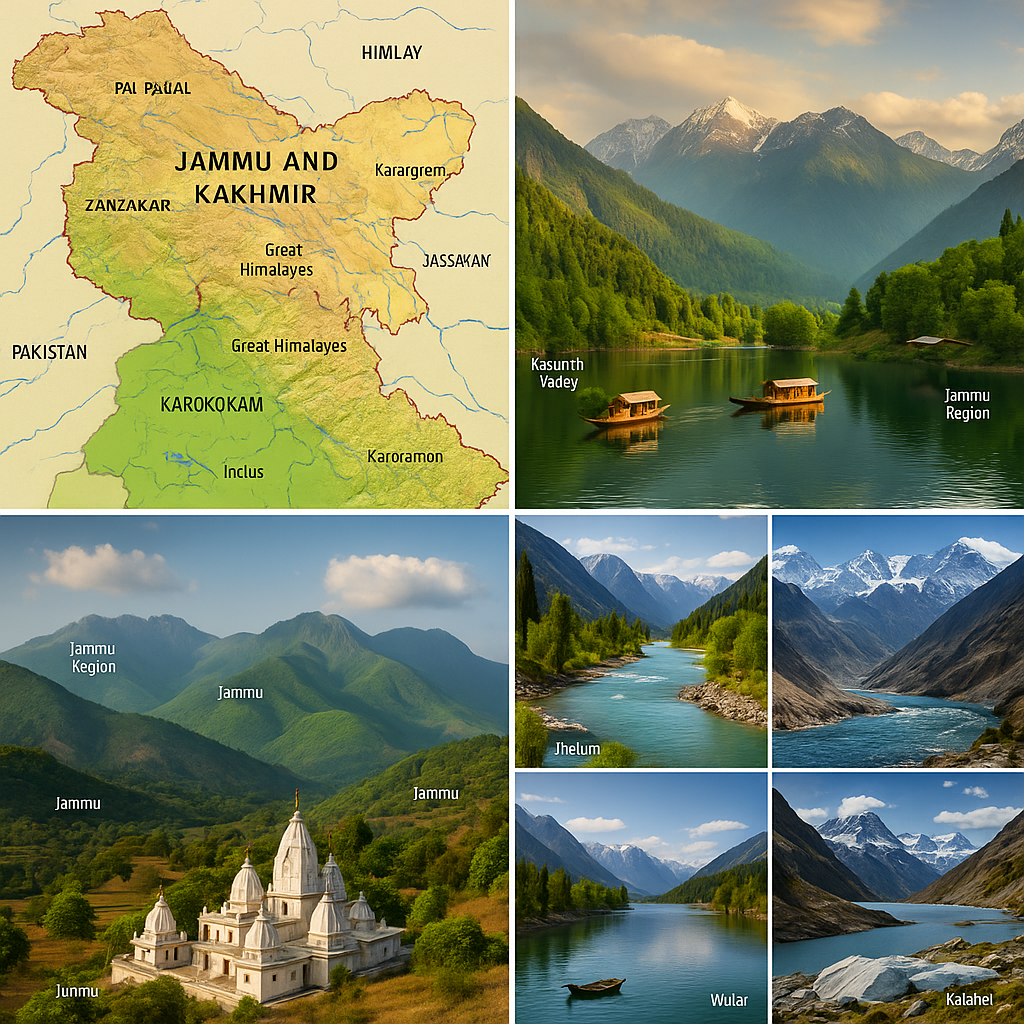
Geographical Structure of Jammu and Kashmir
Jammu and Kashmir is renowned for its distinctive geographical features. Located between the Himalayan mountain ranges, the region is known for its high mountains, valleys, rivers, and lakes. Its geographical structure can be understood by dividing it into various natural regions.
1. Division of Land
Jammu and Kashmir can be divided into three major geographical regions:
- Kashmir Valley
- Jammu Region
- Pir Panjal and Zanskar Region
Kashmir Valley
Location: Situated between the Himalayas and Pir Panjal ranges.
Key Features
- Crescent-shaped valley, approx. 135 km long and 32 km wide.
- Average altitude: 1600 m.
- Climate: Temperate — snow in winters and pleasant summers.
- Major Lakes: Dal Lake, Wular Lake, Manasbal Lake.
- Major Rivers: Jhelum River and its tributaries.
Jammu Region
Location: Located in the southern part, comprising both mountains and plains.
Key Features
- Altitude: 300 to 1000 m above sea level.
- Known as the “City of Temples.”
- Adjacent to the Shivalik Hills and Punjab plains.
- Climate: Subtropical.
- Major Rivers: Chenab, Tawi, Ravi.
Pir Panjal and Zanskar Region
Location: Pir Panjal forms a sub-range of the Himalayas, while the Zanskar Range lies in the upper Himalayas.
Key Features
- High snow-covered mountains ideal for trekking and mountaineering.
- Average altitude: 3000–4500 m.
- Harsh climate and sparse population.
2. Major Mountain Ranges
The geographical structure of Jammu and Kashmir is defined by several significant mountain ranges:
(i) Pir Panjal Range
- Forms the southern boundary of the Himalayas.
- Famous tourist destinations like Gulmarg and Pahalgam lie in this region.
- Divides the Kashmir Valley from the Outer Himalayas.
(ii) Great Himalayas
- Located north of the Kashmir Valley.
- Mountain peaks rise above 6000 m, such as Nanga Parbat.
- Known for glaciers and heavy snowfall.
(iii) Karakoram Range
- Lies along the India–China border.
- Home to K2 (Godwin-Austen), the world’s second-highest peak.
- Includes Siachen Glacier — the world’s highest battlefield.
3. Rivers and Water Resources
(i) Jhelum River
- Lifeline of the Kashmir Valley.
- Originates from Verinag Spring (not Wular Lake; drains into Wular).
- Srinagar is located along its banks.
(ii) Chenab River
- Flows through the Jammu region.
- Supports several hydropower projects.
(iii) Ravi and Tawi Rivers
- Important for agriculture and irrigation in the Jammu region.
(iv) Indus River
- Flows through the Zanskar and Karakoram region.
- One of India's major trans-Himalayan rivers.
4. Lakes and Glaciers
Major Lakes
- Dal Lake: Famous for houseboats and Shikaras.
- Wular Lake: India’s largest freshwater lake.
- Manasbal Lake: Known for its serene environment and trekking routes.
Major Glaciers
- Siachen Glacier: One of the highest and coldest glaciers in the world.
- Kolahoi Glacier: Primary source of the Jhelum River.
5. Flora and Fauna
Vegetation
- Dense forests cover large parts of the region.
- Major trees: Chinar, Deodar (Cedar), Pine.
- Horticulture crops: Apples, walnuts, almonds.
Wildlife
- Himalayan black bear
- Kashmir deer (Hangul)
- Snow leopard
- Monal pheasant
6. Climate
- Kashmir Valley: Temperate climate with snowy winters and cool summers.
- Jammu Region: Subtropical climate with hot, humid summers.
- Pir Panjal & Zanskar: Extreme cold with heavy snowfall.

⭐ Editor's Choice
Discover a highly rated product selected for its quality, functionality, and positive customer feedback.
View Details & Reviews →Kashmir Valley: A Complete Introduction
The Kashmir Valley is a major region of the Union Territory of Jammu and Kashmir. Known as “Heaven on Earth,” it is celebrated for its breathtaking natural beauty, rich culture, and historical significance.
Geographical Structure
- Location: Between the Himalayas and Pir Panjal ranges.
- Shape: Crescent-shaped valley (135 km × 32 km).
- Altitude: Approx. 1600 m above sea level.
Main Geographical Features
Mountains and Hills
The valley is surrounded by snow-covered mountain ranges.
Lakes
- Dal Lake
- Wular Lake
- Manasbal Lake
Rivers
- Jhelum River (lifeline of the valley; Srinagar lies along it)
Glaciers
- Kolahoi Glacier — main source of the Jhelum River
Climate of Kashmir Valley
- Summer: Pleasant (20°C–30°C)
- Autumn: Chinar trees turn red (Oct–Nov)
- Winter: Extremely cold; heavy snowfall (as low as –10°C)
- Spring: Flowers bloom (Mar–May)
Natural Beauty
- Lush green valleys
- Snowy mountains
- Flowing rivers
- Mughal Gardens: Nishat Bagh, Shalimar Bagh, Chashme Shahi
- Gulmarg and Pahalgam — meadows, horse rides, ski slopes
Cultural and Social Structure
Population
Kashmiri Muslims, Kashmiri Pandits, Sikhs, and some Buddhist communities.
Languages
Kashmiri (main), Urdu, Hindi, English.
Religion & Traditions
Islam is predominant; Sufi traditions have strong influence.
Arts and Crafts
- Pashmina shawls
- Kashmiri carpets
- Paper-mâché crafts
Festivals
- Eid
- Shivaratri (Herath)
- Navreh
- Tulip Festival
Economy of Kashmir Valley
Agriculture & Horticulture
- Major products: apples, saffron, walnuts, almonds.
- Kashmiri saffron is world-famous.
Tourism
- Srinagar, Gulmarg, Pahalgam, Sonamarg.
- Dal Lake and Shikara rides.
Handicrafts
Pashmina shawls and carpets form a major export sector.
Importance of Tourist Places
- Srinagar: Dal Lake, Mughal Gardens, Jama Masjid, Shankaracharya Temple.
- Gulmarg: Skiing, Gondola rides.
- Pahalgam: Natural beauty; base for Amarnath Yatra.
- Sonamarg: Glaciers and trekking routes.
Importance and Challenges
- Importance: A cultural, ecological, and scenic treasure of India.
- Challenges: Political Instability, terrorism, environmental damage, climate change.

Jammu: Complete Introduction
Jammu is a major region of the Union Territory of Jammu and Kashmir. Known as the “City of Temples,” it is famous for its religious sites, cultural heritage, and natural beauty. Jammu also serves as the winter capital of the Union Territory.
Geographical Structure
Location
The Jammu region is located in the northwestern part of India.
Boundaries
- North: Kashmir Valley
- South: Punjab
- West: Pakistan
- East: Himachal Pradesh
Altitude
Average elevation: 300 to 1000 meters above sea level.
Terrain
- A mix of plains and the Shivalik Hills.
- Rich in rivers and hill ranges.
Main Geographical Features
Mountains and Hills
- Shivalik Hills: Lower Himalayan range encircling the Jammu region.
- Trikuta Mountain: Famous for the sacred Vaishno Devi Shrine.
Rivers
- Chenab River: Largest river of Jammu, significant for hydropower.
- Tawi River: Considered the lifeline of Jammu.
- Ravi and Ujh Rivers: Important for irrigation and water supply.
Climate
- Subtropical climate.
- Summers: Hot and humid.
- Winters: Cool and pleasant.
History and Significance
Historical Background
- Mentioned in ancient texts like Rajatarangini and the Mahabharata.
- Stronghold of the Dogra kings.
- Maharaja Gulab Singh made Jammu the capital of the Dogra Empire.
Religious Significance
Jammu is renowned for its Hindu, Sikh, and Muslim pilgrimage destinations.
- Mata Vaishno Devi Temple
- Raghunath Temple
- Maa Baleshwar Temple
Cultural and Social Structure
Population and Communities
- Dogra
- Pahari
- Gujjar
Languages
Main languages spoken: Dogri, Hindi, Punjabi, Urdu.
Arts and Crafts
- Dogri paintings
- Wood carving
- Traditional textiles
Music and Dance
Dogri folk songs and dances are an important part of regional culture.
Festivals
- Lohri: Major harvest festival.
- Baisakhi: Celebrated with enthusiasm.
- Navratri: Lakhs of devotees visit Vaishno Devi during this time.
Economy
Agriculture and Horticulture
- Major crops: Wheat, paddy, maize.
- Suitable climate for horticulture.
Tourism
Tourism is a major contributor to the Jammu region. Millions visit Vaishno Devi every year.
Handicrafts and Industry
- Dogra embroidery and shawls
- Wood and metal carving
Tourist Spots
Religious Places
- Mata Vaishno Devi Temple: Located on Trikuta Mountain.
- Raghunath Temple: Dedicated to Lord Rama.
- Bahu Fort & Kali Temple: Major historic and religious site.
Natural Landmarks
- Patnitop: Popular hill station with serene forests.
- Surinsar & Mansar Lakes: Ideal for nature lovers.
Historical Sites
- Akhnoor Fort: Located along the Chenab River.
- Mubarak Mandi Palace: Former royal residence of Dogra kings.
Important Facts
- Jammu is known as the “City of Temples.”
- Trikuta Mountain is home to Vaishno Devi.
- Major religious tourism hub of India.
Ladakh: Complete Introduction
Ladakh was part of Jammu and Kashmir until 2019 when it was declared a separate Union Territory. Often called “Little Tibet” and the “Land of Mountains,” Ladakh is known for its breathtaking natural landscapes, Buddhist culture, and unique geography.

⭐ Editor's Choice
Discover a highly rated product selected for its quality, functionality, and positive customer feedback.
View Details & Reviews →Geographical Structure
Situation
- Located in northern India.
- Between the Himalayas and Karakoram ranges.
- Borders China and Pakistan.
Area
Total area: 59,146 sq km.
Altitude
Average elevation: 3000 m to 7000 m above sea level.
Geographical Division
- Leh: Known for Buddhist monasteries and Tibetan culture.
- Kargil: Muslim-majority region with rich heritage.
Main Geographical Features
Mountain Ranges
- Himalayan Range (South)
- Karakoram Range (North)
- Zanskar Range (Adventure and trekking hub)
Rivers
- Indus River: Main river of Ladakh.
- Shyok River: Flows through the Karakoram region.
- Nubra River: Major river of the Nubra Valley.
Lakes
- Pangong Tso: Famous saltwater lake shared with China.
- Tso Moriri: Major nature attraction.
- Tso Kar: Salt lake region.
Climate
- One of the driest regions in the world.
- Harsh winters: –30°C to –50°C.
History and Cultural Significance
History
- Known as the “Gateway to Tibet.”
- Important part of the ancient Silk Route.
- Ruled by the Namgyal Kingdom.
Religion and Culture
- Buddhism: Predominant in Leh.
- Islam: Major religion in Kargil.
- Hindu and Sikh communities also reside here.
Languages
Ladakhi, Tibetan, Hindi, Urdu, English.
Festivals
- Hemis Festival
- Losar (Tibetan New Year)
- Dospa Festival
Arts and Crafts
- Monastery sculptures and paintings
- Wood and metal carving
- Woolen clothes, Thangka paintings, Tibetan shawls
Economy
Agriculture & Animal Husbandry
- Barley, maize, mustard cultivation.
- Yak rearing is common.
Tourism
Ladakh is a hub for adventure tourism—ideal for trekking, motorbiking, camping, rafting, and mountaineering.
Major Tourist Attractions
Leh
- Leh Palace
- Shanti Stupa
- Thikse Monastery
Nubra Valley
- Double-hump camels
- Diskit Monastery
Pangong Tso
- Famous for changing colours and scenic beauty
Zanskar Valley
- Known for trekking routes
- Famous Chadar Trek on frozen Zanskar River
Kargil
- Site of the 1999 conflict
- Kargil War Memorial
Challenges and Prospects
Challenges
- Harsh geographical conditions
- climate change effects
- Border tensions and security concerns
Possibilities
- High potential for tourism development
- Cultural heritage promotion
- Large scope for renewable energy, especially solar power
Article 370 and 35A
Introduction to Article 370 and 35A
Article 370 and Article 35A were special provisions in the Indian Constitution that granted Jammu and Kashmir a separate status and special autonomy. Due to these provisions, Jammu and Kashmir enjoyed certain rights and privileges not available to other Indian states.
On 5 August 2019, the Government of India abolished both Articles and reorganized Jammu and Kashmir into a Union Territory.
Article 370
Article 370 was a provision of the Indian Constitution that gave Jammu and Kashmir special autonomy. It was approved by the Constituent Assembly in 1949 and came into effect on 26 January 1950.
Key Features of Article 370
1. Special Status
- Jammu and Kashmir enjoyed special autonomy under the Constitution of India.
- The Indian Parliament could legislate for J&K only in three subjects: foreign affairs, defence, and communications.
2. Separate Constitution
- Jammu and Kashmir had its own Constitution, which came into force on 17 November 1956.
3. Limitations in Law Making
- Any Presidential order or law made by the Indian Parliament could be applied to the state only with the consent of the J&K Government.
4. Separate Flag and Rights
- The state had its own flag and emblem.
- A Presidential emergency under Article 356 could not be imposed without the state's concurrence, except during National Emergency.
Article 35A
Article 35A was introduced into the Indian Constitution through a Presidential Order in 1954. It granted special rights and privileges to the permanent residents of Jammu and Kashmir.
Key Features of Article 35A
1. Permanent Resident Status
- Only permanent residents of Jammu and Kashmir could purchase land, obtain government jobs, and access state-sponsored benefits.
2. Impact on Women’s Rights
- A woman from J&K who married outside the state would lose her permanent resident status, along with her children.
3. Economic and Social Impact
- People from outside J&K could not buy land or apply for government jobs in the state.
Abrogation of Article 370 and 35A
On 5 August 2019, the Government of India abolished Article 370 and Article 35A through a Presidential Order and a resolution passed by Parliament.
Key Decisions

⭐ Editor's Choice
Discover a highly rated product selected for its quality, functionality, and positive customer feedback.
View Details & Reviews →- Removal of Article 370: Special status of J&K was revoked.
- State Reorganisation: Jammu and Kashmir was divided into two Union Territories:
- Jammu and Kashmir (with Legislative Assembly)
- Ladakh (without Legislative Assembly)
- Full Implementation of the Indian Constitution: All provisions of the Constitution now apply to the region.
Effects of Abrogation
Positive Effects
1. National Unity
- Jammu and Kashmir now enjoys the same constitutional rights as other Indian states.
- Supports the vision of “Ek Bharat, Shreshtha Bharat.”
2. Growth Prospects
- Increase in external investment and job opportunities.
- Better utilisation of land and resources.
3. Social Equality
- Women and Dalits now have equal rights.
- Any Indian citizen can buy land and start businesses in J&K.
Challenges
1. Security Issues
- Increase in security deployment due to potential unrest.
- Risk of terrorism and protests.
2. Political Instability
- Local political parties opposed the decision.
- Some regions expressed dissatisfaction.
3. International Response
- Pakistan and China criticized the move.
- Kashmir issue received increased global attention.
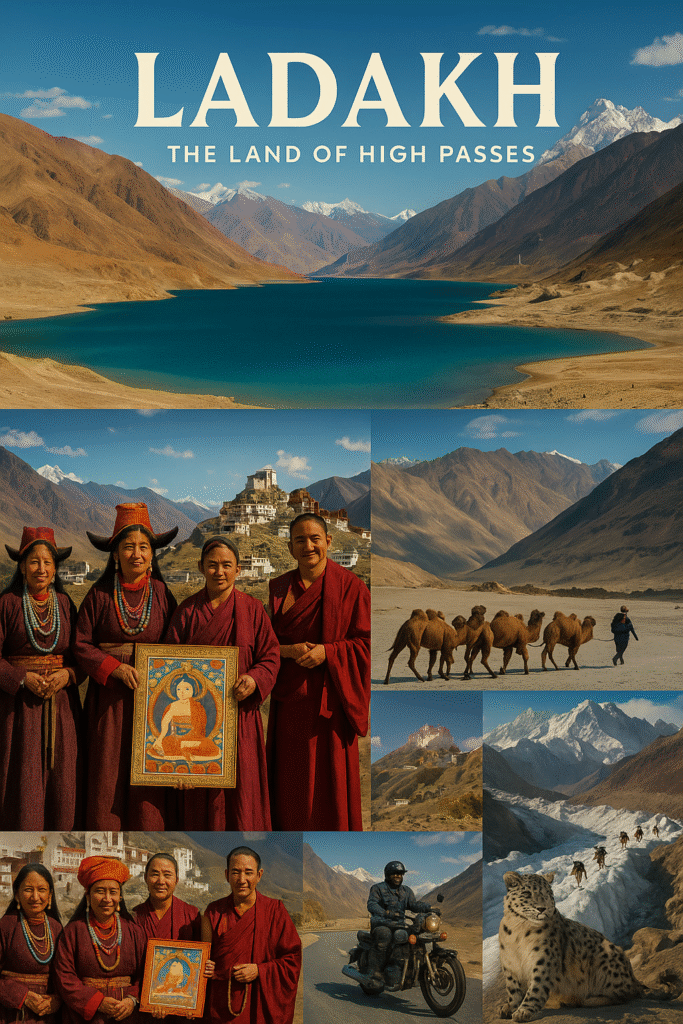
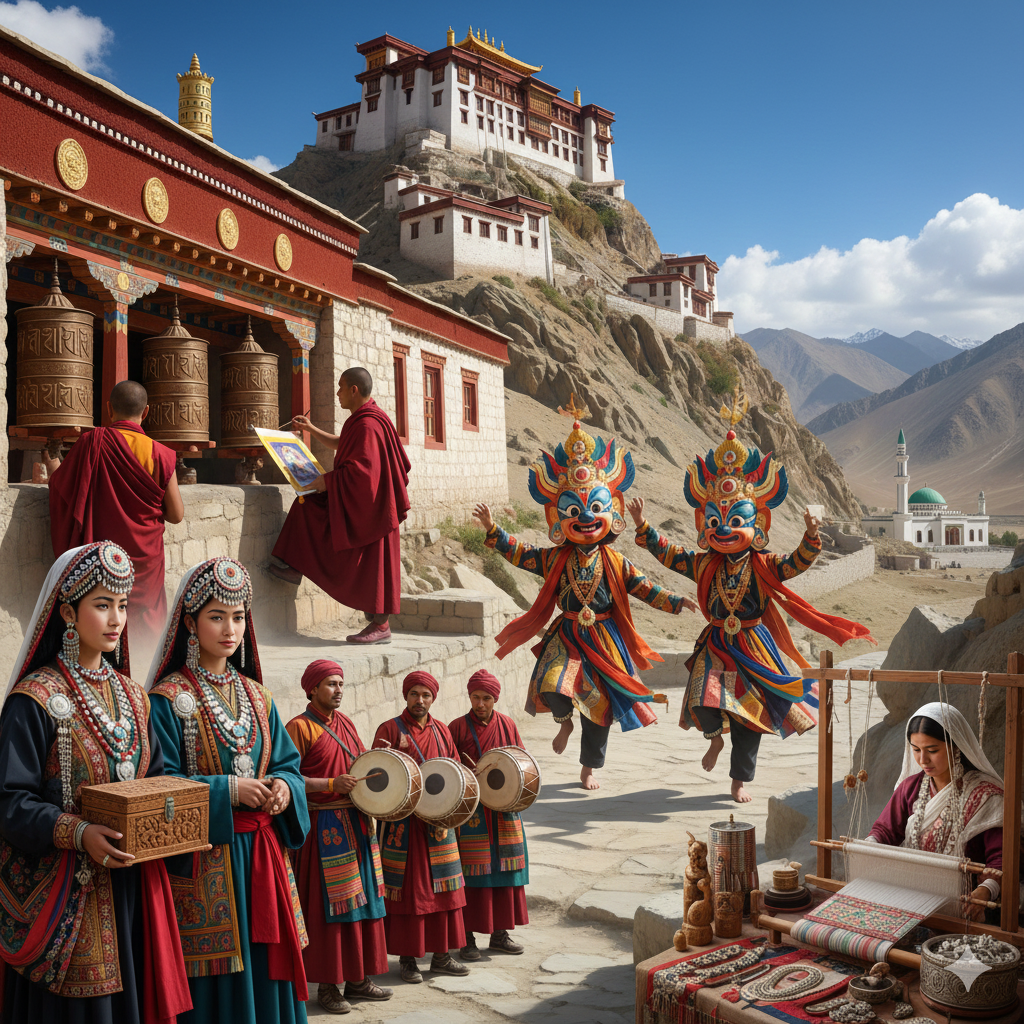
Culture of Ladakh
Detailed Introduction to the Culture of Ladakh
Ladakh, also known as “Little Tibet,” is a culturally rich and diverse region located in the northern border area of India. Its culture is a blend of Buddhism, Tibetan traditions, and Islam. The cultural identity of Ladakh is shaped by strong historical, religious, and geographical ties between India and Tibet.
Religion and Beliefs
Buddhism
- Buddhism is the most prominent and influential part of Ladakh’s culture.
- Most people in Ladakh follow Tibetan Buddhism.
- Major monasteries (Gompas) such as Hemis, Thiksey, Lhamo Yur, and Lamayuru preserve ancient Buddhist traditions.
- The Dalai Lama is highly respected among Buddhist followers in Ladakh.
- Ladakhi Architecture: Monasteries feature ornate wall paintings, sculptures, and traditional Thangka paintings.
Islam
- Kargil and some surrounding regions have a majority Muslim population.
- The Muslim community is predominantly Shia.
- Major Islamic festivals include Ramadan, Eid, and Muharram.
- Islamic culture is reflected through mosques, shrines, and madrassas.
Hinduism
- Hindu cultural influence is present in some parts of Ladakh, especially near Himalayan regions.
- Some followers of Vaishno Devi celebrate Hindu festivals here.
Languages and Literature
Ladakhi (Bhoti)
- Ladakhi, belonging to the Bhoti language family, is the primary language of the region.
- It is closely related to the Tibetan language.
- Ladakhi literature includes folktales, poems, and religious texts.
Hindi and Urdu
- Widely spoken in urban areas.
- Urdu has significant influence in the Muslim-majority regions.
English
English is used in education, tourism, and administration.
Festivals and Observances
Hemis Festival
- The largest and most famous Buddhist festival of Ladakh.
- Celebrated at Hemis Monastery with sacred rituals, dance, and music.
- Dedicated to the great Buddhist masters and revered by Tibetan Buddhists.
Losar (Ladakhi New Year)
- Celebrated according to the Tibetan Buddhist calendar.
- Families gather to observe traditions, offer prayers, and celebrate with joy.
Eid
- Celebrated prominently by the Muslim community, especially in Kargil.
- Ramadan fasting concludes with grand Eid prayers and festivities.
Diwali
Celebrated by the Hindu community with lamps, sweets, and prayers.
Arts and Handicrafts
Thangka Painting
- A traditional Tibetan Buddhist painting style found in monasteries.
- Used to depict Buddhist deities and religious symbols.
Buddhist Architecture
- Monasteries have unique architectural styles with murals, statues, prayer wheels, and stupas.
- Large Buddha statues and temple domes form a significant part of Ladakhi art.
Handicrafts
- Traditional woolen clothing and Pashmina shawls.
- Handmade carpets and rugs.
- Wood carvings, silver jewelry, and copper utensils.
Traditional Clothing and Dress
Ladakhi Dress
- Traditional attire includes Cho, a long woollen garment worn by both men and women.
- Ideal for harsh winters.
- Women often wear traditional head wraps and bangles.
Traditional Jewelry
- Ladakhi women wear distinct silver jewelry that is an essential part of their cultural identity.
Cultural Traditions and Folk Art
Folk Dance and Music
- Traditional folk music and dance play a major role in Ladakhi celebrations.
- Performed during weddings, festivals, and religious ceremonies.
- Musical instruments like Daman and Dole are commonly used.
Preservation of Culture
- Local communities and monasteries work actively to preserve Ladakh’s cultural heritage.
- Traditional arts, festivals, and rituals are carefully maintained.
Challenges
- Increasing influence of modernity and external cultures.
- Tourism growth sometimes affects traditional lifestyle and customs.
Tourism in Ladakh
Detailed Introduction to Ladakh Tourism
Ladakh, known as the “Roof of the World,” is one of India’s most exciting and scenic tourist destinations. With its snow-covered peaks, cold desert landscape, serene lakes, and ancient Buddhist sites, Ladakh attracts nature lovers, adventure seekers, pilgrims, and cultural tourists from across the world.
Major Tourist Spots
Leh and Surrounding Areas
- Leh: Administrative centre with markets, Buddhist monasteries, and historical landmarks.
- Shanti Stupa: A white marble stupa offering panoramic views of Leh.
- Leh Palace: An ancient royal palace overlooking the city.
Pangong Lake
- The most famous tourist attraction in Ladakh.
- Situated at about 14,000 ft near the India–China border.
- Known for its blue waters and breathtaking scenery.
- Offers camping, photography, and lakeside activities.
- Gained popularity due to the movie “3 Idiots.”
⭐ Editor's Choice
Discover a highly rated product selected for its quality, functionality, and positive customer feedback.
View Details & Reviews →Nubra Valley
- Located about 150 km from Leh.
- Known as a cold desert with dunes and double-hump camels (Bactrian camels).
- Major attractions: Khardung La Pass, Nubra River, monasteries.
- Popular for trekking, camping, and adventure sports.
Zanskar Valley
- A peaceful and scenic valley surrounded by high mountain ranges.
- Main attractions: Phugtal Monastery, Zanskar River.
- Ideal for trekking and nature exploration.
Hemis Monastery & Hemis Festival
- Largest and most famous monastery in Ladakh.
- Dates back to the 17th century.
- Hemis Festival: Celebrated annually with dance, music, and Buddhist rituals.
Siachen Glacier
- Known as “the world’s highest battlefield.”
- Indian Army remains deployed here.
- Adventure activities are allowed in nearby regions.
Khardung La Pass
- One of the highest motorable passes in the world (approx. 18,380 ft).
- Offers stunning views of the valleys and mountain ranges.
Torlegg and Monasteries
- A small scenic village ideal for trekking.
- Home to Matho Monastery, known for Tibetan paintings.
Adventure Tourism
Trekking and Hiking
- Ideal destination for trekkers and hikers.
- Major trekking routes: Marsimik La, Zanskar Valley Trail, Drass Valley Trek.
Mountain Biking
- Biking on high mountain passes and rugged desert roads.
- Popular routes: Leh–Nubra Valley and Kargil–Zanskar.
River Rafting
- Thrilling rafting experiences on the Indus and Zanskar Rivers.
- Offers scenic views and adventure challenges.
Skiing and Snowboarding
- Winter adventure sports enjoyed in regions like Nimu and near Pangong Lake.
Arts, Culture and Festivals
Local Arts and Handicrafts
- Handmade woolen clothes, Pashmina shawls, and Tibetan art sculptures.
- Thangka paintings and religious artworks.
Festivals
- Losar (Ladakhi New Year)
- Hemis Festival
- Local dance, music, and religious events celebrated widely.
Natural Beauty and Wildlife
Natural Beauty
- Cold desert landscapes with snow-capped mountain views.
- Scenic lakes, glaciers, and high mountain ranges.
Wildlife
- Snow leopard
- Tibetan wild ass (Kiang)
- Reindeer
- Hemis National Park and Tso Kar region are ideal for wildlife enthusiasts.
Modes of Entry and Travel
Air Route
- Leh Airport is the main airport in Ladakh.
- Well connected to Delhi, Srinagar, and other major cities.
Road Route
- Accessible via Leh–Manali Highway and Leh–Srinagar Highway.
- High passes like Khardung La and Rohtang Pass offer scenic road trips.

Jammu
Jammu is a major and historic region of the Union Territory of Jammu and Kashmir, widely known for its religious importance, cultural heritage, and geographical diversity. Located in the northwestern part of India, Jammu lies in the southern part of the former state of Jammu and Kashmir. Covering an area of about 22,000 sq km, Jammu is also the largest city of the region and is famous as the Winter Capital.
Geographical Location and Structure
Geographical Location
Jammu lies to the south of the Kashmir Valley and shares borders with Punjab, Himachal Pradesh, and Pakistan’s Punjab province. The Jammu region includes districts such as Rajouri, Poonch, Udhampur, and Kathua.
Climate
- Summers: Hot, temperature up to 35°C.
- Winters: Cold, with temperatures falling to –2°C in higher areas.
- Monsoon influences agriculture significantly.
Geographical Diversity
- Shivalik Hills and Pir Panjal foothills.
- Mandher Mountain ranges.
- Tawi River enhances the natural beauty of Jammu city.
History
Ancient History
- Once known as “Jambu,” Jammu is mentioned in the Mahabharata and ancient Sanskrit texts.
- Ruled by multiple Hindu and Muslim dynasties over centuries.
Mughal Period
- Jammu flourished during the Mughal Empire.
- Horticulture, irrigation, and architecture were developed by Akbar and his successors.
- Several temples, orchards, and palaces were built during this era.
Freedom Struggle
- The region played an active role against British rule.
- Local leaders like Mehboob Shah contributed to the independence movement.
Current Status
- After 1947, Jammu became part of India following Pakistani aggression in Kashmir.
- It shares a long and strategic border with Pakistan and Pakistan-occupied Kashmir (PoK).
- Today, Jammu holds political and military significance for India.
Culture and Language
Culture
- A blend of Indian traditions, influenced heavily by Hinduism.
- Muslim, Sikh, and Christian communities also contribute to the cultural fabric.
- Major festivals: Maha Shivaratri, Navratri, and Vaishno Devi pilgrimage.
Language
- Major languages: Dogri, Hindi, Urdu, and Kashmiri.
- Local folk songs, dances, and traditions reflect linguistic richness.
Religious Diversity
- Hinduism: Predominant; key temples include Vaishno Devi, Raghunath Temple, and Amarnath pilgrimage points.
- Sikhism: Prominent gurdwaras across the region.
- Islam & Christianity: Mosques and churches seen in Jammu city.
Economic Activities
Agriculture
- Main crops: rice, wheat, vegetables, and fruits.
- Major fruit produce: apples, walnuts, grapes.
- Handicrafts and shawls complement agricultural income.
Handicrafts
- Kashmiri embroidery, carpets, and woollen shawls.
- Leather goods and wooden carvings also popular.
Tourism
- Major attractions: Vaishno Devi Temple, Raghunath Temple, Shiv Khori, Amarnath Yatra route.
- Adventure tourism spots in Udhampur, Patnitop, and surrounding areas.
- Winter snow tourism and summer pilgrimage seasons attract large numbers.
Problems and Challenges
Security Situation
- Close proximity to Indo–Pakistan border.
- Risk of cross-border firing and infiltration attempts.
Terrorist Activities
- Some areas affected by terrorism and separatist violence.
- Disrupts social life and economic development.
Lack of Development
- Need for improved water, electricity, health, and education infrastructure.
- Rural areas face slower growth.

⭐ Editor's Choice
Discover a highly rated product selected for its quality, functionality, and positive customer feedback.
View Details & Reviews →Dal Lake
Dal Lake is the most famous and historic lake of the Kashmir Valley, located near Srinagar city. Considered the symbol of Kashmir’s natural beauty, it is known as the “Jewel of Kashmir.” Dal Lake is not only central to tourism but also holds cultural and historical importance.
Geographical Location and Structure
Location and Size
- Located northwest of Srinagar.
- Area: approx. 22 sq km.
- Length: 7 km, Width: 3 km.
- Average depth: around 5 meters.
Climate and Weather
- Winters: Lake freezes completely during snowfall.
- Summers: Pleasant climate with clear, calm waters.
Water Source
- Fed by nearby rivers, streams, and natural springs.
- Connected to the Jhelum River which helps maintain water flow.
- Vegetation and lotus flowers flourish along its edges.
History and Cultural Significance
Ancient Importance
- Mentioned in ancient Kashmiri literature and mythology.
- A major cultural centre during the era of Hindu and Buddhist rulers.
Mughal Influence
- Mughal Emperor Akbar enhanced the beauty and structure of Dal Lake.
- Mughal gardens, artificial islands, and floating gardens (Raadh) were developed here.
- Shikaras and houseboats flourish due to Mughal influence.
Role in Kashmiri Life
- Local communities depend on the lake for fishing, farming, and handicrafts.
- Floating villages and houseboats depict unique Kashmiri lifestyle.
Tours and Attractions
Shikara Rides
- The most iconic tourist activity on Dal Lake.
- Visitors enjoy scenic views and calm waters while travelling in colourful boats.
Floating Market
- A unique market on water.
- Locals sell fruits, flowers, textiles, shawls, and handicrafts.
Mughal Gardens
- Nishat Bagh
- Shalimar Bagh
- Chashme Shahi
- Built by Mughal emperors to enhance the beauty of the lake.
Lotus Flowers & Vegetation
- Lotus blooms cover large areas of the lake during summer.
- Vegetation adds charm to the scenic landscape.
Economic and Environmental Aspects
Tourism and Employment
- Dal Lake is vital for Kashmir’s tourism industry.
- Provides employment through shikara rides, hotels, handicrafts, and houseboats.
Environmental Threats
- Water pollution from sewage and household waste.
- Illegal construction and encroachments.
- Declining water levels due to ecological imbalance.
Conservation Efforts
- Government and NGOs conduct cleaning drives.
- Measures taken to restore water quality and protect the lake’s ecosystem.