
Mahmud Ghazni (971–1030 AD): Reasons, Effects, and Historical Impact
Mahmud of Ghazni was one of the most powerful rulers of medieval India who invaded the Indian subcontinent multiple times. His invasions had a deep impact on India's economy, culture, and history, making him a significant figure in medieval history.
Overview
Mahmud Ghazni (971–1030 AD) was a powerful Turkish invader who attacked India 17 times. His primary objective was to plunder India’s immense wealth, especially that of temples and sacred places. His most famous invasion was in 1025 when he attacked the Somnath Temple in present-day Gujarat.
Main Reasons for Mahmud Ghazni’s Invasions
There were several important motives behind Mahmud’s repeated invasions of India. These included economic, political, religious, and strategic reasons:
1. Economic Gain and Plunder
India was extremely wealthy at that time, especially its temples which stored gold, silver, precious jewels, and valuable ornaments. Mahmud learned about this enormous wealth and planned his invasions to strengthen his empire financially.
2. Islamic Expansion and Religious Objectives
Mahmud was a Muslim ruler and often justified his invasions as efforts to spread Islam. While the core purpose was plunder, he also saw the destruction of Hindu temples as a religious achievement linked to the idea of Jihad.
3. Military Expansion and Imperial Power
Mahmud wanted to showcase his military strength and establish himself as a dominant leader in Central Asia. Repeated victories in India helped increase his prestige and authority.
4. Advantage of Political Instability in India
At that time, India lacked a strong central authority. Numerous small kingdoms were engaged in internal conflicts, making it easier for Mahmud to invade repeatedly without facing unified resistance.
5. Religious Conflict and Ideological Motivation
Historical interpretations also show that Mahmud intended to weaken Hindu religious centers and spread Islamic influence. Although not his primary motive, he considered these actions religiously justified.
6. Strategic Reasons
The invasions helped Mahmud demonstrate superior strategy and military preparedness. This strengthened his empire and enhanced his influence across the region.
7. Personal Reputation and Legacy
Mahmud wanted to be remembered as a great conqueror. His successful invasions of India enhanced his personal fame and built an image of a powerful ruler.
Effects of the Invasions
Mahmud Ghazni’s invasions had deep cultural, religious, economic, and political impacts on India:
Religious and Cultural Damage
Important temples were destroyed, and their treasures were looted. This caused heavy religious and cultural losses to Indian civilization.

⭐ Editor's Choice
Discover a highly rated product selected for its quality, functionality, and positive customer feedback.
View Details & Reviews →Pressure on Local Rulers
Repeated invasions weakened regional rulers, creating instability and loss of sovereignty in many regions.
Impact on Prosperity and Trade
Major cities and trade centers were damaged, which negatively affected the economic and cultural activities of the time.
Attack on Somnath Temple (1025)
The attack on the Somnath Temple in 1025 was Mahmud Ghazni’s most infamous invasion. The temple, dedicated to Lord Shiva, was extremely wealthy and sacred. Mahmud looted the treasure, took valuable idols and ornaments, and destroyed the temple. This event is remembered as a dark chapter in Indian history and a major blow to Indian pride.
Conclusion
Mahmud Ghazni’s invasions were driven by a mix of motives including wealth, religious justification, military expansion, and personal prestige. These invasions caused significant damage to Indian culture, religion, and political stability. However, Indian civilization eventually revived and new powerful empires rose again.
Modern Lessons We Can Learn
- Strong cultural identity helps a civilization recover from major challenges.
- Political unity and secure economic resources are crucial for national strength.
- Studying history helps us make better decisions for the future.
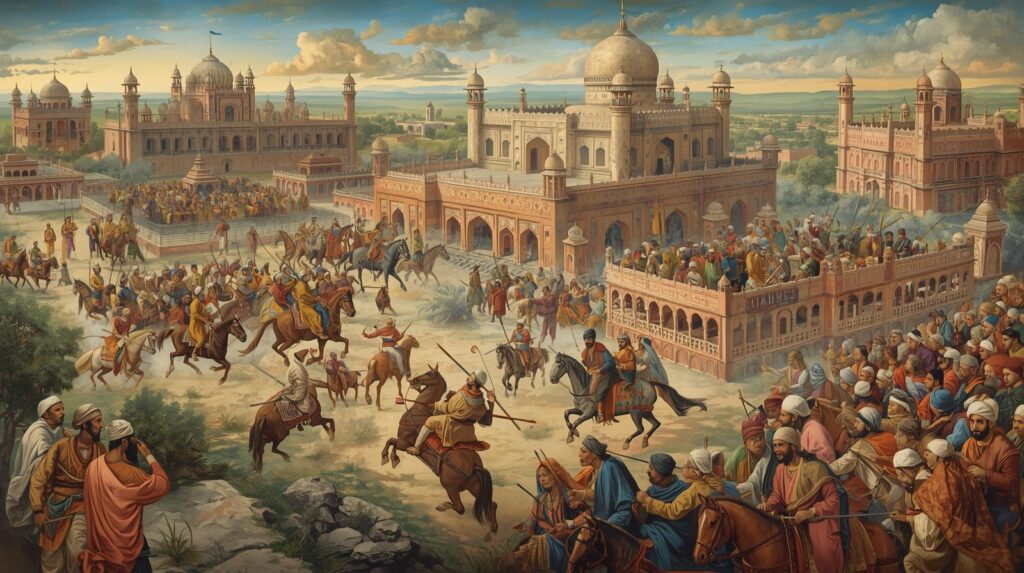
Effects of Mahmud Ghazni’s Invasions on India
In this article, I have shared the effects of Mahmud Ghazni's invasions in a clear, inspiring, and story-like manner—based on historical facts, personal understanding, and the lessons one can draw from them, without changing the original meaning.
Overview
Mahmud Ghazni’s invasions had far-reaching effects on Indian society, politics, culture, and religion. These invasions deeply influenced India’s cultural identity, economic systems, and social harmony, creating long-lasting changes whose traces are still studied today.
1. Religious and Cultural Damage
Destruction of Temples
One of the most direct impacts of Mahmud’s invasions was the destruction of major Hindu temples including Somnath, Mathura, Kashi, and Avanti (Kashmir). He looted jewellery, idols, wealth, and demolished these sacred structures.
Loss of Religious and Cultural Heritage
These temples were not only centers of devotion but also repositories of inscriptions, statues, art, and historical documents. Their destruction caused an irreplaceable loss to India’s cultural knowledge and identity.
2. Political Instability and Weak Central governance
Defeat of Local Rulers
Mahmud’s invasions weakened many small kingdoms. Taking advantage of internal conflicts between Indian rulers, he easily defeated fragmented powers.
Political Disunity
India was a land of several small states and republics often engaged in battles with each other. Mahmud exploited this disunity, further increasing instability in Indian politics.
3. Cultural Reconstruction and Re-Creation
Although Mahmud’s invasions caused widespread cultural damage, Indian society did not lose its inner strength. Over time, cultural life revived.
New Architecture
In later years, temple rebuilding began. Indian architecture evolved and new styles emerged, representing a resilient cultural identity.
Flourishing of Literature and Philosophy
Even after the invasions, Indian literature and philosophy thrived. Hindu, Buddhist, and Jain scholars continued producing important works.

⭐ Editor's Choice
Discover a highly rated product selected for its quality, functionality, and positive customer feedback.
View Details & Reviews →4. Religious Conflict and Intolerance
Mahmud’s targeting of Hindu temples increased religious tensions.
Hindu–Muslim Conflict
Although large-scale conflict intensified more in the later medieval period, Mahmud’s actions laid the foundation for mistrust between communities.
Sensitive Religious Issues
The attacks shook the religious identity of Hindus, heightening conflict between Hindu and Muslim communities.
6. Crisis of Religious Tolerance
Mahmud’s religious motives triggered a decline in religious harmony. Subsequent invasions by different Muslim rulers further deepened the crisis, as many targeted places of Hindu worship.
7. Impact on History
Mahmud’s invasions created a significant shift in the Indian historical narrative. Historians and poets recorded these attacks, highlighting the role and influence of invasions on the subcontinent’s development.
Conclusion
The effects of Mahmud Ghazni’s invasions were profound and long-lasting, influencing India socially, culturally, politically, and religiously. Although these invasions caused great harm, Indian civilization rebuilt itself, displaying resilience and cultural strength.
Lessons for Today
- A society’s identity can survive even massive external shocks.
- Unity and strong governance are essential to prevent external threats.
- The revival of culture reflects the strength of Indian diversity and tolerance.
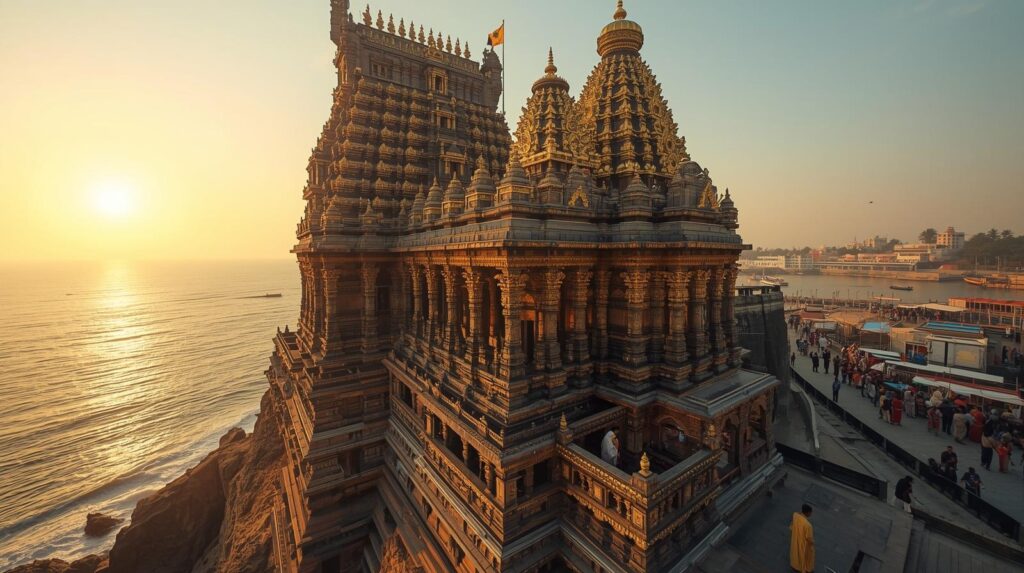
Attack on Somnath Temple (1025)
In this article, I present the invasion of the Somnath Temple (1025) by Mahmud Ghazni as a story of destruction, resilience, and the lessons history teaches us. The meaning of the original content remains unchanged, but the structure and language are made clearer, inspirational, and SEO-friendly.
Historical Importance of Somnath Temple
The Somnath Temple, located near Junagadh in Gujarat, was dedicated to Lord Shiva. It was one of the most revered pilgrimage sites of Hinduism, known for its spiritual prestige, wealth, and cultural significance.
Wealth and Prosperity
The temple contained vast amounts of gold, silver, gems, statues, and ancient artefacts. It was considered one of the richest temples of India.
Spiritual and Cultural Prestige
Somnath was more than a religious place — it was a cultural center where devotees from across India visited. Situated on the west coast, it also held importance for trade and commerce.
Invasion of Mahmud Ghazni (1025)
In 1025 AD, Mahmud Ghazni attacked the Somnath Temple. His invasion was driven by a combination of economic, religious, political, and strategic motives. Mahmud arrived with a powerful army from Central Asia, determined to capture India’s wealth.
1. Objective of the Attack
Loot of Wealth
The Somnath Temple housed enormous wealth. Mahmud targeted this treasure to strengthen his empire and military resources.
Religious Motivation
Mahmud sought to destroy symbols of Hinduism, seeing this invasion as a religious victory and part of Jihad.
Display of Military Power
He intended to showcase the strength of his army and enhance his reputation as a powerful conqueror.
2. Process of the Invasion
Mahmud marched his army towards Somnath, laid siege to the temple, and entered its premises.

⭐ Editor's Choice
Discover a highly rated product selected for its quality, functionality, and positive customer feedback.
View Details & Reviews →Destruction and Looting
He broke the main gate, destroyed structures, vandalized idols, and looted vast amounts of gold, silver, and precious stones.
Return with Immense Wealth
Historical accounts describe that Mahmud returned with immense treasure, completely destroying the temple in the process.
3. Situation After the Invasion
Religious and Cultural Loss
The destruction of Somnath shocked Indian society. It was seen as a direct attack on Hinduism, culture, and national pride.
Political Impact
The invasion deepened Political Instability and highlighted the weakness of small Indian kingdoms.
Religious Resistance
After the attack, Hindu communities strengthened their efforts to protect temples and religious identity.
4. Mahmud Ghazni’s Viewpoint and Opposition
Mahmud viewed the invasion as a religious mission and a demonstration of power. Some historians argue that although religious motives were present, economic gain was his primary objective.
He returned to his empire boasting of the wealth looted from Somnath, strengthening his political and military standing.
5. Reconstruction of Somnath
After Mahmud’s invasion, Hindu rulers took up the task of rebuilding the temple. By the 12th century, Somnath was reconstructed and its cultural glory restored.
6. Invasion of Somnath in History
The invasion remains one of the most debated and emotional events in Indian history. For Indian society, it became a symbol of resistance and the struggle to safeguard cultural identity.
While Mahmud is portrayed as a religious conqueror in some texts, Indian sources view the event as a cultural and national tragedy.
Aims of the Invasion
1. Economic Objectives
Mahmud was attracted to India’s vast wealth, especially that of Somnath. Looting temples helped him finance his military campaigns and strengthen his empire.
2. Religious Objectives
He aimed to promote Islam by destroying symbols of Hinduism. The attack on Somnath was portrayed as part of Jihad.
3. Demonstration of Military Power
The invasion tested and showcased his war strategy, expanding his influence in South Asia.
4. Political Objectives
Mahmud exploited India’s political instability, attacking small warring states to increase his dominance.
5. Personal Reputation
Mahmud wanted to be remembered in history as a strong and victorious ruler. His repeated invasions helped build his legacy.
Conclusion
The attack on the Somnath Temple in 1025 was a turning point in Indian history. It intensified religious conflict, damaged cultural identity, and triggered political instability. Yet, despite the destruction, Indian society rebuilt its temples, preserved its traditions, and re-established its cultural identity.
Key Lesson
Somnath teaches us that even the greatest destruction cannot erase a civilization’s spirit — resilience, unity, and cultural pride can rebuild what was lost.
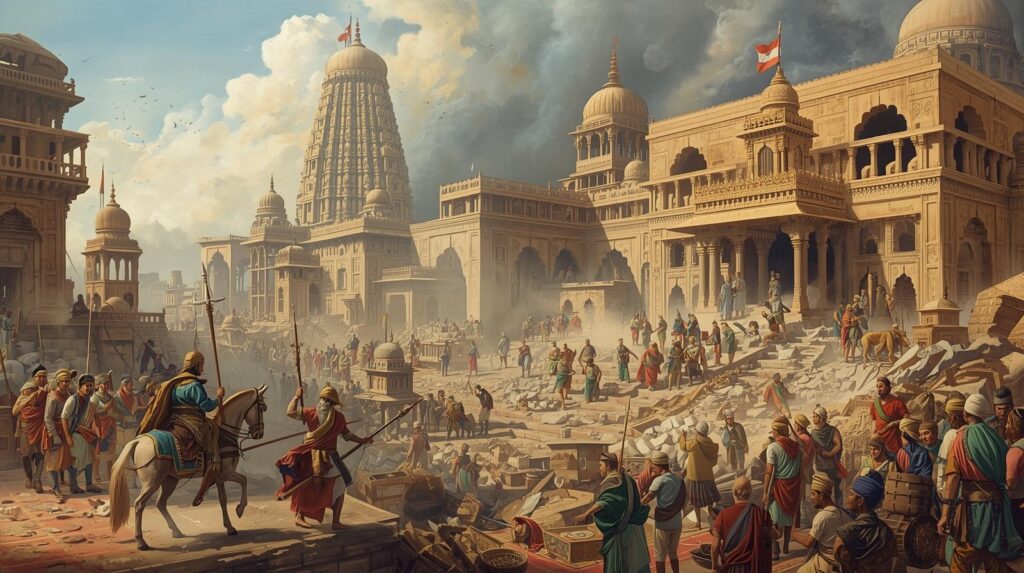
Invasion Process of Somnath Temple (1025) and Post-Invasion Situation
This article presents a clear, inspiring, and historical description of Mahmud Ghazni’s invasion of the Somnath Temple in 1025. The meaning of the original content remains unchanged while providing a structured, SEO-optimized, and engaging narrative.
Invasion Process of Somnath Temple (1025)
Mahmud Ghazni’s invasion of the Somnath Temple (1025) was a major historical event. It involved strategic military planning, religious motivations, political objectives, and a systematic approach to destruction and looting. The process can be understood in the following stages:
1. Preparation for the Journey and Organization of the Army
Creation of a Powerful Army
Mahmud Ghazni strengthened his military forces before marching toward India. His army consisted of Turkish soldiers, cavalry, infantry, and elite tactical units equipped with advanced weapons for that era.
Military Leadership and Planning
As an experienced commander, Mahmud organized his troops and evaluated India’s political and military situation. He carefully planned the route leading to western India, where the Somnath Temple was located.
2. Beginning of the Attack on Somnath Temple
Approach Toward Gujarat
Mahmud led his army across the challenging terrain toward the west coast of India. Somnath, being a prosperous and sacred Hindu pilgrimage site, became an important target.
Siege of the Temple
Upon reaching Somnath, Mahmud’s forces surrounded the temple complex. The temple had many priests and devotees present. Mahmud assessed its defenses and planned a systematic attack.
3. Destruction and Looting of the Temple
Entry into the Temple
The invading army broke open the temple gates and forced their way inside.
Looting of Idols and Ornaments
Mahmud’s soldiers seized gold, silver idols, gems, and other precious objects stored in the temple.
Destruction of Temple Structures
Mahmud ordered the destruction of the main shrine, religious symbols, and sacred idols. The temple’s grandeur and spiritual identity suffered a devastating loss.
4. Collection and Return of Loot
Loot of Wealth
The wealth looted from Somnath included immense quantities of gold, jewels, and valuable artefacts. Mahmud transported the treasure back to Afghanistan.
Return Journey
On the way back, Mahmud’s army attacked other nearby places and collected additional wealth.
5. Military Conflict and Resistance
Local Resistance
Local villagers and defenders resisted Mahmud’s army, but due to lack of organization and weapons, they were defeated.
Resistance by Priests and Devotees
Historical accounts mention that priests and devotees also fought bravely, though they were unable to stop the invasion.
6. The Mark of the Invasion in history
The destruction of Somnath left a deep mark on Indian cultural memory. It symbolized the struggle between invaders and the defense of Hindu culture and identity.
7. Consequences After the Attack
After destroying the temple, Mahmud Ghazni returned with immense wealth. His invasion reshaped Indian society, religion, and politics for years to come.
Post-Invasion Situation
The aftermath of Mahmud Ghazni’s invasion of Somnath had profound consequences on Indian religious life, society, culture, and political landscape. The situation can be understood as follows:
1. Religious and Cultural Influences
Destruction of Hindu Symbols
The destruction of Somnath was perceived as a direct attack on Hindu religious identity. The loss of idols and sacred artefacts caused psychological and cultural shock across India.
Increase in Religious Tension
The invasion intensified distrust and religious conflict between Hindus and Muslims, shaping a long-lasting rivalry.
2. Political Influence
Instability Among Indian States
Though Mahmud did not aim to establish permanent rule in India, his invasion exposed the political fragmentation of Indian kingdoms.
Rise of Hindu Resistance
After the invasion, several Hindu rulers — especially Rajputs — strengthened their armies to defend their territories and culture.

⭐ Editor's Choice
Discover a highly rated product selected for its quality, functionality, and positive customer feedback.
View Details & Reviews →3. Reconstruction of Somnath Temple
Temple Rebuilding Efforts
Hindu rulers later rebuilt the Somnath Temple, symbolizing determination and cultural revival. Reconstruction began in the 12th century and restored the sacred site’s spiritual importance.
Cultural Reconstruction
The rebuilding of Somnath reflected a broader cultural resurgence, reaffirming Indian religious identity.
4. Military and Diplomatic Resistance
Strengthening Military Strategy
Indian rulers improved their military preparedness against future invasions.
Diplomatic Awareness
The attack created political awareness about the need for unity against foreign invasions.
5. Religious and Cultural Responses
Preservation of Cultural Heritage
Indian society began efforts to protect its sacred sites and cultural traditions.
Symbol of Resistance
Somnath became a symbol of resistance, inspiring later struggles against Muslim invasions.
6. Historical Impact
Long-Lasting Memory in Literature and Tradition
The invasion remained a major theme in Indian poetry, chronicles, and oral narratives. It was remembered as a symbol of tyranny and resistance.
Differing Historical Perspectives
In Hindu tradition, Mahmud was remembered as a destructive invader; in Muslim narratives, he was celebrated as a victorious warrior. These contrasting views shaped historical interpretation for centuries.
Conclusion
Mahmud Ghazni’s invasion of Somnath Temple was not merely a military campaign — it was an event that reshaped Indian religion, culture, and politics. It triggered cultural reconstruction, political awareness, and a long-term spirit of resistance. Despite immense destruction, Indian society rebuilt Somnath and preserved its cultural identity, demonstrating resilience against historical adversity.
Key Insight
Somnath’s story teaches us that while invaders may destroy monuments, they cannot destroy a civilization’s determination, courage, and cultural soul.
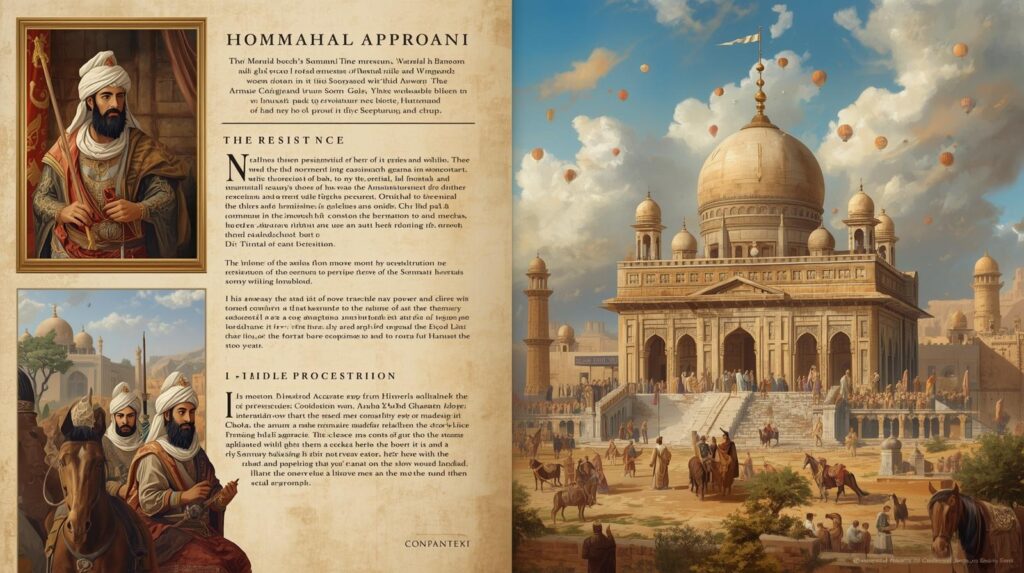
Approach and Opposition of Mahmud of Ghazni & Reconstruction of Somnath Temple
This article presents a detailed, inspiring, and historically accurate description of Mahmud Ghazni’s approach, ideological motives, the opposition he faced, and the remarkable journey of Somnath Temple’s reconstruction. The original meaning remains unchanged while offering an SEO-friendly, story-like narrative.
Approach of Mahmud of Ghazni
Mahmud of Ghazni (971–1030) was the ruler of the Turkish Ghaznavid Empire. His invasions of India were driven by religious, economic, military, and political motives. His approach combined a religiously motivated “jihad,” strategic military objectives, and the desire to expand power.
1. Religious Perspective (Propagation of Islam)
Mahmud considered his invasions a religious duty. His aim was the destruction of Hindu temples and symbols, and the spread of Islam.
Duty of a Muslim Conqueror
Mahmud believed he was obligated to attack major Hindu temples to establish Islamic supremacy. He sought both religious victory and destruction of Hindu idols and institutions.
Attack on Somnath Temple
Somnath, as a sacred and prosperous Hindu pilgrimage site, became a prime religious target for Mahmud.
2. Economic Motives (Looting)
One of Mahmud’s strongest motives was economic gain.
Loot of Wealth
Rich Indian temples — especially Somnath — contained gold, silver, jewels, and precious artefacts. Mahmud invaded India repeatedly to plunder this wealth.
Strengthening the Empire
The looted resources strengthened his military power and financed further campaigns.
3. Demonstration of Military and Political Power
Military Superiority
Mahmud used these invasions to demonstrate the might of his army and present himself as a dominant power in Central and South Asia.
Political Ambition
He viewed fragmented Indian kingdoms as an opportunity to expand his influence.
4. Personal Reputation and Historical Significance
Mahmud aimed to be remembered as a glorious conqueror. He recorded his victories and shaped his image as a powerful ruler whose campaigns had religious and political importance.
Opposition to Mahmud of Ghazni
Mahmud’s invasions faced several forms of resistance from Indian society, including religious, cultural, and military responses.

⭐ Editor's Choice
Discover a highly rated product selected for its quality, functionality, and positive customer feedback.
View Details & Reviews →1. Religious Resistance
Protection of Religious Sites
Hindu communities attempted to defend temples and sacred locations. Although local resistance was limited in strength, it reflected the deep-rooted cultural commitment of Indian society.
Religious Conflict
Mahmud’s attacks intensified contradictions between Hinduism and Islam, creating long-term religious tensions.
2. Political and Military Resistance
Opposition from Local Rulers
Rajput rulers of Gujarat, Rajasthan, and other regions opposed Mahmud through military resistance. However, disunity among Indian kingdoms weakened their ability to provide a unified defense.
Regional Disunity
The invasions highlighted the lack of political unity in India, teaching future rulers the importance of coordination and collective defense.
3. Cultural Resistance
Reconstruction of Temples
After Mahmud’s invasions, Hindu rulers and communities began rebuilding destroyed temples — including Somnath — as an act of cultural resilience.
Cultural Awareness
This period led to increased awareness and efforts to preserve Hindu traditions, rituals, and architectural heritage.
4. Opposition in Historical Narratives
Indian literature portrays Mahmud as a destructive invader, while Muslim historians present him as a victorious and pious warrior. These contrasting perspectives continue to shape the understanding of medieval Indian history.
Reconstruction of Somnath Temple
The reconstruction of the Somnath Temple after its destruction by Mahmud in 1025 is a symbol of India’s cultural resilience. The temple was rebuilt multiple times across centuries.
1. Situation After the Invasion
Mahmud destroyed Somnath completely — looting wealth, breaking idols, and devastating Cultural Heritage. The destruction was a severe emotional and spiritual blow to Hindu society.
2. Initial Attempts at Reconstruction
Contribution of Solanki Kings
King Bhimdev I of the Solanki Dynasty initiated the first major reconstruction effort. Skilled artisans revived the temple’s architecture, turning Somnath into a symbol of cultural resistance.
Contribution of Local People
Local devotees contributed funds, resources, and manpower, showing strong community-driven cultural revival.
3. Somnath During Delhi Sultanate and Mughal Period
Throughout the medieval period, Somnath faced repeated destruction but was revived each time by Hindu communities.
4. Reconstruction During Maratha Rule
Maratha ruler Ahilyabai Holkar renovated the temple and revived worship practices, strengthening cultural and religious identity.
5. Reconstruction in the Modern Period
Leadership of Sardar Vallabhbhai Patel
After India’s independence, Sardar Patel initiated the modern reconstruction of Somnath in 1947 as a national symbol of cultural pride.
Role of Dr. Rajendra Prasad
Dr. Rajendra Prasad inaugurated the restored temple in 1951, calling it a testimony to India’s cultural continuity.
Modern Architectural Style
The present temple was built using a blend of Chalukya, Chola, and Nagar styles, integrating ancient craftsmanship with modern engineering.
6. Somnath Temple Today
Today, Somnath stands as one of India’s holiest pilgrimage sites and a symbol of cultural revival. Managed by the Somnath Trust, it attracts millions of devotees and tourists every year.
Conclusion
The approach of Mahmud of Ghazni and the opposition against him represent significant episodes of Indian history. While Mahmud’s motives were religious, economic, and political, the Indian response took the form of cultural reconstruction, military resistance, and religious awakening. The reconstruction of the Somnath Temple is a powerful symbol of India’s resilience, cultural pride, and determination to protect its heritage.
Key Insight
Somnath teaches a timeless lesson — destruction cannot defeat the spirit of a civilization. Unity, awareness, and cultural pride can rebuild even the greatest losses.
Invasion of Somnath in History (1025)
Mahmud of Ghazni’s attack on the Somnath Temple in 1025 is considered one of the most significant and controversial events in Indian history. This invasion not only affected India culturally and religiously but also shaped Hindu–Muslim relations for centuries. The following article explains this historical event in detail while preserving the original meaning.
Historical and Religious Importance of Somnath Temple
Somnath is considered one of the twelve Jyotirlingas of Hinduism. Dedicated to Lord Shiva, it was among the most prosperous and sacred religious centers of ancient India. Its architecture, wealth, and spiritual significance made it famous worldwide.
Trade and prosperity
Somnath was not only a religious center but also an important trading hub on the western coast, contributing greatly to regional economy and commerce.
Background and Aims of Mahmud of Ghazni
Mahmud of Ghazni, born in 971 AD, became the ruler of the Ghaznavid Empire in 997 AD. His primary objective was to enrich his empire by plundering the wealth of India, especially its temples.
Religious Motivation
Mahmud aimed to destroy Hindu idols and temples to prove the superiority of Islam. The wealth and significance of Somnath made it an attractive target.
Mahmud of Ghazni’s Attack on Somnath
Date and Route of the Invasion
In 1025 AD, Mahmud attacked the Somnath Temple with an army of about 20,000 soldiers. He moved through Gujarat, facing resistance from local forces but eventually reaching Somnath.
Demolition of the Temple
Mahmud looted the immense wealth stored in the temple — including gold, jewels, ornaments, and sacred idols. He destroyed the Shivlinga and reduced the temple to ruins.
Jihadi Perspective
Mahmud justified this invasion as a religious mission to destroy what he considered an “idol worshiping center.” He believed that destroying Somnath would symbolize the victory of Islam.
Impact of the Somnath Invasion
1. Religious and Cultural Perspectives
The destruction of Somnath caused a deep religious shock to Hindu society. It awakened a sense of resistance and highlighted the need to protect Indian religious heritage from foreign invaders.
⭐ Editor's Choice
Discover a highly rated product selected for its quality, functionality, and positive customer feedback.
View Details & Reviews →2. Political and Military Perspectives
India at that time consisted of many small kingdoms without unity. Mahmud’s attack exposed political disorganization and emphasized the need for a central authority or unified defense.
3. Global Impact
Mahmud’s invasion was seen by many historians as a religious war, further intensifying Hindu–Muslim tensions and influencing global perceptions of medieval Indian conflicts.
Protests and Resistance
Resistance of Local Rulers and People
Local people and rulers fought against Mahmud to defend Somnath, but due to limited resources and fragmented leadership, their resistance was unsuccessful. Yet, this struggle inspired long-term resistance movements in India.
Efforts to Rebuild the Temple
After the invasion, the Solanki kings of Gujarat initiated reconstruction efforts. Later, the Maratha rulers also contributed. After India’s independence, the Somnath Temple was fully rebuilt and restored as a symbol of Indian heritage.
Conclusion
The invasion of Somnath by Mahmud of Ghazni was not merely a religious attack but a turning point in Indian history. It profoundly affected Indian culture, religion, and politics, awakening a sense of unity and awareness. This invasion ultimately strengthened the belief that India needed collective effort to protect its culture and heritage from foreign threats.
Key Understanding
Somnath’s story shows that even after destruction, cultural identity and collective resilience can rebuild what was lost — transforming tragedy into strength.
5. Social and Economic Impact
Economic Losses
The looting of immense wealth caused financial strain in many regions. Trade, agriculture, and local economies were disrupted.
Administrative Disintegration
With weakened rulers and local governance, administrative systems deteriorated. Though people resisted invasions, unified leadership was lacking.