
Introduction: A Personal Beginning
History is not just a collection of dates, treaties, and political decisions—it is a living narrative shaped by people’s fears, hopes, and experiences. For me, the story of the NATO vs Warsaw Pact is not merely a comparison between two military alliances; it is a window into a world divided by ideology, mistrust, and the constant shadow of war. Yet, the NATO vs Warsaw Pact rivalry is also filled with lessons that continue to guide us today.
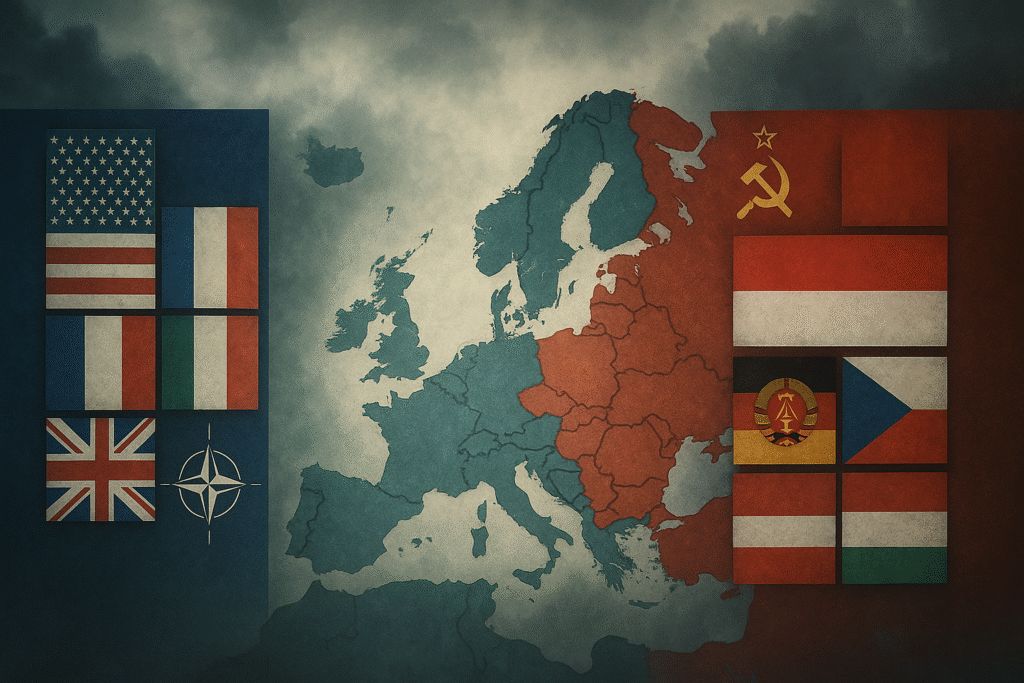
When I first learned about the Cold War as a student, I did not fully understand what the NATO vs Warsaw Pact confrontation meant for two halves of the world living under constant suspicion. On one side stood NATO, promising collective defense and unity among democratic nations. On the other stood the Warsaw Pact, a powerful alliance led by the Soviet Union and formed largely in response to NATO. The long-running NATO vs Warsaw Pact tension shaped global politics for decades—but at that age, the idea felt distant and abstract.
Everything changed the day I had a conversation with a retired soldier who had lived through those years. He told me, “I never fought a real war—but fear was my daily companion.” That sentence struck me deeply. It made me realize that the Cold War—and especially the NATO vs Warsaw Pact standoff—was not fought only in meeting rooms, military bases, and diplomatic negotiations. It was fought in people’s minds—in the uncertainty of families, in the worries of soldiers, and in the quiet prayers of those who hoped the world would not fall apart.
This moment triggered a question that has stayed with me ever since: Do alliances like NATO and the Warsaw Pact truly guarantee security, or does the NATO vs Warsaw Pact model sometimes create new forms of fear and confrontation? Does collective defense bring nations closer, or does it build invisible walls between them? And most importantly—what happens to humanity in the middle of such geopolitical rivalry?
In this article, I attempt to connect my personal reflections with historical reality and present the NATO vs Warsaw Pact narrative not just as a geopolitical study, but as a story—one filled with human emotion, political choices, and the constant struggle for peace. You will not only encounter facts here, but also the deeper insights that make the NATO vs Warsaw Pact debate relevant even today.
So let us begin this journey—from the tense moments of the mid-20th century, when the world was split into two powerful camps and every nation had to choose its side. The history of NATO vs Warsaw Pact is not just a Cold War comparison; it is a reminder of how fragile peace can be, how powerful unity can become, and how every geopolitical conflict carries lessons far beyond its era.
History & Background
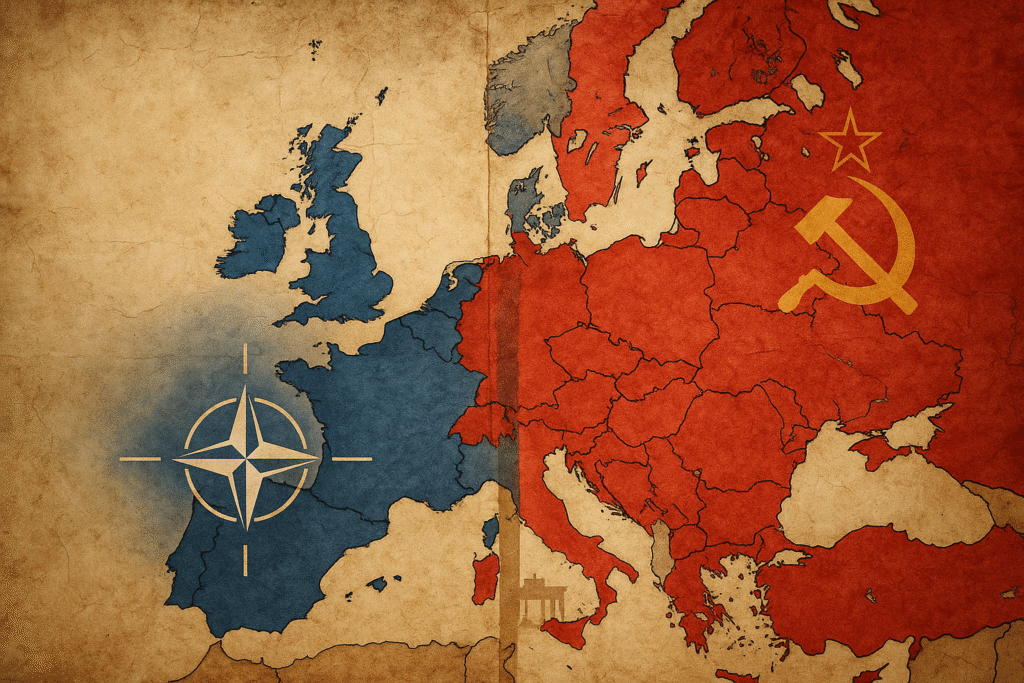
To understand the story of NATO vs Warsaw Pact, we must travel back to a world still bearing the wounds of World War II — a world in which trust was fragile, borders were fluid, and the language of power had shifted from open conquest to strategic alliances. The NATO vs Warsaw Pact rivalry did not emerge overnight; it grew out of deep fears, urgent political calculations, and competing visions of security. In this section I trace how each alliance formed, what it sought to protect, and how the NATO vs Warsaw Pact competition shaped global politics for nearly half a century.
The Birth of NATO (1949)
On April 4, 1949, representatives of North American and Western European countries signed the North Atlantic Treaty, creating the North Atlantic Treaty Organization (NATO). The memory of Nazi aggression was still fresh, and European reconstruction was underway under the Marshall Plan. Beyond economic recovery, Western leaders feared the spread of Soviet influence across a weakened Europe. NATO’s core promise — most famously captured in Article 5 — was collective defense: an attack on one would be treated as an attack on all. That commitment transformed the meaning of sovereignty and deterrence in the emerging NATO vs Warsaw Pact Cold War environment.
What NATO aimed to do
- Provide a collective security guarantee for democratic states in the North Atlantic area.
- Coordinate military planning and share defense resources among members.
- Act as a political forum to align Western policy against perceived expansionism.
The Formation of the Warsaw Pact (1955)
In response, on May 14, 1955, the Soviet Union and seven Eastern European countries formalized the Warsaw Pact (the Treaty of Friendship, Cooperation, and Mutual Assistance). Seen in Moscow as both a military counterweight to NATO and a tool to consolidate control over the Soviet bloc, the Warsaw Pact institutionalized Eastern Europe’s military cooperation under Soviet leadership. Within the broader NATO vs Warsaw Pact confrontation, this alliance became the eastern pillar of Cold War military strategy. Unlike NATO’s more pluralistic decision-making, the Warsaw structure often reflected Moscow’s strategic priorities and its need to manage satellite states.
Key features of the Warsaw alliance
The Warsaw Pact provided coordination of military deployments, standardized command structures, and a framework that justified Soviet interventions when member regimes teetered. It was as much an instrument of political order within the Eastern bloc as it was a mechanism of external deterrence during the NATO vs Warsaw Pact rivalry.
Cold War Flashpoints and the Limits of Alliances
The rivalry between NATO and the Warsaw Pact repeatedly surfaced in crises that tested the credibility and limits of both alliances. The Berlin Blockade (1948–49) and later the Berlin Crisis highlighted the perils of a divided city. The Hungarian Revolution of 1956 and the suppression of uprisings showed how the Warsaw Pact could be used to enforce Soviet control. Perhaps most perilous was the Cuban Missile Crisis of 1962 — a confrontation that brought the superpowers to the brink of nuclear exchange and underscored the dangers embedded in the NATO vs Warsaw Pact standoff.
Throughout these moments, the world witnessed how alliances could deter direct great-power war while also enabling proxy conflicts, spheres of influence, and intense arms competition. The nuclear arms race and the expansion of conventional forces made Europe and beyond a continuous stage for strategic signaling within the NATO vs Warsaw Pact era.
Adaptation, Tension, and Dissolution
Over time, NATO evolved — developing integrated command structures, nuclear-sharing arrangements, and political instruments to manage alliance politics. The Warsaw Pact, tethered more tightly to Soviet policy, faced internal strains as member states chafed under centralized control. In the 1980s, economic stagnation, political reform movements, and a waning Soviet will to enforce conformity set the stage for dramatic change. The fall of the Berlin Wall in 1989 and the cascading revolutions across Eastern Europe revealed that even the NATO vs Warsaw Pact balance could not indefinitely substitute for economic health and popular legitimacy.
By 1991, with the Soviet Union dissolving, the Warsaw Pact effectively ceased to function. Its formal institutions disbanded, and former member states embarked on divergent paths — some seeking integration with Western institutions, others navigating new national trajectories. NATO, meanwhile, faced a strategic redefinition: from collective defense against a single rival to new missions including crisis management, partnership-building, and out-of-area operations.
Historical Takeaways
The NATO vs Warsaw Pact era teaches that alliances are powerful but imperfect instruments. They can deter aggression and create predictable security frameworks — yet they also reflect the political will, economic foundations, and moral legitimacy of their patrons. Most importantly, the history of the NATO vs Warsaw Pact rivalry reminds us that the human costs of geopolitical division are profound: fear, displacement, and the constant pressure of living under the shadow of confrontation.
Human Stories: Lives Shaped by a Divided World
When we study NATO vs Warsaw Pact, we often analyze strategies, treaties, and military doctrines. But beneath these grand structures lie the quiet, powerful stories of individuals—soldiers, families, young students, and ordinary citizens—whose daily lives were shaped by the invisible yet undeniable pressure of the Cold War. These human experiences reveal that the NATO vs Warsaw Pact rivalry was never only about military balance; it was deeply personal. These vignettes show that geopolitics is never just about nations; it is about people.
Vignette 1: “A Night on the Edge” — A NATO Soldier Remembers
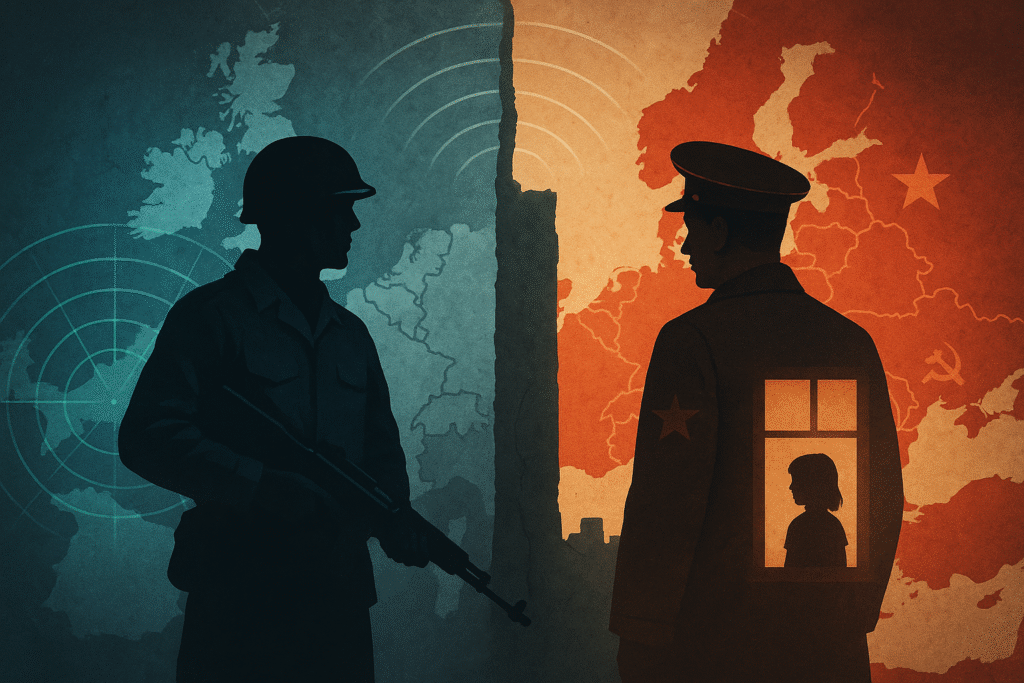
The wintry night in West Germany was still, almost unnaturally silent. Sergeant David Thompson, a young NATO radar operator, stood on duty near the border—alert, disciplined, and yet haunted by the weight of uncertainty that defined the NATO vs Warsaw Pact frontline. He often said, “The Cold War was a war of waiting, not fighting.”
Every evening, the sky glowed faintly with the lights of military installations on both sides. David would stare at the radar screen, where even the smallest unidentified blip could trigger panic. “One wrong reading, one miscommunication… and the world could change forever,” his commander used to warn.
There were no bullets, no explosions—yet the silence carried more fear than the battlefield. David wrote to his family every week with the same line: “Don’t worry, I’m safe.” But inside, he wondered how long the illusion of safety could survive in a world defined by NATO vs Warsaw Pact tensions.
He later recalled, “We were defending peace, but we were also defending ourselves from the fear of what might happen next.” His story shows that soldiers on the front lines of the NATO vs Warsaw Pact divide lived with a different kind of warfare—one fought in the mind.
Vignette 2: “Between Loyalty and Longing” — An Eastern European Family
In a small town in Poland, Anna grew up surrounded by posters of unity and strength—symbols of the Warsaw Pact that hung on every school wall. Her father, a technical specialist serving the alliance, often traveled for long stretches during the height of the NATO vs Warsaw Pact era. He believed in discipline, order, and duty. But he also believed in honesty.
One evening, after months away, he returned home unusually quiet. Anna asked, “Papa, why do you look worried?” He looked at her and replied, “Because we are told we are protecting our friends… but sometimes I feel we are protecting the system from its own people.”
Warsaw Pact members were expected to show unity, but behind closed doors, families like Anna’s lived with confusion, questions, and fear of political consequences shaped by the broader NATO vs Warsaw Pact rivalry. Her father described the pressure: “Obedience was part of our uniform, but so was exhaustion.”
When the Warsaw Pact dissolved in 1991, he whispered with relief, “Now we can be more than soldiers… we can be human again.” For families like Anna’s, the end of the NATO vs Warsaw Pact confrontation was not just a political event—it was the end of decades of emotional burden.
Vignette 3: “Friendship Across a Wall” — Two Teenagers, Two Alliances
On opposite sides of the Berlin Wall lived two teenagers—Lucas in the West (NATO side) and Mikhail in the East (Warsaw Pact side). Both loved radios, trains, and geography. Both dreamed of seeing the world. But the hard realities of the NATO vs Warsaw Pact divide kept them apart.
Lucas discovered that his shortwave radio could sometimes catch unlisted frequencies from the East. One day, he sent a recorded message: “I don’t know who will hear this, but I hope you’re okay. I believe the world won’t stay like this forever.”
Weeks later, he received a faint reply through static: “I heard you. I’m fine. I also believe we will meet someday.” It was Mikhail—another boy who refused to let the NATO vs Warsaw Pact divide silence his hope.
When the Berlin Wall fell in 1989, crowds flooded the streets in celebration. In that sea of people, Lucas and Mikhail—two young voices who had crossed the wall through radio waves—finally found each other. They later said, “Alliances separated us, but friendship found a way.”
These stories remind us that the NATO vs Warsaw Pact rivalry was not just about military power or political ideology. It shaped families, friendships, fears, and futures. Behind every treaty and every border stood millions of human beings navigating a world defined by the NATO vs Warsaw Pact divide—yet still filled with hope.
Comparative Analysis: Structure, Strategy, and Long-Term Impact
The rivalry between NATO vs Warsaw Pact was more than a military standoff—it represented two opposing worldviews, two political systems, and two contrasting approaches to security. This NATO vs Warsaw Pact comparative analysis explores how each alliance functioned, how they differed in leadership, strategy, and military doctrine, and how their influence shaped the global order for decades.
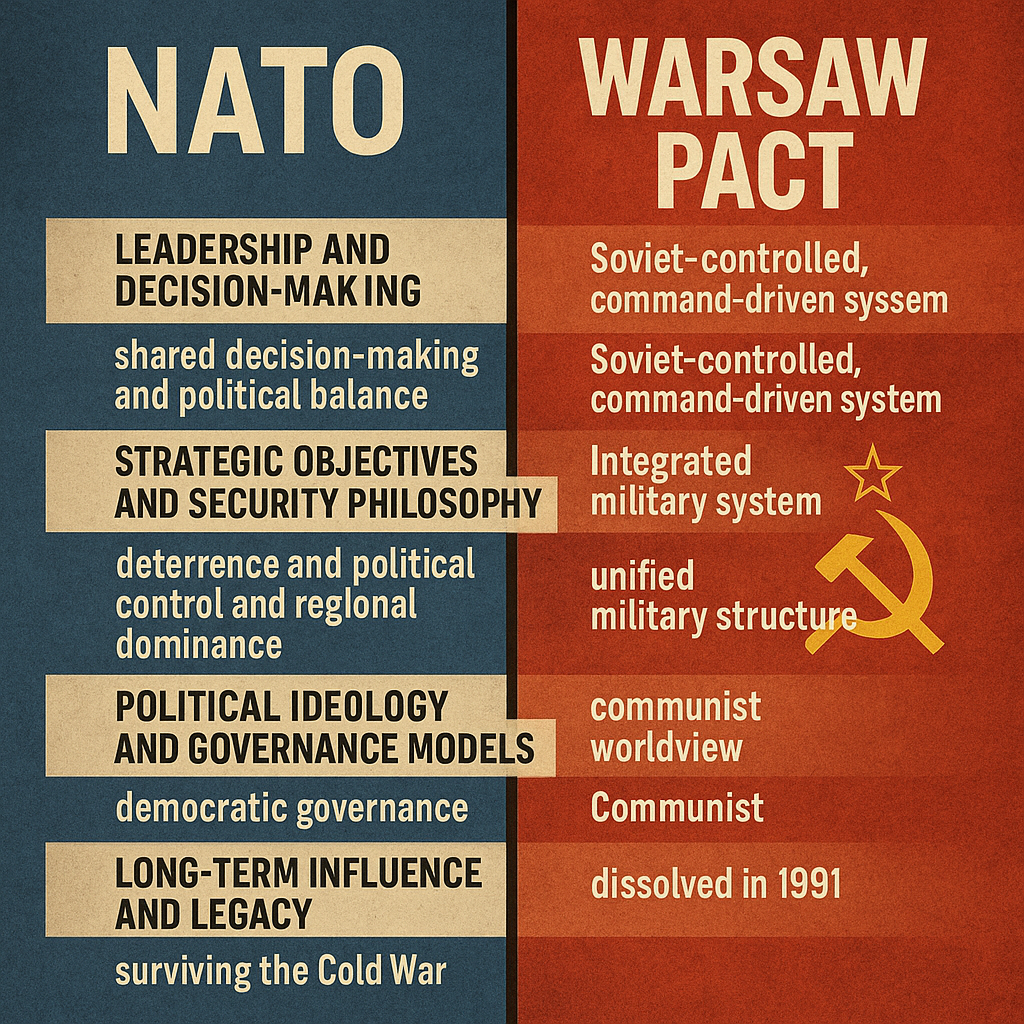
1. Leadership and Decision-Making
Within the NATO vs Warsaw Pact framework, NATO operated through a decentralised, consensus-driven leadership model. Every member—whether large or small—had a voice in the governing councils. Decisions required agreement among all states, encouraging diplomacy, dialogue, and negotiation.
The Warsaw Pact, by contrast in the NATO vs Warsaw Pact comparison, was highly centralised. Although multiple Eastern European countries were formal members, the Soviet Union held decisive authority over major strategic and political matters. Most important military decisions flowed from Moscow, leaving little room for independent policymaking within the bloc.
Core Difference
- NATO — shared decision-making and political balance.
- Warsaw Pact — Soviet-controlled, command-driven system.
2. Strategic Objectives and Security Philosophy
In the NATO vs Warsaw Pact rivalry, NATO’s primary mission was collective defense. Article 5 declared that an attack on one member would be treated as an attack on all. This created a powerful deterrence system intended to prevent Soviet expansion and ensure stability in the West.
The Warsaw Pact followed a different logic within the NATO vs Warsaw Pact contest. While it claimed to be a defensive alliance, its deeper purpose was to maintain and justify the Soviet sphere of influence in Eastern Europe. It acted not only as a shield against external threats but also as an internal enforcement mechanism that helped keep satellite states aligned with Soviet political goals.
Strategic Difference
- NATO — deterrence and multinational security cooperation.
- Warsaw Pact — preservation of political control and regional dominance.
3. Military Structure and Operational Capability
NATO employed a flexible, integrated military system during the NATO vs Warsaw Pact Cold War era. Member nations conducted joint exercises, coordinated defense planning, and standardized equipment to ensure interoperability. The integrated command structure—headed by the Supreme Allied Commander Europe (SACEUR)—allowed NATO to function as a unified force during crises.
The Warsaw Pact maintained a unified but rigid military structure in the NATO vs Warsaw Pact balance of power. Most weaponry, training systems, and doctrines were designed around Soviet standards. Although this created a uniform military front, it offered little strategic autonomy to smaller member states and limited innovation compared to NATO’s more collaborative approach.
4. Political Ideology and Governance Models
In the broader NATO vs Warsaw Pact ideological divide, NATO represented democratic governance, open political dialogue, and cooperation among sovereign nations. It aimed to promote stability through partnership, transparency, and shared values.
The Warsaw Pact symbolised the communist worldview led by Soviet policies. Political power in member countries was tightly controlled, and dissent was often suppressed. Within the NATO vs Warsaw Pact contrast, the alliance thus became an extension of Soviet governance rather than a genuinely multilateral framework.
5. Long-Term Influence and Legacy
NATO survived the end of the Cold War and continues to expand, adapt, and redefine its mission. Today it addresses challenges like cyber warfare, terrorism, crisis management, and global security cooperation. Its endurance is one of the most striking outcomes of the NATO vs Warsaw Pact era.
The Warsaw Pact dissolved in 1991, collapsing alongside the Soviet Union. Interestingly, many former Warsaw Pact countries later joined NATO, a major geopolitical shift that reshaped the post–NATO vs Warsaw Pact world order.
Conclusion
The NATO vs Warsaw Pact comparison reveals two distinctly different versions of power and security. NATO emphasized partnership, collective responsibility, and balanced decision-making. The Warsaw Pact relied on hierarchy, control, and ideological conformity. Their divergent legacies show that while military strength is vital, the sustainability of an alliance ultimately depends on trust, shared values, and political legitimacy.
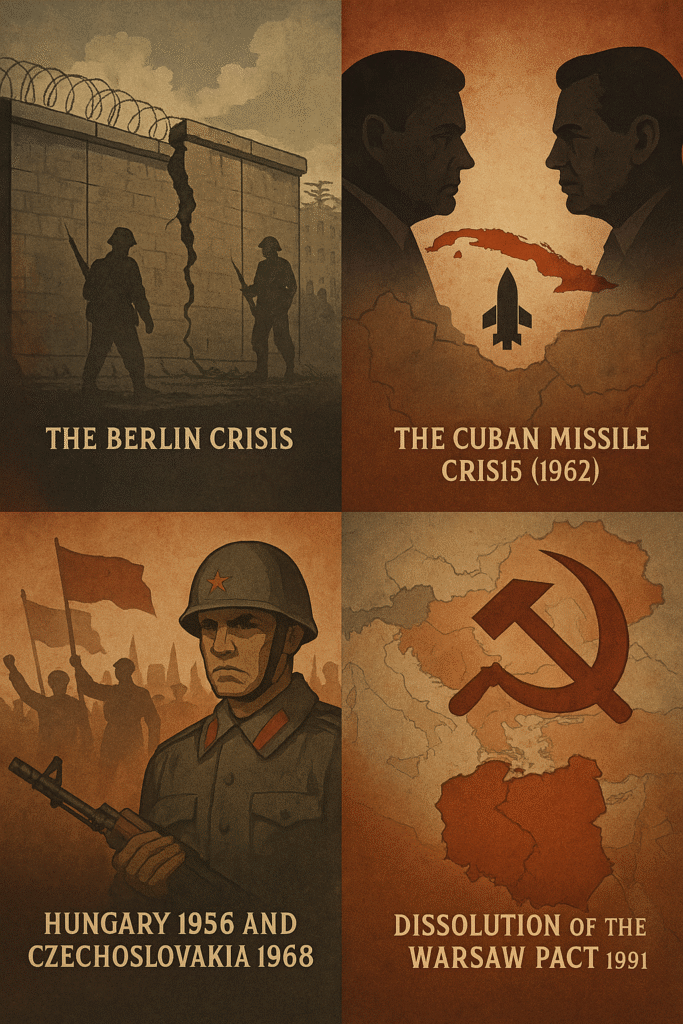
Turning Points and Lessons: Crises That Reshaped the Cold War
The History of NATO vs Warsaw Pact is not defined only by treaties, military doctrines, or political speeches—it is shaped by the turning points where the world stood on the edge of conflict, uncertainty, and irreversible change. These crises reveal how fragile peace can be and how decisions made under pressure can influence generations. In this section, we explore the most defining moments of the Cold War and the lessons they leave for today’s world.
1. The Berlin Crisis: Walls Built from Fear, Not Bricks
In 1961, the construction of the Berlin Wall became one of the Cold War’s most iconic events. It divided not only a city but also two political ideologies—freedom and democracy on one side, centralised control and restrictive Governance on the other. For NATO and the Warsaw Pact, it was a moment of intense caution; a wrong move could have ignited a war in Europe.
The Berlin Crisis teaches us that political walls rise when communication falls. It highlighted the importance of dialogue and the danger of replacing trust with suspicion. The wall stood as a reminder that security imposed at the cost of human freedom eventually collapses.
2. The Cuban Missile Crisis (1962): Thirteen Days at the Brink of Disaster
The Cuban Missile Crisis was the closest the world has ever come to nuclear war. The United States and the Soviet Union were armed, alert, and deeply distrustful. NATO allies were on high readiness, and Warsaw Pact members watched anxiously as the superpowers confronted each other.
Eventually, diplomacy—secret negotiations, back-channel messages, and calculated restraint—prevented catastrophe. This crisis offered a powerful lesson: Even at the peak of fear, communication is the only bridge to peace. It reshaped how the superpowers approached nuclear strategy and crisis management.
3. Hungary (1956) and Czechoslovakia (1968): The Hard Face of the Warsaw Pact
When pro-democracy movements emerged in Hungary and Czechoslovakia, the Soviet-led Warsaw Pact intervened with force. These invasions exposed the alliance’s internal contradiction—it claimed to protect its members, yet sometimes turned against them to maintain ideological control.
These events revealed a crucial truth: Alliances rooted in compulsion cannot survive forever. Where freedom is suppressed, resentment grows, weakening the unity that military force tries to preserve.
 |
Recommended Educational ResourceThis resource may help students and readers looking for additional study support, learning material, and topic understanding. View Details on Amazon |
| This article may contain affiliate links. |
4. The Dissolution of the Warsaw Pact (1991): When Power Without Trust Fails
By the late 1980s, economic stagnation, political dissent, and the desire for independence shook the Soviet bloc. As Eastern European nations pushed for reforms, the Warsaw Pact began to crumble. In 1991, it dissolved entirely—a dramatic moment that symbolized the collapse of a controlled political order.
This turning point teaches us that no alliance can endure on military strength alone. Sustained cooperation requires legitimacy, economic stability, and public trust.
Key Lessons for Today
The Cold War’s defining moments offer important insights for the modern world:
- Dialogue must never be abandoned—even during the greatest tension.
- Lasting security comes from cooperation, not intimidation.
- Political freedom is essential; alliances built on coercion eventually collapse.
- Diplomacy prevents wars that weapons alone cannot stop.
Ultimately, the story of NATO vs Warsaw Pact reminds us that history is not meant to frighten us—it is meant to prepare us. These turning points challenge us to build a world where crises are met with wisdom, not fear; communication, not confrontation; and humanity, not hostility.
Practical Takeaways for Today: Politics, Security, and Humanity
The story of NATO vs Warsaw Pact—its leadership struggles, ideological conflicts, military tensions, and human experiences—does more than explain Cold War History. It offers timeless lessons that are deeply relevant to today’s world, where global politics remain complex, interconnected, and often fragile. In this section, we explore the practical insights that modern nations, communities, and individuals can learn from the successes and failures of these two powerful alliances.
1. Dialogue and diplomacy Must Come First
Many Cold War crises were born from a lack of communication, and nearly all of their solutions came from negotiation, compromise, and diplomacy. Whether it was the Berlin tensions or the Cuban Missile Crisis, peace prevailed only when leaders chose to speak instead of escalate.
The key lesson is simple yet profound: When confrontation reaches its limit, dialogue becomes the only bridge to stability. This truth applies not only to global politics but also to personal and community-level conflicts.
2. Security Is Not Built on Military Power Alone
NATO survived and adapted because its foundation rested on cooperation, collective defense, and shared values. The Warsaw Pact collapsed partly because it relied on coercion, fear, and centralized control. Modern challenges—cyber threats, disinformation, economic rivalries, and hybrid warfare—cannot be defeated by weapons alone.
Today’s world requires a more holistic security approach, based on trust, transparency, technology, diplomacy, and international partnerships.
3. Alliances Built on Force Cannot Last
The collapse of the Warsaw Pact teaches a powerful lesson: political systems and alliances that restrict freedom eventually face resistance. When people are denied their rights, identity, or participation, discontent slowly builds until the entire structure begins to crack.
Sustainable coalitions grow from consent, not compulsion; from shared goals, not shared fear.
4. balance of power Is Essential for Stability
the Cold War’s stability—despite its dangers—came from a constant balance between the two sides. At times, this balance prevented war; at other times, it catalyzed tension. Yet it demonstrated that unchecked dominance or uncontrolled escalation is dangerous for any era.
The modern geopolitical environment still requires this balance—whether in global politics, regional alliances, or economic competition. Stability thrives when cooperation and competition coexist in a healthy equilibrium.
5. Humanity Should Always Guide Strategy
Behind every military decision, every alliance treaty, and every diplomatic standoff, there were real people affected by fear, separation, and suffering. The Cold War was a reminder that political decisions, when detached from human consequences, can cause long-lasting damage.
Lasting peace requires that human well-being remain at the center of all strategy—not power, pride, or ideology.
Final Reflection
The greatest lesson from the NATO vs Warsaw Pact era is that global security depends less on force and more on understanding. The Warsaw Pact showed the limits of control-based systems, while NATO illustrated the resilience of alliances built on cooperation. As the world faces new uncertainties, these lessons encourage us to build a future grounded in dialogue, balanced power, shared responsibility, and—above all—humanity.
Conclusion
The story of the NATO vs Warsaw Pact rivalry is far more than a historical comparison of two military alliances. It reflects an entire era shaped by fear, ideology, hope, and human resilience. The division of the world into two powerful blocs taught us that security is not merely built on weapons or military postures, but on the fragile foundation of trust between nations.
Throughout the Cold War, both alliances attempted to preserve their political and strategic visions. NATO emerged as a model of collective security and partnership, while the Warsaw Pact leaned heavily on centralized authority and political control. These contrasting approaches reveal a simple truth: alliances rooted in cooperation endure longer than those built on fear or compulsion.
The human dimension of this story is equally important — soldiers who stood guard through sleepless nights, families who lived with uncertainty, and young people who dreamed of a world without walls. Their experiences remind us that behind every geopolitical decision lies a human cost, and that the pursuit of peace is never abstract; it is deeply personal.
As the modern world grapples with rising tensions, cyber warfare, economic disputes, and global instability, the lessons of the Cold War remain strikingly relevant. Sustainable peace cannot be achieved through military buildup alone; it requires dialogue, cooperation, and a commitment to shared values.
Ultimately, the narrative of the NATO vs Warsaw Pact era is not just a historical reference — it is a reminder, a warning, and an inspiration for the future. It teaches us that power is meaningful only when it protects humanity, not when it dominates it.
In the end, one message stands above all: no matter how divided the world becomes, dialogue remains the only bridge strong enough to rise above conflict. This is the lesson we must carry forward for the generations to come.
FAQ — Frequently Asked Questions
1. What is NATO and when was it formed?
NATO (North Atlantic Treaty Organization) is a collective defense military alliance formed on April 4, 1949. Its main purpose is to ensure mutual security among member countries.
2. What was the Warsaw Pact?
The Warsaw Pact was a military alliance created in 1955 between the Soviet Union and Eastern European countries. It was established in response to NATO and was dissolved in 1991 after the collapse of the Soviet Union.
3. What was the main difference between NATO and the Warsaw Pact?
NATO followed a democratic, consensus-based decision-making model, giving equal voice to all members. The Warsaw Pact, however, was centralized under Soviet leadership, where Moscow controlled major political and military decisions.
4. Did NATO and the Warsaw Pact ever fight a direct war?
No, the two alliances never engaged in a direct military conflict. Their rivalry remained a Cold War standoff, marked by deterrence, crises, and proxy conflicts, but not open warfare.
5. Why did the Warsaw Pact collapse?
The Warsaw Pact collapsed due to rising political unrest, economic decline, and pro-democracy movements in Eastern Europe during the late 1980s. When the Soviet Union weakened and eventually dissolved in 1991, the alliance lost its foundation and disbanded.
6. Is NATO still active today?
Yes, NATO remains active and has expanded its role beyond traditional defense. Today it focuses on cyber security, counter-terrorism, crisis management, and cooperation with partner nations.
References
The following references provide reliable background information, historical timelines, and analytical insights related to the NATO vs Warsaw Pact topic. These sources can be used for deeper study, verification of facts, and further academic exploration.
-
NATO — Official Website
“North Atlantic Treaty Organization: History, Structure, and Functions.” -
Warsaw Pact — Historical Archives
“Warsaw Treaty of Friendship, Cooperation, and Mutual Assistance (1955–1991).” -
Cold War History — international relations Studies
“the Cold War: Origins, Major Crises, and Global Consequences.” -
European Security Studies (Academic Journals)
“Comparative Analysis of NATO and the Warsaw Pact: Strategic and Political Dimensions.” -
World History & Political Science Textbooks
“Modern Geopolitics and the Dynamics of Military Alliances.”
(Note: You can access these references through official websites, academic libraries, or trusted research databases. Always verify dates, statistics, and historical facts from authoritative sources when writing or publishing.)