
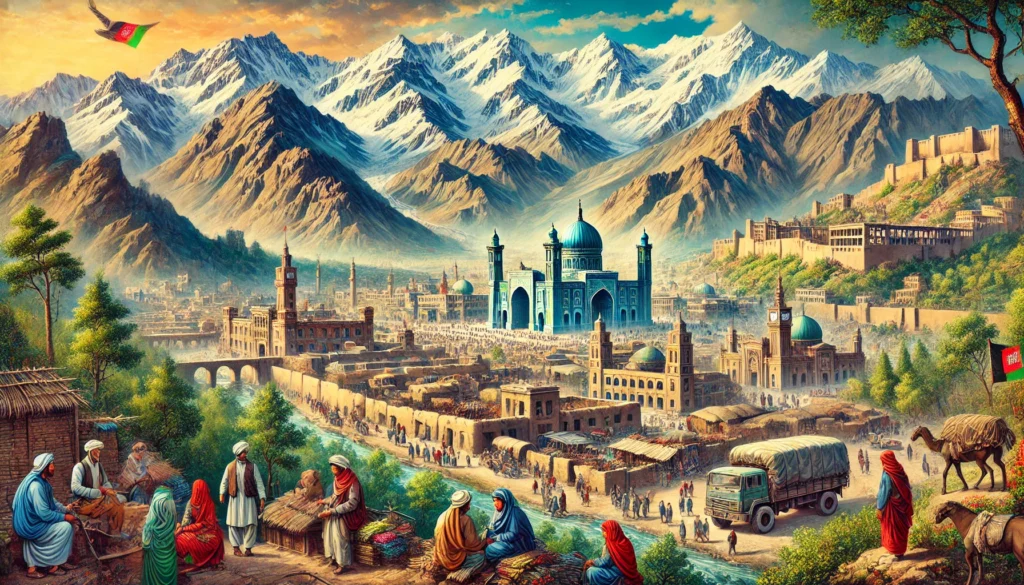
Afghanistan is one of the most strategically important coUNtries in Asia, often called the “Heart of Asia”. But is it only known for conflicts?
In this complete 2026 guide, you will discover Afghanistan’s geography, history, culture, climate, rivers, and major challenges in a simple and exam-focused way.
From the mighty Hindu Kush mountains to its role in global geopolitics, Afghanistan connects civilizations, trade routes, and cultures across Asia.
Afghanistan: History, Challenges, and Lessons from the Heart of Asia
Afghanistan is a landlocked country located at the crossroads of South Asia and Central Asia, with its capital in Kabul. Often described as the “Heart of Asia”, Afghanistan has held immense geographical and historical importance for centuries. As I studied its journey, I realized that Afghanistan is not just a nation shaped by conflicts, but also a land that has connected civilizations, cultures, and ideas across Asia.
Geographical Location of Afghanistan
Afghanistan’s location has always defined its destiny. Situated at the meeting point of major regions, it has served as a bridge between East, West, North, and South Asia.
Borders and Neighbouring Countries
- Turkmenistan, Uzbekistan, and Tajikistan to the north
- China to the east
- Pakistan to the south and east
- Iran to the west
This strategic position explains why Afghanistan has been a focal point for empires, trade routes, and geopolitical rivalries throughout history.
Language and Population
Official Languages
The official languages of Afghanistan are Pashto and Dari (a dialect of Persian). Language here reflects cultural diversity and deep historical roots.

⭐ Editor's Choice
Discover a highly rated product selected for its quality, functionality, and positive customer feedback.
View Details & Reviews →Population
As per the 2023 estimate, Afghanistan has a population of about 4 crore (40 million). Despite decades of conflict, its society remains resilient and deeply rooted in tradition.
Religion and Social Structure
The majority of Afghanistan’s population follows Islam, with most people being Sunni Muslims. Religion plays a central role in shaping social norms, cultural practices, and daily life.
Historical Background of Afghanistan
Afghanistan’s history is layered and complex. While reading about its past, I learned that this land has witnessed both cultural prosperity and prolonged turmoil.
Ancient and Medieval Period
- Linked to ancient civilizations such as the Maurya Empire and the Kushan Empire
- An important part of the Silk Road
- Once a major centre of Buddhism, evident from archaeological remains
Modern History and Global Rivalries
During the 19th and 20th centuries, Afghanistan became the centre of the “Great Game” between the British and Russian empires. This era marked the beginning of modern geopolitical struggles in the region.
Conflict and International Intervention
- Soviet invasion in 1979 and subsequent civil wars
- 2001 marked the beginning of international intervention and reconstruction efforts
These events pushed the country into prolonged instability, deeply affecting its social and economic structures.
Economic Condition of Afghanistan
Afghanistan’s economy is primarily based on agriculture and mineral resources. Traditional industries continue to support livelihoods despite limited infrastructure.
Main Economic Activities
- Agriculture-based economy
- Carpet industry as a traditional craft
- Opium production as a major, though controversial, economic activity
Taliban Rule (Since 2021)
In 2021, following the withdrawal of US and NATO forces, the Taliban retook power in Afghanistan. The country is currently governed by the Taliban, though the government is not internationally recognised.
This political shift has had far-reaching consequences on governance, human rights, and international relations.
Major Challenges Facing Afghanistan
Afghanistan’s present challenges reveal how deeply political and social issues are interconnected.
Key Issues
- Political instability and terrorism
- Severe economic crisis and widespread poverty
- Violation of the rights of women and minorities
- Lack of infrastructure, healthcare, and education
Reflections and Learnings
Studying Afghanistan taught me that a nation’s struggles cannot be understood through conflict alone. Afghanistan’s story is equally about resilience, cultural depth, and the long-term impact of global politics. Its future depends not only on internal reforms but also on constructive engagement with the international community.
Afghanistan’s Future and Global Relations
Afghanistan’s path forward will be shaped by how effectively it resolves internal conflicts, protects basic human rights, and rebuilds trust with the global community. Sustainable peace remains the most critical requirement for long-term development.
Frequently Asked Questions (FAQ)
Where is Afghanistan located?
Afghanistan is a landlocked country located in South Asia and Central Asia, bordered by Iran, Pakistan, China, and Central Asian nations.
What are the official languages of Afghanistan?
The official languages are Pashto and Dari (a dialect of Persian).
What is the current political situation in Afghanistan?
Since 2021, Afghanistan has been ruled by the Taliban after the withdrawal of US and NATO forces. The government is not internationally recognised.
What are the major economic activities in Afghanistan?
Agriculture, carpet weaving, mineral resources, and opium production are the main economic activities.
What are the biggest challenges Afghanistan faces today?
Political instability, economic crisis, poverty, human rights violations, and lack of education and infrastructure are the major challenges.
Internal Links
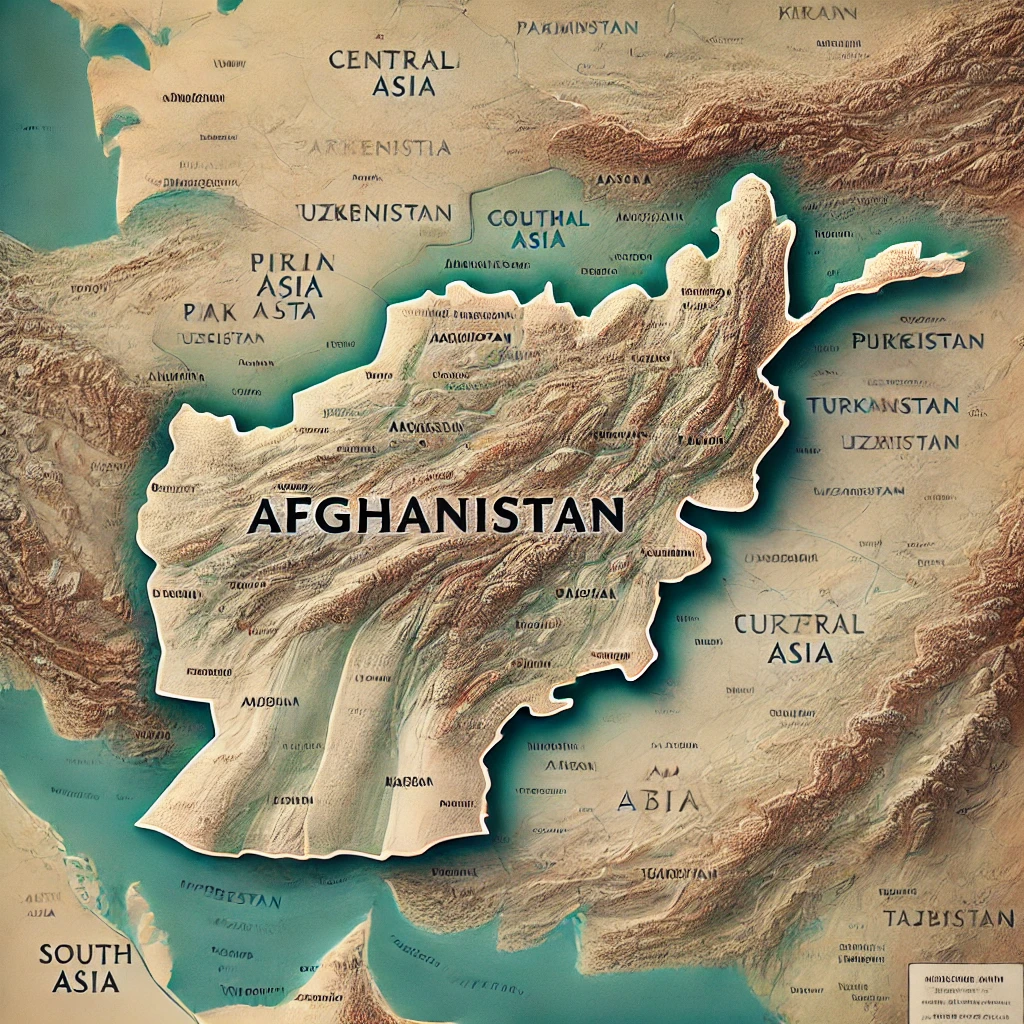
Geographical Location of Afghanistan
The geographical location of Afghanistan makes it a strategically important coUNtry in Asia. It is situated at the confluence of South Asia, Central Asia, and West Asia. Due to this unique position, Afghanistan has historically acted as a bridge connecting different regions, cultures, and trade routes.
Afghanistan covers a total area of approximately 652,230 square kilometers. It is a landlocked country, meaning it has no direct access to the sea, a factor that has significantly influenced its economic and strategic development.
Geographical Boundaries of Afghanistan
Afghanistan shares its borders with six countries, making it geopolitically sensitive and regionally interconnected.
North
- Turkmenistan – approximately 744 km border
- Uzbekistan – approximately 137 km border
- Tajikistan – approximately 1,206 km border
East and North-East
- China – approximately 76 km border
South and East
- Pakistan – approximately 2,670 km border
West
- Iran – approximately 921 km border
Major Geographical Features of Afghanistan
Afghanistan’s physical geography is diverse and largely rugged, influencing settlement patterns, climate, and economic activities.
Hindu Kush Mountain Range
Most of Afghanistan is mountainous. The Hindu Kush mountain range is the dominant geographical feature, extending from the northeast to the southwest. Many of its peaks rise above 7,000 meters, making it one of the most formidable natural barriers in Asia. These mountains have historically shaped defense strategies, climate patterns, and transportation routes.
Northern Plains
The northern region of Afghanistan consists of fertile plains near the Amu Darya River. These plains support agriculture and animal husbandry and are among the most productive agricultural zones of the country.
Desert Regions
Southern and western Afghanistan contain extensive desert areas, including the Registan Desert. These arid regions have sparse population and limited economic activity due to harsh environmental conditions.
Rivers of Afghanistan
Although Afghanistan has limited rainfall, several important rivers support agriculture and human settlements.
- Amu Darya – forms much of the northern boundary of Afghanistan
- Kabul River – flows through Kabul and into Pakistan
- Helmand River – the longest river within Afghanistan
- Harirud River
- Farah River

⭐ Editor's Choice
Discover a highly rated product selected for its quality, functionality, and positive customer feedback.
View Details & Reviews →Climate of Afghanistan
Afghanistan experiences a dry continental climate, which varies significantly by region and altitude.
- Summer: Hot and dry, especially in plains and desert areas
- Winter: Cold, with heavy snowfall in mountainous regions
- Rainfall: Limited, occurring mainly during winter and spring
Strategic Importance of Afghanistan’s Geography
Afghanistan’s geographical location has made it a focal point of regional and global politics. Historically, it was an important part of the Silk Road, facilitating trade and cultural exchange between Asia, the Middle East, and Europe.
Even today, Afghanistan remains a significant geopolitical center in Asia. Its position continues to influence regional security, trade routes, and international relations, making geography a key factor in understanding Afghanistan’s past, present, and future.
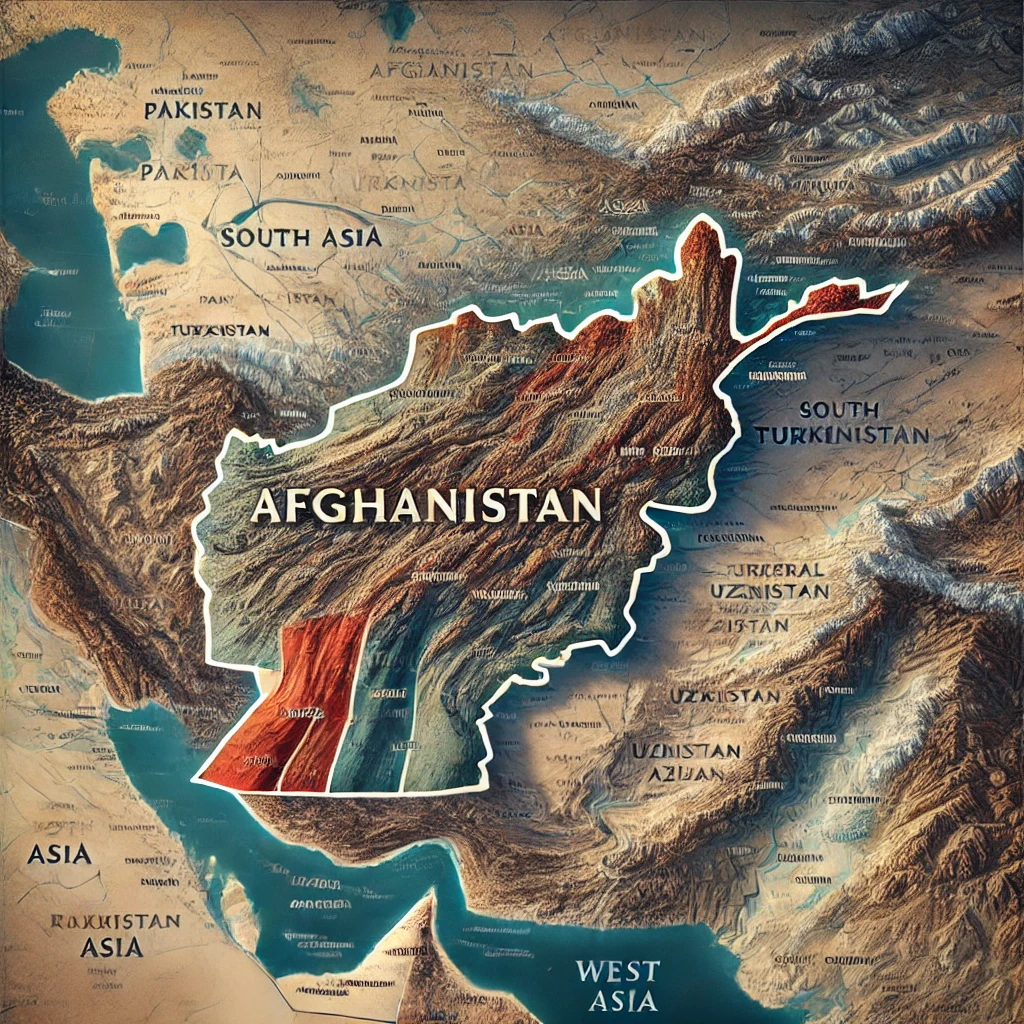
Hindu Kush MoUNtain Range
The Hindu Kush mountain range is one of the most important physical features of Afghanistan and northern Pakistan. It acts as a natural and cultural divide between Central Asia and South Asia. From historical, geographical, and environmental perspectives, the Hindu Kush has played a decisive role in shaping the region.
Main Features of the Hindu Kush
Location and Extent
The Hindu Kush mountain range begins in the northeastern part of Afghanistan and extends southeastward into Pakistan. Its total length is approximately 800 kilometers.
Height and Peaks
The range is characterized by numerous high peaks. The highest peak is Tirich Mir (7,708 meters), located in Pakistan. Several other major peaks lie within Afghanistan, with elevations ranging between 6,000 and 7,000 meters.
Geographical Importance
- Divides Afghanistan into northern and southern regions
- The western part gradually transitions into desert areas
- The eastern part is higher, colder, and more rugged
- Source of major rivers such as the Kabul River and tributaries of the Amu Darya
Historical Significance of the Hindu Kush
Part of the Silk Road
In ancient times, the Hindu Kush formed an essential part of the Silk Road, facilitating trade and cultural exchange between different regions of Asia.
Routes of Invasions
The mountain passes of the Hindu Kush were used by various invaders and empires, including Alexander the Great and the Mongol invaders. The rugged terrain often posed severe challenges for military campaigns.
Religious Significance
Historically, the Hindu Kush region was a major center of Buddhism. Numerous Buddhist stupas and caves once existed here, many of which were later destroyed during periods of conflict and invasions.
Climate and Environment
Climate
- Cold climate at higher altitudes with heavy snowfall during winters
- Lower regions experience higher temperatures during summer
Flora and Fauna
Vegetation is limited at higher elevations, while grasslands and shrublands dominate the lower areas. Wildlife includes species such as the snow leopard, Himalayan bear, and other mountain animals.

⭐ Editor's Choice
Discover a highly rated product selected for its quality, functionality, and positive customer feedback.
View Details & Reviews →Challenges of the Hindu Kush Region
- Geographical inaccessibility due to rugged terrain and harsh climate
- Political instability and security concerns along the Afghanistan–Pakistan border
Meaning of the Name “Hindu Kush”
The term “Hindu Kush” is often interpreted as meaning “slayer of Hindus”. The name dates back to the medieval era, when this route was used for slave trade, and many people reportedly died due to extreme climatic conditions.
Modern Significance of the Hindu Kush
Even today, the Hindu Kush remains significant due to issues related to climate change, natural resources, and strategic importance. Rivers originating from its glaciers are the lifeline of Afghanistan and surrounding regions.
Amu Darya Plain
The Amu Darya Plain is a fertile and economically important geographical region located in the northern part of Afghanistan. This plain has been shaped by the Amu Darya River and its tributaries, making it crucial for agriculture, trade, and civilization.
Amu Darya: Introduction
The Amu Darya is one of the major rivers of Central Asia. In ancient times, it was known as the Oxus River. It originates in the Pamir Mountains of Tajikistan and flows for about 2,400 kilometers before draining into the Aral Sea.
Along Afghanistan’s northern boundary, the Amu Darya forms a natural border with Turkmenistan, Uzbekistan, and Tajikistan.
Characteristics of the Amu Darya Plain
Location
The plain lies in northern Afghanistan and extends along the Amu Darya. It is shared by Afghanistan, Tajikistan, and Uzbekistan.
Geographical Structure
- Flat and fertile terrain
- Extensive alluvial plains along the river
- Presence of small lakes and marshlands
Soil and Agriculture
The region has fertile alluvial soil, making it the agricultural heart of Afghanistan. Major crops include wheat, cotton, barley, and fruits such as grapes and pomegranates. The Amu Darya is extensively used for irrigation.
Climate
The region experiences a semi-arid climate. Summers are hot, while winters are moderately cold. Irrigation from the river offsets low rainfall.
Economic and Strategic Importance
Agricultural Center
A large share of Afghanistan’s grain and cotton production comes from this region, making it vital to the national economy.
Natural Resources
Oil, gas, and other mineral resources are found in areas around the Amu Darya, increasing its importance as a mining hub.
trade routes
Since ancient times, the Amu Darya Plain has been a center of trade. Bridges and navigation routes connect Afghanistan with Central Asian countries.
Strategic Importance
Located along Afghanistan’s northern borders, the Amu Darya Plain holds strategic importance in relations with Tajikistan, Uzbekistan, and Turkmenistan.
Challenges
- Declining water levels of the Amu Darya
- Political instability affecting development
- Impact of climate change due to glacier melting
In short, the Amu Darya Plain is a major geographical, economic, and strategic hub of Afghanistan. Despite its importance, environmental and political challenges continue to hinder its full potential.
Desert Regions of Afghanistan
The southern and western desert regions of Afghanistan form a significant part of the country’s geographical landscape. These steppe and desert areas are characterized by harsh climatic conditions and limited human settlement.
Main Desert Areas
Registan Desert
Located in southern Afghanistan, the Registan Desert literally means “place of sand.” It is dominated by sand dunes, extremely low rainfall, and very high summer temperatures.
Dasht-e-Margo (Desert of the Dead)
Situated near western Afghanistan and the Iranian border, this desert is known for its barren and uninhabited nature, with almost no vegetation or water sources.
Dasht-e-Kavir and Dasht-e-Lut
These deserts extend along the western border between Afghanistan and Iran. The soil here is saline, and summer temperatures become extremely high.
Geographical Features
Soil
Sandy and saline soils dominate the desert regions.
Climate
- Extreme heat in summers (40–50°C)
- Cold winters with temperatures near or below freezing
- Very low annual rainfall (less than 100 mm)
Vegetation
Vegetation is sparse and includes drought-resistant shrubs and cactus. Some grasslands support limited animal husbandry.
Economic Importance
Mineral Resources
Desert regions are rich in minerals such as oil, natural gas, and salt.
Animal Husbandry
Nomadic tribes raise camels, goats, and sheep in suitable areas.
Potential Agriculture
With irrigation, limited agricultural activities are possible.
Challenges
- Severe water scarcity
- Low population density
- Worsening conditions due to climate change
In conclusion, the desert regions of southern and western Afghanistan highlight the country’s geographical diversity. Although rich in natural resources, harsh climate and water scarcity limit development. With effective management, these regions can contribute more significantly to Afghanistan’s economy.
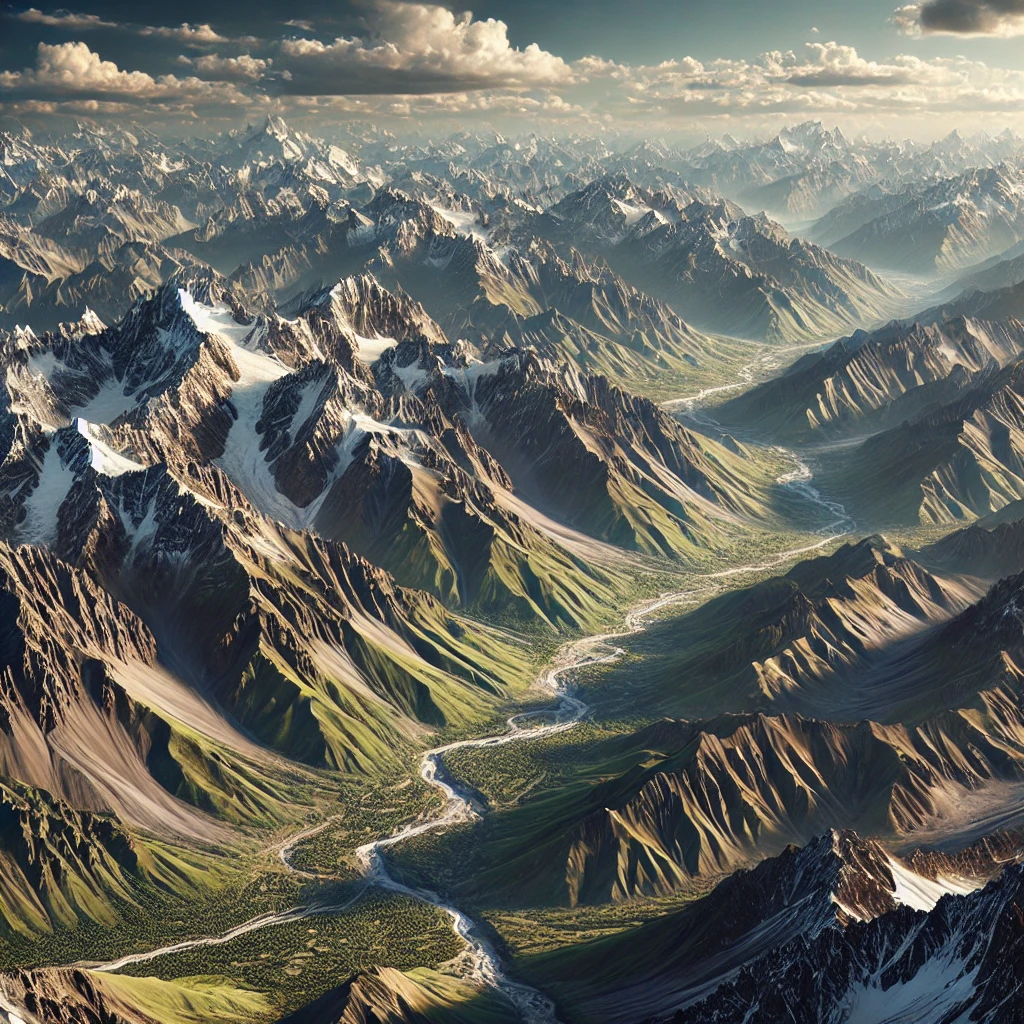
Rivers of Afghanistan (Nadiya)
Afghanistan has many rivers that are vital to the coUNtry’s water resources, agriculture, transportation, and ecology. These rivers strongly influence Afghanistan’s geography and climate. Most rivers originate in the Hindu Kush Mountains and surrounding highlands and connect regions of South Asia and Central Asia.
Major Rivers of Afghanistan
1. Amu Darya
- Length: Approximately 2,400 km (total)
- Source: Pamir Mountains (Tajikistan)
- Importance:
- Forms Afghanistan’s northern boundary with Tajikistan, Uzbekistan, and Turkmenistan
- Main source of irrigation in northern Afghanistan
- Major Tributaries: Kokcha River, Kunduz River
2. Kabul River
- Length: About 700 km
- Source: Hindu Kush Mountains, Afghanistan
- Importance:
- Flows through Kabul city and joins the Indus River in Pakistan
- Historically and economically significant
- Major Tributaries: Panjshir River, Kunar River
3. Helmand River
- Length: Approximately 1,150 km
- Source: Hindu Kush Mountains
- Importance:
- Longest river entirely within Afghanistan
- Main irrigation source for western Afghanistan
- Supplies water to the Sistan region of Iran
- Final Destination: Sistan Lake (Iran)
4. Harirud River
- Length: About 1,100 km
- Source: Central Hindu Kush Mountains
- Importance:
- Flows through western Afghanistan
- Provides irrigation near the borders of Iran and Turkmenistan
5. Murghab River
- Length: Approximately 850 km
- Source: Hindu Kush Mountains
- Importance:
- Flows into Turkmenistan
- Acts as a lifeline for desert irrigation areas
6. Farah River
- Length: Approximately 560 km
- Source: Hindu Kush Mountains
- Importance:
- Supplies water to desert regions of western Afghanistan
7. Panj River
- Length: Approximately 1,125 km
- Source: Pamir Region
- Importance:
- Forms the border between Afghanistan and Tajikistan
- Major tributary of the Amu Darya

⭐ Editor's Choice
Discover a highly rated product selected for its quality, functionality, and positive customer feedback.
View Details & Reviews →Uses of Rivers in Afghanistan
Irrigation
Afghanistan’s economy is largely agriculture-based. Rivers are the primary source of irrigation, especially around the Helmand and Kabul river basins.
hydropower
Several rivers have the potential for hydroelectric power generation. Small and medium-scale hydropower projects operate on rivers such as the Kabul and Panjshir.
Drinking Water
Rivers provide drinking water to millions of people, especially in rural areas.
Environmental Importance
Rivers help maintain green zones in plains and desert regions and support biodiversity.
Challenges Related to Rivers
- climate change: Melting glaciers are reducing river flow
- Water Disputes: Conflicts with Iran, Pakistan, and Tajikistan over water sharing
- Pollution: Urban waste and agricultural chemicals contaminate river water
In short, Afghanistan’s rivers are essential for economic stability and environmental balance, but climate change, disputes, and weak infrastructure pose serious challenges.
Climate of Afghanistan
The climate of Afghanistan is mainly dry continental, characterized by hot summers, cold winters, and limited rainfall. Due to geographical diversity and variations in altitude, the climate differs significantly from one region to another.
Main Features of Afghanistan’s Climate
1. Summer Season
- Weather: Hot and dry
- Temperature: 35°C to 45°C in plains
- Regional Variation:
- Desert areas may reach up to 50°C
- Mountain regions remain comparatively cooler
2. Winter Season
- Weather: Cold and snowy
- Temperature:
- Mountains: -15°C to -25°C
- Plains: 0°C to 10°C
- Snowfall: Heavy snowfall in Hindu Kush and Pamir Mountains
Snowmelt during spring is the main source of water for rivers.
3. Spring and Autumn
- Weather: Mild and pleasant
- Rainfall: Limited rainfall during spring
- This season is favorable for farming and grazing
Rainfall and Humidity
- Average Annual Rainfall: 100–400 mm
- Rainfall mainly occurs in winter and spring
- Southern and western deserts receive less than 100 mm annually
- Humidity remains low across most regions
Regional Climate Diversity
North and West (Plains)
- Extremely hot summers
- Cold winters with light rainfall
South and West (Desert Regions)
- Extremely dry and hot
- Very low rainfall
East and North-East (Mountainous Regions)
- Cold, snowy winters
- Mild summers
Kabul and Surrounding Areas
- Moderate climate
- Warm summers and cool winters
Impact of Climate Change
- Melting of Glaciers: Unstable river flow due to glacier loss
- Drought: Reduced rainfall and rising temperatures
- Impact on Agriculture: Declining crop production
Importance of Afghanistan’s Climate
Agriculture and Animal Husbandry
Crop production such as wheat, barley, and grapes depends heavily on climate. Pasture availability for livestock is seasonal.
Water Resources
Snowfall and spring rainfall are critical for sustaining rivers and groundwater.
Lifestyle
People adapt their farming methods, housing, and daily life according to climatic conditions.
In conclusion, Afghanistan’s climate is diverse yet challenging. Its arid nature and extreme weather strongly affect agriculture, water resources, and human life. Climate change and recurring droughts make adaptation increasingly urgent.
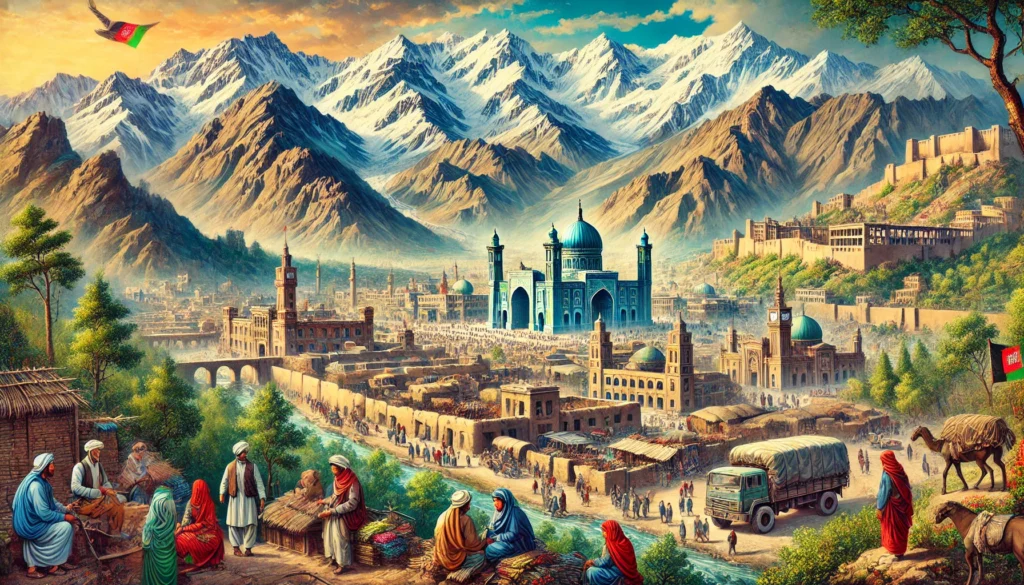
History of Afghanistan
The history of Afghanistan is ancient, diverse, and marked by repeated phases of rise and decline. Since early times, this region has been home to numerous empires, cultures, and civilizations. Its strategic geographical location made it a vital center of trade, military movement, and cultural exchange in the heart of Asia.
Ancient History of Afghanistan
1. Vedic and Aryan Culture (aroUNd 2000 BCE)
The Aryans migrated into this region and referred to it as Aryana or Aryana Vaijah. Afghanistan emerged as an early center of Vedic culture and Hinduism, influencing religious and social traditions.
2. Achaemenid Empire (550–330 BCE)
Afghanistan came under the rule of the Persian Achaemenid Empire. Rulers such as Darius I governed the region, and Zoroastrianism was promoted during this period.
3. Maurya Empire (322–185 BCE)
Under Chandragupta Maurya and later Emperor Ashoka, large parts of Afghanistan were incorporated into the Maurya Empire. Buddhism spread widely, and the region became an important center of Buddhist culture.
4. Kushan Empire (50–240 CE)
The Kushans transformed Afghanistan into a major trade and cultural hub. This period saw the flourishing of Gandhara art and Buddhism. The famous Bamiyan Buddha statues are a legacy of the Kushan era.
Medieval History of Afghanistan
1. Advent of Islam (7th–10th Century)
Islam entered Afghanistan through Arab invasions during the 7th century. By the 10th century, most of the region had become predominantly Muslim.
2. Ghaznavid Empire (977–1186)
Under Mahmud of Ghazni, Afghanistan emerged as a powerful Muslim empire. His repeated invasions of India are historically significant and well documented.
3. Ghori Dynasty (12th Century)
Mohammad Ghori ruled from Afghanistan and laid the foundation of Muslim rule in North India, marking a major turning point in South Asian history.
4. Mongol Invasion (13th Century)
Genghis Khan invaded Afghanistan, causing massive destruction. The Mongol invasions left the region devastated and politically unstable for many years.
5. Timurid Empire (14th–15th Century)
Under Timur (Timur Lang), Afghanistan again gained importance. The city of Herat became a renowned center of culture, education, and art.
Modern History of Afghanistan
1. Durrani Empire (1747)
Ahmad Shah Durrani established Afghanistan as an independent state and is regarded as the founder of modern Afghanistan. Kandahar served as the capital during his reign.

⭐ Editor's Choice
Discover a highly rated product selected for its quality, functionality, and positive customer feedback.
View Details & Reviews →2. Anglo-Afghan Wars (19th Century)
Afghanistan became a focal point of the “Great Game” between the British and Russian empires. Three major wars were fought:
- First Anglo-Afghan War (1839–1842)
- Second Anglo-Afghan War (1878–1880)
- Third Anglo-Afghan War (1919)
After the third war, Afghanistan gained full independence from British influence in 1919.
3. Amanullah Khan and Modernization (1919–1929)
King Amanullah Khan introduced reforms aimed at modernizing Afghanistan. His policies focused on education, women’s rights, and social reforms. However, opposition from conservative forces forced him to abdicate.
4. Monarchy and Constitutional Period (1933–1973)
Zahir Shah ruled Afghanistan for nearly 40 years, providing relative stability. In 1964, a new constitution was adopted, introducing democratic reforms and limited political freedom.
Recent History of Afghanistan
1. Soviet Invasion (1979–1989)
In 1979, the Soviet Union invaded Afghanistan. Mujahideen fighters resisted Soviet forces. After the Soviet withdrawal in 1989, the country plunged into a prolonged civil war.
2. Rise of the Taliban (1996–2001)
The Taliban seized control over most of Afghanistan and imposed strict Islamic Sharia law. In 2001, the United States attacked Afghanistan after the Taliban sheltered al-Qaeda.
3. US Intervention and Aftermath (2001–2021)
The US-led intervention removed the Taliban regime and established a democratic government. However, following the withdrawal of US forces in 2021, the Taliban regained power.
Conclusion
In summary, Afghanistan’s history is a continuous story of the rise and fall of empires. Its strategic geography has placed it at the crossroads of civilizations and global politics. Even today, Afghanistan remains at the center of international attention due to its rich historical legacy, cultural heritage, and ongoing political challenges.