
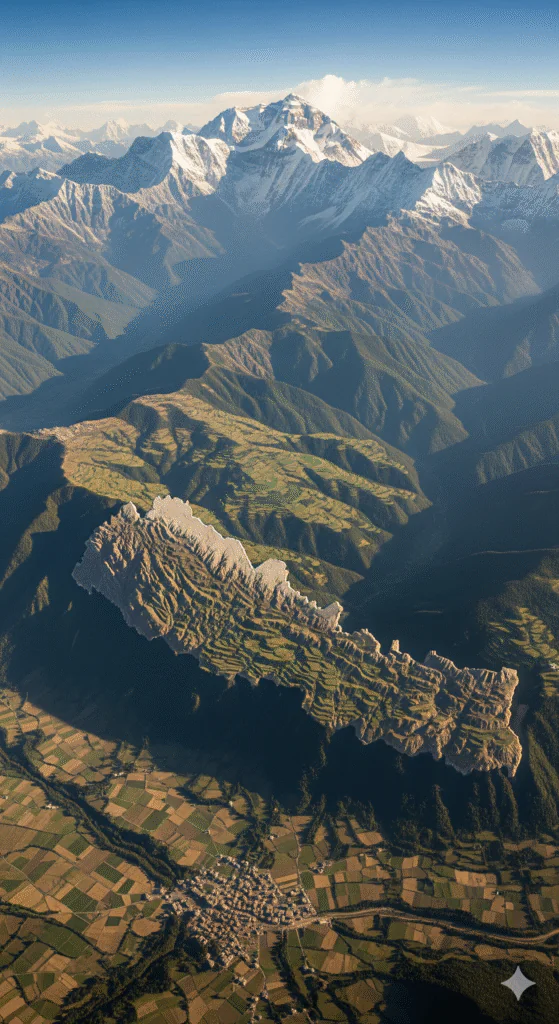
Nepal Complete Guide 2026
A unique Himalayan nation known for Mount Everest, cultural richness and geographical diversity.
Background and Introduction
This landlocked Himalayan country in South Asia is renowned for natural beauty, religious heritage and diverse landscapes. Nearly 75% of its territory is mountainous, including Mount Everest (Sagarmatha), the world’s highest peak.
- Capital: Kathmandu
- Official Language: Nepali
- Currency: Nepalese Rupee (NPR)
- Major Religions: Hinduism and Buddhism
It is often called the “Roof of the World” due to its Himalayan dominance.
Geographical Location and Structure
- North: China (Tibet)
- South, East & West: India
- Total Area: 147,516 sq km
Major Physiographic Regions
Terai Region
- Southern fertile plains
- Major crops: Rice, wheat, sugarcane
- Subtropical climate
Hilly Region
- Central belt (800–4,000 meters)
- Valleys and river systems
- Moderate climate
Himalayan Region
- Dominated by high mountain ranges
- Mount Everest (8,848.86 m)
- Extremely cold climate
Major Rivers
- Karnali
- Gandak
- Koshi
These river systems contribute significantly to hydroelectric power potential.
Historical Background
Ancient Period
The Licchavi (4th–9th century) and Malla (12th–18th century) dynasties marked golden periods of art, culture and architecture.
Unification
In the 18th century, Prithvi Narayan Shah unified several kingdoms and laid the foundation of the modern state.
Democratic Transition
The Rana regime ended in 1951. Multi-party democracy was restored in 1990, and in 2008 the country became a federal democratic republic.
Present Political and Economic Structure
Political System
A federal democratic republic with a multi-party parliamentary system.
Economic Overview
The economy relies on agriculture, tourism and remittances. Himalayan tourism and mountaineering play a major role in revenue generation.
Social and Cultural Life
The culture reflects a blend of Hindu and Buddhist traditions. Important heritage sites include Pashupatinath Temple and Lumbini (birthplace of Gautam Buddha).
Conclusion
This Himalayan nation stands out for its geographical diversity, deep history and spiritual heritage. Despite economic and political challenges, tourism potential and natural resources provide strong future prospects.

Best Selling Amazon Product
High quality product with excellent customer reviews. Perfect for daily use and great value for money.
👉 Buy on Amazon*As an Amazon Associate, I earn from qualifying purchases.
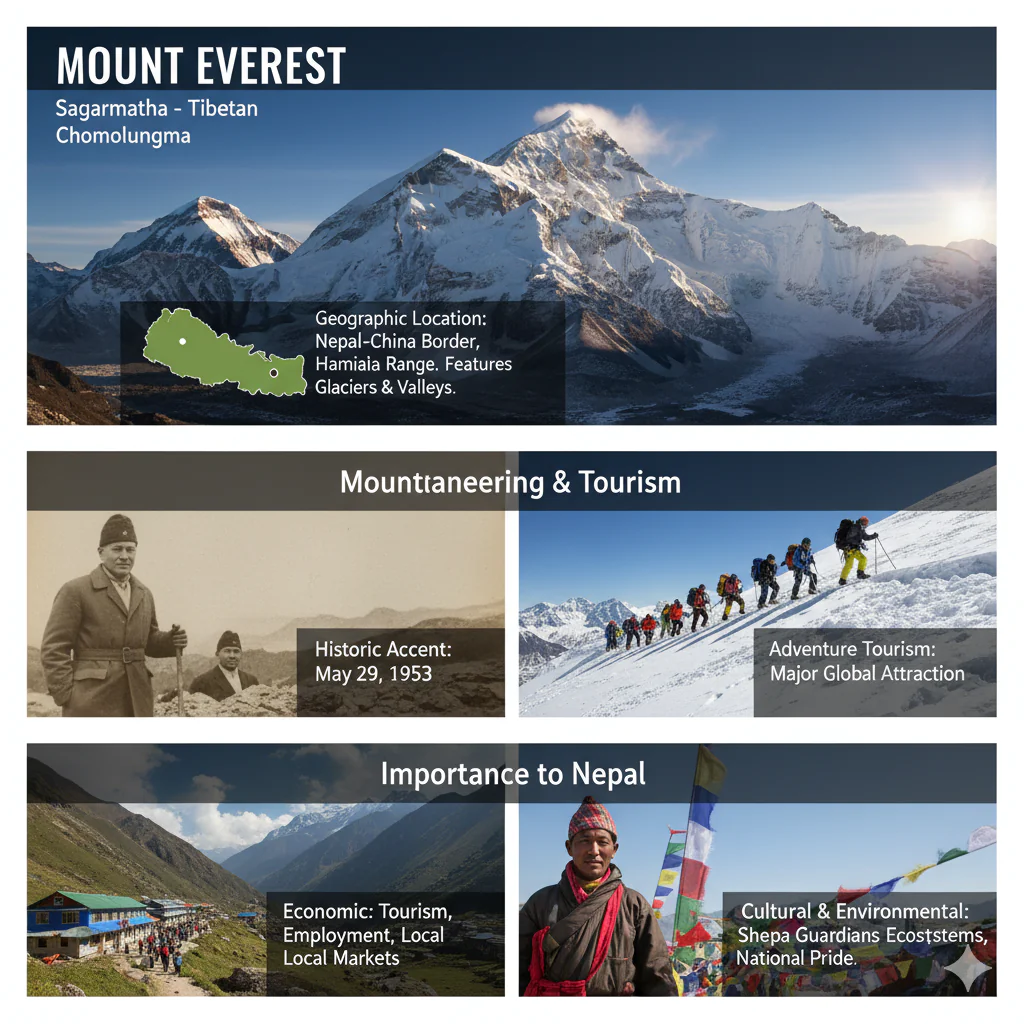
Mount Everest
Mount Everest, known as Sagarmatha in Nepal and Chomolungma in Tibet, is the world’s highest mountain peak. At 8,848.86 meters, it holds immense natural and cultural significance for Nepal.
Geographical Location
- Mount Everest is part of the Himalayan mountain range.
- It is located on the Nepal–China (Tibet) border.
- The surrounding region includes glaciers, deep valleys, and rugged mountain terrain—ideal for adventure tourism and mountaineering.
Amazing Amazon Product
High quality item with great value — click below to view details and buy on Amazon.
👉 View on Amazon*As an Amazon Associate, I earn from qualifying purchases.
Mountaineering and Tourism
Historical Ascents
- Edmund Hillary and Tenzing Norgay became the first climbers to successfully summit Everest on May 29, 1953.
- Since then, Everest has become one of the most famous adventure tourism destinations in the world.
Environmental and Economic Importance
- Tourism in the Everest region makes a major contribution to Nepal’s national economy.
- Hotels, trekking agencies, guide services, and local markets generate employment for rural communities.
Natural and Cultural Importance
- The Everest region is home to diverse Himalayan ecosystems and rare species of wildlife.
- The Sherpa community is recognized as the cultural and spiritual guardian of the mountain.
In Nepal, Everest is not just a mountain—it is a symbol of national pride, courage, and identity.
Mount Everest Complete Guide 2026
Mount Everest, known as Sagarmatha in Nepal and Chomolungma in Tibet, is the highest mountain peak in the world. Rising to 8,848.86 meters, it holds immense natural, cultural and economic significance.
Geographical Location
- Part of the Himalayan mountain range.
- Situated on the Nepal–China (Tibet) border.
- Surrounded by glaciers, deep valleys and rugged alpine terrain.
The region’s dramatic landscape makes it one of the most iconic mountaineering destinations globally.
Amazing Amazon Product
High quality item with great value — click below to view details and buy on Amazon.
👉 View on Amazon*As an Amazon Associate, I earn from qualifying purchases.
Mountaineering and Tourism
Historic First Ascent
- Sir Edmund Hillary and Tenzing Norgay successfully reached the summit on 29 May 1953.
- Today, thousands of climbers attempt expeditions each year.
Economic Importance
- The Everest region significantly contributes to Nepal’s tourism revenue.
- Trekking agencies, hotels and guide services provide employment to local communities.
Environmental Significance
- Home to fragile Himalayan ecosystems and rare wildlife.
- Climate change and waste management are major concerns.
Cultural Importance
- The Sherpa community considers the mountain sacred.
- It symbolizes courage, endurance and national pride.
Conclusion
Mount Everest stands as a global icon of adventure and human determination. Beyond its towering height, it represents cultural heritage, environmental responsibility and economic opportunity for the Himalayan Region.
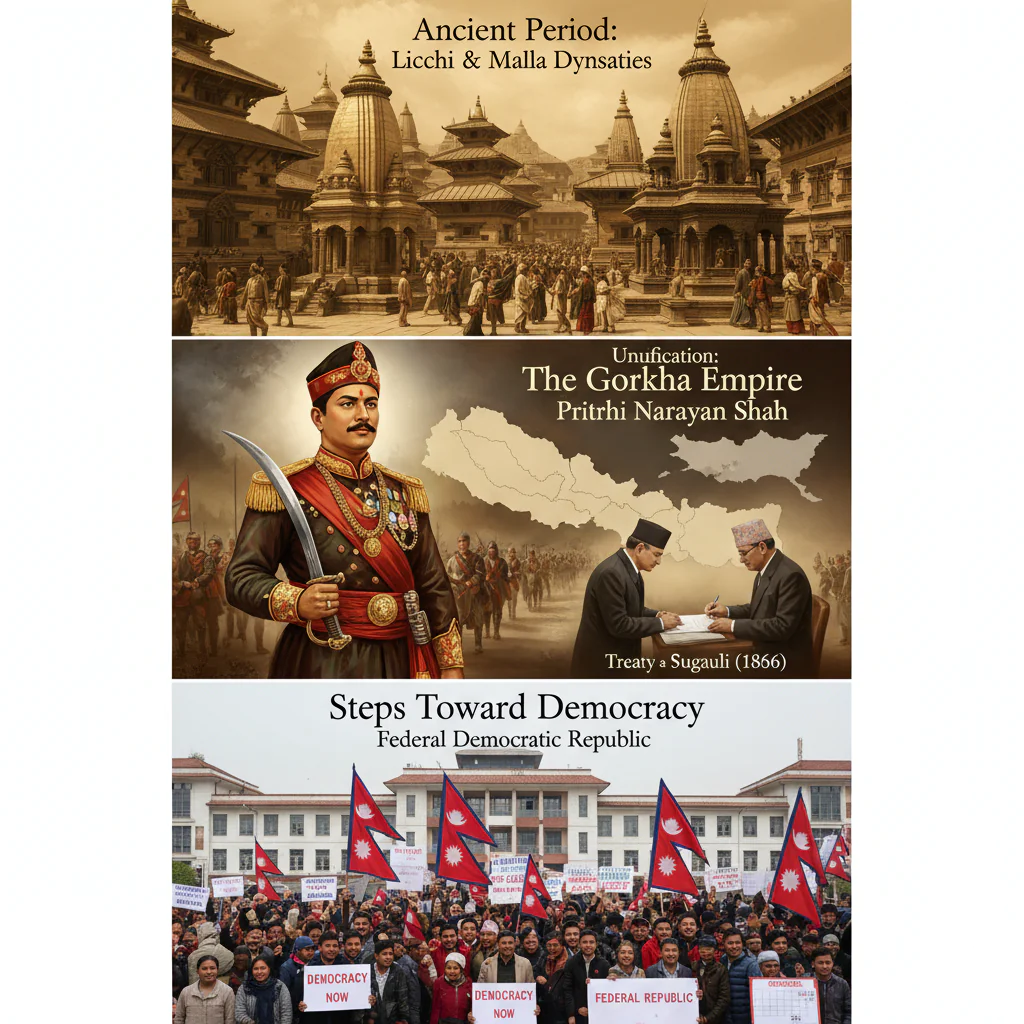
History of Nepal Complete Guide 2026
The history of Nepal is rich in religious, cultural and political evolution. From ancient civilizations to the federal democratic republic, this Himalayan nation has undergone significant transformation.
Major Historical Phases
- Ancient Period
- Medieval Period
- Gorkha Unification
- British Relations & Rana Rule
- Democratic and Republican Era
Ancient Period
Early Civilizations
Ancient references appear in Vedic and Buddhist texts. Hinduism and Buddhism deeply influenced society.
Licchavi Dynasty (4th–9th Century)
- Golden age of art and architecture.
- Flourishing of Hindu-Buddhist culture.
Medieval Period
Malla Dynasty (12th–18th Century)
- Development of literature, temples and city-states.
- Major heritage centers in Kathmandu Valley.
Gorkha Kingdom and Unification
Prithvi Narayan Shah
- Unified small kingdoms in the 18th century.
- Founder of modern Nepal.
- Promoted unity and diversity.
Conquest of Kathmandu Valley
- Kathmandu declared capital in 1769.
British-Nepal Relations
Anglo-Nepal War (1814–1816)
- Border disputes led to war with British India.
- Demonstrated military bravery of Gurkhas.
Treaty of Sugauli (1816)
- Defined modern borders.
- Territorial concessions to British India.
- Maintained national independence.
Military Cooperation
- Gurkha soldiers recruited into British Army.

Awesome Amazon Product
Quality item at great value — click below to view details and purchase on Amazon.
👉 View on Amazon*As an Amazon Associate, I earn from qualifying purchases.
Rana Rule (1846–1951)
- Prime Ministers from Rana family controlled power.
- Monarchy became ceremonial.
- Ended in 1951 after democratic movement.
Steps Towards Democracy
1951 Democratic Beginning
- End of Rana autocracy.
- Introduction of constitutional governance.
People’s Movement 1990
- Restoration of multi-party democracy.
- Limited monarchy powers.
Maoist Insurgency (1996–2006)
- Decade-long internal conflict.
Republic Era (2008–Present)
- Monarchy abolished in 2008.
- Federal democratic republic established.
- Governed by elected representatives.
Conclusion
The history of Nepal reflects resilience, cultural richness and political transformation. From ancient dynasties to modern democracy, it stands as a sovereign and evolving nation in South Asia.
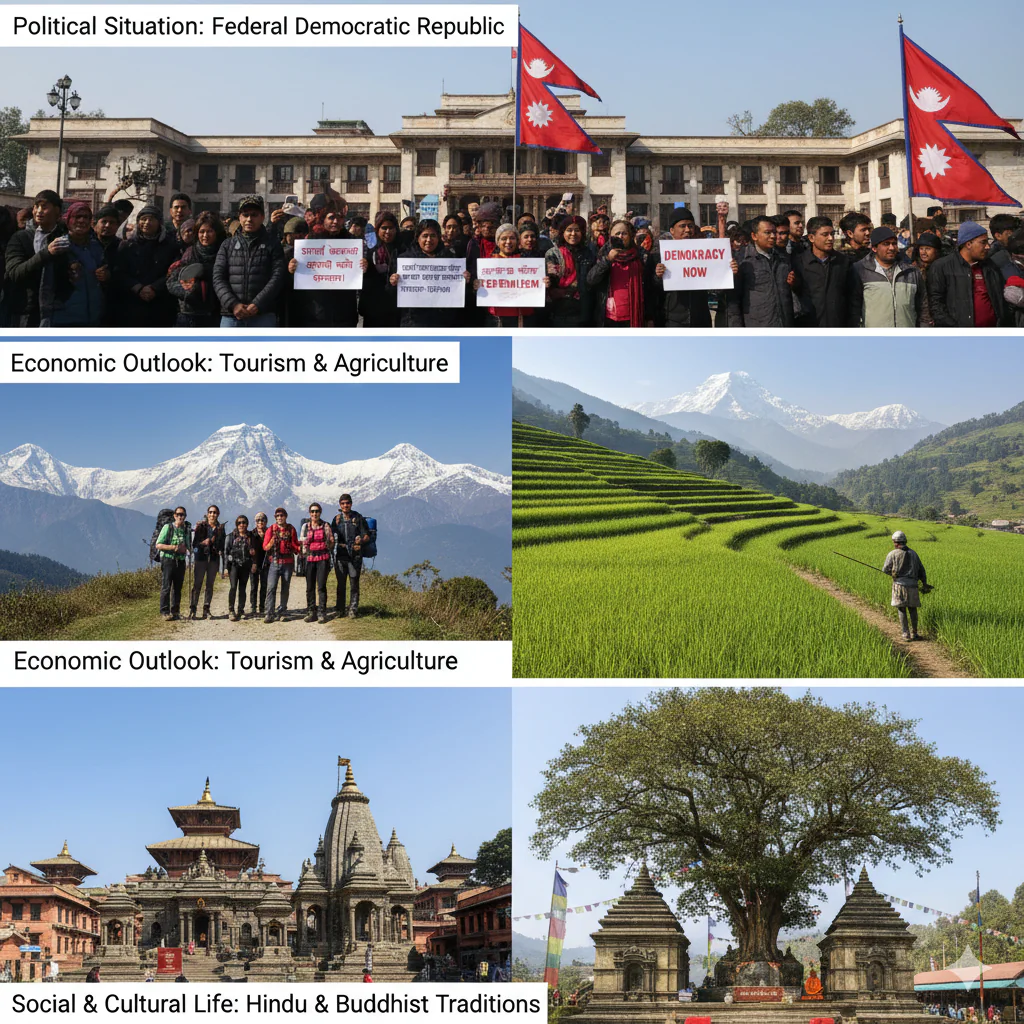
Present-Day Nepal Complete Guide 2026
Modern Nepal is a federal democratic republic that has developed a new identity after years of political transition and social transformation. The country is gradually moving toward political stability, economic reform and social modernization.
Political Situation
Democratic System
- Monarchy was abolished in 2008.
- The 2015 Constitution established a federal structure.
- Seven provinces operate under a parliamentary system.
Government Structure
- President – Head of State.
- Prime Minister – Head of Government.
- Parliament consists of the House of Representatives and National Assembly.
Political Challenges
- Frequent government changes.
- Ethnic and regional political pressures.
- Ongoing need for institutional stability.
Reform and Development
- Federal system strengthening local governance.
- Greater public participation in democratic processes.
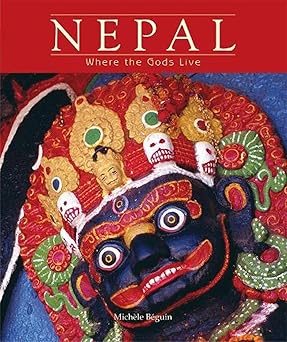
Book / Amazon Product
Discover this fascinating item on Amazon — click below for details and latest price!
👉 View on Amazon*As an Amazon Associate, I earn from qualifying purchases.
Economic Scenario
Major Economic Sectors
Agriculture
- About 65% of the population depends on agriculture.
- Main crops: rice, wheat, maize, sugarcane and pulses.
Tourism
- Mount Everest (Sagarmatha)
- Lumbini – birthplace of Gautama Buddha
- Kathmandu Valley – UNESCO Heritage Sites
Remittances
- Major contributor to GDP.
- Key income source for rural families.
Industrial and Business Development
Small and Medium Industries
- Handicrafts, textiles and food processing industries growing steadily.
Hydropower Potential
- Rivers provide large hydropower opportunities.
- Future exports could boost national income.
Foreign Trade
- Strengthening trade ties with India and China.
- Main imports: fuel, machinery and industrial goods.
Economic Challenges
- Landlocked Geography limits trade routes.
- Weak rural infrastructure.
- Natural disasters affecting stability.
Social and Cultural Life
Multicultural Society
- Over 125 ethnic groups and 123 languages.
- Major communities: Chhetri, Tharu, Sherpa, Tamang, Newari.
- Hinduism and Buddhism dominate religious life.
Festivals and Traditions
Major Festivals
- Dashain
- Tihar
- Buddha Jayanti
cultural heritage
- Rich traditions in music, art and architecture.
- Temples and stupas reflect historical depth.
Education and Health
- Education improving in urban areas.
- Rural health infrastructure still developing.
- Government and NGOs expanding services.
Social Challenges
- Urban-rural inequality.
- Ethnic and regional imbalance.
- Environmental threats including glacier melt.
Conclusion
Present-day Nepal reflects resilience and transformation. With strengthening democracy, economic reform and cultural richness, the country continues its journey toward sustainable development and stability.
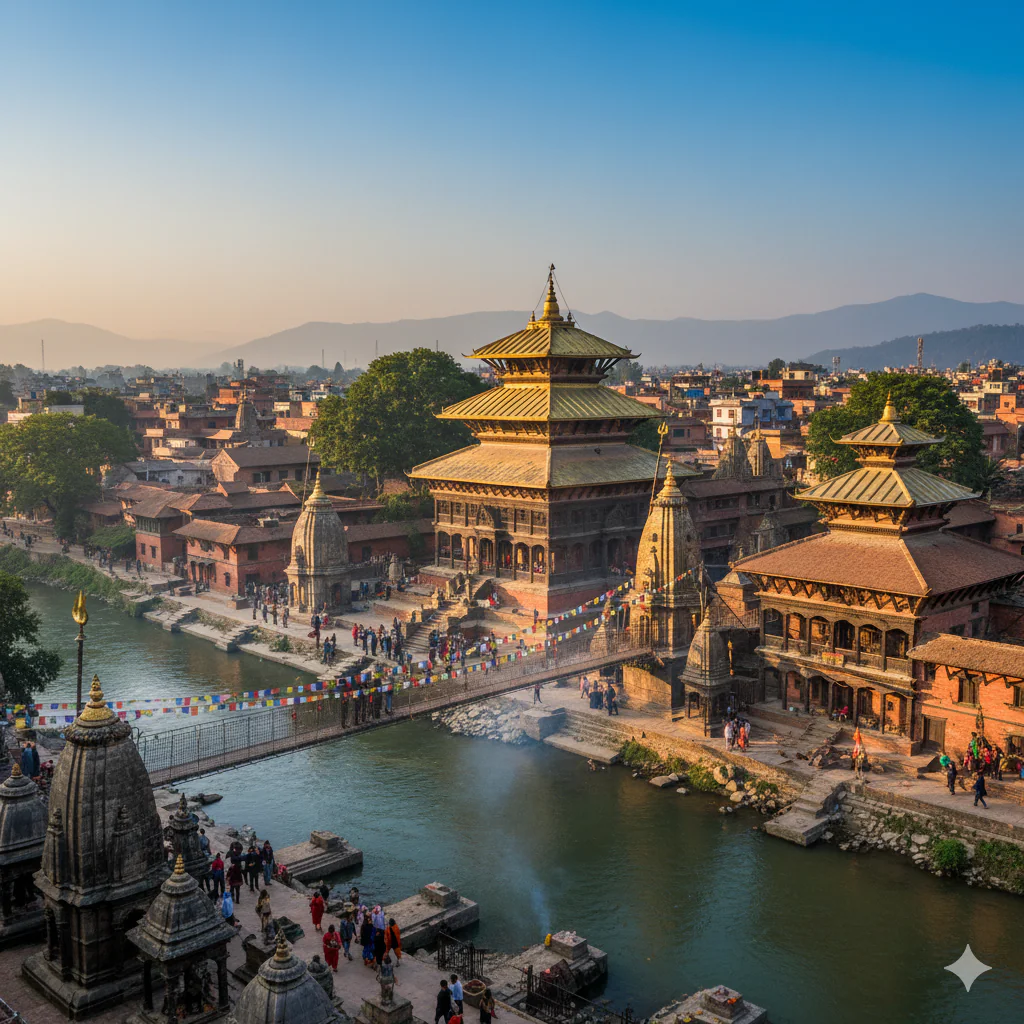
Pashupatinath Temple & Lumbini Complete Guide 2026
Nepal is home to some of the world’s most sacred spiritual destinations. Among them, Pashupatinath Temple and Lumbini hold immense religious, historical and cultural importance.
Pashupatinath Temple
The Pashupatinath Temple is one of the most sacred Hindu temples dedicated to Lord Shiva, located in Kathmandu Valley.
Geographical and Religious Significance
- Situated on the banks of the Bagmati River.
- Recognized as a UNESCO World Heritage Site.
- Major pilgrimage center for devotees from Nepal and India.
Architecture and Structure
Key Features
- Excellent example of traditional Newari architecture.
- Golden roof and intricate wood carvings.
- Temple complex includes multiple shrines and monuments.
Cultural Activities
- Thousands gather during Mahashivratri.
- Important center of Hindu rituals and traditions.
Social and Environmental Aspects
- Center for religious education and cultural preservation.
- Environmental conservation initiatives along Bagmati River.

Great Amazon Product
Click below to view full details and the latest price on Amazon.
👉 View on Amazon*As an Amazon Associate, I earn from qualifying purchases.
Lumbini
Lumbini, located in the Terai region, is the birthplace of Siddhartha Gautama (Lord Buddha) and one of the most important Buddhist pilgrimage sites in the world.
Geographical and Historical Significance
- Located in Rupandehi district.
- Birthplace of Gautama Buddha (around 623 BC).
- Designated UNESCO World Heritage Site.
Lumbini Complex and Structure
Main Attractions
- Maya Devi Temple
- Ashoka Pillar
- International Buddhist monasteries and stupas.
Environment and Spiritual Atmosphere
- Peaceful gardens, ponds and meditation zones.
- Major global pilgrimage destination.
Social and Religious Importance
- Symbol of peace and non-violence.
- Represents Nepal’s religious diversity.
Conclusion
Pashupatinath Temple and Lumbini represent the spiritual heart of Nepal. These heritage sites reflect the nation’s deep-rooted religious traditions, architectural brilliance and cultural harmony.
- Strong historical foundations.
- Global pilgrimage destinations.
- Key contributors to tourism and cultural identity.
Together, they symbolize Nepal’s sacred heritage and global spiritual significance.
References
- Nepal Government Official Website
- Nepal Tourism Board
- UNESCO World Heritage Centre
- World Bank – Nepal Data
- Britannica – Nepal
- BBC Country Profile – Nepal