
Introduction
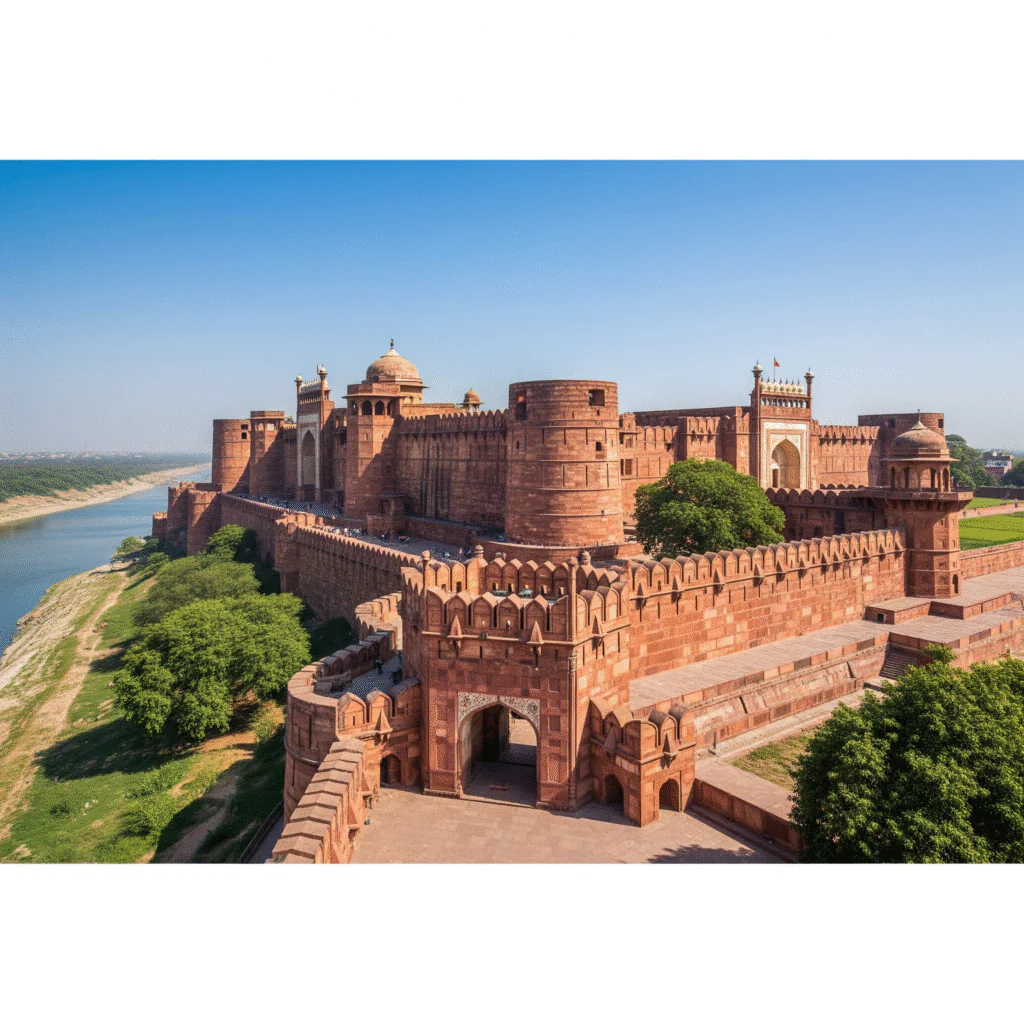
Located in Agra city of Uttar Pradesh, Agra Fort is one of the most important historical monuments in India. This magnificent fort is not only a military fortification but also a symbol of the power, architectural excellence and cultural richness of the Mughal Empire. In 1983, Agra Fort was inscribed as a UNESCO World Heritage Site.
History of Agra Fort
The history of Agra Fort dates back several centuries, but its present structure is primarily associated with Mughal Emperor Akbar. He ordered its reconstruction in 1565, and the major construction work was completed around 1573. The earlier fortification was traditionally associated with a brick fort known as Badalgarh. Akbar transformed it into a massive military and royal complex using red sandstone.
Major Historical Events
- Agra became an important political and administrative centre of the Mughal Empire during Akbar's reign.
- Jahangir continued to use the fort as a royal residence and administrative centre and received foreign visitors and representatives.
- Shah Jahan added several magnificent marble structures and palaces to the fort.
- After Aurangzeb came to power, Shah Jahan was confined in Agra Fort, where he spent his final years.
- The fort offers views towards the Taj Mahal across the Yamuna River.
Architecture of Agra Fort
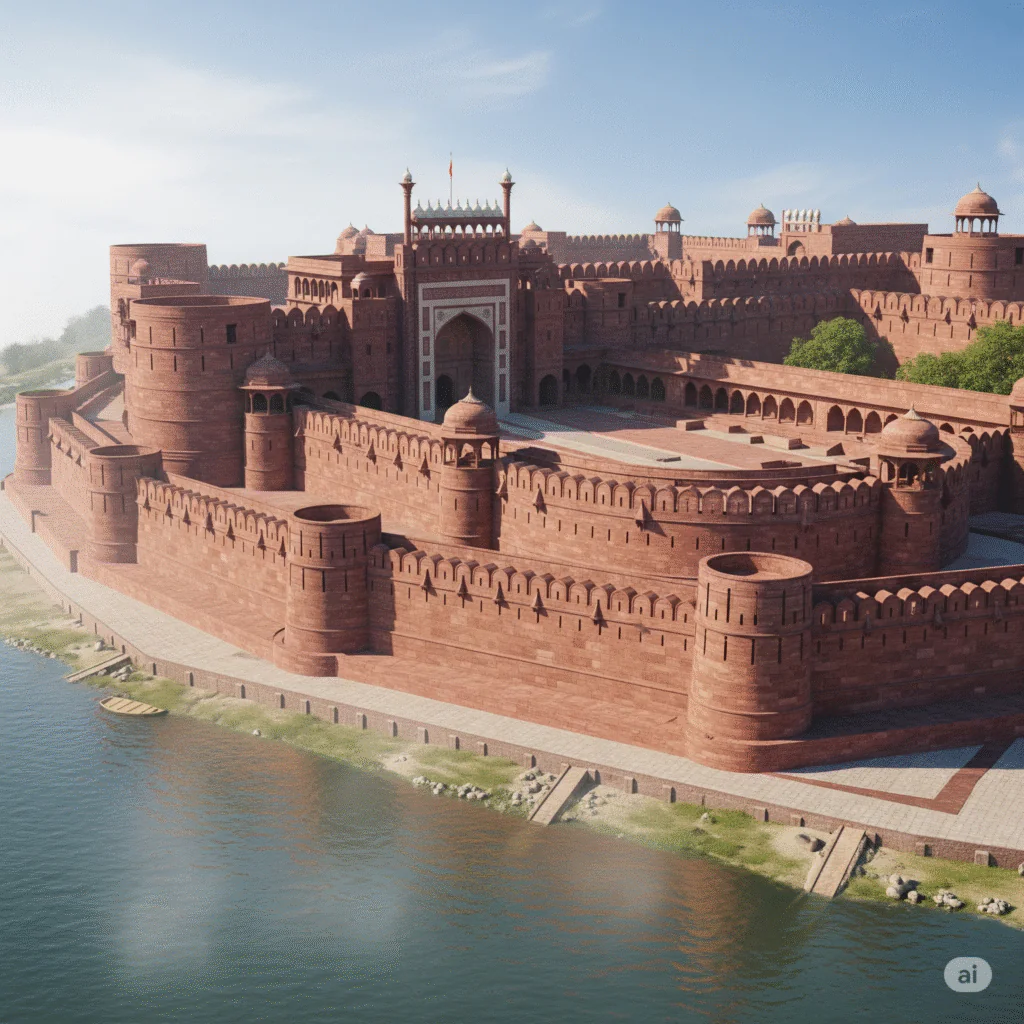
Agra Fort is a massive crescent-shaped fortification situated on the western bank of the Yamuna River. Its fortified complex covers approximately 94 acres, and its massive walls extend for about 2.5 kilometres. The structure combines military architecture with royal palaces, audience halls, mosques and gardens. Red sandstone is the dominant building material, while several important structures added during Shah Jahan's reign feature white marble.
Major Structures Inside Agra Fort
- Delhi Gate: An imposing entrance constructed during Akbar's reign and known for its impressive architectural features.
- Amar Singh Gate: The main entrance currently used by visitors to enter the fort.
- Diwan-i-Aam: The Hall of Public Audience, where the Mughal emperor received ordinary subjects and heard petitions.
- Diwan-i-Khas: The Hall of Private Audience, used for meetings with important courtiers, nobles and foreign representatives.
- Jahangiri Mahal: An important palace associated with Akbar's architectural programme and traditionally regarded as a residence for royal women.
- Moti Masjid: A beautiful white marble mosque constructed during Shah Jahan's reign.
- Musamman Burj: An octagonal tower and palace structure traditionally associated with Shah Jahan's confinement and his views towards the Taj Mahal.
Explore More About India's Historical Heritage
Discover books and resources related to Indian history, Mughal architecture and historical monuments.
Check the latest price on Amazon.
View on AmazonAs an Amazon Associate, I earn from qualifying purchases.
Cultural Importance of Agra Fort
Agra Fort is an outstanding example of Mughal architecture and an important symbol of India's historical and cultural heritage. Its buildings reflect the architectural vision, artistic traditions and royal lifestyle of successive Mughal emperors. The combination of red sandstone structures, marble palaces, decorative elements and fortified walls demonstrates the evolution of Mughal architecture.
Its historical association with Akbar, Jahangir, Shah Jahan and Aurangzeb makes the fort an important source for understanding Mughal political history, administration, art and architecture.
Conclusion
Agra Fort is one of India's most remarkable historical monuments and an essential destination for anyone interested in history and architecture. Its magnificent structures, rich Mughal heritage and association with important historical events make it a major cultural and tourist attraction. Together with the Taj Mahal and other Mughal monuments of Agra, it represents an important chapter in India's architectural history.
Detailed History of Agra Fort
Agra Fort has witnessed several centuries of political, military and cultural developments. Although earlier fortifications existed at this location, its transformation into a major imperial complex took place under the Mughal dynasty. The fort subsequently became an important centre of Mughal administration and royal life.
Early History
Before Akbar's reconstruction, a brick fortification traditionally known as Badalgarh existed at Agra. The site was associated with earlier rulers of northern India, including the Lodis. However, it was during the Mughal period that the fort acquired its major political, military and architectural importance.
Reconstruction by Akbar (1565–1573)
After consolidating Mughal authority, Emperor Akbar selected Agra as one of the principal centres of his empire. In 1565, he initiated the reconstruction of the old fortification into a powerful imperial fortress. Red sandstone was extensively used in its construction, and thousands of workers and craftsmen contributed to the project. The major construction work was completed around 1573.
Akbar's fort included massive defensive walls, imposing gateways, royal residences and administrative buildings. It became an important centre of Mughal political authority.
Era of Jahangir and Shah Jahan
Jahangir continued to use Agra Fort as an important royal and administrative centre. During his reign, the Mughal court maintained its political and cultural significance, and the fort remained associated with royal ceremonies and diplomatic interactions.
Shah Jahan, who had a special interest in architecture, introduced several important changes to the fort. He added elegant white marble buildings and palaces, including the Moti Masjid and Musamman Burj. These structures reflected the refined architectural style of his reign.
Imprisonment of Shah Jahan
After Aurangzeb came to power in 1658, Shah Jahan was placed under confinement in Agra Fort. He spent the final years of his life in the fort and died in 1666. Historical accounts associate his confinement with the Musamman Burj, from where he could view the Taj Mahal, the mausoleum of his wife Mumtaz Mahal.
Maratha and British Rule
During the eighteenth century, Agra Fort witnessed changing political control as Mughal authority weakened. The fort came under Maratha influence and subsequently experienced further political changes. In 1803, the British East India Company captured Agra during its military expansion in northern India.
Under British rule, the fort was used for military purposes and underwent changes that affected some of its historic structures. It later became an important protected heritage monument.
Historical Importance
- Agra Fort served as an important imperial centre and royal residence during the Mughal period.
- It reflects the development of Mughal military architecture, palace design and artistic traditions.
- The fort witnessed major political events during the reigns of Akbar, Jahangir, Shah Jahan and Aurangzeb.
- Along with the Taj Mahal, it represents an important achievement in Indian architecture and cultural heritage.
- Its UNESCO World Heritage recognition highlights its outstanding historical and architectural significance.
Agra Fort: Major Historical Events
Agra Fort has witnessed several important moments in Indian history. It reflects the political power, military conflicts, royal ambitions and cultural achievements of the Mughal Empire. From Akbar's reconstruction to the events of the 1857 Revolt, the fort has played an important role in the history of northern India.
1. Reconstruction by Akbar (1565–1573)
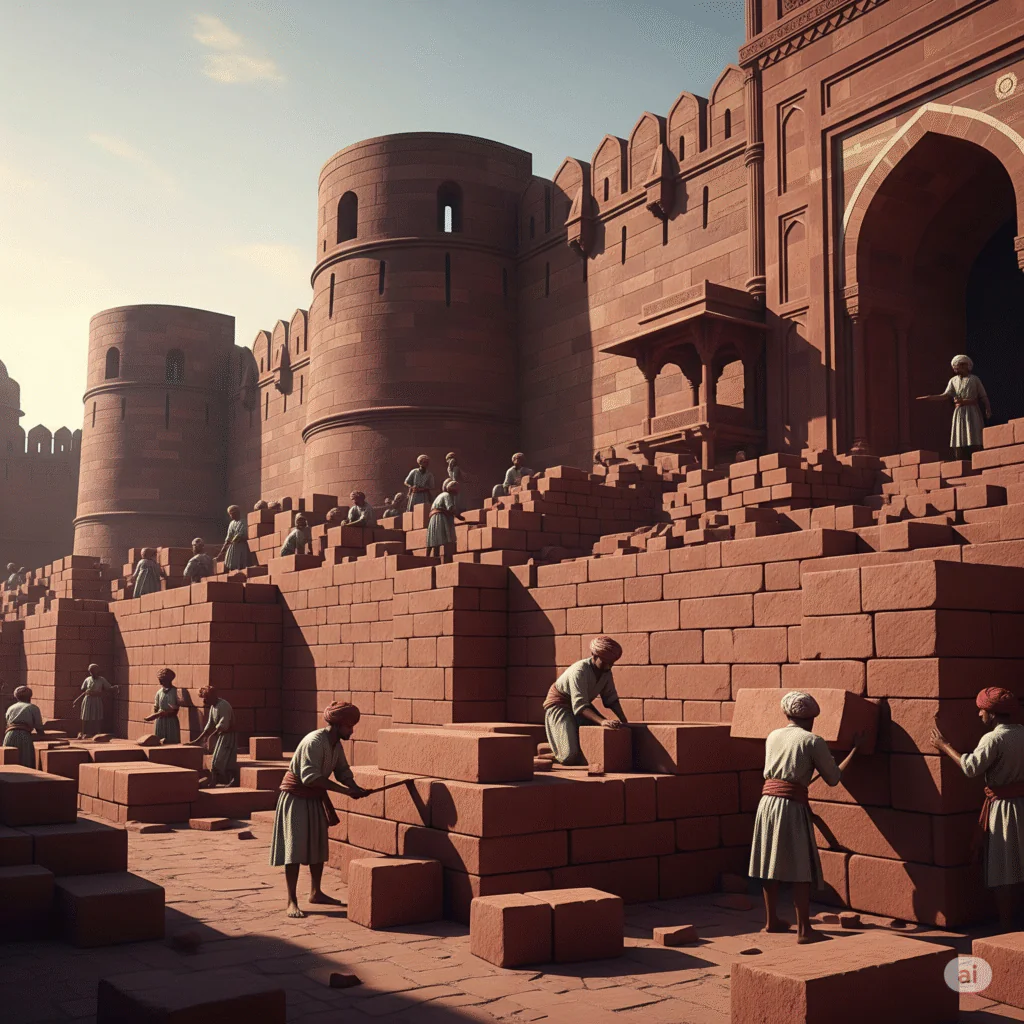
- Mughal Emperor Akbar began the reconstruction of the old fort in 1565.
- A massive fortress was constructed primarily using red sandstone.
- The complex was developed as a royal residence, administrative centre and military stronghold.
- The major construction work was completed around 1573.
2. Agra Became the Mughal Capital (1558)
- Akbar established Agra as his principal capital in 1558.
- Agra Fort gradually developed into an important centre of imperial governance and administration.
- The city became a major political, commercial and cultural centre of the Mughal Empire.
3. Coronation of Jahangir (1605)
- Following Akbar's death in 1605, his son Jahangir succeeded him as Mughal emperor.
- Agra remained an important royal and administrative centre during Jahangir's reign.
- The Mughal court continued to receive foreign visitors, diplomatic representatives and important nobles.
4. Construction of Marble Structures by Shah Jahan
- Shah Jahan significantly transformed the architectural appearance of Agra Fort.
- He commissioned several elegant marble structures and palaces within the fort complex.
- Important structures associated with his architectural programme include the Moti Masjid, Musamman Burj and Diwan-i-Khas.
- These buildings demonstrate the refinement and artistic excellence of Mughal architecture.
Explore More About Mughal History
Discover books and educational resources related to Mughal rulers, Indian history and historical monuments.

Check the latest price on Amazon.
View on AmazonAs an Amazon Associate, I earn from qualifying purchases.
5. Imprisonment of Shah Jahan (1658–1666)
- After Aurangzeb seized the Mughal throne in 1658, Shah Jahan was placed under confinement in Agra Fort.
- He spent the final years of his life in the fort, traditionally associated with the Musamman Burj.
- He died in 1666 and was later buried beside Mumtaz Mahal in the Taj Mahal.
6. Maratha and British Control
- During the eighteenth century, Agra Fort experienced changing political control as Mughal authority declined.
- The fort came under Maratha influence during this period.
- In 1803, the British East India Company captured Agra during its military expansion in northern India.
- The British subsequently used parts of the fort for military purposes.
7. Agra Fort During the Revolt of 1857
- During the Revolt of 1857, Agra became an important centre of political and military tension in northern India.
- British officials and civilians sought refuge inside Agra Fort during the uprising.
- The British military used the fortified complex as a strategic position during the disturbances.
- The events of 1857 further strengthened the British military presence in the region.
Conclusion
Agra Fort is not merely an architectural masterpiece but also an important historical record of India's past. Its association with Akbar, Jahangir, Shah Jahan and Aurangzeb, along with its later role during Maratha and British rule, makes it an essential monument for understanding Indian history. The events connected with this fort reflect the political transformations and cultural developments that shaped the history of northern India.
Architecture of Agra Fort
Agra Fort is a magnificent example of Mughal architecture. It was not merely a military fortification but also an extensive complex of royal palaces, audience halls, mosques and courtyards. Its architectural style reflects a remarkable combination of Islamic, Persian, Timurid and Indian architectural traditions, demonstrating the artistic vision and cultural influences of the Mughal period.
Building Materials
- Red Sandstone: Extensively used during the reconstruction of the fort under Emperor Akbar.
- White Marble: Introduced extensively in several royal buildings and palace structures during Shah Jahan's reign.
- Other Materials: Decorative stones, marble inlays and traditional construction materials were used in different parts of the complex.
- The fort covers approximately 94 acres, with massive fortified walls reaching considerable heights in different sections.
Architectural Features
1. Crescent-Shaped Structure
- The fort has a distinctive crescent-shaped plan and is situated on the western bank of the Yamuna River.
- Its massive defensive walls and strategically designed gateways provided protection to the royal complex.
- The location also offered strategic advantages because of its proximity to the river.
2. Impressive Gates
- Delhi Gate: An imposing entrance constructed during Akbar's reign, featuring impressive defensive and architectural elements.
- Amar Singh Gate: The principal entrance currently used by tourists visiting the fort.
3. Major Buildings and Structures
| Structure Name | Description |
|---|---|
| Jahangiri Mahal | An important palace associated with Akbar's architectural programme and traditionally considered a residence for royal women. |
| Diwan-i-Aam | The Hall of Public Audience, where the emperor received subjects, heard petitions and addressed public matters. |
| Diwan-i-Khas | The Hall of Private Audience, used for meetings with important courtiers, nobles and foreign representatives. |
| Moti Masjid | A beautiful white marble mosque constructed during Shah Jahan's reign. |
| Musamman Burj | An elegant octagonal tower and palace structure associated with Shah Jahan's confinement and offering views towards the Taj Mahal. |
| Shahi Baoli | A historic stepwell within the fort complex, associated with water storage and supply. |
Decoration and Carving
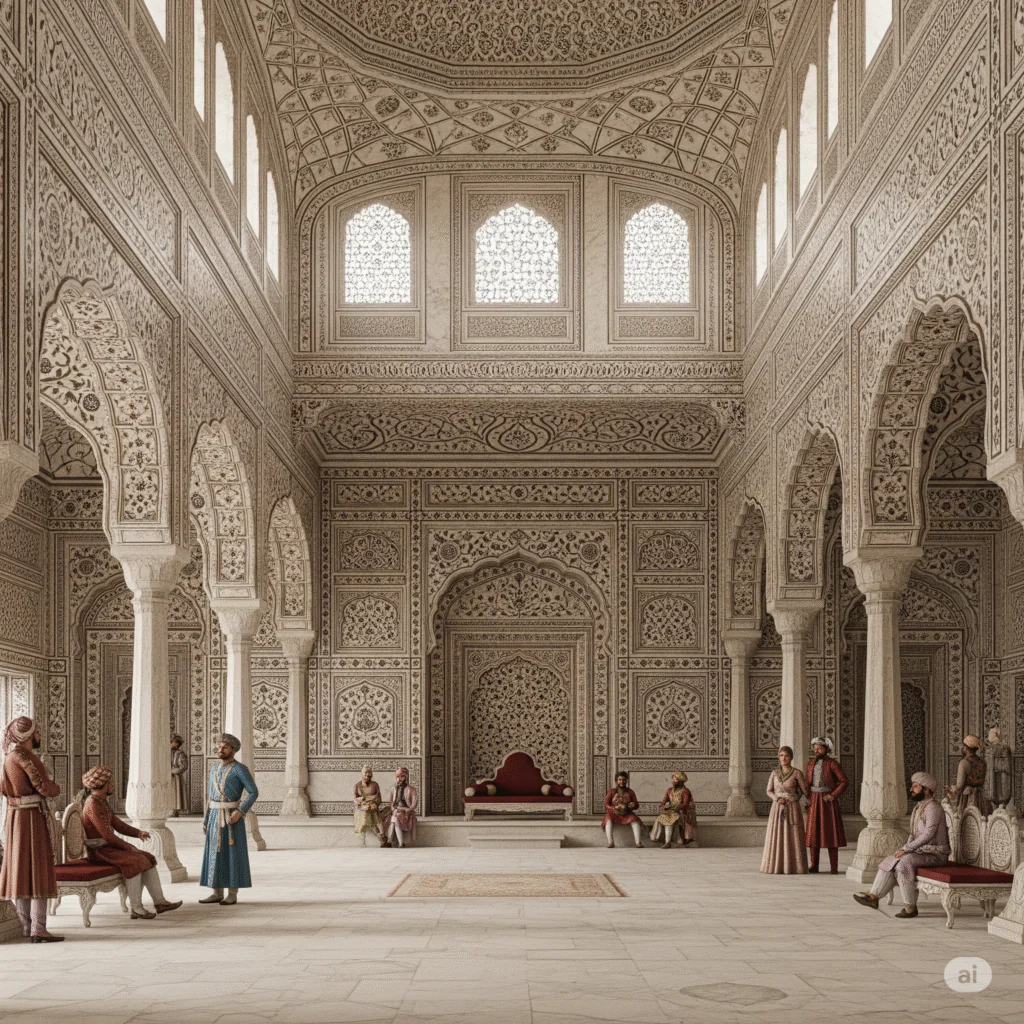
Agra Fort is famous for its decorative craftsmanship and intricate artistic details. Its walls, pillars and palace interiors feature floral patterns, geometric designs, calligraphic inscriptions and beautifully crafted jali (lattice) work.
Several marble buildings display Pietra Dura (stone inlay work), in which colourful semi-precious stones are embedded into marble surfaces to create decorative floral and geometric patterns. These artistic elements reflect the sophistication of Mughal craftsmanship.
Gardens and Courtyards
- The fort complex contains landscaped gardens and open courtyards associated with Mughal palace planning.
- Some garden spaces reflect the influence of the traditional Charbagh garden concept.
- Courtyards provided open spaces for royal activities, gatherings and movement between palace buildings.
- Gardens, water features and shaded architectural spaces contributed to the comfort and aesthetic character of the royal complex.
Explore More About Mughal Architecture
Discover books and educational resources related to Mughal architecture, Indian history and historical monuments.

Check the latest price on Amazon.
View on AmazonAs an Amazon Associate, I earn from qualifying purchases.
Conclusion
The architecture of Agra Fort represents a unique combination of military strength, artistic beauty and royal grandeur. Its red sandstone fortifications, marble palaces, decorative carvings and impressive courtyards reflect the architectural achievements of the Mughal Empire. Even today, its structures provide valuable insights into the art, culture and lifestyle of the Mughal rulers.
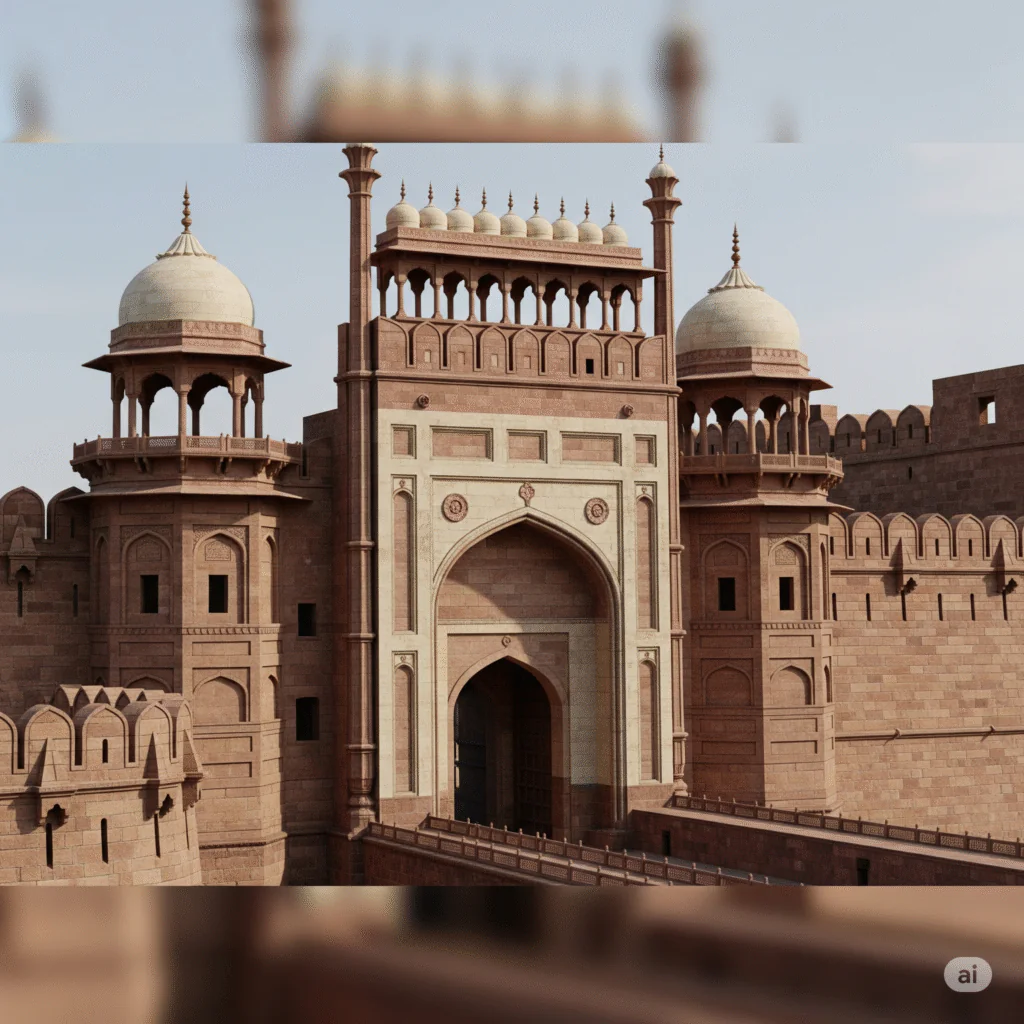
Major Structures of Agra Fort
Agra Fort is not merely a military fortress but an extensive royal complex containing magnificent palaces, audience halls, mosques, towers and courtyards. These structures reflect the architectural vision, artistic achievements and royal lifestyle of successive Mughal emperors. Together, they provide valuable insights into the political, cultural and architectural history of the Mughal Empire.
1. Jahangiri Mahal
- Builder: Primarily associated with the architectural programme of Emperor Akbar.
- Purpose: Traditionally associated with the residential requirements of the Mughal royal women.
- Architectural Features: Constructed mainly of red sandstone, the palace combines Persian, Central Asian and Indian architectural elements.
- Historical Importance: It is one of the most prominent surviving residential structures from Akbar's period inside Agra Fort.
2. Diwan-i-Aam (Hall of Public Audience)
- Builder: Commissioned during the reign of Shah Jahan.
- Purpose: Used by the emperor to receive ordinary subjects, hear petitions and address public matters.
- Architectural Features: A spacious pillared hall with an elevated imperial throne area.
- Historical Importance: It reflects the administrative and public audience traditions of the Mughal court.
3. Diwan-i-Khas (Hall of Private Audience)
- Builder: Associated with Shah Jahan's architectural developments at Agra Fort.
- Purpose: Used for meetings with important nobles, high-ranking officials and foreign representatives.
- Architectural Features: Known for its refined design, decorative details and use of marble.
- Historical Importance: It represents the ceremonial and diplomatic functions of the Mughal imperial court.
Explore More About Mughal Architecture
Discover books and educational resources related to Mughal architecture, Indian history and historical monuments.

Check the latest price on Amazon.
View on AmazonAs an Amazon Associate, I earn from qualifying purchases.
4. Moti Masjid (Pearl Mosque)
- Builder: Commissioned by Emperor Shah Jahan.
- Meaning: The name Moti Masjid means Pearl Mosque, referring to the beauty and appearance of its white marble architecture.
- Architectural Features: Built primarily of white marble, it is admired for its elegant proportions and relatively simple decorative style.
- Historical Importance: It is an important example of Mughal religious architecture and reflects Shah Jahan's preference for marble construction.
5. Musamman Burj (Octagonal Tower)
- Builder: Associated with Shah Jahan's architectural additions to Agra Fort.
- Location: Situated near the palace complex and overlooking the Yamuna River and the Taj Mahal.
- Architectural Features: An elegant octagonal marble structure featuring decorative work and open balconies.
- Historical Importance: Traditionally associated with Shah Jahan's confinement under Aurangzeb. Historical accounts connect his final years with this part of the fort, from where he could view the Taj Mahal.
6. Amar Singh Gate
- Purpose: It serves as the principal entrance for visitors to Agra Fort today.
- Architectural Features: Designed with defensive elements, strong gateways and a controlled entrance route.
- Historical Importance: It illustrates the military and defensive planning of the Mughal fortress.
7. Shahi Hamam (Royal Bathhouse)
- Purpose: Associated with the bathing and personal comfort arrangements of the royal household.
- Architectural Features: Mughal bathhouse traditions included water channels, bathing chambers and arrangements for hot and cold water.
- Historical Importance: Such facilities reflect the lifestyle, luxury and sophisticated water-management practices of the Mughal royal court.
8. Gardens and Charbagh Tradition
- Architectural Features: Mughal garden planning was influenced by the Persian Charbagh concept, which traditionally divided a garden into four sections.
- Purpose: Gardens and landscaped courtyards provided recreational spaces and enhanced the visual beauty of royal complexes.
- Historical Importance: The garden tradition reflects Persian cultural influences and the Mughal emphasis on symmetry, water features and natural beauty.
Conclusion
The major structures of Agra Fort are outstanding examples of Mughal architectural and artistic achievements. From Jahangiri Mahal and the audience halls to Moti Masjid and Musamman Burj, each structure provides insights into the political, religious and personal lives of Mughal emperors. Their architectural beauty and historical importance continue to make Agra Fort one of India's most significant heritage destinations.
Cultural Importance of Agra Fort
Agra Fort is not merely a historical fortress but an important symbol of India's cultural heritage, architectural excellence and Mughal lifestyle. Its magnificent buildings, palaces and courtyards reflect centuries of artistic development, political history and cultural traditions. The fort provides valuable insights into the history and achievements of the Mughal Empire.
1. Confluence of Indian and Mughal Culture
- Agra Fort reflects a combination of Indian, Persian, Central Asian and Islamic architectural traditions.
- Structures such as Jahangiri Mahal feature decorative elements, including floral motifs, geometric patterns and architectural details influenced by different artistic traditions.
- The integration of regional craftsmanship and Persianate architectural influences demonstrates the cultural interaction that shaped Mughal architecture.
- The fort provides an important example of the development of a distinctive Mughal architectural identity in India.
Explore India's Cultural Heritage
Discover books and educational resources related to Indian history, Mughal culture and architectural heritage.
Check the latest price on Amazon.
View on AmazonAs an Amazon Associate, I earn from qualifying purchases.
2. Symbol of Art and Architecture
- Magnificent structures made of red sandstone and white marble demonstrate the artistic achievements of Mughal architecture.
- Decorative latticework, floral carvings, geometric patterns and Pietra Dura inlay work reflect the craftsmanship of the period.
- Palaces, audience halls, mosques and courtyards illustrate the architectural vision and aesthetic preferences of successive Mughal emperors.
3. Relationship with Literature and Music
- Agra was an important political and cultural centre during the Mughal period.
- Mughal royal courts supported literary activities, poetry, painting, music and other artistic traditions.
- Scholars, poets, musicians and artists contributed to the cultural environment associated with Mughal imperial life.
- The fort provides an important historical setting for understanding the relationship between political power and artistic patronage.
4. Reflection of Religious and Cultural Diversity
- Agra Fort contains Islamic religious structures as well as architectural elements influenced by regional Indian traditions.
- Decorative motifs, floral designs and traditional Indian craftsmanship can be observed in different parts of the complex.
- The fort reflects the cultural interactions and artistic exchanges that took place during the Mughal period.
- Its architecture provides insights into the diverse cultural influences that shaped the Mughal imperial environment.
5. Centre of Cultural Tourism
- Agra Fort is an important tourist attraction for visitors interested in Indian history, architecture and culture.
- It provides educational opportunities for students, researchers and historians studying the Mughal period.
- The monument contributes to heritage tourism and supports the preservation of India's historical identity.
- Its location near the Taj Mahal makes it an important part of Agra's cultural tourism circuit.
6. Recognition as a UNESCO World Heritage Site
- Agra Fort was inscribed on the UNESCO World Heritage List in 1983.
- Its recognition highlights its outstanding universal value as a major example of Mughal architecture and imperial history.
- International recognition has strengthened efforts towards heritage conservation, restoration and public awareness.
- The fort represents an important part of India's cultural heritage on the global stage.
Conclusion
Agra Fort is a remarkable symbol of India's historical, cultural and architectural heritage. Its palaces, mosques, audience halls and decorative features reflect the artistic achievements and royal lifestyle of the Mughal Empire. The monument also provides insights into the cultural interactions and historical developments that shaped northern India.
Its UNESCO World Heritage recognition, architectural beauty and historical significance make it an invaluable heritage site. Visiting Agra Fort is not only a journey through history but also an opportunity to understand the rich cultural traditions of India.
References
- Archaeological Survey of India (ASI) – Historical monuments and heritage conservation.
- UNESCO World Heritage Centre – Agra Fort.
- Uttar Pradesh Tourism Department – Tourism and heritage information.
- R. Nath – Research publications on Mughal architecture and the historical monuments of Agra.
- Historical studies on Mughal architecture, art and cultural development in medieval India.