
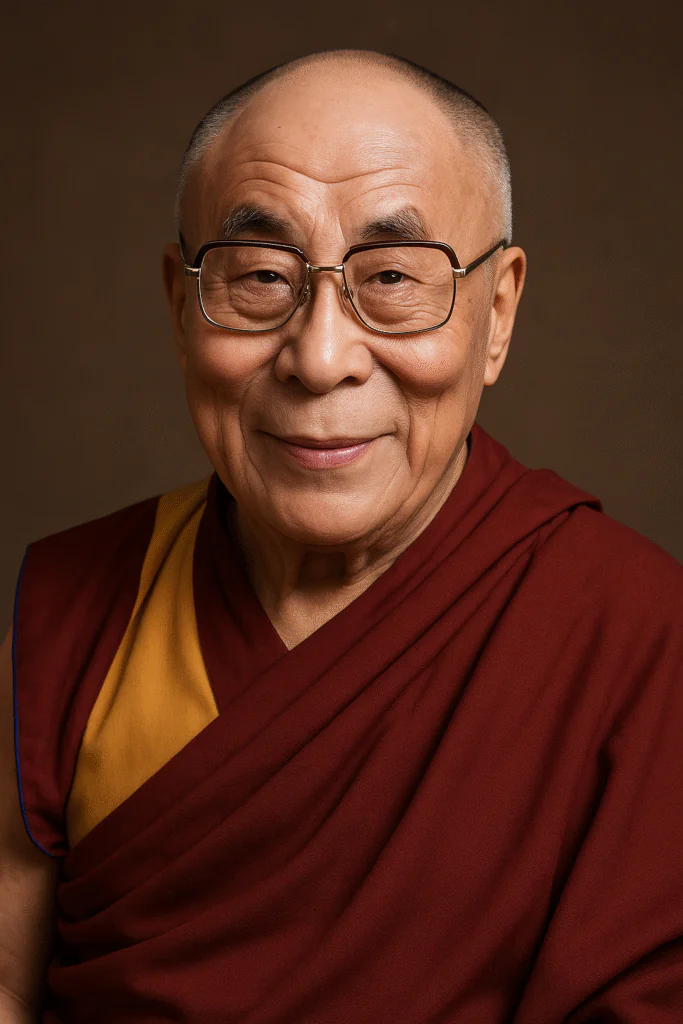
Dalai Lama: Inspiring Life and Powerful Message of Compassion
The Dalai Lama is the supreme spiritual leader of Tibetan Buddhism. The present holder of this sacred title is the 14th Dalai Lama, Tenzin Gyatso, a globally respected advocate of peace, compassion and nonviolence.
Introduction to the 14th Dalai Lama
Born in 1935 in a small Tibetan village, Tenzin Gyatso was recognized as the reincarnation of his predecessor at a young age. Over the decades, he has become an international symbol of peace, dialogue and human values.
Basic Information
| Subject | Description |
|---|---|
| Full Name | Tenzin Gyatso |
| Title | 14th Dalai Lama |
| Date of Birth | 6 July 1935 |
| Birthplace | Tibet (now under China) |
| Residence | Dharamsala, India |
| Award | Nobel Peace Prize (1989) |

Check Latest Price on Amazon
View on AmazonAs an Amazon Associate, I earn from qualifying purchases.
Exile and Global Recognition
In 1959, after political tensions in Tibet, he sought refuge in India. Since then, the Tibetan spiritual leader has worked tirelessly to preserve Tibetan culture and promote peaceful dialogue.
In 1989, he received the Nobel Peace Prize for advocating nonviolent solutions and universal responsibility.
Core Teachings and Philosophy
Compassion
Compassion remains the foundation of his message. He believes kindness is essential for individual and global harmony.
Nonviolence
Inspired by leaders like Mahatma Gandhi, he promotes peaceful dialogue instead of aggression.
Mind Training
A calm and disciplined mind leads to happiness and resilience.
Religious Harmony
All faiths share values of love and ethics; mutual respect is necessary.
Inspirational Quotes
- "Whenever possible, be kind. It is always possible."
- "If you want to be happy, practice compassion."
- "Love and compassion are necessities, not luxuries."
Conclusion
The life of the Dalai Lama reflects courage, humility and unwavering dedication to humanity. Despite exile and political challenges, he continues to inspire millions through his peaceful philosophy and humanitarian vision.
His journey teaches that true strength lies not in power, but in compassion and service.

Reincarnation and Tibetan Exile: The Powerful Journey of the Dalai Lama
Reincarnation is a central concept in several Eastern religions. In Tibetan Buddhism, this belief holds special importance, especially in relation to the Dalai Lama, who is regarded as a spiritual leader reborn to serve humanity.
Meaning of Reincarnation
Reincarnation refers to the idea that after death, consciousness continues and takes birth again in a new form. This concept is deeply rooted in Hinduism, Buddhism, Jainism and Sikh traditions.
Reincarnation in Buddhist Philosophy
- There is no permanent soul; instead, there is a continuity of consciousness.
- Rebirth depends on karma (actions performed in previous life).
- The endless cycle of birth and death is called Saṃsāra.
- Freedom from this cycle is known as Nirvana.
The Dalai Lama and the Belief in Rebirth
In Tibetan Buddhism, the Dalai Lama is believed to be the reincarnation of Avalokiteshvara, the Bodhisattva of compassion. It is said that he consciously chooses rebirth to continue guiding humanity toward peace and wisdom.
How the Next Dalai Lama is Identified
After the passing of a Dalai Lama, monks begin a sacred search process. This includes spiritual visions, symbolic signs, and traditional tests to identify the child who carries the consciousness of the previous leader.

Check Latest Price on Amazon
View on AmazonAs an Amazon Associate, I earn from qualifying purchases.
Purpose of Reincarnation
- To experience the results of karma
- To purify consciousness
- To progress toward enlightenment
“Whenever I die, I will be reborn to serve humanity.” — Dalai Lama
Tibetan Exile: A Historic Turning Point
The Tibetan exile began in 1959 when the 14th Dalai Lama fled Tibet following political tensions and military conflict with China. This moment changed Tibetan history forever.
Timeline of Major Events
| Year | Event |
|---|---|
| 1950 | Chinese forces entered Tibet. |
| 1951 | 17-Point Agreement signed under pressure. |
| March 1959 | Uprising in Lhasa against Chinese control. |
| 31 March 1959 | The Dalai Lama arrived in India and received asylum. |
Life in Exile in India
Since 1959, Dharamsala (Himachal Pradesh) has been the residence of the Tibetan spiritual leader. The Central Tibetan Administration was formed to preserve Tibetan culture, religion and identity.
Role After Exile
- Promoted peaceful dialogue instead of violence.
- Advocated meaningful autonomy rather than full independence.
- Worked globally for compassion and interfaith harmony.
Conclusion
The story of reincarnation and Tibetan exile represents both spiritual faith and political struggle. The Dalai Lama’s journey reflects resilience, peace and unwavering dedication to humanity.
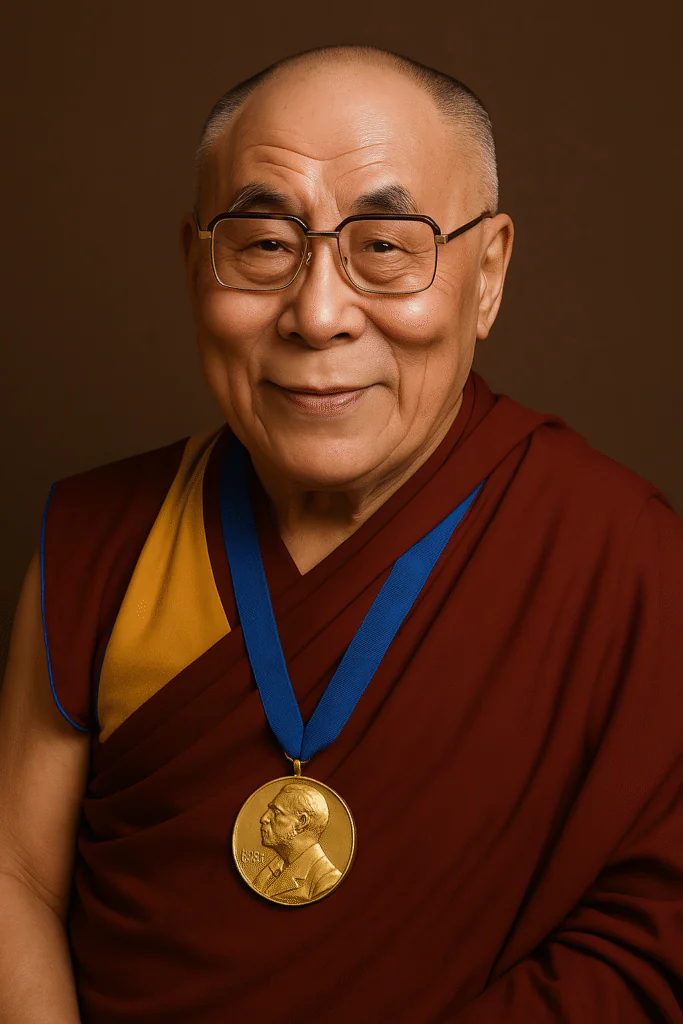
Dalai Lama & the 1989 Nobel Peace Prize: A Powerful Journey of Nonviolence
The 14th Dalai Lama, Tenzin Gyatso, received the Nobel Peace Prize in 1989 for his unwavering commitment to nonviolence, compassion, and human rights. The award recognized his peaceful struggle for Tibetan autonomy and global harmony.
Why the Dalai Lama Won the Nobel Peace Prize
| Reason | Explanation |
|---|---|
| Nonviolent Resistance | He consistently rejected violence and promoted dialogue. |
| Human Rights Advocacy | Spoke for Tibetan cultural and religious freedom. |
| Global Peace Message | Encouraged compassion, tolerance, and coexistence worldwide. |
| Environmental Awareness | Highlighted the importance of protecting nature. |
Significance of the Year 1989
The award year marked the 120th birth anniversary of Mahatma Gandhi, whom the Tibetan spiritual leader considers a major inspiration for nonviolent resistance.
His Response to the Award
“This prize belongs to all those who struggle peacefully for justice and freedom.”
China–Tibet Conflict Explained
The conflict between China and Tibet centers around political control, religious freedom, and cultural identity.
Main Reasons Behind the Dispute
| Issue | Details |
|---|---|
| Chinese Entry (1950) | China took control of Tibet. |
| 17-Point Agreement | Promised autonomy but implementation remains disputed. |
| 1959 Uprising | Dalai Lama fled to India after unrest in Lhasa. |
| Religious Restrictions | Limitations on monasteries and Buddhist practices. |
| Reincarnation Control | China claims authority over approving the next Dalai Lama. |

Check Latest Price on Amazon
View on AmazonAs an Amazon Associate, I earn from qualifying purchases.
The Dalai Lama’s Stand
He does not demand full independence. Instead, he seeks meaningful autonomy and cultural preservation through peaceful dialogue.
Core Teachings
Compassion
True happiness comes from helping others.
Nonviolence
Peaceful dialogue is stronger than aggression.
Inner Peace
Meditation and self-discipline create lasting stability.
Humanity First
“My religion is kindness.”
Inspirational Quotes
- “Whenever possible, be kind. It is always possible.”
- “We all belong to one human family.”
- “Peace begins within.”
Conclusion
The Nobel Peace Prize recognized not only one individual, but a philosophy of nonviolence and compassion. The Dalai Lama’s journey remains a powerful example of moral courage in modern global history.
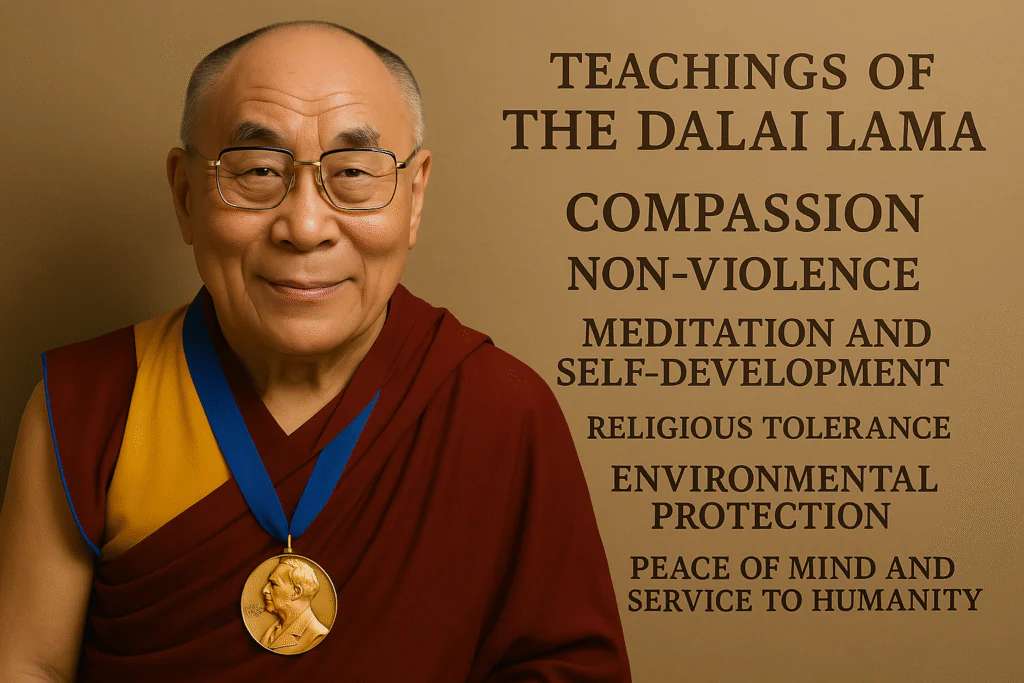
Dalai Lama’s Powerful Inspirational Teachings on Compassion and Peace
The Dalai Lama is widely respected as a global symbol of peace, compassion, and humanity. His teachings go beyond religion and focus on universal values that connect all human beings.
Teachings on Life and Compassion
“Whenever possible, be kind — it is always possible.”
“If you want others to be happy, practice compassion. If you want to be happy, practice compassion.”
Compassion, according to the Tibetan spiritual leader, is not weakness but the foundation of real strength and happiness.
Teachings on Peace and Nonviolence
“Peace does not mean the absence of war; it is connected with the stability of the mind and compassion.”
“Nonviolence can be our greatest strength.”
Inspired by Mahatma Gandhi, he believes conflicts should be resolved through dialogue rather than violence.
Teachings on Humanity and Tolerance
“My religion is kindness.”
“We are human beings first, then citizens of any religion or country.”
“Real religion is very simple — it is kindness, love, and compassion.”
His philosophy emphasizes that humanity must rise above divisions of religion, nationality, and politics.
Teachings on Self-Development and Inner Peace
“Happiness comes from within.”
“External circumstances are not the source of our happiness — our mind is.”
“Even your enemy can be your teacher.”
Meditation, mindfulness, and mental discipline are essential tools for lasting peace.
Teachings on Education and Positive Thinking
“The purpose of education is not only to increase intelligence, but also to educate the heart.”
“With positive thinking, anything becomes possible.”
Education should develop moral values along with intellectual growth.

Check Latest Price on Amazon
View on AmazonAs an Amazon Associate, I earn from qualifying purchases.
Conclusion
The Dalai Lama’s life and philosophy demonstrate that true power lies not in weapons or authority, but in kindness, patience, and moral courage.
- He consistently chose nonviolence over aggression.
- His teachings connect humanity beyond borders.
- He proved inner peace is stronger than external conflict.
- Compassion can transform societies.
References
- Official Website of the 14th Dalai Lama – dalailama.com
- Nobel Prize Official Website – nobelprize.org
- Central Tibetan Administration – tibet.net
- Encyclopaedia Britannica – britannica.com
- BBC News – bbc.com
Dalai Lama’s Powerful Inspirational Teachings on Compassion and Peace
The Dalai Lama is widely respected as a global symbol of peace, compassion, and humanity. His teachings go beyond religion and focus on universal values that connect all human beings.
Teachings on Life and Compassion
“Whenever possible, be kind — it is always possible.”
“If you want others to be happy, practice compassion. If you want to be happy, practice compassion.”
Compassion, according to the Tibetan spiritual leader, is not weakness but the foundation of real strength and happiness.
Teachings on Peace and Nonviolence
“Peace does not mean the absence of war; it is connected with the stability of the mind and compassion.”
“Nonviolence can be our greatest strength.”
Inspired by Mahatma Gandhi, he believes conflicts should be resolved through dialogue rather than violence.
Teachings on Humanity and Tolerance
“My religion is kindness.”
“We are human beings first, then citizens of any religion or country.”
“Real religion is very simple — it is kindness, love, and compassion.”
His philosophy emphasizes that humanity must rise above divisions of religion, nationality, and politics.
Teachings on Self-Development and Inner Peace
“Happiness comes from within.”
“External circumstances are not the source of our happiness — our mind is.”
“Even your enemy can be your teacher.”
Meditation, mindfulness, and mental discipline are essential tools for lasting peace.
Teachings on Education and Positive Thinking
“The purpose of education is not only to increase intelligence, but also to educate the heart.”
“With positive thinking, anything becomes possible.”
Education should develop moral values along with intellectual growth.
Check Latest Price on Amazon
View on AmazonAs an Amazon Associate, I earn from qualifying purchases.
Conclusion
The Dalai Lama’s life and philosophy demonstrate that true power lies not in weapons or authority, but in kindness, patience, and moral courage.
- He consistently chose nonviolence over aggression.
- His teachings connect humanity beyond borders.
- He proved inner peace is stronger than external conflict.
- Compassion can transform societies.
References
- Official Website of the 14th Dalai Lama – dalailama.com
- Nobel Prize Official Website – nobelprize.org
- Central Tibetan Administration – tibet.net
- Encyclopaedia Britannica – britannica.com
- BBC News – bbc.com