Astrology

Astrology — My Journey, Learnings & Practical Guide

Astrology — My Journey, Learnings & Practical Guide

How I Encountered Astrology

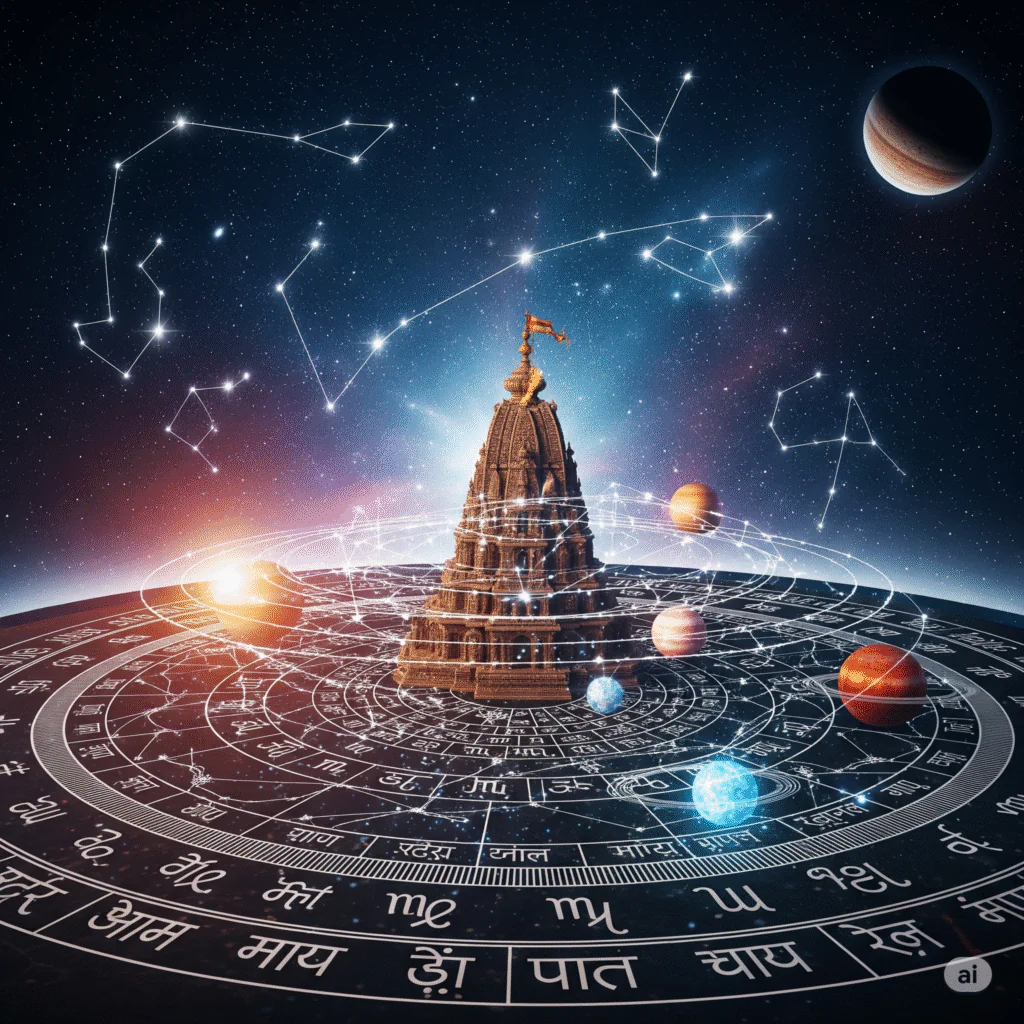
I first encountered astrology as a mixture of science and spirituality — an ancient body of knowledge that links planetary motion and celestial patterns with life on Earth. Over time, reading scriptures and talking to practitioners helped me appreciate astrology not only as prediction but also as cultural guidance and a way to reflect on life.

Original Meaning of the Word “Astrology”

The word commonly translated as astrology in South Asian traditions comes from Sanskrit roots:

  • Jyoti = light
  • śa / śa = god, knowledge, or master

Literally the term points to “knowledge by light” — an attempt to understand life and the universe through the light of celestial bodies.

Vedic definition

In Vedic context, astrology (Jyotish) is described as a form of vision or insight into life’s events, good and bad times, and the influence of cosmic energies.

Major Types of Astrology

Vedic Jyotish (Indian / Hindu Astrology)

Vedic or Hindu astrology is the traditional system practiced in India. It is often subdivided into three branches:

  • Fundamental/Astronomical Calculations — precise astronomical computations that form the basis of charts.
  • Predictive Techniques — methods for forecasting events affecting individuals, society, or natural phenomena.
  • Hora / Prashna (Horary) — answering specific questions based on the horoscope or moment of query.

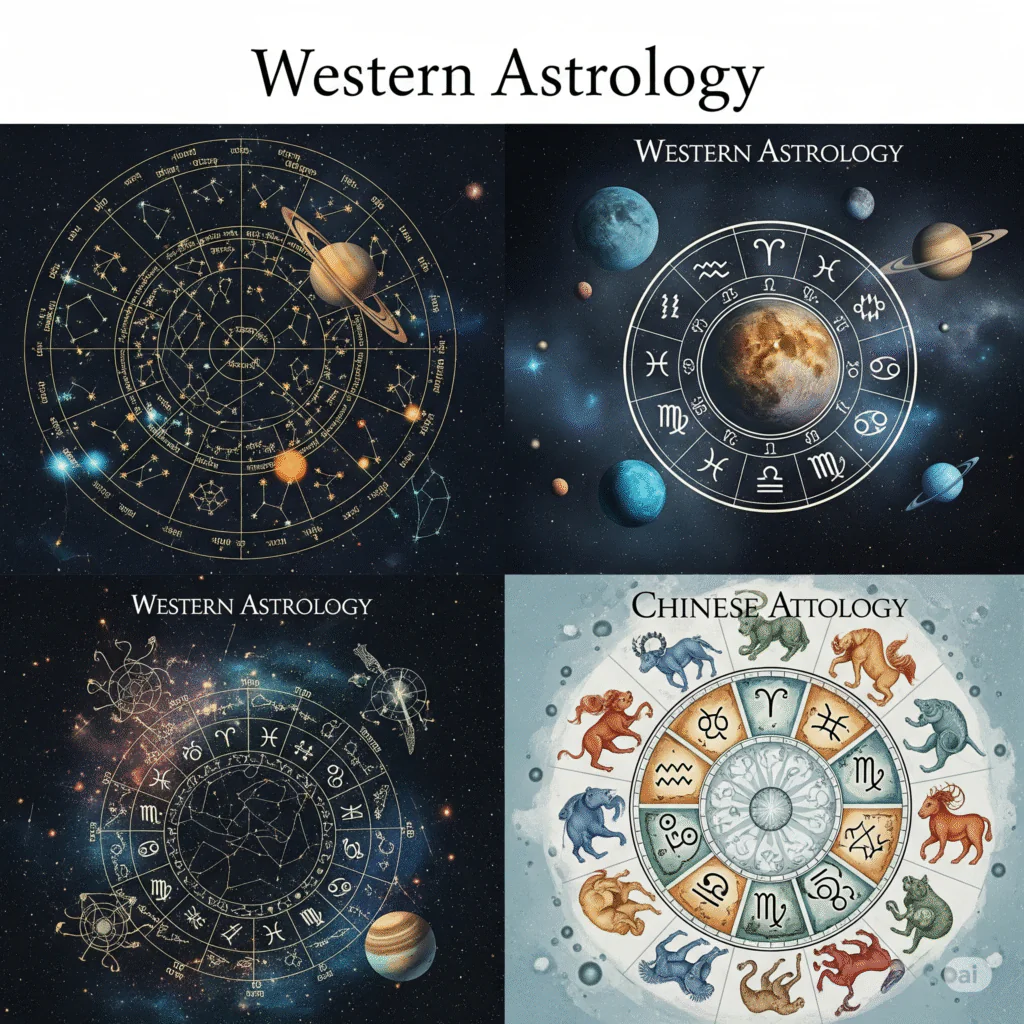
Western Astrology

Western astrology is primarily solar-based and centers on the Sun’s placement. It uses twelve zodiac signs and ten classical planets as the core framework for character and future-oriented readings.

Chinese Astrology

Chinese astrology is animal-based (rat, ox, tiger, etc.) and incorporates the five elements — wood, fire, earth, metal, water — as an essential influence on personality and destiny.

Core Elements of Astrology

Planets (Grahas)

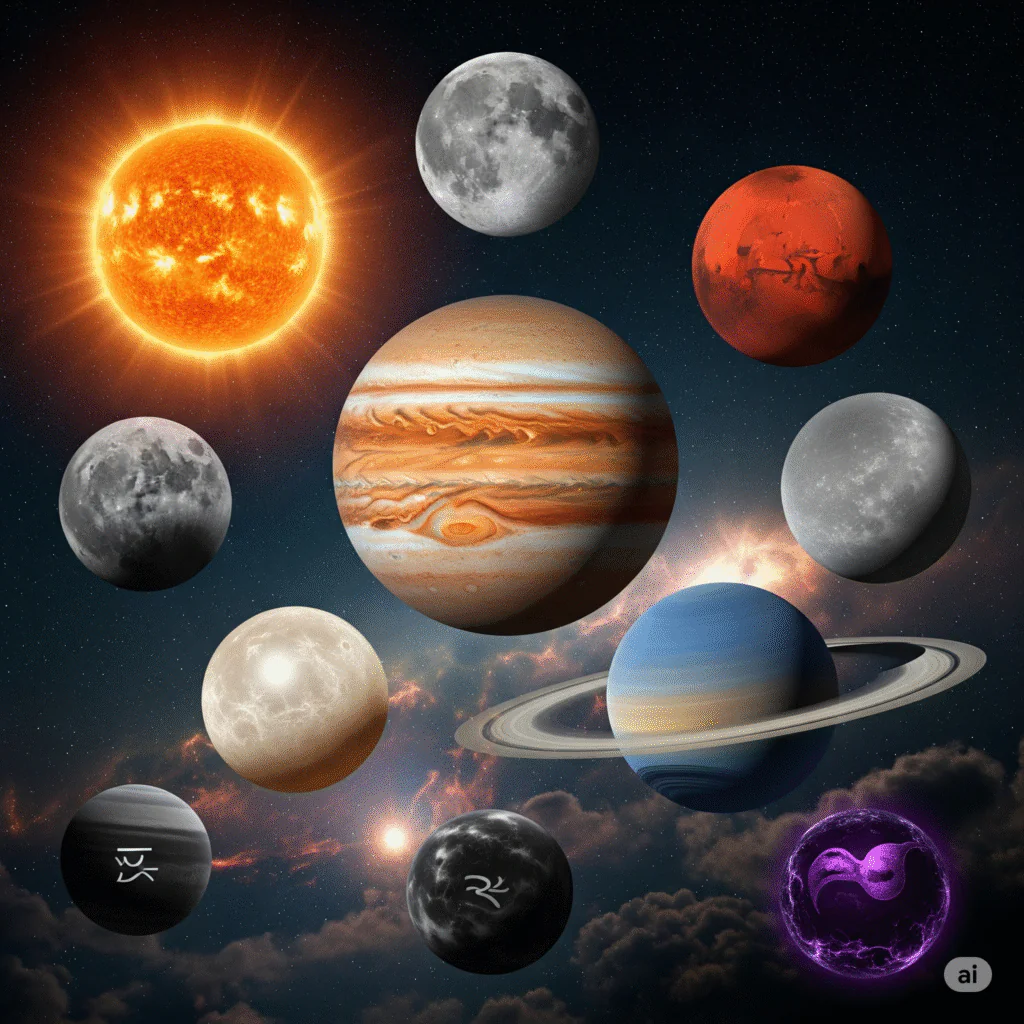
Classically, nine planets are used in Vedic astrology:

  • Sun (Surya)
  • Moon (Chandra)
  • Mars (Mangala)
  • Mercury (Budha)
  • Jupiter (Guru)
  • Venus (Shukra)
  • Saturn (Shani)
  • Rahu (north lunar node)
  • Ketu (south lunar node)

Zodiac Signs (Rāśi)

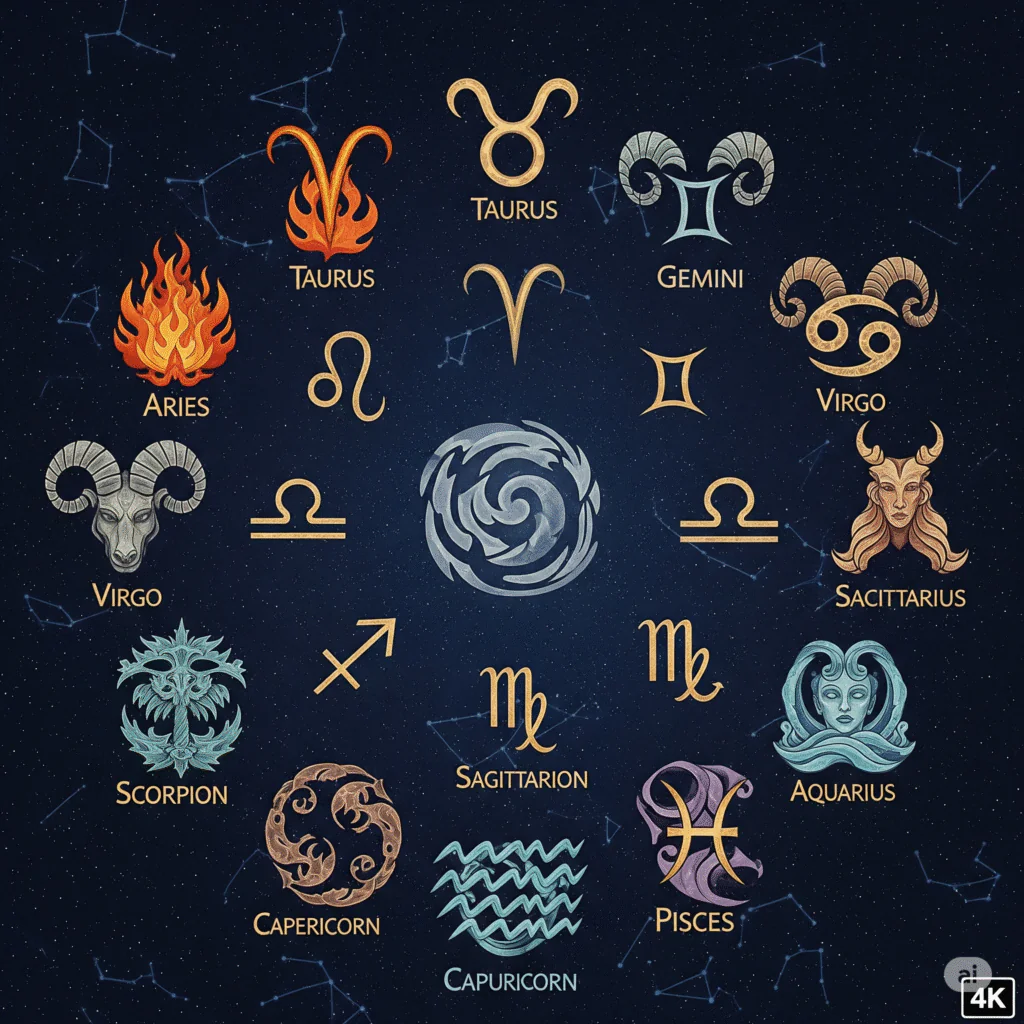
The twelve zodiac signs are:

  • Aries, Taurus, Gemini, Cancer, Leo, Virgo, Libra, Scorpio, Sagittarius, Capricorn, Aquarius, Pisces

Houses (Bhāvas)

A horoscope has twelve houses, each reflecting different life areas such as health, wealth, education, marriage, children and career.

Constellations (Nakshatras)

Vedic astrology uses 27 lunar constellations, for example Ashwini, Bharani, Kṛttikā, etc., each with unique qualities.

Practical Uses of Astrology

Through my learning and experience, I found common practical applications include:

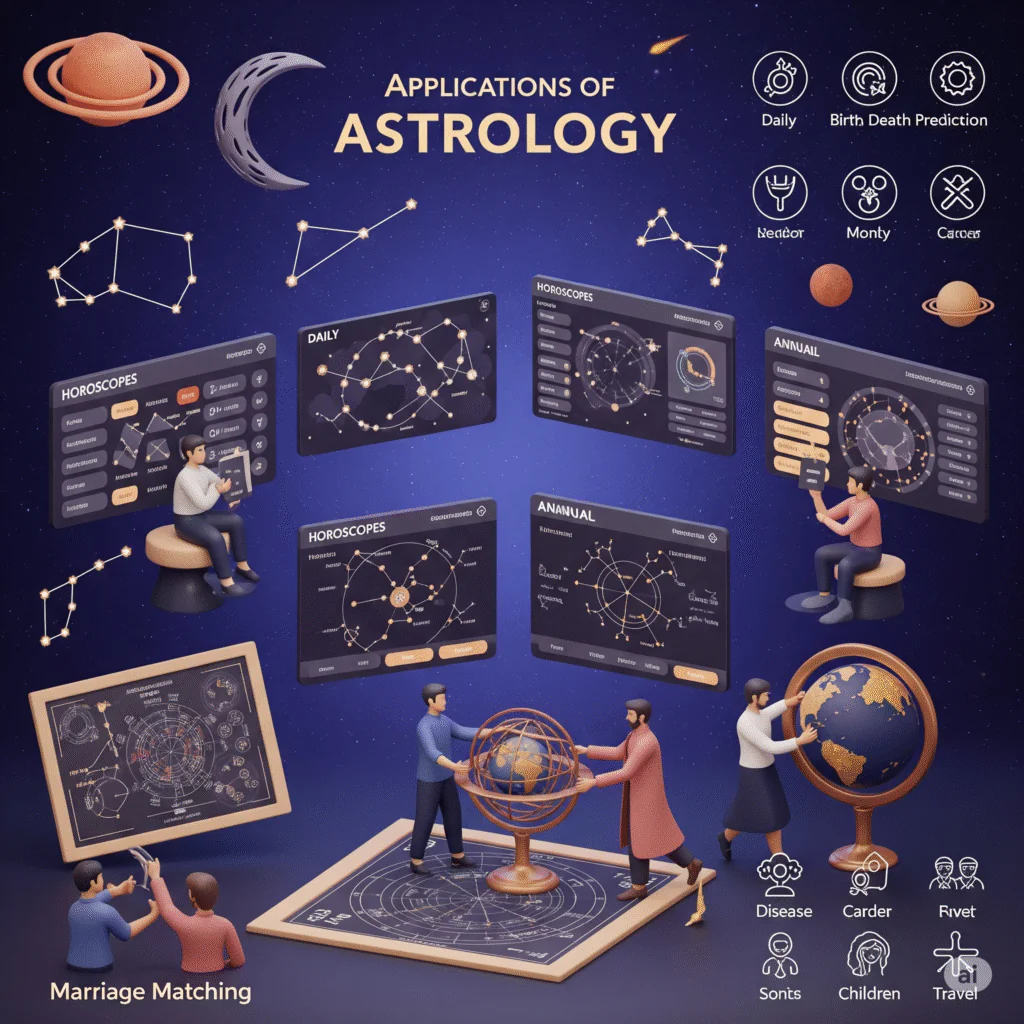
  • Constructing and analyzing horoscopes for individuals.
  • Marriage matching (compatibility analysis).
  • Daily, weekly, monthly and annual forecasts.
  • Determining muhūrta — auspicious timings for events.
  • Understanding dashas (planetary periods) and transits to anticipate life trends.
  • Advice related to health, career, travel, relationships and family matters.

Scientific Perspective and Criticisms

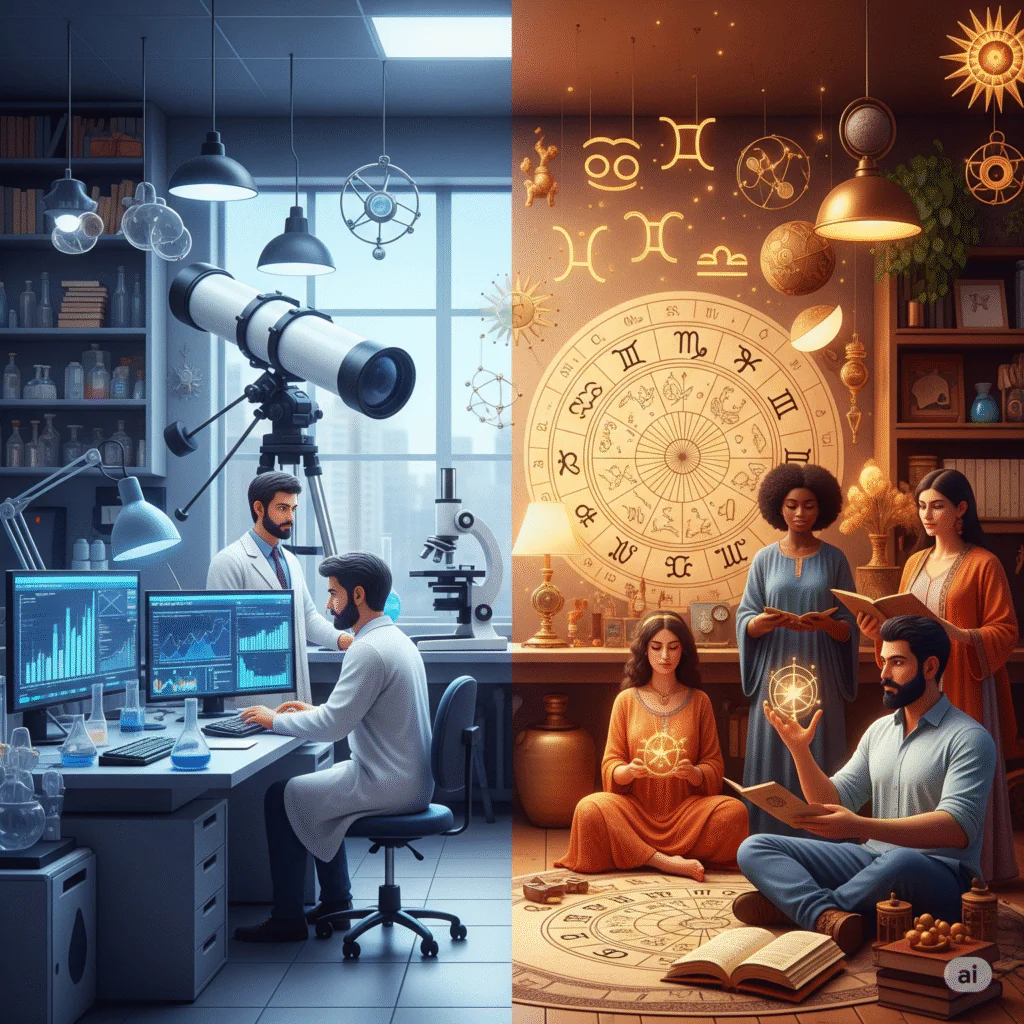
Many in the scientific community consider astrology unscientific because it lacks consistent experimental proof and replicable evidence. That critique is valid when claims are absolute or when astrology is presented as deterministic science.

Cultural and Psychological Value

Despite scientific criticisms, astrology holds cultural, psychological and social value for many. It can provide a framework for reflection, comfort, or meaning during uncertain times.

Common Misuses and Warnings

  • Some view astrology as superstition and misuse it for misleading commercial predictions.
  • Over-reliance on astrology for all decisions can weaken personal decision-making and responsibility.
  • Use astrology with discretion and knowledge rather than as absolute rule.

Conclusion — My Takeaway

Astrology is an ancient knowledge system rooted in observing celestial motions. For me it is a tool for understanding life’s patterns and for cultural and emotional guidance. It should not replace personal judgment or critical thinking. When used with discretion and study, astrology can add meaningful perspective to life’s journey.

Appendix: Literal Meaning (Clarified)

Literal roots

One way to read the word is:

  • “Light” — symbolizing illumination and insight
  • “Ish / Isha” — implying deity, knowledge or source

So astrology can be understood as “knowledge derived from the light of celestial bodies” — a poetic but meaningful description of its aim.

Types of Astrology & Vedic Astrology Explained

Astrology: Types, Systems & Vedic Astrology Explained

Astrology includes many types that are based on different traditions, viewpoints, experiments and cultural practices. Broadly, astrology can be divided into two major categories.

Types of Astrology

🔷 1. Traditional Astrology Systems

1.1 Vedic Astrology (Hindu or Indian Astrology)

Also known as “Astrology Ethology,” Vedic Astrology is based on the Vedas and has been practiced in India since ancient times. It focuses on planets, constellations, dasa, transit, horoscopes, auspicious timings, and predictive methods.

Vedic Astrology – Three Major Branches

BranchDescription
1. Principles AstrologyAstronomy & calculations (Sun–Moon positions, planetary motion, etc.)
2. Code AstrologyPredictions related to natural events, society, nation & environment
3. Hora AstrologyPersonal horoscope & predictions related to daily life

1.2 Western Astrology

  • Based on Sun and Moon signs
  • Developed from Greek & Roman civilizations
  • Uses Solar Signs (Sun Signs) & horoscope charts
  • Primarily based on 12 zodiac signs: Aries to Pisces

1.3 Chinese Astrology

  • Traditional Chinese system
  • Based on 12 animal symbols (Dragon, Tiger, Rat, Snake, etc.)
  • Includes Five Elements (Metal, Wood, Water, Fire, Earth)
  • Incorporates Yin-Yang principles

1.4 Arabic & Islamic Astrology

  • Influenced by Greek and Indian astrology
  • Based on planetary movement, lunar calendar & religious aspects

🔷 2. Utility & Analytical Astrology Types

2.1 Natal (Birth) Astrology

Predictions based on an individual’s birth chart, created using birth date, time, and place.

2.2 Prashna / Horary Astrology

Predictions made using the chart prepared for the exact time a question is asked, even without birth details.

2.3 Muhurta / Electional Astrology

Choosing the most auspicious time for any event — marriage, travel, housewarming, and other important activities.

2.4 Transit Astrology

Study of current planetary positions and their effects.

2.5 Dasha System

Understanding planetary effects through time cycles (Mahadasha, Antardasha, etc.).

2.6 Mundane (Constitutional) Astrology

Predictions related to countries, politics, society, natural events, and international affairs.

Conclusion

Astrology is a deep and detailed field with numerous types — from personal predictions to societal, national, and natural event analysis. Each system helps in understanding different layers of life and the universe.


Vedic Astrology (Hindu Astrology)

Vedic Astrology is one of India's oldest knowledge systems and is based on the Vedas. It explains the relationship between human life, nature, and the universe. It is also known as the “Eye of the Vedas.”

“Chakshurvai Jyotishaam” — meaning: Astrology is the vision of the Vedas.

🔷 1. Origins & Texts of Vedic Astrology

  • Mentioned in Rigveda, Yajurveda, and other scriptures
  • Important texts:
    • Brihajjataka (Varahamihira)
    • Surya Siddhanta
    • Parashara Hora Shastra

🔷 2. Three Major Branches of Vedic Astrology

BranchDescription
(a) Principles AstrologyAstronomical calculations: planetary position, speed, solar-lunar eclipses
(b) Code AstrologyNatural disasters, social events, agriculture & national predictions
(c) Hora AstrologyPersonal horoscope, Prashna Astrology, marriage, children, etc.

🔷 3. Basic Elements of Vedic Astrology

(i) Navgrahas (9 Planets)

  • Sun, Moon, Mars, Mercury, Jupiter, Venus, Saturn, Rahu, Ketu

(ii) 12 Zodiac Signs

Aries, Taurus, Gemini, Cancer, Leo, Virgo, Libra, Scorpio, Sagittarius, Capricorn, Aquarius, Pisces

(iii) 27 Constellations (Nakshatras)

Ashwini, Bharani, Krittika, Rohini, Mrigashira, etc.

(iv) 12 Houses (Bhava)

Each house represents a different area of life:

  • Soul & Body
  • Wealth
  • Siblings
  • Mother & Happiness
  • Children & Education
  • Disease & Enemies
  • Marriage
  • Age & Mysteries
  • Luck
  • Karma (Work)
  • Gains
  • Expenses

🔷 4. Horoscope (Kundli)

A horoscope is prepared based on the birth date, time, and place. It includes the ascendant and planetary positions, which help determine personality, luck, career, marriage, health, and life events.

🔷 5. Dasha System

The timing of planetary effects in a person's life. The most important system is:

  • Vimshottari Dasha — 120-year planetary cycle

🔷 6. Transit (Gochar)

The current planetary positions and their influence on the horoscope. Example: Saturn’s Sade Sati.

🔷 7. Other Key Components

  • Auspicious time selection
  • Marriage matching
  • Mantra & remedies (e.g., Rahu–Ketu shanti)
  • Planetary gemstones (Sapphire, Ruby, Topaz, etc.)

🔷 8. Benefits of Vedic Astrology

BenefitDescription
Life GuidanceChoosing the right direction in career or work
Identify ProblemsUnderstanding the reason behind obstacles
Suggested RemediesMantra, Yantra, Puja, gemstones, etc.
Timing KnowledgeSelecting appropriate time for important events

🔷 9. Conclusion

Vedic Astrology is not merely a predictive art but a comprehensive system that aims to create a balanced and prosperous life. It blends spirituality, nature, and astronomical science. Although scientific proof is debated, millions still rely on it for guidance.

Western Astrology
Western Astrology, Chinese Astrology & Basics of Astrology

Western Astrology

Western Astrology is a popular astronomical system based on the Sun Sign (Sun Rashi). It originated in ancient European cultures such as Greece, Rome, and Egypt, and is widely used today in newspapers, magazines, and online horoscope forecasts.

🔷 1. Origin of Western Astrology

  • Its roots lie in ancient Babylon, Egypt, Greece, and Rome.
  • Developed further by Greek philosophers such as Plato, Parmenides, and Ptolemy.
  • Based on the Tropical Zodiac, which follows the Sun’s annual path (Ecliptic).

🔷 2. Main Features

SpecialityDescription
Zodiac Signs12 Zodiac Signs
PlanetsSun, Moon, Mercury, Venus, Mars, Jupiter, Saturn, Uranus, Neptune, Pluto
ElementsFire, Earth, Air, Water
ModalitiesCardinal, Fixed, Mutable
Houses12 Houses representing life areas
AspectsTrine, Square, Opposition, Conjunction, Sextile

🔷 3. The 12 Western Zodiac Signs

SignDate RangeElementModality
AriesMar 21 – Apr 19FireCardinal
TaurusApr 20 – May 20EarthFixed
GeminiMay 21 – Jun 20AirMutable
CancerJun 21 – Jul 22WaterCardinal
LeoJul 23 – Aug 22FireFixed
VirgoAug 23 – Sep 22EarthMutable
LibraSep 23 – Oct 22AirCardinal
ScorpioOct 23 – Nov 21WaterFixed
SagittariusNov 22 – Dec 21FireMutable
CapricornDec 22 – Jan 19EarthCardinal
AquariusJan 20 – Feb 18AirFixed
PiscesFeb 19 – Mar 20WaterMutable

🔷 4. Western Horoscope (Natal Chart)

A birth chart is created using the person’s birth date, time, and location. It contains:

  • 12 Houses
  • Planetary positions
  • Aspects between planets

🔷 5. Main Uses

  • Daily Sun Sign Horoscope
  • Love & Marriage compatibility
  • Personality analysis
  • Career and financial predictions
  • Combination with tarot & Western divination methods

🔷 6. Differences Between Indian & Western Astrology

PointVedic AstrologyWestern Astrology
SystemMoon & constellation-basedSun-sign based
CalculationSiderealTropical
Planets9 planets (incl. Rahu-Ketu)10 planets (till Pluto)
Dasha SystemYes (Vimshottari)No
Auspicious TimingVery importantLess emphasized

🔷 7. Conclusion

Western Astrology focuses on Sun signs, planets, and their relationships, offering psychological and personality-based insights. Vedic Astrology focuses more on life events, karma, and predictive accuracy. Both systems hold value in their unique ways.


Chinese Astrology (Shēngxiào)

Chinese Astrology is an ancient and unique system based on cultural, philosophical, lunar, and elemental principles. It interprets personality, luck, and life cycles using animal signs, elements, and Yin-Yang energy.

🔷 1. Origin of Chinese Astrology

  • Approximately 5000 years old
  • Based on the Lunar Calendar
  • Known as “Shēngxiào” in Chinese tradition

🔷 2. The 12 Chinese Zodiac Animal Signs

OrderAnimalName (Hindi)
1RatChooha
2OxBail
3TigerBagh
4RabbitKhargosh
5DragonNaag/Sarpa
6SnakeSaanp
7HorseGhoda
8GoatBakri
9MonkeyBandar
10RoosterMurgi
11DogKutta
12PigSuar

🔷 3. The Five Elements (Wu Xing)

ElementAttributes
WoodGrowth, flexibility
FireEnergy, passion
EarthStability, nourishment
MetalStrength, discipline
WaterWisdom, communication

Each animal is linked to multiple elements, e.g., Wood Dragon, Fire Dragon, etc.

🔷 4. Yin & Yang

EnergyMeaning
YinFeminine, moon, peace
YangMasculine, sun, activity

🔷 5. Chinese Birth Chart (Ba Zi / Four Pillars)

The Four Pillars are:

  • Year Pillar — Social identity
  • Month Pillar — Parents & education
  • Day Pillar — Self & spouse
  • Hour Pillar — Children & future

🔷 6. Usage & Beliefs

AreaDescription
HoroscopePrediction for the entire year
Marriage MatchBased on compatibility of animal signs
Career/FateChoosing correct profession and timing
Child PlanningSelecting an auspicious birth year

🔷 7. Compatibility (Animal Pairs)

Friendly PairDescription
Rat + OxStrong understanding
Tiger + PigPowerful and supportive bond
Dragon + RoosterEnergetic pair
Monkey + SnakeIntelligence and strategy
Horse + GoatBalance and harmony

🔷 8. Differences Between Chinese & Vedic Astrology

PointChinese AstrologyVedic Astrology
BaseAnimal signs, lunar calendarPlanets, constellations, zodiac
Cycle12-year animal cycle12 zodiac signs
ElementsWood, Fire, Earth, Metal, WaterSky, Air, Fire, Water, Earth
ChartFour PillarsAscendant & 12 Houses
RemediesFeng Shui, colors, directionsMantras, gems, puja

🔷 9. Conclusion

Chinese Astrology is a rich system connecting nature, astronomy, elements, and human life. It plays an important role in naming, marriage, business, architecture, and personal guidance.


Astrology: The Basic Foundations

Astrology is a knowledge system that studies the impact of celestial bodies (planetary and stellar movement) on human life, events, and future possibilities. It is a blend of astronomical calculation, statistics, experience, and philosophical assumptions.

🪐 1. Planets

  • Sun: Soul, leadership, father
  • Moon: Mind, emotions, mother
  • Mars: Courage, energy, brothers
  • Mercury: Intellect, speech, logic
  • Jupiter: Knowledge, religion, teacher
  • Venus: Love, art, luxury
  • Saturn: Karma, obstacles, justice
  • Rahu: Desire, illusion
  • Ketu: Spirituality, detachment

🌀 2. Zodiac Signs

The sky is divided into 360 degrees and further into 12 signs (30° each):

Aries, Taurus, Gemini, Cancer, Leo, Virgo, Libra, Scorpio, Sagittarius, Capricorn, Aquarius, Pisces

🏠 3. Houses (Bhavas)

HouseSignifications
1Self, body, personality
2Wealth, family, speech
3Courage, siblings
4Mother, home, comforts
5Children, intellect, romance
6Diseases, debts, enemies
7Marriage, partnerships
8Death, secrets, transformation
9Luck, religion, father
10Career, profession
11Gains, aspirations
12Expenses, foreign land, salvation

🌌 4. Constellations (Nakshatras)

There are 27 Nakshatras, such as Ashwini, Bharani, Krittika, Rohini, and Mrigashira. Each nakshatra influences behavior, personality, and decision-making.

📅 5. Dasha System

The Dasha system explains the timing of planetary effects. The most important:

  • Vimshottari Dasha — 120-year cycle

🌠 6. Transit (Gochar)

Planetary movement from one sign to another affects life events. Example: Saturn Sade Sati, Jupiter Transit, Rahu–Ketu changes.

🧭 7. Ascendant (Lagna)

The sign rising in the eastern horizon at birth. It determines personality, direction of life, and acts as the first house of the horoscope.

📊 8. Yogas (Combinations)

Special planetary combinations:

  • Raja Yoga – success
  • Daridra Yoga – poverty
  • Gajakesari Yoga – wisdom, reputation
  • Kaal Sarp Yoga

🕉 9. Elements & Temperament

ElementZodiac Signs
FireAries, Leo, Sagittarius
EarthTaurus, Virgo, Capricorn
AirGemini, Libra, Aquarius
WaterCancer, Scorpio, Pisces

Conclusion

The foundation of Astrology rests on planetary positions, zodiac divisions, and their mutual relationships. It is a blend of science, mathematics, spirituality, and accumulated human experience, offering insights into life’s possibilities.

Planet
Planets in Vedic Astrology (Navgraha) — Nature, Effects & Characteristics

Planets in Astrology (Navgraha)

In astrology, planets hold an extremely important place. It is believed that the movement and position of planets influence a person’s nature, thoughts, health, actions and overall luck.

Vedic Astrology: The Nine Planets (Navgraha)

In Vedic Astrology, the following nine planets are collectively called the Navgrahas:

1. Planetary Characteristics

PlanetRepresentationNatureTemperamentBody Part
☀️ SunSoul, father, confidenceMajesticFireHeart, eyes
🌙 MoonMind, emotions, motherSatvikWaterBrain, blood
♂️ MarsCourage, energy, brothersMaleficFireBlood, muscles
☿️ MercuryIntellect, speech, logicSatvikEarthSkin, nerves
♃ JupiterKnowledge, religion, teacherSatvikSkyLiver, fat
♀️ VenusLove, art, luxuryMajesticWaterReproductive organs
♄ SaturnKarma, obstacles, disciplineMaleficAirBones, skin
RahuDesires, materialism, deceitMalefic (Shadow)AirMental confusion
KetuSalvation, mystery, enlightenmentSatvik (Shadow)FireSpine, spirituality

2. Planetary Auspiciousness & Roles

PlanetAuspicious / InauspiciousStrength LevelSpecific Role
SunGenerally auspiciousStrong in AscendantConfidence, leadership
MoonAuspiciousStrong in Full MoonEmotional strength
MarsCruel (both auspicious/inauspicious)Strong in friendly signsBravery or aggression
MercuryMildBenefic with beneficsIntelligence, business
JupiterHighly auspiciousAlways beneficReligion, wisdom, education
VenusAuspiciousStrong when well-placedLove, marriage, luxury
SaturnSlow, just, maleficStrong in own signKarmaphal, discipline
RahuShadow planetStrong in Air signsDesire, illusion, greed
KetuShadow planetStrong in Fire signsSpirituality, detachment

3. Planetary Speed & Duration of Effects

PlanetDuration in One SignKey Effect
Sun~30 daysConfidence, vitality
Moon~2.25 daysMood, emotions
Mars~45 daysCourage, anger
Mercury20–30 daysSpeech, business
Jupiter~1 yearKnowledge, guidance
Venus~23 daysLove, beauty
Saturn~2.5 yearsKarma, tests
Rahu / Ketu~18 monthsConfusion or spirituality

4. Planetary Aspects (Drishti)

Each planet casts specific angular aspects on other planets or houses.

  • Saturn: 3rd, 7th, 10th aspects
  • Jupiter: 5th, 7th, 9th aspects
  • Mars: 4th, 7th, 8th aspects

5. Planetary Friend–Enemy Relationship

PlanetFriendsEnemiesNeutral
SunMoon, MarsVenus, SaturnMercury
MoonSun, MercuryMars
MarsSun, MoonMercuryVenus, Saturn
MercuryVenus, SaturnMoonOthers
JupiterSun, MoonVenusMars
VenusMercury, SaturnSun, MoonJupiter
SaturnMercury, VenusSun, MoonMars

6. Remedies for Planets (Shanti)

To reduce the negative effects of planets, remedies such as charity, mantras, worship, and gemstones are commonly advised.

  • Saturn Shanti: Worship of Lord Shani, donation of black clothes, sesame, iron
  • Rahu–Ketu: Kaal Sarp Dosha remedies, specific mantra chanting

Conclusion

Planets are the foundation of astrology. Their position, strength, aspects, dasha, and transit determine the direction and events of a person’s life. Understanding the Navgrahas is the first and most important step in accurate astrological analysis.

Zodiac Signs
Zodiac Signs in Astrology — Elements, Qualities & Characteristics

Zodiac Signs

Zodiac signs are one of the most important foundations of astrology. The sky is divided into 360 degrees, which is further divided into 12 equal parts known as the 12 Zodiac Signs. Each sign is associated with a ruling planet, specific elements, and a distinct temperament. These signs reflect a person’s nature, thinking, behaviour, and luck.

🌀 1. The 12 Zodiac Signs and Their Properties

OrderName (Hindi)English NameSymbolElementRuling Planet
1MeshAriesRamFireMars
2VrishabhaTaurusBullEarthVenus
3MithunGeminiTwinsAirMercury
4KarkaCancerCrabWaterMoon
5SimhaLeoLionFireSun
6KanyaVirgoVirginEarthMercury
7TulaLibraBalanceAirVenus
8VrischikScorpioScorpionWaterMars
9DhanusSagittariusArcherFireJupiter
10MakarCapricornGoatEarthSaturn
11KumbhaAquariusPitcherAirSaturn
12MeenPiscesFishWaterJupiter

🔷 2. Zodiac Sign Elements

ElementZodiac SignsCharacteristics
FireAries, Leo, SagittariusEnergy, enthusiasm, confidence, courage
EarthTaurus, Virgo, CapricornPracticality, stability, grounded nature
AirGemini, Libra, AquariusIntellect, expression, communication
WaterCancer, Scorpio, PiscesEmotion, sensitivity, intuition

🔷 3. Zodiac Sign Temperaments (Qualities / Modes)

TemperamentZodiac SignsProperties
Cardinal (Initiators)Aries, Cancer, Libra, CapricornLeadership, starting new things
FixedTaurus, Leo, Scorpio, AquariusStability, persistence, determination
MutableGemini, Virgo, Sagittarius, PiscesFlexibility, adaptability, versatility

🔷 4. Zodiac Signs & Personality Traits (Brief)

Zodiac SignKey Traits
AriesCourageous, leader-like, quick-tempered
TaurusCalm, practical, stubborn
GeminiPlayful, talkative, intellectual
CancerEmotional, protective, family-oriented
LeoConfident, attractive, proud
VirgoAnalytical, systematic, perfectionist
LibraBalanced, artistic, sociable
ScorpioMysterious, intense, deep emotions
SagittariusIndependent, adventurous, travel-lover
CapricornAmbitious, disciplined, patient
AquariusRevolutionary, intellectual, unique thinking
PiscesKind, artistic, spiritual

🔷 5. Zodiac Signs & Body Parts

Zodiac SignBody Part Associated
AriesHead
TaurusThroat
GeminiArms, lungs
CancerChest
LeoHeart, spine
VirgoStomach, intestines
LibraWaist
ScorpioGenitals
SagittariusThighs
CapricornKnees
AquariusCalves
PiscesFeet, soles

Conclusion

Zodiac signs form the core structure of a birth horoscope. Every person has a Moon Sign, Sun Sign, and Ascendant Sign — and the combination of all three shapes their personality, behaviour, actions, and destiny.
Emotions of Number 12
12 Houses in Astrology (Bhavas) — Meaning, Categories & Effects

12 Houses in Astrology (Expressions / Bhavas)

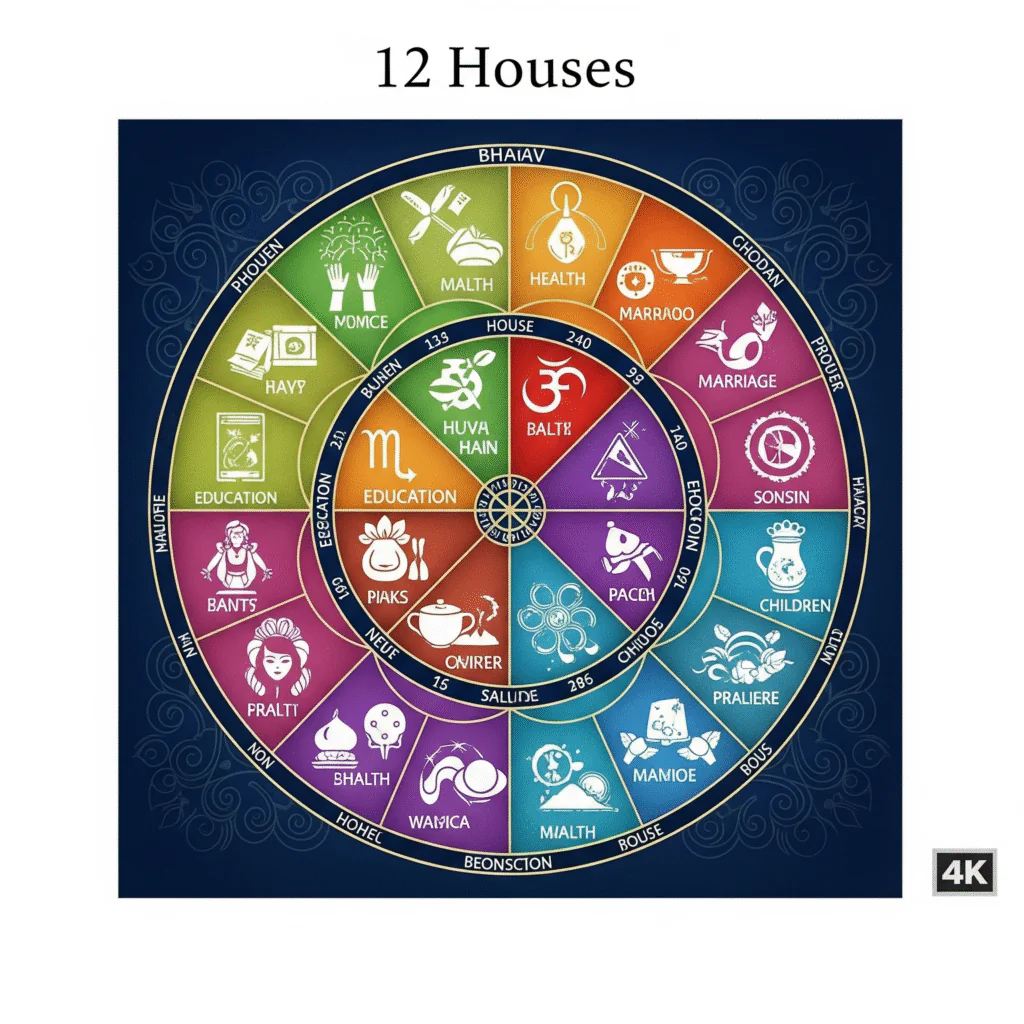
In astrology, the 12 houses—also known as “expressions”—are one of the most important components of a horoscope. The birth chart is divided into 12 equal parts, and each part represents a specific area of life. These areas include personality, wealth, family, education, marriage, career, health, spirituality and much more.

🔷 The 12 Houses of Astrology

House No.NameLife Area Represented
1First House (Lagna)Body, nature, soul, personality
2Second HouseWealth, speech, family, possessions
3Third HouseCourage, siblings, efforts, communication
4Fourth HouseMother, home, property, mental peace
5Fifth HouseEducation, children, love, past virtues
6Sixth HouseDisease, debt, enemies, competition
7Seventh HouseMarriage, spouse, partnership
8Eighth HouseLongevity, secrets, death, insurance, research
9Ninth HouseDestiny, religion, guru, long travel
10Tenth HouseCareer, profession, fame, father
11Eleventh HouseGains, desires, friends, growth
12Twelfth HouseExpenses, foreign travel, salvation, losses

🔷 Categories of Houses

1. Kendra Houses (1, 4, 7, 10)

  • Main pillars of life: Personality, Happiness, Marriage, Karma
  • Benefic planets placed here give strong positive results

2. Trikona Houses (1, 5, 9)

  • Most auspicious houses
  • Connected to luck, education, children, virtues

3. Upachaya Houses (3, 6, 10, 11)

  • Growth through effort, competition and action
  • Malefic planets also give good results here

4. Trik (Difficult) Houses (6, 8, 12)

  • Represent disease, obstacles, losses and hidden matters
  • Benefic planets give weaker results here

🔷 Summary of the Themes of All 12 Houses

House No.Themes
1Self, health, birth conditions
2Wealth, food, speech, family
3Courage, siblings, writing, short travel
4Mother, property, comfort, mental peace
5Education, children, intelligence, love
6Disease, debt, enemies, disputes
7Marriage, spouse, business partnerships
8Secret knowledge, transformation, death
9Luck, religion, guru, long journeys
10Work, profession, reputation
11Gains, social circle, desires
12Losses, expenditure, foreign travel, moksha

🔷 Relationship Between Houses & Planets

The planet placed in any house influences all life matters related to that house. Examples:

  • If Jupiter is in the 5th House: Auspicious for education, children and wisdom.
  • If Saturn is in the 6th House: Strengthens the ability to face disease, enemies and obstacles.
  • If Moon is in the 4th House: Emotional ups and downs and influence on mother & mental peace.

Conclusion

The 12 houses are the life-map of an individual. They reveal which areas of life will be activated, challenged or supported. When planets, aspects and transits interact with these houses, accurate astrological predictions can be made.
constellation Vedic Astrology
Nakshatras (Constellations) in Vedic Astrology — List, Rulers & Importance

Constellations (Nakshatras) in Vedic Astrology

Constellations or Nakshatras are one of the most important foundations of Vedic Astrology. When we look toward the night sky, we see countless groups of stars. These specific star groups are called Nakshatras. They are not only astronomical divisions but powerful indicators of our nature, actions, mental state and destiny.

🌀 1. Number of Constellations

  • Vedic Astrology includes 27 main Nakshatras.
  • Some ancient texts also mention a 28th Nakshatra — Abhijeet.

🧭 2. Astronomical Basis of Nakshatras

  • The entire sky = 360 degrees
  • 360° ÷ 27 = 13° 20' → span of each Nakshatra
  • Each Nakshatra is divided into 4 Padas (quarters)
  • Total Padas: 27 × 4 = 108

The number 108 connects deeply with spirituality (like the 108 beads of a mala).

🪐 3. List of 27 Nakshatras, Their Ruling Planet & Nature

OrderNakshatraRuling PlanetSymbolKey Property
1AshwiniKetuHorseQuick action
2BharaniVenusYoniPatient, determined
3KrittikaSunKnifeIntense, fiery
4RohiniMoonChariotAttraction, charm
5MrigashiraMarsDeerExplorer, seeker
6ArdraRahuTearTransformation
7PunarvasuJupiterBowReconstruction
8PushyaSaturnFlowerNurturing, sacred
9AshleshaMercurySerpentMysterious
10MaghaKetuThroneRoyalty, authority
11Purva PhalguniVenusBedCreativity, charm
12Uttara PhalguniSunCotService, stability
13HastaMoonHandSkillfulness
14ChitraMarsPearlArtistic brilliance
15SwatiRahuCoral / AirIndependence
16VishakhaJupiterArchAmbition
17AnuradhaSaturnLotusFriendship
18JyeshthaMercuryStickPower, authority
19MoolaKetuRootDepth
20Purva AshadhaVenusTuskVictory
21Uttara AshadhaSunFlagFirmness
22ShravanaMoonEarKnowledge
23DhanishthaMarsFluteHarmony
24ShatabhishaRahuCircleMystery
25Purva BhadrapadaJupiterSwordSpiritual intensity
26Uttara BhadrapadaSaturnMaceWisdom, stability
27RevatiMercuryFishNourishment, completion

🌠 4. Astrological Importance of Nakshatras

The Nakshatra in which the Moon is placed at the time of birth is known as the Birth Nakshatra. It determines:

  • Naming of a child (based on pada syllables)
  • Marriage compatibility (Guna Milan)
  • Beginning of Dasha system
  • Personality & mental tendencies
  • Luck and life path direction

📿 5. Nakshatras & Naming (Pada-Based)

Each Nakshatra has 4 padas (quarters), and each pada is linked with specific syllables used for naming.

Examples:

  • Ashwini — 1st Pada → “Chu”
  • Rohini — 3rd Pada → “Vi”
  • Punarvasu — 4th Pada → “Te”

🔄 6. Nakshatras & Dasha System

In the Vimshottari Dasha system (120 years):

  • The first Mahadasha begins from the ruling planet of the Birth Nakshatra.

Example: If the Birth Nakshatra is Rohini, ruled by the Moon, then the first Mahadasha will be of the Moon.

🧘‍♀️ 7. Nakshatras & Temperament

Nakshatra TypeKey Traits
Deva (Divine)Auspicious, spiritual, kind
Manushya (Human)Practical, balanced, realistic
Rakshasa (Demonic)Mysterious, bold, powerful

Conclusion

Nakshatras are not merely star clusters but powerful indicators of inner nature and destiny. A person’s temperament, thoughts, mental strength and life direction are strongly influenced by their Birth Nakshatra. They play an essential role in marriage matching, Dasha calculation and selecting auspicious timings.

Astrology Of Chief Use
Main Uses of Astrology — Horoscope, Marriage Match, Muhurta, Dasha, Remedies

Main Uses of Astrology

Astrology is not only a way to understand the future, but also a guiding system that helps in making balanced, successful and peaceful life decisions. Through its insights, a person can understand their strengths, weaknesses, opportunities and challenges.

✅ 1. Birth Horoscope Construction & Analysis (Janma Kundali / Horoscope)

  • Horoscope is created using birth date, time and place.
  • Provides details about nature, health, education, marriage, career and overall life path.
  • Horoscope is based on three pillars:
    • Planets
    • Zodiac Signs
    • Houses (Expressions)

✅ 2. Marriage Matching (Matchmaking / Kundali Milan)

  • Bride and groom’s horoscopes are compared.
  • Guna Milan (36 points) or Ashtakoot Matching system is used.
  • A score of 18 or more is considered auspicious.
  • Manglik Dosha, Nadi Dosha and other compatibility factors are also checked.

✅ 3. Auspicious Muhurta Selection

Astrology helps in selecting the most auspicious time for important events:

  • Marriage
  • Griha Pravesh (Home Entry)
  • Vehicle or Property Purchase
  • Naming Ceremony
  • Tonsure / Sacred Thread Ceremony
  • Starting a Business

Muhurta is chosen based on Tithi, Yoga, Nakshatra, weekday and planetary positions.

✅ 4. Dasha & Transit Analysis

  • Vimshottari Dasha, Antardasha, and planetary transits help understand life events.
  • Major transits include:
    • Saturn — Sade Sati, Dhaiya
    • Jupiter — sign change & blessings
    • Rahu–Ketu — karmic shifts

✅ 5. Predictions

Astrology provides predictions in major life areas:

  • Education
  • Career / Job / Business
  • Marriage & Love Life
  • Health
  • Children
  • Wealth & Property
  • Foreign Travel
  • Remedies & Cautions

✅ 6. Remedies for Planetary Problems

If any planet is giving malefic results, remedies may be advised:

  • Wearing gemstones
  • Mantra chanting
  • Charity & donations
  • Fasting
  • Specific poojas (Navgraha Shanti, Shani Shanti, Rahu–Ketu remedies)

✅ 7. Naming of Children

  • A child’s name is chosen based on birth Nakshatra and its pada (syllable).
  • Each Nakshatra has fixed syllables used for naming.

✅ 8. Health Astrology (Medical Astrology)

  • Analysis of disease combinations in the horoscope.
  • 6th, 8th, and 12th houses are major disease-causing houses.
  • Planetary positions help determine timing, nature and type of illness.

✅ 9. Vastu & Direction Guidance

  • Planets influence directions used in Vastu.
  • Proper directional alignment brings harmony in residence or workplace.

✅ 10. Career & Business Selection

Astrology identifies suitable career directions by analyzing the 10th house and planetary placements.

Examples:

  • Mars strong → Police, Army, Engineering
  • Mercury strong → Writing, Business, Communication
  • Venus strong → Art, Fashion, Beauty Industry
  • Jupiter strong → Education, Law, Spirituality

Conclusion

Astrology is a life-guiding science. Its purpose is not to bind a person to fate, but to help them understand themselves, choose the right moments and navigate life’s challenges wisely. It acts as a supportive tool that empowers rather than restricts.

Astrology And Scientist Approach
Astrology and Scientific Approach — Traditional vs Scientific View

Astrology and the Scientific Approach

Astrology is an ancient knowledge system that studies the influence of planets, constellations and zodiac signs on human life. Science, however, follows a very different approach. Below, both perspectives are explained clearly — the traditional astrological base and the scientific viewpoint.

🔷 1. Astrology: A Traditional Knowledge System

BaseDescription
FoundationPosition of planets, movement of Moon, constellations
ObjectiveUnderstanding life direction and forecasting possible events
UsesHoroscope creation, marriage matching, muhurta, dasha, transit
SystemsVedic (lunar-based), Western (solar-based), Chinese Astrology etc.

🔬 2. Scientific Viewpoint

PointScientific Position
TestingScientific methods require experiments, calculations and repeatability. Astrology is difficult to test in this way.
FalsifiabilityScientific theories remain valid only until proven wrong. Astrological predictions are often broad or vague, making testing difficult.
Placebo EffectMany people feel benefits because they believe in astrology. Science calls this the "placebo effect."
Planetary InfluenceScience says most planets are too far for their gravity or radiation to influence humans (except the Sun & Moon).
ClassificationScientific community labels astrology as a “pseudoscience” because it does not follow standard scientific methodology.

🔄 3. Scientific Studies & Findings

  • Carl Sagan called astrology “a great cultural tradition, but scientifically unverified.”
  • The National Science Foundation (USA) reports no scientific validation for astrology.
  • Several double-blind studies found astrologers could not predict better than chance when given charts without context.

🤝 4. The Middle Path: Modern Perspective

AspectDescription
Psychological BenefitAstrology provides introspection, emotional support and self-confidence.
Decision SupportPeople use astrology as a guide when making important life decisions.
Cultural ImportanceIn India, astrology is deeply rooted in religion, culture and traditions.

🧪 5. Difference Between Science & Astrology

SubjectScienceAstrology
BaseProof & EvidenceFaith & Experience
VerificationMeasurableSubjective
PrinciplesUniversal, repeatablePerson-specific
ConclusionCertain, testableProbabilistic, interpretative

Conclusion

Astrology is an ancient cultural and empirical system that still provides guidance and mental comfort to millions. However, because it does not meet the scientific criteria of testability and repeatability, it is not recognized as science.

Modern understanding suggests:

“Astrology is not science, but a psychological and cultural method of understanding life.”

Astrology of Criticism
Criticism of Astrology — Scientific, Psychological & Social Perspectives

Astrology: Criticism & Modern Evaluation

Although astrology is widely accepted in India and many other countries, and millions of people rely on it for major life decisions, it has also faced significant criticism from scientists, philosophers and social thinkers. Below are the major points of critique explained clearly.

🔍 1. Scientific Criticism of Astrology

PointDescription
Lack of Scientific ProofAstrology’s principles cannot be consistently tested or verified using scientific experiments and logic.
Weak Planetary InfluenceAccording to science, planets are too far away for their gravity or radiation to influence human behavior (except the Sun and Moon).
Absence of RepeatabilityAstrological predictions cannot be repeatedly tested with the same results, which is a core requirement of science.
Inconsistency in PredictionsDifferent astrologers often give different interpretations for the same horoscope.

🧠 2. Psychological Criticism

PointDescription
Barnum EffectPeople accept vague or general statements as personally meaningful, making predictions appear accurate.
Emotional Support in CrisisIn stressful situations, people turn to astrology for comfort, often ignoring practical or real solutions.

🏛️ 3. Philosophical Criticism

PointDescription
DeterminismAstrology suggests life events are predetermined, which reduces the importance of free will.
Undermining EffortSome people blame planets for problems and ignore personal responsibility or hard work.

🧾 4. Social Criticism

PointDescription
Overemphasis in MarriageHoroscope mismatch often leads to rejection of perfectly compatible relationships, causing social issues.
Commercial ExploitationSome individuals manipulate people’s fears for monetary gain.
Encouragement of SuperstitionAstrology is sometimes misused in ways that obstruct logical thinking and scientific reasoning.

⚖️ 5. Views of Western Scientists & Scholars

NameView
Carl Sagan“Astrology is not science, but a cultural remembrance.”
Bertrand Russell“Astrology is belief, not argument.”
Stephen Hawking“Planets do not control our lives — our decisions do.”

Conclusion: Balanced Understanding of Astrology

Astrology is an ancient and culturally rich system that attempts to understand human life through planets, zodiac signs, constellations and houses. It is not merely a tool for predicting the future but also a spiritual and cultural guide. People find it useful for birth, marriage, education, career, health, and even the final stages of life.

Modern science, however, does not recognize astrology due to its lack of testable and repeatable principles. Still, astrology continues to provide psychological support, emotional clarity and directional guidance to millions.

Therefore:

Astrology is neither fully scientific nor purely unreliable — it is a system based on experience, tradition and belief, which should be used with discretion and balance.

References

  • Brihat Parashara Hora Shastra – Maharishi Parashara
  • Phaldeepika – Mantareshwar
  • Jataka Parijat – Vaidyanath Dixit
  • Surya Siddhanta – Ancient Indian Astronomy Text
  • Brihat Jataka – Varahamihir
  • Laghu Parashari – Vedic Astrology Text
  • Pingree, D. (1981). Jyotiḥśāstra: Astral and Mathematical Literature.
  • Sharma, V. (2002). Essentials of Vedic Astrology. Motilal Banarsidass.
  • Kapoor, S.K. (2011). Astrology and Cosmology in the World’s Religions.
  • Campion, N. (2008). A History of Western Astrology.

2 thoughts on “Astrology”

Leave a Comment

Your email address will not be published. Required fields are marked *

Scroll to Top