
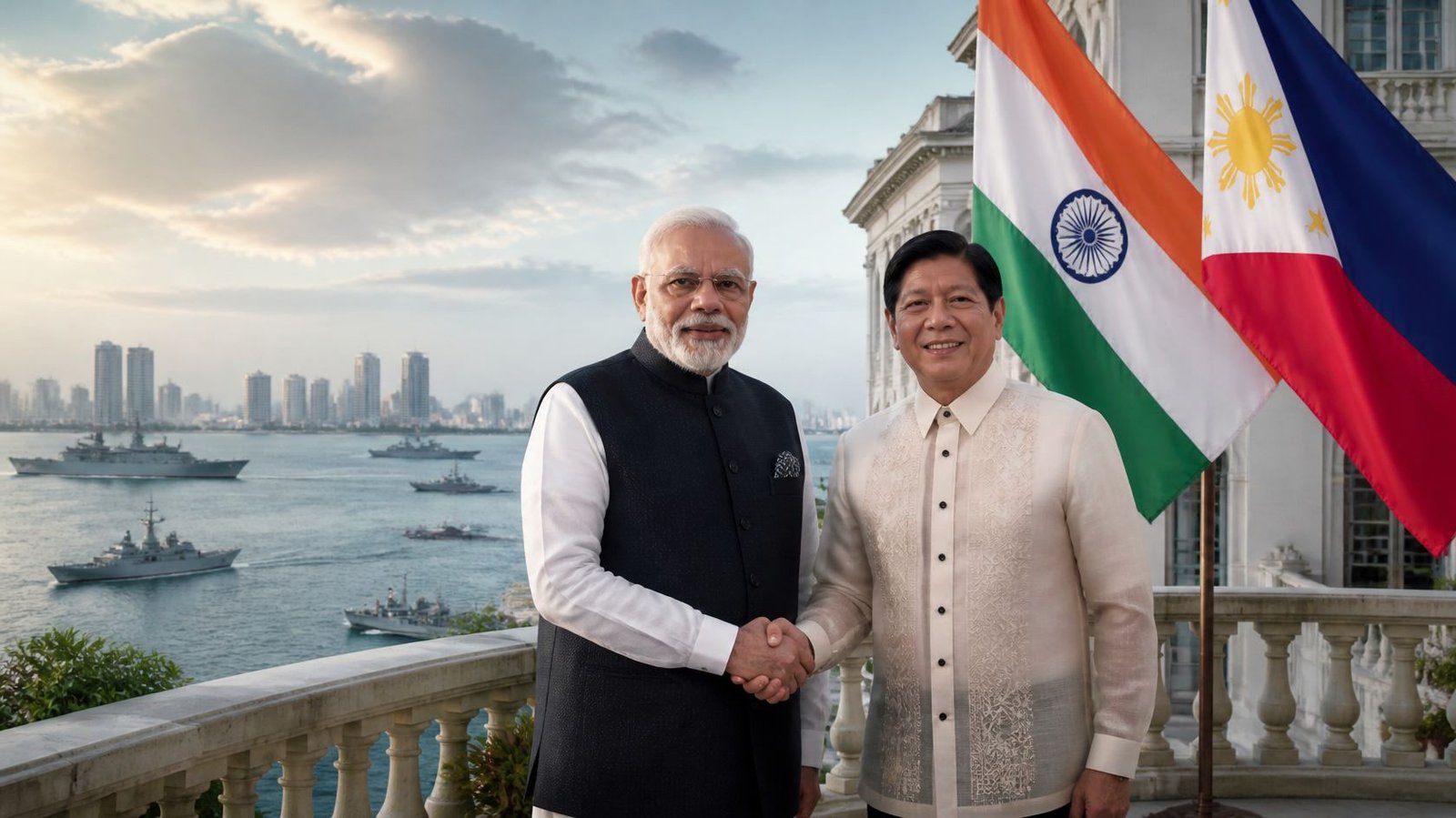
PM Modi Philippines Visit 2026 was an important diplomatic engagement that highlighted India's growing strategic, economic and defence relations with the Philippines. The visit also focused on India's role in the QUAD, ASEAN and the wider Indo-Pacific region.
Introduction: PM Narendra Modi's Visit to the Philippines 2026
Prime Minister Narendra Modi's visit to Manila, the capital of the Philippines, on 16–17 November 2026, represents an important development in India's diplomatic engagement with Southeast Asia and the wider Indo-Pacific region. At the invitation of Philippine President Ferdinand R. Marcos Jr., the Prime Minister visited the country to participate in the 23rd ASEAN-India Summit and the 21st East Asia Summit (EAS), hosted by the Philippines as the ASEAN Chair for 2026.
The visit holds significance beyond India's bilateral relationship with the Philippines. It reflects India's growing engagement with Southeast Asian countries and its commitment to strengthening regional cooperation, maritime security, economic connectivity and a free, open and inclusive Indo-Pacific.
India's relations with the Association of Southeast Asian Nations (ASEAN) are an important pillar of its Act East Policy. The region also occupies a central position in India's broader Indo-Pacific vision. Therefore, the Philippines' role as ASEAN Chair in 2026 provided an important opportunity to strengthen India's engagement with the region.
Quick Summary: PM Modi's Philippines Visit 2026
- Visiting country: Philippines
- Capital: Manila
- Prime Minister: Narendra Modi
- President of the Philippines: Ferdinand R. Marcos Jr.
- Visit dates: 16–17 November 2026
- 23rd ASEAN-India Summit: 17 November 2026
- 21st East Asia Summit: 17 November 2026
- ASEAN Chair for 2026: Philippines
The visit also comes at an important time in India-ASEAN relations. The year 2026 is being observed as the ASEAN-India Year of Maritime Cooperation. In 2027, India and ASEAN will commemorate 35 years of Dialogue Relations and five years of their Comprehensive Strategic Partnership.
Background: India's Act East Policy and the Indo-Pacific Region
India's engagement with Southeast Asia has evolved significantly over the past three decades. The region has historical, cultural, economic and strategic importance for India. Southeast Asia connects the Indian Ocean with the Pacific Ocean and plays a crucial role in international trade, maritime connectivity and regional security.
1. Look East Policy (1992)
India launched its Look East Policy in 1992 to strengthen economic and diplomatic relations with Southeast Asian countries. The policy aimed to improve India's engagement with ASEAN, expand trade and investment, and establish stronger political and cultural connections with the region.
Over time, the policy developed into a broader framework of cooperation involving economic integration, connectivity, defence engagement and regional diplomacy.
2. Act East Policy (2014)
In 2014, the Government of India upgraded the Look East Policy into the Act East Policy. The objective was to move beyond diplomatic engagement and focus on practical cooperation, connectivity, trade, investment, cultural exchanges and strategic partnerships.
The Act East Policy gives special importance to ASEAN countries and India's northeastern states. It also supports stronger cooperation in areas such as infrastructure, digital connectivity, maritime security, defence and regional development.
3. Indo-Pacific Vision
The Indo-Pacific region has become increasingly important in global geopolitics. It includes strategically significant sea routes, major economic centres and important maritime trade corridors. India supports a free, open, inclusive and rules-based Indo-Pacific in which all countries can pursue their interests peacefully and cooperate on common challenges.
India and the Philippines share several interests in this region, particularly in maritime security, freedom of navigation, respect for international law, peaceful settlement of disputes and regional stability.
Important for Competitive Examinations
Look East Policy: Launched in 1992.
Act East Policy: Announced in 2014.
Core focus: Strengthening India's economic, political, cultural and strategic engagement with Southeast Asia and the Indo-Pacific region.
India–Philippines Relations: Historical Background and Strategic Partnership
India and the Philippines share friendly relations based on democratic values, historical connections, cultural exchanges and common interests in regional peace and stability. Both countries are maritime nations in the Indo-Pacific and support a rules-based international order.
1. Establishment of Diplomatic Relations
India and the Philippines formally established diplomatic relations on 26 November 1949, shortly after both countries gained independence. Since then, their relationship has gradually expanded across political, economic, cultural, educational and security-related fields.
The two countries share important democratic values, including pluralism, the rule of law, an independent judiciary and a free press. The widespread use of the English language in both countries also facilitates communication, education and people-to-people exchanges.
2. Historical and Civilizational Connections
The relationship between India and the Philippines is not limited to modern diplomatic engagement. The two countries have historical and civilizational connections that go back several centuries through trade, cultural interaction and the spread of ideas across Southeast Asia.
Indian cultural influence can be observed in several historical and linguistic elements of the Philippines. Some important examples include:
- Sanskrit Influence: Several words in Tagalog, the local language of the Philippines, have Sanskrit roots.
- Laguna Copperplate Inscription: One of the oldest historical artefacts discovered in the Philippines, written in Kavi script derived from the Pallava script.
- Agusan Tara: A golden statue that reflects historical cultural and religious connections with the wider Indian cultural sphere.
- Maharadia Lawana: A localized version of the Indian epic Ramayana, reflecting the influence of Indian storytelling traditions in the Philippines.
These historical links demonstrate the long-standing cultural interaction between India and Southeast Asia and provide a foundation for stronger contemporary relations.
3. Development of Bilateral Cooperation
After the establishment of diplomatic relations in 1949, India and the Philippines gradually developed cooperation in several areas. Political consultations, economic exchanges, educational cooperation, tourism and cultural relations contributed to strengthening bilateral ties.
India's Look East Policy, launched in 1992, gave further momentum to its engagement with the Philippines and other ASEAN members. The Act East Policy, introduced in 2014, expanded this engagement by placing greater emphasis on strategic, maritime and economic cooperation.
4. India–Philippines Strategic Partnership (2025)
A major milestone in bilateral relations was achieved during the State Visit of Philippine President Ferdinand R. Marcos Jr. to India from 4 to 8 August 2025. On 5 August 2025, Prime Minister Narendra Modi and President Marcos announced the establishment of a Strategic Partnership between India and the Philippines.
The partnership aims to give a new strategic dimension to bilateral relations and expand cooperation in areas of mutual interest. It is guided by the Plan of Action for 2025–2029, adopted by the two countries on 5 August 2025.
5. Major Areas of Strategic Cooperation
| Area | Key Focus of Cooperation |
|---|---|
| Political Cooperation | High-level visits, diplomatic dialogue and institutional cooperation. |
| Defence and Security | defence cooperation, military exchanges, training and security dialogue. |
| Maritime Cooperation | Maritime security, naval cooperation, coastal surveillance and maritime domain awareness. |
| Trade and Investment | Expansion of bilateral trade, investment and business partnerships. |
| Science and Technology | Cooperation in digital technologies, innovation, space and emerging technologies. |
| Healthcare and Pharmaceuticals | Medical cooperation, pharmaceuticals, traditional medicine and capacity building. |
| Culture and Education | Educational exchanges, cultural relations, tourism and people-to-people contacts. |
India and the Philippines: Shared Strategic Interests in the Indo-Pacific
India and the Philippines are important maritime countries in the Indo-Pacific region. Their geographical locations give them strategic importance in regional trade, maritime connectivity and security. Both countries have an interest in maintaining peace, stability and freedom of navigation in international waters.
Their growing cooperation is particularly relevant in the context of changing geopolitical developments in the Indo-Pacific. Both countries support respect for international law, peaceful resolution of disputes and stronger regional institutions.
Key Areas of Shared Interests
- Maritime Security: Strengthening cooperation to maintain security and stability in the Indo-Pacific maritime domain.
- Freedom of Navigation: Supporting lawful maritime activities and freedom of navigation in accordance with international law.
- Regional Stability: Promoting peace, dialogue and cooperation among Indo-Pacific countries.
- Economic Connectivity: Expanding trade, investment, infrastructure and supply-chain cooperation.
- ASEAN Centrality: Supporting ASEAN's central role in regional cooperation and Indo-Pacific affairs.
Key Point
The India–Philippines Strategic Partnership is an important part of India's wider engagement with Southeast Asia. It connects bilateral cooperation with India's Act East Policy and its vision for a free, open, inclusive and rules-based Indo-Pacific.
Conclusion
Prime Minister Narendra Modi's 2026 visit to the Philippines reflects the growing importance of India–Philippines relations and India's wider strategic engagement with Southeast Asia. The historical and cultural foundations of the relationship, combined with the Strategic Partnership established in 2025, provide opportunities for deeper cooperation in defence, maritime security, trade, technology and regional diplomacy.
As the Philippines hosted the ASEAN-India Summit and the East Asia Summit in 2026, the visit also provided an important platform for India to strengthen its engagement with ASEAN and contribute to peace, stability and prosperity in the Indo-Pacific region.
Important Facts at a Glance
- India and the Philippines established diplomatic relations on 26 November 1949.
- India launched the Look East Policy in 1992.
- India introduced the Act East Policy in 2014.
- India and the Philippines established a Strategic Partnership on 5 August 2025.
- The Strategic Partnership is guided by the Plan of Action 2025–2029.
- The Philippines served as ASEAN Chair in 2026.
- PM Narendra Modi visited the Philippines on 16–17 November 2026.
QUAD: Formation, Objectives, Member Countries and India's Role
The Quadrilateral security dialogue, commonly known as the QUAD, is an important strategic and diplomatic grouping in the Indo-Pacific region. It brings together four major democratic countries: India, the United States, Japan and Australia. The grouping aims to promote a free, open, inclusive, peaceful and prosperous Indo-Pacific through practical cooperation in areas such as maritime security, economic resilience, critical technologies, infrastructure, cybersecurity and disaster management.
QUAD has gained considerable importance in the context of changing geopolitical developments, growing maritime challenges and the increasing strategic significance of the Indo-Pacific region. For India, it is an important platform to strengthen partnerships with like-minded countries while advancing its national interests and regional vision.
QUAD: Quick Summary
- Full Form: Quadrilateral Security Dialogue
- Member Countries: India, United States, Japan and Australia
- Origin: Cooperation during the 2004 Indian Ocean Tsunami
- First Official-Level Meeting: May 2007
- Revival: November 2017
- Leaders-Level Format: 2021
- Nature: Diplomatic and strategic partnership, not a formal military alliance
- Major Objective: A free, open, inclusive and rules-based Indo-Pacific
1. What is QUAD?
QUAD stands for the Quadrilateral Security Dialogue. It is a strategic partnership among India, the United States, Japan and Australia. The four countries cooperate on regional and global issues with the objective of maintaining peace, stability and prosperity in the Indo-Pacific.
Although the grouping is often discussed in the context of regional security, its agenda is not limited to defence or military cooperation. It also covers economic security, supply-chain resilience, health security, climate change, infrastructure development, emerging technologies, cybersecurity and humanitarian assistance.
QUAD is not a treaty-based military alliance and does not have a collective defence clause similar to NATO. Instead, it functions as a diplomatic and strategic platform through dialogue, coordination and practical initiatives among its member countries.
Member Countries of QUAD
| Country | Strategic Importance |
|---|---|
| India | A major Indian Ocean power with an important role in regional maritime security and connectivity. |
| United States | A major global power with significant economic, technological and military capabilities in the Indo-Pacific. |
| Japan | A major economic and technological power supporting a free and open Indo-Pacific. |
| Australia | A strategically located Indo-Pacific country with an important role in maritime security and regional connectivity. |
2. Origin and Evolution of QUAD
The origin of QUAD can be traced to the international humanitarian response to the Indian Ocean earthquake and tsunami of December 2004. India, Japan, Australia and the United States coordinated relief and assistance efforts to support countries affected by the disaster. This cooperation provided the foundation for future strategic dialogue among the four countries.
1. Formation in 2007
The first official-level meeting of QUAD took place in May 2007 on the sidelines of the ASEAN Regional Forum in the Philippines. The initiative was associated with the efforts of the then leaders of Japan, India, Australia and the United States to strengthen cooperation in the Indo-Pacific region.
However, the grouping did not develop into a continuous framework at that time. Differences in strategic priorities and regional considerations affected the continuity of the initiative.
2. Revival in 2017
In November 2017, the four countries revived the QUAD dialogue in Manila, Philippines, on the sidelines of the East Asia Summit. The renewed dialogue focused on regional connectivity, maritime security, counterTerrorism, a free and open Indo-Pacific and common strategic challenges.
3. Elevation to Leaders-Level Format in 2021
In 2021, QUAD cooperation was elevated to the level of national leaders. The first-ever virtual QUAD Leaders' Summit was held on 12 March 2021. The leaders discussed cooperation in the Indo-Pacific and announced initiatives related to vaccine partnership, climate change and critical and emerging technologies.
The first in-person QUAD Leaders' Summit was held in Washington, D.C., on 24 September 2021. This development strengthened the grouping's political importance and its action-oriented approach.
| Year | Major Development |
|---|---|
| 2004 | Four countries cooperated in humanitarian assistance after the Indian Ocean Tsunami. |
| 2007 | First official-level QUAD meeting in the Philippines. |
| 2017 | Revival of QUAD dialogue in Manila. |
| 2021 | QUAD elevated to the Leaders-Level format; first virtual Leaders' Summit held. |
| 2026 | QUAD Leaders' Summit held in Manila on 17 November. |
3. Major Objectives and Areas of Cooperation of QUAD
QUAD follows a practical cooperation-based approach. Its agenda has expanded beyond traditional security concerns to include economic, technological, environmental and humanitarian issues. The grouping seeks to deliver tangible benefits to countries across the Indo-Pacific.
1. Maritime Security
Maritime security is one of the most important areas of QUAD cooperation. The four countries seek to strengthen maritime domain awareness, improve information sharing and support safe and secure maritime activities. Cooperation in this field is particularly important for protecting sea routes and maintaining regional stability.
2. Free and Open Indo-Pacific
QUAD supports a free, open, inclusive and rules-based Indo-Pacific. It emphasizes respect for international law, sovereignty, territorial integrity, freedom of navigation and peaceful settlement of disputes.
3. Economic Security and Supply-Chain Resilience
Disruptions in global supply chains can affect trade, manufacturing and economic stability. QUAD countries are working to strengthen reliable supply chains, promote economic resilience and reduce vulnerabilities in strategically important sectors, including critical minerals and energy.
4. Critical and Emerging Technologies
QUAD promotes cooperation in areas such as artificial intelligence, telecommunications, semiconductors, space technology and other emerging technologies. The objective is to encourage innovation, trusted technology ecosystems and responsible technological development.
5. Cybersecurity
Increasing cyber threats have made digital security an important regional concern. QUAD countries seek to strengthen cybersecurity cooperation, share information and improve the resilience of digital infrastructure.
6. Humanitarian Assistance and Disaster Relief (HADR)
The Indo-Pacific is vulnerable to natural disasters such as earthquakes, cyclones, floods and tsunamis. QUAD promotes coordination in humanitarian assistance and disaster relief to improve emergency response and support affected communities.
7. Climate Change and Health Security
QUAD also works on climate-related challenges, clean energy, sustainable development and health security. Cooperation in these areas aims to improve the resilience and well-being of communities across the region.
Key Point
QUAD is not limited to military or defence cooperation. Its wider agenda includes maritime security, economic security, technology, cybersecurity, climate change, health and humanitarian assistance.
4. India's Role and Strategic Importance in QUAD
India is a central member of QUAD because of its geographical position, economic potential, maritime capabilities and growing diplomatic influence. Its location in the Indian Ocean region gives it an important role in maintaining maritime security and promoting connectivity between the Indian Ocean and the wider Indo-Pacific.
1. Strengthening India's Indo-Pacific Vision
India's participation in QUAD supports its vision of a free, open, inclusive and rules-based Indo-Pacific. Through the grouping, India works with other countries to promote regional stability, respect for international law and peaceful cooperation.
2. Maritime Security in the Indian Ocean
India has a significant role in the security of the Indian Ocean, through which a large volume of international trade and energy supplies passes. QUAD cooperation provides opportunities to improve maritime information sharing, surveillance and coordination among partner countries.
3. strategic partnerships
QUAD enables India to deepen its strategic relationships with the United States, Japan and Australia. These partnerships support cooperation in defence, technology, infrastructure, investment, education and regional diplomacy.
4. Supply-Chain Diversification
India seeks to strengthen its position in global manufacturing and supply chains. QUAD cooperation in critical minerals, technology and resilient supply networks can create opportunities for India to expand its economic and industrial capabilities.
5. Balancing Strategic Interests
India follows an independent foreign policy and maintains strategic autonomy. QUAD provides a platform for cooperation with like-minded countries without requiring India to become part of a formal military alliance or abandon its independent decision-making.
Important for Competitive Examinations
India's participation in QUAD is closely connected with its Act East Policy, Indo-Pacific vision, maritime security interests and strategic autonomy.
5. QUAD Leaders' Summit in Manila, Philippines – 17 November 2026
An important development in QUAD cooperation took place on 17 November 2026, when the leaders of India, the United States, Japan and Australia met in Manila, the Philippines, for a QUAD Leaders' Summit.
The meeting was attended by Indian Prime Minister Narendra Modi, United States President Donald Trump, Japanese Prime Minister Sanae Takaichi and Australian Prime Minister Anthony Albanese. The leaders reaffirmed their commitment to a free and open Indo-Pacific and discussed practical cooperation in maritime security, economic resilience, critical technologies and regional stability.
Major Outcomes of the 2026 Manila Meeting
1. Quad Business Leaders' Forum
The leaders announced the inaugural Quad Business Leaders' Forum, scheduled to be held in early 2027. The forum aims to bring together business leaders, government representatives and policy experts to strengthen commercial partnerships and economic cooperation among the four countries.
2. Indo-Pacific Maritime Surveillance Collaboration
The leaders welcomed the Indo-Pacific Maritime Surveillance Collaboration (IPMSC), an initiative intended to improve information sharing and maritime domain awareness. They also announced plans for patrol aircraft from the four countries to participate in a maritime exercise in the QUAD context for the first time in 2027.
3. Quad Partnership for Cable Connectivity and Resilience
The leaders welcomed progress under the Quad Partnership for Cable Connectivity and Resilience. The initiative focuses on strengthening secure and reliable communications infrastructure and improving regional connectivity through undersea cable networks.
4. Enhanced Quad Cybersecurity Cooperation
Recognizing the growing number and scale of cyber incidents, the leaders announced enhanced cybersecurity cooperation. The initiative aims to promote a more open, secure and resilient cyberspace across the Indo-Pacific.
5. Cooperation Against Terrorism
The leaders unequivocally condemned terrorism and violent extremism in all their forms and manifestations, including cross-border terrorism. They committed to strengthening cooperation against terrorism and related threats.
6. Critical Supply Chains and Emerging Technologies
The leaders emphasized the importance of resilient critical supply chains, energy security and cooperation in emerging technologies. They also discussed trusted artificial intelligence-related technologies and the need to support technological development across the Indo-Pacific.
| Area | Major Outcome |
|---|---|
| Economic Cooperation | Inaugural Quad Business Leaders' Forum in early 2027. |
| Maritime Security | Indo-Pacific Maritime Surveillance Collaboration. |
| Connectivity | Strengthening cable connectivity and resilience. |
| Cybersecurity | Enhanced Quad Cybersecurity Cooperation. |
| Counterterrorism | Strengthening cooperation against terrorism and violent extremism. |
| Technology and Energy | Cooperation in emerging technologies, critical supply chains and energy security. |
The Manila meeting demonstrated that QUAD is increasingly focusing on practical regional initiatives rather than limiting itself to high-level diplomatic discussions. It also reaffirmed the importance of ASEAN centrality and unity in the Indo-Pacific regional architecture.
6. Major Challenges and Limitations of QUAD
Despite its growing importance, QUAD faces several strategic and operational challenges. The four countries share many objectives, but their national interests, foreign policy priorities and regional approaches are not always identical.
1. Differences in Strategic Priorities
India, the United States, Japan and Australia have different geographical positions, economic priorities and security concerns. Maintaining a common approach while respecting these differences remains an important challenge.
2. Absence of a Formal Treaty Framework
QUAD is not a formal military alliance and does not have a binding collective defence arrangement. Its effectiveness therefore depends largely on political commitment, regular dialogue and voluntary cooperation among the four countries.
3. Regional Geopolitical Tensions
Strategic competition and geopolitical tensions in the Indo-Pacific can complicate cooperation. QUAD members must balance regional security interests with the need to avoid unnecessary escalation and maintain diplomatic engagement.
4. Need for Practical Implementation
The success of QUAD depends on the effective implementation of its initiatives. Cooperation in infrastructure, technology, maritime security and supply chains requires financial resources, institutional coordination and long-term commitment.
Analytical Perspective
The effectiveness of QUAD should be evaluated through its practical outcomes, regional contributions and ability to maintain cooperation among its four members, rather than only through summit declarations.
7. Conclusion: QUAD and India's Indo-Pacific Strategy
QUAD has emerged as an important platform for strategic and diplomatic cooperation in the Indo-Pacific. Its evolution from humanitarian coordination after the 2004 Indian Ocean Tsunami to a leaders-level strategic dialogue reflects the growing importance of cooperation among India, the United States, Japan and Australia.
For India, QUAD provides opportunities to strengthen maritime security, expand economic partnerships, improve technological cooperation and promote a free, open and inclusive Indo-Pacific. The 2026 Manila Leaders' Summit further highlighted the grouping's focus on practical cooperation in maritime surveillance, cybersecurity, connectivity, counterterrorism and economic resilience.
However, QUAD's long-term success will depend on maintaining unity among its members, respecting regional institutions such as ASEAN and translating shared commitments into concrete outcomes.
Important Facts at a Glance
- QUAD consists of India, the United States, Japan and Australia.
- Its origins are linked to humanitarian cooperation after the 2004 Indian Ocean Tsunami.
- The first official-level meeting took place in May 2007 in the Philippines.
- QUAD was revived in November 2017 in Manila.
- It was elevated to the Leaders-Level format in 2021.
- QUAD is a diplomatic and strategic partnership, not a formal military alliance.
- The 2026 QUAD Leaders' Summit was held in Manila on 17 November 2026.
- The inaugural Quad Business Leaders' Forum is scheduled for early 2027.
- India's role is linked to maritime security, strategic autonomy and its Indo-Pacific vision.
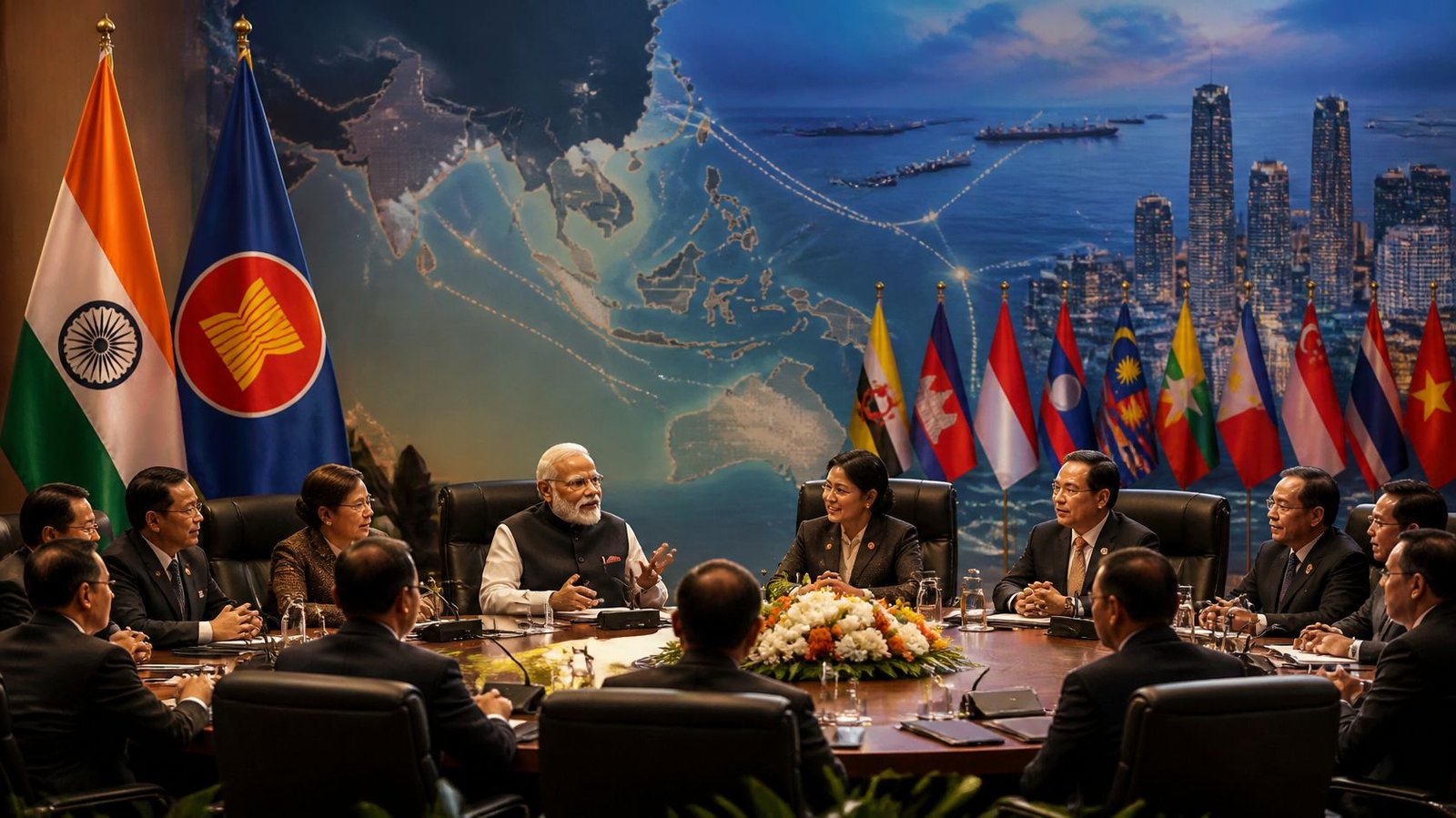
ASEAN-India Summit: India–ASEAN Relations, Regional Cooperation and the 23rd Summit
Relations between India and the Association of Southeast Asian Nations (ASEAN) are an important pillar of India's foreign policy. Geographical proximity, historical and cultural connections, trade, maritime connectivity and shared strategic interests make India and ASEAN important partners.
Prime Minister Narendra Modi participated in the 23rd ASEAN-India Summit held in Manila, the capital of the Philippines, on 17 November 2026. During the summit, leaders from India and ASEAN countries reviewed their Comprehensive Strategic Partnership and discussed ways to advance cooperation in trade, maritime security, digital technology, disaster management, education and regional stability.
23rd ASEAN-India Summit: Quick Summary
- Summit: 23rd ASEAN-India Summit
- Date: 17 November 2026
- Venue: Manila, Philippines
- Indian Representative: Prime Minister Narendra Modi
- Host Country: Philippines
- ASEAN Chair for 2026: Philippines
- Special Theme for 2026: ASEAN-India Year of Maritime Cooperation
- Significance of 2027: 35 years of ASEAN-India Dialogue Relations and 5 years of Comprehensive Strategic Partnership
- Major Areas: Maritime cooperation, economic partnership, digital technology and regional stability
1. What is ASEAN? Formation, Objectives and Importance
ASEAN stands for the Association of Southeast Asian Nations. It is a regional organisation of Southeast Asian countries established to promote economic growth, social progress, cultural cooperation, regional peace and stability.
Establishment of ASEAN
ASEAN was established on 8 August 1967 through the Bangkok Declaration. At the time of its establishment, it had five founding members:
- Indonesia
- Malaysia
- Philippines
- Singapore
- Thailand
Over time, ASEAN expanded and included other countries of Southeast Asia. Following the admission of Timor-Leste in 2025, ASEAN had 11 member countries in 2026.
Major Objectives of ASEAN
- Economic Development: Promoting trade, investment and economic integration among member countries.
- Regional Peace: Maintaining peace, security and stability in Southeast Asia.
- Social and Cultural Cooperation: Encouraging cooperation in education, healthcare, culture and people-to-people exchanges.
- Regional Integration: Strengthening economic and institutional cooperation among member countries.
- International Cooperation: Developing partnerships with other countries and regional organisations.
Member Countries of ASEAN
| S. No. | Member Country |
|---|---|
| 1 | Brunei Darussalam |
| 2 | Cambodia |
| 3 | Indonesia |
| 4 | Laos |
| 5 | Malaysia |
| 6 | Myanmar |
| 7 | Philippines |
| 8 | Singapore |
| 9 | Thailand |
| 10 | Vietnam |
| 11 | Timor-Leste |
Important for Competitive Examinations
Established: 8 August 1967
Founding Document: Bangkok Declaration
Headquarters: Jakarta, Indonesia
Member Countries in 2026: 11
2. Evolution of India–ASEAN Relations
Relations between India and Southeast Asia existed long before the beginning of modern diplomacy. Since ancient times, India has maintained trade, religious, linguistic, artistic, literary and cultural exchanges with this region. In the modern era, these historical connections have developed into economic and strategic partnerships.
1. 1992: Beginning of Dialogue Partnership
In 1992, India established relations with ASEAN as a Sectoral Dialogue Partner. This was an important step under India's Look East Policy. The objective was to strengthen economic and diplomatic cooperation with Southeast Asian countries.
2. 1995: Full Dialogue Partner
In 1995, India became a Full Dialogue Partner of ASEAN. This provided an opportunity to expand political, economic and institutional cooperation between the two sides.
3. 2002: Summit-Level Relations
The first ASEAN-India Summit was held in 2002. This brought the relationship to a higher political level and expanded regular dialogue between India and ASEAN.
4. 2012: Strategic Partnership
In 2012, India and ASEAN elevated their relationship to a Strategic Partnership. This step strengthened cooperation in political, economic, security and cultural fields.
5. 2014: Act East Policy
In 2014, the Government of India advanced the Look East Policy through the Act East Policy. Its objective was to move beyond dialogue and diplomacy and promote practical cooperation in trade, investment, connectivity, defence, maritime security and regional development.
6. 2022: Comprehensive Strategic Partnership
In November 2022, India and ASEAN elevated their relationship to a Comprehensive Strategic Partnership. This expanded the scope of cooperation and provided a new direction to their shared strategic interests in the Indo-Pacific region.
| Year | Major Development in India–ASEAN Relations |
|---|---|
| 1992 | Beginning of relations as a Sectoral Dialogue Partner. |
| 1995 | India became a Full Dialogue Partner. |
| 2002 | First ASEAN-India Summit. |
| 2012 | Establishment of Strategic Partnership. |
| 2014 | Introduction of India's Act East Policy. |
| 2022 | Elevation to Comprehensive Strategic Partnership. |
| 2026 | ASEAN-India Year of Maritime Cooperation. |
| 2027 | 35 years of Dialogue Relations and 5 years of Comprehensive Strategic Partnership. |
3. Strategic and Economic Importance of ASEAN for India
ASEAN is an important part of India's foreign policy, economic development and Indo-Pacific strategy. Southeast Asia connects India with East Asia and the Pacific region. It is also highly significant for international trade, maritime routes and global supply chains.
1. Geographical and Strategic Importance
India's northeastern region shares geographical proximity with Southeast Asia. Through Myanmar and other Southeast Asian countries, India's northeastern states can gain new opportunities for regional connectivity and trade.
Stronger relations with ASEAN increase India's regional presence and help strengthen strategic connectivity between the Indian Ocean and the Pacific Ocean.
2. Trade and Investment
ASEAN is among India's important trading partners. Trade in goods and services, investment, manufacturing, agriculture, energy and industrial cooperation are becoming increasingly significant for both sides.
According to preliminary ASEAN data presented during the ASEAN-India Economic Ministers Consultation held in September 2026, bilateral trade between India and ASEAN stood at approximately US$114.1 billion in 2025. This highlights the importance of their economic relationship.
3. Maritime Security and Connectivity
Maritime routes in Southeast Asia are important for global trade and energy supplies. Cooperation between India and ASEAN can strengthen maritime safety, maritime surveillance, coastal security, disaster management and regional connectivity.
4. Development of Northeast India
Stronger connectivity with ASEAN can provide significant benefits to India's northeastern states. Road, rail, waterway and cross-border connectivity projects can create opportunities for trade, tourism, employment and investment in the region.
5. India's Role in the Indo-Pacific Region
India supports a free, open, inclusive and rules-based Indo-Pacific region. While recognising ASEAN Centrality, India promotes regional dialogue, peace, stability and respect for international law.
Key Point
ASEAN is a central pillar of India's Act East Policy. It provides India with opportunities to expand trade, investment, maritime security, connectivity and Strategic Cooperation with Southeast Asia.
4. 23rd ASEAN-India Summit 2026: Major Discussions and India's Vision
The 23rd ASEAN-India Summit was held in Manila, the capital of the Philippines, on 17 November 2026. Prime Minister Narendra Modi reviewed the Comprehensive Strategic Partnership between India and ASEAN countries and discussed the future direction of cooperation.
The Philippines held the ASEAN Chairmanship in 2026. The theme of the chairmanship was “Navigating Our Future, Together”, reflecting the objective of collectively shaping the region's future.
Major Views Expressed by Prime Minister Narendra Modi
In his address, the Prime Minister stated that the future of India and ASEAN should be based on cooperation rather than competition. He highlighted the importance of regional peace, stability and predictability.
The Prime Minister also stated that India's Act East Policy had provided new momentum and depth to its relations with ASEAN. India would continue to remain committed to ASEAN unity and centrality.
He highlighted the importance of ASEAN Community Vision 2045 and Viksit Bharat 2047 in fulfilling the shared aspirations of both sides.
Cooperation in Technology and Innovation
The Prime Minister emphasised that India and ASEAN should not remain merely consumers of technology but should also work towards the co-creation of technology. For this purpose, cooperation in digital technology, skill development, innovation and emerging sectors needs to be strengthened.
Future of India–ASEAN Cooperation
The Prime Minister highlighted that 2027 would be a special year for India-ASEAN relations. It will mark 35 years of Dialogue Relations and five years of their Comprehensive Strategic Partnership.
Key Message of the Summit
Future cooperation between India and ASEAN should be based on peace, stability, partnership and shared development rather than regional competition.
5. Major Announcements and Initiatives of the 23rd ASEAN-India Summit
At the 23rd ASEAN-India Summit, Prime Minister Narendra Modi presented several important proposals to advance practical cooperation between India and ASEAN countries. These initiatives cover maritime security, technology, education, youth engagement, energy, tourism and economic cooperation.
1. Long-Term ASEAN-India Maritime Cooperation Plan
India proposed advancing a long-term maritime cooperation plan with ASEAN. The initiative focuses on cooperation in the following areas:
- Strengthening maritime connectivity.
- Promoting marine scientific research.
- Enhancing disaster management cooperation.
- Strengthening cooperation among Coast Guard forces.
- Improving Maritime Domain Awareness.
- Ensuring the safety of seafarers.
2. Joint Cyber Forensics Training Programme
India proposed a joint cyber forensics training programme to strengthen regional capacity building. Its objective is to improve the investigation of cybercrimes, analysis of digital evidence and institutional capabilities related to cybersecurity in ASEAN countries.
3. ASEAN-India Nuclear Energy Technical Exchanges
India proposed promoting technical exchanges in the field of nuclear energy. This initiative can create opportunities for cooperation in the peaceful use of nuclear energy, technical knowledge and the exchange of expertise.
4. ASEAN-India Space Hackathon
The ASEAN-India Space Hackathon initiative was proposed to promote space technology and innovation. It aims to provide a common platform for students, researchers and technology experts from India and ASEAN countries to develop solutions to space-related challenges.
5. Cooperation in Critical Minerals
India proposed expanding cooperation with ASEAN countries in mining and critical minerals. Critical minerals are essential for electric vehicles, batteries, renewable energy, electronics and advanced technologies. Cooperation in this sector can strengthen supply-chain security and economic resilience.
6. ASEAN-India Youth Connect
The ASEAN-India Youth Connect initiative was proposed to promote engagement and cooperation among young people. Its activities include:
- Youth Summits.
- Young Parliamentarian Exchanges.
- Start-up Hackathons.
7. Scholarships at Nalanda University
India proposed increasing scholarship opportunities at Nalanda University for students from ASEAN countries. This initiative aims to promote education, research and cultural exchanges while strengthening academic relations between India and Southeast Asia.
8. ASEAN-India Creative Partnership Pavilion at WAVES 2027
India announced the initiative to establish an ASEAN-India Creative Partnership Pavilion at WAVES 2027. The objective is to promote cooperation in creative industries, media, entertainment, cultural exchanges and the creative economy.
9. Free e-Visa for Tourists from ASEAN Countries
India announced a free e-Visa facility for tourists from ASEAN countries. The initiative aims to promote tourism, cultural interaction and people-to-people relations.
| S. No. | Initiative | Main Objective |
|---|---|---|
| 1 | Maritime Cooperation Plan | Maritime security, connectivity and disaster management. |
| 2 | Joint Cyber Forensics Training | Cybercrime investigation and capacity building. |
| 3 | Nuclear Energy Technical Exchanges | Technical cooperation in nuclear energy. |
| 4 | Space Hackathon | Space technology and innovation. |
| 5 | Critical Minerals Cooperation | Mining and critical mineral supply chains. |
| 6 | ASEAN-India Youth Connect | Youth engagement, parliamentary exchanges and start-ups. |
| 7 | Nalanda University Scholarships | Cooperation in education and research. |
| 8 | WAVES 2027 Pavilion | Creative industries and cultural cooperation. |
| 9 | Free e-Visa | Facilitating tourists travelling to India from ASEAN countries. |
6. ASEAN-India Joint Statement on Cooperation in Disaster Management
One of the important outcomes of the 23rd ASEAN-India Summit was the adoption of a joint statement on cooperation in disaster management. India and ASEAN countries reaffirmed their commitment to strengthening regional coordination, preparedness and response capabilities to deal with natural disasters.
Need for Cooperation in Disaster Management
India and Southeast Asian countries are vulnerable to natural disasters such as earthquakes, tsunamis, floods, cyclones, extreme heat and landslides. These disasters can have serious consequences for human life, agriculture, infrastructure and economic activities.
Major Areas of Cooperation
- Strengthening early warning systems for natural disasters.
- Coordinating rapid relief and rescue operations during disasters.
- Improving preparedness and disaster risk reduction.
- Enhancing humanitarian assistance and emergency response.
- Promoting post-disaster rehabilitation and resilient infrastructure.
- Sharing experience and information among disaster management institutions.
Coordination among institutions such as the ASEAN Committee on Disaster Management, the AHA Centre and India's National Disaster Management Authority is important for strengthening this cooperation.
Important Fact
The ASEAN-India Joint Statement on Cooperation in Disaster Management was adopted at the 23rd ASEAN-India Summit on 17 November 2026. Its main objective is to strengthen regional disaster preparedness, response and resilience.
7. Future of India–ASEAN Relations and Major Challenges
The future of cooperation between India and ASEAN will depend on trade, the digital economy, maritime security, connectivity, energy, education and technological innovation. Converting the Comprehensive Strategic Partnership into practical outcomes will remain a major priority in the coming years.
1. Expansion of Trade and Investment
India and ASEAN need to reduce trade barriers, increase investment and ensure greater participation in regional production networks. This can further strengthen their economic partnership.
2. Development of Connectivity Projects
Projects such as the India-Myanmar-Thailand Trilateral Highway have the potential to connect India with Southeast Asia. Completing these projects on time and improving regional connectivity remain important challenges.
3. Maritime Security and Regional Stability
Maritime security, freedom of navigation and respect for international law in the Indo-Pacific are shared interests of India and ASEAN. Both sides need to continuously strengthen maritime cooperation and regional dialogue.
4. Digital Economy and Technological Cooperation
There are significant opportunities for cooperation in digital payments, artificial intelligence, cybersecurity, semiconductors and digital public infrastructure. Technological cooperation can improve trade, governance and public services.
5. Regional Political and Security Challenges
Political instability, regional disputes and geopolitical competition in Southeast Asia can affect India-ASEAN cooperation. Therefore, both sides need to strengthen dialogue, diplomacy and the role of regional institutions.
Major Challenge
Although India-ASEAN relations cover a wide range of areas, converting the available opportunities in trade, connectivity projects and regional production networks into concrete outcomes remains an important challenge.
8. Conclusion: Role of ASEAN in India's Act East Policy
ASEAN is an important pillar of India's foreign policy and Indo-Pacific vision. What began as a relationship based on historical and cultural connections has now expanded into trade, investment, maritime security, digital technology, education and regional diplomacy.
The 23rd ASEAN-India Summit provided an important opportunity to advance the Comprehensive Strategic Partnership between the two sides. Initiatives related to maritime cooperation, cyber forensics training, nuclear energy, space, critical minerals, youth engagement and disaster management highlighted new areas of cooperation.
In 2027, India and ASEAN will complete 35 years of Dialogue Relations. Therefore, it will be important for both sides to make their partnership more practical, inclusive and result-oriented in the coming years.
Important Facts at a Glance
- ASEAN was established on 8 August 1967.
- ASEAN was established through the Bangkok Declaration.
- ASEAN headquarters are located in Jakarta, Indonesia.
- India became an ASEAN Sectoral Dialogue Partner in 1992.
- India received Full Dialogue Partner status in 1995.
- The first ASEAN-India Summit was held in 2002.
- India and ASEAN established a Strategic Partnership in 2012.
- The relationship was elevated to Comprehensive Strategic Partnership in 2022.
- 2026 is being observed as the ASEAN-India Year of Maritime Cooperation.
- The 23rd ASEAN-India Summit was held in Manila on 17 November 2026.
- India and ASEAN will complete 35 years of Dialogue Relations in 2027.
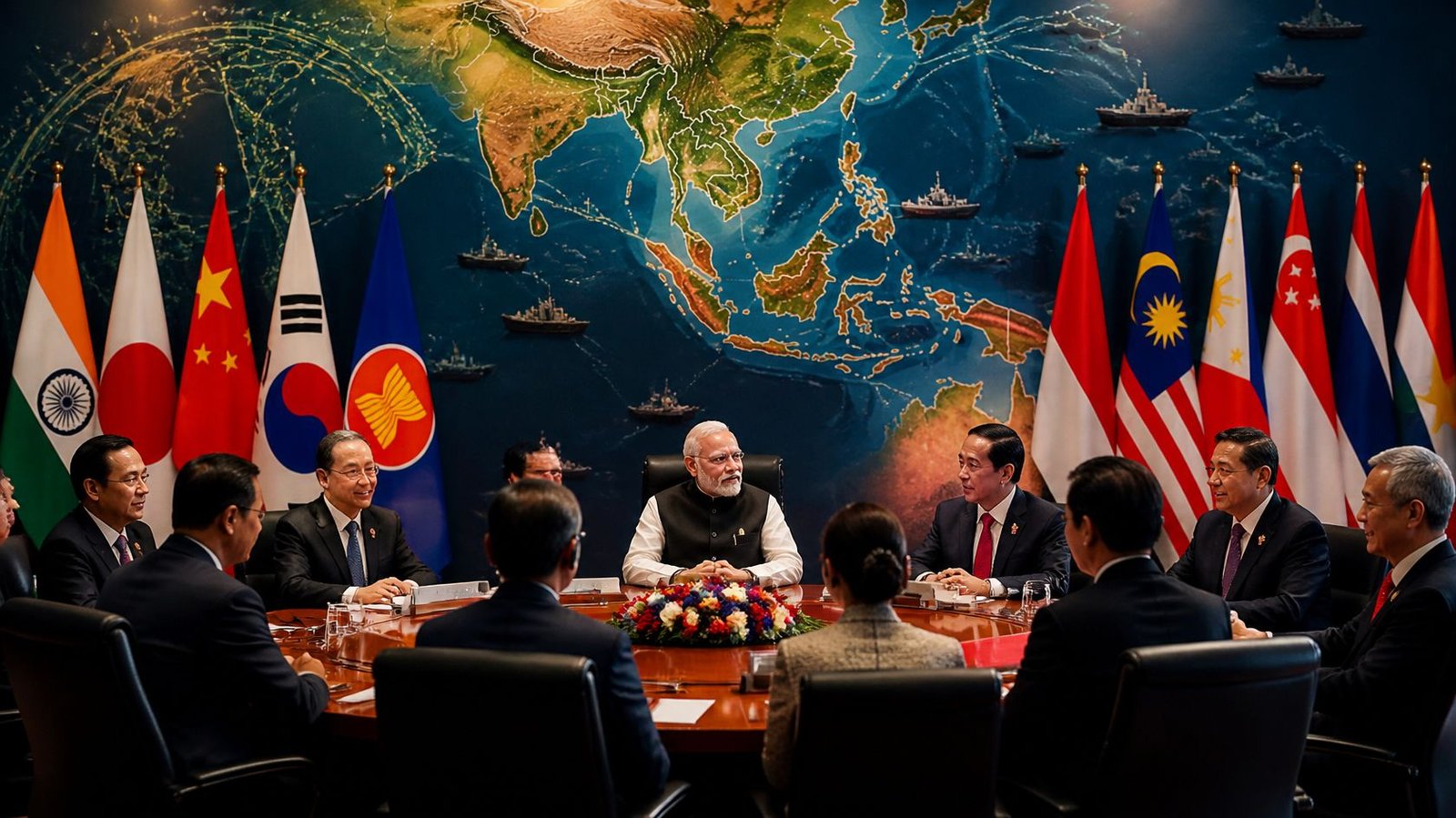
East Asia Summit (EAS): Formation, Member Countries, Objectives and India's Role
The East Asia Summit (EAS) is a major leaders-led regional forum for dialogue and cooperation on strategic, political and economic issues in the Indo-Pacific and East Asian regions. It brings together ASEAN member countries and eight important dialogue partners, including India, China, Japan, the United States and Russia.
The 21st East Asia Summit was held in Manila, the capital of the Philippines, on 17 November 2026, under the Philippines' ASEAN Chairmanship. Prime Minister Narendra Modi participated in the summit and discussed regional peace, stability, maritime security, economic cooperation and emerging transnational challenges.
The summit was particularly important because it provided an opportunity for regional leaders to discuss Geopolitical Tensions, economic uncertainty, cybercrime, online scams, maritime security and the future of regional cooperation.
East Asia Summit 2026: Quick Summary
- Full Name: East Asia Summit (EAS)
- Established: 2005
- First Summit: Kuala Lumpur, Malaysia, 2005
- Nature: Leaders-led regional dialogue forum
- Participating Countries: 19
- 21st Summit: 17 November 2026
- Venue: Manila, Philippines
- Host: Philippines, ASEAN Chair for 2026
- India's Representative: Prime Minister Narendra Modi
- Major Themes: Regional stability, maritime security, cybercrime, economic cooperation and strategic dialogue
1. What is the East Asia Summit (EAS)?
The East Asia Summit is a regional forum that provides a platform for leaders to discuss major strategic, political and economic issues affecting East Asia and the wider Indo-Pacific region. It promotes dialogue, mutual understanding and practical cooperation among participating countries.
Unlike a conventional regional organisation, the EAS is a leaders-led forum. Its main strength lies in bringing together important regional and global powers at the highest political level to discuss common challenges and opportunities.
Establishment of the East Asia Summit
The East Asia Summit was established in 2005. The first summit was held in Kuala Lumpur, Malaysia, on 14 December 2005. It was initially formed with ASEAN member countries and six dialogue partners: Australia, China, India, Japan, New Zealand and the Republic of Korea.
In 2011, the United States and Russia joined the East Asia Summit, taking the total number of participating countries to 18 at that time. Following Timor-Leste's admission to ASEAN in 2025, the EAS framework included 19 participating countries in 2026.
Major Objectives of EAS
- Strategic Dialogue: Providing a platform for leaders to discuss regional and international strategic issues.
- Regional Peace and Stability: Promoting peace, security and stability in East Asia and the Indo-Pacific.
- Economic Cooperation: Encouraging cooperation in trade, investment, energy and regional economic development.
- Maritime Cooperation: Strengthening maritime security, connectivity and cooperation at sea.
- Non-Traditional Security: Addressing Terrorism, cybercrime, human trafficking, natural disasters and other transnational threats.
- Regional Integration: Supporting ASEAN Centrality and strengthening cooperation among regional countries.
Important for Competitive Examinations
Established: 2005
First Summit: Kuala Lumpur, Malaysia
Expansion: United States and Russia joined in 2011.
Participating Countries in 2026: 19
2. Member Countries of the East Asia Summit
The East Asia Summit consists of 19 participating countries. These include the 11 ASEAN member countries and eight other participating countries that are ASEAN's important dialogue partners.
ASEAN Member Countries
- Brunei Darussalam
- Cambodia
- Indonesia
- Laos
- Malaysia
- Myanmar
- Philippines
- Singapore
- Thailand
- Vietnam
- Timor-Leste
Eight Other EAS Participating Countries
- Australia
- China
- India
- Japan
- New Zealand
- Republic of Korea (South Korea)
- Russia
- United States
| Category | Number of Countries |
|---|---|
| ASEAN Member Countries | 11 |
| Other Participating Countries | 8 |
| Total EAS Participants | 19 |
Key Point
The East Asia Summit brings together ASEAN's 11 member countries and eight other participating countries, including India, the United States, China, Japan and Russia.
3. India's Role and Importance in the East Asia Summit
India is one of the founding participants of the East Asia Summit. Its participation reflects the growing importance of East Asia and the Indo-Pacific region in India's foreign policy. Through the EAS, India engages with major regional powers on issues related to economic development, strategic stability, maritime security and regional cooperation.
1. India's Act East Policy
The East Asia Summit provides an important platform for implementing India's Act East Policy. Through this forum, India strengthens its engagement with ASEAN countries and other major powers in the region.
2. Indo-Pacific Vision
India supports a free, open, inclusive and rules-based Indo-Pacific. The EAS provides an opportunity to discuss regional security, international law, freedom of navigation and peaceful settlement of disputes.
3. Strategic Engagement with Major Powers
The EAS brings India into direct dialogue with important regional and global powers, including the United States, China, Japan, Russia, Australia and South Korea. This helps India strengthen diplomatic engagement and discuss issues of common interest.
4. Maritime Security
India has important maritime interests in the Indian Ocean and the wider Indo-Pacific region. Through the EAS, India can promote cooperation in maritime safety, maritime domain awareness, protection of sea routes and security of seafarers.
5. Economic and Technological Cooperation
The EAS provides opportunities to strengthen cooperation in trade, energy security, supply chains, digital technology, innovation and sustainable development. These areas are important for India's economic growth and regional integration.
6. Countering Transnational Threats
India supports regional cooperation against terrorism, cybercrime, online fraud, human trafficking and other transnational criminal activities. The EAS provides a platform for dialogue and coordination among participating countries to address these challenges.
Important for Examinations
India is a founding participant of the East Asia Summit. Its participation is closely linked to the Act East Policy, Indo-Pacific vision, maritime security and strategic engagement with regional powers.
4. 21st East Asia Summit 2026: Manila, Philippines
The 21st East Asia Summit was held on 17 November 2026 in Manila, the Philippines, under the country's ASEAN Chairmanship. The meeting brought together leaders of ASEAN member countries and eight other EAS participating countries.
The summit was chaired by Philippine President Ferdinand R. Marcos Jr. and provided an important platform for discussions on strategic, political and economic issues affecting the region.
Major Issues Discussed at the Summit
- Regional and international geopolitical developments.
- Peace, stability and security in the Indo-Pacific.
- Economic uncertainty and global supply-chain disruptions.
- Maritime security and freedom of navigation.
- Cybercrime and online scams.
- climate change and disaster risks.
- Regional connectivity and Strategic Cooperation.
Review of the EAS Plan of Action 2023–2028
During the summit, leaders reviewed cooperation under the East Asia Summit Plan of Action 2023–2028. The plan provides a framework for advancing cooperation in areas such as political and security dialogue, economic cooperation, connectivity, sustainable development and people-to-people exchanges.
The participating countries also discussed the future direction of the EAS and reaffirmed its importance as a leaders-led forum for dialogue and cooperation on regional strategic, political and economic issues.
Key Development
The 21st EAS reaffirmed the importance of the summit as a high-level regional platform for dialogue, cooperation and addressing shared challenges.
5. Major Outcome Documents of the 21st East Asia Summit
The 21st East Asia Summit produced two important outcome documents. These documents focused on strengthening regional stability and improving cooperation against online scams and related transnational crimes.
1. EAS Declaration on Navigating Our Future, Together: Stability and Renewal
The participating countries adopted the East Asia Summit Declaration on “Navigating Our Future, Together: Stability and Renewal.”
The declaration reaffirmed the commitment of participating countries to regional peace, stability and prosperity. It recognised that the changing geopolitical environment, economic challenges and emerging security threats require stronger dialogue and collective cooperation.
Major Focus Areas
- Strengthening dialogue among participating countries.
- Promoting regional peace and stability.
- Addressing emerging geopolitical and economic challenges.
- Improving cooperation on transnational security threats.
- Strengthening the relevance and effectiveness of the East Asia Summit.
- Supporting ASEAN Centrality in regional cooperation.
2. EAS Leaders' Statement on Strengthening Cooperation Against Online Scams and Related Offenses
The second major outcome document was the EAS Leaders' Statement on Strengthening Cooperation Against Online Scams and Related Offenses.
The statement recognised the growing threat posed by organised criminal networks involved in online scams, cyber fraud and related offences. These activities can cause financial losses, exploit vulnerable people and undermine public trust, regional security and economic stability.
Major Areas of Cooperation
- Law Enforcement Cooperation: Strengthening coordination among law enforcement agencies of participating countries.
- Information Sharing: Improving the exchange of information related to online scams and transnational criminal networks.
- Cross-Border Cooperation: Promoting coordinated action against criminal activities operating across national borders.
- Cybercrime Prevention: Strengthening measures to prevent and combat cybercrime and digital fraud.
- Victim Protection: Recognising the need to protect vulnerable people from exploitation and related offences.
- International Legal Cooperation: Supporting relevant international legal frameworks and cooperation against transnational organised crime.
The statement also highlighted the importance of ASEAN Centrality in addressing online scams and related transnational threats.
| Outcome Document | Main Objective |
|---|---|
| EAS Declaration on Navigating Our Future, Together: Stability and Renewal | Strengthening regional dialogue, peace, stability and cooperation against emerging challenges. |
| EAS Leaders' Statement on Strengthening Cooperation Against Online Scams and Related Offenses | Improving cross-border cooperation against online scams, cybercrime and related offences. |
6. India's Major Announcements at the 21st East Asia Summit
India announced several initiatives at the 21st East Asia Summit to strengthen practical cooperation with participating countries. These initiatives focus on maritime safety, cybersecurity, cultural heritage and academic cooperation.
1. EAS Seafarers' Safety Initiative
India proposed the EAS Seafarers' Safety Initiative to promote cooperation in the safety and security of seafarers. The initiative focuses on joint training and emergency response cooperation.
Seafarers play an important role in international trade and maritime transportation. Strengthening their safety is essential for maintaining secure and reliable maritime activities.
2. EAS Cyber Crime Conference at National Forensic Science University
India announced an EAS Cyber Crime Conference at the National Forensic Science University (NFSU). The conference will focus on new-age threats arising from cross-border crimes, including online frauds and cybercrimes.
The initiative aims to provide a platform for experts, law enforcement agencies and participating countries to exchange knowledge and strengthen cooperation in cybercrime investigation and prevention.
3. EAS Maritime Heritage Festival at Lothal
India announced the EAS Maritime Heritage Festival at Lothal, Gujarat. Lothal is an important archaeological site associated with the ancient Indus Valley Civilisation and its maritime trade connections.
The initiative aims to highlight India's maritime heritage and promote cultural and historical cooperation among East Asian countries.
4. EAS University Conclave at Nalanda
India proposed an EAS University Conclave at Nalanda to strengthen academic cooperation with East Asia Summit participating countries.
The initiative aims to promote educational exchanges, research collaboration, academic partnerships and people-to-people connections among universities and higher education institutions.
| S. No. | Indian Initiative | Major Objective |
|---|---|---|
| 1 | EAS Seafarers' Safety Initiative | Joint training and emergency response for seafarers. |
| 2 | EAS Cyber Crime Conference | Cooperation against online fraud and cybercrime. |
| 3 | EAS Maritime Heritage Festival | Promoting maritime heritage at Lothal, Gujarat. |
| 4 | EAS University Conclave | Academic cooperation at Nalanda. |
Important for Competitive Examinations
Remember the four Indian initiatives announced at the 21st EAS: Seafarers' Safety Initiative, Cyber Crime Conference at NFSU, Maritime Heritage Festival at Lothal and University Conclave at Nalanda.
7. Strategic Importance of the East Asia Summit for India
The East Asia Summit is important for India because it provides a platform to engage with major powers and regional countries on issues affecting the Indo-Pacific. It also strengthens India's diplomatic presence and supports its wider foreign policy objectives.
1. Strengthening Regional Diplomacy
The EAS enables India to participate in high-level dialogue with major regional and global powers. This helps build mutual understanding and promotes diplomatic solutions to regional challenges.
2. Supporting ASEAN Centrality
India recognises ASEAN's central role in the regional architecture of the Indo-Pacific. The EAS provides an important platform for supporting ASEAN-led dialogue and cooperation.
3. Maritime Security and Trade Routes
The Indo-Pacific contains important international shipping routes. Cooperation through the EAS can support maritime security, safety of navigation and the protection of seafarers.
4. Cooperation Against Cybercrime
Online scams and cybercrime increasingly operate across international borders. Cooperation through the EAS can improve information sharing, law enforcement coordination and regional capacity building.
5. Education and Cultural Diplomacy
Initiatives such as the EAS University Conclave at Nalanda and the Maritime Heritage Festival at Lothal can strengthen academic, cultural and people-to-people relations between India and East Asian countries.
8. Challenges and Limitations of the East Asia Summit
Despite its importance, the East Asia Summit faces several challenges in maintaining regional consensus and ensuring effective cooperation among its participating countries.
1. Geopolitical Rivalries
Strategic competition among major powers can make it difficult to reach a common understanding on sensitive regional and international issues.
2. Differences in national interests
Participating countries have different political systems, economic priorities and security concerns. These differences can affect the pace and scope of regional cooperation.
3. Maritime and Territorial Disputes
Maritime disputes and differences over regional security arrangements can create challenges for dialogue and cooperation in East Asia and the Indo-Pacific.
4. Implementation of Decisions
The effectiveness of the EAS depends on how far its declarations and commitments are translated into practical initiatives. Regular follow-up, institutional coordination and political commitment are essential.
5. Emerging Transnational Threats
Cybercrime, online scams, human trafficking, terrorism and climate-related disasters require stronger cooperation among participating countries. These challenges often cross national borders and cannot be addressed effectively by one country alone.
Analytical Perspective
The long-term effectiveness of the East Asia Summit will depend on its ability to maintain dialogue among major powers, preserve ASEAN Centrality and convert shared commitments into practical regional cooperation.
9. Conclusion: East Asia Summit and India's Indo-Pacific Engagement
The East Asia Summit is an important regional platform for dialogue and cooperation on strategic, political and economic issues. India's participation in the EAS strengthens its engagement with major regional powers and supports its Act East Policy and Indo-Pacific vision.
The 21st East Asia Summit, held in Manila on 17 November 2026, focused on regional stability, strategic dialogue and emerging transnational challenges. The adoption of the declaration on stability and renewal and the leaders' statement against online scams demonstrated the importance of collective action in addressing shared concerns.
India's initiatives on seafarers' safety, cybercrime cooperation, maritime heritage and academic exchanges further expanded opportunities for practical cooperation with participating countries.
In the coming years, the EAS will remain important for strengthening regional dialogue, maritime cooperation, economic resilience and peace in the Indo-Pacific.
Important Facts at a Glance
- The East Asia Summit was established in 2005.
- The first EAS was held in Kuala Lumpur, Malaysia.
- The United States and Russia joined the EAS in 2011.
- The EAS had 19 participating countries in 2026.
- India is a founding participant of the East Asia Summit.
- The 21st EAS was held on 17 November 2026 in Manila, Philippines.
- The leaders reviewed cooperation under the EAS Plan of Action 2023–2028.
- Two major outcome documents were adopted at the 21st EAS.
- One outcome document focused on stability and renewal.
- The second focused on cooperation against online scams and related offences.
- India announced four initiatives related to maritime safety, cybercrime, maritime heritage and academic cooperation.
India–Philippines Bilateral Relations: Defence, maritime security and Economic Cooperation
India and the Philippines share historical, cultural and democratic similarities. Formal diplomatic relations between the two countries were established on 26 November 1949. Over time, these relations have expanded beyond trade and development cooperation to include defence, maritime security, technology and strategic partnership.
Due to changing geopolitical circumstances in the South China Sea and the wider Indo-Pacific region, the Philippines has become an important partner for India. The Philippines also holds special significance in the context of India's Act East Policy and MAHASAGAR vision.
Quick Summary
- Establishment of diplomatic relations: 26 November 1949
- Strategic Partnership: August 2025
- Major areas of cooperation: Defence, maritime security, trade, space and technology
- Major defence cooperation: BrahMos supersonic cruise missile
- Prime Minister Narendra Modi and President Ferdinand Marcos Jr. held a meeting in Manila in November 2026.
1. India–Philippines Strategic Partnership
During the visit of Philippine President Ferdinand R. Marcos Jr. to India in August 2025, both countries elevated their bilateral relations to the level of a Strategic Partnership. This step provided a broader and more long-term direction to bilateral relations.
The objective of the Strategic Partnership is not limited to defence cooperation. It also includes economic development, science and technology, the digital economy, education, tourism and people-to-people contacts.
Major Areas of the Strategic Partnership
| Sector | Nature of Cooperation |
|---|---|
| Defence and Security | Defence equipment, military training and security dialogue |
| Maritime Cooperation | Maritime security, naval engagement and regional stability |
| Space | Cooperation in space science and related technologies |
| Railways and Infrastructure | Exchange of expertise in railway development and infrastructure |
| Fintech | Cooperation in digital payments and financial technology |
| Trade and Investment | Expansion of trade and exploration of new investment opportunities |
| Science and Innovation | Research, technology and innovation-based partnerships |
2. Defence Cooperation: An Important Pillar of India–Philippines Relations
Defence cooperation between India and the Philippines has gained significant importance in recent years. Both countries are expanding cooperation in maritime security, regional stability, military capacity-building and defence technology.
BrahMos Missile Agreement
The export of the BrahMos supersonic cruise missile is an important milestone in India–Philippines defence relations. In 2022, the two countries signed an agreement worth approximately US$375 million for the supply of the BrahMos missile system. Its first batch was handed over to the Philippines in 2024.
This is considered an important step for India's defence exports and the coastal defence capabilities of the Philippines. It has also provided India with an opportunity to strengthen its role as a reliable defence supplier in Southeast Asia.
Exam-Oriented Facts
- BrahMos is a supersonic cruise missile system.
- BrahMos was developed through a joint collaboration between India and Russia.
- The Philippines became the first foreign buyer of the BrahMos missile system.
- This agreement gave India's defence exports greater international recognition.
Other Areas of Defence Cooperation
- Regular defence dialogue and military engagement.
- Naval cooperation and participation in maritime exercises.
- Defence training and capacity-building.
- Cooperation on Terrorism and international security challenges.
- Participation in multilateral platforms such as the ASEAN Defence Ministers' Meeting-Plus (ADMM-Plus).
3. Maritime Security and the Importance of the South China Sea
The geographical location of the Philippines makes it strategically important in the South China Sea and the Western Pacific region. The South China Sea is extremely important for international trade, energy transportation and sea lines of communication.
India's interests in this region are linked to maintaining international law, freedom of navigation and the security of maritime routes. Both India and the Philippines support a free, open, inclusive and rules-based Indo-Pacific region.
Strategic Importance of the Philippines for India
- Indo-Pacific Region: Strengthening strategic connectivity between Southeast Asia and the Western Pacific.
- maritime trade: Ensuring the security and stability of important international maritime trade routes.
- Naval Cooperation: Promoting dialogue, training and operational coordination between the two navies.
- Regional Balance: Strengthening support for a rules-based regional order and international law.
Important Distinction
Maritime cooperation between India and the Philippines does not mean the creation of a military alliance. Its primary objectives are to promote maritime security, capacity-building, international law and regional stability.
4. Trade and Economic Relations
Trade relations between India and the Philippines involve pharmaceuticals, medicinal products, electronics, machinery, chemicals and agricultural products. There is considerable potential to expand trade and investment between the two countries.
According to available government and news sources, bilateral trade between the two countries was approximately US$3.34 billion in the financial year 2024–25. This figure reflects the growing importance of economic relations between the two countries.
Major Trade Sectors
| Sector | Potential Role of India |
|---|---|
| Pharmaceuticals | Generic medicines and healthcare products |
| Machinery and Engineering | Industrial equipment and engineering products |
| Chemicals | Industrial and speciality chemical products |
| Electronics | Electronic equipment and technological products |
| Agriculture and Food | Processed food and agricultural products |
| Services | IT, digital services and financial technology |
Opportunities for Expanding Trade
- Promoting bilateral trade and investment.
- Exploring market opportunities for Indian pharmaceutical and healthcare companies.
- Cooperation in digital payments and fintech.
- Partnerships in logistics, transportation and infrastructure.
- Cooperation between startups and technology companies.
5. Prime Minister Narendra Modi's November 2026 Visit to the Philippines and Bilateral Meeting
Prime Minister Narendra Modi visited Manila, the capital of the Philippines, on 16–17 November 2026. During this visit, he participated in the 23rd ASEAN-India Summit and the 21st East Asia Summit. On 17 November 2026, Prime Minister Modi also held a bilateral meeting with Philippine President Ferdinand R. Marcos Jr.
Both leaders reviewed the progress made under the Strategic Partnership established in August 2025. They expressed satisfaction with the growing cooperation in areas such as defence and security, space, railway infrastructure, fintech, trade and investment.
Major Highlights of the Meeting
- Taking the India–Philippines Strategic Partnership forward.
- Strengthening cooperation in defence and maritime security.
- Expanding partnerships in space and technology.
- Exploring opportunities for cooperation in railway infrastructure and fintech.
- Expanding trade and investment relations.
- Exchanging views on regional and global issues.
Significance of the November 2026 Meeting
The meeting demonstrates that India–Philippines relations are no longer limited to traditional diplomatic engagement. They are moving towards broader Strategic Cooperation in areas such as defence, maritime security, economic development and advanced technology.
6. Major Challenges in India–Philippines Relations
Despite progress in bilateral relations, certain challenges remain. These need to be addressed through continuous dialogue and cooperation.
- Geographical Distance: The long distance between the two countries can increase transportation and trade costs.
- Trade Expansion: There is a need to make bilateral trade more diversified and balanced.
- Regional Tensions: Tensions in the South China Sea can affect regional security and maritime trade.
- Economic Competition: The strong presence of other countries in regional markets poses challenges for Indian companies.
- Technological Cooperation: Cooperation in digital infrastructure, cybersecurity and emerging technologies needs to be further strengthened.
7. Future of India–Philippines Relations
In the coming years, India and the Philippines have considerable opportunities to expand cooperation in defence production, maritime security, the digital economy, space research, education and trade. The Philippines will remain an important partner under India's Act East Policy and MAHASAGAR vision.
A stronger strategic partnership between the two countries will not only advance bilateral relations but also contribute to peace, stability and economic prosperity in Southeast Asia and the Indo-Pacific region.
Conclusion
India–Philippines relations have evolved from historical friendship into a comprehensive strategic partnership. BrahMos missile cooperation, maritime security, trade, technology and the high-level meeting in November 2026 reflect the growing strength of this partnership.
Important Facts for Competitive Examinations
- Diplomatic relations between India and the Philippines were established on 26 November 1949.
- Both countries established a Strategic Partnership in August 2025.
- The export of the BrahMos missile system is a major achievement in India–Philippines defence cooperation.
- The Philippines became the first foreign buyer of the BrahMos missile system.
- Prime Minister Narendra Modi and President Ferdinand Marcos Jr. held a meeting in Manila on 17 November 2026.
- India–Philippines cooperation includes defence, maritime security, space, railways, fintech and trade.
Frequently Asked Questions (FAQs)
1. When did Prime Minister Narendra Modi visit the Philippines in 2026?
Prime Minister Narendra Modi visited the Philippines on 16–17 November 2026. During his visit, he participated in the 23rd ASEAN-India Summit and the 21st East Asia Summit in Manila.
2. When were diplomatic relations established between India and the Philippines?
India and the Philippines formally established diplomatic relations on 26 November 1949. Since then, their relationship has expanded across trade, defence, education, technology and regional cooperation.
3. When did India and the Philippines establish a Strategic Partnership?
India and the Philippines elevated their bilateral relations to a Strategic Partnership in August 2025 during the visit of Philippine President Ferdinand R. Marcos Jr. to India.
4. What is the QUAD, and which countries are its members?
The QUAD, or Quadrilateral security dialogue, is a strategic grouping of four countries: India, the United States, Japan and Australia. It focuses on cooperation in the Indo-Pacific region, including maritime security, technology, disaster response and regional stability.
5. What is the ASEAN-India Summit?
The ASEAN-India Summit is a high-level dialogue platform between India and the member countries of the Association of Southeast Asian Nations (ASEAN). It provides an opportunity to strengthen cooperation in trade, connectivity, maritime security, technology and regional development.
6. What is the East Asia Summit (EAS)?
The East Asia Summit is a regional leaders-led forum established in 2005. It provides a platform for discussing strategic, political, economic and security issues in the wider Indo-Pacific and East Asian regions. India is one of its founding participants.
7. Why is the Philippines important for India's Indo-Pacific strategy?
The Philippines occupies a strategically important location in Southeast Asia and the Western Pacific. Its geographical position, maritime interests and role in ASEAN make it an important partner for India in promoting a free, open, inclusive and rules-based Indo-Pacific region.
8. What is the BrahMos missile agreement between India and the Philippines?
In 2022, India and the Philippines signed an agreement worth approximately US$375 million for the supply of the BrahMos missile system. The agreement marked an important milestone in India's defence exports and bilateral defence cooperation.
9. What are the major areas of cooperation between India and the Philippines?
The major areas of cooperation include defence, maritime security, trade, investment, pharmaceuticals, space, railway infrastructure, digital technology, fintech, education and people-to-people exchanges.
10. What is the significance of India's Act East Policy for the Philippines?
India's Act East Policy aims to strengthen economic, strategic and cultural relations with Southeast Asian and East Asian countries. The Philippines is an important partner under this policy because of its ASEAN membership and strategic position in the Indo-Pacific region.
Conclusion: Significance of PM Modi's Philippines Visit 2026
PM Modi Philippines Visit 2026 reflects India's growing engagement with Southeast Asia and the wider Indo-Pacific region. Participation in the 23rd ASEAN-India Summit and the 21st East Asia Summit provided India with an important opportunity to strengthen regional partnerships and discuss major geopolitical and economic developments.
Prime Minister Narendra Modi's Philippines visit in November 2026 reflects India's growing engagement with Southeast Asia and the wider Indo-Pacific region. Participation in the 23rd ASEAN-India Summit and the 21st East Asia Summit provided India with an important opportunity to strengthen regional partnerships and discuss major geopolitical and economic developments.
India–Philippines relations have evolved from traditional diplomatic friendship into a broader strategic partnership. Defence cooperation, particularly the BrahMos missile agreement, maritime security, trade, investment and technological collaboration have emerged as important pillars of this relationship.
The QUAD, ASEAN and East Asia Summit also highlight India's commitment to regional cooperation, freedom of navigation, international law and a stable Indo-Pacific order.
Overall, the Philippines has become an increasingly important partner in India's Act East Policy and Indo-Pacific vision. Stronger cooperation between the two countries can contribute to regional stability, economic growth and a more balanced regional order.
Key Takeaway
India's engagement with the Philippines in 2026 demonstrates the growing importance of Southeast Asia in India's foreign policy. Strategic partnership, defence cooperation, maritime security and regional diplomacy will remain important drivers of India–Philippines relations in the coming years.