
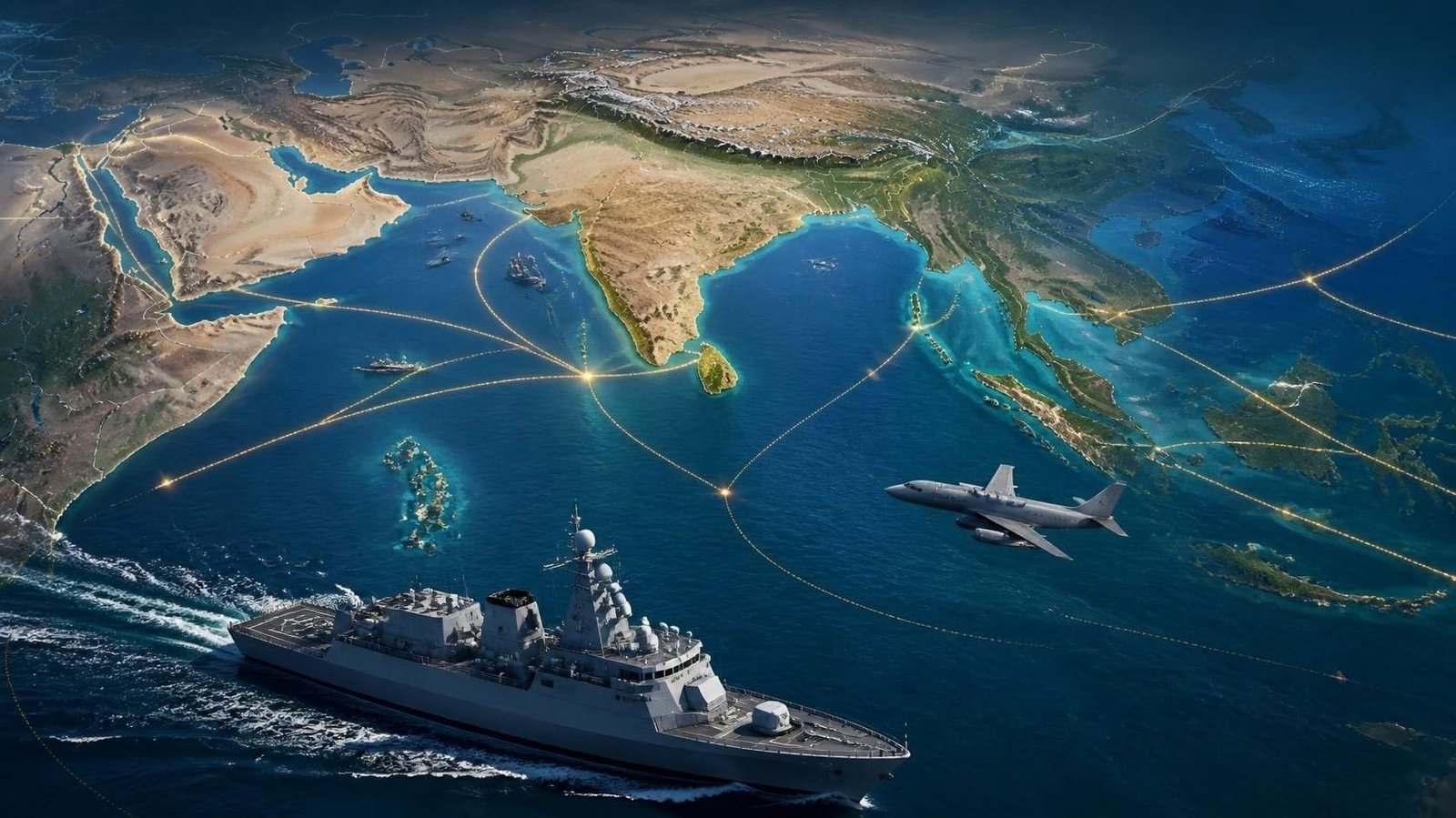
The Indian Ocean is extremely important for India’s national security, economic interests, energy supplies, and foreign policy. India’s Geopolitical Power in the Indian Ocean is closely connected with its geographical position, maritime security, trade routes, and strategic partnerships.
India’s Geopolitical Power in the Indian Ocean
The Indian Ocean is extremely important for India’s national security, economic interests, energy supplies, and foreign policy. India’s geographical location gives it an important role in the geopolitics of the Indian Ocean.
India’s Geopolitical Power in the Indian Ocean: Why It Matters
The Indian Ocean carries important maritime trade and energy routes connecting Asia, Africa, and Europe. Therefore, the security of these sea routes is directly connected with India’s economy and national security.
India’s long coastline and strategic islands such as the Andaman and Nicobar Islands and Lakshadweep strengthen India’s Maritime Presence. In particular, the Andaman and Nicobar Islands are located close to important maritime routes leading towards Southeast Asia.
Role of the Indian Navy
The Indian Navy plays an important role in maritime surveillance, counter-piracy operations, protection of commercial shipping, and humanitarian assistance. Through the SAGAR initiative, India emphasizes security and cooperation in the Indian Ocean Region.
China and the Changing Geopolitics
China’s growing economic and maritime activities in the Indian Ocean are an important part of India’s strategic calculations. Along with this, India is strengthening Indo-Pacific cooperation, Maritime Security, and partnerships with neighboring countries.
Introduction: Importance of the Indian Ocean for India
The Indian Ocean is extremely important for India’s national security, economic development, energy security, and foreign policy. India’s geographical location gives it a significant position in the geopolitics of the Indian Ocean. India is surrounded by the sea on three sides, and its long coastline gives special importance to the country’s trade and maritime connectivity.
Important Maritime trade routes connecting Asia, Africa, and Europe pass through the Indian Ocean. These routes transport large quantities of crude oil, natural gas, and other essential commodities. Therefore, the security of the Indian Ocean is directly connected with India’s Energy Security and Economic Security.
In addition, islands such as the Andaman and Nicobar Islands and Lakshadweep strengthen India’s Maritime Presence. This is why the Indian Ocean has become an important center of India’s national security and the changing global Geopolitics.
Indian Navy and maritime security
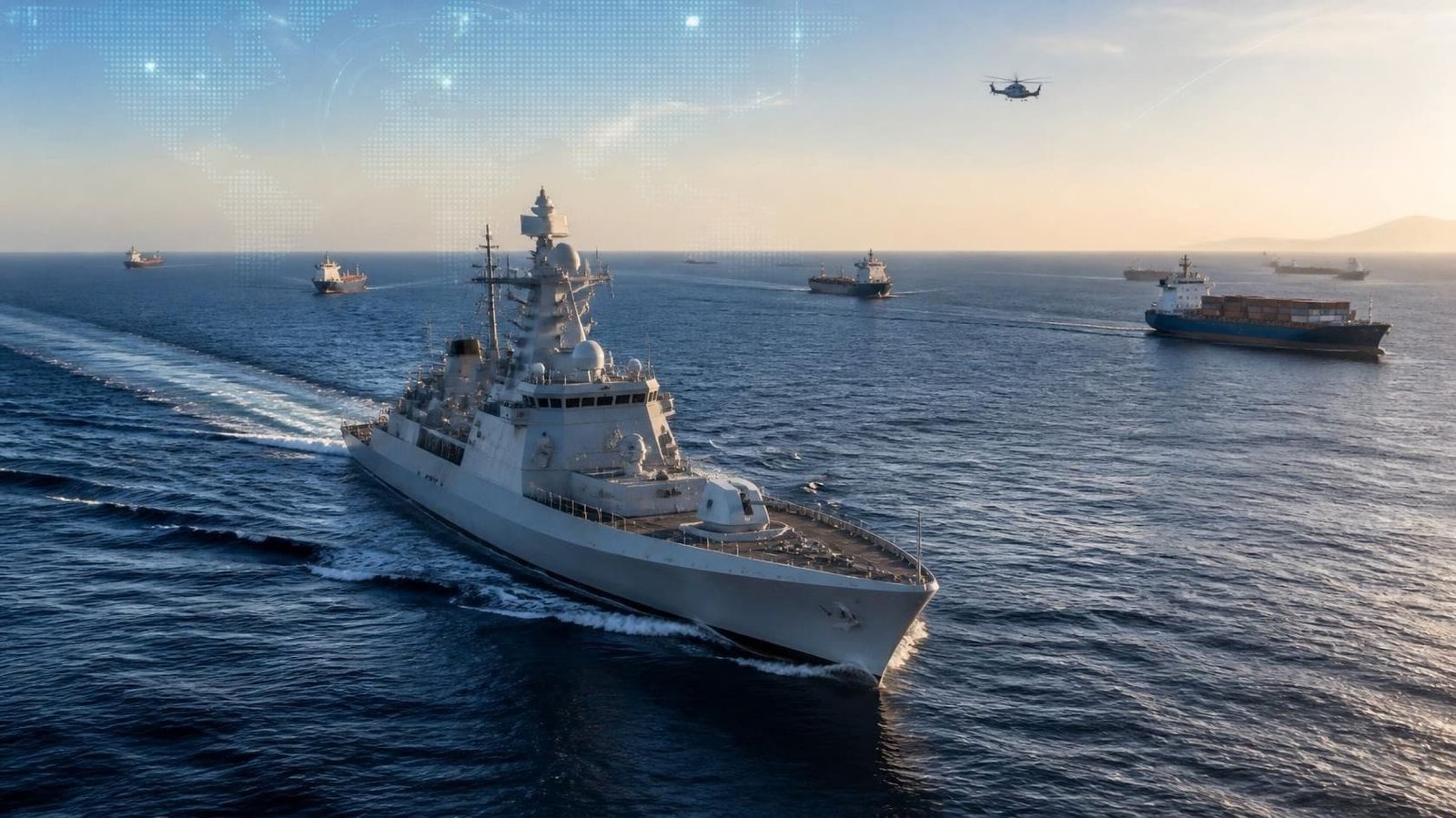
The Indian Navy is an important foundation of India’s Maritime Security and Geopolitical Presence in the Indian Ocean. The Navy plays a crucial role in protecting India’s maritime borders, trade routes, and strategic interests. Amid growing maritime activities in the Indian Ocean, a capable and modern naval force is important for India’s national security as well as its economic interests.
The Indian Navy conducts Maritime Surveillance to monitor ships and maritime activities across the region. During Anti-Piracy Operations, the Navy also contributes to the protection of commercial vessels. This supports safe and uninterrupted movement along important maritime trade routes.
The Indian Navy provides assistance during natural disasters and humanitarian crises through Humanitarian Assistance and Disaster Relief (HADR). In addition, regular Naval Exercises and Maritime Cooperation with friendly countries contribute to strengthening India’s maritime diplomacy and regional security partnerships.
China’s Growing Presence and India
China’s growing economic and naval activities in the Indian Ocean have become an important part of India’s Geopolitical and Strategic Calculations. China’s increasing economic cooperation with regional countries, infrastructure projects, and maritime presence are influencing the changing strategic environment of the Indian Ocean. For India, this situation is important from the perspective of maritime security and Regional Stability.
China’s economic and maritime activities in Sri Lanka, Pakistan, and East Africa have increased its presence in the Indian Ocean Region. Infrastructure projects such as Gwadar Port in Pakistan and Hambantota Port in Sri Lanka are examples of China’s wider economic engagement in the region. However, it would not be appropriate to view all such projects directly as military bases.
India emphasizes maritime security and freedom of navigation through Indo-Pacific cooperation and various regional partnerships. At the same time, India is promoting capacity building and maritime cooperation with Sri Lanka, Maldives, Mauritius, Seychelles, and other Indian Ocean countries. Thus, amid China’s growing presence, Naval Strength, Regional Partnerships, and Maritime Security have gained greater importance in India’s strategy.
India’s Relations with Neighboring Island Countries
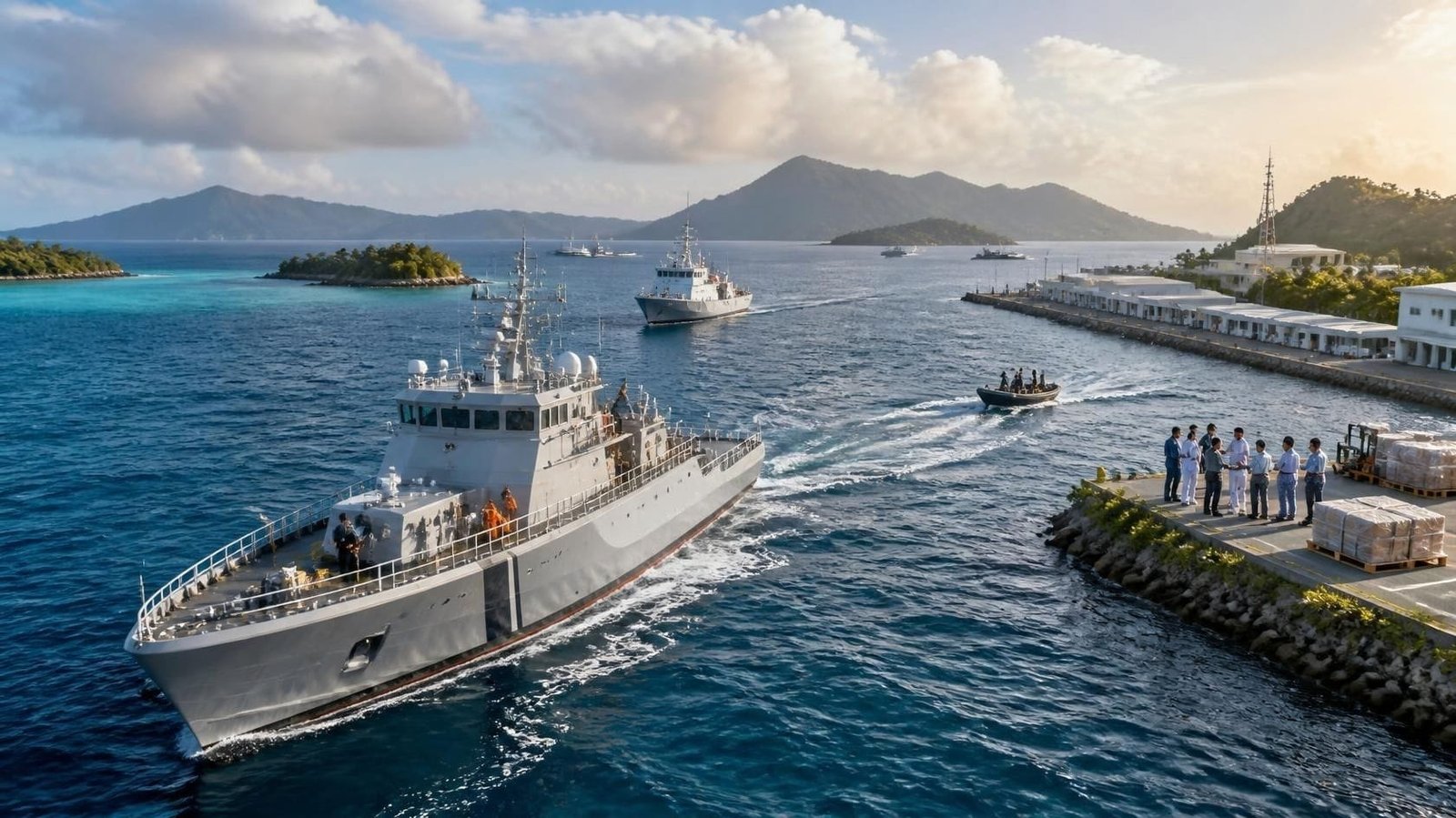
Neighboring island countries hold special importance in India’s Geopolitical and Maritime Strategy in the Indian Ocean. Maldives, Sri Lanka, Mauritius, and Seychelles are strategically important partners for India. Their geographical locations are close to important maritime areas of the Indian Ocean, making strong relations with these countries important for India’s maritime security and Regional Cooperation.
India cooperates with these countries in various areas of Maritime Security, Economic Cooperation, and Capacity Building. Through maritime surveillance, coast guard cooperation, training, and technical assistance, India contributes to strengthening regional maritime capabilities. This also helps promote maritime security and mutual trust.
During natural disasters and humanitarian crises, India also provides Humanitarian Assistance and Disaster Relief (HADR) to these countries. Maritime cooperation with Sri Lanka and Maldives is also connected with India’s Neighbourhood First Approach. Cooperation with Mauritius and Seychelles strengthens India’s Maritime Presence in the western Indian Ocean. Thus, partnerships with island countries are an important part of India’s Maritime Diplomacy and Indian Ocean Strategy.
India’s Future Strategy and Conclusion
To maintain India’s Geopolitical and Maritime Position in the Indian Ocean, a comprehensive maritime strategy will be required in the coming years. India will need to focus not only on modernizing its naval capabilities but also on maritime infrastructure, technology, and regional partnerships. Considering the changing strategic environment in the Indian Ocean, the importance of India’s Maritime Strategy is expected to increase further.
For India, Modern Naval Capabilities, Advanced Ports, and Maritime Domain Awareness (MDA) will remain important priorities. MDA enables better monitoring of ships, suspicious activities, and important maritime routes. At the same time, developing the strategic capabilities of the Andaman and Nicobar Islands can play an important role in India’s Indo-Pacific and Indian Ocean Strategy.
India will need to further strengthen maritime cooperation and capacity building with Maldives, Sri Lanka, Mauritius, and Seychelles, along with other Indian Ocean countries. The Indian Ocean is directly connected with India’s trade, energy security, maritime connectivity, and national security. Therefore, India’s maritime power and regional cooperation will remain an important part of its broader Geopolitical Strategy in the future.