
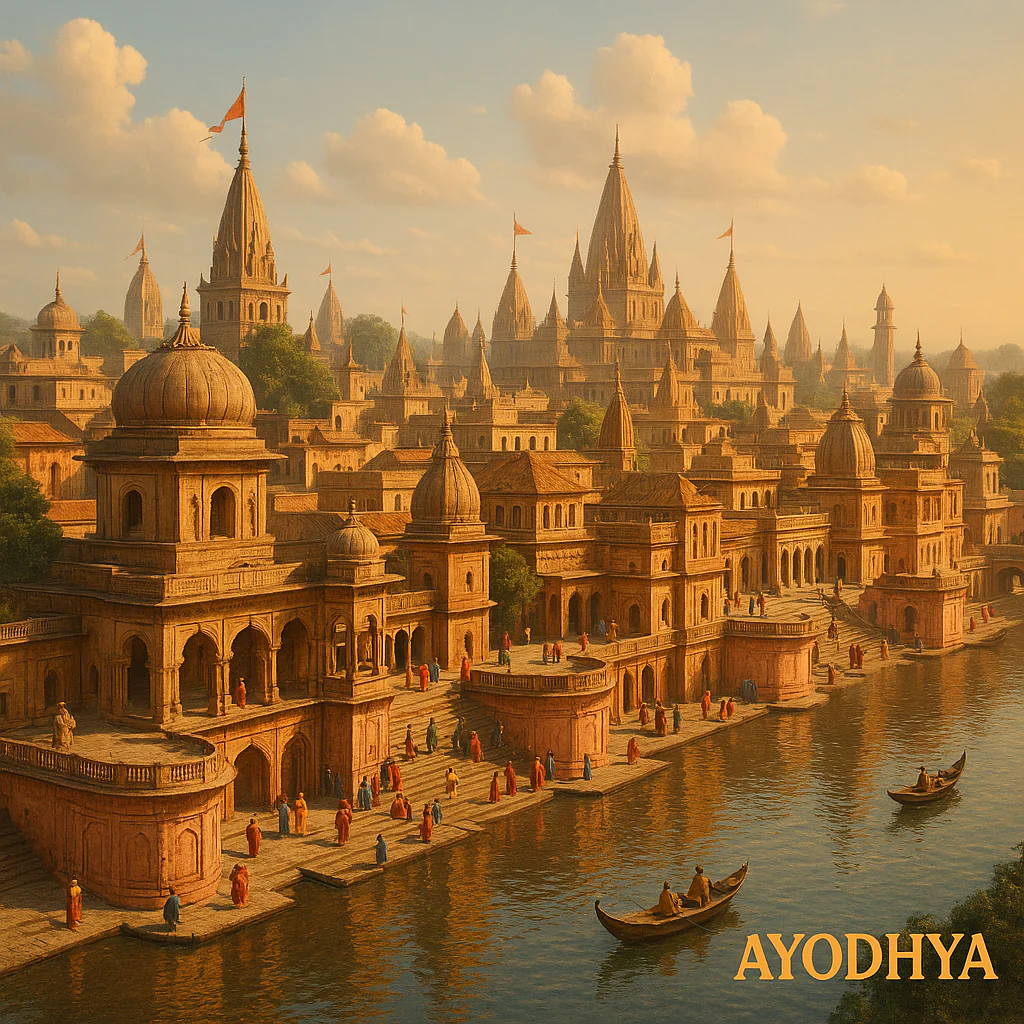
Ayodhya City — A Living Legacy of Faith & Progress
Ayodhya City in Uttar Pradesh is widely revered as the birthplace of Lord Shri Ram. Beyond headlines, this sacred destination reflects centuries of history, devotion and evolving urban development.
Overview of Ayodhya City
Located in eastern Uttar Pradesh along the Saryu River, this historic pilgrimage centre has deep roots in Hindu tradition. Ancient texts such as the Valmiki Ramayana describe it as the capital of the Kosala kingdom.
- State: Uttar Pradesh
- River: Saryu
- Famous For: Ram Janmabhoomi & Ram Mandir
- Languages: Hindi, Awadhi
Historical Background
Ancient Period
The city served as the capital of Kosala and holds an important place in Hindu scriptures. It is counted among the seven sacred pilgrimage cities (Saptpuri).
Medieval & Modern Era
During the medieval period, administrative changes linked the region with Faizabad. The Ram Janmabhoomi movement and later judicial decisions led to the construction of the grand Ram Mandir, bringing renewed global attention and large-scale development.
Religious Importance
- Hinduism: Ram Mandir, Hanumangarhi, Kanak Bhawan and Ram Ki Paidi attract millions of devotees.
- Jainism: Associated with multiple Tirthankaras.
- Sikhism: Historical visit of Guru Nanak Dev Ji.
- Buddhism: References to ancient stupas in historical accounts.
Culture & Traditions
The region is known for Ramlila performances, devotional music and grand celebrations such as Ram Navami and Deepotsav. Awadhi culture, literature and cuisine add further richness to its identity.
Economy & Development
Religious tourism drives the local economy. Hotels, handicrafts, temple services and pilgrimage facilities provide employment. Recent infrastructure projects include improved roads, beautified ghats and expansion of air connectivity.
Transport & Connectivity
- Rail: Ayodhya Junction connects to major cities.
- Road: NH-27 and NH-330 link the district to Lucknow and Varanasi.
- Air: Maharaja Shriram Airport enhances connectivity.
Popular Attractions
- Ram Janmabhoomi Temple
- Hanumangarhi
- Kanak Bhawan
- Saryu Ghat
- Dashrath Mahal
Recommended Reading

Conclusion
Ayodhya City represents a powerful blend of faith, heritage and modernization. Its spiritual importance, cultural continuity and ongoing development make it one of India’s most significant pilgrimage destinations.
For students, travellers and devotees alike, this sacred city offers both reflection and inspiration.

Historical Classification of Ayodhya
This ancient Indian city is among the most culturally and historically significant urban centers in the subcontinent. Its legacy spans multiple eras — Vedic civilization, the Ramayana tradition, Buddhist and Jain influence, medieval transformations, colonial administration, and contemporary India. Below is a structured chronological classification explaining its historical evolution.
(i) Vedic and Puranic Period
- The city is referenced in ancient scriptures such as the Rigveda, Atharvaveda, and Shatapatha Brahmana.
- It served as the capital of the powerful Kosala kingdom.
- According to the Valmiki Ramayana, it was the birthplace of Lord Shri Ram and the seat of the Ikshvaku dynasty.
- The phrase “Ayodhya Naama Nagari Tatrasit Lokvishruta” highlights its reputation as a renowned and prosperous city.
(ii) Ramayana and Epic Tradition
- This era marks the golden age associated with the life and rule of Lord Rama.
- King Dasharatha governed from this capital.
- The concept of Ram Rajya — symbolizing justice, morality, and prosperity — is rooted in this period.
(iii) Buddhist and Jain Influence
- During the reign of Emperor Ashoka (3rd century BCE), the region developed as an important Buddhist centre with stupas and monasteries.
- Jain traditions state that five Tirthankaras — Rishabhdev, Ajitanatha, Abhinandannatha, Sumatinatha, and Anantanatha — were born here.
- This period reflects religious diversity and cultural exchange.
(iv) Gupta and Medieval Period
- Under the Gupta dynasty, the region experienced renewed cultural and artistic growth.
- The medieval phase began with the arrival of Islamic rule in North India.
- In 1528 CE, the structure known as the Babri Masjid was built by Mir Baqi, a commander of Mughal emperor Babur.
- This later became the focal point of a long-standing religious and legal dispute.

Ramayana – Historical & Cultural Analysis
Buy on Amazon(v) British Colonial Administration
- During British rule, the region was administered under the Faizabad district.
- Legal and administrative records from this period document early disputes related to the religious site.
- The issue continued to evolve through the late colonial era.
(vi) Post-Independence Developments
- 1949: Idols of Shri Ram were placed inside the disputed structure, changing the legal status of the site.
- 1992: The Babri Masjid structure was demolished, leading to widespread political and social consequences.
- 2019: The Supreme Court of India delivered a landmark judgment allowing the construction of the Ram Mandir.
- 2020 onward: Foundation laying and construction activities marked a new phase in the city's contemporary history.
Conclusion
The historical classification presented above demonstrates a continuous civilizational journey — from Vedic references and epic narratives to medieval transformations and modern constitutional processes. Today, this sacred urban centre represents not only religious devotion but also a significant chapter in India’s cultural and legal history.
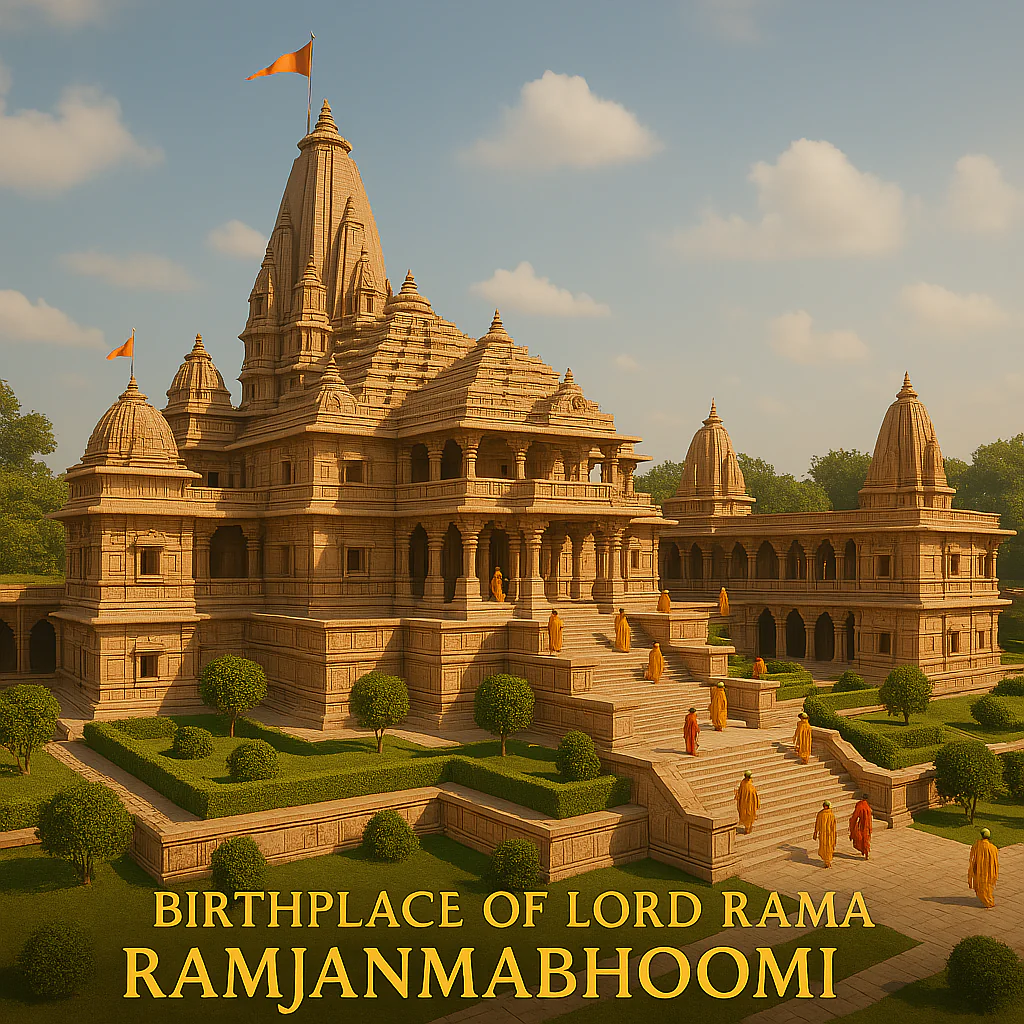
Religious Classification of Ayodhya
This historic North Indian city has long served as a center of faith for multiple religious traditions. While it is primarily revered in Hinduism, the region also holds important associations with Jainism, Buddhism, Sikhism, and Islam. Below is a structured overview of its multi-religious heritage.
1. Importance in Hinduism
Shri Ram Janmabhoomi
The city is traditionally regarded as the birthplace of Lord Shri Ram, the seventh incarnation of Lord Vishnu. He is worshipped as Maryada Purushottam and remains the central devotional figure of the region.
Major Hindu Pilgrimage Sites
- Shri Ram Janmabhoomi Temple
- Hanumangarhi – Temple dedicated to Lord Hanuman
- Kanak Bhawan – Associated with Shri Ram and Sita
- Dasharath Mahal
- Ram Ki Paidi – Ghats along the Saryu River
- Nageshwarnath Temple
Major Festivals
- Ram Navami
- Deepotsav (celebrated before Diwali)
- Navratri
- Shravan Mela
- Ekadashi Celebrations
2. Significance in Jainism
In Jain tradition, the city is considered highly sacred because five Jain Tirthankaras are believed to have been born here.
Five Tirthankaras Associated with the Region
- Rishabhdev (Adinath) – 1st Tirthankara
- Ajitnath – 2nd Tirthankara
- Abhinandanath – 4th Tirthankara
- Sumatinath – 5th Tirthankara
- Anantnath – 14th Tirthankara
Important Jain Sites
- Shri Adinath Digambar Jain Temple
- Panch Tirthankara Janmabhoomi Sthal
- Jain Dharamshalas for pilgrims
Jain scriptures refer to the city as Vineetpuri and Sudarshanpuri, highlighting its spiritual importance.
3. Significance in Buddhism
In Buddhist literature, the region is identified as Saket. During the reign of Emperor Ashoka (3rd century BCE), stupas and monasteries were reportedly established here.
- Recognized historically as a Buddhist pilgrimage location.
- Referenced in ancient travel accounts.
- Though few visible remains survive today, its historical connection remains notable.
4. Connection with Sikhism
The city holds significance in Sikh history due to the visit of Guru Nanak Dev Ji during his Udasis.
Major Sikh Site
- Gurdwara Brahmkund Sahib – Located near the Saryu River
Special prayers, kirtan, and langar are organized during Guru Nanak Jayanti.
5. Reference in Islam
- In 1528 CE, Mir Baqi constructed the structure known as the Babri Masjid.
- The site later became central to a prolonged legal and religious dispute.
- In 1992, the structure was demolished.
- In 2019, the Supreme Court of India delivered its final verdict, enabling temple construction and allocating alternate land for a mosque.

Conclusion
Ayodhya represents a layered religious landscape shaped by Hindu devotion, Jain philosophy, Buddhist heritage, Sikh history, and Islamic influence. Over centuries, these traditions have collectively contributed to its identity as one of India’s most historically and spiritually significant cities.

Geographical Classification
The city is located in the fertile Gangetic plains of North India and holds environmental as well as cultural significance. Its river-based setting, flat terrain and agricultural surroundings shape its regional identity.
1. Location
- Country: India
- State: Uttar Pradesh
- Division: Ayodhya Division
- Latitude–Longitude: Approx. 26.8°N, 82.2°E
- Elevation: ~93 meters above sea level
2. Rivers & Water Bodies
- Situated on the banks of the Saryu River, a tributary of the Ghaghra.
- The river supports agriculture and carries deep religious importance.
- Ram Ki Paidi is a prominent ghat along the riverfront.
3. Climate
- Type: Sub-tropical
- Summer: 30°C – 45°C
- Monsoon: ~1000–1200 mm rainfall
- Winter: 5°C – 20°C
4. Land Use & Natural Features
- Urban pilgrimage layout with temples, ghats and residential areas.
- Surrounding zones include agricultural land producing wheat, paddy and sugarcane.
- Located within the fertile Gangetic Plains.
Conclusion
Geographically, this riverine settlement combines fertile land, strategic location and spiritual heritage, making it environmentally and culturally significant.
Administrative Classification
The district functions under the Government of Uttar Pradesh and serves as both divisional and district headquarters. Its governance operates through state, district and municipal levels.
1. State & Divisional Structure
- State: Uttar Pradesh
- Division: Ayodhya Division
- Headquarters: Ayodhya City
2. District Administration
- District Magistrate (DM): Overall administration
- Senior Superintendent of Police (SSP): Law & order
- Chief Development Officer (CDO): Development programs
3. Urban Governance
- Governed by the Municipal Corporation.
- Part of the Smart City Mission.
- Responsibilities include sanitation, water supply, roads and infrastructure management.
Conclusion
Administratively, the district holds regional importance and plays a growing role in governance due to expanding tourism and infrastructure projects.
Economic Classification
Traditionally centered on pilgrimage-based activities, the local economy has expanded rapidly with new infrastructure and investment projects.
1. Tourism-Based Economy
- Religious tourism forms the backbone of revenue generation.
- Hotels, restaurants, transport services and guide networks benefit significantly.
- The Ram Mandir project has accelerated visitor numbers and spending.
2. Infrastructure & Investment
- Major developments include the Ram Mandir complex, airport expansion and railway modernization.
- Real estate and construction sectors are witnessing steady growth.
3. Service Sector
- Hospitality, banking, healthcare and education sectors expanding.
- Digital payments and e-commerce adoption increasing among local businesses.
4. Agriculture & Rural Economy
- Wheat, paddy, sugarcane and pulses are major crops.
- Dairy farming and small-scale cottage industries contribute to income.
5. MSMEs
- Stone carving, religious crafts, incense production and temple décor items.
- Linked to the ODOP (One District One Product) initiative.
Conclusion
The economic profile reflects a transition from a primarily pilgrimage-driven structure to a diversified growth model supported by infrastructure, services and rural industries.

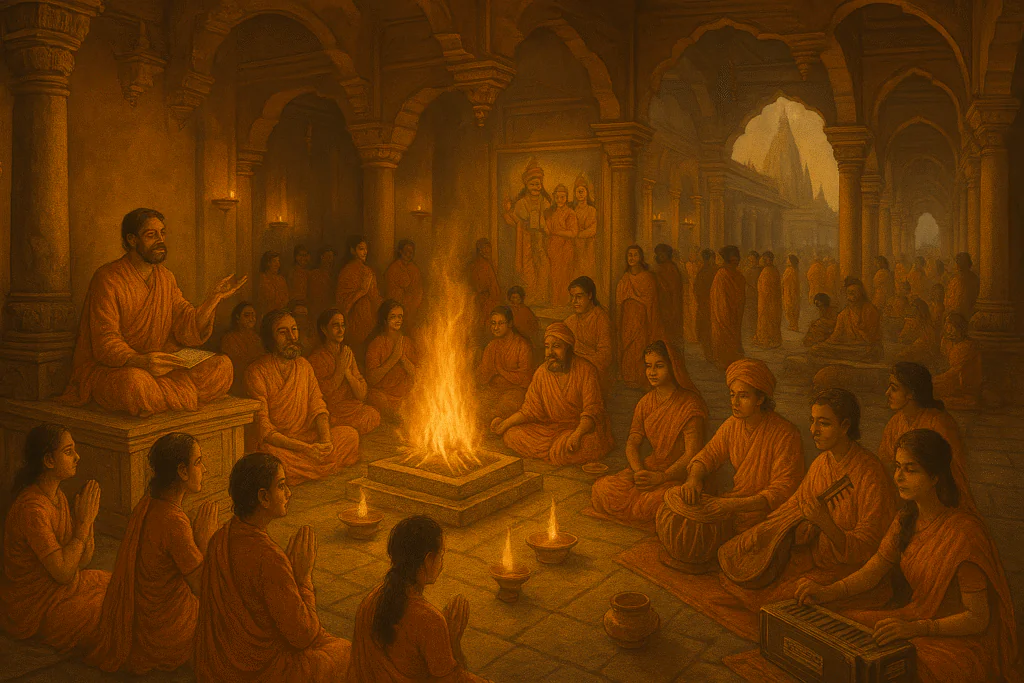
6. Cultural Classification – Ayodhya
Ayodhya is one of India’s ancient cultural centers. It is not only significant for its religious heritage, but also for its contributions to art, literature, music, folk traditions, and festivals. The cultural life of Ayodhya reflects traditions from the Ramayana era, the Bhakti movement, and diverse folk practices.
(i) Cultural Heritage & Mythological Significance
- Ayodhya is believed to be the birthplace of Lord Shri Ram, making it a living symbol of Ramayana culture.
- Texts like the Valmiki Ramayana and Ramcharitmanas written by Tulsidas describe Ayodhya with great reverence.
- The cultural values of the city are rooted in dharma, dignity, devotion, and duty.
(ii) Folk Art & Music
- Major folk arts include Ramlila, Bhajan-Kirtan, Jhumar, Kajri, and folk theatre.
- Ramlila is the most prominent cultural tradition performed during Dussehra.
- Folk music and dance are integral to temple events, fairs, and cultural gatherings.
(iii) Language & Literature
- Languages: Hindi, Awadhi, Urdu
- Awadhi language is rich in folk songs and devotional hymns dedicated to Lord Rama.
- Tulsidas, the author of Ramcharitmanas, represents Ayodhya’s great literary tradition.
(iv) Festivals & Cultural Events
The cultural diversity of Ayodhya is reflected in its vibrant festivals:
- Ram Navami – Birth anniversary of Lord Rama
- Dussehra – Celebrated through grand Ramlila performances
- Diwali – Commemorates the return of Rama to Ayodhya
- Shravan Mela, Chhath Puja, Ganga Dussehra
- Deepotsav – A grand cultural festival where millions of lamps are lit on the Saryu riverbank
(v) Folk Life & Traditions
- The lifestyle in Ayodhya is simple, devotional, and tradition-oriented.
- Rituals like worship, fasting, storytelling, and hymn chanting are part of daily life.
- Pilgrimage practices such as parikrama, river bathing, and temple visits are routine.
(vi) Architecture & Sculpture
- The temples, ghats, kunds, toran gates, and statues reflect ancient Indian architecture.
- Iconic sites include the Ram Temple, Hanumangarhi, Kanak Bhawan, Nageshwarnath Temple.
- Local artisans are known for religious idols, stone carvings, and woodwork.
Conclusion
Ayodhya’s culture is a living tradition where religion, literature, folk art, and discipline come together. It is not just a city of temples but a vibrant cultural soul where every corner echoes the story of Lord Rama.
7. Transport Classification – Ayodhya
As one of the most important pilgrimage and cultural cities of Uttar Pradesh, Ayodhya sees millions of visitors every year. This has led to rapid development of its transportation system, making it a well-connected and emerging transport hub.
(i) Road Transport
- Ayodhya is located about 130 km from Lucknow, the capital of Uttar Pradesh.
- It is connected by major highways such as:
- NH-27 (Gorakhpur–Lucknow)
- NH-330 (Prayagraj–Ayodhya)
- Ayodhya Depot (UPSRTC) provides regular bus services to major cities.
Major Connected Cities
- Lucknow
- Gorakhpur
- Varanasi
- Prayagraj
- Delhi
- Kanpur
- Basti
- Sultanpur

Awesome Amazon Product
Buy on Amazon(ii) Rail Transport
- Ayodhya has two main railway stations:
- Ayodhya Junction (AY)
- Faizabad Junction (FD) — now known as Ayodhya Cantt
- These stations fall under Northern Railway and connect to major cities like Delhi, Mumbai, Kolkata, Jaipur, Lucknow, and Ahmedabad.
- After the Ram Mandir construction, major investment has gone into new railway lines, platform expansions, and tourist facilities.
(iii) Air Transport
- Ayodhya now has an international airport:
Maryada Purushottam Shri Ram International Airport - Phased operations began in 2024–2025.
- Nearest alternative airport:
Lucknow – Chaudhary Charan Singh International Airport (130 km)
(iv) Local Transport
- Auto-rickshaws, tempos, e-rickshaws, city buses, and app-based cabs (Ola, Uber).
- Tourist guide vehicles and dedicated walking paths for pilgrims.
(v) Parikrama Marg & Pilgrimage Routes
- 14 Kosi Parikrama Marg
- 84 Kosi Parikrama Marg
- These routes are walked by millions of devotees during religious festivals.
(vi) Modern Transportation Schemes
- Under the Smart City Mission:
- E-buses
- Multi-level parking
- Road widening projects
- Pedestrian zones, shuttle services, and cycle tracks are being developed around the Ram Mandir area.
Conclusion
Ayodhya's transportation network is developing rapidly. With well-structured road, rail, air, and intra-city systems, Ayodhya is becoming not only a major religious destination but also a growing center for tourism, business, and cultural movement.
Conclusion — Summary of Ayodhya City
Ayodhya is one of the oldest, holiest, and culturally richest cities of India. Beyond being the birthplace of Lord Shri Ram, it represents the core of Indian faith, tradition, and cultural pride.
The historical, religious, geographical, administrative, economic, cultural, and transport classifications of Ayodhya together show how the city beautifully balances its ancient heritage with modern development.
With the construction of the Ram Temple, Smart City initiatives, airport development, and rapid expansion of tourism, Ayodhya has earned a prominent place on the global map.
Ayodhya is not just a pilgrimage destination — it is a living cultural heritage that symbolizes spirituality, folk life, cultural diversity, and modern growth.
In essence, Ayodhya is:
- A center of faith
- A witness to History
- A city moving confidently toward development
- A symbol of the cultural soul of India