
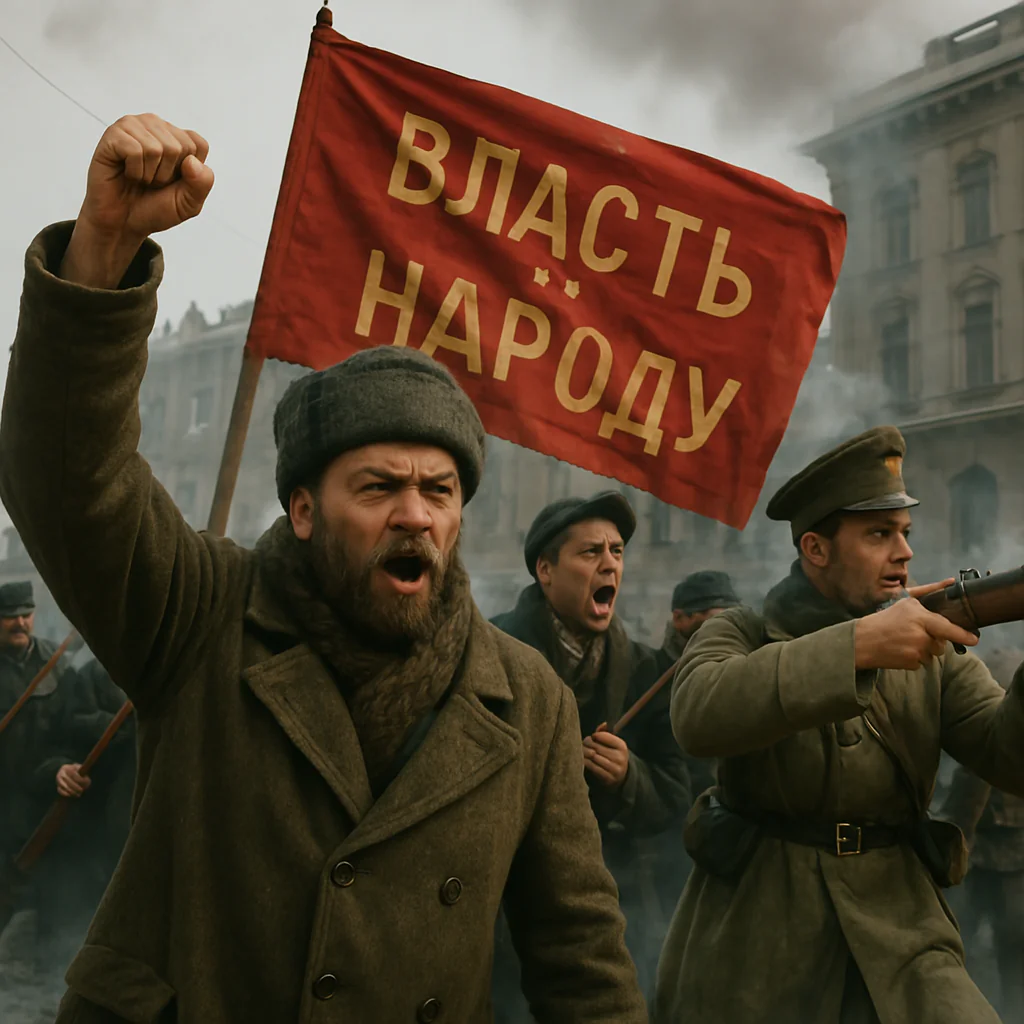
Russian Revolution (1917)
An inspiring and informative story: how popular discontent transformed Russia and changed the world.

Introduction — Why the 1917 Revolutions Matter
The Russian Revolution of 1917 was not only a turning point for Russia’s political, social, and economic order; it also had a profound effect on the rest of the world. The revolution unfolded in two main stages — the February Revolution and the October Revolution — each reshaping power and society in decisive ways.
1. Background
Monarchy and Autocracy
For centuries Russia was ruled by the Romanov dynasty under an autocratic monarchy. By the early 20th century, Tsar Nicholas II's policies were widely regarded as out of touch and oppressive by many segments of the population.
Economic Inequality
Farmers, laborers, and the urban poor suffered widespread exploitation and poverty, while the aristocracy and elite enjoyed luxury. These stark inequalities created deep social tensions.
Industrial Problems
As industrialization expanded, many factory workers endured harsh conditions, low wages, and weak legal protections. Labor unrest and dissatisfaction grew in these new industrial centers.
Aftermath of the 1905 Revolution
The 1905 uprising revealed popular discontent and produced limited reforms, but the Tsarist regime later crushed further revolutionary momentum, leaving many grievances unresolved.
Impact of World War I
Russia's catastrophic losses in World War I, combined with supply shortages and rising casualties, intensified public frustration and weakened the state's authority.
Awesome Amazon Product
Buy on Amazon2. Major Phases of the Revolution
February Revolution (March 1917 — Gregorian calendar)
Causes
- Severe food shortages and famine in cities.
- Military defeats and general war-weariness from World War I.
- Widespread corruption and unpopular Tsarist policies.
Key Events
- Mass demonstrations in Petrograd (now Saint Petersburg) by workers and soldiers.
- Mutiny in parts of the army; soldiers refused orders to fire on civilians.
- Tsar Nicholas II abdicated the throne.
- A Provisional Government was formed, led in large part by figures such as Alexander Kerensky.
October Revolution (November 1917 — Gregorian calendar)
Causes
- Failure of the Provisional Government to withdraw from the war or carry out meaningful land reform.
- Ongoing economic collapse and public impatience for decisive action.
Key Events
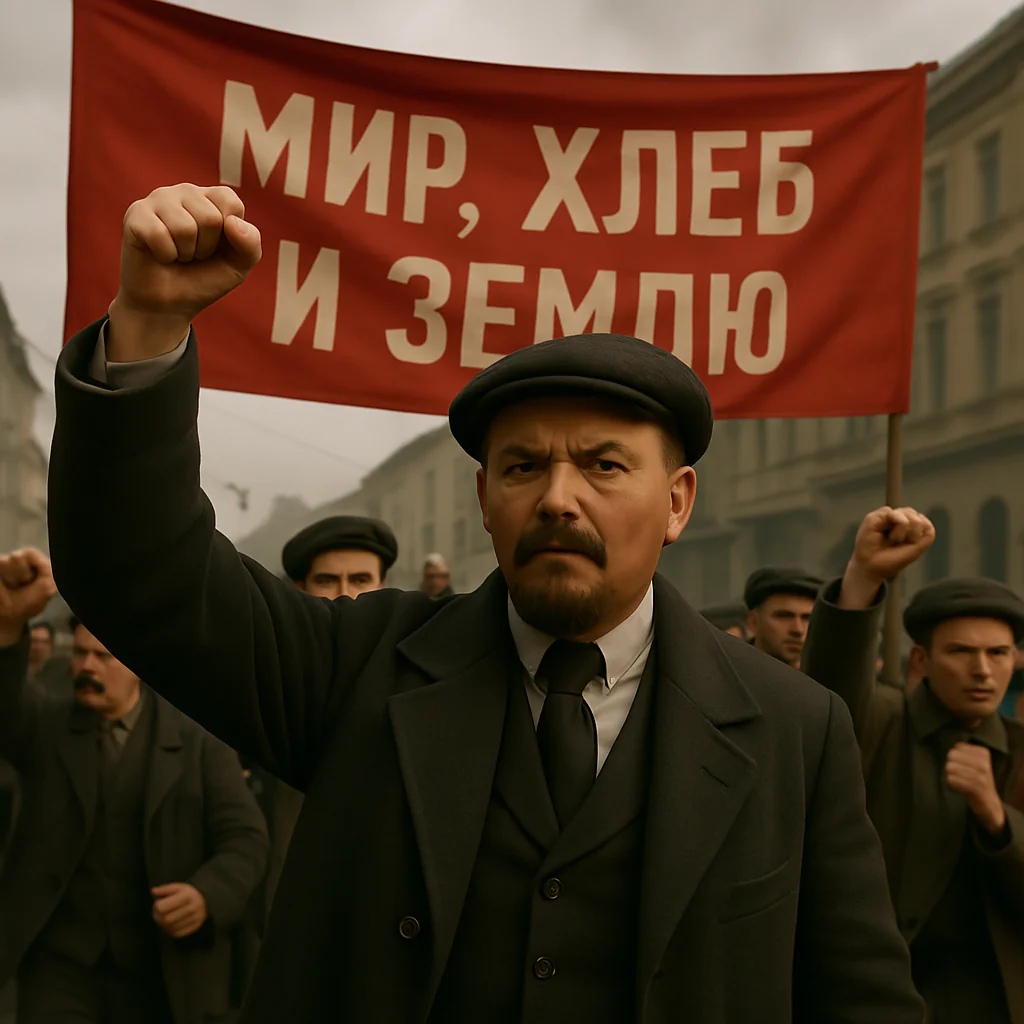
- The Bolshevik Party, led by Vladimir Lenin, campaigned on the slogans “Peace, Bread, and Land.”
- On 7 November 1917 (Gregorian calendar), Bolshevik-led forces carried out an armed insurrection in Petrograd.
- The Provisional Government was overthrown and Soviet (council) power was established, representing workers, soldiers, and peasants.
3. Key Leaders
Several individuals played decisive roles during 1917:
| Leader | Role |
|---|---|
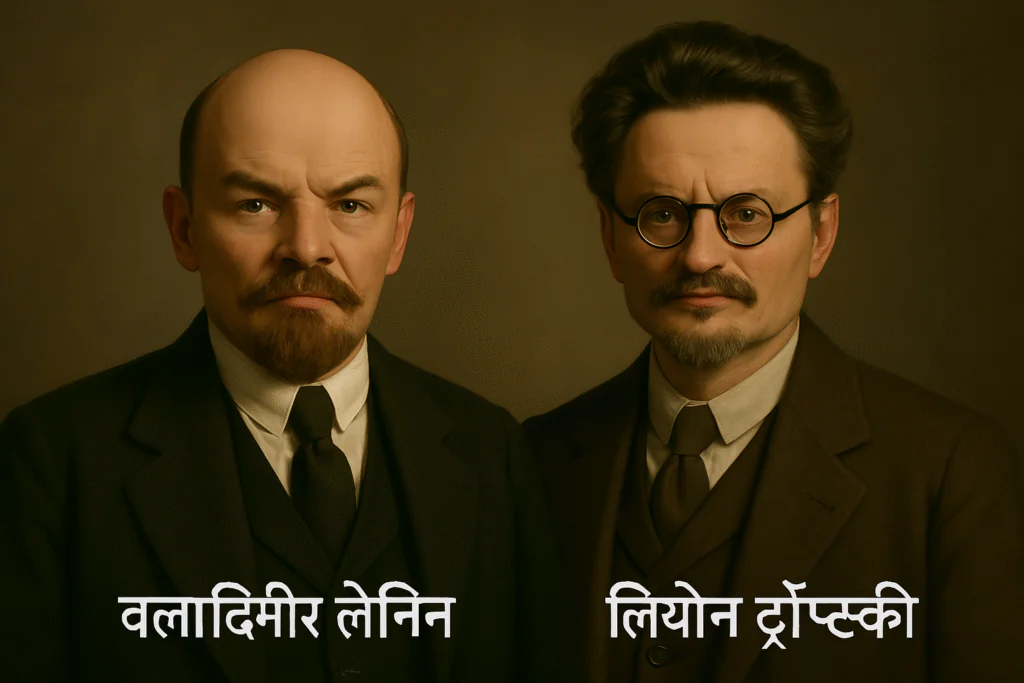
| Vladimir Lenin | Leader of the Bolsheviks; principal organizer and ideological leader of the October uprising |
| Leon Trotsky | Organizer of the Red Army and a leading strategist in the October events |
| Tsar Nicholas II | The last Emperor of Russia; forced to abdicate after the February Revolution |
| Alexander Kerensky | Prominent figure in the Provisional Government after the February Revolution |
4. Effects of the Russian Revolution
Consequences for Russia
- The end of the Romanov monarchy and the emergence of a socialist government.
- Nationalization of land and major industries.
- Increased state control over Religion and a move toward secular governance.
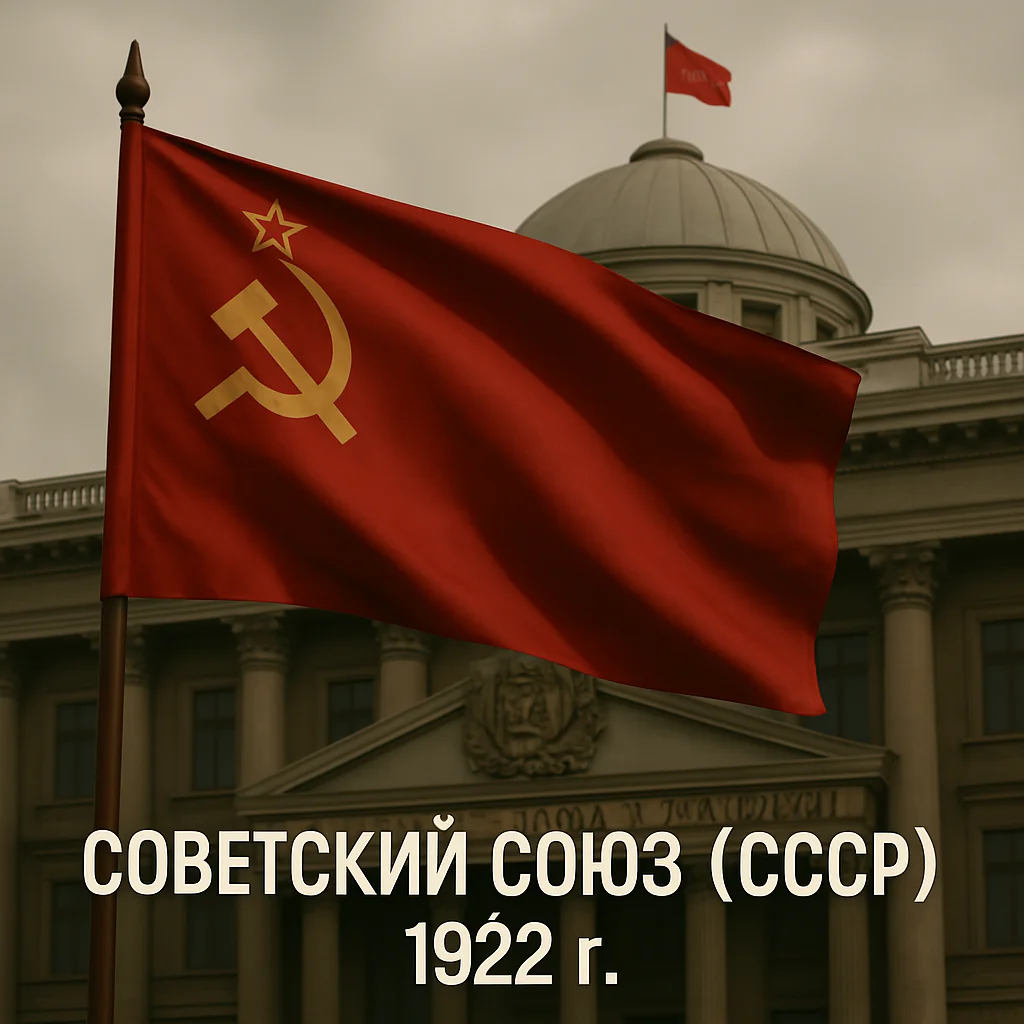
- Foundation of the Union of Soviet Socialist Republics (USSR) in 1922.
Global Impact
- The revolution inspired the growth of communist and socialist movements worldwide.
- It set the stage for prolonged geopolitical rivalry between the Soviet Union and Western capitalist states — the Cold War era.
- Anti-colonial and independence movements in many colonial countries found inspiration in the revolution’s example of mass mobilization.
5. Classification — How the Revolution Transformed Society
| Aspect | Change |
|---|---|
| Political | From autocratic monarchy to socialist government and Soviet rule |
| Economic | Move from private property and capitalist modes toward state-planned socialism |
| Social | Toward a classless ideal — emphasis on workers' and peasants' rights |
| Ideological | Rise and practical application of Marxism–Leninism |
| Global | Reordered world politics into competing poles (socialism vs. capitalism) |
6. Conclusion — The Lasting Legacy
The Russian Revolution of 1917 affected not only Russia but the entire world. As the first successful socialist revolution on a national scale, it demonstrated that organized popular movements could overthrow entrenched autocratic regimes. Its example ignited waves of socialist and revolutionary movements across the 20th century and reshaped global political debates about revolution, socialism, and capitalism.
FAQ — Quick Answers
What were the two main revolutions in Russia in 1917?
The February Revolution (which forced the Tsar to abdicate) and the October Revolution (in which the Bolsheviks seized power).
Who led the Bolsheviks?
Vladimir Lenin was the primary leader of the Bolshevik Party; Leon Trotsky later organized the Red Army.
When was the USSR established?
The Union of Soviet Socialist Republics (USSR) was formally established in 1922.
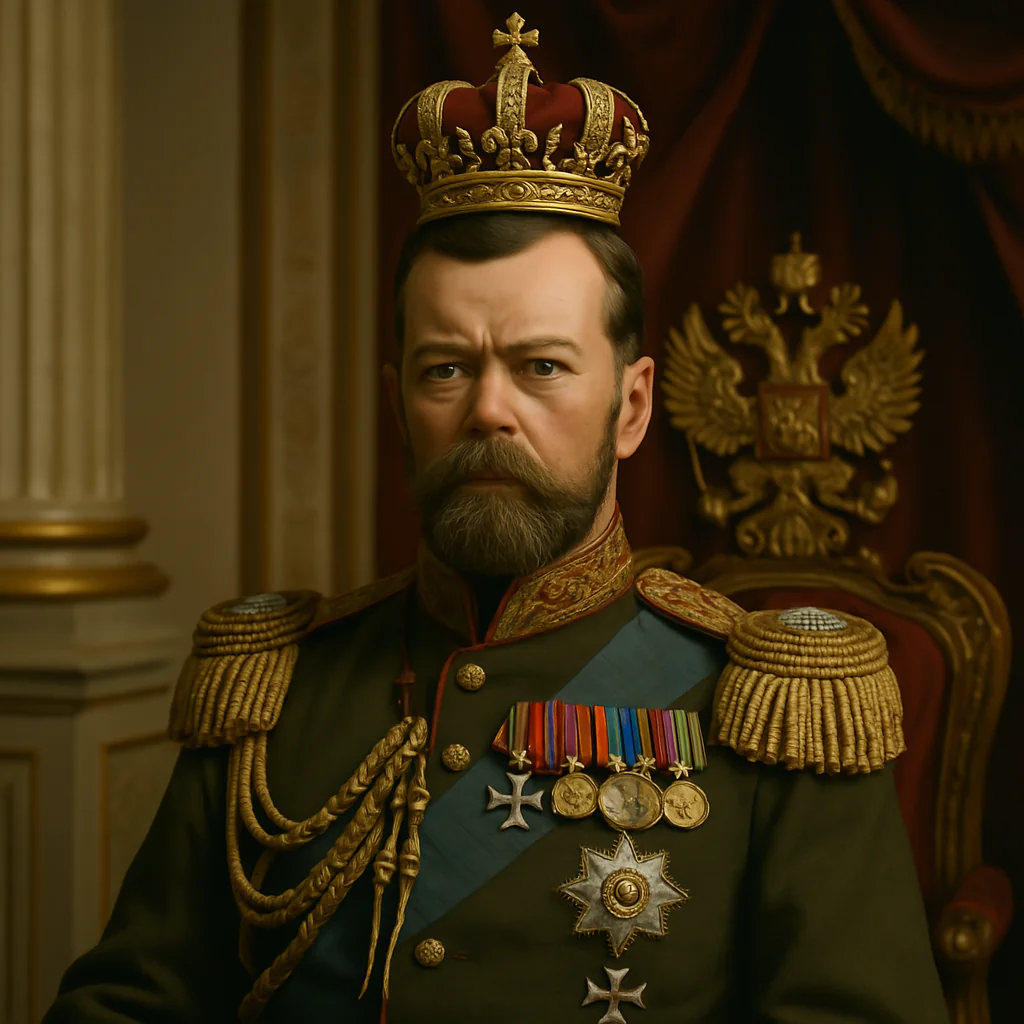
Background – Russian Revolution (1917)
To understand the Russian Revolution, it is necessary to look at its background. The social, political, economic, and military causes had been developing for many years. The revolution did not occur suddenly; instead, it was the result of deepening discontent and the failures of the Tsarist government.
(i) Autocratic Monarchy
- Russia was ruled by the Romanov dynasty, where the Tsar (Emperor) was believed to be the representative of God.
- Tsar Nicholas II was the last ruler of Russia. He maintained harsh control and suppressed people’s freedoms.
- The people had no political participation; even the parliament (Duma) was kept weak and powerless.
Social Inequality
Russian society was mainly divided into three major groups:
- Royal Families and Nobles: Received privileges and lived lavishly.
- Farmers: Nearly 80% of the population were farmers Who suffered heavy taxes and shortage of land.
- Workers: Industrial workers faced long working hours, low wages, and no labor protection laws.
Women’s condition was also extremely poor and neglected.
Economic Crisis
- Russia was primarily an agricultural country, but the agricultural system was outdated and poorly organized.
- industrialization was limited, and even within industries the condition of workers worsened.
- Inflation, food shortages, and unemployment became severe.
1905 Revolution
- In 1905, Russia witnessed its first large-scale public uprising, known as “Bloody Sunday.”
- Tsar’s soldiers fired on peaceful protestors, killing thousands.
- Although the Tsar created the Duma afterward, it was never given real authority.
- This failed revolution further strengthened the desire for change among the people.
(v) First World War (1914–1918)
- Russia joined the war against Germany, suffering heavy casualties.
- Losses, low morale among soldiers, and shortages of weapons worsened the situation.
- Food shortages, fuel scarcity, and rising prices made life extremely difficult for citizens.
(vi) Political Instability and Leadership Failure
- Tsar Nicholas II lacked clarity and decisiveness in his policies.
- His wife Czarina Alexandra and her advisor Rasputin contributed to distrust and disrepute toward the monarchy.
- The government was full of corruption and incompetence.
In Summary:
The background of the Russian Revolution consisted of economic inequality, social oppression, autocratic governance, and the pressures created by war. The people had been living in an explosive environment for years — a volcano of discontent that finally erupted in 1917.
2. Major Phases – Russian Revolution (1917)
The Russian Revolution took place in two major stages:
- February Revolution – March 1917 (February according to Julian Calendar)
- October Revolution – November 1917 (October according to Julian Calendar)

Awesome Amazon Product
Buy on AmazonBoth stages together completed the transformation from the end of Tsarism to the establishment of the Bolshevik government.
🟥 (i) February Revolution – March 1917
👉 Reasons:
- Continuous defeats and heavy military casualties in World War I
- Severe food and fuel shortages
- Growing unpopularity of Tsar Nicholas II
- Rising discontent among workers and soldiers
- Loss of public confidence in the government in Petrograd (now Saint Petersburg)
👉 Main Events:
- 8 March 1917: On International Women’s Day, women began protests against food shortages.
- Workers and soldiers soon joined the demonstrations.
- The Tsar ordered the army to crush the protesters, but many regiments revolted instead.
- 15 March 1917: Tsar Nicholas II abdicated the throne.
👉 Result:
- End of the Romanov dynasty
- Formation of the Provisional Government (led mainly by Alexander Kerensky)
- Workers’ and soldiers’ councils called “Soviets” emerged as parallel power centers
🟥 (ii) October Revolution – November 1917
👉 Reasons:
- Failure of the Provisional Government (no land reform, no end to the war, no major workers’ rights reforms)
- Protection of landowners and capitalist interests
- Growing public support for the Bolsheviks
- Strategic leadership of Lenin and Trotsky
👉 Main Events:
- Lenin gave the slogan: “Peace, Bread, and Land.”
- 7 November 1917: Bolsheviks took control of government buildings, telegraph centers, and railway stations in Petrograd.
- The Provisional Government was overthrown.
- A Soviet Government was formed under Lenin, transferring power (in principle) to workers, peasants, and soldiers.
👉 Result:
- Beginning of communist rule in Russia
- Nationalization of land, industries, and banks
- Russia exited World War I by signing the Treaty of Brest–Litovsk (1918)
- Start of the Russian Civil War: Red Army vs. White Army
🔄 Brief Comparison
| Aspect | February Revolution | October Revolution |
|---|---|---|
| Objective | Remove the Tsar from power | Give power to the Bolsheviks |
| Leadership | Liberal and socialist leaders (Provisional Government) | Bolshevik Party (Lenin, Trotsky) |
| Result | End of Tsarism; formation of Provisional Government | Bolshevik takeover; beginning of Communism |
| Type | Relatively peaceful | Armed rebellion and violence |
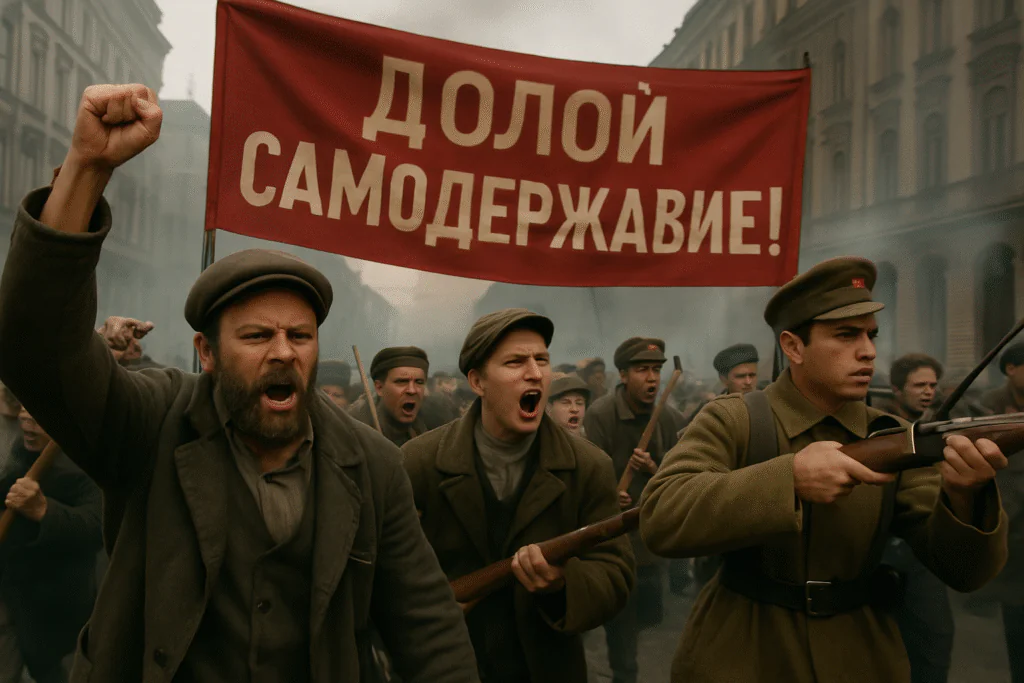
🟥 (i) February Revolution (March 1917 – February in the Julian Calendar)
The February Revolution was the first major phase of the Russian Revolution. It brought an end to Tsarist rule and led to the establishment of a democratic Provisional Government in Russia. This revolution was a spontaneous public uprising fueled by demands for peace, bread, and change.
🔹 Main Reasons
| Area | Description |
|---|---|
| 🔸 Political Discontent | Tsar Nicholas II's autocratic policies and widespread corruption created deep dissatisfaction among the people. |
| 🔸 First World War | Russia suffered heavy military losses; soldiers were exhausted, and citizens were battling starvation. |
| 🔸 Economic Crisis | Severe shortages of food and fuel, rising unemployment, inflation, and government mismanagement made life unbearable. |
| 🔸 Failure of the 1905 Revolution | The failed uprising of 1905 intensified public anger. The Tsar had promised reforms but never implemented them. |
| 🔸 Lack of Political Leadership | In the absence of strong leadership, the government was in disarray and unable to guide the nation. |
🔹 Chronology of Events
| Date | Event |
|---|---|
| 23 February 1917 (8 March Gregorian) | International Women’s Day protest in Petrograd demanding “Bread and Peace.” |
| 24–26 February | Workers, students, and labor groups joined the protests. Strikes spread across factories and streets. |
| 27 February | Several army regiments refused Tsar’s orders and joined the uprising. |
| 28 February | Tsar’s authority collapsed. The Petrograd Soviet (Workers’ and Soldiers’ Council) was formed. |
| 2 March 1917 | Tsar Nicholas II abdicated, ending over 300 years of Romanov rule. |
| 3 March 1917 | The Provisional Government was established—initially under Prince Lvov, later led by Alexander Kerensky. |
Awesome Amazon Product
Buy on Amazon🔹 Outcomes
| Point | Description |
|---|---|
| ✅ End of Tsarism | Russia’s 300-year-old autocratic monarchy came to an end. |
| ✅ Establishment of Provisional Government | A liberal–socialist government was formed, promising democratic reforms and elections. |
| ✅ Dual Power Situation | The Provisional Government co-existed with the Soviets (workers’ and soldiers’ councils), creating conflict and instability. |
| ✅ Opportunity for Bolsheviks | Lenin and the Bolsheviks used the government’s failures to position themselves as the true representatives of the people. |
🔹 Important Facts (Key Facts)
| Point | Description |
|---|---|
| 🔹 Nature of Revolution | Spontaneous, people-driven, and relatively non-violent. |
| 🔹 Main Center | Petrograd (St. Petersburg). |
| 🔹 Key Groups | Workers, soldiers, women, students. |
| 🔹 Major Outcome | End of Tsarism and formation of the Provisional Government. |
🔹 Conclusion
The February Revolution of 1917 marked a turning point in Russian politics. It dismantled the autocratic Tsarist regime and gave people hope for democratic change. However, due to the Provisional Government’s indecision and policy failures, Russia soon moved toward another historic uprising — the October Revolution.
🟥 (ii) October Revolution (November 1917 – October in the Julian Calendar)
The October Revolution was the second and decisive phase of the Russian Revolution. In this stage, the Bolsheviks seized power and established the first communist government in Russia. It transformed Russia’s political structure and shaped global politics for decades.
🔹 Background and Reasons
| Reason | Description |
|---|---|
| 🔸 Failure of the Provisional Government | The government formed after the February Revolution failed to end the war, implement land reforms, or provide food security. |
| 🔸 Continued War Policy | The decision to continue fighting in World War I shattered public trust and demoralized soldiers. |
| 🔸 Rising Popularity of Bolsheviks | Under Lenin’s leadership, the Bolsheviks attracted the masses through the slogan “Peace, Bread, and Land.” |
| 🔸 Dual Power Situation | The Provisional Government and the Soviets (workers' and soldiers' councils) frequently clashed, creating instability. |
| 🔸 Leadership of Lenin and Trotsky | Lenin’s ideological clarity and Trotsky’s military strategy provided structure and direction to the revolutionary movement. |
🔹 Main Chronology of Events
| Date | Event |
|---|---|
| 7 November 1917 (25 October – Julian Calendar) | The Bolsheviks launched their takeover. Red Guards and revolutionary troops captured government buildings, banks, and telegraph centers in Petrograd. |
| Assault on Winter Palace | The Bolsheviks stormed the Winter Palace, the headquarters of the Provisional Government, and overthrew it. |
| Kerensky Escapes | Alexander Kerensky, the head of the Provisional Government, fled the capital. |
| Second Congress of Soviets | On the same night, Lenin announced the formation of the Bolshevik (Soviet) government. |
🔹 Outcomes
| Point | Description |
|---|---|
| ✅ Establishment of Bolshevik Government | Russia became a communist state led by Vladimir Lenin. |
| ✅ Nationalization of Land, Industry, and Banks | Land was redistributed to peasants; factories came under workers’ control; banks were nationalized. |
| ✅ Withdrawal from World War I | The Bolsheviks signed the Treaty of Brest–Litovsk (1918), exiting the war. |
| ✅ Beginning of Civil War (1918–1922) | A brutal civil war erupted between the Red Army (Bolsheviks) and the White Army (anti-Bolshevik forces). |
| ✅ Foundation of the Soviet Union | The revolution laid the groundwork for the establishment of the USSR in 1922. |

Awesome Amazon Product
Buy on Amazon🔹 Important Personalities
| Name | Role |
|---|---|
| Vladimir Lenin | Leader of the Bolshevik Party; ideological architect of the revolution. |
| Leon Trotsky | Founder of the Red Army; key military strategist during the October Revolution. |
| Alexander Kerensky | Head of the Provisional Government; overthrown during the revolution. |
🔹 Features of the October Revolution
| Speciality | Description |
|---|---|
| 🔹 Organized and Systematic | The Bolsheviks executed a well-planned and strategic seizure of power. |
| 🔹 Minimal Bloodshed | The revolution itself was relatively less violent; major conflict occurred later during the Civil War. |
| 🔹 Ideological Transformation | It was not just political but also a social and economic revolution—marking the victory of workers and peasants over capitalist forces. |
🔹 Conclusion
The October Revolution of 1917 transformed the course of world history. It created the first socialist–communist state, placing workers, peasants, and soldiers at the center of power. Its influence spread far beyond Russia, inspiring leftist movements across the globe and reshaping 20th-century political thought.
🟥 3. Chief Main Leaders of the Russian Revolution
During the Russian Revolution of 1917, multiple leaders from different political ideologies played important roles. Their decisions, strategies, and leadership shaped the direction of the revolution. Below are the major leaders and their contributions:
🔹 (i) Vladimir Ilyich Lenin
- Party: Bolsheviks (Communist Party)
- Role: Ideological and political leader of the revolution
- Contribution:
- Gave the slogan “Peace, Bread, and Land” to mobilize public support.
- Led the October Revolution (November 1917).
- Became the first head of Soviet Russia.
- Developed Russian interpretation of Marxism, known as Leninism.
🔹 (ii) Leon Trotsky
- Party: Bolsheviks
- Role: Strategic military leader of the October Revolution
- Contribution:
- Chairman of the Petrograd Soviet.
- Founder of the Red Army; played a key role in the Civil War.
- Supporter of the concept of Permanent Revolution.
🔹 (iii) Alexander Kerensky
- Party: socialist Revolutionary (SR); Leader of the Provisional Government
- Role: Prime Minister after the February Revolution
- Contribution:
- Played a major role after the fall of the Tsar.
- Attempted to establish a democratic government.
- Deposed during the October Revolution by the Bolsheviks.
🔹 (iv) Joseph Stalin
- Party: Bolsheviks
- Role: Minor revolutionary role, major post-revolution leader
- Contribution:
- Became the supreme leader of the Soviet Union after Lenin’s death.
- Implemented a strict form of socialism known as Stalinism.
🔹 (v) Tsar Nicholas II
- Party: Romanov Dynasty (Tsarist Government)
- Role: The last Tsar of Russia
- Contribution:
- Autocratic rule, military failures, and poor governance led to widespread discontent.
- Forced to abdicate during the February Revolution.
- Executed by the Bolsheviks in 1918.

Awesome Amazon Product
Buy on Amazon🔸 Other Notable Leaders
| Name | Contribution |
|---|---|
| Grigory Zinoviev | Bolshevik leader and close associate of Lenin |
| Lev Kamenev | Important Bolshevik strategist and ally of Lenin |
| Grigori Rasputin | Influenced Tsarina Alexandra; contributed to the monarchy’s disrepute |
🟢 Conclusion
The Russian Revolution was a collective mass movement, but its direction and success were largely shaped by visionary leaders like Lenin and Trotsky. Their leadership not only overthrew the old regime but also established a new social, political, and economic structure.
🟥 4. Effects of the Russian Revolution
🔸 (i) Effects on Russia
| Effect | Description |
|---|---|
| ✅ End of Tsarism | The 300-year Romanov dynasty collapsed, ending the monarchy. |
| ✅ Establishment of Communist Government | Russia became the world’s first socialist/communist nation. |
| ✅ Nationalization of Land & Industry | Land was redistributed to peasants; factories were placed under workers’ control. |
| ✅ Civil War (1918–1922) | A violent conflict between the Red Army (Bolsheviks) and White Army (anti-Bolsheviks). |
| ✅ Formation of the USSR (1922) | The revolution laid the foundation for the creation of the Soviet Union. |
🔸 (ii) Effects on the World
| Area | Effect |
|---|---|
| 🌍 Inspiration for Global Communist Movements | Communist and workers’ movements strengthened worldwide (China, Cuba, Vietnam). |
| 🌍 Capitalism vs Socialism Conflict | After World War II, the ideological Cold War began between the US and USSR. |
| 🌍 Inspiration to Colonial Nations | Countries like India, China, and African regions drew inspiration for freedom struggles. |
| 🌍 Growth of Human Rights Concepts | The world began thinking more deeply about equality, labor rights, and social justice. |
🔸 (iii) Social and Cultural Effects
| Effect | Description |
|---|---|
| 🟢 Progress in Education & Health | Education became universal; major focus on science and technology. |
| 🟢 Gender Equality | Women gained rights including voting, education, and employment. |
| 🔴 Restrictions on Personal Freedom | The Bolshevik regime imposed censorship, suppressed opposition, and established a one-party rule. |
🔸 Conclusion
The Russian Revolution of 1917 was not just a political upheaval—it marked the beginning of a global ideological shift. It shaped the politics, society, and conflicts of the 20th century and remains one of the most influential revolutions in world history.
Impact of the Russian Revolution (1917) on Russia
The 1917 revolutions reshaped Russia’s political, social, economic and cultural frameworks. Below is a concise, structured summary of the major domestic impacts.
1. Political Impact
| Point | Description |
|---|---|
| End of Tsarism | The Romanov dynasty (≈300 years) ended with the abdication of Nicholas II in 1917. |
| From Democracy to One-Party Rule | The Provisional Government briefly introduced democratic reforms, but the October Revolution replaced it with a one-party Bolshevik state. |
| Establishment of Soviet Power | Power was reorganized into Soviets (workers, peasants, soldiers) under Bolshevik leadership. |
| New Constitution | Early Soviet constitutions (beginning 1918) enshrined the new socialist state structure and the legal basis for nationalization. |
2. Social Impact
| Point | Description |
|---|---|
| Move toward a Classless Ideal | Land, property and privileges of aristocrats and the Church were targeted for redistribution or seizure. |
| Women’s Rights | Women gained expanded rights: voting, access to education and employment opportunities improved significantly. |
| Religion | The Church lost political power and property; religious life became increasingly subordinated to state policy. |
| Repression in the Name of Social Order | The Bolshevik regime suppressed opposition parties and the independent press, initiating periods of political repression (e.g., Red Terror). |
3. Economic Impact
| Point | Description |
|---|---|
| Land Redistribution & Collectivization | Initial redistribution of land to peasants later led to large-scale collectivization under Stalin. |
| Nationalization of Industry | The state took control of factories, banks, railways and major enterprises. |
| New Economic Policy (NEP) | In 1921 Lenin introduced NEP — a temporary partial return of market mechanisms to revive the economy. |
| Destruction and Short-term Hardship | Civil war and social dislocation caused famine, industrial breakdown and severe human costs before recovery began. |
4. Cultural & Educational Impact
| Point | Description |
|---|---|
| Education Expansion | Universal and free education became a state priority; literacy campaigns significantly raised literacy rates. |
| Culture and Arts | Art, literature, theatre and film were mobilized to promote socialist values; avant-garde movements briefly flourished under state patronage. |
| Science & Technology | The state promoted scientific research and technical education as part of modernization efforts. |
5. Military & Administrative Impact
| Point | Description |
|---|---|
| Creation of the Red Army | Under Trotsky, the Red Army was formed into a disciplined revolutionary force that won the civil war. |
| Centralized State Control | Administration and security were centralized; secret police (Cheka and successors) enforced political conformity. |

Awesome Amazon Product
Buy on AmazonConclusion
The Russian Revolution of 1917 replaced a centuries-old tsarist dictatorship with a communist one-party state. It triggered profound social and economic upheaval — short-term devastation followed by state-led reconstruction, education expansion, and cultural transformation. Ultimately these changes paved the way for the Soviet Union, making Russia a central power in 20th-century global politics.
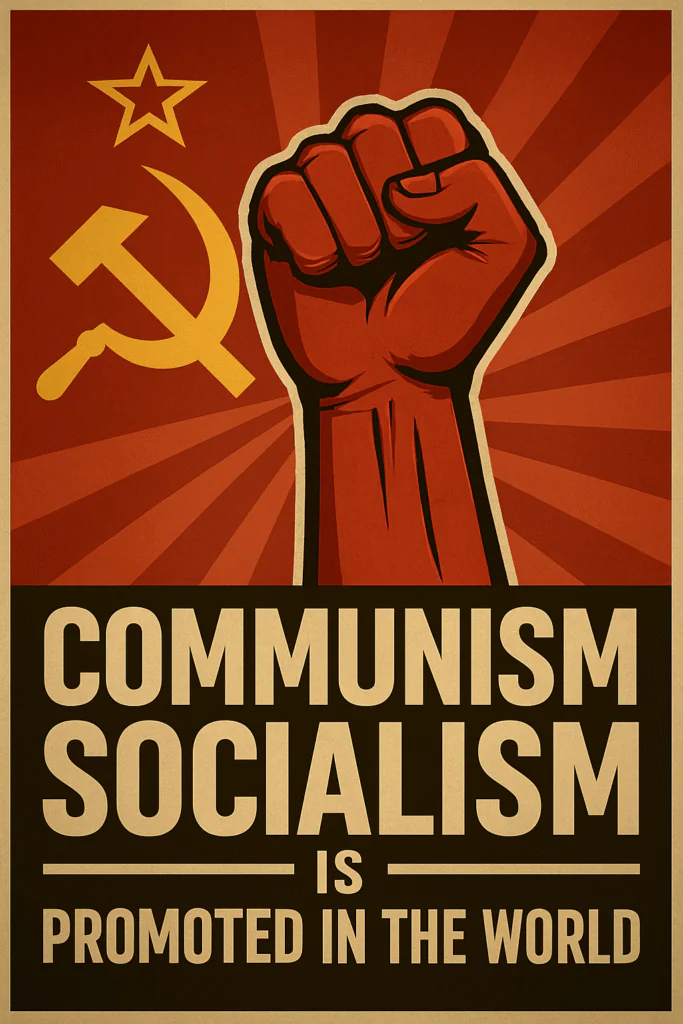
🟥 (ii) Global Impact of the Russian Revolution
The 1917 Russian Revolution did not only transform Russia internally but also reshaped global politics, economies, ideologies, and freedom movements. Its influence is considered one of the most far-reaching in world history.
🔹 1. Rise of Global Communism
| Effect | Description |
|---|---|
| 🔸 Spread of Communist Thought | Marxism–Leninism spread across the world, especially among poor, working-class and colonized societies. |
| 🔸 Formation of Communist Parties | Communist parties emerged in China, India, Germany, France, Vietnam, Cuba and many others. |
| 🔸 USSR as a Model | Many countries viewed the USSR as an example of a worker-based state and drew inspiration from it. |
🔹 2. Foundation of the Cold War
| Effect | Description |
|---|---|
| 🔸 socialism vs Capitalism | The Revolution gave rise to two rival ideologies — Communism (USSR) and Capitalism (usa). |
| 🔸 Division of the World | After WWII, the world was divided into two blocs — USA vs USSR. |
| 🔸 Arms & Space Race | The ideological conflict escalated into nuclear weapon competition, space race, and espionage wars. |
🔹 3. Inspiration to Anti-Colonial Movements
| Effect | Description |
|---|---|
| 🔸 Rise in Consciousness | Colonized nations in Asia, Africa and Latin America found new courage to fight for independence. |
| 🔸 Soviet Support | The USSR supported many anti-colonial struggles politically and economically. |
| 🔸 Impact on India | Indian freedom fighters and worker movements were influenced by communist ideology (e.g., Bhagat Singh; CPI formed in 1925). |
🔹 4. Reaction of Capitalist Nations
| Effect | Description |
|---|---|
| 🔸 Opposition to Communism | Capitalist nations treated communism as a threat and tried to suppress its spread. |
| 🔸 Social Reforms Introduced | To reduce revolutionary sentiments, rights like minimum wages, social security and labor protection were introduced. |
| 🔸 US “Red Scare” Policies | In the USA, strict laws and actions were taken against communists and leftists. |
🔹 5. Impact on Global Politics & Organizations
| Effect | Description |
|---|---|
| 🔸 Comintern (1919) | The Communist International was created to coordinate global socialist revolutions. |
| 🔸 Rise of Socialist Governments | Many nations adopted socialism — China (1949), Cuba (1959), Vietnam, North Korea. |
| 🔸 Impact on United Nations | Capitalist vs socialist ideological conflict shaped global UN politics and voting patterns. |
🔹 6. Impact on Ideology, Education & Culture
| Effect | Description |
|---|---|
| 🔸 Spread of Marxist Studies | Marxism became a major subject of academic and intellectual debate worldwide. |
| 🔸 Influence on Literature, Art & Cinema | Revolutionary ideas inspired films, books and arts (e.g., Eisenstein’s cinema). |
| 🔸 Boost to Labor & Women’s Movements | Global movements began demanding rights for workers and women. |
🟢 Conclusion
Globally, the Russian Revolution reshaped political ideologies, inspired anti-colonial struggles, ignited the Cold War, and influenced world politics, alliances and intellectual movements. Its impact continues to echo in present-day ideological debates and governance models.
🟥 5. Classification of the Russian Revolution (1917)
The Russian Revolution can be classified based on chronology, ideology, political transformation, participants, objectives, socio-economic changes and international impact.
🔹 1. Chronological Classification
| Revolution | Description |
|---|---|
| February Revolution (March 1917) | Tsar Nicholas II was removed; Provisional Government was formed. |
| October Revolution (November 1917) | The Bolsheviks overthrew the Provisional Government and established communist rule. |
🔹 2. Ideological Classification
| Ideology | Leadership | Objective |
|---|---|---|
| 🟥 Bolsheviks | Lenin, Trotsky | Establish socialism and a classless society |
| 🟦 Mensheviks | Martov, others | Gradual reform-based socialism |
| 🟩 Socialist Revolutionaries (SR) | Kerensky | Land reforms for peasants |
🔹 3. Political Classification
| Form | Description |
|---|---|
| Monarchy → Republic | Tsarist rule ended and democracy emerged. |
| Democracy → Socialism | The Bolsheviks replaced the Provisional Government with a socialist state. |
🔹 4. Classification by Participants
| Group | Role |
|---|---|
| 👑 Tsar & Royal Family | Downfall of autocratic monarchy |
| ✊ Workers & Peasants | Main base of revolution demanding “Bread, Peace, Land” |
| ⚙️ Bolshevik Workers | Led armed rebellion under Lenin |
| 🛡 Red Army & Soviets | Controlled power after the revolution |
🔹 5. Classification by Objectives
| Revolution | Objective |
|---|---|
| 🛑 February Revolution | End Tsarism and establish democracy |
| 🟥 October Revolution | Overthrow capitalist provisional rule and establish socialism |
🔹 6. Socio-Economic Classification
| Group | Impact |
|---|---|
| 🧑🌾 Peasants | Land nationalization and collectivized farming |
| 👷 Workers | Control over factories, improved working rights |
| 🏰 Aristocrats | Loss of property and privileges |
🔹 7. International Classification
| Area | Impact |
|---|---|
| 🌎 Capitalist Nations | Resistance to communism; beginning of Cold War |
| 🌍 Colonized Regions | Inspired freedom movements |
| 🌏 Socialist Movements | Rise of communist governments in China, Cuba, Vietnam |
🟢 Conclusion
The Russian Revolution cannot be confined to one category. It was simultaneously a political, social, economic, ideological and global revolution that reshaped the modern world.
🟥 6. Conclusion of the Russian Revolution (1917)
The Russian Revolution of 1917 stands among the most intense and influential revolutions in world history. It ended a centuries-old autocratic monarchy and paved the way for the world’s first communist government.
🔹 Summary of Key Points
- Public discontent against Tsar Nicholas II led to the February Revolution.
- Failure of the Provisional Government resulted in the October Revolution led by the Bolsheviks.
- The Revolution reshaped Russia’s political, economic, social and cultural structures.
- It triggered a global ideological conflict — Communism vs Capitalism — and inspired anti-colonial movements worldwide.

Awesome Amazon Product
Buy on Amazon🔹 Historical Significance
The revolution empowered oppressed groups, inspired global liberation struggles, and demonstrated how ideology, leadership and mass participation can alter the course of history.
✅ Final Conclusion
The Russian Revolution (1917) was not just a national event — it was the ideological revolution of the 20th century. It redefined global politics and continues to influence historians, thinkers and societies even today.