
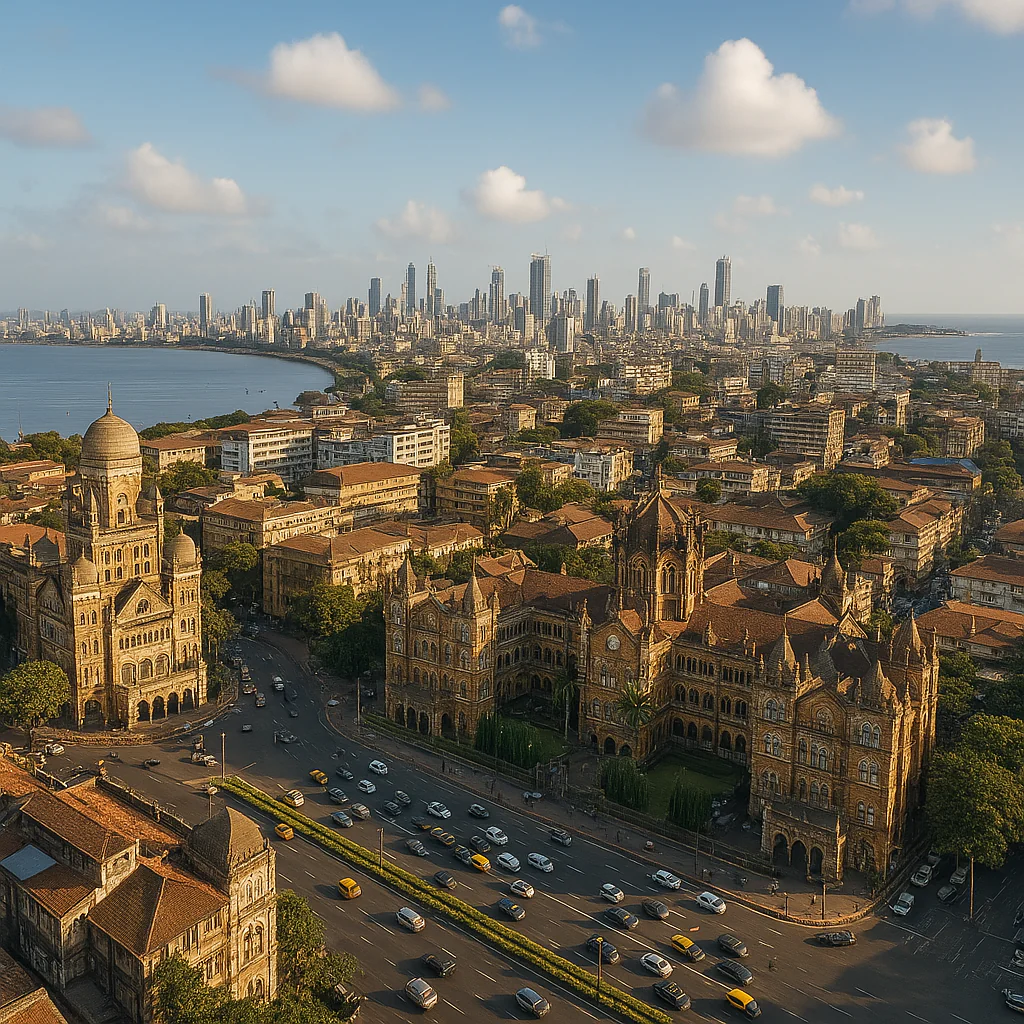
Mumbai City
Introduction to Mumbai City
Mumbai City, formerly known as Bombay, is the capital of Maharashtra and the financial capital of India. Mumbai City is one of the largest metropolitan regions in the world and plays a vital role in India’s economy, trade, entertainment, and global connectivity.
- Mumbai City is located on the western coast of India along the Arabian Sea.
- Mumbai City is popularly known as the “Economic Capital of India” and the “City of Dreams.”
- Bollywood, India’s largest film industry, is based in Mumbai City.
Administrative Structure of Mumbai City
Greater Mumbai City Administration
- Mumbai City is governed by the Brihanmumbai Municipal Corporation (BMC).
- The administrative area includes South Mumbai City, Central Mumbai City, and the Western and Eastern suburbs.
- Mumbai City is divided into 24 administrative wards (A to T).
Mumbai Suburban District
The suburban region of Mumbai City includes densely populated areas like Andheri, Bandra, Borivali, Mulund, and Ghatkopar.
Geographical Features of Mumbai City
Mumbai City was originally formed from seven islands that were merged during British rule. Today, Mumbai City stretches along a coastline of nearly 150 kilometers.
- Main Rivers of Mumbai City: Mithi River, Poisar River, Dahisar River
- Mumbai City has a tropical coastal climate.
Economic Importance of Mumbai City
Mumbai City as Financial Capital
- Bombay Stock Exchange (BSE) and National Stock Exchange (NSE) operate in Mumbai City.
- The Reserve Bank of India headquarters is located in Mumbai City.
- Many multinational corporations and banks have offices in Mumbai City.
Industries in Mumbai City
- Major sectors include textiles, petrochemicals, finance, IT, pharmaceuticals, and media.
- Mumbai City is also called the Entertainment Capital of India due to Bollywood.
Population and Society of Mumbai City
Mumbai City has a population of over 20 million in its metropolitan region, making Mumbai City the most populated urban region in India.
- Mumbai City includes areas like Dharavi as well as luxury zones such as Malabar Hill.
- Mumbai City represents both economic contrasts and opportunities.
Transportation System in Mumbai City
- Mumbai City Local Trains are known as the “Lifeline of Mumbai City.”
- Mumbai City Metro and Monorail support urban transport.
- Chhatrapati Shivaji Maharaj International Airport connects Mumbai City globally.
- Bandra–Worli Sea Link improves road connectivity in Mumbai City.
Major Landmarks of Mumbai City
- Gateway of India
- Marine Drive
- Siddhivinayak Temple
- Haji Ali Dargah
- Elephanta Caves
- Bandra–Worli Sea Link
Culture and Diversity in Mumbai City
Mumbai City is a multicultural and multilingual urban center where Marathi, Hindi, Gujarati, and English are widely spoken. Festivals such as Ganesh Chaturthi and Navratri are celebrated with great enthusiasm in Mumbai City.
Frequently Asked Questions About Mumbai City
Why is Mumbai City called the financial capital of India?
Mumbai City is called the financial capital because it hosts RBI, BSE, NSE, and headquarters of major corporations.
What is the population of Mumbai City?
The population of Mumbai City metropolitan region exceeds 20 million.
What makes Mumbai City famous?
Mumbai City is famous for Bollywood, Marine Drive, Gateway of India, financial markets, and its fast-paced lifestyle.
Conclusion
Mumbai City is not just a geographical region but an economic, cultural, and social powerhouse. Mumbai City symbolizes ambition, opportunity, diversity, and resilience. With its strong financial base, vibrant culture, and global connections, Mumbai City continues to shape the future of India.

Top Amazon Product
Discover this awesome product available on Amazon — click below to view the latest price, key features, and customer reviews!
👉 View on Amazon(Amazon Affiliate Link – Thank you!)
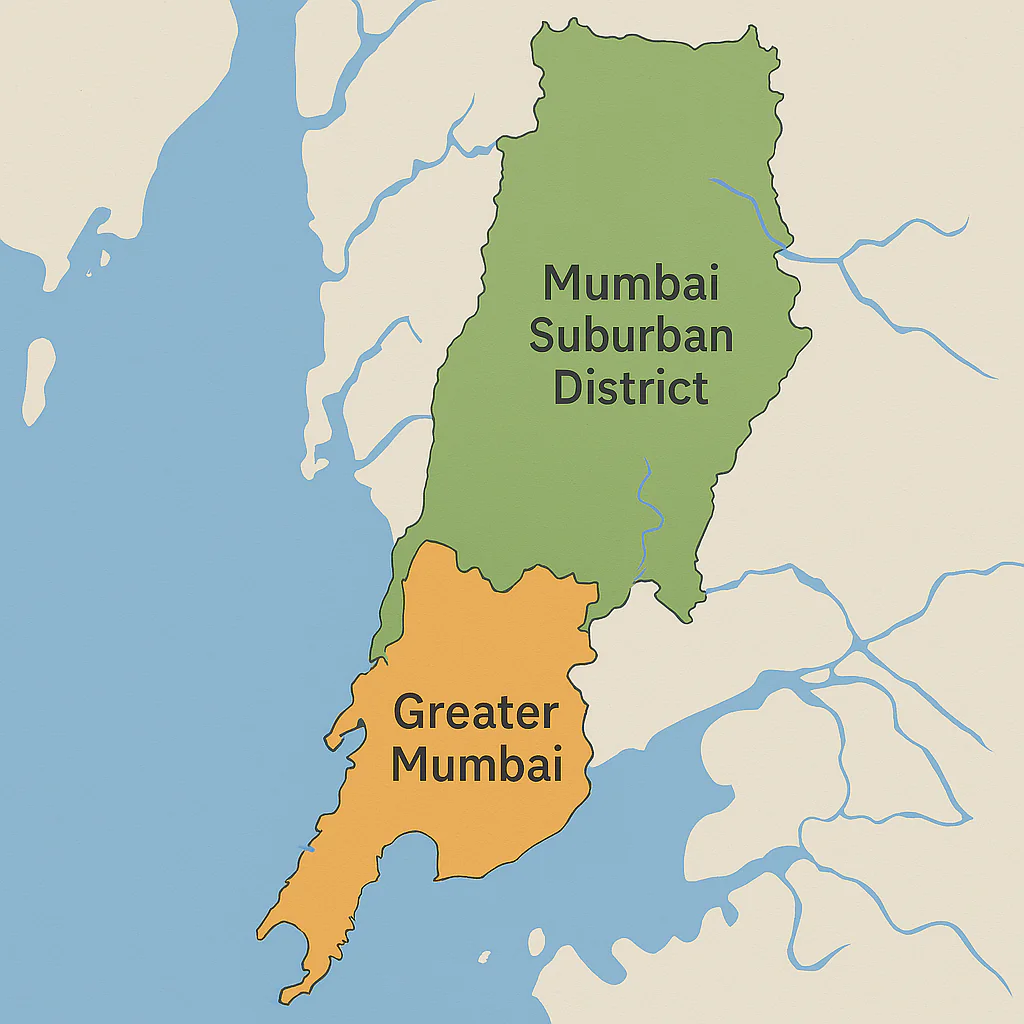
Mumbai Classification
Overview
Mumbai can be classified on several bases including Administrative Structure, geography, economy, culture, transportation, and urban–rural characteristics. Below is a complete and accurate classification of Mumbai.
1. Administrative Classification of Mumbai
1.1 Mumbai City District
Mumbai City District is commonly referred to as South Mumbai. It is the oldest and most historic region of Mumbai.
Key Features
- Administration: Managed by the Brihanmumbai Municipal Corporation (BMC).
- Area: Approx. 67.79 sq km
- Population: Approx. 3 million
- Main Areas: Colaba, Churchgate, Marine Drive, Fort, Nariman Point
- This region serves as the financial, commercial and government center of Mumbai.
1.2 Mumbai Suburban District
Mumbai Suburban District covers the suburban region of the city. It is significantly larger and more densely populated than the Mumbai City District.
Key Features
- Area: Approx. 446 sq km
- Population: Over 9 million (2024 estimate)
- Administrative Centre: Bandra
- Subdivisions:
- Western Suburbs: Andheri, Bandra, Borivali, Malad
- Eastern Suburbs: Mulund, Bhandup, Ghatkopar, Chembur
- Northern Fringe: Dahisar, Kandivali, Mira–Bhayander (in MMR)
1.3 Brihanmumbai Municipal Corporation (BMC)
- Established: 1888
- India’s oldest and largest municipal corporation.
- Responsible for managing health, sanitation, water supply, roads, street lights & urban planning.
- Divided into 24 wards (A to T).
- Governed by a Mayor and a Municipal Commissioner.
1.4 Mumbai Metropolitan Region (MMR)
MMR is the extended metropolitan region of Mumbai governed by the Mumbai Metropolitan Region Development Authority (MMRDA).
Areas Included
- Thane
- Navi Mumbai
- Kalyan–Dombivli
- Ulhasnagar
- Mira–Bhayander
- Vasai–Virar
- Panvel
Purpose: Manage population & economic expansion outside Mumbai city limits.
Summary Table
| Category | Region | Speciality |
|---|---|---|
| Mumbai City District | South Mumbai | Historic, commercial center |
| Mumbai Suburban District | Western + Eastern Suburbs | Dense population, residential areas |
| BMC | Entire Mumbai | Civic services, 24 wards |
| MMR | Extended Region | Urban development & expansion |
2. Geographic Classification
Mumbai is geographically divided into three major regions:
2.1 South Mumbai
- Colonial-era buildings
- High-income residential areas
- Commercial hubs: Nariman Point, Fort, Marine Drive
2.2 Central Mumbai
- Mixed-use residential & industrial areas
- Areas: Dadar, Parel, Sion
2.3 Suburban Mumbai
- Most densely populated part of Mumbai
- Areas: Andheri, Borivali, Kandivali, Mulund
3. Economic Classification
Rich Class Areas
- Malabar Hill
- Bandra–Worli Sea Face
- Juhu
Middle-Class Areas
- Goregaon
- Thane
- Chembur
- Mulund
Lower-Class / Slum Areas
- Dharavi (largest slum in Asia)
- Mankhurd
- Kurla
- Shivaji Nagar
4. Transportation-Based Classification
Rail Network (Three Main Lines)
- Western Line: Churchgate to Dahanu
- Central Line: CST to Karjat / Kasara
- Harbour Line: CST to Panvel / Andheri
Additionally, Mumbai has:
- Metro
- Monorail
- Sea Link
- BEST Bus Service
5. Cultural Classification
Mumbai is a confluence of multiple cultures and communities.
- Marathi: Traditional residents
- Gujarati & Marwari: Trader communities
- North Indians, South Indians, Muslims, Christians, Parsis, Sindhis
All major festivals are celebrated with enthusiasm:
- Ganesh Chaturthi
- Navratri
- Eid
- Christmas
- Holi
6. Urban–Rural Classification
Although Mumbai is a fully urban metropolitan region:
- Mumbai City & Suburbs: Fully urban
- MMR (Mumbai Metropolitan Region): Has semi-rural areas such as Palghar, Kalyan, Bhiwandi, Virar, Panvel
7. Residential & Industrial Classification
Residential Areas
- Juhu
- Bandra
- Vile Parle
- Goregaon
Industrial Areas
- Chembur
- Rombay
- Kurla
- Andheri MIDC
Conclusion
The classification of Mumbai shows how complex, vibrant, and multifunctional this metropolitan city is. Mumbai is not just a geographical location—it is the center of possibilities, challenges, aspirations, and dreams. From its administrative structure to cultural diversity, Mumbai stands as one of India’s most dynamic and influential cities.

Top Amazon Product
Discover this quality product available on Amazon — click below to view latest price, features & customer reviews!
👉 View on Amazon(Amazon Affiliate Link – Thank you!)
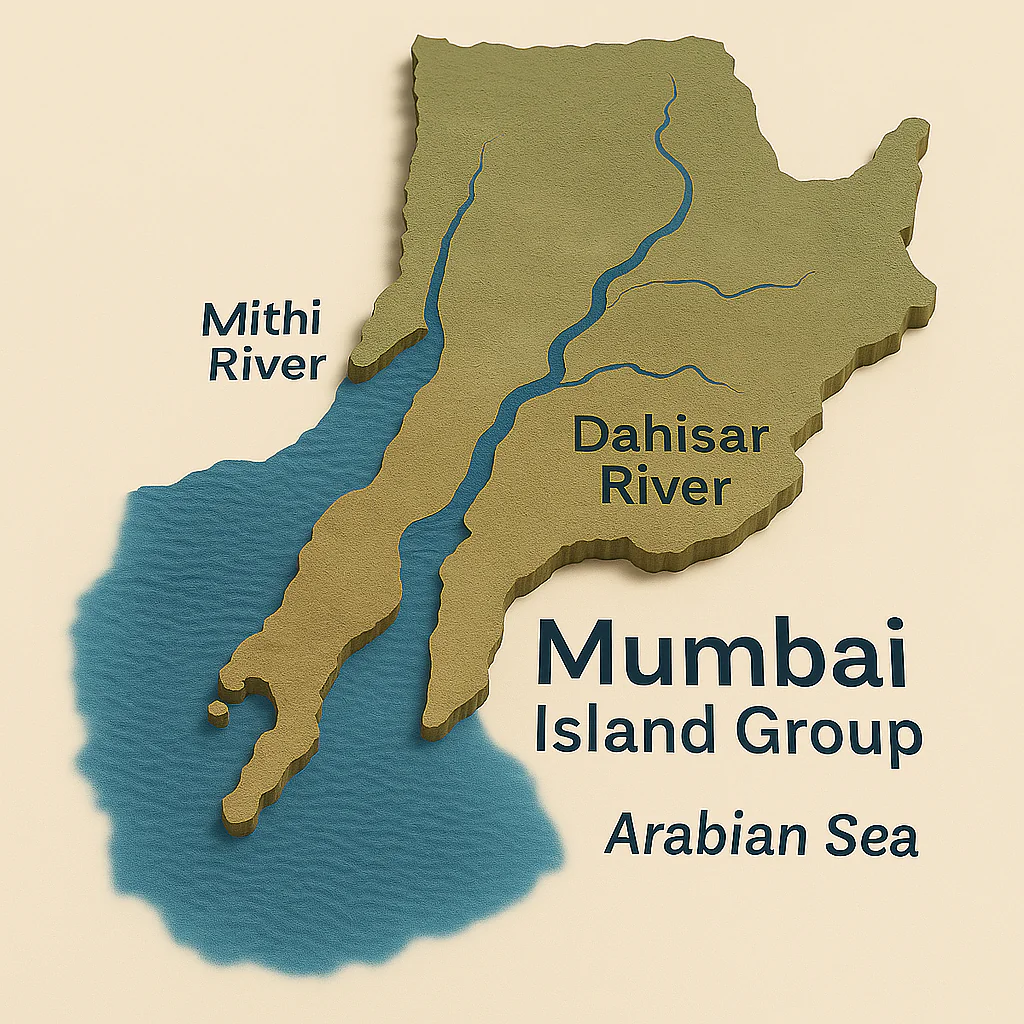
2. Geographic Classification of Mumbai
Mumbai is a city that evolved from a group of islands into a large metropolitan region. Geographically, it is divided into several areas based on their location, usage, population density, and level of development.
2.1 South Mumbai (Island City)
Features
- The oldest and most historic part of Mumbai.
- Originally formed from 7 islands merged by the British.
- Center of business, administration, and heritage architecture.
Major Areas
- Colaba
- Churchgate
- Fort
- Nariman Point
- Marine Drive
- Malabar Hill
Key Landmarks
- Gateway of India
- Chhatrapati Shivaji Terminus
- Mumbai High Court
- Raj Bhavan
Characteristics
- Highest land value and living standards.
- Colonial and heritage architecture.
2.2 Central Mumbai (Middle Mumbai)
Features
- Located between South Mumbai and the Suburbs.
- Former industrial (mill) district now transformed into residential and corporate hubs.
Major Areas
- Dadar
- Parel
- Sion
- Matunga
- Wadala
- Lower Parel
Development Characteristics
- Old mill lands converted into high-rise towers and malls.
- Dadar acts as one of Mumbai’s most important railway junctions.
2.3 Suburban Mumbai (Mumbai Suburbs)
Features
- The fastest growing and most populated part of Mumbai.
- Includes Western, Eastern, and North-Western suburbs.
Western Suburbs
- Bandra
- Andheri
- Jogeshwari
- Goregaon
- Malad
- Borivali
- Dahisar
These areas include Film City, malls, corporate offices, and the international airport.
Eastern Suburbs
- Chembur
- Ghatkopar
- Bhandup
- Vikhroli
- Mulund
Characteristics
- Predominantly middle-class and industrial zones.
2.4 Extended Suburbs (MMR Region)
These areas are outside the administrative boundary of Mumbai but fall under the Mumbai Metropolitan Region (MMR).
Major Regions
- Thane
- Navi Mumbai
- Panvel
- Mira–Bhayander
- Vasai–Virar
Large numbers of people travel daily from these regions to Mumbai for work.
2.5 Summary Table of Mumbai's Geographic Division
| Area | Key Localities | Speciality |
|---|---|---|
| South Mumbai | Colaba, Fort, Marine Drive | Historical, premium, commercial |
| Central Mumbai | Dadar, Parel, Wadala | Transition from industrial to residential |
| Western Suburbs | Bandra, Andheri, Borivali | Film, fashion, corporate growth |
| Eastern Suburbs | Chembur, Ghatkopar, Mulund | Industrial & middle-class housing |
| Extended Suburbs (MMR) | Thane, Navi Mumbai, Virar | Fast urban development |
Conclusion
Mumbai’s geographical classification reflects not only physical location but also the economic status, lifestyle, culture, and diversity of its residents. From slums to skyscrapers, seafront heritage to metro-city malls—Mumbai contains every form of urban life in a single metropolitan region.
3. Economic Classification of Mumbai
Mumbai is regarded as the Economic capital of India. Its economy is highly diversified and includes finance, business, films, construction, transportation, IT, and more.
3.1 Financial & Corporate Sector
Major Areas
- Nariman Point
- Fort
- Bandra–Kurla Complex (BKC)
- Lower Parel
- Andheri East
Key Features
- Bombay Stock Exchange (BSE)
- National Stock Exchange (NSE)
- Reserve Bank of India (RBI)
- Many national and international banks
- Global corporate and IT headquarters
Role
Mumbai controls nearly 60% of India’s capital market activities.
3.2 Film & Media Sector
Major Areas
- Film City (Goregaon)
- Andheri West
- Bandra
- Juhu
Industry Features
- Headquarters of Bollywood
- Thousands of films, TV serials, advertisements, and web series produced yearly
- Employment generator and tourism booster
3.3 Industrial & Construction Sector
Major Areas
- Chembur
- Bhandup
- Ghatkopar
- Kurla
- Thane
- Navi Mumbai
Key Features
- Old mill lands converted into housing, malls, and corporate hubs
- Real estate and infrastructure expansion
3.4 Port & Maritime Trade Sector
Major Locations
- Mazagaon Dock
- Mumbai Port
- Nhava Sheva Port (JNPT)
Sector Features
- One of India’s busiest port zones
- Major center for import–export, shipping, Navy & marine logistics
3.5 Service & Commercial Sector
Major Areas
- Malad
- Kandivali
- Borivali
- Bandra
- Andheri
- Ghatkopar
Services
- Retail
- Tourism & hospitality
- Restaurants
- Education
- Health services
3.6 Informal & Slum Economy
Major Areas
- Dharavi
- Shivaji Nagar
- Kurla
- Govandi
Characteristics
- Small-scale industries like leatherwork, pottery, recycling, and textile stitching
- Dharavi alone is estimated to generate over USD 1 billion annually
Mumbai’s Economic Share (2024 Estimates)
| Sector | Contribution (%) |
|---|---|
| Financial Services | 25% |
| Real Estate & Construction | 20% |
| Film & Media | 10% |
| Industrial / Manufacturing | 15% |
| Informal Sector | 10% |
| Other Services | 20% |
Conclusion
Mumbai’s economy is one of the most diverse and powerful in India. The city not only contributes significantly to the national GDP, banking, film, construction, and port activities, but also drives employment, innovation, and global connectivity. Mumbai truly stands as India’s financial engine.

Awesome Amazon Product
Check out this great product available on Amazon — click below to view the latest price, key features, and customer reviews!
👉 View on Amazon(Amazon Affiliate Link – Thank you!)
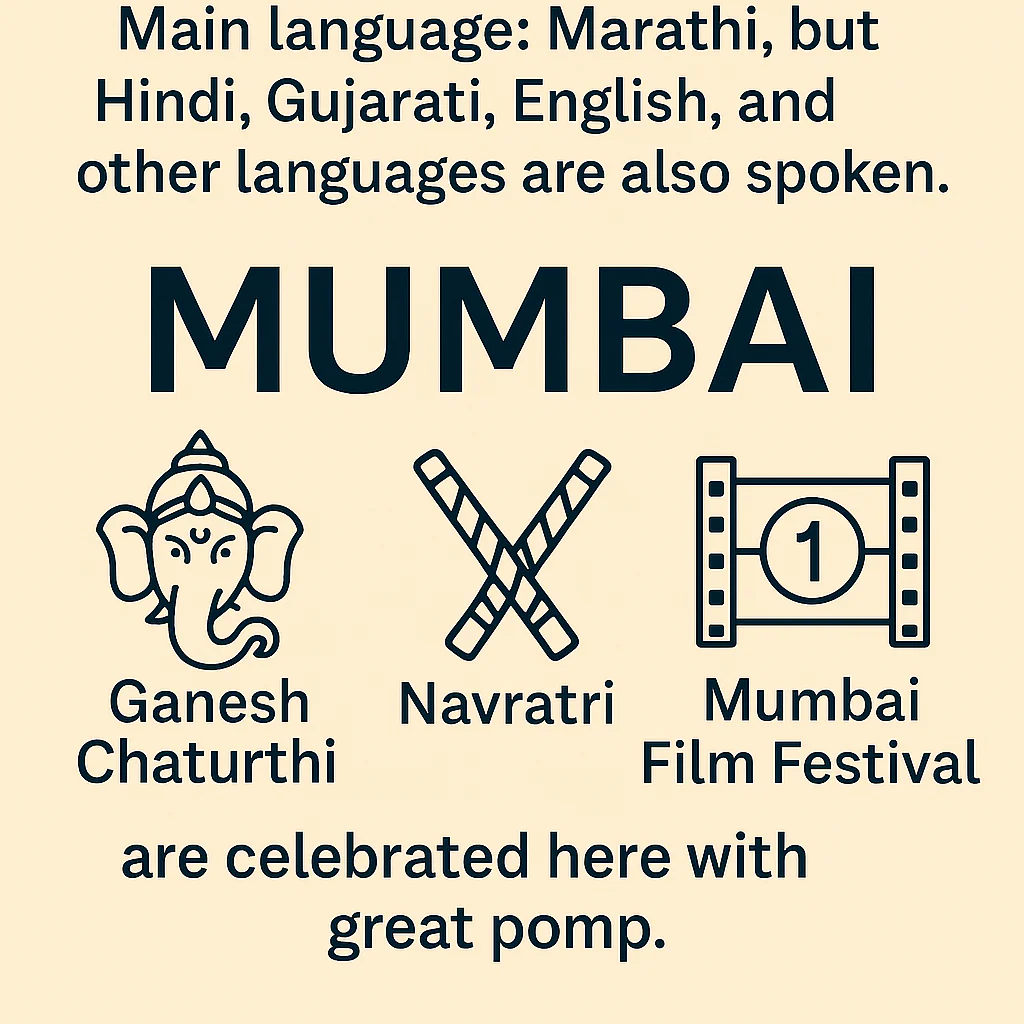
4. Cultural Classification of Mumbai
Mumbai is one of India’s most multicultural metropolitan cities where diversity, coexistence, and modernity coexist beautifully. It is not only an economic hub but also a cultural capital of India.
A. Linguistic and Religious Diversity
1. Linguistic Diversity
Many languages are spoken in Mumbai by different communities:
| Language | Primary Speaking Community |
|---|---|
| Marathi | Local Marathi population |
| Hindi | North Indian migrants |
| Gujarati | Business communities |
| English | Corporate and higher-income population |
| Tamil, Telugu, Malayalam, Punjabi, etc. | Various migrant groups |
2. Religious Diversity
People of various Religions live in Mumbai with harmony:
| Religion | Famous Places |
|---|---|
| Hindu | Siddhivinayak Temple, Mahalakshmi Temple |
| Muslim | Haji Ali Dargah, Mumba Devi Mosque |
| Christian | Mount Mary Church, St. Thomas Cathedral |
| Parsi | Fire Temples, Tower of Silence |
| Jain | Bhuleshwar Jain Temple |
B. Art, Music and Theatre
1. Theatre
- Marathi theatre has a strong historic influence in Mumbai.
- Important venues: Shivaji Mandir (Prabhadevi), NCPA (Nariman Point)
2. Music and Dance
- Birthplace of Bollywood music.
- A blend of classical, Bollywood, folk and indie music.
- Key festivals: Sawai Gandharva, Kala Ghoda Arts Festival
3. Painting and Visual Arts
- Major art galleries: Jehangir Art Gallery, Piramal Art Gallery
- Art exhibitions in Colaba and Worli
C. Film and Media Culture
Mumbai is known as the “City of Bollywood”.
| Element | Description |
|---|---|
| Bollywood | Produces nearly 60% of India’s films |
| Studios | Film City, Yash Raj Studios, Mehboob Studios |
| TV Industry | Major center for TV serials and OTT web series |
D. Festivals and Celebrations
Mumbai celebrates every festival with grandeur:
| Festival | Main Places | Features |
|---|---|---|
| Ganesh Chaturthi | Siddhivinayak, Lalbaugcha Raja | Massive pandals, visarjan |
| Eid | Haji Ali, Mohammed Ali Road | Lights, festive food |
| Navratri & Garba | Borivali, Malad | Colorful dandiya events |
| Christmas | Bandra, Churchgate | Church decorations, celebrations |
| Diwali | Entire City | Lights & fireworks |
| Holi | Juhu, Khar, Local trains | Vibrant colors |
E. Lifestyle and Local Culture
| Area | Cultural Highlights |
|---|---|
| Colaba, Bandra | Cafes, street art, youth culture |
| Dharavi | Symbol of hard work and creativity (art, music, crafts) |
| Dongri, Bhendi Bazaar | Traditional Muslim culture |
| Matunga | South Indian food and heritage |
| Malad, Borivali | Gujarati & Jain cultural dominance |
F. Cultural Landmarks and Monuments
| Area | Cultural Identity |
|---|---|
| Fort | British architecture, art galleries |
| Marine Drive | “Queen’s Necklace”, iconic seafront |
| Gateway of India | Colonial-era landmark |
| Dharavi | World’s most creative slum |
| Shivaji Park | Marathi cultural and political hub |
Conclusion
Mumbai is a “Mini India” where every religion, language, and social class coexists. Its culture represents inclusiveness, creativity, and vibrancy—a blend of heritage and modernity that makes Mumbai a culturally rich metropolis.
5. Population & Demographic Classification of Mumbai
Mumbai is the most populated city in India. It is home to a multilingual, multi-religious, and socio-economically diverse population.
A. Population Size
| Criteria | Data (2024 Estimate) |
|---|---|
| Mumbai Metropolitan Region (MMR) | ~25 Million |
| BMC Area Population | ~13 Million |
| Population Density (BMC) | ~21,000 people per sq km |
| India Rank | 1st |
| World Rank | Top 10 |
B. Location-based Population Classification
| Area | Population Features |
|---|---|
| South Mumbai (SoBo) | Lower density, wealthier population, Parsi/Marwari community |
| Western Suburbs | Middle-class, Hindi/Gujarati majority |
| Central Suburbs | Mixed industrial and residential |
| Eastern Suburbs | Mixed income groups |
| Dharavi | High density, lower income, migrant labourers |
| Navi Mumbai, Thane | Well-planned, new development |
C. Linguistic Demographics
| Language | Estimated Share |
|---|---|
| Marathi | ~35% |
| Hindi | ~25% |
| Gujarati | ~10% |
| Urdu | ~7% |
| Tamil, Telugu, Malayalam | ~8% |
| English | ~5% |
| Other | ~10% |
D. Religious Demographics
| Religion | Estimated Share |
|---|---|
| Hindu | ~65% |
| Muslim | ~20% |
| Christian | ~6% |
| Parsi | ~0.5% |
| Jain | ~4% |
| Others (Sikh, Buddhist, etc.) | ~4.5% |
E. Socio-Economic Classification
| Category | Features |
|---|---|
| High Income Group | Lives in South Mumbai, BKC, Worli |
| Middle Income Group | Found in Malad, Kandivali, Ghatkopar |
| Lower Income Group | Lives in Dharavi, Kurla, Chembur, Shivaji Nagar |
| Migrant Labourers | From UP, Bihar, Odisha, etc. |
| Skilled Professionals | Works in IT, media, finance sectors |
F. Other Demographics
| Criteria | Data |
|---|---|
| Gender Ratio | ~850 females per 1000 males |
| Literacy Rate | ~90% (Male 93%, Female 87%) |
| Youth (18–35) | ~45% |
| Elderly Population (60+) | ~7% |
| Migrant Population Share | ~40% |
Conclusion
Mumbai’s population is a symbol of diversity. People of every religion, language, class and age group live here together, earning Mumbai the title “India in Miniature.” While population is Mumbai’s greatest strength, it also makes urban management and infrastructure development a major challenge.

Top Amazon Product
Discover this great product on Amazon — click below to see the latest price, features, and customer reviews!
👉 View on Amazon(Amazon Affiliate Link – Thank you!)
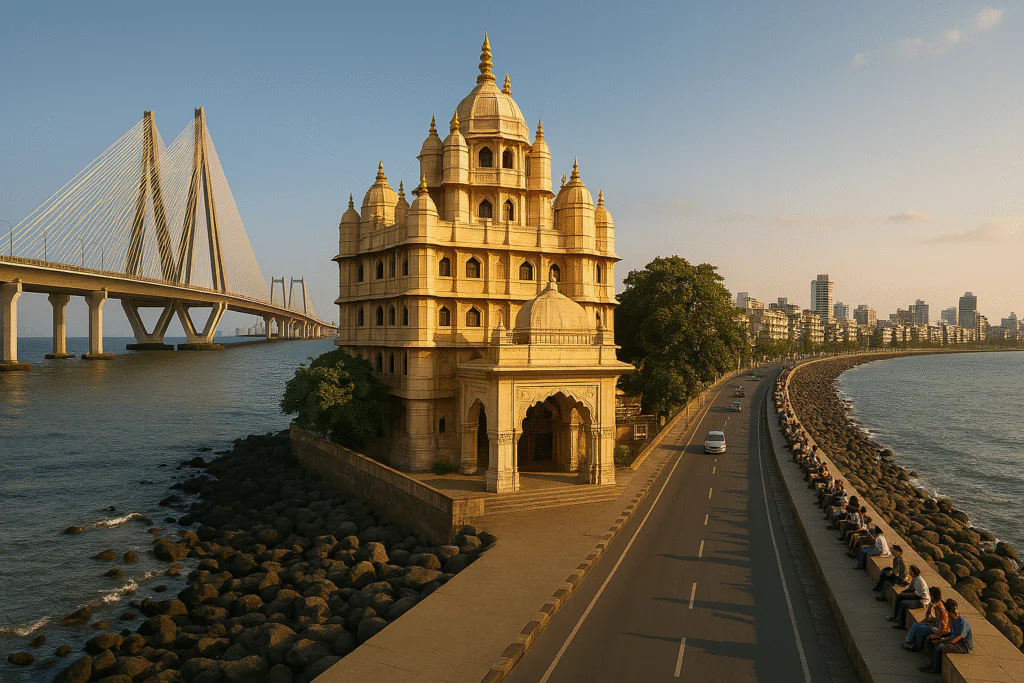
6. Transportation Classification of Mumbai
Mumbai’s transportation network is one of the busiest and most complex systems in India. It includes an advanced combination of road, rail, air and water transport, making mobility efficient despite extreme population pressure.
A. Road Transport
1. Local Road Network
- Mumbai has a road network of more than 8,000 km.
- Road density is extremely high, especially in the suburban regions.
2. BEST Bus Service
- Operated by BEST (Brihanmumbai Electric Supply and Transport).
- Over 3,000 buses carry more than 3.5 million passengers daily.
- Introduction of electric buses is rapidly expanding.
3. Taxi and Auto Rickshaw
- Black–Yellow Taxis: Operate across Mumbai.
- Auto Rickshaws: Operate only in the suburbs (not allowed in South Mumbai).
4. Major Highways and Flyovers
- Western Express Highway (WEH)
- Eastern Express Highway (EEH)
- Bandra–Worli Sea Link
- JJ Flyover
B. Railway Transport
1. Mumbai Local Trains
Known as the “Lifeline of Mumbai”, local trains carry over 7.5 million passengers daily.
| Line | Route | Features |
|---|---|---|
| Western Railway | Churchgate – Dahanu | Busiest line |
| Central Railway | CSMT – Karjat / Kalyan | Long-distance connectivity |
| Harbour Line | CSMT – Panvel | Moderate crowd |
| Trans-Harbour Line | Thane – Nerul / Panvel | Suburban connectivity |
2. Mumbai Metro
- Phase 1 (Versova–Ghatkopar) operational.
- More than 14 metro lines proposed.
- Planned network of 300+ km by 2025.
3. Monorail
- Operational from Chembur to Wadala.
- Limited route but potential for future expansion.
C. Air Transport
1. CSMIA – Chhatrapati Shivaji Maharaj International Airport
- India’s second busiest airport.
- Two terminals: T1 (Domestic), T2 (International).
- Handles 900+ flights daily.
2. Navi Mumbai International Airport (NMIA)
- Currently under construction.
- Expected operational start by 2025.
- Will significantly reduce Mumbai’s air traffic load.
D. Marine Transport
1. Ferry Services
- Operate from Gateway of India to Alibaug and Elephanta Island.
- Used for tourism and daily passenger movement.
2. Jawaharlal Nehru Port Trust (JNPT)
- India’s busiest container port.
- Located in the Uran region.
- Major hub for cargo, shipping, and marine logistics.
E. Emerging and Alternative Transport Options
| Option | Description |
|---|---|
| Bicycle Tracks | Developed in Bandra, BKC, Navi Mumbai |
| Electric Scooters & Bikes | Services like Yulu, Ola Electric |
| Ride-hailing Cabs | Uber, Ola, Rapido |
F. Challenges and Improvements
Key Challenges
- Severe overcrowding
- Traffic congestion
- Pollution
- Poor road conditions, especially during monsoon
Recent Improvements
- Rapid expansion of Mumbai Metro
- Coastal Road Project
- Multi-level parking initiatives
- Promotion of electric vehicles (EVs)
Conclusion
Mumbai’s transportation system is dynamic, complex, and constantly evolving. While local trains and BEST buses remain the city’s heartbeat, metro expansion, highways, and airports represent Mumbai’s future. With better planning, technology, and investment, the system continues to transform.
7. Key Highlights of Mumbai
1. Economic capital of India
- Contributes significantly to India’s GDP (~6%).
- Home to RBI, BSE, NSE, and numerous multinational companies.
2. Bollywood & Entertainment Hub
- Film City, Yash Raj Studios, and entertainment giants operate from here.
- Center of Indian cinema, TV serials, and OTT productions.
3. Mumbai Local Trains – Lifeline of the City
- Carry around 7.5 million passengers daily.
- Fast, affordable and reliable public transport.
4. Cultural Diversity
- Languages: Marathi, Hindi, Gujarati, Tamil, Telugu, Urdu, English, and more.
- Religions: Hindu, Muslim, Christian, Parsi, Jain, Sikh.
5. Architecture & Heritage
- Gateway of India
- Chhatrapati Shivaji Maharaj Terminus (CSMT)
- Haji Ali Dargah
- Bandra–Worli Sea Link
6. Education & Institutions
- University of Mumbai
- IIT Bombay
- Tata Institute of Social Sciences (TISS)
- J.J. School of Arts
7. Beaches & Coastal Culture
- Juhu Beach
- Girgaon Chowpatty
- Madh Island
- Marine Drive
8. Industrial & Service Sector Strength
- Headquarters of Tata, Reliance, L&T and more.
- Strong presence of IT, media, banking, real estate and logistics industries.
9. Urbanisation & Slum Dynamics
- Dharavi — one of the world’s largest slums, yet highly productive.
- Coexistence of luxury towers and low-income settlements.
10. Festival Vibrancy
- Ganesh Chaturthi at Lalbaugcha Raja
- Eid at Mohammed Ali Road
- Diwali at Marine Drive
- Navratri, Christmas, Holi and more
11. Excellent Connectivity
- CSMIA Airport
- Mumbai Metro
- BEST, taxis, auto-rickshaws, ferries
Final Conclusion
Mumbai is not just a city — it is the heartbeat of India, a symbol of dreams, diversity, ambition and resilience. From its administrative and geographical structure to its strong economic foundation, cultural vibrancy, fast-paced lifestyle and iconic local trains, Mumbai is a living example of India’s urban spirit.
Whether it is the glamour of Bollywood, the grandeur of the Sea Link, or the energy of Dharavi — every aspect reflects the depth and dynamism of this city.
Mumbai gives millions of people hope, opportunities, and the courage to rise every day. Though life in Mumbai is challenging, it is filled with optimism, progress and endless possibilities.
“Mumbai is not just a place to live — it is a way of life.”
References
- Government of Maharashtra – Mumbai City & Suburban District Official Data
- Mumbai Metropolitan Region Development Authority (MMRDA) Reports
- Brihanmumbai Municipal Corporation (BMC) – Annual Statistical Handbook
- Ministry of Housing & Urban Affairs, Government of India
- Mumbai Railway Vikas Corporation – Transportation Statistics
- Directorate of Economics & Statistics, Maharashtra State
- Census of India – Mumbai Population & Demographics
- Mumbai Port Trust (MbPT) & JNPT Official Publications
- Reserve Bank of India (RBI) – Mumbai Financial Data

Top Amazon Product
Discover this quality product available on Amazon — click below to view the latest price, features, and customer reviews!
👉 View on Amazon(Amazon Affiliate Link – Thank you!)