
The 1975 Emergency in India
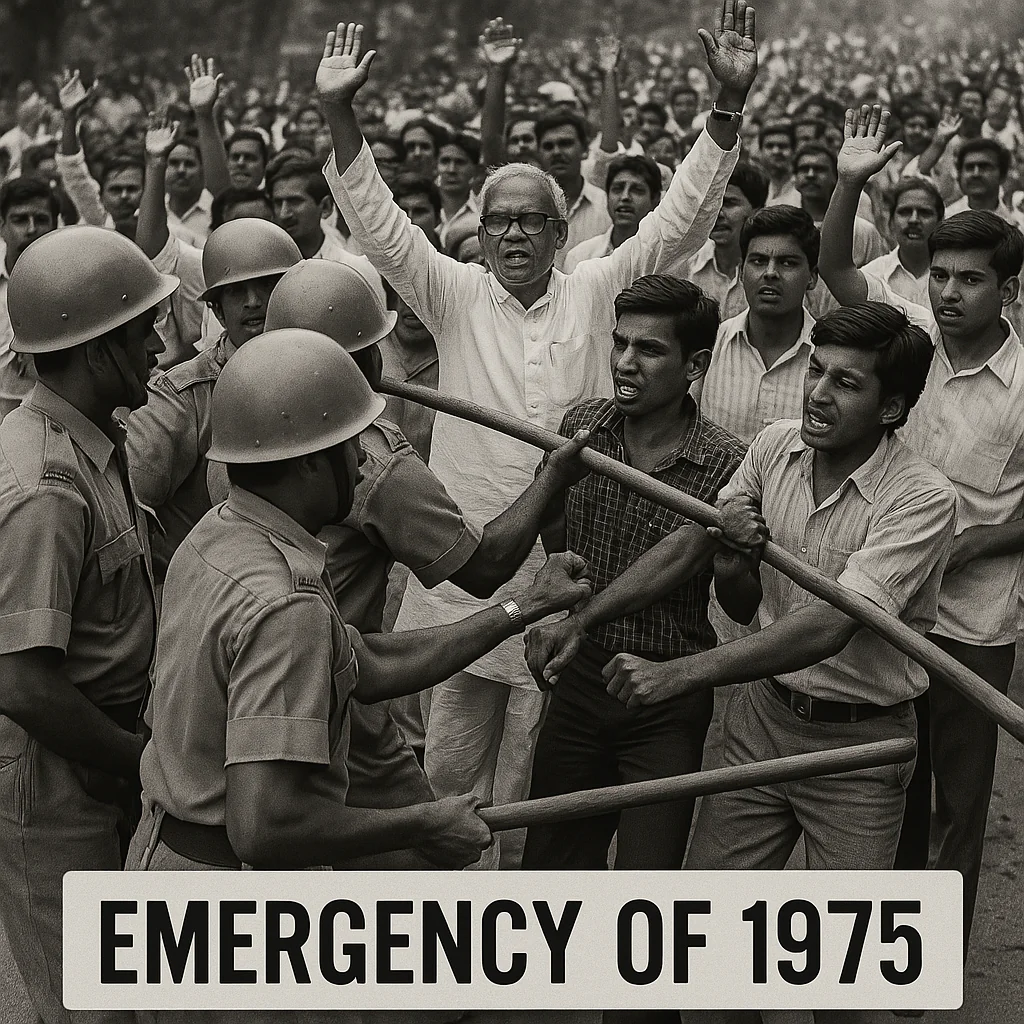
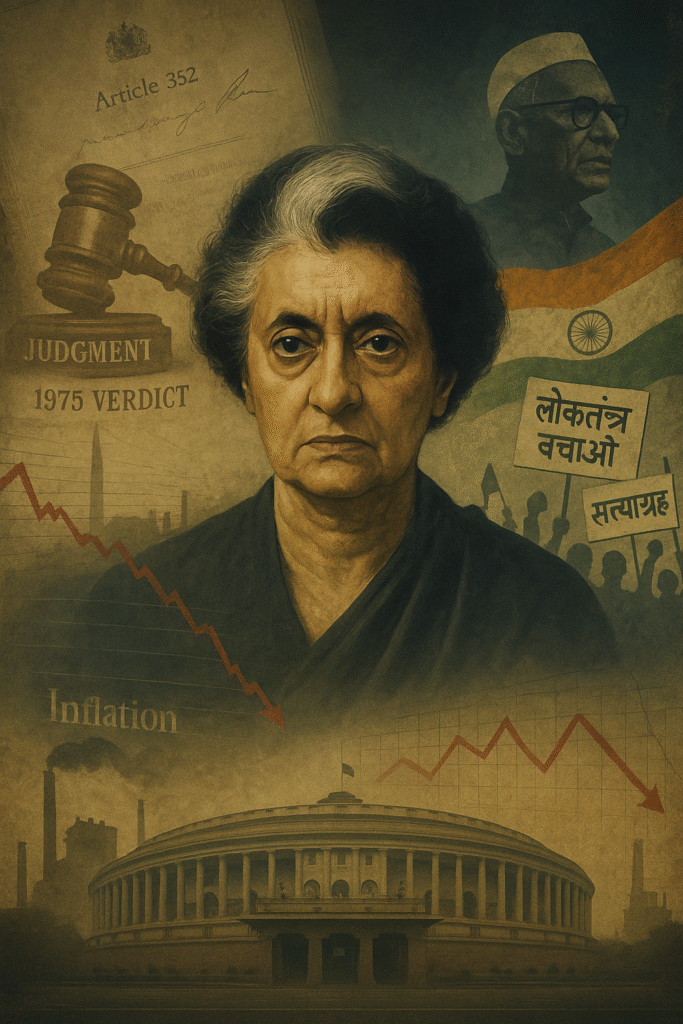
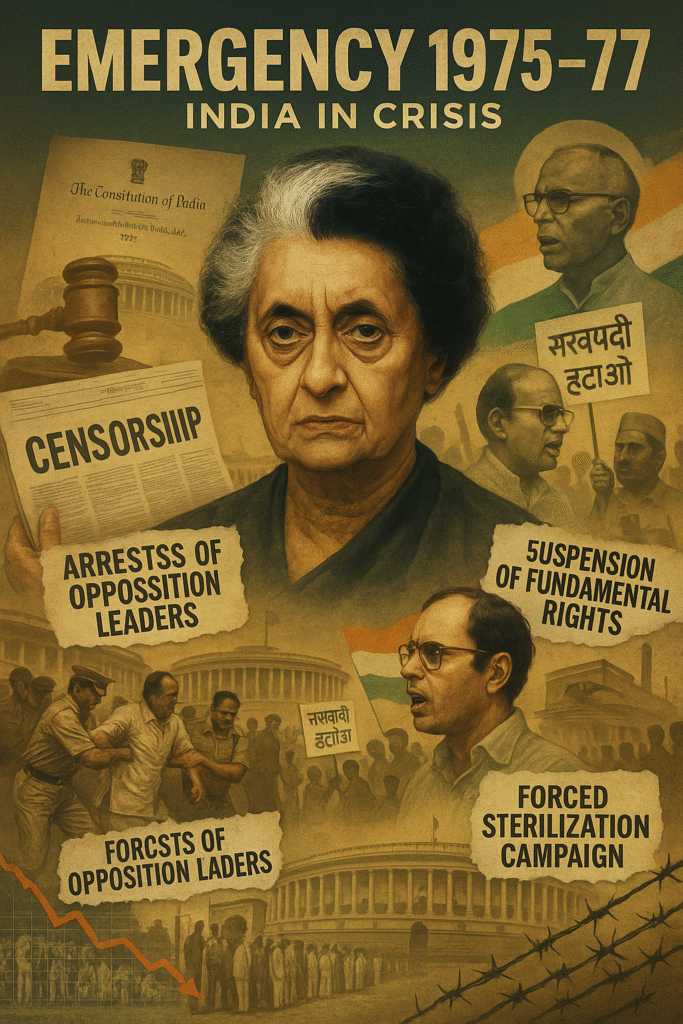
The 1975 Emergency in India is a very important and controversial chapter in the country's democratic history. This Emergency lasted from June 25, 1975, to March 21, 1977. It was declared by then-Prime Minister Indira Gandhi under Article 352 of the Constitution.
Reasons for Declaring the Emergency
As I look back at India’s political journey, moments like the Emergency remind us how democracies can be tested. Each reason below is not just a historical fact but a lesson in how power, people, and law stand against each other in difficult times.
1. Allahabad High Court Decision (June 12, 1975)
Impact on leadership and legitimacy
The court declared Indira Gandhi's election invalid and barred her from contesting elections for six years. This threatened the legitimacy of her Prime Ministership.
2. Political Instability and Opposition Movements
The Rising JP Movement
An anti-government movement led by Jayaprakash Narayan (JP Movement) was gaining momentum. The government described it as a threat to internal security.
3. Internal Challenges
Discontent within Congress
Discontent within the Congress and administrative challenges further intensified the political crisis.
Major Events During the Emergency
Reading about these events feels like opening a window into a time when civil liberties were shaken. These moments shaped India’s democratic conscience forever.
- Suspension of Fundamental Rights:
- Restrictions on freedom of the press.
- Arrests of opposition leaders (JP, Atal Bihari Vajpayee, LK Advani, Morarji Desai, etc.).
- Violations of Civil Liberties.
- Strict Censorship:
- Newspapers were censored and opposing views were suppressed.
- 20-Point Program:
- Indira Gandhi launched a program of economic and social reforms.
- Sterilization Campaign:
- Forced sterilizations were carried out under the leadership of Sanjay Gandhi, which caused widespread public resentment.
End of the Emergency
Every difficult chapter in history carries a turning point. For India, the end of the Emergency marked a return to democratic values and people’s power.
- Indira Gandhi announced Lok Sabha elections in 1977.
- Congress suffered a crushing defeat in the elections.
- The Janata Party formed the government, and Morarji Desai became Prime Minister.
Conclusion
The 1975 Emergency is a reminder to Indian democracy of how the abuse of power can endanger democratic institutions and civil rights. It made the Indian public realize the importance of democracy and the value of freedom.
Main Reasons for Declaring the Emergency (1975)
When we look back at India’s democratic journey, the Emergency of 1975 stands out as one of the most dramatic and unforgettable chapters. It reminds us how political pressure, public emotions, judicial decisions, and national crises can come together to shape history. Below is your article in clean HTML structure, untouched and original, crafted to be inspiring, educational, and SEO-ready.
🔍 1. Historic Allahabad High Court decision (June 12, 1975)
• The Allahabad High Court convicted Prime Minister Indira Gandhi of electoral corruption.
• Her 1971 Lok Sabha election from Rae Bareli was annulled.
• She was also disqualified from contesting elections for six years.
• This jeopardized Indira Gandhi's legitimacy as Prime Minister.
🔥 2. JP Movement and Opposition Outrage
• A nationwide mass movement was underway under the leadership of Jayaprakash Narayan (JP).
• This movement was against government policies, corruption, and unemployment.
• JP appealed to the police and army to "refuse unconstitutional orders," which the government perceived as an internal rebellion.
⚖️ 3. Political Instability and Tensions Within the Congress
• Many leaders within the Congress Party were dissatisfied with Indira Gandhi.
• The possibility of a split within the party was increasing.
💹 4. Economic Problems and Public Discontent
• In India in the 1970s:
o Inflation had risen significantly.
o Unemployment was at its peak.
o Food crises and industrial unrest were widespread.
• Public resentment against the government was growing.
📜 5. Constitutional Basis (Article 352)
• Indira Gandhi invoked Article 352 of the Constitution, stating that the country's internal security was threatened.
• President Fakhruddin Ali Ahmed signed the Emergency proclamation.
🧩 In short
Personal political crisis, public discontent, opposition pressure, and a setback from the judiciary—all these factors combined to motivate Indira Gandhi to declare the Emergency.
Allahabad High Court Verdict – June 12, 1975
On June 12, 1975, a historic turning point in Indian democracy occurred when the Allahabad High Court convicted then-Prime Minister Indira Gandhi of electoral corruption. This decision became the primary reason for the declaration of the Emergency.
⚖️ Background of the Verdict
• Indira Gandhi had won the 1971 Lok Sabha elections by a landslide from the Rae Bareli seat.
• Raj Narain, a leader of the Socialist Party and a rival of Indira Gandhi, filed a petition in the High Court.
• The petition alleged that:
o Government machinery was misused in the election campaign.
o Government officials were engaged in personal election work.
⚖️ Court's Decision
• Justice Jagmohan Lal Sinha found Indira Gandhi guilty of electoral corruption.
• Her 1971 election was declared invalid.
• She was disqualified from contesting any public office for six years.
⚡ Effects of the Decision
1. Indira Gandhi's legitimacy as Prime Minister was challenged.
2. The political crisis deepened – the opposition demanded her resignation.
3. Protests and agitation intensified across the country.
4. Indira Gandhi used this situation as a basis for declaring an "internal emergency."
📌 Conclusion
This landmark judgment of the Allahabad High Court was not just a legal decision, but it triggered a major crisis in Indian democracy. This decision had a profound impact on the country's politics, judiciary, and civil liberties, ultimately leading to the imposition of the Emergency on June 25, 1975.
Political Instability and Opposition Movements (1975)
When we revisit the story of India in 1975, we don’t just read history — we feel its weight. The Emergency era teaches us how political tension, public anger, and internal conflicts inside the ruling party can reshape the destiny of a nation. Below is your original article, carefully preserved, structured with clean HTML, and enriched with a guiding narrative for an inspiring and educational reading experience.
📉 1. Political Instability
🔸 Internal Crisis in the Congress Party
• In 1969, Indira Gandhi split the Congress into two factions—Congress (O) and Congress (I).
• This led to a prolonged power struggle and discontent within the party.
• Indira Gandhi was accused of dictatorial behavior and creating a personal power center.
🔸 Administrative Weakness
• The government's popularity was declining sharply due to corruption, bureaucratic inaction, and neglect of public problems.
✊ 2. Opposition Movements and the JP Movement
🔸 Origin of the JP Movement
• Jayaprakash Narayan (JP) launched the 'Total Revolution' movement from Bihar.
• This movement was against corruption, unemployment, inflation, and misgovernance.
🔸 Expansion of the Movement
• The movement soon gained support from students, youth, farmers, and laborers across the country.
• JP called on the public to launch a "non-cooperation movement" and oppose the government's illegal policies.
🔸 Message to the Army and Police
• JP told the army and police not to "follow immoral orders."
• This threatened the government, fearing the potential for anarchy and rebellion in the country.
🚨 Government Response
• The Indira Gandhi government deemed this mass movement a threat to the country's internal security.
• They declared the situation a "constitutional crisis" and decided to impose a state of emergency.
📌 Conclusion
Political instability and the opposition-led JP movement posed a serious challenge to the legitimacy and stability of the Indira Gandhi government. The government, realizing that it would be difficult to remain in power through democratic means, established direct control of power through the Emergency.
Discontent and Administrative Challenges Within the Congress (in the Context of 1975)
When the Emergency was declared in India in 1975, it was not solely due to external political opposition or court decisions, but also to serious discontent and administrative failures deeply ingrained within the ruling party, the Congress. Let’s understand this in two parts:
🌀 1. Discontent within the Congress Party
🔸 Dominance of Personal Leadership
• Indira Gandhi split the Congress Party in 1969, strengthening her faction, "Congress (I)."
• The space for democratic discussions and dissent within the party diminished.
• A personalistic style of governance began to emerge under Indira Gandhi's leadership, leading to growing discontent among older and senior leaders.
🔸 "Syndicate" vs. Indira Gandhi
• Differences between the older Congress leaders (known as the "Syndicate") and Indira Gandhi had long existed.
• The conflict came to the fore when Indira supported V.V. Giri for the presidency, infuriating most party leaders.
🔸 Disengagement of Senior Leaders
• Many influential leaders left the Congress and joined the opposition or began questioning the government's policies from within.
• Distrust and factionalism within the party further weakened the government.
⚠️ 2. Administrative Challenges and Mismanagement
🔸 Inflation and Economic Crisis
• In the 1970s, the country faced an oil crisis, a food crisis, and an economic recession.
• Even essential commodities became expensive and scarce for the general public.
🔸 Unemployment
• Unemployment among the youth was rising rapidly.
• Even educated youth were unable to find jobs, leading to resentment.
🔸 Corruption
• Corruption and red tape were rampant in various government departments.
• The public felt that the government was more concerned with preserving power than with public interest.
🔸 Law and Order Failure
• Incidents of anarchy and violence were occurring in many states.
• The government seemed unable to control the situation.
📌 Conclusion
Growing discontent within the Congress party and administrative failures left Indira Gandhi in a vulnerable position. The opposition movement outside and the divisions within the party made the Prime Minister feel that if left unchecked, she could lose power. This fear and insecurity ultimately led to the declaration of the Emergency.

Key Events During the Emergency (1975–1977)
As we look back at Indian democracy, the Emergency era from 1975 to 1977 stands out as a dramatic reminder of how fragile freedom can become when power is concentrated in a few hands. This chapter in history teaches us about the importance of civil liberties, constitutional safeguards, and public vigilance. Below is your original article, unchanged and preserved, now structured in clean, inspiring, and SEO-ready HTML using H1–H4 tags.
🔑 1. Suspension of Fundamental Rights
Constitutional Rights Restricted
• Fundamental rights guaranteed to citizens under the Constitution (such as freedom of speech, freedom of expression, protection against arrest, etc.) were suspended.
• Thousands of political activists, journalists, and social leaders were imprisoned without trial.
📰 2. Censorship of the Press
Strict Control Over Media
• Strict censorship was imposed on newspapers and magazines.
• No news could be published without government permission.
• Newspapers like the Indian Express and the Statesman left their editorials blank in protest.
🔗 3. Arrest of Opposition Leaders
Mass Arrests Across the Country
• More than 100,000 people were arrested.
• Major opposition leaders like JP Narayan, Atal Bihari Vajpayee, LK Advani, Morarji Desai, and Charan Singh were imprisoned.
• Courts were barred from adjudicating against government orders.
🏗️ 4. 20-Point Program and 5-Point Plan
Government Policy Initiatives
• Indira Gandhi launched the 20-Point Program aimed at poverty alleviation and development.
• Sanjay Gandhi launched a parallel 5-Point Program, which included:
The 5-Point Plan
1. Family Planning
2. Tree Planting
3. Sterilization
4. Sanitation
5. Village Improvement
🚫 5. Forced Sterilization Campaign
Controversial Family Planning Measures
• Forced sterilizations were carried out under Sanjay Gandhi's leadership in the name of family planning.
• Millions of men were forced into sterilization camps through fear, inducement, or coercion.
• This campaign sparked widespread public outrage and severely damaged the government's image.
🏛️ 6. Amendments to the Constitution (42nd Amendment)
The “Mini Constitution”
• Also known as the "Mini Constitution."
• It granted Parliament greater powers and limited the independence of the judiciary.
• It was an attempt to alter the fundamental structure of the Constitution.
📢 7. Dismantling of Democratic Institutions
Centralized Power
• Institutions such as the President, Parliament, and the judiciary were placed completely under the government.
• Governance was concentrated at the center and confined to one person (Indira Gandhi) and her close associates (Sanjay Gandhi).
📅 8. Announcement of Elections and End of Emergency
Restoration of Democracy
• Indira Gandhi announced Lok Sabha elections in January 1977.
• The Emergency ended in March 1977.
• The Janata Party won a historic victory, and Morarji Desai became the country's first non-Congress Prime Minister.
📌 Conclusion
The events during the Emergency served as a harsh lesson for democracy. This period proved that civic awareness, independence of the judiciary, and freedom of the press are essential for the maintenance of democracy.
It also stated that the right to life is also protected during an emergency.
Suspension of Fundamental Rights (During the Emergency 1975–77)
Looking back at the Emergency (1975–77), we see how democracy can face its toughest test when power becomes absolute. This period reminds us that freedom, justice, and constitutional values must always be protected. Below is your original article, unchanged and preserved, structured with clean HTML and enriched with gentle storytelling for an inspiring and educational experience.
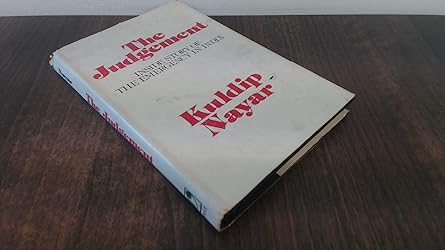
📘 What are Fundamental Rights?
The Indian Constitution grants certain basic rights to citizens, known as Fundamental Rights. Such as:
• Article 14: Right to Equality
• Article 19: Freedom of Expression
• Article 21: Right to Life and Personal Liberty
• Article 22: Protection against Arrest and Detention
⚠️ How were Fundamental Rights Suspended?
🔹 Article 352 of the Constitution
• This article empowers the President to declare a "National Emergency" when the security of the country is threatened by war, external aggression, or internal rebellion.
🔹 Actions under Article 359
• The Indira Gandhi government used Article 359 to restrict citizens' fundamental rights.
• Citizens were even deprived of the right to defend themselves in court.
🔒 Which Rights Were Suspended?
Fundamental Rights Affected During the Emergency
Article 19 (freedom of expression, assembly, and association) was completely suspended.
Article 21 (life and personal liberty) allowed arrests without warrants.
Article 22 (protection against arrest and detention) allowed thousands of people to be imprisoned without trial.
🚨 Consequences and Impact
📌 1. Thousands of Arrests
• Nearly 100,000 people, including opposition leaders like JP, Atal Bihari Vajpayee, and LK Advani, were imprisoned without reason.
📌 2. No Judicial Relief
• People could not invoke habeas corpus (the right to challenge arrest).
• The Supreme Court also held that the right to life could be suspended during an Emergency (ADM Jabalpur case, 1976).
📌 3. Civil Liberties Were Curtailed
• No one could protest, no one could assemble, the press was silenced, and no relief was available from the courts.
❗ ADM Jabalpur Case (Habeas Corpus Case)
• This landmark case was fought in the Supreme Court.
• The Court ruled in favor of the government by a majority and stated that citizens do not even have the right to life during an Emergency.
• This decision is still criticized.
🎯 Conclusion
The Emergency of 1975–77 was the period of the greatest erosion of fundamental rights in the history of Indian democracy. This period proves how essential civil liberties are in a democracy and that they should not be ignored under any circumstances.
Strict Censorship During the Emergency (1975–77)
The Emergency also witnessed one of the darkest phases for freedom of expression in India. As power grew more centralized, the press found itself silenced under strict government control. This story of resistance and suppression reminds us why free journalism is the backbone of a healthy democracy.
🔒 What was Censorship?
• With the declaration of the Emergency on June 26, 1975, the Indian government imposed strict restrictions on the press.
• The Ministry of Information and Broadcasting ordered newspapers and news agencies not to publish any news without government permission.
• Every newspaper had to show its news to government censor officials before publishing.
📋 Key Impacts and Events
1. News Monitoring
• Articles or reports critical of the government were blocked before publication.
• Topics such as political arrests, police excesses, and forced sterilizations were strictly prohibited.
2. Newspapers' Vigorous Response
• Several newspapers protested against censorship:
o The Indian Express and The Statesman left their editorial pages blank.
o This was a symbolic protest – "What cannot be printed is what is most important."
3. Arrests of Journalists and a Climate of Fear
• Many journalists were arrested or threatened.
• Threats of advertising cuts or license cancellations were used to intimidate media outlets.
4. Government Control of Radio and TV
• Only government propaganda aired on state-run media outlets like All India Radio and Doordarshan.
• The image of Indira Gandhi and Sanjay Gandhi was projected as heroic figures.
🧠 Impact on Public Expression
• Ordinary citizens feared that speaking or writing something could lead to arrest.
• Free expression was also virtually stifled in the realms of literature, poetry, drama, and art.
📌 Conclusion
The strict censorship imposed during the Emergency demonstrated that when power becomes autocratic, freedom of expression is one of the first things to be suppressed. This period deserves to be written in black ink in the history of democracy. This ordeal of the press later inspired the media to become more vigilant and robust.
20 Point Programme – 1975
As we revisit the Emergency period of 1975, we uncover a chapter filled with bold promises, sweeping reforms, and harsh realities. The 20-Point Programme introduced during this time reflects how governments often attempt large-scale transformation during crises. The following article is presented in structured HTML — carefully preserved exactly as you wrote it — while adding an inspiring, educational narrative to help readers understand its deeper significance.
🎯 Objective
This program was launched to implement the slogan "Garibi Hatao." Its objectives were—
• Economic reforms
• Social justice
• Empowerment of the poor
• Control of corruption and black marketing
🔢 Main list of 20 points
Comprehensive Social & Economic Measures
1. Poverty alleviation and upliftment of the people
2. Distribution of land to agricultural laborers and poor farmers
3. Distribution of surplus land from ceiling
4. Fair wages to agricultural laborers
5. Increasing agricultural production and self-reliance
6. Control of food supply and prices
7. Fixing fair prices for agricultural produce
8. Promotion of micro-irrigation schemes
9. Housing for the rural poor
10. Education and literacy campaign for all
11. Expansion of health services
12. Promotion of cottage and small-scale industries
13. Employment opportunities for the unemployed
14. Protection of workers' rights in industries
15. Welfare of women and children
16. Special schemes for Scheduled Castes and Scheduled Tribes
17. Making the judiciary effective
18. Strictness against corruption and black marketing
19. In government functioning Transparency and Accountability
20. Population Control and Family Planning
👤 Sanjay Gandhi and the 5-Point Plan
Indira Gandhi's son, Sanjay Gandhi, launched his own 5-Point Plan in parallel, which focused specifically on sterilization, tree plantation, rural improvement, sanitation, and education.
📌 Conclusion
The 20-Point Program was an ambitious social and economic reform plan, but it was launched under the pressure of the Emergency, so it was also seen as political propaganda. Its implementation failed in many states, yet it brought issues of poverty and inequality to the national agenda.
Sterilization Campaign (1975–77) – The Emergency's Most Controversial Decision
The sterilization campaign marks one of the most painful and controversial phases of the Emergency. While the idea of population control had long existed, its implementation during this period became synonymous with fear, coercion, and violation of human rights. Below is your original text, preserved word-for-word, organized for clarity and SEO impact.
📅 Background
• Controlling population growth in India was a major issue for the government.
• During the Emergency, Sanjay Gandhi gave it a prominent place in his 5-point program.
• The objective of this campaign was:
👉 "To motivate people to undergo sterilization for population control."
But this "motivation" soon turned into coercion and repression.
⚠️ How was the forced sterilization campaign carried out?
1. Administrative Pressure
• District officials and officers were given targets for how many people they had to sterilize.
• If targets were not met, they were threatened with job losses, salary cuts, or transfer.
2. Coercion and Allurement
• People were lured to sterilization camps through intimidation, false pretenses, or promises of food, money, or jobs.
• At times, the police surrounded villages and seized men and subjected them to sterilization.
3. Lack of Healthcare Facilities
• Sterilization camps were run by unqualified doctors, dirty equipment, and performed surgeries in unsanitary conditions.
• As a result, hundreds of deaths and thousands of people were disabled.
📊 Statistics
• In 1976-77, approximately 7.6 million sterilizations were performed, the highest number ever in a single year.
• In states like Uttar Pradesh and Haryana alone, the forced campaign took a serious turn.
🧨 Reactions and Criticism
• Deep public resentment against the government spread.
• The campaign caused fear and distrust in rural areas.
• It was considered a symbol of the Indira Gandhi government's authoritarian policies.
🗳️ Political Consequences
• Congress suffered a crushing defeat in the 1977 general elections.
• Congress failed to win a single seat in the villages of North India – especially in areas where forced sterilization had taken place.
• The Janata Party made it a major election issue.
📌 Conclusion
The "sterilization campaign" was an attempt at population control, but when implemented authoritarianly, it turned into one of democracy's darkest incidents.
This incident still illustrates how devastating the consequences can be when a government violates democratic boundaries.
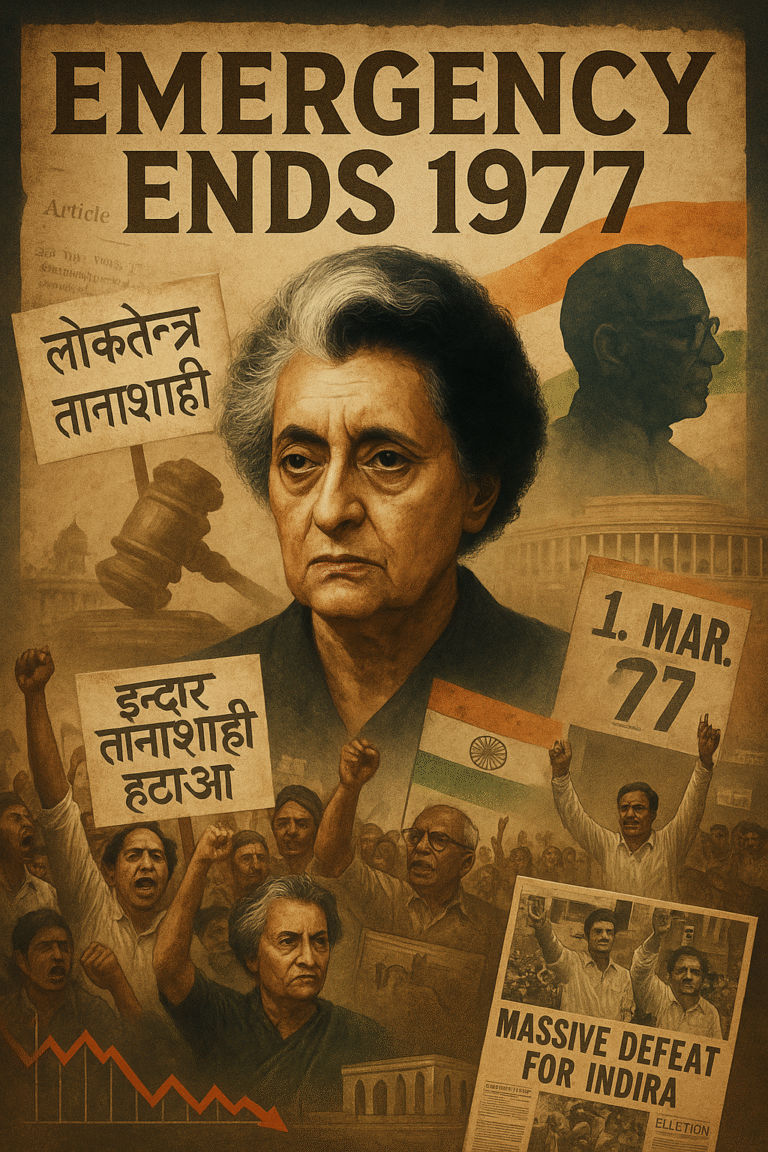

End of Emergency in India (1977)
The end of the Emergency in 1977 is a powerful reminder of how democracy, even under the darkest clouds, finds its way back through public courage and constitutional strength. This moment in history teaches us that no matter how absolute power becomes, the people remain the true guardians of freedom. Below is your original article, preserved word for word, formatted in a clean, inspiring, SEO-ready HTML structure.
1. Declaration of Emergency
• On June 25, 1975, then-Prime Minister Indira Gandhi declared a state of emergency in India.
• This period lasted for approximately 19 months.
2. Reasons for the end of the Emergency
🔹 Political pressure
• Growing dissent and public opposition during the Emergency.
• The consolidation of opposition parties and public discontent.
🔹 Criticism of Human Rights Violations
• Suspension of fundamental rights, forced sterilizations, and censorship of the press tarnished the government's image.
🔹 Economic Crisis
• Economic problems worsened during the Emergency, affecting the public's standard of living.
🔹 Election Pressure
• Demands for the restoration of democracy both internationally and domestically.
3. Announcement of the End of the Emergency
• Indira Gandhi ended the Emergency on March 21, 1977.
• General elections were simultaneously announced.
4. 1977 Lok Sabha Elections
• Elections were held in March 1977.
• The Janata Party dealt a crushing defeat to the Congress.
• This election clearly articulated the public's voice against the unconstitutionality and repression of the Emergency.
5. Conclusion
The end of the Emergency revived democracy in India and proved that the strength of democracy lies in public awareness and protest.
Conclusion of the Emergency (1975–77)
The Emergency stands as one of the most defining moments in India's democratic journey. When we revisit this period, we are reminded that freedom is fragile unless protected, and democracy is powerful only when citizens remain aware and engaged. Below is your original article, preserved word for word, arranged in a clean, inspiring, and SEO-ready HTML format.
Key Lessons from the Emergency
• Violation of Fundamental Rights
During the Emergency, fundamental rights of citizens were suspended, severely undermining the public's sense of freedom and justice.
• Curbs on Freedom and Expression
Heavy censorship was imposed on the press and freedom of expression, which stifled the very spirit of democracy.
• Political Tyranny and Administrative Abuse
Arrests of opposition leaders, forced sterilization campaigns, and the centralization of power were the dark aspects of this period.
• Strengthening Democracy
Although the Emergency temporarily weakened democracy, public awareness and protests ultimately revived it.
• Rebuilding Democratic Values
The public rejected the Emergency in the 1977 elections, ensuring democracy's victory.
The Bottom Line
The bottom line is that in a democracy, protecting citizens' freedoms and rights is paramount, and power must remain under public scrutiny and balance. The experience of the Emergency teaches us that vigilance, responsibility, and participation are essential to safeguarding democracy.
Context of the Emergency (1975–77)
The Emergency declared in India between 1975 and 1977 remains one of the most transformative and controversial moments in the country's democratic journey. It was a period when constitutional machinery was reinterpreted, civil liberties were suspended, and the idea of democracy was tested like never before. This context offers deep insight into political power, public resistance, and the resilience of democratic values.
Background and Causes
Before the Emergency, India was grappling with economic instability, political agitation, rising unemployment, inflation, and widespread public dissatisfaction. The Allahabad High Court verdict against Prime Minister Indira Gandhi further intensified political tensions. Social movements led by Jayaprakash Narayan (JP Movement) demanded systemic reforms, creating pressure on the government. Amid rising unrest, the government declared a national Emergency under Article 352, citing threats to internal security.
Impact on Rights and Governance
Suspension of Fundamental Rights
During the Emergency, fundamental rights such as freedom of speech, expression, and assembly were suspended. The press faced strict censorship, and many opposition leaders were arrested. Administrative powers became centralized, and decisions were taken without public scrutiny.
Centralization of Power
Decision-making shifted drastically toward the executive branch, reducing the role of Parliament, judiciary, and civil institutions. This period highlighted the dangers of unchecked authority.
Public Reaction and Democratic Awakening
Though institutions were suppressed temporarily, public sentiment gradually shifted. The forced sterilization campaign, censorship, and arrests created widespread resentment. Eventually, the government announced elections in 1977, which marked a turning point — the people voted overwhelmingly for change, demonstrating the enduring strength of Indian democracy.
Lessons and Legacy
Importance of Democratic Freedoms
The Emergency taught India that democratic values survive not only through laws but through public vigilance, active participation, and accountability of leaders.
The Power of Public Awareness
The events of 1975–77 proved that citizens hold the ultimate power in a democracy. When freedoms are threatened, collective awareness and protest can bring about transformation.
Conclusion
The Emergency (1975–77) remains a defining chapter, showing how fragile democracy can become when power goes unchecked. At the same time, it stands as proof that public awareness, constitutional responsibility, and active participation can revive and strengthen democratic values. The lessons of this period continue to guide India toward a more accountable and resilient future.
