
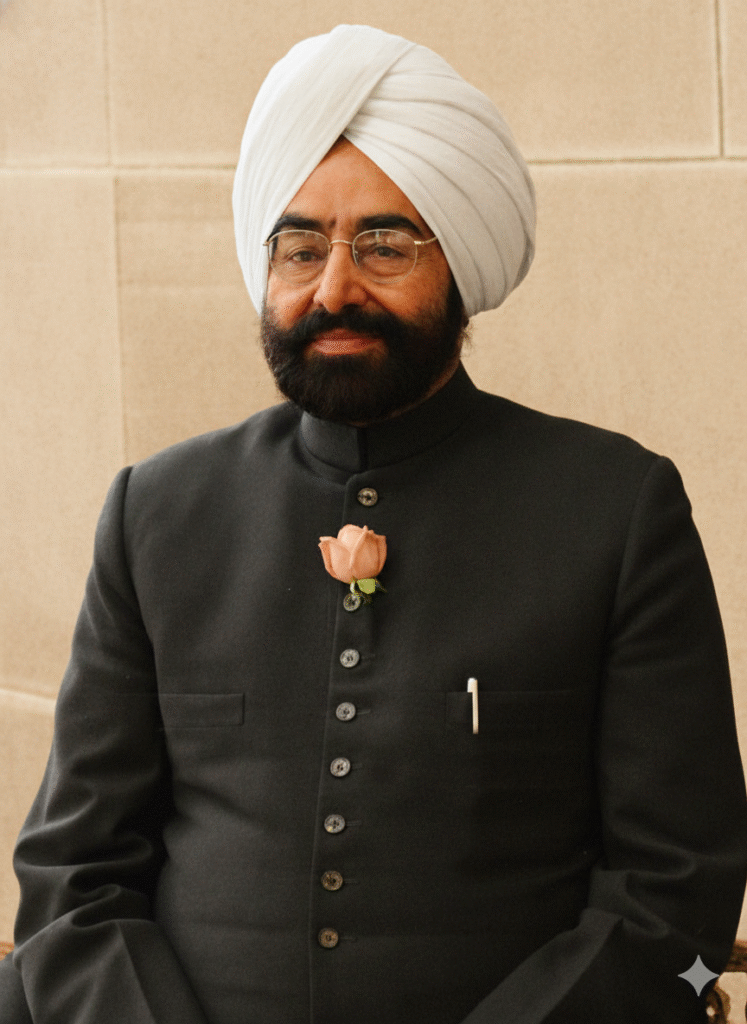
Biography of Giani Zail Singh
Giani Zail Singh was the seventh President of India, serving from 25 July 1982 to 25 July 1987. He was the first Sikh to hold the office of President of India. Born on 5 May 1916 in Sandhwan village, Faridkot district, Punjab, he was a freedom fighter and an important political leader who also served as Chief Minister of Punjab and Union Home Minister.
Introduction
Giani Zail Singh was an important figure in modern Indian political history. His political journey began during the freedom movement and continued through his involvement in the politics of Punjab and the national government.
He served as the Chief Minister of Punjab from 1972 to 1977, Union Home Minister from 1980 to 1982 and the seventh President of India from 1982 to 1987. He was the first Sikh to become President of India.
Birth and Early Life
Basic Details
- Birth Name: Jarnail Singh
- Popular Name: Giani Zail Singh
- Date of Birth: 5 May 1916
- Birthplace: Sandhwan village, Faridkot district, Punjab (then British India)
- Father's Name: Kishan Singh
- Mother's Name: Ind Kaur
- Religion: Sikhism
- Presidency: 25 July 1982 – 25 July 1987
- Death: 25 December 1994
Giani Zail Singh was born as Jarnail Singh in Sandhwan village in the princely state of Faridkot. His father, Kishan Singh, was a village carpenter who was also associated with agriculture. He grew up in a modest family environment and developed an early interest in Sikh religious teachings and public affairs.
His original name was Jarnail Singh. He later became widely known as Zail Singh during his political life. The title Giani was associated with his knowledge of Sikh religious scriptures and teachings.
Recommended Reading

Readers interested in Indian history, political leaders and constitutional institutions may find this resource useful for further study.
Affiliate Disclosure: GSStudyHub may earn a commission from qualifying purchases at no extra cost to the buyer.
Education
Giani Zail Singh had limited formal education compared with many other political leaders of his time. However, he developed considerable knowledge of Sikh religious literature, history and philosophy through religious studies and self-learning.
He studied at the Shaheed Sikh Missionary College in Amritsar, where he received religious training and developed his knowledge of Sikh scriptures. His understanding of religious teachings earned him the title Giani, meaning a learned person.
He also developed strong public-speaking skills and became known for his speeches in Punjabi and Urdu. These abilities later helped him in his political and public life.
Political Career
Participation in the Freedom Struggle
Giani Zail Singh became involved in political activities during the period of British rule. He opposed the autocratic administration of the princely state of Faridkot and supported the demand for political rights and representative government.
He became associated with the Praja Mandal movement, which worked for democratic rights and representative institutions in princely states. His political activities led to imprisonment, including a prolonged period of incarceration between 1938 and 1943.
He also participated in the Quit India Movement of 1942. In 1946, he took part in the National Flag agitation in Faridkot, which became an important episode in his political life.
Political Career in PEPSU and Punjab
After Independence, Giani Zail Singh continued his political activities in the Patiala and East Punjab States Union (PEPSU). He held ministerial responsibilities in its government, including Revenue and later Agriculture and Public Works.
He became associated with the Punjab Pradesh Congress Committee and gradually emerged as an important Congress leader in the state. His political career included responsibilities in the state legislature and the organisation of the Congress Party.
Chief Minister of Punjab (1972–1977)
Giani Zail Singh became the Chief Minister of Punjab on 17 March 1972 and continued in office until 30 April 1977.
During his tenure, his government dealt with issues relating to state administration, agriculture, rural development, social welfare and public services. His political leadership made him one of the prominent figures in Punjab during the 1970s.
Union Home Minister (1980–1982)
In January 1980, Giani Zail Singh joined the Union Cabinet of Prime Minister Indira Gandhi as the Union Home Minister.
He held this important national responsibility until June 1982. During this period, he dealt with matters relating to internal security, law and order and the administration of the Home Ministry.
President of India (1982–1987)
Election and Tenure
In 1982, Giani Zail Singh was selected as the candidate for the Presidential Election. He defeated H. R. Khanna in the election and was elected the seventh President of India.
He took office on 25 July 1982 and served until 25 July 1987. His election was historically significant because he became the first Sikh President of India.
Important Constitutional Responsibilities
As President, Giani Zail Singh served as the constitutional Head of State. His responsibilities included performing duties under the Constitution, appointing the Prime Minister in accordance with constitutional provisions, participating in the legislative process and representing the Republic of India in official capacities.
His presidency coincided with important political and constitutional developments, including the assassination of Prime Minister Indira Gandhi in 1984 and the subsequent change of government under Prime Minister Rajiv Gandhi.
Operation Blue Star and the Events of 1984
One of the most difficult periods during Giani Zail Singh's presidency was 1984, when Punjab experienced serious political and social unrest.
In June 1984, the Indian Army conducted Operation Blue Star at the Golden Temple complex in Amritsar. The operation and its consequences created deep distress among sections of the Sikh community and had a major impact on the political situation in Punjab.
On 31 October 1984, Prime Minister Indira Gandhi was assassinated by two of her Sikh bodyguards. Following her assassination, widespread anti-Sikh violence took place in several parts of India, particularly in Delhi.
These events created a serious national crisis during Giani Zail Singh's presidency and remain among the most significant and painful episodes of modern Indian history.
Death of Giani Zail Singh
- Date of Accident: 29 November 1994
- Date of Death: 25 December 1994
- Place of Death: Chandigarh, Punjab region
After completing his presidential term in 1987, Giani Zail Singh continued to remain an important figure in public life.
On 29 November 1994, he was seriously injured in a road accident while travelling towards Anandpur Sahib. He was admitted to a hospital in Chandigarh for medical treatment but died on 25 December 1994 due to complications arising from his injuries.
His death was widely mourned across the country. He is remembered as the first Sikh President of India and an important participant in the freedom movement.
Honours and Legacy
Giani Zail Singh occupies an important place in the history of Indian politics. His journey from the freedom movement to the office of President of India remains a notable part of the country's democratic history.
His major historical distinctions include:
- He was the first Sikh to become President of India.
- He served as the seventh President of India from 1982 to 1987.
- He served as Chief Minister of Punjab from 1972 to 1977.
- He served as Union Home Minister from 1980 to 1982.
- He participated in the freedom movement and the Praja Mandal movement.
His political career remains relevant to the study of India's freedom struggle, Punjab's political history and the development of constitutional institutions.
Conclusion
Giani Zail Singh's life represents an important chapter in the political history of modern India. From his early involvement in the freedom movement and the Praja Mandal movement to his service as Chief Minister of Punjab and Union Home Minister, he held several important responsibilities in public life.
His election as the seventh President of India in 1982 was a historic milestone, as he became the first Sikh to hold the highest constitutional office in the country. His presidency also coincided with some of the most challenging political and social events in modern Indian history.
Giani Zail Singh passed away on 25 December 1994, but his political journey remains an important subject for understanding India's freedom movement, Punjab's political development and the history of the Indian Presidency.
References
- President of India – Official Profile of Giani Zail Singh
- President of India – Former President and Term of Office
- Lok Sabha Debates – Obituary Reference for Former President Giani Zail Singh
- Rajya Sabha – Biographical Record of Giani Zail Singh
- Election Commission of India – Presidential Election of 1982
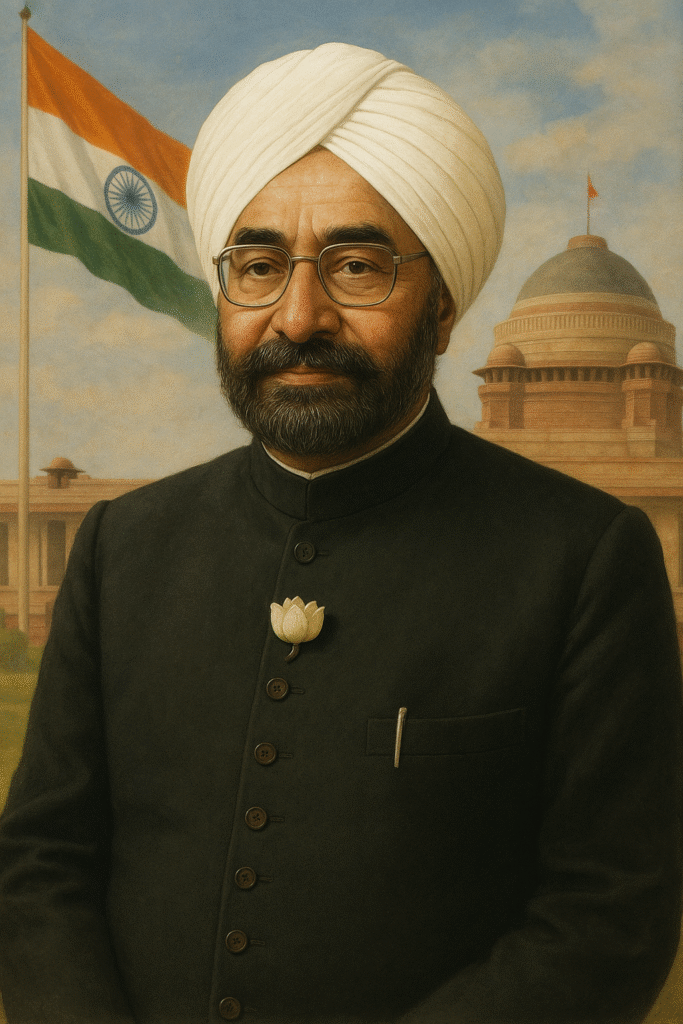
Quick Facts about Giani Zail Singh
- Birth Name: Jarnail Singh
- Popular Name: Giani Zail Singh
- Date of Birth: 5 May 1916
- Birthplace: Sandhwan village, Faridkot district, Punjab
- Father's Name: Kishan Singh
- Political Party: Indian National Congress
- Chief Minister of Punjab: 1972–1977
- Union Home Minister: 1980–1982
- Position: Seventh President of India
- Presidential Tenure: 25 July 1982 – 25 July 1987
- Date of Death: 25 December 1994
Giani Zail Singh: Introduction
Giani Zail Singh was a prominent Indian political leader and the seventh President of India. He served as President from 25 July 1982 to 25 July 1987 and became the first Sikh to hold this constitutional office.
His political journey began during the freedom struggle and continued through his involvement in the politics of Punjab and the Indian National Congress. Before becoming President, he served as the Chief Minister of Punjab and Union Home Minister.
His presidency coincided with several important and difficult events in Indian history, including Operation Blue Star, the assassination of Prime Minister Indira Gandhi and the anti-Sikh violence of 1984.
Giani Zail Singh remains an important figure in the history of Indian politics, Punjab's political development and the Indian Presidency.
Giani Zail Singh: Birth and Early Life
Giani Zail Singh was born on 5 May 1916 in Sandhwan village, Faridkot district, Punjab, which was then part of British India. His birth name was Jarnail Singh. His father's name was Kishan Singh, who worked as a carpenter and was also associated with agriculture.
He belonged to a Sikh family and grew up in a modest rural environment. From childhood, he developed an interest in Sikh religious teachings, Punjabi literature and religious traditions.
He studied Sikh scriptures and Gurbani and gradually became known for his religious knowledge and public speaking abilities. His religious education earned him the title of "Giani", meaning a learned person in religious knowledge. The title later became a permanent part of his name.
His early experiences in Faridkot played an important role in shaping his social and political outlook. He became increasingly interested in public affairs and the demand for political rights in the princely state.
Giani Zail Singh: Education
Giani Zail Singh received limited formal education during his early life. However, he developed considerable knowledge of Sikh religious literature, history and philosophy through religious studies and self-learning.
He received religious training at Shaheed Sikh Missionary College in Amritsar. His knowledge of Sikh scriptures and his ability to speak effectively helped him earn recognition as a religious scholar.
He developed a strong understanding of the Guru Granth Sahib, Sikh traditions and Punjabi religious literature. His interest in religious studies also helped him develop public-speaking skills, which later became an important part of his political career.
Although he did not pursue a conventional university education, his religious knowledge, communication abilities and understanding of public affairs helped him establish himself as a recognised public figure.
Giani Zail Singh: Political Career
Giani Zail Singh's political career began in the princely state of Faridkot during the period of British rule. His early activities were connected with the demand for civil liberties, democratic rights and political reforms in princely states.
Participation in the Freedom Struggle
During the 1930s, Zail Singh became involved in political activities against the autocratic administration of the princely state of Faridkot.
- He became associated with the Praja Mandal movement, which demanded democratic rights and representative government in princely states.
- In 1938, he helped establish the Faridkot Congress Committee and participated in political activities against the princely administration.
- He was arrested and imprisoned for his political activities and remained in jail for several years, from 1938 to 1943.
- In 1946, he participated in the National Flag agitation in Faridkot, demanding the right to hoist the national flag.
His participation in these movements made him an important political figure in Faridkot and strengthened his association with the wider freedom struggle.
Political Career in PEPSU
After Independence, the princely states of Patiala and East Punjab were integrated into the Patiala and East Punjab States Union (PEPSU).
Giani Zail Singh became part of the PEPSU Government and held important ministerial responsibilities.
- 1948–1949: Served as Revenue Minister in the PEPSU Government.
- 1951–1952: Served as Minister for Agriculture and Public Works.
- 1955–1956: Served as President of the PEPSU Pradesh Congress Committee.
Member of the Rajya Sabha
Giani Zail Singh served as a Member of the Rajya Sabha from 1956 to 1962. His parliamentary experience helped him develop a broader understanding of national politics and legislative institutions.
Entry into Punjab Legislative Politics
In 1962, Giani Zail Singh was elected to the Punjab Legislative Assembly. He subsequently joined the Punjab Government led by Chief Minister Partap Singh Kairon and held ministerial responsibilities.
His political influence continued to grow, and he eventually emerged as one of the leading Congress politicians in Punjab.
Recommended Reading

Readers interested in Indian history, political leaders and constitutional institutions may find this resource useful for further study.
Affiliate Disclosure: GSStudyHub may earn a commission from qualifying purchases at no extra cost to the buyer.
Chief Minister of Punjab (1972–1977)
Giani Zail Singh became the Chief Minister of Punjab on 17 March 1972. He served in this position until 30 April 1977.
During his tenure, his government focused on several areas of state administration and development, including agriculture, rural development, education, social welfare and public infrastructure.
- His government dealt with agricultural development and rural administration.
- Social welfare and the development of disadvantaged communities were important areas of state policy.
- He led the Punjab Government during a significant period in the state's political and administrative development.
His tenure as Chief Minister helped establish him as one of the prominent political leaders of Punjab and strengthened his position in national politics.
Union Home Minister (1980–1982)
Following the return of Indira Gandhi to power in 1980, Giani Zail Singh was appointed Union Home Minister on 14 January 1980.
He held this important office until 22 June 1982. As Home Minister, he was responsible for matters relating to internal security, law and order, and the administration of the Union Home Ministry.
His appointment to the Union Cabinet marked an important stage in his political career and brought him into the centre of national administration.
President of India (1982–1987)
Election as the Seventh President
In 1982, Giani Zail Singh was selected as the Presidential candidate of the Indian National Congress. He contested the Presidential Election against H. R. Khanna and was elected the seventh President of India.
He assumed office on 25 July 1982 and served until 25 July 1987. He became the first Sikh to hold the office of President of India.
Constitutional Responsibilities
As President, Giani Zail Singh served as the constitutional Head of State. His responsibilities included performing duties under the Constitution, appointing the Prime Minister in accordance with constitutional provisions, and participating in the legislative process through the powers assigned to the President.
His presidential term coincided with important political developments and difficult national circumstances. His tenure is an important part of the history of the Indian Presidency.
Operation Blue Star and the Events of 1984
One of the most challenging periods during Giani Zail Singh's presidency was 1984, when Punjab experienced serious political and social unrest.
In June 1984, the Indian Army conducted Operation Blue Star at the Golden Temple complex in Amritsar. The operation resulted in significant loss of life and damage to religious and historical structures. It created deep distress among sections of the Sikh community and had a major impact on the political situation in Punjab.
On 31 October 1984, Prime Minister Indira Gandhi was assassinated by two of her Sikh bodyguards. Following her assassination, widespread anti-Sikh violence took place in several parts of India, particularly in Delhi.
These events created a serious national crisis during Giani Zail Singh's presidency and remain among the most painful episodes in modern Indian history.
Characteristics of Giani Zail Singh's Political Life
Connection with the Common People
Giani Zail Singh's political career developed through his association with local political movements, religious activities and public organisations. His ability to communicate in Punjabi and his understanding of regional society helped him build a connection with ordinary people.
Commitment to Public Life
His political journey included participation in the freedom movement, imprisonment, ministerial responsibilities and service in constitutional offices. These experiences formed an important part of his public life.
Experience in Administration and Politics
He served in the PEPSU Government, Punjab Government, Union Cabinet and the office of the President. His career reflected extensive experience in state administration and national politics.
Death of Giani Zail Singh
- Date of Accident: 29 November 1994
- Date of Death: 25 December 1994
- Place: Chandigarh
After completing his presidential term in 1987, Giani Zail Singh continued to remain an important figure in public life.
On 29 November 1994, he was seriously injured in a road accident while travelling towards Anandpur Sahib. He received medical treatment in Chandigarh but died on 25 December 1994 due to complications arising from his injuries.
His death was widely mourned across the country. He is remembered as the first Sikh President of India and an important participant in the freedom movement.
Conclusion
Giani Zail Singh's life represents an important chapter in the political history of modern India. From his early involvement in the freedom struggle and the Praja Mandal movement to his service as Chief Minister of Punjab and Union Home Minister, he held several important responsibilities in public life.
His election as the seventh President of India in 1982 was a historic milestone, as he became the first Sikh to hold the highest constitutional office in the country. His presidency also coincided with some of the most challenging political and social events in modern Indian history.
Giani Zail Singh passed away on 25 December 1994, but his political journey remains an important subject for understanding India's freedom movement, Punjab's political development and the history of the Indian Presidency.
References
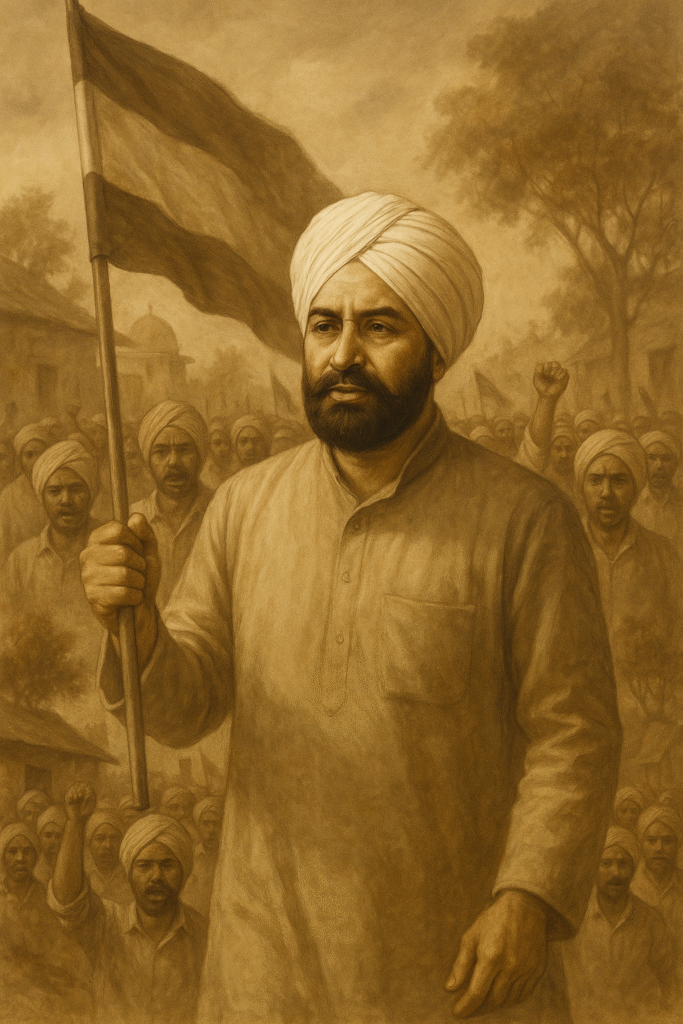
Giani Zail Singh: Participation in the Freedom Struggle
Giani Zail Singh played an important role in the freedom movement, particularly in the political struggle against the autocratic administration of princely states in Punjab. His contribution was closely associated with the Praja Mandal movement, which demanded civil liberties, democratic rights and representative government in the princely states.
Participation in the Praja Mandal Movement
During British rule, several princely states in Punjab were governed by hereditary rulers. Although these states were under British paramountcy, their internal administration was controlled by their respective rulers. Ordinary people had limited opportunities to participate in political decision-making.
Giani Zail Singh became involved in political activities against the autocratic administration of the princely state of Faridkot.
- He participated in movements demanding civil liberties and democratic reforms in Faridkot State.
- He became associated with the Praja Mandal movement, which sought representative government in princely states.
- He helped organise political activities and mobilise people against restrictions imposed by the princely administration.
- He became an important local leader in the struggle for political rights in Faridkot.
Formation of Faridkot Congress Committee
In 1938, Giani Zail Singh became associated with the establishment of the Faridkot Congress Committee. He served as its General Secretary, while Sandhura Singh was its President.
The committee organised political activities and demanded civil liberties and administrative reforms in Faridkot State. These activities brought him into direct conflict with the princely administration.
Imprisonment and Struggle
Giani Zail Singh faced imprisonment because of his political activities against the princely administration of Faridkot.
- He was imprisoned for his involvement in the political movement in Faridkot.
- He spent approximately five years in prison, from 1938 to 1943.
- His imprisonment became an important part of his political journey and strengthened his association with the freedom movement.
His struggle was directed towards civil liberties, representative government and the rights of people living under princely rule.
National Flag Agitation of 1946
In 1946, Giani Zail Singh played an important role in the National Flag agitation in Faridkot. The movement demanded the right to hoist the Indian National Congress flag in the princely state.
The agitation attracted national attention. Jawaharlal Nehru also became involved in the developments surrounding the Faridkot movement. The agitation became an important milestone in the struggle for political rights in the princely state.
Conclusion: Role in the Freedom Struggle
Giani Zail Singh's contribution to India's freedom movement was particularly significant at the regional level. His activities against autocratic princely rule, imprisonment and participation in the National Flag agitation helped establish him as an important political leader in Punjab. These experiences laid the foundation for his later political career in independent India.
Giani Zail Singh: State-Level Politics
After Independence, Giani Zail Singh continued his political activities and became an important leader in the administration and politics of Punjab. His political career developed through the Patiala and East Punjab States Union (PEPSU), the Rajya Sabha, the Punjab Legislative Assembly and the Punjab Government.
Political Career in PEPSU
Following Independence, several princely states in the Punjab region were integrated into the Patiala and East Punjab States Union (PEPSU), which was formed on 15 July 1948.
Giani Zail Singh became associated with the new administration and held important ministerial responsibilities.
- 1948–1949: Served as Revenue Minister in the PEPSU Government.
- 1951–1952: Served as Minister for Public Works and Agriculture in the PEPSU Government.
- 1955–1956: Served as President of the PEPSU Pradesh Congress Committee.
Member of the Rajya Sabha (1956–1962)
After the reorganisation of states, Giani Zail Singh became a member of the Rajya Sabha on 3 April 1956. He served in the Upper House of Parliament until 10 March 1962.
His parliamentary experience provided him with an opportunity to participate in national political affairs and strengthen his understanding of India's legislative institutions.
Entry into the Punjab Legislative Assembly
In 1962, Giani Zail Singh was elected to the Punjab Legislative Assembly. He subsequently became a minister in the Punjab Government led by Chief Minister Partap Singh Kairon.
His responsibilities in the state government increased his administrative experience and strengthened his position within the Indian National Congress in Punjab.
Political Organisation and Leadership in Punjab
Giani Zail Singh held important organisational responsibilities in the Punjab Congress. He served as Vice-President of the Punjab Pradesh Congress Committee from 1956 to 1958 and later became its President from 1966 to 1972.
His organisational experience and political influence helped him emerge as one of the leading Congress politicians in Punjab during this period.
Recommended Reading
Readers interested in Indian history, the freedom movement and political leaders may find this resource useful for additional study.
Affiliate Disclosure: GSStudyHub may earn a commission from qualifying purchases at no extra cost to the buyer.
Chief Minister of Punjab (1972–1977)
Giani Zail Singh became the Chief Minister of Punjab on 17 March 1972. He continued in office until 30 April 1977.
During his tenure, he led the state government through an important period of agricultural, economic and administrative development. His government dealt with several issues concerning rural development, public administration, social welfare and infrastructure.
Main Features of His Tenure
- Agricultural Development: Punjab continued to consolidate its position as an important agricultural state during the period of the Green Revolution.
- Rural Development: Rural administration and development remained important areas of state governance.
- Education and Public Services: The state government continued its responsibilities relating to education and public service delivery.
- Social Welfare: Welfare and development of disadvantaged sections remained important areas of government policy.
- Industrial Development: Industrial and economic development formed part of the broader priorities of the state administration.
His tenure as Chief Minister strengthened his position in national politics. Following the end of his term in 1977, he later became an important national political figure and was appointed Union Home Minister in 1980.
Conclusion: Role in Punjab Politics
Giani Zail Singh's political career in Punjab developed through several stages, beginning with the freedom movement and continuing through his ministerial responsibilities in PEPSU, membership of the Rajya Sabha and service in the Punjab Government.
His tenure as Chief Minister from 1972 to 1977 marked an important phase in his political career. His administrative and organisational experience subsequently helped him move into national politics, where he served as Union Home Minister and later became the seventh President of India.
References
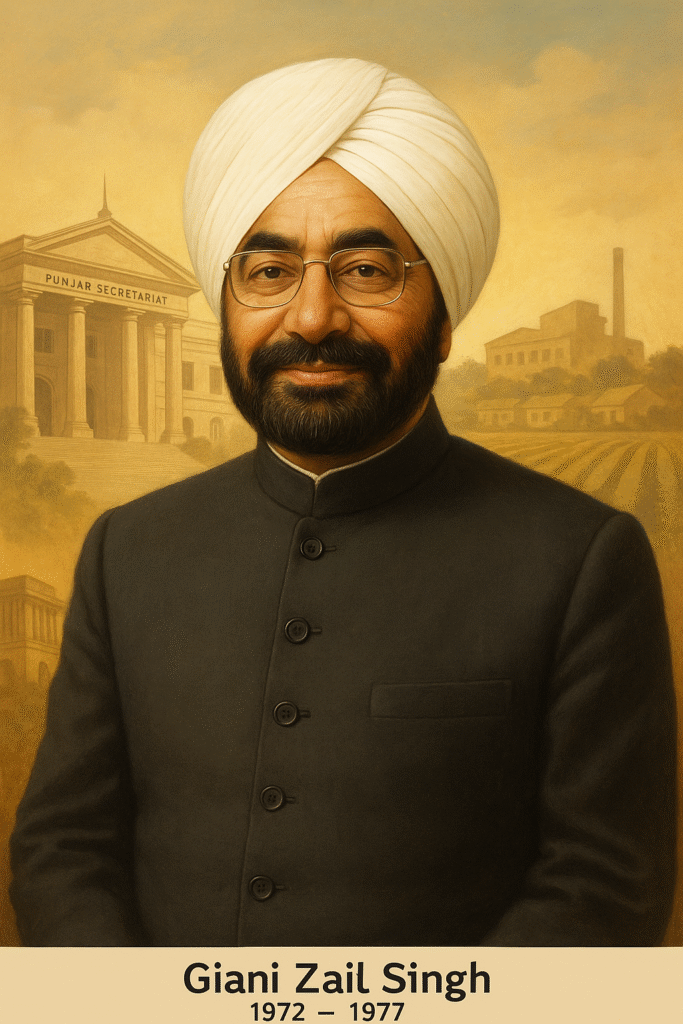
Giani Zail Singh: Chief Minister of Punjab (1972–1977)
Giani Zail Singh’s tenure as the Chief Minister of Punjab was an important chapter in his political career. He assumed office on 17 March 1972 and served until 30 April 1977. His tenure focused on administration, rural development, social welfare and the development of Punjab.
Background of Becoming Chief Minister
- The Congress Party won the Punjab Assembly elections in 1972.
- Giani Zail Singh became Chief Minister on 17 March 1972.
- Before becoming Chief Minister, he had held several important positions in Punjab politics and the Congress organisation.
Major Areas of Work as Chief Minister
Rural Development and Agriculture
- Rural development and agricultural progress were important areas of state administration during his tenure.
- His government worked within the broader context of Punjab's agricultural development and the continuing Green Revolution.
- Land reforms and administrative restructuring were among the initiatives associated with his tenure, as noted in the official biography of the President of India.
Education and Social Welfare
- Social welfare and the development of disadvantaged sections remained important concerns in Punjab's political and administrative agenda.
- His public image was associated with concern for poor and disadvantaged communities.
Social Harmony and Welfare of Weaker Sections
- He was known for his association with the welfare of poor and disadvantaged sections of society.
- Social justice and equality were important themes in his political career.
- His administration operated in a state with diverse religious, social and political communities.
Industry and Administration
- Industrial development and administrative restructuring formed part of the wider governance agenda in Punjab.
- His government also had to manage the state's administrative and development priorities.
Challenges and Criticism
- Punjab faced political and administrative challenges during this period.
- His government also faced criticism from opposition parties on governance and other political issues.
- Political developments in the state and at the national level influenced the functioning of his government.
Conclusion
Giani Zail Singh served as the Chief Minister of Punjab from 17 March 1972 to 30 April 1977. His tenure was associated with land reforms, administrative restructuring and the broader development agenda of the state. His experience in Punjab politics helped him move into important positions in national politics, including the office of Union Home Minister and later the President of India.
Giani Zail Singh: Tenure as Union Home Minister (1980–1982)
After serving as the Chief Minister of Punjab, Giani Zail Singh moved to national politics. Following the Congress Party's return to power in 1980, Prime Minister Indira Gandhi included him in the Union Cabinet and appointed him as the Home Minister of India. He held this office from 14 January 1980 to 22 June 1982.
Background of Becoming Home Minister
- The Congress Party returned to power after winning the 1980 general elections.
- Prime Minister Indira Gandhi appointed Giani Zail Singh as the Union Home Minister.
- He assumed office on 14 January 1980 and served until 22 June 1982.
Recommended Amazon Product
Check the product details, availability and latest offers on Amazon.
Check Price on AmazonMajor Responsibilities as Home Minister
National Security and Internal Affairs
- The Ministry of Home Affairs was responsible for important matters relating to internal security, law and order and coordination with state governments.
- During this period, India faced several internal security and political challenges.
- Punjab and other regions also experienced developments that required attention from the central government.
Law and Order
- Maintaining internal security and supporting law-and-order administration were important responsibilities of the Home Ministry.
- The Ministry worked with state governments and relevant agencies on internal security matters.
Protection of Constitutional and Civil Rights
- The Home Ministry dealt with matters involving public order, civil administration and the responsibilities of the Union Government.
- Issues concerning social harmony and the protection of citizens' rights formed part of the wider responsibilities of the ministry.
Challenges During His Tenure
- Internal security and political tensions presented important challenges for the Union Government.
- Developments in Punjab became increasingly significant during this period.
- Managing relations between the Union Government and state governments was an important administrative responsibility.
Conclusion
Giani Zail Singh served as India's Union Home Minister from 14 January 1980 to 22 June 1982. His tenure coincided with important political and internal security challenges. In 1982, he was elected President of India and assumed office on 25 July 1982, becoming the seventh President of the country.
References
Popular Amazon Choice
Explore this popular product and check its latest price, availability and offers on Amazon.
View on Amazon